Allentown, Pennsylvania — Public Meeting Index
Search help
Summaries & topics includes titles; words may match separately. Transcripts match a literal word or phrase, with case and whitespace normalized. Punctuation and contractions must match. Documents are not searched. Results have separate pages by source; a meeting may appear in both. Both dates are included.
Summaries & topics
A meeting of the Allentown City Council was scheduled for August 26, 2026, at 6:00 PM in Council Chambers to discuss housing-related topics. No minutes or transcript were provided for this meeting, so the following summary is based solely on the agenda. Discussion Items - The agenda included a roll call, followed by discussions on the Housing Fund and Affordable Housing Legislation. - Presentations were scheduled on the Allentown Housing Plan (Welcome Home), the Housing Fund budget, the 2025 AHCOPA Report, Program Design Recommendations, and City of Easton Housing Legislation. Key Outcomes - No decisions, votes, or next steps are recorded due to the absence of meeting minutes or a transcript.
This special meeting of the Allentown City Council was scheduled for 6:30 PM on August 12, 2026, as per the agenda. The agenda included two presentations: from the Allentown Housing Authority (AHA) and the Downtown Allentown Alliance (DAA). No transcript or minutes were available for this summary, so details of the presentations and any discussion or decisions are not reported. Note: The user's provided timestamp (11:30:00+00:00) differs from the agenda's start time (6:30 PM local). The date is consistent.
The Public Works Committee of Allentown met on Wednesday, August 5, 2026, at 5:30 PM in Council Chambers, 435 Hamilton Street. The meeting consisted of roll call, a shade tree presentation, and adjournment. No minutes or transcript of the proceedings were provided for this summary. Shade Tree Presentation - The committee received a presentation on shade trees. The agenda includes an attachment titled "260727EACLOSUrbanCanopy," referencing a possible study or report from the Environmental Advisory Council (EAC) regarding urban canopy level of service. No further details about the content or discussion are available. Adjournment - The meeting was adjourned following the presentation. Note: The meeting time in the agenda is 5:30 PM, while the metadata for this summary indicates 10:45:00+00:00 (UTC). This discrepancy is noted.
The Allentown Historical Architecture Review Board (HARB) met on August 4, 2026, at 6:02 PM. Board members present included AJ Jordan, Alex and Scalesman, Philip Hart, David Huber, and Ivy Westerman. The board approved a fence installation with conditions, tabled a project due to the applicant's absence, and held policy discussions on plan revision disclosures and the use of AI imagery. Public Comments & Testimony - Richard Jerome, applicant for 37 North 17th Street, presented his proposal for a wrought iron fence. He expressed strong support for the project, describing it as "beautiful," and stated it would match a fence planned by his neighbor, who will file a separate application. He accepted the board's conditions regarding engineering plan submissions and tree mitigation. Discussion Items - 37 North 17th Street (New Business): Staff recommended approval for a black metal fence, finding it historically appropriate. Discussion focused on the proposed concrete footer, its potential impact on a street tree, pedestrian safety, and the fence's extent. The board stressed the need for the fence line to remain continuous around the tree. The applicant agreed to the conditions. - 223 North 17th Street (New Business): The applicant was absent. A motion to table the item for one month was made, seconded, and carried. - Procedural & Policy (Other Business): Philip Hart formally placed on record that applicants must explicitly declare all changes to revised plans, referring to a previous issue where a project's window count changed without clear disclosure. The board discussed requiring greater specificity and utilizing a digital checklist. The board also cautioned that AI-generated images require strict verification of materials and dimensions from applicants. - Public Outreach: Upcoming window restoration workshops (Aug 5, 19, 26) and a door hangers community engagement event were announced. Key Outcomes - 37 N 17th Street: Approved with conditions (unanimous). Conditions: submit engineering plans for staff and city review; maintain fence height and continuity around the existing tree; compliance with Chapter 3, Section 3.1.2 (Fences and Streetscape Features). - 223 N 17th Street: Tabled for one month. - Policy Guidance: Board affirmed the expectation for explicit disclosure of plan changes and detailed material specifications when AI renderings are used. The meeting was adjourned at 6:31 PM.
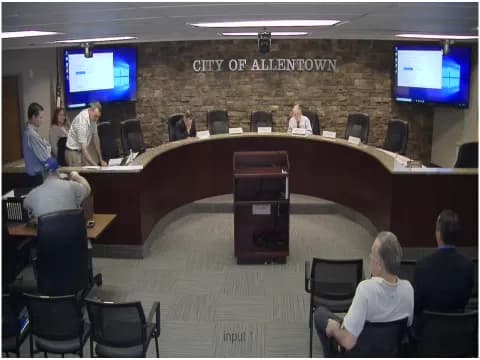
The meeting agenda was a standard template with no specific items listed for discussion or action. No minutes or transcript were provided, so no substantive business, public comments, or decisions can be reported. The meeting was scheduled for 5:30 PM in Council Chambers at 435 Hamilton Street, Allentown, Pa. 18101, but no record of the proceedings is available.
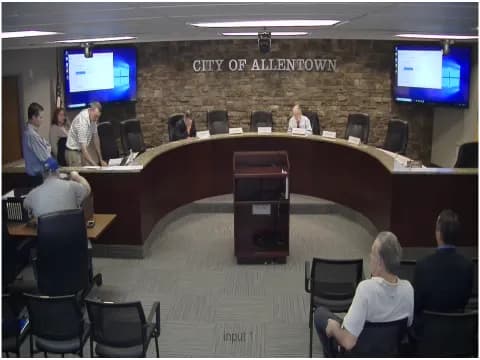
The Allentown City Council convened on July 31, 2026. The published agenda outlines a standard meeting scheduled to begin at 10:00 AM in Council Chambers at 435 Hamilton Street, though a discrepancy exists between this agenda time and the provided meeting metadata timestamp (15:00 UTC / 11:00 AM EDT). The agenda includes standard procedural items: Invocation, Pledge to the Flag, Roll Call, Courtesy of the Floor (public comment period), Contract Approvals, Minutes of Previous Meeting, Communications, Old Business, Reports, Ordinances for Final Passage, Consent Agenda, Resolutions for Final Passage, Ordinances for Introduction, Resolutions for Introduction, New Business, and Good and Welfare. No detailed official minutes or a verbatim transcript of the proceedings were available in the provided source materials. Consequently, no specific consent calendar items, public testimony, discussion proposals, or formal votes and outcomes from this meeting were recorded in the available documentation.
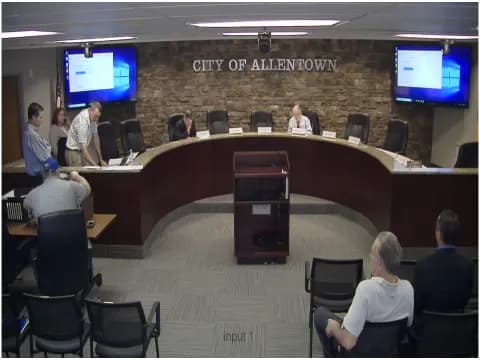
No agenda, minutes, or transcript were provided for this meeting. Therefore, no summary of proceedings, discussions, or decisions can be generated.
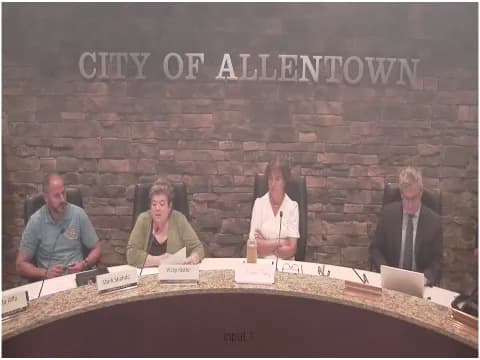
The meeting of the Allentown Disruptive Conduct Board of Appeals on July 23, 2026, was called to order by Chairwoman Vicky Kissler. The board heard three appeals of Disruptive Conduct Reports (DCRs) issued by city police officers, deliberated on each, and issued rulings on the validity of the violations. Appeal 1: Sergey Seward v. Officer Connolly (Property at 201 S. 14th St.) - Officer Connolly testified that on March 28, 2026, at approximately 3:47 a.m., he was dispatched to a report of a male and female fighting on the top floor of the residence. Upon arrival, he found no disturbance. He stated that the building tenant said a cat was making noise. The DCR was issued because police had responded to the address three times that month. - Appellant Sergey Seward and his roommate Jessica Pluskis argued that the complaints were a retaliatory campaign by a second-floor neighbor who had weaponized police calls. They presented evidence of 12 calls to police, with officers repeatedly finding no noise or disturbances. They stated that the caller admitted to his goal of getting them evicted via DCR. Seward and Pluskis testified that they were not engaged in a romantic relationship and that no domestic violence had occurred. - The board voted unanimously to grant the appeal, finding that the DCR was not supported because the reporting officer did not personally hear any noise or disturbance. The DCR was overturned. Appeal 2: Rupert Blanco v. Officer Espinoza (Garage at 748-750 Cardin) - Officer Espinoza testified that on March 31, 2026, at approximately 5:55 p.m., he was dispatched to the address for a report of a motorcycle doing burnouts. The complainant provided a video, but the officer could not identify the rider. He issued a DCR based on the complainant's statement that it was a continuous issue. - Appellant Rupert Blanco testified that he does not own a motorcycle, does not ride one, and was working on a car in the garage at the time. His uncle and mother confirmed that the family had purchased a motorcycle only two weeks before the hearing. They argued the complaint was retaliatory because Blanco had refused to do a favor for the complainant. - The board voted unanimously to grant the appeal, stating that there was no direct evidence linking Blanco to the motorcycle or the burnouts. Appeal 3: Jaslin de Jesus and City Star Management v. Officer Dietrich (Property at 926 W. Liberty St.) - Officer Dietrich testified that on June 5, 2026, at approximately 8:00 p.m., he heard loud music from a portable speaker while patrolling. He observed a juvenile playing the music on the porch. He issued a DCR, and noted that the address had 10 prior noise complaints, including five with documented loud music or gatherings. - Appellant Jaslin de Jesus admitted the music occurred but stated she had since removed speakers and limited visitors. She argued she had been a good tenant since 2023 and felt targeted. Property manager Elizabeth Salib requested a continuance due to a pending Right-to-Know request for police reports, but the board proceeded. - The board voted unanimously to deny the appeal, sustaining the DCR based on the pattern of prior complaints and the officer's firsthand observation. Key Outcomes - Appeal 1 (Seward): Granted. DCR overturned. Appellant will receive refund of appeal fee. Written decision to be provided within 10 days. - Appeal 2 (Blanco): Granted. DCR overturned. Appellant will receive refund of appeal fee. - Appeal 3 (de Jesus): Denied. DCR sustained as valid. Written decision to be provided within 10 days. - All parties were informed of their right to appeal to the Lehigh County Court of Common Pleas within 30 days of the filing of the board's decision.
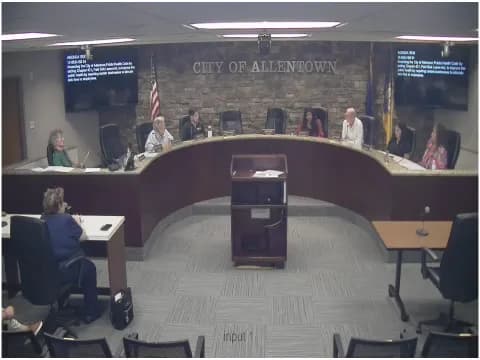
This special meeting of the Allentown City Council was held on Wednesday, July 22, 2026, at 6:00 PM in Council Chambers to review a citizen initiative (Bill 54) that would amend the city's Public Health Code to require certain businesses to provide paid sick leave to employees. After hearing from petitioners, the administration, council members, and the public, the council unanimously voted to forward the initiative to Lehigh County for placement on the November 2026 general election ballot as a referendum. The meeting adjourned at 6:23 PM. Public Comments & Testimony - Diana Espinal (Allentown resident since 2023, member leader at Make the Road Pennsylvania) testified through interpretation about her personal experiences working in a warehouse where missing a shift due to illness resulted in points that could lead to termination. She described being forced to work while ill due to fear of losing her job or paycheck. She expressed support for the initiative, stating it would give all workers the ability to care for themselves and their families without fear of losing their job. She noted that residents were joyful about the possibility of paid sick days. - Diana Robinson (Co-Executive Director of Make the Road Pennsylvania) translated Petal's remarks and added that this was a joint effort with community members, Unite Here Local 274, and SEIU. She emphasized that voters should decide what is best for Allentown. - Later in the meeting, Diana Robinson provided clarifying context on the policy: For employers with 15 or more employees, workers accrue 1 hour of sick time per 30 hours worked, up to 72 hours per calendar year. For employers with fewer than 15 employees, the accrual is 1 hour per 30 hours worked, up to 48 hours per calendar year. She noted similar legislation has been passed in Philadelphia and Pittsburgh with positive impacts. Discussion Items - Administration Position (Vicky Kistler): The City of Allentown administration stated it supports good public health legislation and fair labor practices but does not support Bill 54. Key reasons: (1) The ordinance was a citizen initiative, not proposed by the city or any affiliated health organization, so no city research or data shows it will protect public health. (2) Over 20,500 active in-city licensed businesses would need to be monitored, and the Health Bureau lacks staffing and administrative processes for enforcement. (3) Implementation could require doubling or tripling business license fees or property tax increases. (4) Approximately 80% of Allentown residents who work leave the city for employment, and about 80% of city jobs are filled by commuters living outside Allentown; thus the ordinance may not effectively protect local public health. (5) It could put Allentown at a competitive disadvantage with neighboring communities. The administration believes such an ordinance would be more appropriate at the county or state level. - Council Member Comments: - Candida Affa (council member) expressed personal concern as a former small business owner (8-9 employees) that the ordinance could deter businesses from locating in the city and could be taken advantage of by employees. She made a motion to forward the initiative to the ballot, stating that letting voters decide would alleviate timing issues for the general election. - Cristian Pungo acknowledged the power of the citizen initiative process but expressed concern that council cannot amend a citizen initiative, and that the ordinance could negatively impact service providers and small businesses. He noted the lack of evaluation of potential harm and encouraged voters to read the legislation carefully. He also remarked that many residents work outside the city and should not have a false sense of security about paid sick time if employed elsewhere. He made his comments in both English and Spanish. - Ce Ce Gerlach thanked the petitioners for their work, stated the initiative will go to voters, and noted that if passed, the city could later amend the ordinance. - Jeremy Binder clarified that there is a two-year moratorium on amending the law after it passes. - Cynthia Mota (Vice President presiding) emphasized that more than 2,000 residents signed the petition, and it is important to honor that process and let voters decide. She stressed the need for the petitioners to continue educating the community. She acknowledged validity of concerns about small businesses but noted that the law could be amended later. Key Outcomes - Motion and Vote: Council member Candida Affa made a motion to forward the initiative to the Chief Clerk of Elections and other appropriate officials at Lehigh County Voter Registration to be placed on the upcoming general election (November 2026) as a referendum for the registered voters to decide. The motion was seconded by Cynthia Mota. After public comment, the council voted unanimously 6-0 in favor (all members present: Cynthia Mota, Natalie Santos, Ce Ce Gerlach, Candida Affa, Jeremy Binder, Cristian Pungo). Santo Napoli was absent. - Next Steps: The initiative will be placed on the November 2026 general election ballot. If voters approve, it will become law; if rejected, it will not. There will be a two-year moratorium before council can amend the ordinance if it does pass.
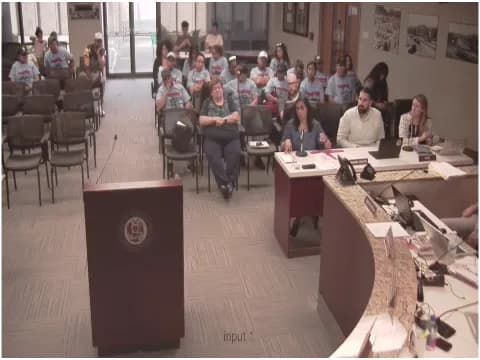
The Budget and Finance Committee met on July 22, 2026, to discuss Bill 55, which would allow police officers to purchase up to five years of pension service credit for prior service with another Pennsylvania municipality, and to review the June financial reports. The meeting was chaired by the committee chair, and Director Patel presented the details of Bill 55. No public comments were made. Discussion Items Bill 55 – Pension Service Credit for Prior Police Service - Director Patel provided a history: Mayor O'Connell signed a memorandum of understanding (MOU) in 2021 stating that if Senate Bill 464 (later Act 49) passed, the city would allow officers to purchase up to five years of service from other Pennsylvania taxing authorities for pension purposes. Act 49 passed in July 2024. - The city and FOP could not agree on the interpretation (FOP wanted health care included), leading to arbitration. An award was issued on June 29, 2026, confirming that only pension service credit (not health care) was allowed. - An actuarial study from November 2024 estimated costs: for 13 currently eligible officers, the cost would be approximately $150,000 over 11 years ($14,000 per year); for 52 officers who may become eligible in the future, the cost would be approximately $510,000 over 11 years ($46,300 per year). - Officers must pay the full contribution plus 4.75% interest upfront; the city does not bear the full cost immediately. The pension fund receives revenue until the officer retires, then the cost emerges. - Director Patel noted the program helps recruit experienced officers, addressing ongoing vacancies (over 10 vacancies reported). The committee discussed that other municipalities are exploring similar benefits, but Allentown is among the earliest to implement. - Councilmember Alpha expressed strong support based on the need for more officers, stating the police force is strained (around 212 officers vs. a recommended 300). Other councilmembers supported the bill because it is voluntary, officers pay into it, and it provides a choice. - Councilmember Gurla questioned whether the city had recruited experienced officers without this benefit and asked about an inventory of outstanding MOUs. Controller's office confirmed MOUs are logged and available. - The committee voted unanimously to forward Bill 55 to the full council for approval. June Financial Report Review - Director Patel summarized the June director's memo: general fund revenues are in line with expectations, expenditures are below budget, and all funds are performing well. - Investments: PLIGIT yields 3.72%–4.27% APY; TD Bank liquid assets yield 3.0% APY. - The housing fund, created from a half-percent realty transfer tax increase, now has just over $1 million. - The city expects to complete the 2025 financial audit by the end of July. - No concerns were raised; councilmembers indicated they would submit minor questions via email for next year's budget. Key Outcomes - Bill 55 was forwarded to the full city council for a vote (motion passed unanimously). - The June financial report was accepted as presented; no further action required. - The meeting was adjourned.
Transcripts
Enter keywords to search transcript passages.
Transcript coverage details
Only published transcript revisions are searched. Recording completeness is unknown. Missing, cancelled, incomplete, or changed transcripts can leave gaps. No match does not establish that something was never discussed.