Baton Rouge City-Parish Second Budget Hearing: Finance and Parish Attorney Presentations, November 20, 2025
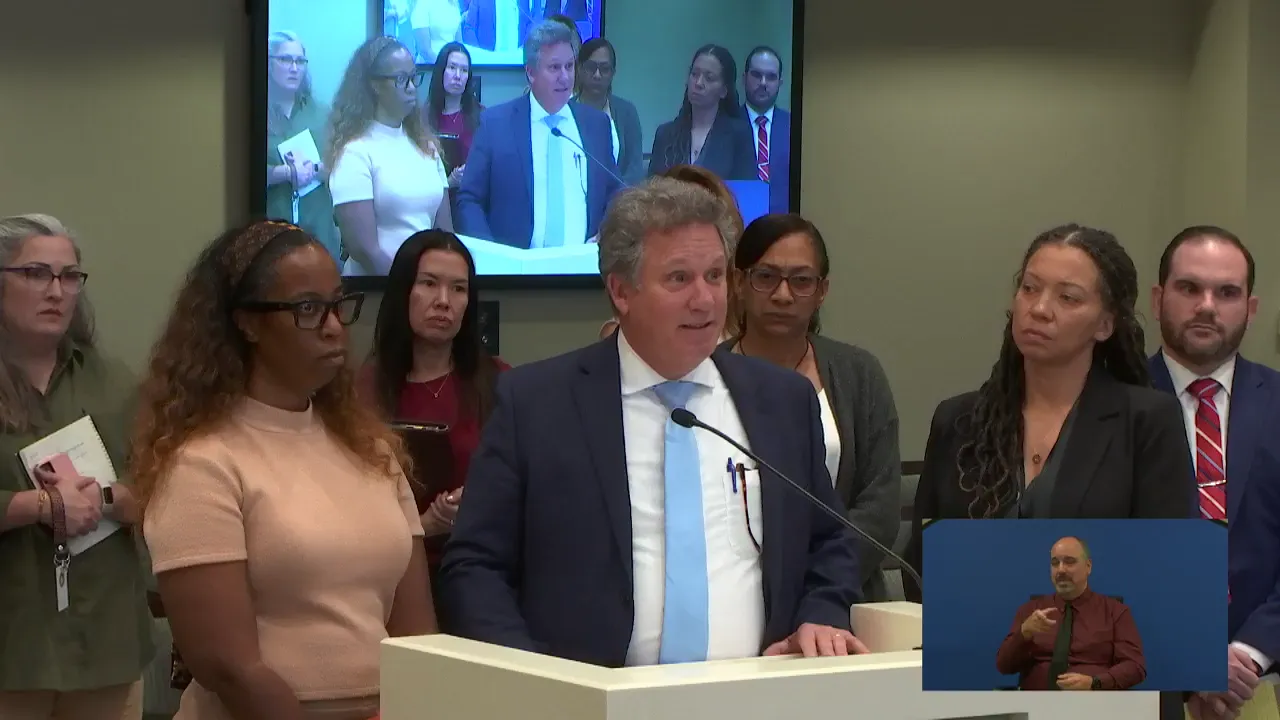
STREAMING COPY IN PREPARATION — RECORDING AVAILABLE FROM THE ORIGINAL SOURCE
Baton Rouge City-Parish Second Budget Hearing – November 20, 2025
The Metro Council held its second budget hearing for the 2026 fiscal year on November 20, 2025, starting at 3 p.m. with a hard stop at 4:45 p.m. The finance department and parish attorney’s office presented their proposed budgets and answered council questions. No votes were taken; the hearing was informational.
Finance Department Presentation
- Finance Director Angie Savoir presented a high-level overview of the city-parish budget. The total proposed budget is $1.1 billion; only 28% is undedicated general fund. Enterprise funds include airport, sewer, solid waste, river center, stormwater, and parking garage; capital improvement funds include Move BR, libraries, and EMS; special revenue funds include EMS, library, mosquito control, Council on Aging, TIFs, fire fund, and fire districts.
- Personnel allotments have decreased by 422 positions over four years. The 2026 budget recommends deleting 234 positions, 213 of which have been frozen since 2025.
- The general fund is $332 million, supported 86% by sales tax. Over the past two years, revenues have declined by over $49 million. The 2026 budget assumes a $10 million increase in city sales tax offset by a $19 million decrease in parish sales tax, a net decrease of $9.3 million.
- The legislative auditor recommends two months of operating cash in reserves. For the general fund, that would require roughly $52 million; current reserves are about $36 million, slightly over one month.
- Salary and benefits account for 71% of expenditures, driving the need for workforce reductions.
- The finance department budget is $9.5 million, an 11% reduction from 2025. The department plans to delete 15 positions and reduce its workforce by 23 positions (35%). Services will decrease: vendor checks may drop from three times a week to one or two, and taxpayer assistance wait times may increase.
- Savoir cited workload statistics: over 4,000 W-2s, over 1,300 W-9s, over 1,600 journal entries per month, over 7,000 bank transactions reconciled monthly, over 2,000 cash receipts, over 1,000 jury/witness checks, over 2,000 workers’ compensation checks, and over 500 people at the cashier window monthly. Monthly invoices exceed 10,000, with payment turnaround currently 10–14 days.
Council Discussion on Finance
- Council members thanked Savoir for her work. Concerns included reduced public transparency (the award-winning budget book may lose supplementary information) and service levels.
- Savoir said the revenue auditing division has been outsourced under a contract that performs regional audits; it equates to roughly two to three staff positions. A contract for December 10 consideration was noted.
- On layoffs, Savoir said she has collaborated with BREC and other agencies because of shared retirement systems, and some employees may transition; civil service rules constrain options.
- Positive budget factors cited: energy franchise fee originally estimated at $3.5 million annually now expected to generate $4.6 million; reassessment growth added $1.9 million; avoided health insurance inflation saved about $8 million; online retail sales tax increased, though not quantified.
- St. George transition: starting July 1, 2025, the city receives 100% of the 2% municipal sales tax collected in its boundaries, approximately $50–54 million annually, remitted monthly. The parish provided services through October and recently invoiced St. George; no reimbursement check has been received. There is no agreement for St. George to pay for constitutional offices. Savoir said withholding sales tax distributions would likely be illegal. The parish will stop providing services as of November 1, except animal control, which will be covered by a new agreement on December 10.
- Franchise fee funds: the council allocated $3.2 million in a 2025 budget supplement to council districts, constitutional offices, public safety, and other priorities; unallocated surplus will offset overages, including fire workers’ compensation. Savoir said these dollars supported the whole budget.
- Community center overspending: Savoir disclosed about $70,000 in overage, largely attributed to a homeless feeding program at Councilman Hearst’s district community center. She said excess revenues would cover it. Council members expressed frustration and demanded accountability. Councilman Hearst defended the program, noting it feeds 100 people three days a week, provides laundry and showers, and that he stopped spending and obtained third-party funding (XR Mobile) for the rest of the year. Christelle from the mayor’s office clarified opioid funds are not controlled by finance and that a $2,500 contract with Tyra Bank would provide finance training to community center staff. Councilwoman Coleman confirmed her community center did not overspend.
Parish Attorney’s Office Presentation
- Parish Attorney Greg Rome introduced his team and said the office is cutting its budget like all departments. He said he expects to cut at least eight lawyers, potentially up to 16 as suggested in the budget book.
- Staff are underpaid and could earn $200,000–$250,000 elsewhere. They work after hours and weekends.
- Key financial contributions: city prosecutor Brandy projected $1,842,000 in traffic fines for 2025, none of which goes to the office. Litigation chief Michael reported that the office has saved the city over $165 million in the last 10 years on fewer than 50 cases, out of roughly 1,000 cases.
- Kim Brooks collected $2.1 million (2024), $2.5 million (2023), $2.4 million (2022), and $2.6 million (2021) in subrogation.
- The outside counsel budget is $150,000 and is expected to be exhausted by June or July 2026. The settlement fund for 2026 is budgeted at $1.8 million for settlements only, and Rome said he is developing options to present to council members in small groups.
- Rome discussed opioid settlement money, which his office helped secure; Brandy qualifies for opioid funding, and Michael may. He noted Purdue Pharma’s $7.4 billion settlement might lead to more funds, but he could not comment specifically.
Council Discussion on Parish Attorney
- Council members expressed strong support for the parish attorney’s staff, citing their institutional knowledge, availability, and underpayment. Councilwoman Rocka noted many staff still pay student loans.
- Councilman Dunn clarified that the parish attorney is hired by the council, not the mayor, and suggested exploring funding for satellite attorneys: Michael Fruge at the airport is funded by the airport, while Bailey Moore at BRPD is funded by the office. Rome said he met with Chief LaDuff about BRPD funding.
- Councilman Hudson asked about the outside counsel budget and settlement fund; Rome said he is being proactive with small-group discussions.
- Councilman Kennedy asked if staff jobs are at risk; Rome said he would rather lose his own position than any staff member.
Key Outcomes
- No votes were taken; the hearing was informational.
- The next budget hearing is scheduled for Monday, November 24, 2025, at 5 p.m., featuring the Department of Public Works (drainage, transportation, maintenance, environmental services, building and grounds, development) and the Big Buddy program.
- The council will continue deliberations during the upcoming budget hearings.
Meeting Transcript
Welcome. Welcome to the second council budget hearing of 2025. Thank you to everyone who has come today to join us in the chamber and to hear these presentations by the finance department and by the parish attorney's office. Thank you also for everybody who is watching at home. We are very grateful to have the opportunity to be able to broadcast this and have people who are engaged and care about their city parish and who are watching from their desks and from their homes. Just want again want to say I'm so sorry that we had to have this one at 3 p.m. today. And so we have, I'm letting everybody know we have a hard stop councilman, councilman. We have a hard stop today at 4 45 p.m. So we need to get going. So first up, I would like to welcome head of our finance department, Angie Savoir. Thank you, Angie. Hi, thank y'all for having me. So I do represent the finance department, but the finance department also is involved with the formulation of the annual budget. So I was asked to give a high level overview of the entire budget, and then I'll do a high-level overview of finance. So the first slide you'll show as most of y'all have seen in the budget, our total budget is 1.1 billion. Of that, only 28% is undedicated and represents the general fund. The enterprise fund is the second largest funding within our city parish budget, and this is made up of the airport, sewer, solid waste, river center, stormwater, and our parking garage. The capital improvement funds is made up of mainly MOOC BR, some libraries, EMS, and then our special revenue funds include EMS Library, Mosquito, Council on Aging, our TIFFs, the Fire Fund, and the Fire Districts. We also have some debt service, and then we have our pension trust, which pays pension benefits to the employees participating in that program. And then we have our internal service fund, which is the fleet program. The next chart is a history of our personnel allotments. So over the last four years, we have decreased our allotment by 422 positions. This budget is recommending to delete 234 positions, of which 213 have been frozen since 2025. So going into this budget, we are reducing our workforce, and mainly these positions that are being deleted are within the general fund. If you go to the next slide, we'll show you a comparison of the budget from the 25 to 26. The largest reduction is in the general fund, which this is the second year of adjusting the budget due to the incorporation of St. George. Our special revenue funds did increase, decrease, and mainly because of the library reduced their budget by 11 million, but of 11, 9 million was related to capital improvements. The capital improvements is attributed to the decrease in library, which is being offset by the Move BR program. The enterprise funds, as I discussed, are the sewer solid waste small increases. The pension increase is due to the benefit payment schedules that are scheduled to be paid out in 2026. So overall, our budget decreased by one or 11 million dollars. Next slide. The general fund, which we mentioned before, is 332 million or 28% of our total budget. The majority of how the general fund is supported is by sales tax. So sales tax supports 86% of our operations. And you can see how over the past two years in sales tax, I mean in revenues in general, we have lost over 49 million dollars. The city sales tax, we didn't assume a half percent growth for city sales tax. We're assuming 10 million increase, but it's being offset by a 19 million decrease in parish, which is a net decrease of 9.3. And then the next slide is just a history of our fund balance. I thought this was important for everyone to understand where our fund balances are. So the legislative auditor recommends that you have two months of operating cash within your reserves. So our total budget is $32 million, which would require $52 million in your reserves that are not dedicated or obligated for special purposes. So if you look at the chart above, currently we have $36, which is about a month and a little over a week. So we have all made a commitment to strive to build this up to what the best practice is. Um it's important that we maintain our reserves so that if there is an unforeseen situation, we are able to respond. You know, we we are prone to disasters, unfortunately, and and BEMA does reimburse, so you have to have money to be able to start reacting and recovering to those disasters. Next slide. And then the next largest expenditure is a general government, which is the central service agencies, the constitutional offices.
openpublica.com