Baton Rouge City Council Third 2026 Budget Hearing - November 24, 2025
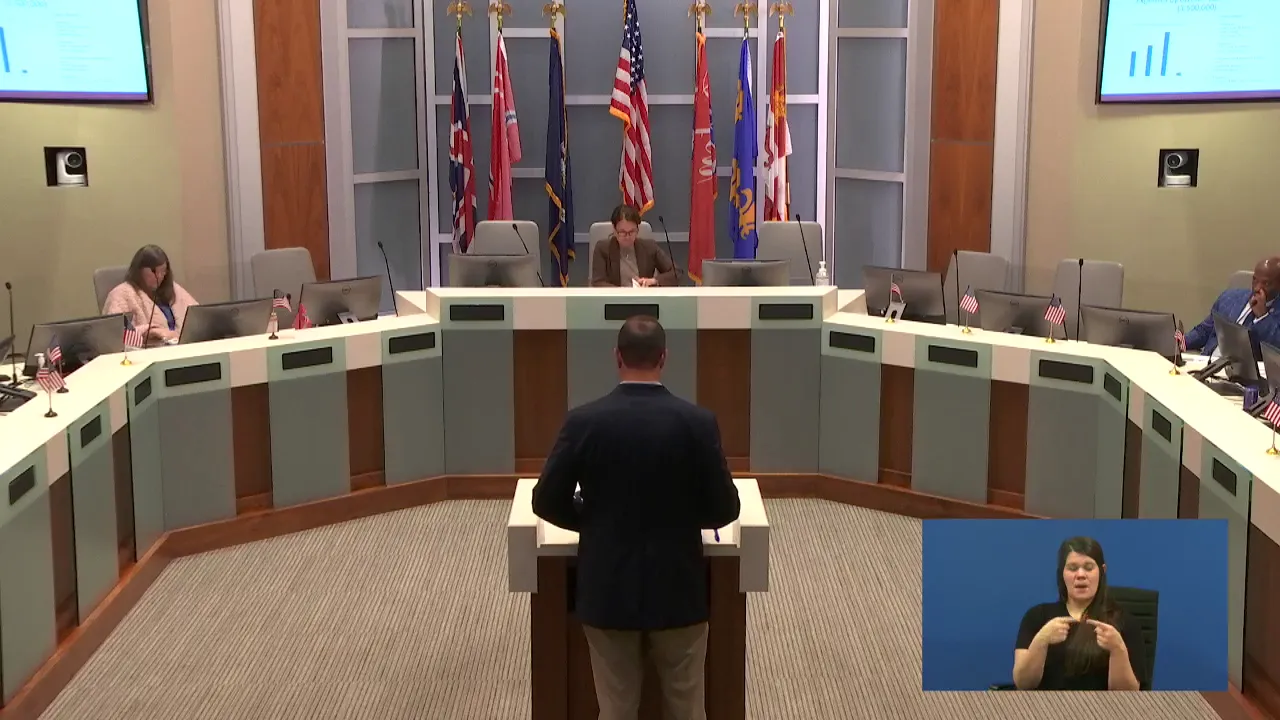
STREAMING COPY IN PREPARATION — RECORDING AVAILABLE FROM THE ORIGINAL SOURCE
Baton Rouge City Council Third 2026 Budget Hearing
The Baton Rouge City Council held its third 2026 budget hearing on November 24, 2025, receiving presentations from the Department of Development, Buildings and Grounds, Department of Maintenance, Transportation and Drainage, Environmental Services, and the Big Buddy Program. Departments detailed service reductions, staffing cuts, and revenue challenges. No formal votes were taken during the hearing; the next budget hearing was scheduled for December 3, 2025.
Department of Development (Rachel Lambert)
- The department faces a $1.1 million reduction for 2026, eliminating 31 vacant/frozen positions and reducing contracts by about $900,000. Overtime will be eliminated.
- Revenue through October 2025 was $3.2 million, down about 30% from $4.7 million in the same period of 2024. Total 2024 revenue was $5.3 million; 2023 revenue was $5.8 million.
- Permit activity declined: 6,700 permits issued in 2025 vs. 9,300 in 2024 (about 20% decrease); 1,000 plan reviews in 2025 vs. 1,700 in 2024 (about 30% decrease). Plan review turnaround is under 3 days; guaranteed times are 7 days for residential and 24 days for commercial permits.
- The revenue drop was attributed primarily to the City of St. George transition, which began in October 2024. The department also took a 17% budget reduction from 2024 to 2025 in anticipation.
- Blight/condemnation activity: over 2,000 condemnation inspections, 327 condemnations introduced, 230 structures condemned, and 178 demolitions (47 in-house, 131 contracted). About 30 more structures are expected to be demolished by year-end, with 70 condemned structures waiting and about 90 introduced/in process.
- Average contracted demolition cost is about $10,000; 75% of demolished structures contain asbestos. About $1.37 million in CDBG funds was used. For 2026, there will be zero general fund dollars for contracted blight abatement; in-house crews will handle most work, and CDBG-ineligible areas include South Mid-City, South Baton Rouge, and parts of Scotlandville.
- Proposed mitigation: increase permit fees (e.g., reinspection fee from $20 to cover $75 inspection cost), subdivision fees, fines/fees/penalties, and pursue grants. Fee changes would require council ordinance amendments.
- Additional stats: nearly 3,000 blight violation notices, almost 12,000 blight court inspections, about $320,000 in fees/fines assessed, over 450 court orders, and 729 liens rolled onto tax bills. 45 condemnation rescissions occurred this year; recording costs are $125–$135 per property.
Buildings and Grounds (Joe Butler)
- The 2026 budget is $12,316,000, a reduction of $1,565,000 (11%). Staffing drops from 65 to 63 allotments with no layoffs.
- Focused maintenance accounts were reduced an average of 21%, totaling $811,000. Preventive maintenance will move to quarterly; contractor response crews will be reduced by 50%, likely extending response times.
- Work order completion rate is 92.5% overall and 93.5% since July; average turnaround is 3–4 days. HVAC callouts at the prison dropped about 20% after new chillers and air handling unit replacements.
- Priority capital needs: waterproofing/leaks at 19th JDC and City Hall, B2 parking garage security, City Court water intrusion, and City Hall elevator upgrades. A FEMA project for City Hall window replacement is still awaiting approval.
- A vibration analysis of 180 pieces of equipment costing about $8,000 identified about 75 findings, including a failing bearing that could have caused $35,000–$40,000 in damage if not caught.
- The department maintains 160 facilities, actively servicing about 150, including EMS stations, fire stations, BRPD, community centers, pump stations, courts, and the prison.
Department of Maintenance (Mr. Brunfield)
- The department is reducing its budget by approximately $2.5 million, eliminating 32 funded positions (10 already frozen and 22 vacancies) with no layoffs.
- Overtime will be reduced by $230,000; seasonal employees drop from 60 to 40 ($182,000 savings); landscape services reduced by $822,000; other contractual services reduced by $149,000. Approximately 435 acres were removed from the parish inventory due to St. George.
- Service impacts: pothole crews from 3 to 2, asphalt patching crews from 2 to 1, concrete crews from 3 to 2, reduced ditch/litter crews, and fewer storm response personnel. Lower-priority corridors may see longer mowing cycles.
- Mitigation measures include new work order and GPS fleet systems, supervisor training with LSU Leadership School, possible use of autonomous mowers, and greater reliance on contracted services using parish transportation funds.
- Councilman Dunn asked about port-a-potty vendor response times during events; the vendor is based outside the parish and the contract has one renewal remaining. Mr. Brunfield said he would look into it.
Transportation and Drainage (Fred Ravert)
- The department is responsible for about 380 city bridges and over 470 traffic signals. It will lose about 40 previously frozen positions, reducing from 108 to 68 allotments; about 11 positions are currently frozen.
- Sign replacement and pavement marking services will slow. The sign shop's machine is down, and replacement would cost a couple hundred thousand dollars. Restriping costs about $8 per foot; last year's restriping spent just over $1 million.
- The city has agreed to maintain traffic signals within St. George for $8,500 per signal; about 40–50 signals are involved, with some state-owned. The agreement was pending execution.
- Drainage: the department continues to pursue grants and submitted seven projects for Capital Outlay funding. A $29 million Ward's Creek realignment/channel improvement project for Manchac was highlighted and is expected to come before the council. Ravert stated a new revenue source will be needed for drainage maintenance and projects.
Environmental Services (Adam)
- Environmental Services covers sanitary sewer, solid waste, and stormwater compliance. Sewer and solid waste are enterprise funds; stormwater compliance is a general fund division.
- Sewer: 2026 revenue expected to be just over $190 million (user fees nearly $123 million; half-cent sales tax under $61 million). Operating budget is just under $73 million, with contractual services about 70%. About $83 million is budgeted for SSO debt service.
- Solid waste disposal: proposed commercial tipping fee increase from $42 to $44 per ton and out-of-parish from $46 to $48, to be introduced at the December meeting. The landfill life is about 20 years; the adjacent Red Mud Lake property (700+ acres) is the likely future landfill site.
- Solid waste collection: residential user fee is $35.23/month, while service costs are about $38/month; the fee has been held using fund balance. Republic/RDI contracts include 4% annual escalation.
- Stormwater compliance: $3.5 million budgeted for 2026, funded from general fund fund balance; it includes $1.8 million for stormwater pipe point repairs, $600,000 for inlet repairs, and public education. Councilman Mook noted this is a one-time funding source, creating a challenge for 2027.
- The old abandoned wastewater treatment plant on River Road is currently being demolished under contract.
Big Buddy Program (Ms. Mack)
- Big Buddy is a local mentoring and youth development organization serving over 500 youth per day and about 1,400 youth annually. Programs include one-on-one mentoring, after-school/summer/holiday camps, and the Mayor's Youth Workforce Experience (My We).
- 2025 My We expanded with $670,000 in funding, providing workforce experiences for over 300 youth; 47% of funds went directly to youth stipends. Average cost per youth for the eight-week program was about $3,097.
- Proposed 2026 city funding is $80,000 from American Rescue Plan interest earnings (not general fund). General fund support was $68,850 in 2024 and $55,800 in 2025.
- The $80,000 would support mentoring matches at Glen Oaks and Northdale and supplement middle school/holiday camp programs, but would not cover the full cost of My We (about $3,500 per youth). Ms. Mack said Big Buddy would need to fundraise to fill the gap.
- Councilman Dunn asked the administration to explore continued funding. Chris from the mayor's office said they would go back and look at options. Councilman Moak raised questions about duplication among youth programs; Ms. Mack responded that Big Buddy is unique as a local organization and suggested a coordinated nonprofit council.
Key Outcomes
- No votes or formal council actions were taken during the hearing; it was informational.
- Several fee increases and budget adjustments were flagged for future council action, including permit fees, subdivision fees, tipping fees, and stormwater modeling fees.
- The next council budget hearing will be held December 3, 2025, following a 4:00 p.m. zoning meeting, with the budget hearing expected to start at 4:30 p.m. Additional agencies may still be added to the agenda.
Meeting Transcript
Good evening and welcome to the third of the council budget hearings, the third time for the uh 2025 year in anticipation of the 2026 year and 2020 budget. So thank you to all of our council members for making time to be here. Thank you to our staff that has stayed late, and thank you very much to the members of the media and the public who have taken time out of their busy lives. I know everybody is defrosting the turkey and baking the pumpkin pies. Um I know that that all feels more immediate than what we're doing here, but in my mind, there's nothing more important than what we're doing here today. So let's get started. Um today we're gonna be talking to a lot of people from public works. So let me call up Rachel Lambert with development. Miss Lambert. I'm gonna go make sure my present okay, good evening, council. Um you have a paper copy in front of you, or you should. I brought some copies. Um can we move to the next slide? All right. Here's a recap showing the 2025 and the 2026 budget, um, how it's allocated between the four divisions of the Department of Development, which are administration, subdivision engineering, permits and inspections, and neighborhood revitalization, also known as Blight. Um we also have the allotments for the current year versus um 2026 year. Um you can see a list of the contracts and professional services listed below each year. We um, and I'll talk about it a later slide, but we are having a significant reduction in contractual services. Um next slide. This is a breakdown of the budget category for each division. You can see those on the four pie charts on the outside, and in the big in the middle, the big one is all of the department of development in whole. Um, as you can see, salaries and benefits make up around half of our total budget. Professional services makes up a good chunk, but that's um the permit office is the majority of that. Um we're a pretty heavy vehicles and fuel um department, as in you know, we have a lot of inspectors out there in the field, so we're we have quite a fit bit of EUC and fuel usage. We have some contractual services, legal actually takes up quite a bit of our budget as well, and just supplies and off and and office, you know, things. Next slide, please. So here's gonna be some of the impacts to services. Um the department is seeing going to see about a 1.1 million dollar in reduction. Um division engineering, we're gonna have to eliminate our second engineering position, which is only gonna leave us one engineer on staff in that department, um, which is a planned government mandated position, the chief development engineer. Um review times will likely be longer, so we'll we will have less you know um support staff permits and inspections. We're gonna decrease the permits and inspections plan reviewers by two. That's in our South Central planning contract. Um review times will likely get longer, though, as you'll see in one of the further slides. We are very fast. We're at less than three days in plan review right now in permits, which is pretty unheard of. Though review times may get longer, we're still aiming to meet the guaranteed turnaround, which is seven days for residential permits and 24 days for commercial permits. Neighborhood revitalization, we're going to have zero general fund dollars for contracted blight abatement. For reference this year, we've spent about 2.2 million dollars in contracted blight abatement. Um we will have to rely solely on in-house crews for most blight abatement. Um there is some CDBG dollars from Office of Community Development that we have been allocated, though there are some pretty significant areas of town that are ineligible for those dollars. That means that there has to be an environmental and historic preservation review for each of those structures in order to be deemed eligible for those dollars. And there's three areas in town, um, South Mid-City will call it, um, South Baton Rouge neighborhood, and then a good bit of um Scotlandville are ineligible, which are quite a lot of structures that we you know are seeing come through our doors. The locations of the budget reduction on the right side, we're eliminating 31 positions. We're reducing contracts by you know around 900,000. We're gonna eliminate all overtime, and we've also, since we're eliminating positions, we've had a reduction, a significant reduction in equipment and fleet. Um we have are proposing some mitigation solutions that will hopefully come before you early in 2026. We want to increase certain permit fees, specifically the reinspection fee, which right now is $20, and it costs us approximately $75 in order to make an inspection. Yes. So we are also subsidizing the average residential permit to the tune of about three to four hundred dollars. So we're looking to try to break even on that.
openpublica.com