Beverly City Council Committee of the Whole Budget Review - June 4, 2026
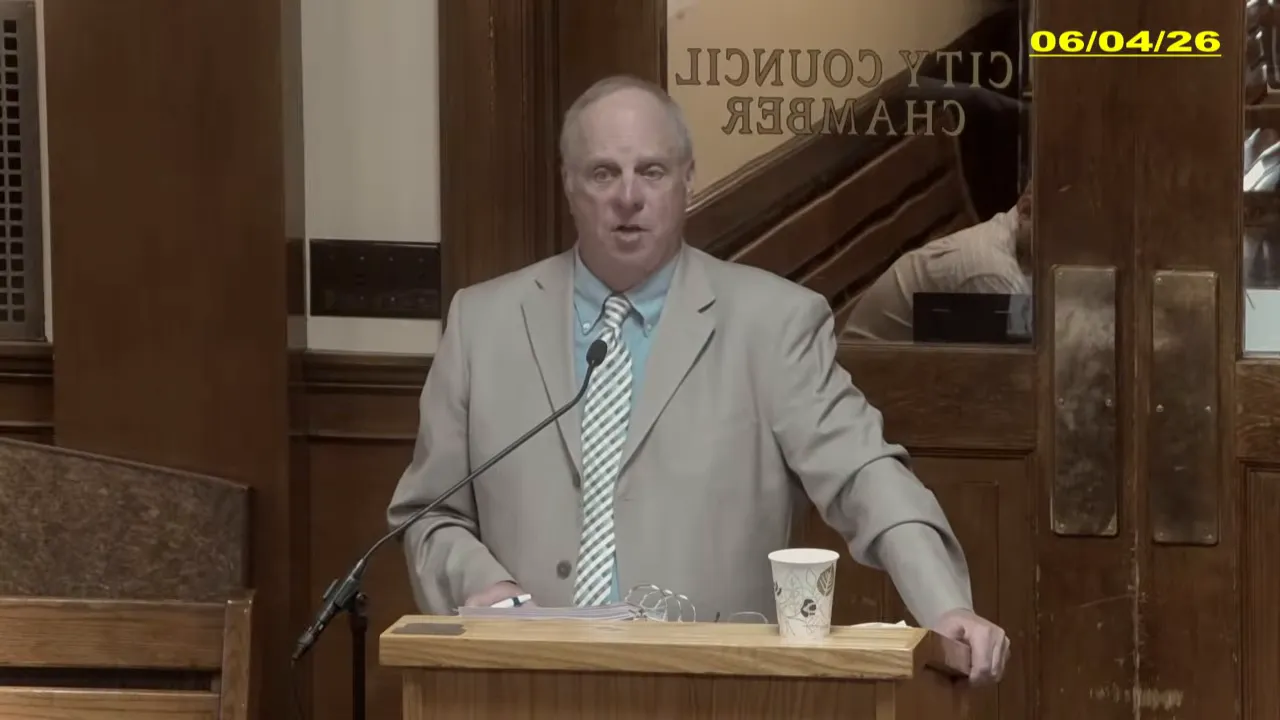
STREAMING COPY IN PREPARATION — RECORDING AVAILABLE FROM THE ORIGINAL SOURCE
Beverly City Council Committee of the Whole Budget Review - June 4, 2026
This was a meeting of the Finance and Property Committee of the Whole to review the proposed Fiscal Year 2027 budget. The budget, as presented by Mayor Cahill, is balanced at $180.8 million in general fund revenues, with a 4.12% increase over FY26. The meeting featured presentations from Budget Analyst Jerry Perry, Mayor Mike Cahill, and Finance Director Brian Ailes, followed by extensive discussion among councilors on structural deficits, spending priorities, and potential revenue options.
Discussion Items
- Budget Analyst's Presentation: Mr. Perry reported that the FY27 budget is balanced without using reserves, which he praised. He noted revenues match expenditures, with the levy limit increasing by 3.57% and new growth at $1.9 million (an anomaly). He highlighted several stress factors: collective bargaining, public education spending, health insurance, trash costs, and public safety overtime. A major concern was the structural deficit: public education spending (Beverly Public Schools up 5.27%, vocational education up 17.4%) now exceeds the levy limit by over $1 million. He warned that without a policy change, continued vocational education increases will force cuts to municipal services. He also noted the city’s overtime budgets for police and fire are likely insufficient, and that FY28 will be even more challenging, with a projected $7.1 million deficit. Mr. Perry advised the council that their only legal authority is to decrease line items, and he recommended they consider a conversation with the mayor and school committee about vocational education sustainability.
- Mayor's Presentation: Mayor Cahill presented his executive office budget, reduced by nearly 20% to $803,237. He explained the consolidation of the sustainability director and chief of staff into one position, the reduction of the DEI director from full-time to part-time, and the proposal to fund the assistant sustainability director through donor funds for two years. He defended keeping the constituent services director, citing heavy workload and effective communications. He also discussed the summer learning program (12th year, $15,000 city contribution, leveraged with grants) and funding for the youth center. He noted cuts to organizations supporting downtown economic development (Beverly Main Streets, Chamber of Commerce) and reduced training and travel expenses, but argued that small investments in travel and conferences yield significant returns.
- Finance Director's Presentation: Brian Ailes presented the finance department budget, which is reduced from 23 to 20 FTEs. He explained the restructuring after the assistant finance director’s departure and the impact on producing the digital budget book (delayed due to staffing shortages). He walked through the various sub-departments: accounting, assessing, IT, procurement, treasury, and collector. He noted that IT costs are rising due to licensing agreements, and the city is extending computer replacement cycles from four to five years to save money. He also addressed pilot payments (payments in lieu of taxes), noting the city currently receives voluntary contributions from four entities (Endicott College, Montserrat College, Beverly Housing Authority, and a solar developer), totaling about $250,000 annually. Councilors discussed the possibility of expanding pilots through a committee or more aggressive outreach.
- Councilor Discussion: Councilors debated spending priorities and revenue options. Councilor Houseman called for cutting what he termed “nice-to-have” positions (constituent services, DEI) and travel, arguing residents have no appetite for fees or overrides and that the city should focus on core services. Councilor St. Hilaire emphasized the need to control costs before considering new revenue, criticizing the city hall project and suggesting the council should propose cuts. Councilor Feldman and President Flowers pushed back, arguing that the executive budget is only $800,000 and cannot solve the structural deficit, and that an override should not be taken off the table. Councilor Sonya defended the constituent services director and grant coordinator. Several councilors expressed concern about the lack of a digital budget book and the impact of staffing reductions on transparency.
Key Outcomes
- No votes were taken at this meeting. The committee will continue budget hearings on Tuesday, June 10, 2026, at 6:00 PM, with presentations from the fire and planning departments.
- Mr. Perry recommended that the council initiate a policy conversation with the mayor and school committee about the sustainability of vocational education enrollment and funding.
- Councilor St. Hilaire indicated he will propose specific cuts to the budget during upcoming deliberations.
- Councilors agreed to explore options for expanding pilot payments, potentially through a small committee.
Meeting Transcript
Summary of their budget and then Mr. Ailes. And after each person, I will first give the subcommittee a chance to ask questions of each presenter, and then we'll open it up to other counselors at that time as we take the um the presenters in a row. So with that, Mr. Perry. We would welcome your presentation and your summary. And thank you. We all received um a memo which spells out a lot of what I presume Mr. Perry is going to say, and I hope we all had a chance to review that because it was very informative this year as a thank you, Madam Chairman, Chairwoman, and members of the committee, uh, as well as the rest of the city council. I come before you tonight for with my annual oral presentation on uh the FY27 budget as presented to you by Mayor Cahill. Um, is the chair correctly indicated. I forwarded to you a report of my thoughts and findings uh a couple days ago, so I hope you had an opportunity to look into it. Um, but if I may, madam chair, with your permission for the next several minutes, go over some of my findings, my thoughts and opinions, and uh we'll go from there. Um of my comments are gonna be sobering. It's not gonna be easy, not only uh certainly this year, which we you already know a little bit about, but uh when we build budgets, when budget building goes on, it's not just a one-year event, it's looking into the future as well. It's important that we understand that, and I'll comment about that near the tail end. I start off with good news though. The budget as presented by Mayor Cahill is in balance. Probably again, I say every year, it's the most important thing I do, and even though the mayor indicated was balanced, and certainly Mr. Ailes does, I concur with that assessment. Uh revenues match expenditures. Um the stress factors in this budget, as we've known, and we've talked that I've talked to you about for the last two years, involve collective bargaining, public education spending, the cost of trash, public safety, health insurance, and some other minor issues. The revenues uh projected by the mayor amount to 180 million, 884,417 of the general fund. Um it's 7,168,04 more than FY26, or a 4.12% increase. The levy limit increased by 4,835,589, or a 3.57% increase. We no longer have excess levy capacity that we enjoyed a few years ago, as that is now gone. The growth, we got lucky this year a little bit. The new growth is projected at 1.9 million. I really pushed back on Mr. Ailes on that one a little bit and even had conversations with the assessors' offices. Where we got lucky is they did a good job. We added close to a million dollars in um uh utility assessments that we gr uh were able to garner this year. That was uh a significant thing would be part of the levy going forward. But keep in mind the 1.9 million is an anomaly with new growth with traditionally around 1.2, and it's not something you should count on in future years. So this year was a good year, and it certainly helped tremendously to close the gap with regard to the budget. Our overlays at $500,000, uh a little bit higher than other years, as the council knows. Uh the city council approved some exemptions. I think it was for veterans and things of that nature. Uh so it means it's gonna be more costly for the taxpayers, which means the $500,000 would be necessary to be placed in the overlay, and I I deem that appropriate in nature, and I think it should cover the costs. The local aid version, the the mayor is using the House version. Chapter 90, uh, chapter 70, I'm sorry, is increased by 713,760 dollars, more than the current FY26 numbers. I did a careful review of local receipts, that's your motor vehicle exercise, rooms, meals, tax, things of that nature, is a long list of them. They are appropriate in nature. They did they're done in uh in a fiduciary responsible way, and I'm comfortable with the uh assessment that the mayor has provided to you. One of the new things we all excuse me. I saw the mayor do that with water in the past. Um of the new things we did get this year, which was a good thing, um, and that Mr. Ayles can talk a little bit more about it when we get into it. Uh we got 700,000 of utility credits. That also helped the budget quite a bit this year, too.
openpublica.com