Duluth City Council Meeting: Tourism Tax, VDU, Snow Emergency - Oct 28, 2024
STREAMING COPY IN PREPARATION — RECORDING AVAILABLE FROM THE ORIGINAL SOURCE
Duluth City Council Meeting - October 28, 2024
The Duluth City Council met on October 28, 2024 at 7:00 PM in the Council Chamber. The meeting began with a committee of the whole presentation on tourism tax trends and a report from the Commission on Disabilities. The regular agenda included approval of the consent calendar, public comments, first readings of ordinances, and second readings of several items, including a controversial vacation dwelling unit (VDU) amendment and a new snow emergency ordinance.
Consent Calendar
- The consent agenda was approved by a 9-0 vote. It included resolutions adopting the 2025 fee schedule, approving appointments, new civil service classifications, settling a grievance, vacating easements, awarding contracts for lead water service replacements and engineering agreements, authorizing police services agreement with St. Louis County, and accepting grants for Spirit Mountain. (Items 3-21)
Public Comments & Testimony
- Henry Banks (55806) thanked Councilors Randorf and Tomanek for their advocacy regarding the Clayton Jackson McGee Memorial and urged the city to maintain the memorial properly.
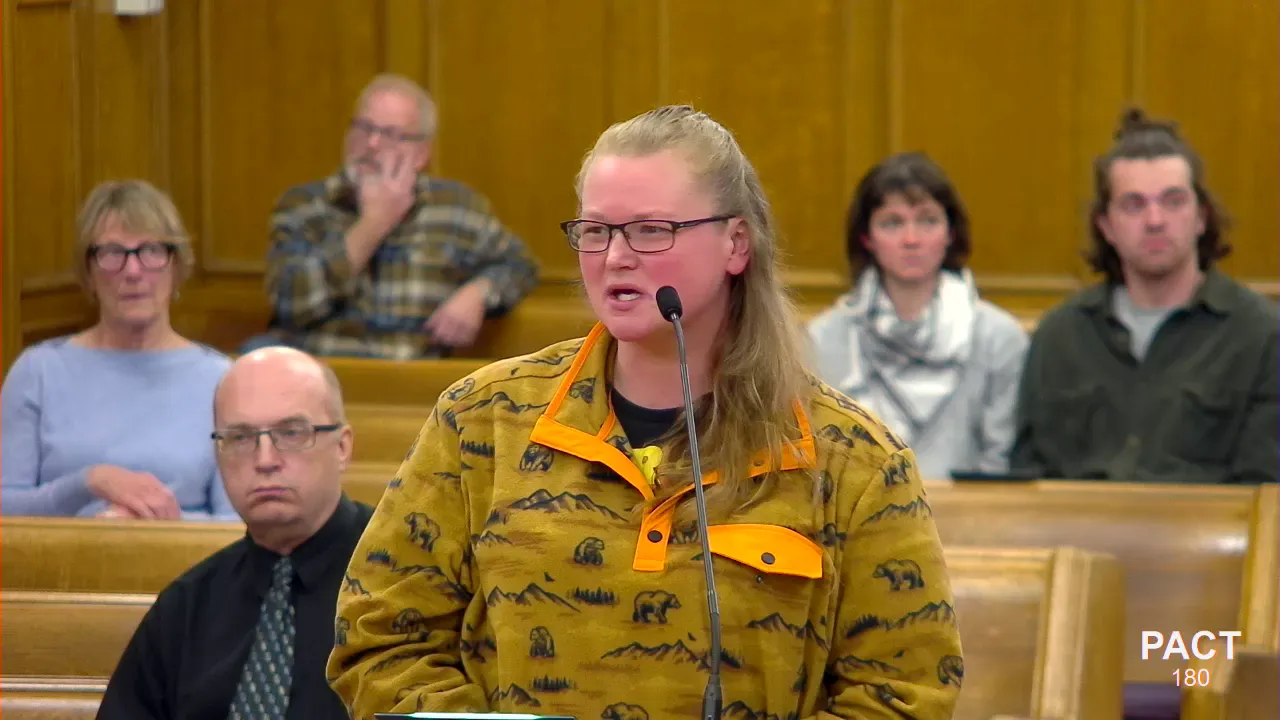
- Becca Millenberg criticized Councilor Forsman for bringing forward the VDU amendment despite the Planning Commission's vote against it, calling the ordinance spot zoning and expressing concern about the impact on 49 homes.
- Laura Martell (623 E 7th St) urged the council to include a viable access point for Incline Village in future planning to mitigate traffic impacts, noting that 13,000 daily vehicle trips will affect the area. She requested a good faith effort to preserve a connection for future councils.
- Jill Crawford Nichols (1505 W Morgan) opposed the VDU amendment, stating that 49 homes are now potentially impacted, called the ordinance an ROI for developers and a trick for homeowners, and expressed exhaustion with the process.
- Ben Field (1504 Osage) supported the VDU amendment on behalf of four Osage Avenue homeowners, arguing the zoning was a city mistake and that the ordinance is not a big ask. He criticized the Planning Commission's handling and said distant neighbors' concerns were irrelevant. He noted that city staff (Administrator Shuckman and Deputy Director Fulton) thought the ordinance was a reasonable solution.
- Devin Ng (1516 Osage) seconded Ben Field's remarks, emphasized loss of privacy, and argued that short-term renters do not affect neighbors more than permanent residents.
Committee of the Whole: Tourism Tax Trends
- Director Carlson and Budget Manager Casper presented an overview of tourism tax collections, noting declining revenues in 2024 compared to 2023. They cited decreasing housing affordability (median income at 85-88% of what is needed to qualify for a median-priced home) and consumers spending more than they earn, dipping into savings. Travel indicators (lodging demand, air passengers) are also decreasing. Meanwhile, allocations to recipients have grown substantially. Projected collections for 2024 are $14 million plus $551,000 from fund balance, but after mandatory debt service, contractual agreements, and commitments (e.g., Blue Bridge, Zoo, Northern Lights Express, tourism marketing, Fourth Fest, Bayfront management, UMD track championships), only about $1.7 million would be available for discretionary distribution. Future projections show that amount dropping to $700,000 by 2026 due to new debt (Spirit Mountain bonds) and continued obligations. Councilors questioned the timeline for debt retirement, collection projections, and the allocation process.
Commission on Disabilities Report
- Chair Ashley Costaldo, Vice Chair Brooke Meriden, and Secretary Christina Johnson presented the commission's accomplishments and goals. Accomplishments included a skywalk assessment, engaging with Duluth Public Schools on the "R-word" resolution, collaborating with the DTA on accessibility, participating in the Snow Removal Task Force, providing input on homeless ordinances, and hosting public events. Future goals include creating a PDF of disability resources, increasing public outreach events, advancing the "Miss Snow Nice" campaign, requesting painted crosswalks downtown, and partnering with the Chamber of Commerce on disability employment. They discussed involvement in hiring a new Human Rights Officer and the importance of accessibility in public infrastructure.
Discussion Items
- Spirit Mountain Bonds (Ordinance 24-045-O): Councilors expressed support for the ordinance authorizing up to $13.5 million in bonds for Spirit Mountain improvements, citing the asset's value for recreation and economic activity. Adopted 9-0.
- Vacation Dwelling Unit Ordinance (24-049-O): Councilor Nephew moved to table the ordinance after learning that Planning staff had indicated it could affect 49 properties, not 7 as previously believed. Councilor Forsman explained the ordinance was intended to help four homeowners on Osage Avenue affected by poor zoning. Debate included concerns about spot zoning, planning commission authority, and slippery slopes. Councilor Swenson supported tabling to allow for re-evaluation. The motion to table failed 3-6 (3 yes: Forsman, Kennedy, Nephew; 6 no: Wall, Durwachter, Mayo, Swenson, Tomanek, Randorf). Following the vote, the ordinance was withdrawn by its sponsors (Forsman and Nephew).
- Snow Emergency Ordinance (24-043-O): Councilor Swenson introduced a comprehensive revision to the snow emergency ordinance, extending parking restrictions to all residential streets (excluding alleys) to improve plowing efficiency. Councilor Mayo noted that priority two streets will now be plowed more effectively and that the Commission on Disabilities was consulted. Passed 9-0.
- Repeal of Ordinance 10908 (24-051-O): Passed 9-0 without discussion.
Key Outcomes
- Approved: Consent agenda (9-0), Spirit Mountain Bonds (24-045-O, 9-0), Snow Emergency Ordinance (24-043-O, 9-0), Repeal Ordinance 10908 (24-051-O, 9-0).
- Failed/Withdrawn: Motion to table VDU ordinance (24-049-O) failed 3-6; the ordinance was then withdrawn by sponsors.
- Directives: Councilor Durwachter requested a report on the performance of the city's lobbyist (Taft Stettinius & Hollister) regarding contacts with Duluth's state legislators. Administrator Montgomery will follow up.
- Next Steps: The VDU issue may be revisited through alternative solutions such as visual buffers or other non-zoning measures. The snow emergency ordinance will take effect 30 days after passage. Applications for tourism tax allocations were due the day of the meeting; the council will consider allocation recommendations in the coming months.
Meeting Transcript
Good evening, everyone. It is 545 as promised. We have a committee of the whole. Go ahead and begin it when you uh when you're ready, and we'll hold questions until uh we're done with the presentation. So good evening, Director Carlson. Thank you, President Randor, City Council's. Um thanks for this opportunity. We are going, we're in the process of receiving tourism tax applications. They're actually due tomorrow by 4 p.m. And so we thought we would take an opportunity to walk you through some of the trends we're seeing as well as some of the challenges uh in the decisions that we're going to be making in the near future. Oh, there we go. All right. So this first slide, um the charts on the right. Um to start, we're going to talk about some trends. So the charts on the right are our current um tourism tax collections and sales tax collections. So you can see the orange line in both of the charts is 2024, and it's done by month as well as by year. And so when you look at the top chart on the right there, tourism tax collections by month, you see we're kind of tapering off. We're uh a bit lower than 2023 in our summer months, and and it's kind of starting to trend towards 2022. Uh same with sales uh tax collections uh in the chart below it, you can see that's kind of tapering off and decreasing as well. Uh the good news is this has not come as a surprise to us. Uh with me tonight, of course, is our budget manager Jess Casper. She and her team pay close attention to economic indicators. And so we've kind of been trending this way and seeing this uh coming forward, and so this has been uh continuing the trend and in our minds as we've been thinking about tourism taxes. The chart on the left is one of the things, one of the indicators that we track, which is housing affordability, because we know that if people need to spend more on their housing, which is um a need, then they will have less to spend on things like travel and purchasing consumables with sales tax. And so this housing affordability index, the chart shows the affordability decreasing. So this says that when you look at July and year to date, um the median household income is between 85 and 88% of what is necessary to qualify for the medium priced home. So in other words, a value of 100 means that a family that earns the median income has exactly enough money to qualify for a mortgage of a median priced home. So a higher number, the more money they that the family makes to be able to afford the medium priced home. You can see we're under a hundred, which means the uh median income is between eighty-five, it's uh eighty-five for the month of July and eighty-eight year to date. So housing is becoming less affordable, the next slide is um some more economic indicators that we track, such as personal income and outlays. And so that chart on the left, the orange bars are spending, and the blue bars are income. And then that black line at the top is savings. And so you can see that that orange line, that orange bar is higher than the blue bar for many of the months, which means um people are spending more than they're earning. And so what's happening is that black line is trending down, which means they're dipping into their savings or they're saving less. And so we know that savings accounts are not an infinite amount and they're not sustainable. So once they're depleted, they're gone, right? Otherwise, and so they you want to build them back up, but what's happening is we're spending more than we're earning and therefore having to dip into savings. And why this relates to travel is it's possible that people were dipping into their savings to be able to travel, or it's possible that just to afford things like increased housing prices, groceries, and other things that they're having to dip into savings for those types of things. So we look at that. And you can see the far right is July of 2024 and the far left is 2008. And you can see that our savings amounts are some of the lowest that they've been in a really long time. And so we look at those indicators as well to see if what the chances are that people continue to prioritize travel. The next slide is some travel indicators. So you can see lodging is the chart on the left, and you can see that demand is also decreasing. So the lodging demand is increasing in both Minnesota and the U.S., so Minnesota is following the trend. And then the right is air passengers, and so you can see air passenger travel is also decreasing. So at the same time, while while our indicators are showing kind of a stagnant or decreasing amount of collections and spend, the amount of allocations that we have been dispersing to recipients has grown dramatically. So you can see on the left of this slide is 2014, and those are the recipients that receive tourism allocations, and the far right is 2024. And you can see how allocations to recipients have grown substantially. Another way to look at this is this chart, which also forecasts future collections.
openpublica.com