Duluth City Council Meeting on DTA Budget and Levy Increase – November 20, 2025
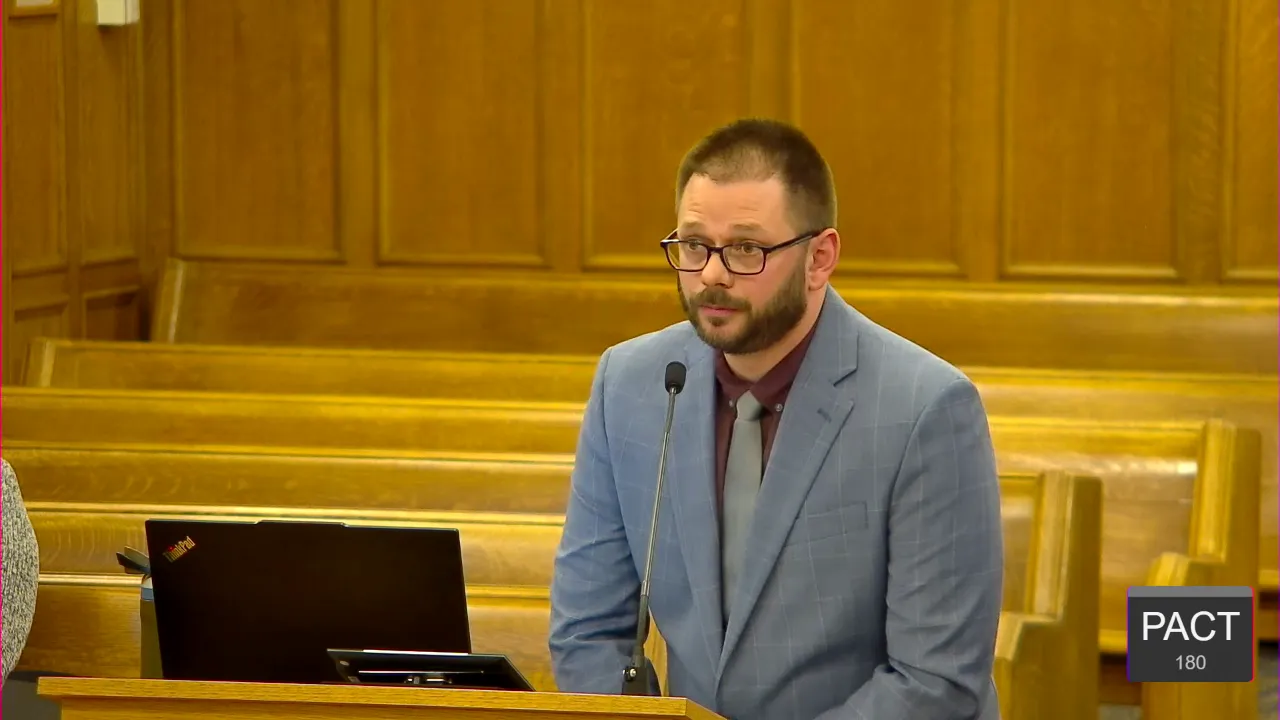
STREAMING COPY IN PREPARATION — RECORDING AVAILABLE FROM THE ORIGINAL SOURCE
Duluth City Council Discussion on DTA Levy and Budget – November 20, 2025
The Duluth City Council held a special session on November 20, 2025, to review the Duluth Transit Authority's (DTA) proposed 2026 budget and levy request. Councilors expressed deep concern over the 43% levy increase (from $2.3 million to $3.3 million) and asked DTA Executive Director Beldon to return with a revised plan that reduces the burden on taxpayers. The DTA defended the request, citing reduced state funding and the need to maintain services, but agreed to come back in two weeks with proposed cuts.
Discussion Items
- Levy Increase Justification: DTA Executive Director Beldon explained that the 43% increase is due to the Minnesota Department of Transportation (MnDOT) lowering the local match requirement to 15% (down from 20%) and the end of one-time state and COVID relief funds. The DTA's overall operating budget is increasing only 3%, but the local share of that increase is large because state support dropped.
- Long-Term Strategy: The DTA outlined plans to build a Bus Rapid Transit (BRT) system between downtown Duluth and Miller Hill Mall, and from Spirit Valley to UMD, to increase ridership and revenue. They noted that these routes already outperform some Twin Cities BRT lines. The DTA has been accumulating federal grant matches (about $15 million restricted) for this project, which they argued cannot be redirected to reduce the levy without forfeiting federal funds.
- Reserves and Interest: The DTA has $15 million in restricted reserves (for capital grants) and $6 million unrestricted. Annual interest income on reserves is about $300,000–$400,000, which is used to reduce the levy. Councilor Randorf asked why the DTA does not use some unrestricted reserves to offset the levy increase. The DTA responded that using unrestricted reserves would jeopardize the ability to match federal grants, essentially losing $5 for every $1 used.
- Ridership and Service Cuts: Council President Tomonic asked about increasing ridership. The DTA noted that frequency is key, and the BRT system would help. However, they have cut marketing budgets and reduced service to some low-density neighborhoods (e.g., Park Point) to focus on high-ridership corridors. Councilor Kennedy expressed concern that taxpayers who lost service are now being asked to pay more for buses they don't use.
- Fare Increase Proposal: The DTA proposed raising peak fares from $1.50 to $2.00 in 2027, subject to council approval, along with adjustments to monthly passes.
- Partnership with ISD 709: A new partnership provides free transit for students, reimbursed at $1.20 per trip, generating a new revenue stream.
- Council Concerns: Multiple councilors (Randorf, Nephew, De Luca, Kennedy) stated that a 43% levy increase is unacceptable, especially combined with other tax increases from the county and HRA. They emphasized that the city had already made budget cuts to keep its own levy low, and the DTA's increase would consume those savings. Councilor Randorf said the DTA must do the same work of right-sizing its budget.
Key Outcomes
- No Revised Budget Presented: The DTA did not bring a revised levy request; they maintained the original 43% increase.
- Council Directed DTA to Return: The council asked the DTA to come back before the December 8, 2025, final levy vote with a concrete proposal to reduce the levy increase, including specific cuts or use of reserves.
- Next Steps: The DTA will present a contingency plan at a Committee of the Whole meeting scheduled for December 4, 2025, showing what reductions would be made to lower the levy request. The council expects the DTA to be a good partner and address the burden on taxpayers.
- Council Stressed Fiscal Stewardship: Throughout the meeting, councilors emphasized the need to balance essential transit service with the financial realities of residents, especially seniors and working families.
Meeting Transcript
Good evening. Good evening, counselors. And thank you very much for continuing this conversation and and um uh inviting us back to have this conversation. So thank you very much. Mm-hmm. And Councillor Randorf. Thank you so much. Thank you so much, President Tamonic, and thank you, um Executive Director Beldon for coming back. Um we asked you uh specifically to come back to uh take a look at uh perhaps revised budget uh to specifically look at uh decreases in your levy requests because for us the Duluth transit system is essential. It's essential in Duluth. Every single counselor uh here in this room agrees with that. Thousands rely on transit every day to access jobs and school and health care. Um it's a basic service that we need. And we need a strong system, and we need the routes to remain reliable. So we're all in agreement on that. Uh we need a strong system and a balanced fiscal uh strategy from you as well. And so on September 29th, we sent uh there was uh Councillor Forsman, Councillor DeLuca, Counselor Nephew, and myself sent a list of uh seven questions. Those are the questions we're gonna review tonight. And what we asked you is we asked you to provide a revised levy and an underlying budget that explores the possibilities of increasing other revenue sources, such as increased passenger fares, trolley charges, advertising revenues, contract revenues, and the like. Have you come tonight prepared with a revised budget? Thank you, uh Counselor Randorf. And um our levy request is remaining the same for this year. Um I did send a presentation. Did did everybody get a chance to look at that? Yep, we saw your PowerPoint. Yep. Okay, and in there um we did update our our forecasts. Okay, talk a little bit more about that. I'm just pulling it up on my own computer here. Um so a few things did change between the our last meeting and what MINDOT has been announcing to us through updates with the state legislature and what um the funding forecasts they have as well. So um the biggest news with that is that for 2027 they're also um remaining at that still decreased um local match requirement to uh 15 percent, still not back up to the 20 percent. So that's all the way out into 2028. Um what now has changed is also their extended forecasting for uh capital awards, which has become challenging for them with uncertainties with federal funding and state funding sources as there was a reduction in in state um revenues for greater Minnesota transit, 11 million the next two years they decrease. So um we only know our our capital vehicle awards, which is our biggest expense usually. Um that's for 2026. We do not have um preliminary awards for 2027, 28, 29, 30. So we made a few assumptions on what we think we might get based on our need. Um how they award buses is the entire state of Minnesota, and they go down a ranked list on what's the oldest worst condition buses in the state. And once you get to the top, you're up next, you get the awards. Um a lot of times that's years after they've met their useful life. The vehicles are um, well, in our case, good half of them are are parked. Um we we're stressing out the fleet we do have because we haven't been able to replace those yet. Um of them they're past twice their useful life, so they're they're in rough shape. They're needing more continual maintenance, that's an added cost. They're less fuel efficient, more cost, and so on. Um so we did make some assumptions on it's uh 19 total buses that are needed, uh large buses over the next three-ish years. So we in 27-28 kind of made a guess on where those might be. That helps us out in that the min dot match for operating, which is our our largest expense. We are projecting to drop a bit in 27. Um beyond that, there are uncertainties, but through um deferring some of our other capital projects, we have not been applying for um usually it's min dot.
openpublica.com