Duluth City Council Meeting - November 24, 2025: Capital Plan, Lester Park Golf Course, and Resolutions
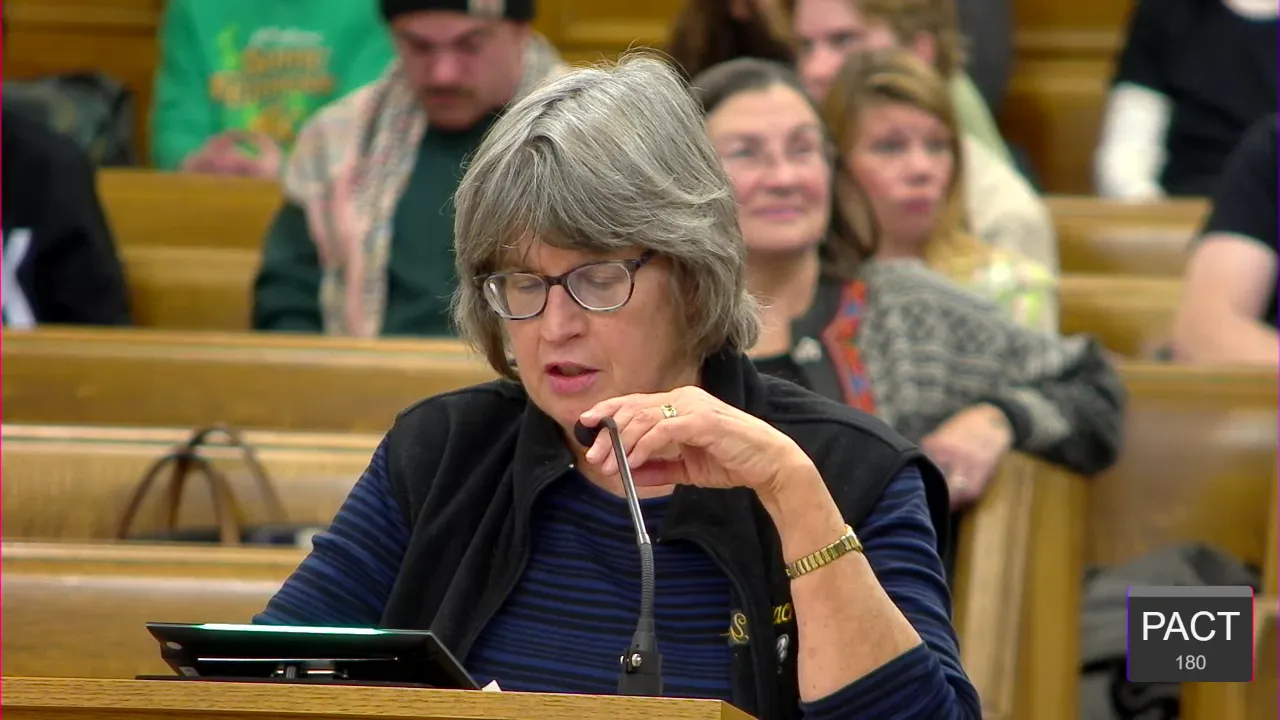
STREAMING COPY IN PREPARATION — RECORDING AVAILABLE FROM THE ORIGINAL SOURCE
Duluth City Council Meeting - November 24, 2025
The Duluth City Council held a Committee of the Whole to review the 2026-2030 Capital Plan, followed by a regular meeting featuring public comments on the Lester Park Golf Course proposal and other issues, a consent agenda, a contested change order for the Shopper's Ramp demolition, first reading of an ordinance conveying Lester Park Golf Course to the Duluth Economic Development Authority (DEDA), and second readings of three ordinances.
Committee of the Whole: 2026 Capital Plan
- Budget Manager Melissa Harold presented the 2026 capital improvement plan totaling $211 million and a $7.2 million capital equipment plan, explaining the planning and bonding process.
- Fleet Services Manager Bill Bursa reported a $25 million rolling stock backlog, with 40% of the general fund fleet past its life cycle. The 2026 rolling stock budget is $5.3 million: $2.7 million from general fund bonds, $635,000 from special revenue, and $1.976 million from public works and utilities. He noted the fleet was reduced by 46 units over the past year and plow truck lead times remain at 12 months.
- IT Director Colhane allocated $1 million for lifecycle replacements and $240,000 for innovation projects.
- Public Works Director Banning reported a $185 million utilities capital budget, including $55 million requested for lead service line replacement (though only ~$15 million is expected), $31 million for water infrastructure surcharge projects, and $83 million for transportation projects such as the Aerial Lift Bridge and West Superior Street.
- Facilities Director Birkland stated the facilities CIP is $2.1 million for 27 of 147 city buildings, with a $50 million deferred maintenance backlog. The Priley Circle project is estimated at $3-5 million, split with county and federal partners.
- Parks and Recreation Manager Jessica Peterson explained the park fund levy is a fixed $2.6 million annually since 2012, with reserves largely depleted. She presented the 2026-2030 parks and trails plan, emphasizing the need for new funding strategies.
Councilors asked questions about fire department PPE, Lake Walk widening, fire station surveys, park budget decreases, Memorial Park funding, and Priley Circle improvements.
Public Comments & Testimony
- Rachel Anderson expressed frustration with business closures, high taxes, police response, lead pollution, and population decline, urging the council to work harder.
- Barbara Monte (2114 East Fifth Street) said she previously opposed the rent repair measure but now accepts it, highlighting its positive aspects such as landlord education and free mediation.
- Dave Pagel (Duluth Area Outdoor Alliance) criticized the Lester Park Golf Course process as rushed and lacking transparency, urging a proper public process.
- Asher Estran accused the mayor of political violence and criticized the hiring of an investigator, claiming taxpayers paid $10,000 for biased results.
- Lisa Fitzpatrick (5229 Peabody Street) requested a full-time sustainability officer and opposed Lester Park Golf Course development.
- Alex Swenson (211 Morley Parkway) opposed the Lester Park transfer, called for protection of 1,500 acres, and said the deal was being rammed through on a holiday week.
- Ben Johnson (351 Snively Road) spoke against the conveyance, citing loss of community accountability.
- Julia Carlson (211 Morley Parkway) opposed agenda item 27, saying the process was not transparent.
- Ari Feld noted Duluth needs affordable housing but said the 2018 land use study found Lester Park least suitable for development.
- Alexandra Panovian delivered a passionate defense of public accountability, rejecting the mayor's characterization of criticism as political violence.
- Brandon Parker (4th District) expanded on political violence, accusing city leaders of suppression and listing grievances.
- Mae Gaxstetter (2955 Devonshire Street) supported protecting 1,500 acres but opposed linking that to the Lester Park conveyance.
- Libby Bent (2423 East Second Street) asked for a neutral land use study before any conveyance.
- Alec Cadlik (5787 Lakewood Road) said the process was confusing and fast-tracked, noting item 27 was missing from the online agenda.
- Ashley Castaldo (4th District) urged openness and warned that inaction can also cause harm.
- Julie O'Leary (5128 Arnold Road, Izaak Walton League) supported the 1,500-acre protection but opposed coupling it with the Lester Park conveyance.
- Michael Bernston (1114 Chester Park Drive) opposed the conveyance, saying it was for rich buyers from Florida.
Consent Calendar
The consent agenda included resolutions on general obligation bonds (Series 2025H, $12,680,000), taxable tourism tax revenue bonds (Series 2025I, $890,000), lead service line fund allocation, a KnowBe4 learning management agreement ($56,726.67), a Network Architect civil service classification, appointment of Juanita Salinas as Finance Director, Duluth Legacy Endowment Fund grant acceptance ($15,000), DEDA FY2026 budgets, Rice Lake tax-exempt obligations, Lester Park real property intent to sell, SEH engineering amendment, MnDOT cooperative agreement for London Road roundabouts, LRIP application for East 4th Street ($1,500,000), chiller removal contract, Pierce fire truck purchase ($2,129,000), Park Hill Cemetery/conveyance, Indian Point Park & Campground agreement, DECC Bayfront Festival Park fee amendment, snowmobile and cross-country ski grants, Night-Riders and Drift Toppers snowmobile agreements, aquatic invasive species grant application, and Chester Bowl agreement transfer. The consent agenda passed 9-0.
Discussion Items
- Shopper's Ramp Demolition Change Order (25-0891R): Councilor Durwachter pulled this item from consent, expressing concerns about the bidding process and the change order being over double the original bid. Director Van Tassel explained that unknowns about the connection to the Garrick building and winter conditions required additional work. Attorney Lair stated the city complied with competitive bidding requirements. Passed 7-2, with Councilors Durwachter and Awal voting no.
- Lester Park Golf Course Conveyance Ordinance (25-032-O, first reading): Councilor Randorf and others clarified that this was a first reading with no vote tonight. Councilor Forsman highlighted the requirement for a land use study and a development agreement between the city and DEDA. Councilors Durwachter and Owell expressed discomfort with coupling the conveyance to the 1,500-acre protection. Multiple councilors affirmed there is no pre-arranged developer. No vote was taken; the ordinance will return for a second reading.
Second Reading Ordinances
- Ordinance 25-029-O: Exempting certain city single-family housing projects from prevailing wage requirements. Passed 9-0.
- Ordinance 25-030-O: Conveying real property in Morley Heights/Parkview to Park Hill Cemetery Association. Passed 9-0.
- Ordinance 25-031-O: Authorizing stormwater inspection and reinspection fees. Passed 9-0.
Key Outcomes
- Minutes approved 9-0.
- Consent agenda approved 9-0.
- Shopper's Ramp change order approved 7-2.
- Three second-reading ordinances approved 9-0.
- Lester Park Golf Course conveyance ordinance moved to second reading at a future meeting; a development agreement and land use study will be prepared.
Meeting Transcript
I didn't get to the Dallas. I watched the airport one. Um the way back and the meeting. Uh I got air at the center. I don't know Lynn's here, right? No problems, right? So we are talking about we're just taking taking charge of the rest of the IS chair. So hopefully we'll see some blood here. Yeah. Hi. How are you? I'm all right. Yeah. Is there anything that we need to be aware of? I mean it's just gonna be is it gonna be a big crowd tonight? Did you read yours? No, that's been a good one. Don't do that. We like you. Don't do that. Oh yeah. Good evening. Oh yeah, pour myself glass of wine for that one. Yeah, yeah, please. Good evening. I want to just begin our committee at the whole in one minute. Good evening. We will begin our committee of the whole meeting with uh manager, budget manager Melissa Harold. Thank you for being here. Thank you. President Tamonic, City Councilors, thank you for the opportunity to share our capital plan with you tonight. We have a lot of information to share, and we want to leave some time for questions, so I'm just gonna jump right in. We'll start with an overview of the capital planning and bonding process, definitions of capital equipment versus capital improvements, and the planned budgets for each of those. This is a refresher on the planning and bonding process. We plan from June until now. Tonight you're reviewing that plan, and in December there'll be a public hearing and resolutions establishing the plan for the coming year. The most important thing to remember is you're approving the plan now. You'll we'll start spending in January, and next October or November we'll sell bonds that will reimburse us for these expenses. So what is a capital improvement? Capital improvement expenditures are related to our infrastructure. Some examples are facilities, roads, sewers, parks, or gas lines. We have a five-year plan to help us plan for both our most urgent needs in the coming year and also to have enough lead time to prepare and plan for the future. A capital improvement can have several funding sources, such as bonds, which includes state utility revenue and GO bonds, federal and state funds grants, street system maintenance levy, half and half tax and parks fund. A subset of the capital improvement plan are those facilities that are bond eligible. When we talk about capital improvement bond eligible facilities, we're talking about city hall, libraries, public safety facilities, and public works facilities. You'll notice here that we don't talk about parks facilities. Parks facilities are not eligible for bond financing, which creates a challenge for us. We have five a five-year plan for these facilities, and we sell 10-year bonds. Tonight you'll see the details of the 2026 capital improvement plan breaking down the 211 million of improvements as shown here. These improvements will be funded by all of these different funding sources with much of the funding coming from grants.
openpublica.com