Erie Town Council Study Session on 2025 Capital Improvement Plan and 5-Year Forecast - July 16, 2024
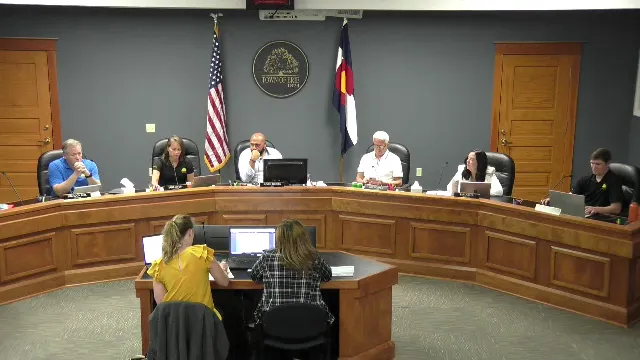
STREAMING COPY IN PREPARATION — RECORDING AVAILABLE FROM THE ORIGINAL SOURCE
Erie Town Council Study Session on 2025 Capital Improvement Plan and 5-Year Forecast
On July 16, 2024, at 6:30 PM, the Erie Town Council held a study session to review the proposed 2025 Capital Improvement Plan (CIP) and the 5-Year Capital Forecast. The session was led by staff from finance, public works, utilities, parks and recreation, and other departments. The presentation highlighted a new budgeting software (ClearGov) that improved transparency and prioritization. The initial total 2025 CIP requests from departments were $142 million (102 requests), which was reduced to $136 million (97 requests) after balancing efforts. The general fund portion was cut from $15.5 million to $10.3 million to maintain fund balance sustainability. Council members raised questions about street maintenance funding, the water treatment facility, affordable housing, and other projects. No formal votes were taken; the session ended with council direction to staff to continue refining the plan.
Discussion Items
- CIP Process and Overview: Sarah (finance) explained the enhanced CIP process using ClearGov software, which allows better prioritization and scorecard alignment with council priorities. The executive budget team and senior leadership reviewed departmental requests. Total 2025 requests: $142 million; after balancing: $136 million. General fund requests reduced from $15.5M to $10.3M to start rebuilding fund balance by 2029.
- Departmental Highlights:
- Economic Development: $1.5M for Makerspace (using 2024 funds to avoid rollover) and historic old town property acquisition.
- Environmental Services: $1M for solar at Lynn R. Morgan water treatment facility (eligible for 30-40% IRA reimbursement, annual savings $58,000); also a forward-looking infrared camera ($100k) for detecting methane/VOC emissions.
- Planning: $800k for affordable housing fund; Col Creek pre-development site work.
- Police: Drone and a second canine police dog (with vest).
- Parks and Recreation: 10 requests, mostly from trails and natural areas fund. Highlights: Sunset Area Plan (new trail alignments, connections to Westerly, skills park). Future: Compass Park (2027-2028), Colliers Hill Filing Six Park, Morgan Hill.
- Public Works: 37 requests ($73M total). Largest: PD expansion (COPs funded). Street maintenance: reduced from $4.5M request to $4M, focusing on overlays and chip seals (e.g., Dogwood Drive, Lilac Circle, Arapaho Ridge). Concrete maintenance reduced from $400k to $350k. Traffic signal at Sheridan and Ridgeview (joint with Broomfield).
- Utilities: 40 requests (35 water fund, 5 wastewater). Key: NISP ($6.5M for annual costs, shares maintained at 6,500); new water treatment facility ($280M over 10 years, reverse osmosis for Boulder Creek supply, likely revenue bond); Erie Lake repairs (leak discovered two years ago, design phase); zone 2 and 3 water tanks and transmission mains.
- Financial Projections and Concerns:
- Assumptions: 10% sales/use tax growth, 4% operating growth, 8% personnel growth. Maintains TABOR reserves. The recommended general fund CIP of $10.3M still shows a tight fund balance in 2027-2028 but recovery by 2029.
- Councilor Sowish expressed concern that street maintenance funding (largest general fund CIP item) would shrink in future years, potentially causing deferred maintenance. Director Fessenden noted that a one-year reduction is manageable but sustained cuts would increase long-term costs.
- Councilor Bell asked about operating expenditure growth since 2020 and requested a per capita analysis. Staff agreed to provide trend data.
- Discussion on bond financing: The police expansion uses COPs (certificates of participation); the water treatment plant would use revenue bonds or alternative financing (e.g., WIFIA, IRA direct pay). General obligation bonds would require voter approval.
- Staff noted that rollovers (unspent funds) are typically $10M/year, but actuals will be known at year-end.
- Council Questions:
- Councilor Bear asked about police canine staffing (using existing officer) and COPs reimbursement timing.
- Councilor Hobart inquired about Sunset Area Plan safety crossing at County Line Road (underpass under consideration).
- Councilor Laughlin asked about future revenue from baseline development, current bond list, and possibility of a dedicated street fund. She also noted grants for affordable housing and parks.
- Councilor Baer asked about solar project return on investment and IRA eligibility; staff confirmed 40% direct pay.
- Councilor Baer also asked about the FLIR camera importance; environmental analyst David Frank explained its value for detecting methane leaks, citing a recent unreported release.
Key Outcomes
- Council provided general direction to staff to proceed with the proposed 2025 CIP recommendations, with emphasis on maintaining street maintenance funding and exploring additional revenue or grant opportunities.
- Staff will provide a follow-up with historical operating expenditure data, current bond list, and year-to-date actuals for the next budget discussion.
- No formal votes were taken; the session was informational to gather council feedback before the budget adoption process later in the year.
- The meeting adjourned at 8:12 PM.
Meeting Transcript
Not an enterprise. But just a separate form. Exactly. Yes. And so after that, we'll go through some of the projections based on what we've come up with. And we would like to get your uh your direction if you think we're going in the right direction. Uh we'll go through the departmental request as well as it says unfunded request here, but really most of them are either reduced or delayed to make sure that we have enough space to make sure we have enough space for all of the projects. As you probably well know already, we have more projects than we have money. Um so the balancing act has begun. Um and then we'll also show once again what those projections look like with the general fund recommendations, how we've balanced that, um, and then we'll have it open for questions and discussion. I will say we have all of the directors who have CIP projects as well as project managers here tonight. So if we have specific questions on projects, we have folks here to speak to those as well. So as I alluded to in uh first supplemental and as well as this introduction, we uh have a pretty new process around this. It is an enhanced process from the previous years. Um but part of the the biggest change is that we've implemented ClearGov budgeting software, and that software has really allowed us to build out a CIP that has uh out year projections, it's easier for us to read, easier to navigate. Um so that's been a really big asset for us in trying to build out the CIP. It also allows the departments to prioritize their projects and tell us what projects are the highest priority versus ones that could maybe wait or be delayed. It also offers up a scorecard option where we can really look at how these different projects are connecting to council and community priorities. I'll also add that it was a pretty heavy lift this year for departments to dig in and move this information from our previous systems and spreadsheets into this. Uh so they've done a phenomenal job as well as working with the budget team to get that information in there. So from this point forward, it should be a lot easier. So uh we're excited that we have all of this information in one consolidated place. Once we did receive all of the budgets or all of the departments um requests, we did engage in a pretty comprehensive review. Uh and that meant that we met with the departments, we had them review with us their projects, their priorities, how they connected the scorecard to what their projects were doing. And then we did those uh meetings along with our executive budget team. And as I had mentioned in first supplemental, the executive budget team is uh a group of not just the town manager's office and the budget team, but also other department directors, so that we have other lenses, other perspectives looking at these and really trying to understand uh the full scope of how this impacts the organization. We then did another strategic review uh just with EBT and the town manager's office and began the process of balancing, uh, which was no easy feat, but we definitely got to a place where we feel pretty comfortable and we'd really like to get your feedback on that and see how you feel about that in the context of uh the upcoming budget process. And then finally, senior leadership team did get to review this. Um, you know, obviously some of them did get to see that that we had to scale back on some of their projects, but we did try really hard and we'll continue to since this is not set in stone. Uh, just make sure that we understand if we need to reprioritize, if we need to understand uh components of different projects to make sure that we're making good decisions. And then finally, we came up with these recommendations based on our available funding, based on the projections that we put together, as well as the priority projects that the departments have indicated are the the biggest priority. Did you have anything to add, Kristen? No, I think I had just liked a second um the shout out to town staff for for such a heavy lift in terms of getting all the information we requested into the budgeting software. Yeah, it was it was a lot. And um, a little preview eventually that uh portal will be something that we can uh display publicly and have you guys get into and look at. It's it's very cool. Um it has pictures and descriptions and all kinds of neat things. So I think we're really going um towards a lot of transparency around how our CIP is developed as well. So with that, I'm gonna have Kristen talk through some of our requests uh from the from the departments. Thank you. Um so what you're looking at right now is the total 2025 CIP requests by department. So this is before we went through the balancing um act, and so just um straight out from departments. We got a total of um 102 requests just for 2025 in CIP. And then you can see um the breakdown on the right and see that the largest um department requests came from public works, which makes sense. They had 54% of the requests, um, followed by the utilities department had 38%. And then the other departments have um less than 1% to about 3% of the capital requests. And then again, um, this is showing that same number, about 142 million in total 2025 CIP requests, but this is broken out by fund. And so you can see that the largest fund is the water fund with 38% of the CIP requests. And then 25% is in the police facility impact fund, followed by the storm drainage operating fund at 13% and the general fund at 11%. All right.
openpublica.com