Erie Town Council Special Meeting - June 3, 2025: Old Town Outreach, Parks Funding, and Community Survey Review
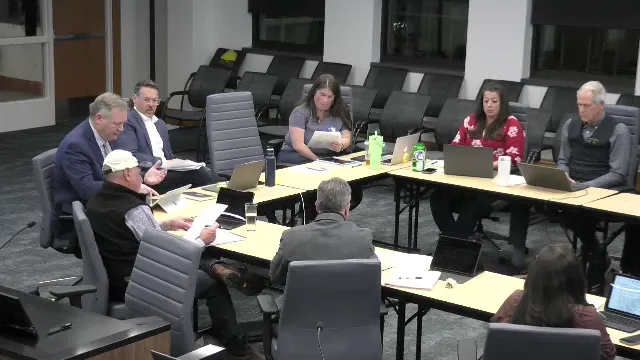
STREAMING COPY IN PREPARATION — RECORDING AVAILABLE FROM THE ORIGINAL SOURCE
Erie Town Council Special Meeting – June 3, 2025
The Erie Town Council held a special meeting on June 3, 2025, starting at 1:00 PM, to discuss three agenda items: a historical Old Town outreach initiative, future funding options for Compass and Morgan Hill parks, and a draft community survey. Staff presentations were followed by extensive council discussion. A motion was passed on parks direction, and the survey review was tabled to a subsequent meeting.
Old Town Outreach and Social Capital Exercise
Senior Strategic Planner Josh Campbell presented a plan to address feelings of being overlooked among Old Town residents. The initiative aims to build social capital over the next 4–6 months through community events, neighborhood activations, and one-on-one interviews with residents. Council members expressed strong support:
- Councilmembers noted they have heard similar sentiments at community coffees and expressed enthusiasm for joining the outreach efforts.
- Councilmember O'Connor highlighted a resident's request for a coordinated cleanup day.
- Mayor Pro Tem Bell emphasized that Old Town is the "heart of the town" and stressed the importance of hearing both concerns and positive feedback.
- Councilmember Montalera suggested linking with historic district efforts to increase engagement.
No formal action was taken; the presentation served to inform council and invite participation.
Future Parks Funding Options and Direction
Director of Parks and Recreation Luke Bollinger outlined the history and status of Compass Park (10 acres, dedicated in 2015) and Morgan Hill Park (14.3 acres, dedicated in 2020). Both parks have conceptual plans adopted in 2023 based on community input. Staff presented phasing options, pros and cons, and funding challenges. The parks impact fee fund is forecast to run deficits in 2028 without new revenue.
Council discussion centered on accelerating construction and funding sources:
- Mayor Pro Tem Bell and others advocated for accelerating both parks simultaneously, noting the long wait for residents.
- Councilmember O'Connor proposed right-sizing Morgan Hill to 8 acres to reduce costs.
- Councilmember Montalera suggested using a phased approach but emphasized making the first phase usable.
- Mayor Baer discussed potential funding sources: sales tax increase, GOCO grants, CIP rollover funds, extending the rec center bond, and reviewing metro district service plans.
- Director of Finance Sarah Garner noted that the impact fee study will be initiated this year, which may improve forecasting.
Motion and Vote: Councilmember (Mayor Pro Tem Bell) moved to direct staff to:
- Move forward with design and preparation for building Compass and Morgan Hill parks simultaneously.
- Complete Compass Park at its full 10 acres and Morgan Hill Park at 8 acres, with staff authorized to adjust the acreage and report back to council.
- Conduct due diligence on funding through metro districts, extending the rec center bond, GOCO funds, CIP rollover funds, and possible use of unfilled FTE salary savings.
The motion was seconded and passed unanimously (voice vote, all in favor).
Review of Town-Wide Community Survey
Gabby Brooks (Communications) and Courtney (Magellan Strategies) presented a draft survey intended to gauge resident priorities on topics including taxes, transportation, parks, housing, and other town services. The survey methodology involves mailing a postcard to each household with a unique link, followed by a text message invitation. Council discussed numerous questions and wording changes:
- General changes: Survey to be open to all residents aged 18+ (not just registered voters), with a demographic question to identify voter registration.
- Transportation section: Council agreed to remove T27 (about traffic increase) and restructure to ask about inconvenience from traffic, then follow up with open-ended location and timing. E-bikes were added as a separate category in the safety question. The RTD JUMP bus route questions were revised to keep the familiarity question and drop T31 (have you ever used it).
- Police department section: Extensive discussion on T11 (payment options for police facility expansion) and T12 (general COP preference). Council directed staff to move T12 above T11, revise wording to avoid deficit framing, and simplify T11 by removing background context and focusing on the police facility.
- Housing section: Council debated whether to include an image labeled "missing middle housing" and decided to remove the word "missing" and keep the image as a visual of housing types. Some councilmembers expressed concern about perception bias in questions about rental and essential worker housing. Staff explained that those questions are designed to measure perception and inform future education efforts.
- General feedback: Council requested that the survey introduction emphasize that the survey will guide council decisions. Several questions were shortened or clarified.
Because of the lateness of the hour, council did not complete the review. The discussion will continue at the June 17 study session.
Key Outcomes
- Old Town Outreach: No formal action; staff will proceed with planning and will invite council members to participate.
- Parks Direction: Motion passed to accelerate both parks simultaneously, with specific acreage guidance and instructions to explore multiple funding sources. Staff will present updated concepts and budgets in the 2026 budget context.
- Survey: Revisions were directed on numerous questions. The survey review is incomplete and will be resumed on June 17, 2025.
- Next Steps: Council will hold a follow-up study session to finalize the survey instrument. Parks design work will begin pending budget direction.
Meeting Transcript
Order the town council special meeting on June 3rd uh 2025. Uh the special meeting we have uh three items on the agenda old town outreach, uh future parks funding options and direction and the review of the town wide uh special topic survey. Um with that it will take role okay. Sorry. Um council member Pastor O'Malley. Here council member O'Connor. Here mayor for Tem Belly Moore here, Councilmember Mayor, President Council Montalera. Here all right, would you please rise and join me in the Pledge of Allegiance? I pledge allegiance to the flag of the United States of America in the Republic for one nation under God with liberty and justice for all. All right, do we have a motion to approve the agenda tonight? So move. All right, motion is second. All in favor, say aye. Aye, aye. All opposed, say no. All right, we have an agenda, and so we will launch right in with the historical town outreach. Yeah, I will turn this over to I turn it over to Sarah or Josh tonight. So turn it over to myself. All right, Josh, it's all yours. All right. Well, I appreciate you all being here tonight. Um Josh Campbell, and I am the senior strategic planner here for the town. Um, I do want to recognize that this is only got 15 minutes, so I'm gonna try to go over the next few slides a little quickly, that way we can leave some time for discussion at the end to hear from you all. Um, but to give a little bit of um background of why we're here today is over this last year, we've had many different outreach and engagement opportunities with the community. Um of the uh emerging themes that we we kind of heard specifically as it relates to old town residents uh was that there was a sense of some um forgetfulness or being overlooked, especially when they compare themselves to uh the surrounding neighborhoods that exist within Erie. Um now this could be one of many different reasons. Um but one of the items that we heard when having these conversations or asking a little bit deeper after hearing this was um could you explain that a little bit more? And it was the uh sense of community that they were seeing existing in these other neighborhoods that they felt maybe wasn't as present or seeing within their community. Uh when I say their community, I'm talking about old town. Um now this could be one of many different reasons whether uh it's associated with those other neighborhoods being primarily HOAs, homeowners associations. Um, whereas Old Town does not exist as an HOA, uh nor are they a voluntary neighborhood association. Um there are many pros and cons to both of those. Um not gonna go into those tonight as that's not part of the discussion. Um, but I really want to harp back a little bit onto that uh that sense of community that's uh that we were hearing when trying to go a little bit further. Um, there's a lot of ways of explaining what community means. Uh the way that I have done this in the past, um, and I like to uh talk with residents is uh community is social capital. It's the ability to know your neighbor, it's the ability to uh have those interpersonal relationships, have trust, have a sense of identity, ownership, and belonging to the area in which you reside in. Um now that could be a geographic boundary uh such as a neighborhood, that could be just your one block street that you feel that your social capital exists in, um, or it could be just the town overall. Um now going back to that social capital, that sense of community. Um took a step back and brought this back into our internal thoughts and tried to figure out what does that mean. Uh, but as we look to the future, we want to try to address or come up with processes to um maybe reverse this sense of forgetfulness or over being looked. Um that brings us to what I'm referring to as the historical old town social capital exercise. Um this is an opportunity where we want to uh take a moment to really talk to the residents that make up the community. Um what I mean by that is over the course of the next four to six months, um we plan to embed ourselves within the community, um specifically old town to try to understand some of this misconception that may exist, this forgetfulness that exists, uh the sense of being overlooked and try to better understand what does that mean. Um because social capital true is the true basis to understand um what we need to do to help better the community for themselves. Um so what our goal is is to um or again, as I mentioned over the next four or six months to attend as many community events as possible, um maybe even host our own events that are targeted towards old town residents, um, have neighborhood activations where uh we're going down to the park or we're doing a block party to invite the neighborhood to come and talk with us to build those connections, that social um capital, those relationships amongst our staff as well as potentially amongst the residents of themselves. Um and then after that, we really want to take a step further and go on to these one-on-one interviews. Um I've done these in the past, and they typically uh last anywhere between an hour, hour and a half, some times even two hours, where we're just truly sitting down with these residents one on one and giving them an opportunity to speak. Um it's one thing to come to the community and give them solutions, but it's another to listen and take back what we hear and try to synthesize that into a process moving forward. Um again, I know I mentioned earlier the goal is to ultimately figure out a way that we can uh lessen this feeling of being forget forgotful or forgot about.
openpublica.com