Hampton Planning Commission Meeting - April 18, 2019
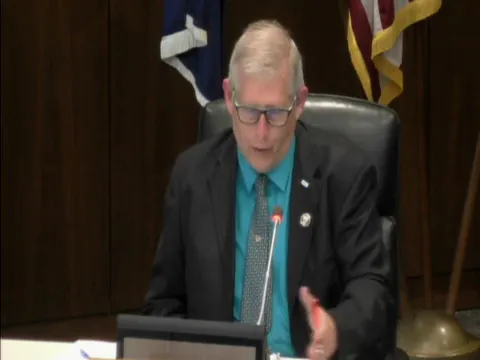
STREAMING COPY IN PREPARATION — RECORDING AVAILABLE FROM THE ORIGINAL SOURCE
Hampton Planning Commission Meeting - April 18, 2019
The Hampton Planning Commission meeting on April 18, 2019, was called to order but lacked a quorum, leading to the rescheduling of public hearings. The commission received a detailed presentation on the City's Capital Improvements Plan (CIP) and a report from the Hampton Youth Commission. No votes were taken due to the absence of a quorum.
Discussion Items
- Lack of Quorum and Rescheduling: Chairman Carter noted several commissioners were absent, so no quorum existed to conduct business. Public hearings were tentatively rescheduled to Tuesday, May 7 at 4:00 p.m., pending confirmation and advertisement. Community Development Director Terry O'Neal clarified this special meeting would allow applicants to maintain their schedule to appear before City Council on May 8, minimizing negative impact.
- Capital Improvements Plan (CIP) Presentation: Assistant City Manager Brian DeProfia presented the FY2020-2024 CIP, released in the manager's recommended budget. Key points included:
- Financial policies: General obligation debt at 2.4% of taxable real estate (policy cap 3%); debt service at 8.2% of general fund expenditures (policy cap 10%); 77% of principal paid off within 10 years (policy minimum 60%). The city maintains an A+ credit rating from all three major agencies.
- Funding sources: bonds, general fund contributions (4.5% of revenues, within 2-6% policy), dedicated fees (stormwater, wastewater), and state/federal funds.
- Project allocations by strategic priority: Economic growth $59M, Educated/engaged citizenry $33M, Good government $117M (~40% of plan), Living with water $33M, Placemaking $23M, Safe/clean community $34M.
- Notable projects: Boo Williams Sportsplex parking expansion (277 gravel spaces), $2.3M for parking replacement at Coliseum, $10M downtown investments, $2.2M housing initiatives, $9.15M for sports tourism pool (funded by proposed hotel fee increase from $1 to $2), $4.5M splash park, $12M resilient Hampton flood mitigation, $12.5M new 911 center, $35.6M street resurfacing, $43.5M wastewater infrastructure, $7M fire station.
- Budget timeline: public hearing April 24, second hearing and first reading May 1, final adoption May 8.
- Youth Plan Report: William Klaus, Junior Youth Planner, reported on Hampton Youth Commission activities in March, including joint meetings with police liaison Sgt. Mark Kincaid, City Council, and school superintendent Dr. Smith. The commission received a partial funding commitment from City Council for its grant program. Upcoming meetings include with the Neighborhood Commission and Planning Commission in May.
Key Outcomes
- Rescheduled public hearings to May 7, 2019 (tentative) to maintain applicant timelines for May 8 City Council meeting.
- Received CIP presentation and youth plan report; no formal action taken due to lack of quorum.
- Planning Commission staff will distribute information on upcoming community plan outreach (mid-May to early June) to commissioners and other boards.
- Recognized and thanked Deputy City Attorney Bonnie for her service and welcomed her parents.
Note: The transcript also includes segments about a DMV Select office celebration, a Dr. King remembrance, a wounded warriors tournament, and a Federal Partners Appreciation Dinner, but these appear to be separate events not part of the Planning Commission meeting agenda.
Meeting Transcript
No, it's not there. No. April eighteenth. The April 18th meeting of the Hampton Planning Commission is now called to order. Please call the roll. Dr. Coleman. Ms. Callum here. Mr. South Hall. Here. Miss Garrison. Mr. Brown. Ms. Funting? Here. Chairman Carter. Okay. I guess first order of business. As you can see, we are shy of some commissioners this afternoon. We do not have a quorum to conduct business. We will be rescheduling the public hearings for this meeting. Tentatively, it's gonna be Tuesday, May 7th at 4 o'clock. But that will be confirmed and it will be advertised in the paper. That takes us down to the community development director's report, Mr. O'Neal. Mr. Chairman, just a point of clarification for people who may not understand if you don't mind. If we are able to do the rescheduled hearing as we anticipate on May the 7th, it would allow the applicants to maintain their schedule to council on May 8th, which is why we're looking for the special meeting so that we do not delay progress for the applicants. And I just wanted to put that in the record so that the applicants and those who may be watching understood we were trying to make every possible effort to avoid negative impact to our applicants. Yeah. Thank you. Thank you, Mr. Chairman. We have two reports that we'll provide to you all that are here as well as to the public. The first um Brian DeProfia, who's our assistant city manager, is going to give you your update on the capital improvements plan. Good afternoon. Um as Terry had had mentioned, uh, I will be uh going through the city's capital improvement plan. This was released on on Monday that in the manager's recommended budget. And before I um get into the details of the plan, I'll I'll just go through a little bit of background on what a capital improvement plan is and a little bit of the basics as to uh how we um you know what the components are and how we put it together. Um the capital improvement plan is the long-term expenditure plan for the acquisitions of property, equipment, new construction, and major improvements to existing public facilities. So things like improvements to our to city hall, things like um when we when we purchase property um in the community either for a public use or for redevelopment. Um those are types of things that are in um the capital improvement plan, any new buildings, and so we'll talk a little bit about that because it's um there's some of uh each of those items in the uh capital improvement plan. Um projects typically have a minimum cost of about $50,000 and a life expectancy of about five years. Uh how we pay for the projects are there's basically four different categories of of sources. The first is bonds, which are municipal loans, which are like your mortgage on your home. And and one of the things that we want to uh one of the ways that we um determine how much how many bonds we can issue is we have certain financial policies that the city has it had adopted in the mid-80s, and over the course of time um there's been some adjustments to those to make them a little bit more um conservative over time as the as the uh financial markets have um have uh have changed. Um but one of the elements of that um those financial policies is that we cannot have more than three percent of our taxable value of real estate in in debt outstanding, um general obligation debt outstanding and general obligation debt is pledging the full faith and credit of the city.
openpublica.com