Howard County Council Work Session March 23, 2026: CR40-2026 Affordable Housing Bond Amendment
STREAMING COPY IN PREPARATION — RECORDING AVAILABLE FROM THE ORIGINAL SOURCE
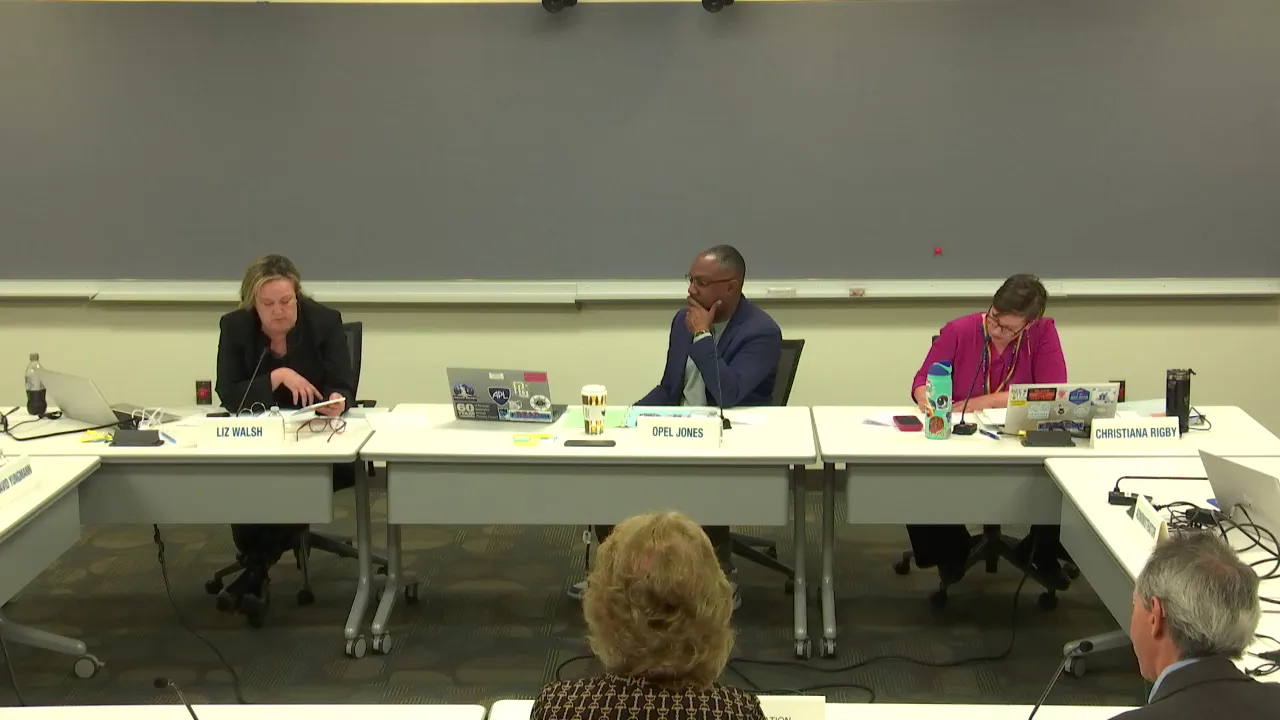
Howard County Council Legislative Work Session - March 23, 2026
The Howard County Council held a hybrid legislative work session on March 23, 2026, to discuss Council Resolution 40-2026, a proposed charter amendment that would allow the county to use general obligation bonds to fund affordable housing projects through the Housing Opportunities Trust Fund. The discussion involved detailed questioning from council members and responses from staff regarding the fund's current revenue sources, fiscal impacts, and comparisons to other jurisdictions.
Discussion Items
- CR40-2026 Overview: The charter amendment, introduced at the request of the County Executive, seeks to amend Section 601 of the County Charter to define “affordable housing projects, financed in whole or in part by the Housing Opportunities Trust Fund,” allowing bond financing for such projects.
- Current Trust Fund Funding: The Housing Opportunities Trust Fund currently relies on transfer tax revenue and moderate income housing unit fees, which are volatile and decreasing. For example, transfer tax revenue dropped from $63 million in 2022 to $41 million in 2023. The fund has received only two appropriations totaling $15 million, used for gap financing on projects like Patuxent Commons, Waverly Winds, and Ranley Court, plus other housing programs.
- Need for New Tool: Councilmember Rigby emphasized that bonding for affordable housing is common practice in Maryland (Montgomery County, Baltimore City) and nationwide (Milwaukee, Pittsburgh, Seattle, Denver). She argued that the amendment would provide a stable, long-term funding source to proactively address housing affordability and grow the county’s tax base.
- Fiscal Concerns: Councilmember Youngman expressed concern that using general obligation bonds for housing would compete with other critical infrastructure needs (schools, roads, libraries) given limited bonding capacity. He noted that a $10 million bond could cost $15 million in debt service and questioned the lack of specific repayment plans or collateral requirements.
- Montgomery County Model: Councilmembers Jung and Walsh asked about Montgomery County’s revolving loan fund, which uses short-term loans (up to 3 years) and requires developer equity. The administration responded that long-term bonds were chosen for Howard County to provide greater control and a better interest rate (triple-A rating) compared to housing authority bonds (double-A plus).
- Use of Existing Funds: Councilmember Walsh pointed out that the Community Renewal Fund has a balance of approximately $43.6 million (including $15 million transferred to the Housing Opportunities Trust Fund) and questioned why those funds hadn't been used more aggressively to produce net new affordable units. Staff noted the funds have been used for preservation and gap financing, but many projects produced no net increase in affordable housing.
- Developer Incentives: Councilmember Jung raised concerns about developer fees and the potential for private profit, suggesting that directing bonding authority to the Housing Commission would ensure proceeds returned to housing production. Ms. Simoneau noted that state rules cap developer fees and allow them only over time, and that the commission already reinvests fees into its mission.
Key Outcomes
- No Vote Taken: The work session concluded without a formal vote on CR40-2026. Councilmembers indicated the need for further deliberation and potential amendments before advancing it to the full council.
- Proposed Amendments: Councilmember Walsh suggested limiting the amendment to for-sale affordable housing projects to encourage homeownership, which was supported by Councilmember Jung. Councilmember Youngman recommended restricting bonds to Housing Commission projects to avoid the county acting as a bank for private developers.
- Next Steps: The council will continue discussing the charter amendment at a future session. If passed by the council, it would be placed on the ballot for voter approval in the next election.
Meeting Transcript
This webinar is being recorded in summary. Good morning, everyone. This is the council's March work session. The proceeding this morning is a hybrid meeting, which is being conducted in person and via WebEx teleconference. The public may view through live stream available to the county council website. As a quick note, we have updated the agenda for this morning, and we'll only be discussing council resolution 40, 2026. CB21 2026 has been removed from the agenda. This time we're going to do a roll call of the council members. Ms. Young. Here. Miss Rigby. Here. Miss Walsh. Here. Mr. Youngman. Here. And I am Opal Jones. We will now proceed with our agenda. So we're here to talk about CR 40 2026. Whoever wants to get the ball rolling. Thanks, Ms. Simonel. I think it'd be really great to just start off a little overview for the public, especially in so that folks know that this is not a reinvention of the wheel, that this is an incredibly common practice across Maryland, but also across the country, and really a strong tool for local governments to use to affirmatively affirmatively further housing affordability in their jurisdictions. Thank you, Ms. Rigby. Yeah, so the Housing Opportunities Trust Fund currently exists, but the only source of funding is transfer tax revenue or fee and lieu revenue to fund projects that come to the Housing Opportunities Trust Fund that are approved for funding. However, this will give us an additional option to be able to offer capital projects or housing developments bond financing. So this is just something else that we can use in addition to our current transfer tax revenue or MIHU modern income housing unit fee and loo revenue to support new housing creation. And the sources of transfer tax, would you um categorize that as something that is robustly growing? So it's it's interesting that you say that um because I looked at 2024 and then I looked at 2025 and in wait a minute, I'm sorry, 2022 to 2023. In 2022, the transfer tax revenue was 63 million, and in 2023 it was 41 million. And so the volatility that transfer tax revenue has based on the health of the real estate market significantly impacts what housing can do with the portion of transfer tax that it receives and um housing is expensive to create. So it's essentially that as real estate transfers decrease, as housing opportunities decrease, the availability for funding to address the problem is also decreasing. Correct. And also MIHU FINLU Moderate Income Housing Unit Fee and Lou revenue due to the lack of available land is is also not going to be an ongoing revenue source for the department's work because there's so little land left. Sure. And with um HOCO by design, we've really focused on two percent of redevelopable land, which will be primarily multifamily. And it is our um policy and practice that we do not do fee and loo for multifamily. Is that correct? Correct. So essentially the existing opportunities are decreasing further, and the future opportunities will be even further decreased because those types of projects um will not do fee and loo, they'll have on-site inclusionary zoning. Um, but that will then further reduce the capacity to to do um housing projects for that the county partners in, correct? We'll be limited to just the transfer tax revenue portion. Correct, which is already decreasing as you said. Um and then also um there are other jurisdictions that use these types of tools, correct? Um Montgomery County has had a lot of success. Is that correct? Yes.
openpublica.com