Howard County Council FY2027 Operating Budget Work Session #2 - May 5, 2026
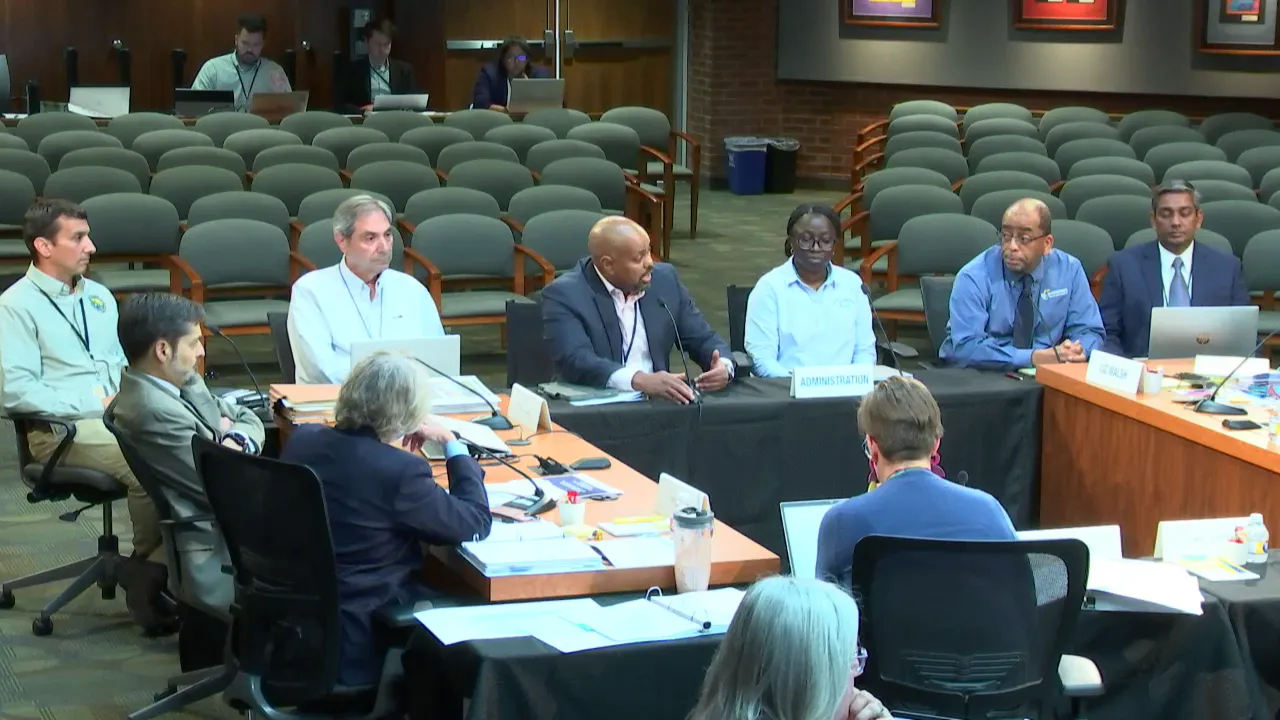
STREAMING COPY IN PREPARATION — RECORDING AVAILABLE FROM THE ORIGINAL SOURCE
Howard County Council FY2027 Operating Budget Work Session #2
This meeting, held on May 5, 2026, was the second work session for the FY2027 operating budget. The council reviewed budgets for Circuit Court, Police, Fire and Rescue, Corrections, Planning and Zoning, Public Works, General Services, Inspections, Soil Conservation, Recreation and Parks, Transportation, Health, and Social Services. Discussions focused on workload increases, staffing, chargebacks, and impacts of state and federal policy changes.
Circuit Court
- Chief Judge Tucker reported a 38% increase in juvenile cases since FY23 and a 25% increase last year. The court requested an additional court reporter and a case manager to handle workload due to complex cases and body-worn camera evidence.
- The court's budget increase of about 10% (excluding new positions) is largely driven by health insurance chargebacks (26% increase per position) and transfer of mental health court funding ($187,000) from the Health Department.
Police
- The proposed budget is $172.1 million (5.7% increase). 76% of the increase is for fixed personnel costs and chargebacks. The department is restructuring (Homeland Security Bureau, Information and Forensics Bureau) and implementing a real-time information center.
- Council members questioned behavioral crisis response following the death of Alex Lemori. The department confirmed that crisis intervention is embedded throughout, not a separate unit. They have purchased tasers and are training officers.
- Councilmember Walsh expressed concern about the lack of a dedicated behavioral crisis unit and inadequate less-lethal options. Councilmember Youngman noted that speed camera revenue is projected to increase despite adding cameras, and raised concerns about overtime costs for Merriweather detail.
Fire and Rescue
- The budget request is a 3.4% increase, maintaining service levels. The mobile integrated health program has reduced 911 calls by 70-80% for participants. The department plans to replace all self-contained breathing apparatus (SCBA) at a cost of $6-6.5 million.
- Councilmembers praised efforts to reduce overtime. The fire fund remains solvent through 2033, but a state-mandated 42-hour workweek (starting Oct 2028) will require monitoring. The department is suing hedge funds over rising vehicle costs.
Corrections
- The department requested five new positions. Overtime is a significant cost due to mandatory minimum staffing and backfilling for illness, injuries, and training. The vacancy rate is low (2%).
- Councilmember Jung questioned the sustainability of using overtime rather than hiring more staff. The department noted that mental health cases often lead to recidivism.
Planning and Zoning (DPZ)
- The maintenance-of-effort budget is $9 million (2.7% increase). Three positions remain frozen. Code enforcement has three inspectors; councilmembers criticized response to citizen complaints (e.g., Manor Hill Brewery, WR Grace).
- Councilmember Walsh argued that DPZ lacks due diligence in investigating violations. Director Eisenberg defended their work. Councilmember Rigby noted that inspectors are not available on weekends, and suggested contract inspectors for off-hours enforcement.
Public Works
- Water and sewer capacity adequate for projected growth; agreements from 1982/84 secure capacity at Patapsco plant. The water and sewer operating fund balance is low ($4.9 million), prompting a requested rate increase.
- The department faces significant vacancies (14%), partly due to non-competitive salaries. Councilmembers urged better compensation and a compensation study from HR. The fleet fund is being depleted; an operating transfer of $5.5 million was made to the general fund.
General Services
- The facilities master plan was provided. Councilmember Jung criticized energy savings days, arguing they saved only an estimated $100,000 but inconvenienced employees and the public. The program will continue until November. Fleet fund balance is projected to drop to $300,000; increased chargebacks needed.
Inspections, Licenses, and Permits (DILP)
- Permit revenue is declining due to shift from new construction to multifamily and alterations. New permitting software is expected by end of calendar year 2026, with AI to improve customer experience. Council requested tracking of accessory dwelling units.
Soil Conservation
- The cost-share program saw 30 farmers install 67 best management practices, including grassed waterways and manure storage. Federal and state funding provide most of the program funds; county AgPres cost-share helps incentivize projects.
Recreation and Parks
- Child care program recovered: staff increased from 115 to 151, waitlist reduced from 733 to 328. The department is using ARPA funds for stipends but will need to replace $360,000 after Dec 2026. Field fees are being increased after 15 years to address deficits.
- Councilmember Youngman questioned fee increases given the county's overall revenue growth, but the department explained rising fixed costs (health insurance chargebacks) and the need to fund field maintenance.
Transportation
- Rapid Ride has tripled ridership; the office is studying expansion. The downtown circulator remains stalled due to insufficient density and free parking. Councilmember Jung pressed for a pedestrian safety plan for downtown Columbia, noting lack of progress. Bike/Walk Howard plans are being updated.
Health Department
- The total operating budget is $55 million; county provides $16.7 million (30%). State core funding was cut by approximately $2 million (20%) over 18 months, leading to elimination of 13 positions through attrition. Environmental health fees have not increased, causing a $357,000 deficit.
- Councilmembers expressed concern about rising uninsured rates and the impact of federal/state cuts. The department's strategic priorities include maternal-infant health, behavioral health, and essential public health functions.
Social Services
- Federal changes to SNAP (food stamps) reduced benefits for 105 asylum refugees in Howard County. An error rate penalty could cost Maryland $50-75 million statewide. The office has created a small food pantry and strengthened referrals.
- The non-custodial parent program is working with workforce development and a fatherhood group. Councilmembers acknowledged the challenges of underfunded state and federal programs.
Key Outcomes
- No formal votes were taken during this work session. Council members will use the information to inform budget decisions in subsequent meetings. Several councilmembers noted the need to address health insurance chargebacks, salary competitiveness, and the impact of state and federal policy changes on county services.
Meeting Transcript
This webinar is being recorded and summarized. Good morning. This is the council's second FY 2027 operating budget work session. The proceeding this morning is a hybrid meeting, which is being conducted in person and via WebEx teleconference. The public may view through live stream available through the county council website. At this moment, I'm going to do a roll call to council members. Ms. Young? Here. Ms. Walsh. Here. Mr. Youngman. Here. And Dr. Jones will be joining us later. Our agenda today includes the following departments for their FY2027 operating budget. Circuit court, police, fire and rescue, corrections, planning and zoning, public works, general services, inspections, licenses, and permits, soil conservation, recreation and parks, transportation, health department, and social services. So to do all that, we're gonna proceed with our agenda. First up, we have our circuit court. Please join us. Welcome, welcome, Judge Docker. What should welcome Jennifer? Good morning. Good morning. If you just want to start with a brief, you know, one to two minute overview how caseloads are going, how um you're responding to to the world in 2026. Sure. Um as you all know, we are the main court, the trial court of general jurisdiction. We only hear these serious matters between all jury trials, family law cases, complex civil uh litigation cases, serious criminal cases. We have um had a number of what I call highlights. Uh we've had a number of jury trials, we've had um our murder trials have increased. We currently actually have 15 pending murder trials and five pending attempted murder trials, and those cases are normally specially assigned to to judges. Uh and that that includes uh all of the other complex civil litigation cases that we what that we specially assign. We try to keep the what we call the normal maintenance of effort budget. However, uh we have had the increases. Our jury trials for this fiscal year alone, we've had 52 jury trials year to date. Last fiscal year we had 69 jury trials, 50 of which were criminal, 19 were civil. We have five judges that handle these matters in addition to three magistrates that handle our juvenile and family law matters. So we've seen an increase of our of our workload, so we also use senior or retired judges to us to assist us. So when we've looked at and analyzed our our work, our workload, we realized we need another court reporter. And the county exec approved that to start in January. As I said, we have five judges and three magistrates. We have five and the senior judges. We all sit pretty much on a daily basis. So we have five full-time court reporters. We had three contingent court reporters, now we have two. So what we've done is we've cross-trained our some of our staff members to help assist, but that takes away from their normal normal general duties. So we need that court reporter, uh, additional court reporter to help with our daily dockets. And in addition, we've seen a dramatic increase in our juvenile cases.
openpublica.com