Howard County Council FY2027 Operating Budget Work Session #3 – May 11, 2026
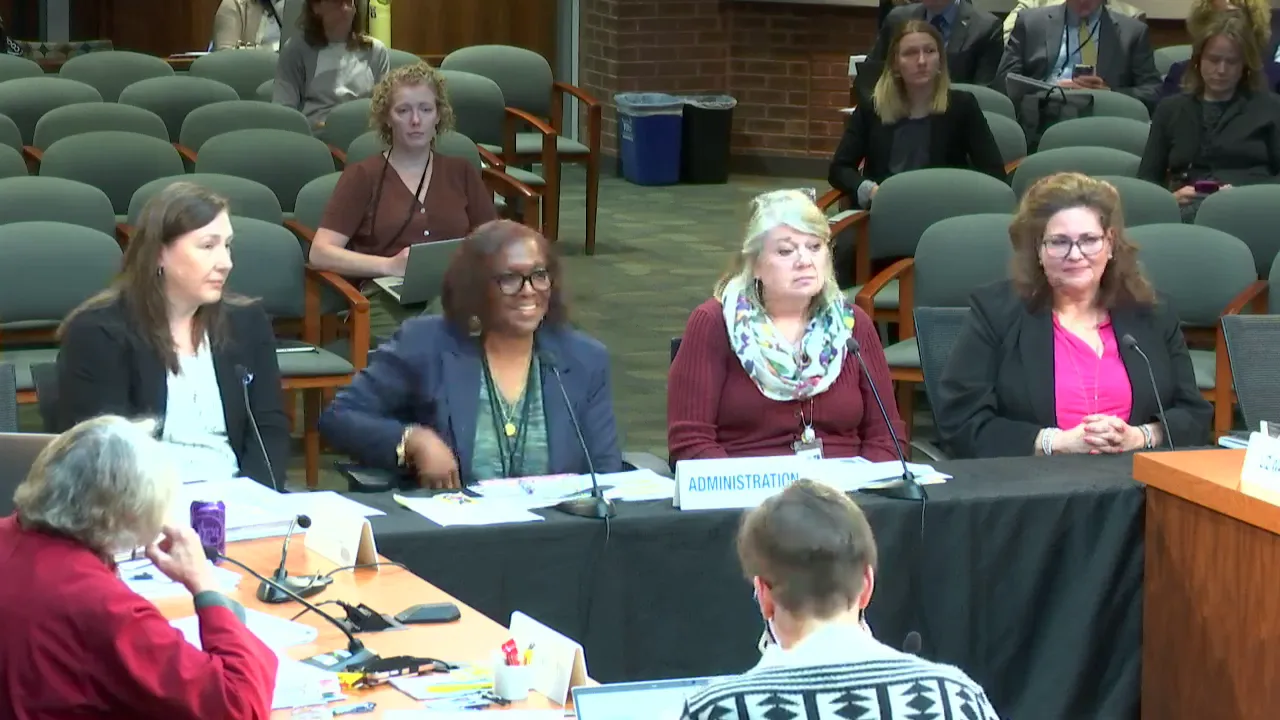
STREAMING COPY IN PREPARATION — RECORDING AVAILABLE FROM THE ORIGINAL SOURCE
Howard County Council FY2027 Operating Budget Work Session #3 – May 11, 2026
This was the third in a series of work sessions on the FY2027 Executive Proposed Operating Budget. The hybrid meeting, convened at 10:00 a.m. and lasting into the afternoon, reviewed budgets for the University of Maryland Extension, Community Resources & Services (DCRS), Community Service Partnerships (CSP), County Executive, County Administration, Finance, Office of Law, Economic Development Authority (EDA), Technology & Communication (DTCS), Housing & Community Development, and Non-Departmental expenses. Council members and department heads discussed funding levels, operational challenges, and the sustainability of current spending patterns.
University of Maryland Extension
- Cheryl Bennett (County Extension Director) and Natasha Mile (Master Gardener Coordinator) presented. The Master Gardener Program costs the county $58,000 annually but generated $771,294 in volunteer value in 2025 – a 13:1 return. In 2025, master gardeners donated over 4,000 pounds of produce to the food bank and supported 600+ families.
- A clarification emerged: the proposed budget listed 7 extension employees, but the office actually has 2 county employees and 9 University of Maryland employees (11 total). The discrepancy was noted.
Community Resources & Services (DCRS) and Community Service Partnerships (CSP)
- Director Jackie Scott described a level budget despite rising demand across all populations. Home visiting programs grew from 78 families (FY25) to 90 this year. Office on Aging saw a 35% increase in service demand and senior center attendance. Council members expressed concern that flat funding is unsustainable.
- Councilmember Youngman highlighted the need for future investment, noting the shift from school enrollment growth to senior demand.
- Councilmember Walsh questioned the lack of clarity around the 988 behavioral crisis response. It was revealed that the mobile crisis team is funded through multiple sources (CSP, health department, state/federal), and no single entity is accountable. The health department manages the grant, but coordination was deemed unclear.
- Councilmember Youngman raised concerns about large, multi-year increases for certain CSP grantees (e.g., Community Ecology Institute with a 10% increase plus a $48,000 YEP grant). He questioned whether programs are reaching enough participants and meeting performance standards.
- Councilmember Young inquired about the opioid restitution fund and community reinvestment fund. So far, opioid funds have been awarded to grantees for Jan–June 2026; the community reinvestment fund is still being structured with a stakeholder process and has not yet distributed money. About $3.1 million is available for FY2027, but state approval is required.
- Councilmember Young noted an audit finding that CSP grantee oversight relied too heavily on undocumented institutional practices. DCRS agreed and is implementing structural changes, including a new senior fiscal position, without adding staff.
County Executive
- Chief of Staff Felix Pasheen presented. The budget has no new initiatives; the increase is driven by fixed costs. Accomplishments include progress on Ellicott City Safe and Sound, North Laurel Pool, and Capitol Line Center. ARPA funds must be spent by December 2026.
- A separation cost of $750,000 is allocated in PAYGO for transitioning employees. Councilmember Young asked about transition planning details.
- Councilmember Walsh questioned salary growth in the Executive Office: from $2 million (13 employees in FY20) to $3.4 million (15 employees in FY27). She expressed concern about optics when other departments face cuts. Pasheen attributed increases to turnover, health benefits, and step increases.
County Administration (Benefits & Risk)
- Chief Administrative Officer Brandy Gans highlighted a voluntary retirement incentive program and ongoing class/compensation study. The Employee Benefits Fund is proposed at $101.1 million, up 19.2%, driven by a 27% increase in prescription costs (30% of that from GLP-1 drugs) and large claims.
- Human Resources Director Ms. Bennett detailed cost containment strategies that saved $32 million in negotiated discounts, $2.7 million from specialty drug rebates, and other measures. Despite these efforts, the fund faces a cumulative deficit projected at $11 million by end of FY27. The FY27 budget includes a $5 million PAYGO infusion to reduce that deficit.
- Councilmember Youngman noted that chargebacks to external agencies (libraries, HCC) are only increasing 3%, while county government absorbs a 26% increase. This is unsustainable, requiring future councils to address benefit costs.
- Councilmember Rigby asked about partnerships with the school system on joint RFPs to reduce administrative costs; preliminary discussions have begun.
- Councilmember Walsh raised concerns about delayed access for the Inspector General to digital records. County Solicitor Cook stated a data-use agreement was provided in mid-March and administration returned comments within eight days; remaining issues involve compliance with state/federal privacy laws.
Finance
- Director Rafi Heeler reported a level budget. Debt service is declining slightly due to refunding that saved over $1 million. The county maintains its AAA bond rating.
- Councilmember Young asked about the plastic bag fund compliance rate (34% non-compliance). Heeler explained it stems from new businesses and a training vendor with turnover. Councilmember Young also requested an updated list of ARPA expenditures.
Office of Law
- County Solicitor Gary Cook presented a maintenance budget with one new partially funded attorney position. The office has 19 attorneys and 7 paralegals handling 69 open lawsuits, 266 DSS cases, 742 red light camera cases, and other matters. Collections for the county total $2.3 million in FY25 and $1.26 million so far in FY26. Opioid settlements have brought in $7.7 million to date; Purdue bankruptcy plan may generate about $2.5 million over 15 years.
- Councilmembers praised the office’s work and acknowledged the need for more staff given rising workload.
Economic Development Authority (EDA)
- Leadership presented on business attraction and retention. Councilmember Youngman inquired about the Blue Stream parcel assemblage fund – a $2 million commitment that appears unpaid. EDA stated they would follow up. Councilmember Rigby highlighted the village center revitalization efforts, including a dedicated staff person and a new PAYGO fund for strip centers.
- Councilmember Young asked about out-of-state trade missions; EDA reported nine international companies at the innovation center as a result of missions to Europe, Canada, and Asia. Two MOUs were signed with Canadian incubators.
Technology & Communication (DTCS)
- Director David Leeds presented. The budget increase is about 8-9% before debt service, driven by hardware/software cost increases and cybersecurity needs. Councilmember Youngman noted that IT costs are growing significantly above inflation, posing a structural challenge.
- A request for an AI specialist was discussed; the position would focus on AI adoption, compliance, and policy, not replacing employees.
- Councilmember Young questioned cost savings from eliminating duplicate devices ($121,000 saved by removing 59 extra desktops) and cell phone stipends ($400,000 saved). She noted field workers are unhappy about losing stipends.
Housing & Community Development
- Director Kelly Simeno presented highlights: $30 million spent over eight years on housing projects; the department’s fund balance dropped from $40 million to $16 million. The Housing Opportunities Trust Fund now supports rental subsidies for 48 older adults, foreclosure prevention, down payment assistance, and rehabilitation. The Family Home Start Program has helped 118 families with children in schools.
- The plan to end homelessness includes increasing shelter beds, a diversion program, and a non-congregate shelter.
- Councilmember Youngman asked about homeownership programs; limited inventory is a barrier. The settlement down payment loan program closed 19 loans this year. MIHU homes are deed-restricted to remain affordable in perpetuity, with limited equity recapture.
- Councilmember Young asked about Beech Crest/Randy’s motel parcel. The Housing Commission is negotiating with the owner; the site will be redeveloped with 30% affordable homes.
Non-Departmental Expenses (Pay-Go, Debt Service, Contingency)
- Budget Administrator Holly presented. Pay-go funding is $106 million, down from $196 million in FY25, due to declining prior-year surpluses. $47 million is allocated to school CIP. Contingency reserves are only $1 million, which is considered inadequate for emergencies (e.g., snow removal often exceeds $2 million).
- Councilmember Young questioned the process for awarding pay-go grants to nonprofits. Administration staff explained that there is no open application process; organizations typically testify or reach out, then are asked to submit an application. Criteria include one-time capital needs and alignment with county priorities. Councilmember Young expressed concern about equity and transparency.
Key Outcomes
- No formal votes were taken; this was a work session to gather information.
- Tai Chi and boxing classes for seniors at 50+ centers will be fully restored after initial cuts caused public outcry. DCRS committed to resolving the issue.
- YEP grant program will shift from County Administration to the Office of the Local Children’s Board (DCRS) as a recurring program, with increased monitoring and alignment with CSP criteria.
- A $5 million PAYGO infusion is proposed for the Employee Benefits Fund to reduce the cumulative deficit, but future councils will need to address structural imbalances.
- Office of the Inspector General will receive dedicated office space at 9755 by June 2026, with a copier and other resources. Councilmember Walsh stressed the need for timely digital access.
- The Blue Stream parcel assemblage fund ($2 million) remains uncollected; EDA and budget office will follow up.
- A list of ARPA expenditures will be provided to the council by the Finance Department.
- The next work session is scheduled for May 20, 2026.
Meeting Transcript
Yeah, that's perfect. Thank you. This webinar is being recorded and summarized. Good morning, everyone, and a happy belated Mother's Day to all. This is the Council third FY2027 executive proposed operation operating budget work session. The proceeding this morning is a hybrid meeting, which is being conducted in person and via WebEx teleconference. The public may view through live stream available through the county council website. At this time, I'm going to do a roll call of the council members. Ms. Young. Here. Mr. Youngman. Here. Ms. Walsh, are you with us virtually? Okay, she was logging on shortly, and Ms. Wigby will be here shortly as well. And I am Opal Jones. Our agenda today includes the following departments for the FY 2027 Executive Proposed Operating Budget. University of Maryland Extension, Community Resources and Services, Community Services Partnership, the County Executive, the County Administration, Finance, Office of Law, Economic Development Authority, Technology and Communication, Housing and Community Development, and Non-Departmental, which includes debt service, pay-go funds, and contingency. We will now proceed with our agenda. And up first is University of Maryland Extension. Good morning. Good morning. Thank you on behalf of University of Maryland Extension. I would like to extend my thanks for the opportunity to speak with all of you this morning. Excuse me. Could you introduce yourself? I'm going to first Cheryl Bennett. I am the Fort Huth Development Educator. I've been with the university for 21 years. And in October of 2025, I also took on the role of the County Extension Director. So after assuming that role, that puts me before you. But it's an honor to speak with you today. Our Howard County Extension Office team is a dedicated team of talented educators and staff that have been working diligently to provide the Howard County community with educational opportunities across all of our program areas, which include family and consumer science in the areas of health, wellness, and nutrition, as well as financial literacy, 4-H youth development, ag and food systems, agriculture nutrient management, and environment and natural resources, including home horticulture, master gardeners, and watershed stewards programs. Our services are provided to clients through classes, seminars, training, field demonstrations, print and electronic resources, one-on-one consultations, and other technology-based education tools. Um of a few partnerships that we have been working with over the past year. And just to highlight those, it's not all inclusive, but just a few things. And so I'm um I'm asking her just to share a few thoughts. Good morning, chairperson and members of the council. My name is Natasha Mile, and I am the new Master Gardener Coordinator for the University of Maryland extension in Howard County. Today I wanted to share with you two numbers: $58,000 and $771,294. The first is the annual operating cost to the county for the Howard County Master Gardener Pro. And the second is the combined value of volunteer time and donated mileage, our Master Gardeners contributed just last year in 2025 alone. That's more than $13 in community value for every dollar they invest, a return that's rare in any budget. The Master Gardener Program is a partnership between the University of Maryland Extension and the residents of this county. Community members complete rigorous university level training in horticulture, ecology, and environmental stewardship. And in return, they give that knowledge back to their neighbors through direct public service. In 2025, excuse me.
openpublica.com