OPENPUBLICA · PUBLIC MEETING RECORD
Record of Proceedings

Monroe RDA Meeting - March 16, 2026: Grant Program Discussion and Financial Report
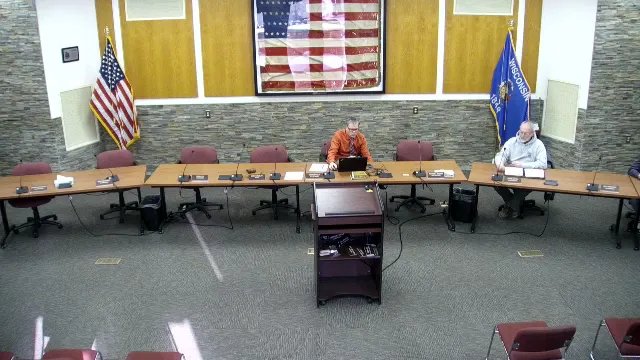
Common Council & CommissionsMonday, March 16, 2026
BodyMonroe, Wisconsin
SessionCommon Council & Commissions
DateMonday, March 16, 2026
StatusFILED
Video Record

STREAMING COPY IN PREPARATION — RECORDING AVAILABLE FROM THE ORIGINAL SOURCE

Transcript — Verbatim
0:00

It is five o'clock and I'll call the RDA meeting to order.

0:04

Can the clerk call the rule, please?

0:06

Alder McGuire?

0:07

Here.

0:08

Ron Markham.

0:10

Brooke Bauman.

0:13

Here.

0:14

Ron Spielman.

0:16

Melissa Evan.

0:19

Here.

0:20

Corey Kunert.

0:23

Here.

0:23

And Dave Whartonweiler.

0:25

Here.

0:30

Item B.

0:31

Does anyone have any correction of the minutes from our last meeting on September 15th, 2025?

0:39

It's been a while.

0:40

Six months.

0:43

Sounds like those are approved as presented.

0:47

Then we'll move on to business.

0:49

We'll go to C2 and review the financial report first.

0:55

This is administrator Rindy.

0:57

And so there's not a lot of significant change to note from actually the last time we met.

1:03

So the fund balance now instead of reflecting on 2024, we've has been updated at the end of the year.

1:10

There is a fund balance of 183,000.

1:14

This year is the final year of a payment from the city based on the agreement related to the Alice Place project.

1:23

And it is less this year of the 60,000.

1:25

So that's been factored in as the a new additional revenue.

1:29

And then there was one expense of a grant.

1:41

So that shows as the 23,008 10 for two of the grants that have been paid out thus far.

1:46

And then I there is one pending grant yet to potentially be paid out of the 8,000.

1:51

So projected based off of that of the additional revenue and impending expenditures, there would be a rough fund balance of 254,000.

2:23

Okay.

2:24

We can move to back up to C1 discussion regarding expanding grant program to support rehabilitation or renovation of non-owner occupied blighted residences.

2:34

All right.

2:34

So I did briefly bring up this kind of topic of in consideration for you guys.

2:40

Then last in September, I believe it was when we met about we have currently the housing kind of improvement program that supports properties that have property maintenance violations and meet the affordable kind of housing threshold and our owner-occupied within RDA1 kind of floated the idea of I have heard through some various avenues as we talk about the housing kind of needs in the community about how based on the economy and cost of things that it's getting harder sometimes for to either like purchase and say flip a house to make it worth their while and or for landlords to potentially invest into their properties as well and wondered if we wanted to kind of expand what the RDA is supporting for that.

3:33

So I had mentioned if it would go beyond um kind of more for um those those land non-owner occupied residents that are within project area number one.

3:44

Um you guys weren't fully opposed, so I did take some more time discussing with some other staff and and organizations about how maybe something like this could look if you if we wanted to.

3:56

So I'm kind of returning with that.

3:59

Um as we go into the discussion, I'll say I think even staff I think we still share some of those same reservations of kind of supporting kind of more of a a business in pockets versus necessarily the needs of residents.

4:14

Um so I also won't be offended if you say we don't want to explore this further, but I thought it was at least worth kind of further discussion.

4:24

So I did include within the agenda packet some parameters that you could consider if we did want to go forward with the program.

4:31

Um before I go into that too, then one thing I'll just make note of of outside of like the businesses and and supporting say pockets of of landlords or otherwise.

4:42

One topic that did come up through the discussion with some of the staff is like there has been uh somebody who could have say been eligible for the the housing improvement program, but she's not technically the owner, her parents are the owner of the home.

5:00

And so sometimes as you look as it's getting harder maybe for people to purchase a home and and they are maybe doing that through family ties and or in the reverse if somebody if a parent is or a child is supporting their parent aging within their home does that also kind of then disqualify them.

5:16

So that's one area where we thought if there's a way to find a support maybe some of those needs rather than just full kind of landlord or renters is an area that maybe could be helpful or beneficial.

5:29

Questions or comments before I maybe go into some of the parameters I thought we could discuss if you were still interested in doing so I haven't changed my opinion I would not support um non-owner occupied yep.

5:51

And I guess yeah if if that's kind of the stance then from everybody I don't maybe need to go further into what parameters could be um so I guess or or where you guys lie.

6:03

Repeat what he said it's hard to hear if I don't know if it's not if they're not using microphones but I'm having a really hard time hearing at my end.

6:11

Okay.

6:12

Sorry to hear that yeah he was using the mic so I'm not quite sure we'll have to look into that.

6:16

But yeah he was saying um Dave shared that he his opinion has kind of changed and he would not be in support of a non-owner occupied program and so I guess before I go further into what potential parameters or program could look like if that's kind of the the general stance of everybody then I I wouldn't necessarily need to do that.

6:45

I'm taking silence as I guess I'm decided I mean I I really I mean I would like to see like the the example that you brought up where the you know the parents actually own the home and maybe working with something along that way but being able to prove that she's not actually renting it like I think it's going to be difficult to do that because it could look like she's renting it from them and then we're in the business of doing rental property.

7:12

So I'm not sure the best way to handle that would be right.

7:18

And I guess to further comment is I guess about as I also was looking at this at one point of okay I heard maybe there's a need or challenge of why people aren't investing into their properties right now because of various factors and and do we want to still see improvements to the properties and this could help that I also was curious like could this really help provide a long-term solution of if we did do it as like a revolving loan where there was some interest coming back then you had money kind of coming back for future as we know right now that's kind of um your your opportunities for that are dwindling or we're gonna have to keep exploring ways to support funding for the RDA so I thought that that could be an option why and so I did provide some examples I don't think for or or an example like kind of calculation of that and it didn't prove to be overly financially lucrative over a long time.

8:10

I mean but it does at least bring some money back.

8:12

So I think with that consideration too if that that was another factor of why it's maybe not necessarily fully worth I'm not opposed to a loan I I think uh yeah I would we've done that in the past on where this this may make sense um I really wonder is the are we going to get the greatest impact by by allocating resources this way um it also seems like there could be a little more administrative burden on some of this too so um I guess I I actually I'm kind of leaning against against this yeah okay thanks Corey all right Dave sorry do you want to restart too we we had a revolving loan program quite a while ago and it was pretty successful and then what the state demanded all the money back or something and that kind of kabosh the whole thing.

9:14

But if if there would be enough monies to do that and we could get uh couple percent interest or something on that order I I wouldn't be opposed to that but but I definitely would be opposed to grants to non-owner occupied dwellings or rental yes for some reason his voice says that they're coming through.

10:11

Um yeah, I think the revolving loan program would be something I'd support looking into further.

Discussion Breakdown — Share of Meeting
Affordable Housing█████████████████████████████████████████████67%
Budget Equity Analysis███████████17%
Procedural███████████16%
Summary of Proceedings

Monroe RDA Meeting - March 16, 2026: Grant Program Discussion and Financial Report

The Monroe Redevelopment Authority (RDA) met on March 16, 2026, at 5:00 PM in the City Hall Council Chambers. The meeting included approval of the previous meeting's minutes, a financial report, and a detailed discussion on potentially expanding the home improvement grant program to support non-owner occupied blighted properties. No formal votes were taken, but the committee directed staff to research a revolving loan program as an alternative.

Consent Calendar

  • The minutes from the September 15, 2025, meeting were approved unanimously as presented. No corrections were offered.

Discussion Items

  • Financial Report (Item C.2): Administrator Rindy presented the financial tracking report. Key figures included:

    • Fund balance of $183,000 as of the end of 2024.
    • This is the final year of a payment from the city related to the Alice Place project, which is $60,000 less than previous payments.
    • An expense of $23,008 was recorded for two grants that have been paid out.
    • One pending grant of $8,000 is yet to be paid.
    • Projected fund balance after additional revenue and impending expenditures would be approximately $254,000.
  • Discussion on Expanding Grant Program to Non-Owner Occupied Blighted Residences (Item C.1):

    • City Administrator introduced the topic, noting that the current Home Improvement Program (HIP) only supports owner-occupied properties within RDA Project Area #1. The proposal was to consider extending support to non-owner occupied (rental) properties to address housing needs and encourage investment.
    • Key positions expressed by members:
      • Dave Whartonweiler stated his opinion had changed and he would not support grants for non-owner occupied properties.
      • Ron Markham expressed opposition to non-owner occupied grants, but indicated openness to a revolving loan program if it could be structured with interest.
      • Corey Kunert leaned against the idea, questioning whether allocating resources this way would have the greatest impact and noting potential administrative burden.
      • Melissa Evan suggested she would support exploring a revolving loan program further, but was not opposed to grants in principle, though limited funds were a concern.
    • A specific case was discussed where a resident is not the owner (parents own the home) but could benefit from assistance; the committee noted complications in distinguishing such cases from rental properties.
    • Discussion contrasted grants (which deplete funds) versus revolving loans (which could replenish funds). The Administrator noted that low-interest revolving loans might be less attractive to potential users and could add administrative complexity, especially if not paired with a bank partner.
    • The committee generally felt the grant approach was not favored, but a revolving loan program might provide a long-term funding mechanism and support commercial/rental properties with payback.

Key Outcomes

  • No formal motions or votes were made. The committee did not approve expanding the grant program to non-owner occupied properties.
  • The Administrator was directed to conduct further research, including:
    • Discussing with local banks about the feasibility and administration of a revolving loan program.
    • Gauging interest from potential users (landlords and property owners) to determine if a loan would be an adequate incentive.
    • Exploring thresholds to limit the percentage of RDA funds allocated to commercial/non-owner occupied projects to preserve funds for owner-occupied needs.
  • The committee will revisit the topic after staff completes this research. The direction was summarized as not warm to grants, but open to a revolving loan option if it proves viable and not overly burdensome.

Meeting Transcript

It is five o'clock and I'll call the RDA meeting to order. Can the clerk call the rule, please? Alder McGuire? Here. Ron Markham. Brooke Bauman. Here. Ron Spielman. Melissa Evan. Here. Corey Kunert. Here. And Dave Whartonweiler. Here. Item B. Does anyone have any correction of the minutes from our last meeting on September 15th, 2025? It's been a while. Six months. Sounds like those are approved as presented. Then we'll move on to business. We'll go to C2 and review the financial report first. This is administrator Rindy. And so there's not a lot of significant change to note from actually the last time we met. So the fund balance now instead of reflecting on 2024, we've has been updated at the end of the year. There is a fund balance of 183,000. This year is the final year of a payment from the city based on the agreement related to the Alice Place project. And it is less this year of the 60,000. So that's been factored in as the a new additional revenue. And then there was one expense of a grant. So that shows as the 23,008 10 for two of the grants that have been paid out thus far. And then I there is one pending grant yet to potentially be paid out of the 8,000. So projected based off of that of the additional revenue and impending expenditures, there would be a rough fund balance of 254,000. Okay. We can move to back up to C1 discussion regarding expanding grant program to support rehabilitation or renovation of non-owner occupied blighted residences. All right. So I did briefly bring up this kind of topic of in consideration for you guys. Then last in September, I believe it was when we met about we have currently the housing kind of improvement program that supports properties that have property maintenance violations and meet the affordable kind of housing threshold and our owner-occupied within RDA1 kind of floated the idea of I have heard through some various avenues as we talk about the housing kind of needs in the community about how based on the economy and cost of things that it's getting harder sometimes for to either like purchase and say flip a house to make it worth their while and or for landlords to potentially invest into their properties as well and wondered if we wanted to kind of expand what the RDA is supporting for that. So I had mentioned if it would go beyond um kind of more for um those those land non-owner occupied residents that are within project area number one. Um you guys weren't fully opposed, so I did take some more time discussing with some other staff and and organizations about how maybe something like this could look if you if we wanted to. So I'm kind of returning with that. Um as we go into the discussion, I'll say I think even staff I think we still share some of those same reservations of kind of supporting kind of more of a a business in pockets versus necessarily the needs of residents. Um so I also won't be offended if you say we don't want to explore this further, but I thought it was at least worth kind of further discussion. So I did include within the agenda packet some parameters that you could consider if we did want to go forward with the program. Um before I go into that too, then one thing I'll just make note of of outside of like the businesses and and supporting say pockets of of landlords or otherwise. One topic that did come up through the discussion with some of the staff is like there has been uh somebody who could have say been eligible for the the housing improvement program, but she's not technically the owner, her parents are the owner of the home. And so sometimes as you look as it's getting harder maybe for people to purchase a home and and they are maybe doing that through family ties and or in the reverse if somebody if a parent is or a child is supporting their parent aging within their home does that also kind of then disqualify them. So that's one area where we thought if there's a way to find a support maybe some of those needs rather than just full kind of landlord or renters is an area that maybe could be helpful or beneficial. Questions or comments before I maybe go into some of the parameters I thought we could discuss if you were still interested in doing so I haven't changed my opinion I would not support um non-owner occupied yep. And I guess yeah if if that's kind of the stance then from everybody I don't maybe need to go further into what parameters could be um so I guess or or where you guys lie. Repeat what he said it's hard to hear if I don't know if it's not if they're not using microphones but I'm having a really hard time hearing at my end.

SUMMARIZED BY OPENPUBLICA AI
TRANSCRIPT VIA PUBLIC VIDEO
openpublica.com