Napa Planning Commission Recommends Approval of Hotel Expansion – February 1, 2024
STREAMING COPY IN PREPARATION — RECORDING AVAILABLE FROM THE ORIGINAL SOURCE
Napa Planning Commission Recommends Approval of Hotel Expansion – February 1, 2024
The Napa Planning Commission held a regular meeting on February 1, 2024, at City Hall, Council Chambers. The primary agenda item was a public hearing on the First & Oxbow Hotel Design Review and Use Permit (PL22-0137), proposing to replace a previously approved 74-room hotel with a 123-room hotel across two four-story buildings, with below-grade parking, at 730 Water Street. The Commission heard a staff report, applicant presentation, and extensive public testimony. After deliberation, the Commission voted 3-1 to forward a recommendation of approval to the City Council, with one commissioner opposed and one recused.
Consent Calendar
- Approved the Planning Commission Regular Meeting minutes for January 18, 2024.
Public Comments & Testimony
- Dan Wolkowski expressed concerns about traffic and parking, noting the 66% increase in rooms and existing congestion at key intersections. He questioned the feasibility of parking stackers and predicted spillover parking.
- Celeste Morassen (Napa Climate Now) argued the project exacerbates climate change, contradicts the city's climate emergency declaration, and requested rejection of the staff recommendation or, failing that, a requirement for climate-neutral building.
- Francie Umwinnie (Friends of the Napa River) raised issues with flood protection (only one foot of freeboard), river setback measurements, and inconsistency with the 2040 General Plan. She urged denial or postponement pending an Oxbow district study.
- Tom Timmer opposed the project based on piecemeal consideration, lack of cumulative impact analysis (economic, environmental, social), and questioned the need for more hotel rooms given existing overcapacity and insolvency risks.
- Chuck Shineman (Napans who love the Oxpo) argued the project cannot be approved under the new 2040 General Plan, highlighted inadequate analysis of greenhouse gas and vehicle miles traveled (VMT), and cited the project's own CEQA update suggesting a zero-sum game for hotel demand.
- Cass Walker criticized the economic analysis for using outdated 2018 data instead of 2023 figures, noting actual occupancy (62.5%) and ADR ($255) were far lower than claimed. She also noted that employee wage ranges start at $17/hour, contradicting the $25/hour claim, and that most employees would need affordable housing.
- David Graves emphasized the city's climate emergency declaration and the global tourism sector's commitment to halving emissions by 2030, arguing the project is backward-looking and will emit greenhouse gases for decades.
- Richard Tippett had no position on approval but recommended restoring retail to support community interaction and urged that any approval require carbon-neutral design.
- Jeremy Sill (property owner of 515 Silverado Trail, the affordable housing site) supported the hotel project and confirmed that the 40-unit affordable housing project is moving forward independently, crediting the applicant for bringing it.
- JB Lemer (resident) defended the project, praising the development team's community contributions and urging approval based on the project's merits, separate from broader planning issues.
- Mary Beth Herman noted that the original commitment of 23 affordable units was increased to 40 thanks to this project.
- Lorraine Francis (architect) addressed concerns about retail by describing the hotel's design as a "living room" for the community, with flexible spaces for pop-ups and community use.
Discussion Items
- Staff Report: Ryder Dilley presented the project, explaining it is a new application that would supersede the 2020 approval for a 74-room hotel. Key changes include an increase to 123 rooms, elimination of third-party retail, reduction in meeting space, one level of below-grade parking (with stackers), and a step back on the western building. He clarified that location and downtown specific plan amendment are not under consideration. CEQA was addressed via addenda, and VMT was analyzed using retail/office thresholds (no adopted hotel threshold).
- Applicant Presentation: David Wood, Andrew Wood, Scott Hunter, Lorraine Francis, and Hugh Lynn presented. They highlighted their experience, the shift from large suites to smaller rooms (promoting walkability), sustainability measures (on-site laundry, EV chargers, VRF system, LED lighting, occupancy sensors, water efficiency), and the connection to the Jamboree affordable housing project (40 very low-income units at 1515 Silverado Trail). They argued the 74-room hotel was not financially viable without a national brand, which requires at least 120 rooms.
- Commissioner Questions:
- Commissioner Myers asked about the housing impact fee ($900,000), confirmed it goes to the city's housing fund and cannot be directly tied to the Jamboree project. She also questioned traffic/valet operations, sustainability certifications (LEED equivalency), and the protected tree removal.
- Commissioner Masaro inquired about public access (valet validation for locals), rooftop noise attenuation, parking stackers in power outages, shading (trellises, awnings), and sustainability. He expressed concern that the project only meets CalGreen minimums and that the CEQA greenhouse gas analysis lacks a baseline. He noted the 2008 hotel policies are outdated and that the 2040 General Plan recommends an Oxbow focus plan.
- Vice Chair Kelly revisited the project's status as a new application due to major changes, verified that the previous approvals for historical structure relocation and street abandonment remain separate. He questioned the top-of-bank setback and flood protection design. Engineer Hugh Lynn explained the use of fill and a wall, meeting FEMA criteria and allowing future adaptation to the larger flood control project. He confirmed sea level rise was not part of the current regulatory base flood elevation.
- Chair Shotwell asked for confirmation that traffic and VMT were analyzed for the revised project, which staff affirmed.
- Deliberation:
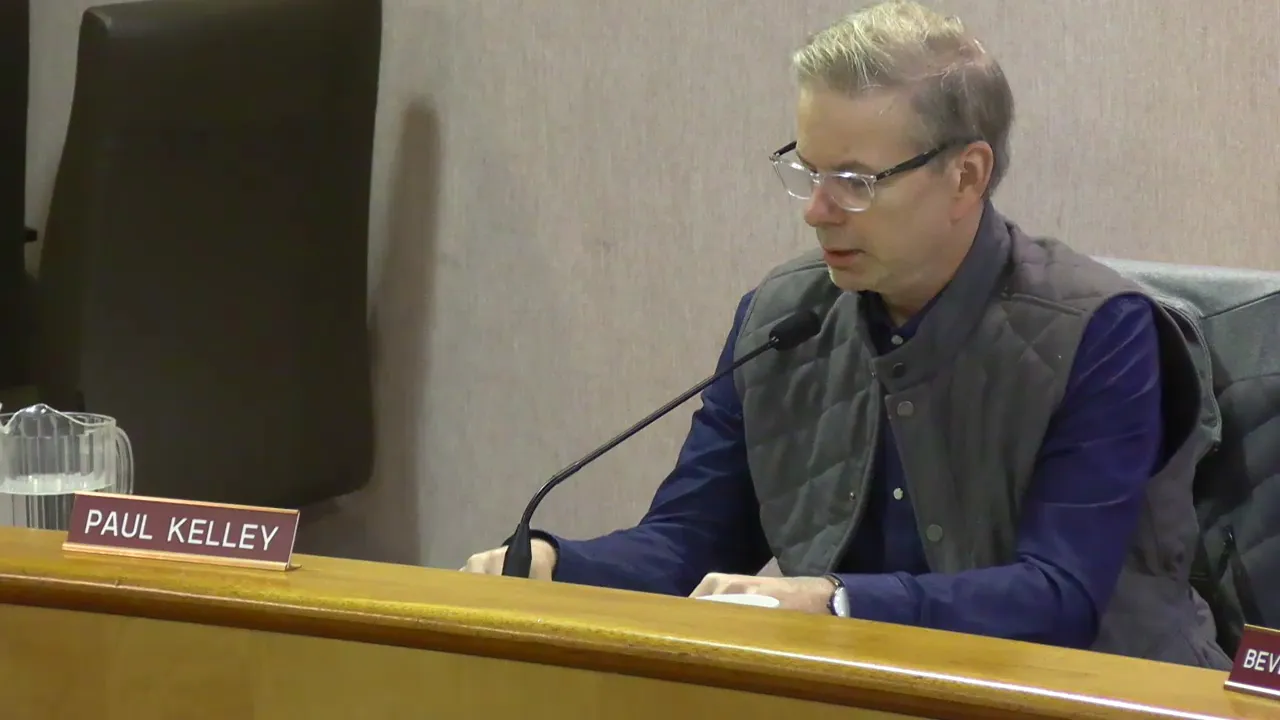
- Vice Chair Kelly noted the project already has an existing entitlement, so denial would not stop a hotel. He acknowledged community concerns but felt the affordable housing contribution (Jamboree) was significant and would be at risk if this project were denied. He voted for approval.
- Commissioner Masaro explained he views the affordable housing project as separate and already entitled, so it does not need the hotel. He found the project 80% complete but lacking on climate action, traffic, retail, and consistency with the 2040 General Plan. He voted no.
- Commissioner Myers supported approval, citing the marginal difference from the existing entitlement and the applicant's delivery of affordable housing, which he sees as fulfilling earlier calls for housing. He also urged the City Council to initiate an Oxbow district study.
- Chair Shotwell expressed initial skepticism but concluded the application is well-analyzed and the affordable housing is a direct result of the hotel project. She supported approval.
Key Outcomes
- Motion: Vice Chair Kelly moved to forward a recommendation to the City Council to adopt a resolution approving the Design Review Permit and Use Permit for the 123-room hotel, with findings that the project was adequately analyzed under CEQA. Commissioner Myers seconded.
- Vote: Approved 3-1 (Commissioners Kelly, Myers, and Shotwell in favor; Commissioner Masaro opposed). Commissioner Huether recused himself due to a financial interest (artist for the project).
- Other: The Commission discussed but did not formalize any additional conditions. Staff noted they would include the Commission's questions about the affordable housing and project linkage in the city council report.
Meeting Transcript
Welcome to the February 1st, 2024 City of Napa regular meeting of the Planning Commission. Okay, and now I put my glasses on so that I can read the script. I would like to call this meeting to order and ask staff to conduct roll call. Commissioner Huthair? Present. Commissioner Masaro. Commissioner Myers. Yep. Vice Chair Kelly? Here. And Chair Shotwell. Present. And we have now the Pledge of Allegiance. We will now rise for the Pledge of Allegiance. Pledge allegiance to the flag of the United States of America. And to the Republic for which it stands. One nation under God, indivisible with liberty and justice for all. The Planning Commission conducts all meetings in accordance with the Ralph M. Brown Act. And pursuant to the city's rules of order for planning commission meetings, policy resolution 10. Staff, are there any changes to this evening's agenda? Yes, I would like to request that we move item 8A, the admin report for the quarterly development report, uh, before we hear the public hearing item 7A. Okay, any opposition to that? No. All right. So public comment. Public comment provides an opportunity for members of the public to directly address the planning commission on items of interest not otherwise noted on the agenda. Each speaker's comments will be limited to three minutes and will comply with the rules of order for planning commission meetings. Do we have any members of the public who wish to provide public comments on non-agenda items? Okay. Seeing none, we will move on. To the consent calendar. These routine items may be approved by a single vote. However, any member of the public or commissioner may remove an item for consideration during the public hearing portion of the agenda. This evening we are reviewing the planning commission regular meeting minutes for January 18th, 2024. Is there a motion to approve the consent calendar as submitted? So moved. Second. Second. All in favor? Aye. Opposed, none. Motion passes. Consent hearings. There are none tonight. Public hearings and appeals. These are items that are formally presented to the planning commission and provide an opportunity for members of the public to comment. Applicants or appellants are allowed 10 minutes to present testimony at the beginning of the public hearing. And if needed, five minutes to present rebuttal at the end of the public hearing. All other speakers will be limited to three minutes.
openpublica.com