Omaha City Council Holds 2027 Budget Hearing on August 11, 2026
STREAMING COPY IN PREPARATION — RECORDING AVAILABLE FROM THE ORIGINAL SOURCE
Omaha City Council Holds 2027 Budget Hearing on August 11, 2026
The Omaha City Council convened on August 11, 2026, to review the proposed 2027 budget. Presentations were delivered by the Finance, Planning, Police, Fire, Public Works, Parks and Recreation, Public Library, and Convention and Visitors Bureau departments. The hearing included detailed discussions on revenue projections, staffing increases, capital improvements, and operational priorities. The council recessed at 6:30 PM; no votes were taken, with formal adoption scheduled for a future meeting.
Discussion Items
-
Finance Department (Steve Curtis): The all-funds budget decreased from $1.8 billion to $1.7 billion, primarily due to lower bond proceeds. Sales tax revenue is projected to grow 8.5% over the prior year’s budget (approximately 4% over the actual 2026 trend), while property taxes are expected to increase 4.3% from valuation growth. The city’s property tax levy remains unchanged at 43.99 cents per $100 valuation. General fund revenues include $128.7 million in property taxes, $288 million in sales tax, and $46 million in restaurant taxes. Department budgets: Police up 12% to $261 million; Fire (general fund) up 4.25% to $147 million; Parks up $5 million (plus $5 million in philanthropy). The city added 43 positions across departments. Curtis noted ongoing difficulty forecasting sales tax due to limited data from the state; the city is working with the Nebraska Department of Revenue to obtain more detailed information.
-
Planning Department (Dave Fanslow): The department’s budget is $16 million from general funds, $3.8 million from federal dollars, and $780,000 for technology and training, with a total workforce of 136 (down one position). Housing and Community Development oversees $141 million in grants and programs. The Capital Improvement Program (CIP) includes $647 million in general obligation bonds. Key projects: $881 million for a new police and fire training headquarters, $40 million/year for street preservation (800 lane miles improved in five years), $45 million Levi Carter Sports Complex (opens October 2026), $200 million CHI Center investment, and streetcar funding. No annexation is planned this year; residential SIDs were not financially beneficial.
-
Police Department (Chief Schmider): The proposed budget is $235 million, an 8.5% increase over 2026. Year-to-date overall crime is down 10% from historic lows, with homicide down 36%, sexual assault down 25%, and robbery down 34%. Staffing is at 844 of 906 budgeted positions, with 35 in the academy; full strength is expected by June 2027. The budget includes 93 new officers, 35 new police vehicles, $9.9 million for IT infrastructure, and $1.3 million for towing. The Real-Time Operations Center and drone first responder program have handled 4,675 incidents, with drones clearing officers before arrival in 5% of calls. Councilmember Melton inquired about automated license plate readers (Flock cameras); Chief Schmider confirmed the department uses Axon cameras, data is purged every 180 days, and usage complies with ACLU recommendations and state statute. No standalone council vote was held on the cameras. Councilmember Cucsi added that state law regulates permissible use and retention. Councilmember Harding asked about a discrepancy in co-responder call numbers (15,000 vs 1,600); the chief suggested it may be a typo or year-to-date figure. The 8.5% increase partly reflects a pay guarantee; exact amount to be provided by finance.
-
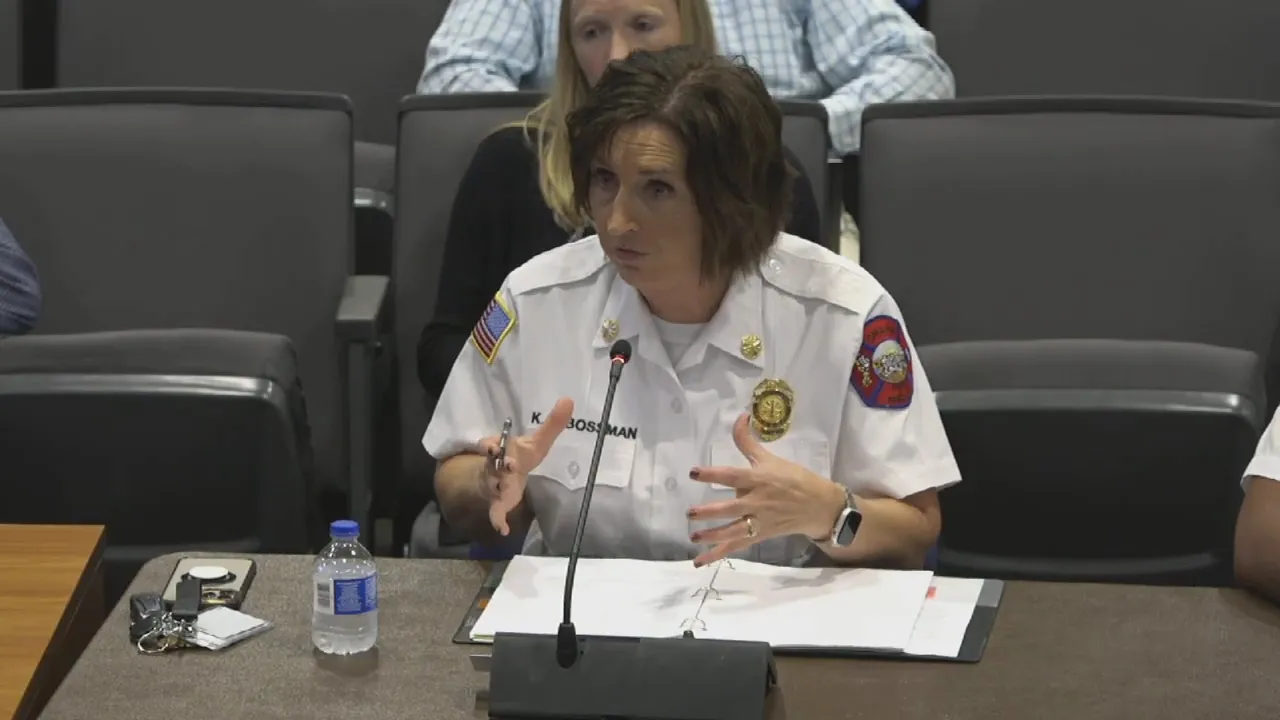
Fire Department (Chief Botsman): The general fund budget grows 4.65%, including nine additional sworn positions to reduce overtime. Fleet replacement ($3.5 million) will cover three engines, three medic units, and remounting three medic units. Capital projects: Fire Station 70 (180th & Maple) construction begins spring 2027, opening early 2028; Fire Station 53 (72nd & Cass) under feasibility review; a new headquarters near 76th & Cass will appear on the November ballot. Training center improvements include replacing 17-year-old live fire containers and a $160,000 smoke simulation system. Councilmember Melton noted a decrease in the Fire Investigation Bureau budget (from $1.5 million to $1.2 million) due to reallocation of one unfilled position. The Fire Safety Bureau budget dropped from $3.2 million to $1.8 million; Chief Botsman will provide details. Councilmember Hugg asked about firefighter staffing: 311 authorized in 2026, 370 proposed for 2027 (plus 18 probationary); two recruit classes are anticipated. The crisis support specialist position (funded by opioid settlement funds) remains on hold pending legal review. The department applied for a SAFER grant; award decisions expected late September.
-
Public Works Department (Bob Stuby): The budget totals $820 million, with over two-thirds for capital. Personnel accounts for 10.5% of the budget; non-personnel costs (contracts, materials) are 21.5%. Funding sources include bonds, gas tax allocation, sewer revenue, parking fees, and $40.5 million from the general fund. Six new positions are proposed: two for vehicle maintenance, two for parking and mobility, and two for water resource recovery facilities. Stuby noted this is his last budget; councilmember commended progress in filling AEO positions.
-
Parks, Recreation, and Public Property (Dan Cedar): The budget increases $6 million to address a $5 million operating deficit identified in the 2025 master plan. Fourteen positions are added (11 in maintenance, one admin, two for Tranquility Park). Part-time/seasonal pay for lifeguards rises to $16.50/hour, with a $0.25 raise for returning staff. Non-compensation increases cover chemicals, repairs for buildings, pools, playgrounds, and restrooms. Key projects: Levi Carter Sports Complex opens October 3, 2026; Tranquility Park scheduled for fall 2027; Jerry Park renovation and Gallagher Park ball field improvements (donor-funded); Upland playground completion; Lake James trail connections; Camelot pool repair. Councilmember Harding asked about a $11 million decrease in enterprise division funding (from $31 million to $20 million); Cedar explained the difference reflects phased capital spending for Tranquility Park (all bonded, not general fund).
-
Public Library (Ms. Marlane and Teresa Jellick): The materials collection budget receives a 7% increase as the first step in a nine-year plan to address underfunding. Library spending per capita ($3.69) lags behind peers such as Lincoln ($5.85) and many peer cities (e.g., Milwaukee $5.90). Since 2004, purchasing power dropped 11% while county population grew 26%. Reciprocal agreements with Ralston and Lincoln ended in October 2025. The new Central Library (opened 2026) has had 172,000 visitors in its first 90 days, with collection turnover exceeding twice. The CIP allocates $1 million in 2027 for Southwest Branch design and $14 million for construction in 2028. Councilmember Melton asked about sustainable funding for materials; the foundation is exploring options. Councilmember Rowe confirmed the branch will reduce pressure on the Elkhorn/Millard locations.
-
Convention and Visitors Bureau (Jasmine Goodwin): The 2027 budget increases 1.68% to $12 million, with 75% from hotel taxes. A 6.6% decline in lodging tax revenue is projected, offset by using $500,000 more from reserves. General fund contribution rises $100,000 to $2.6 million. In 2025, 3 million visitors came from target markets (up 9%). To date in 2026, 7 million out-of-town visitors have been recorded (8.8% increase). The sales team will promote Tranquility Park, Levi Carter, and the CHI Center expansion. Sixty-six events are booked for 2027, generating 71,000 room nights and $110 million in economic impact. Councilmember Hugg raised concerns about short-term rental platforms not collecting hotel taxes; Goodwin said the bureau can track data if needed.
-
Other Budgetary Accounts (Steve Curtis): Retiree health costs are flat at $21 million. Community service programs increase 6.75% to $3.6 million. The Nebraska Humane Society contract is up 8% (under negotiation). Funding for the University of Nebraska Medical Center ($4.5 million) comes from tobacco tax, not general fund—Councilmember Melton requested clearer notation of funding sources. The county jail agreement will cost approximately 37% more (not yet finalized). General expense grew 7%, partly due to new purchasing costs from Douglas County. The contingency fund is $350,000. Riverfront development receives $3 million per year. Councilmember Hugg suggested including a provision in the Humane Society contract to waive pet licensing fees for seniors and disabled veterans.
Key Outcomes
- No formal votes were taken; the hearing concluded with a recess at 6:30 PM. The council is expected to continue budget discussions and adopt the 2027 budget at a subsequent meeting. Several councilmembers requested follow-up information on specific budget line items, including the source of funds for UNMC, police pay guarantee impacts, fire safety bureau details, and improved sales tax data from the state.
Meeting Transcript
Melton roe. Festerson is absent. Good one. Harding. Absent. Mr. President. An affidavit of publication is on file, and a current copy of the open meeting act is posted in a white binder on the East Wall of Legislative Chambers. Good afternoon, everyone. There we go. Good afternoon. We have our presentations beginning. We will start with the finance department. Mr. Curtis. Front and center. Good afternoon. Speaker. Can you hear me? That's good. Okay. I'm just gonna run through this real quickly, and this has also been made available to the public in a couple different formats. But this was the briefing document that we used with pretty much everybody. How about that? Okay. I'm gonna be accused of trying to hide stuff. Um, so if you look at the budget, one of the first ways to look at it is all funds. And if you look at all funds, we're actually going down a little bit, primarily because of uh bond proceeds, which is the main reason all funds would go down in general. So it went from one point eight billion down to about one point seven billion. Uh but you'll notice in there is sales and use tax is growing by about eight point five percent over the prior year budget. And uh property taxes grown about four point three percent over the prior budget, which is directly related to valuation increases. Uh if you go over to the general fund, uh, for the revenue sources on general fund, you'll see that we did a carryover of nine million. We generally do eight or nine million. We decided to up that a little bit. And that's the surplus that we try to end the prior two years with. And so we we attempt to make sure we have a surplus. Property taxes that go into the general fund are about 128.7 million. Uh sales tax is about 288 million. And restaurant taxes about 46 million. Russell tax is roughly flat. We're projecting with the prior year. Uh, one of the things that we try to remind people is that when they look at their property taxes, it's this sheet, that we are just one component. We're about 20 percent or so of the total, 21.39, I believe, in this year, and we kept our levy the same at 43.99. So that's been that for now a couple of years. Uh sales or uh property tax rates. If you look at this chart that I think you have, it basically shows it's been relatively flat for quite a while now. Uh if you go to the appropriations page, which is what you're kind of interested in today, uh, for the departments, some of the bigger departments you might notice. Uh, police went to 261 million from 233 million, which is roughly a twelve percent. Fire uh looks a little misleading on this page uh because of bond proceeds, but they actually, if you do general fund only, they went from 141 million to 147 million, which was a growth rate of about four and a half, four and a quarter percent. Uh parks is a little misleading.
openpublica.com