OPENPUBLICA · PUBLIC MEETING RECORD
Record of Proceedings

Sacramento Community Police Review Commission Meeting - April 12, 2021
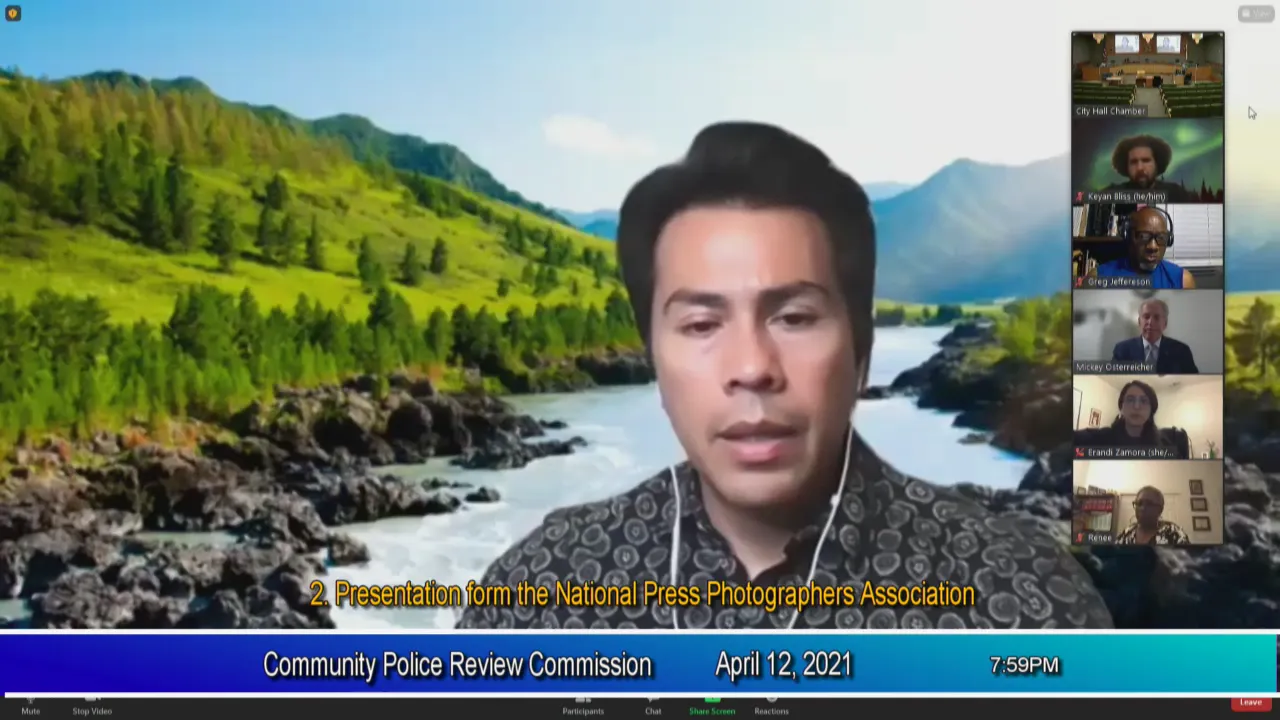
Community Police Review CommissionMonday, April 12, 2021
BodySacramento, California
SessionCommunity Police Review Commission
DateMonday, April 12, 2021
StatusFILED
Video Record

STREAMING COPY IN PREPARATION — RECORDING AVAILABLE FROM THE ORIGINAL SOURCE

Transcript — Verbatim
0:00

And before handing it back over to Marshall, I just want to say the short and long-term physical and psychological impacts of aggressive and violent policing are well known and alarming.

0:09

Many protesters have reported alarming symptoms of psychological distress and trauma, even until this very day.

0:16

The city of Sacramento should really take responsibility and develop the process to redress the harms and try to build rebuild trust with their residents, including providing resources for impacted people to receive appropriate mental health treatment.

0:34

Thank you, Tiffany.

0:35

So my focus here on my slide is to discuss how PsychPD's manual fails to adequately address excessive force during protest.

0:45

The first item I want to highlight is on page three of SPD's Crowd and Riot Control Manual, as it shows that the policy has not been revised since 1998.

0:55

The second item I would like to highlight is the manual refers to a general order 532.11, but that order no longer is listed on the City of Sacramento website.

1:07

Next slide, please.

1:14

So here on the screen, this is a screenshot of page three of Sacramento's Crowd and Riot Control Manual.

1:23

In red highlight at the top, you will see the last time this manual was updated was December of 1998, which is over 20 years ago.

1:31

This manual should have been revised since then.

1:34

Why?

1:35

Because the purpose of this manual is to establish training guidelines for handling crowds and riots.

1:42

With time, the way protests have occurred has evolved.

1:45

So the manual should evolve as well.

1:48

And the second item that is concerning is this next sentence highlighted in red.

1:53

General Order 532.11 implements this manual and requires personnel to know its contents and follow its guidelines when handling crowd and riot situations.

2:05

And then jump down to the last sentence in this paragraph.

2:08

It states this policy statement is an expansion of that found in the general order.

2:15

So on its face, this paragraph sounds fine until you visit the city of Sacramento.org website to locate this general order.

2:24

Next slide, please.

2:28

So when you go to navigate the city of Sacramento.org website to find the list of general orders, you will see there's no longer a 532.11 order existence on the website.

2:42

Here, this is a screenshot and a yellow highlight of where the general order should be that's listed in the crowd and riot manual control.

2:52

But as you can see here, there's a 532.10, and there's also an order of 532.12, but the 532.11 is missing.

3:04

The lack of a general order listed on the website is problematic.

3:09

One, for transparency purposes, and for two, it's also problematic for the public not to know what general order is now guiding the crowd and riot manual control.

3:20

Next slide, please.

3:27

So now I have presented these two problematic areas, and I would like to provide solutions for consideration for the commission.

3:34

First, the 1998 manual needs to be updated immediately with a current general order that describes the use of force, SPD can use if necessary in relation to crowd and riot control.

3:48

Second, SPD's manual, there should also be a clear and separate general order guidance on the use of force related to crowd and riot control, if necessary.

4:00

As of now, in the crowd and riot manual, there are references to general orders that are available that discuss less lethal use of force, but there are in multiple locations and is not specific to crowd and riot control.

4:14

For example, in the third bullet, you'll see several examples, such as a general order for less lethal weapons, general order for conductive energy device, general order for medical care of arrestees, a riot manual for search and handcuffs, a riot manual for the crowd and riot control, which we've been discussing today, and a riot manual for Bata Manual.

4:35

But these policies are referred to in the 1998 manual, but there's no clear and centralized specific policy that will help reduce the harm.

4:48

And there is an approach just to have that immediately so that everyone will be on the same page and know exactly what to expect when these uh protests occur.

4:58

Next slide, please.

5:03

And when we don't have a general order that is very clear and specific in relation to crowd and riot practices, people will get harmed.

5:12

And I'm gonna highlight three experiences from our clients.

5:17

First, we have Francisco Keel, who experienced harm because of unclear policies.

5:22

Mr.

5:22

Q recounts it being tear gassed multiple times by department officers with little to no warning.

5:30

Next, we have Lisa Soto, who also experienced harm because of unclear policies.

5:36

On May 30th, 2020, while attending a protest, they were told that they were going, they told the officers that they were going home and to leave us alone.

5:47

And the self-defense held up a traffic home.

5:50

But the department yelled at them to drop the cone, grab them, force them to the ground, and further, the department cut off their backpack by a straps, shrouded their back, and cuffed them.

6:04

And lastly, we have Robert Yenicombs experiencing harm because of unclear policies.

6:11

On May 30th, 2020, the police broke Mr.

6:14

Yanikone's arm at CHP Wally swung a baton that was meant to hit another individual.

6:21

As you can see, these harms could have been prevented if there were specific guidelines and the manual that discussed how force should be used or not used at all when interacting with peaceful protesters.

6:39

So for a starting point to strengthen the crowd and riot control manual, um, we asked the commission to look at the constitutional use of force factors, which are listed here.

6:49

Um for time's sake, I'm just gonna speed read through them really quickly.

6:54

Um some primary factors to consider uh when determining whether officers should use force um is the severity of the crime at issue, whether the suspect poses an immediate threat to the safety of the officers or others, and whether the person is actively resisting or resisting arrest or attempting to evade arrest by flight.

7:14

However, we urge the commission SPD not to rely on the minimum standards of reasonableness, but to be more detailed for a clear use of force policy specific to crowd and riot control.

7:27

Next slide, please.

7:31

So in our letter that we wrote to the city, we had several recommendations, but for time's sake, I'm just gonna highlight a few.

7:41

For recommendation for a specif for a clear use of force policy specific to crowd control, there should be an articulate specific protocol to ensure officers will use the minimum force necessary, if at all, such as identify a very minimum range of tactics for responding, require officers to engage in strategies for de-escalation and to avoid tactics and conduct and conduct that are likely to escalate tensions or confrontation, and also permit escalation to more forceful tactics only when less intrusive alternatives have failed, or there's a specific articulate basis to believe that we would not that they would not succeed.

8:24

And for time's sake, I'm gonna go to the next slide, please.

8:31

And for this slide, I just want to highlight a recommendation from the first bullet point that SPD and the commission should work to create a separate general order that defines the procedure for use of force relating specifically to crowd control, also to the extent possible.

8:47

Uh police present if police presence is ever necessary for protest, the city and department must prohibit use of force beyond what is minimally necessary to interrupt a violent incident.

9:01

And now I'm going to hand it back over to Tiffany for our conclusion of this presentation.

9:09

Thank you.

Discussion Breakdown — Share of Meeting
Police Policy Review██████████████████████████████████████38%
Public Safety██████████████████18%
Procedural████████████████16%
First Amendment Rights████████8%
Public Comments██████6%
Media Relations█████5%
Community Engagement████4%
Commissioner Comments████4%
Mental Health1%
Summary of Proceedings

Sacramento Community Police Review Commission Meeting - April 12, 2021

The Sacramento Community Police Review Commission met via teleconference on Monday, April 12, 2021, at 6:00 p.m., in compliance with COVID-19 emergency orders. Chair Mario Guerrero presided. The meeting included approval of previous meeting minutes, presentations from advocacy organizations, and a follow-up log review. The commission adjourned at 8:11 p.m.

Consent Calendar

  • Item 1: Approval of the March 8, 2021, meeting minutes. Motion by Richard Falcon, seconded by Graciella Castillo-Krings. Vote: 8 yes (Castillo-Krings, Bliss, Elkarra, Jefferson, Falcon, Savage-Sangwan, Carter, Guerrero), 2 abstain (Escobar, Zamora), 2 absent (Marion, Elkarra — note discrepancy: minutes list Elkarra as both voting yes and absent). Motion carried.

Public Comments & Testimony

  • No public comments were recorded during the meeting. A phone line was available but no testimony is transcribed.

Discussion Items

  • Item 2: Presentation from The National Press Photographers Association (Oral Report). Received and filed.
  • Item 3: Presentation from the ACLU of Northern California and the Lawyers’ Committee for Civil Rights of the San Francisco Bay Area (Oral Report). Received and filed.
  • Item 4: Sacramento Community Police Review Commission Follow-Up Log. Received and filed.

Key Outcomes

  • Approved the March 8, 2021, meeting minutes.
  • Received and filed presentations from the National Press Photographers Association and the ACLU/Lawyers’ Committee.
  • Received and filed the commission’s follow-up log.
  • Chair’s update, Police Department staff update, and commissioner comments were provided without formal action.

Meeting Transcript

And before handing it back over to Marshall, I just want to say the short and long-term physical and psychological impacts of aggressive and violent policing are well known and alarming. Many protesters have reported alarming symptoms of psychological distress and trauma, even until this very day. The city of Sacramento should really take responsibility and develop the process to redress the harms and try to build rebuild trust with their residents, including providing resources for impacted people to receive appropriate mental health treatment. Thank you, Tiffany. So my focus here on my slide is to discuss how PsychPD's manual fails to adequately address excessive force during protest. The first item I want to highlight is on page three of SPD's Crowd and Riot Control Manual, as it shows that the policy has not been revised since 1998. The second item I would like to highlight is the manual refers to a general order 532.11, but that order no longer is listed on the City of Sacramento website. Next slide, please. So here on the screen, this is a screenshot of page three of Sacramento's Crowd and Riot Control Manual. In red highlight at the top, you will see the last time this manual was updated was December of 1998, which is over 20 years ago. This manual should have been revised since then. Why? Because the purpose of this manual is to establish training guidelines for handling crowds and riots. With time, the way protests have occurred has evolved. So the manual should evolve as well. And the second item that is concerning is this next sentence highlighted in red. General Order 532.11 implements this manual and requires personnel to know its contents and follow its guidelines when handling crowd and riot situations. And then jump down to the last sentence in this paragraph. It states this policy statement is an expansion of that found in the general order. So on its face, this paragraph sounds fine until you visit the city of Sacramento.org website to locate this general order. Next slide, please. So when you go to navigate the city of Sacramento.org website to find the list of general orders, you will see there's no longer a 532.11 order existence on the website. Here, this is a screenshot and a yellow highlight of where the general order should be that's listed in the crowd and riot manual control. But as you can see here, there's a 532.10, and there's also an order of 532.12, but the 532.11 is missing. The lack of a general order listed on the website is problematic. One, for transparency purposes, and for two, it's also problematic for the public not to know what general order is now guiding the crowd and riot manual control. Next slide, please. So now I have presented these two problematic areas, and I would like to provide solutions for consideration for the commission. First, the 1998 manual needs to be updated immediately with a current general order that describes the use of force, SPD can use if necessary in relation to crowd and riot control. Second, SPD's manual, there should also be a clear and separate general order guidance on the use of force related to crowd and riot control, if necessary. As of now, in the crowd and riot manual, there are references to general orders that are available that discuss less lethal use of force, but there are in multiple locations and is not specific to crowd and riot control. For example, in the third bullet, you'll see several examples, such as a general order for less lethal weapons, general order for conductive energy device, general order for medical care of arrestees, a riot manual for search and handcuffs, a riot manual for the crowd and riot control, which we've been discussing today, and a riot manual for Bata Manual. But these policies are referred to in the 1998 manual, but there's no clear and centralized specific policy that will help reduce the harm. And there is an approach just to have that immediately so that everyone will be on the same page and know exactly what to expect when these uh protests occur. Next slide, please. And when we don't have a general order that is very clear and specific in relation to crowd and riot practices, people will get harmed. And I'm gonna highlight three experiences from our clients. First, we have Francisco Keel, who experienced harm because of unclear policies. Mr. Q recounts it being tear gassed multiple times by department officers with little to no warning. Next, we have Lisa Soto, who also experienced harm because of unclear policies. On May 30th, 2020, while attending a protest, they were told that they were going, they told the officers that they were going home and to leave us alone. And the self-defense held up a traffic home. But the department yelled at them to drop the cone, grab them, force them to the ground, and further, the department cut off their backpack by a straps, shrouded their back, and cuffed them. And lastly, we have Robert Yenicombs experiencing harm because of unclear policies. On May 30th, 2020, the police broke Mr. Yanikone's arm at CHP Wally swung a baton that was meant to hit another individual. As you can see, these harms could have been prevented if there were specific guidelines and the manual that discussed how force should be used or not used at all when interacting with peaceful protesters. So for a starting point to strengthen the crowd and riot control manual, um, we asked the commission to look at the constitutional use of force factors, which are listed here. Um for time's sake, I'm just gonna speed read through them really quickly.

SUMMARIZED BY OPENPUBLICA AI
TRANSCRIPT VIA PUBLIC VIDEO
openpublica.com