Sarasota City Commission Workshop on Meeting Procedures and Strategic Planning - January 14, 2025
STREAMING COPY IN PREPARATION — RECORDING AVAILABLE FROM THE ORIGINAL SOURCE
Sarasota City Commission Workshop on Meeting Procedures and Strategic Planning - January 14, 2025
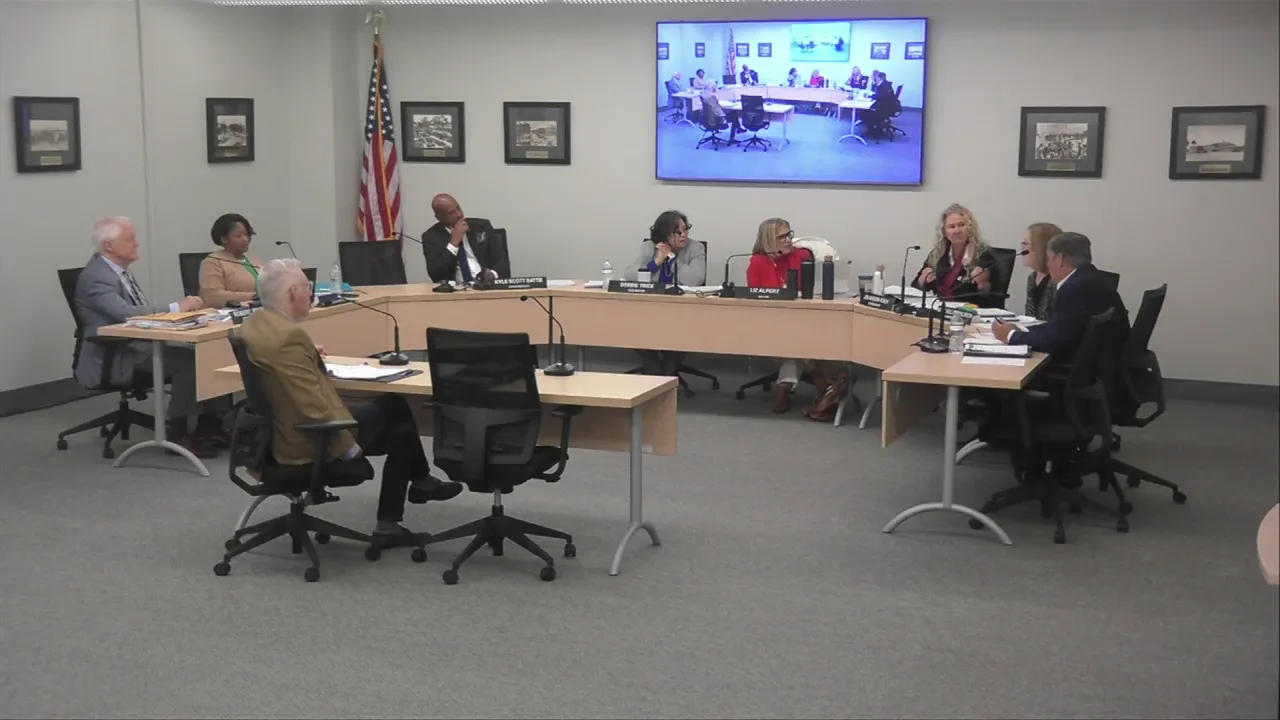
The Sarasota City Commission held a workshop on January 14, 2025, from 10:02 AM to 1:04 PM, to discuss two main agenda items: procedures for Commission meetings and the process for developing a new Strategic Plan. The workshop was facilitated by independent consultant Martin Hurwitz. City Auditor and Clerk Shayla Griggs, Interim City Manager Douglas Jeffcoat, City Attorney Robert Fournier, and Communications General Manager Jan Thornburg also participated.
Discussion Items
- Commission Meetings Procedure Process: Commissioners discussed several improvements to meeting procedures, including:
- Removing timed Q&A for commissioners in favor of limiting questions per round (e.g., three questions per round, then rotating).
- More strictly following Robert's Rules of Order (RRO), with Q&A being for questions only, not statements.
- Empowering the City Auditor and Clerk to serve as parliamentarian, as per the City Charter.
- Rotating the order of who asks questions first.
- Enforcing the 17-day rule for submission of presentation materials, with late submissions requiring a 2/3 vote.
- Clarifying the process for removing items from the Consent Agenda (changing "are to notify" to "should notify").
- Whether Changes to the Orders of the Day should be approved by consensus or a formal vote.
- The format of Commissioner Comments: some favored sharing only pertinent information from outside meetings, while others valued reporting all activities. A suggestion was made to set aside 30 minutes at the end of each workshop for such updates.
- Defining and handling personal attacks during public comment, with a suggestion to direct all comments to the Mayor.
- The need for a yearly RRO refresher course for commissioners and advisory board members (already being developed by staff).
- Process and Explanation of Strategic Planning: Facilitator Hurwitz explained that a new Strategic Plan is needed, focusing on a strategic statement (how resources are allocated to achieve goals). Each commissioner was asked to submit a list of 10 top goals/projects they wish to see accomplished within two years. From these 50 projects, each commissioner's #1 priority would automatically be included, and the body would select a final number (likely 15-20). Discussion ensued on how to gather public input:
- Options included a town hall meeting, a survey, online polls, and outreach via neighborhood associations.
- Commissioners debated whether to first gather public input before creating their lists or to present their lists for public prioritization.
- Concerns were raised about reaching a diverse audience, especially working residents who cannot attend daytime meetings.
- Communications Manager Thornburg outlined the city's media channels (news releases, social media, website) to disseminate information.
- After discussion, the commission converged on a plan to: (1) develop a survey for public input, (2) allow commissioners to review the survey before it goes out, and (3) hold a town hall meeting (30-45 minutes with 1-2 minute speaking limits) immediately before the scheduled February 14, 2025, workshop, with the town hall and workshop noticed as separate events. The survey would be launched immediately to allow time for results compilation before the town hall.
- Other Matters: Commissioner Ahearn-Koch raised several items for future discussion, including:
- The Sarasota Housing Authority's McCown Towers project (160 senior housing units), which encountered zoning issues with the Live Local Act and density bonus. The recommendation is for SHA to apply for a Rezone.
- Holding regular interlocal meetings with the County Commission, Town of Longboat Key, Sarasota Memorial Hospital Board, School Board, and Sarasota/Manatee Airport.
- Revisiting the Parks District taxing district.
- Restoring the advisory board recognition and appreciation event.
- Reviewing policies for key giving, proclamations, and strengthening advisory boards.
- Better incorporating neighborhood associations into city communications.
Key Outcomes
- Staff will compile suggestions from the meeting procedures discussion and bring them back to a future Commission meeting for a formal vote.
- For the Strategic Plan:
- A survey will be created and sent to the public to gather input on priorities. Commissioners will have an opportunity to review the survey before it is distributed.
- A town hall meeting will be held on February 14, 2025, prior to the strategic planning workshop, to allow public testimony (1-2 minutes per speaker). The town hall will be noticed separately from the workshop.
- Commissioners will submit their individual lists of 10 goals/projects within the coming weeks, informed by public input.
- The strategic planning workshop will proceed on February 14, 2025, with the goal of finalizing the plan. The timeline may be adjusted if needed, but the commission expressed a desire to complete the plan before hiring a permanent City Manager.
- No formal votes were taken, as this was a workshop.
Meeting Transcript
All right, good morning, everybody. I'm gonna call this uh Tuesday, January fourteenth, uh City Commission workshop to order and we will get to our first agenda item right away, which is a discussion of the um meetings procedure process. And so we're all right, we did Bob, were you gonna say something you look like you were ready to no I I asked to have this on our first workshop of twenty twenty five um to discuss how you all as a body would like to procedurally have your meetings handled. Um I just want us to all be on the same page and how we want the meeting to run and just kind of have clear defined roles. Um especially for me. Um and then also you as a as a body. So um, I guess we're kinda gonna open it up, kind of talk about, you know, what our expectations are, you know, what will we see, what would we like to see, um, especially from my standpoint. Um how you all want these meetings to to run. And hopefully we run in a fish and spool manner. So that's the goal. Um, so I think first of all, I we'll like to kind of start out with maybe go around and ask what do you all individually see as how you will want the meetings to be run. Um, and we can just kind of I don't know who all wants to start first, and I'll let the the the mayor kind of raise hands and who wants to start first. But um just kinda go around and just let us know how do you all first proceed how these meetings should go. So well, I mean, obviously according to Robert's rules of order and um you know, I don't really have a lot of um complaints about how they're going. Okay. So I think that um, you know, in general they they they go okay, but I do think that there's a lot of room for improvement. Um the um the idea that we this is really funky loud. The idea that we um have which is relatively new. Timed QA for each of us and that whole situation came about in about twenty twenty-one, something like that. Um we never had that before. We never stick to it. It's an item that every meeting we have to say, do we approve the time schedule for it? We we never stick to it. If somebody presenter needs more time, we give them more time. If a commissioner needs more time, we circle back around and give them more time. I don't think it's been an issue. Uh and I that's a piece of our agenda that I think could completely go away. Um so that would be one of my suggestions. The other suggestion would be very much to much more strictly follow Robert's rules of order, which has a very specific time period when it's QA, it's not statement time, it's QA time. And if you don't have a question, don't speak. If you've got a statement to say, you say your statement to the motion when the motion is made. And then that limits the discussion of everybody sort of posturing, me included, right, to what your thoughts are on a big topic to the motion, which is what we're really supposed to be doing with Robert's rules of order. Um not just talking about your opinion about the whole idea of a park or a this or a that. Just to the motion. So, you know, when we go around and we do the Q ⁇ A piece of it and everybody's given 10 minutes or 20 minutes or whatever time limit is was given. How about we just have a couple of questions? You know, do and I hate to hamper back to this, and I'm no I'm pretty sure Kathy will as well. When I was on the planning board, we would generally ask one or two or three or four or five questions. And then even if you had fifty, you'd stop and let others ask questions because they could be asking questions that you were gonna ask. So we would just sort of like rotate through and ask, you know, a handful of questions and then step back and let the others ask questions. But it was not statement time. It was not, you know, parks are this and we should do this and city should do that, and no. It was just questions. And then when a motion sounds good to me. And then when a motion was made, then you spoke only to the motion, not to the grand idea of parks or the grand idea of something else, specifically to the motion, and that was it. And so that, you know, limited um focused, I wouldn't say limit. I would say focus the meeting much more. Um that's another one of my suggestions is that I would I would just make sure that when we are going through, we go we really follow Robert's rules of order. QA is QA, then you close the public hearing, someone makes the motion, and then you speak to the motion if it's seconded. You know, um also allowing the city auditor and clerk um more ability to uh do her parliamentarian role.
openpublica.com