Valdez Tourism Task Force Discusses Governance and Bylaws - April 15, 2026
STREAMING COPY IN PREPARATION — RECORDING AVAILABLE FROM THE ORIGINAL SOURCE
Valdez Tourism Task Force Discusses Governance and Bylaws - April 15, 2026
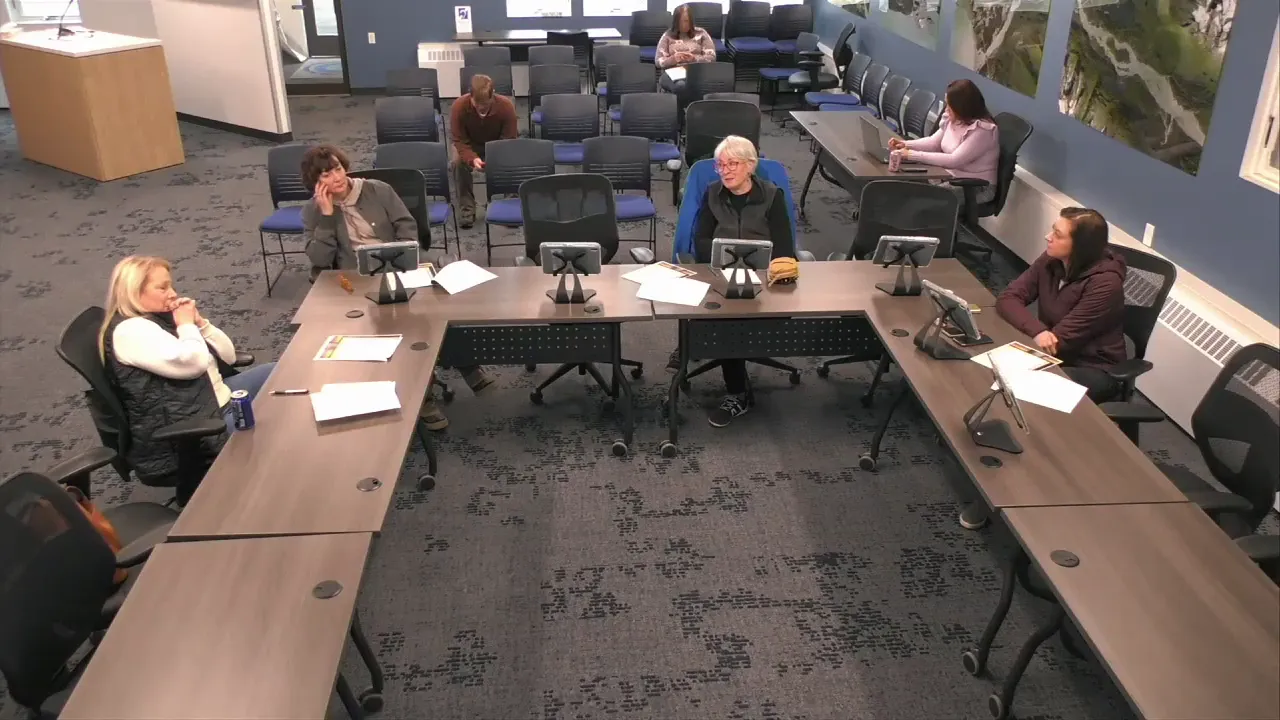
The Valdez Tourism Task Force met at 5:00 PM on Wednesday, April 15, 2026, in Council Chambers to discuss governance structures, board formation, and membership for a new tourism organization. Task force members reviewed the process for establishing a nonprofit corporation, debated board composition and membership tiers, and identified next steps for drafting articles of incorporation.
Discussion Items
- Governance process overview: Sherry explained that the task force's recommendation to form a corporation would begin with drafting articles of incorporation with legal counsel, which would name corporate members and the initial executive board. The first board meeting would include officer elections and appointment of a bylaws committee. Bylaws drafted by that committee must be approved by the membership. The task force can only make suggestions for bylaws, not draft them.
- Bylaws vs. policies/procedures: Sherry clarified that policies and procedures are adopted by the board and can be changed dynamically without member votes, unlike bylaws. Colleen confirmed this understanding.
- Corporate membership: Sherry stated that for this organization, the city council would automatically serve as the corporate member (as with the museum). The articles of incorporation define the number of board members; bylaws provide additional detail.
- Membership structure: Colleen and others discussed creating a new membership for the new organization, not carrying over VCVB members. Colleen noted Martha compiled a list of past VCVB members from various sources, but it should not confer automatic membership. The group discussed:
- A local membership tier for businesses with a Valdez business license, possibly free or low-cost, with voting rights.
- A non-local/outside membership tier for businesses not based locally, likely paid and without voting rights.
- A possible third tier for reciprocal DMO (destination marketing organization) memberships to trade guides and materials.
- Colleen suggested that even if local businesses are eligible, they must still sign up to participate. Prices and specific benefits would be set in policies, while tiers would be established in bylaws.
- Bylaw approval process: Sherry noted that articles of incorporation could state that the corporation approves bylaws, allowing initial approval by the city council, but amendments could be reserved for the membership once established. This was seen as a practical approach.
- Board size and composition: Nate recommended a seven-member board (quorum of four) to ensure industry diversity; Colleen also favored seven, noting a five-member board might be too small. State law requires at least five board members. The group discussed whether a city council member should be a voting or non-voting member. Nate favored a voting seat; Colleen noted past non-voting council/staff liaisons had limited influence. Sherry reminded the group that the city council as corporate body already provides oversight. The suggestion was made to use 'may' instead of 'shall' for a council appointment, allowing flexibility.
- Ex officio and non-voting members: Sherry clarified that under Robert's Rules, ex officio members have voting rights; if a non-voting role is intended, it must be designated as 'non-voting.' Non-voting members do not count toward quorum. The board could appoint non-voting advisors for specific expertise or terms.
- Appointment process: The group discussed that the task force/organization would recruit and recommend board members, with final appointment by the council (corporation). Colleen proposed that board members must be from the local membership tier, and if the council rejects a recommendation, it should be sent back to the organization for a new candidate rather than the council substituting its own.
- City staff role: Sherry expressed that city staff should not have voting roles but could serve as non-voting liaisons. Nate suggested the economic development director might be a standing non-voting member.
- Organization name: A new legal name is required for the articles. Nate suggested 'Destination Valdez' but noted it's not outward-facing; the name could be separate from the marketing brand 'Discover Valdez,' which is trademarked by VCVB and proposed to be purchased. The group agreed to consider names.
Task Force Member Comments and Next Steps
- Zach offered feedback on membership, advocating for free listings for all businesses operating in Valdez (not just those in Valdez), paid membership for outside businesses, and concern about purchasing VCVB's media assets due to possible rights issues and perception that the new organization is just a rebrand.
- The group agreed to hold a future meeting to categorize governance items into the appropriate documents (articles, bylaws, or policies).
Key Outcomes
- Consensus on recommending a corporation structure with a membership approval process for bylaws (with initial approval by the corporation possible).
- Preliminary agreement on a membership structure with at least two tiers (local voting and non-local non-voting), potentially a third DMO reciprocal tier; details to be finalized in policies.
- Preliminary agreement to consider a seven-member board of directors with a quorum of four.
- City council will serve as the corporate member; a council member may be appointed to the board (voting or non-voting), but the wording 'may' rather than 'shall' was favored.
- Board members would be recruited by the organization and appointed by the council; rejected recommendations would be sent back for new nominees.
- City staff may serve as non-voting liaisons.
- Next steps: Sherry and Elise will draft articles of incorporation (with legal review) and send them to the task force before the next meeting on April 29, 2026. Elise will summarize membership discussion, draft an initial mission statement, and gather examples from other Alaska DMOs. Task force members were asked to think about organization names and to categorize governance items into articles, bylaws, or policies.
Meeting Transcript
Go ahead and call the meeting to order. And do we need to do the roll call? So we have Colleen remotely. And then we're missing Bob Harden. One discussion item. Do we want to let Sherry take that? So we talked a little bit over the last couple days about how the board actually will be formed, the initial executive board. And so I just wanted to go over like what those steps are, because you guys have chosen to recommend that we go with the corporation. Okay. And so with that, the first thing that would happen, of course, would be the articles of incorporation would be drafted. And those would be drafted, of course, with the help of legal. And in those articles of incorporation is where you would actually say who the corporate members are, and then who the initial executive board, if you will, who those those members, the initial board would be outlined in those articles of incorporation. Okay. So once that happens, then you would also determine, you know, I guess you know who the you know who are vaguely who are the members of that corporation. The members of the VCB, the bigger board, which I've asked that a couple of times, like who are the members? Who are the members of VCB? And nobody really has come up with a list of who those members are. So that aside, but that will come into play at some point. So once you have your articles of incorporation drafted and you have your executive board, then what happens is the first meeting would be held. Okay, so you would hold your first meeting of the board. And at that board, that first meeting of the board is where the election of officers would take place, and then directly after that, the board would appoint a bylaw committee. Okay, because a bylaw committee is appointed again under the board, and then that bylaw committee goes to work, and the bylaws are drafted at that point by the actual uh board of directors, if you would. Okay. Where the membership comes into play is once those uh bylaws are drafted, then those have to go to the members. So there has to be a member body, and those bylaws then have to be approved by the members. Um so that's sort of the of the uh outline of how it would go, if you will. Um, this task force um, you would not be able to draft bylaws. What you would be able to do is make suggestions, of course, um, for what you maybe would like to see uh in those bylaws, and they would be suggestions which could then go to the board or the bylaw committee, not the board, the bylaw committee once it's appointed. Does that make sense? Yes, Colleen questions on that. I do not, thank you. Okay, um, so I just want to make make sure that everybody understood how that works. So um, and you certainly as a task force again. We talked about this a little bit this afternoon again. You can make um suggestions about you know things that you might want the bylaw committee to consider when they are drafting those bylaws. Um but uh nothing can really happen until those those bylaws and of course the articles of incorporation are in place. Okay it makes perfect sense. Um it is a little you know weird because the the order of things I I don't I I've been part of starting small groups and small you know nonprofits, but never this such a ground level where it's like from the beginning from the very beginning, and that most things kind of evolve out of a loose structure kind of thinking we should probably do something more formal and already having kind of a way forward and then formalizing it. So that's yeah, that actually makes perfect sense. But given you know the human resources that we know that we probably have, um, some of these people might overlap the bylaws. Certainly, certainly committee might include some people who have already been working on certainly, yeah, because the the board would could appoint that bylaw committee. Um, and then uh and then moving further down the chain after your bylaws, come your policies and procedures, and so the board will then have to adopt policies and procedures, which I ask numerous times to actually see them from uh the or this organization, and they were not able to produce those for me. Um and Colleen maybe at one time maybe there were policies and procedures, but your policies and procedures really where you kind of get into the weeds of things regarding um you know more personnel related things in your bylaws, you're gonna stay probably a higher level um regarding who you know how the executive director is is appointed or hired or that kind of thing, but actually duties of that would probably be you know down one rung into your policies and procedures, where which are again adopted by the board and uh uh possibly the membership if you want to go that way. So well, and Sherry is it it's fair to say that the policy and procedures become the documents that um as long as it's following the bylaws and the articles of incorporation to be dynamic and change without having to go necessarily to member votes, so that's exactly right things that we can put in the bylaws and our de articles of incorporation that are broad, then we can put a specific in policies and procedures and have a more dynamic management structure. Exactly. Okay, so I just wanted to go over that with you guys, and Colleen hit it on the head. That's exactly the um how that that structure would work with that unless there's questions. Um I have a couple questions. Can the corporate board? So for the museum, the corporate board is the city council.
openpublica.com