City Council Workshop on Budget Update and Sales Tax Discussion - May 27, 2025
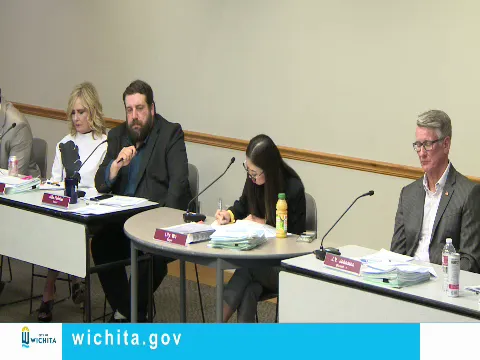
STREAMING COPY IN PREPARATION — RECORDING AVAILABLE FROM THE ORIGINAL SOURCE
City Council Workshop on Budget Update and Sales Tax Discussion - May 27, 2025
The Wichita City Council held a workshop on May 27, 2025, to receive updates on the 2026-2027 budget, review potential budget reductions, and discuss the possibility of implementing a local city sales tax. Staff presented strategic planning tactics, revenue and expenditure forecasts, and several scenarios for balancing the budget. Council members provided feedback on reduction options and expressed interest in exploring a sales tax referendum.
Discussion Items
-
Strategic Planning Update: Finance Director Elizabeth Goldree presented the pillars, goals, strategies, and 60 concrete tactics developed by departments. The five pillars are: Well-Run City, Keep Wichita Safe, Grow Our Economy, Infrastructure, and Living Well. Mayor Lily Wu challenged the ordering, arguing infrastructure should be third based on community survey priorities. Councilmember Hoheisel requested that MOU execution be included as a tactic. Staff noted the tactics will guide budget priorities.
-
Budget Forecast & Reduction Options (Slides 22-25): The 2026 general fund deficit is projected at $2 million, and 2027 at $5.5 million, after modest revenue adjustments. Staff presented a tiered list of reduction concepts with varying impacts. Key items discussed:
- Health insurance rate assumption: Potential savings if actual experience allows lower than 6% rate increase. Council appeared supportive.
- Postage & HR contractuals: Low-impact savings, no objections.
- Library reductions: Proposed cuts to newspaper/audio formats, technology study, and genealogy partnership (three positions). Councilmember Hoheisel expressed concern about impact on literacy programs, and Councilmember Johnson echoed support for maintaining literacy efforts.
- Municipal court staffing: Proposed reduction of one courtroom and three positions due to fewer traffic citations. Councilmember Johnson questioned impact on speedy trial rights; staff committed to further review.
- Tree planting reduction: Councilmember Ballard strongly opposed, noting 2025 was the first year plantings exceeded removals. Councilmember Hoheisel suggested working with community partners to lower costs. No consensus to cut.
- Right-of-way mowing reduction: Councilmember Ballard asked for number of affected properties; Park Director Gary Ferris said analysis is pending.
- Pools operating hours adjustment: Already implemented based on usage data. Councilmember Glasscock and others agreed it should be classified as a modified assumption, not a service reduction.
- Animal control field operations discontinuation (2027): Councilmember Ballard and Hoheisel strongly opposed, citing public safety and humanity. Councilmember Hoheisel suggested exploring consolidation with Sedgwick County. Staff confirmed this would shift calls to police officers.
- Public art reduction (CIP): Councilmember Tuttle supported keeping it; Councilmember Ballard was comfortable with the cut. No firm direction.
- MABCD (abatement/demolition) budget: Councilmember Ballard opposed cutting, noting demand is unpredictable. Councilmember Hoheisel agreed.
- Aerial truck staffing reversal (2027): Councilmember Ballard and Johnson opposed, calling it a public safety risk. Councilmember Tuttle also opposed.
-
Sales Tax Discussion (Slides 26-38): Finance Director Mark Manning presented 40 years of history. Wichita is one of only two first-class Kansas cities without a city sales tax. Current combined rate is 7.5% (6.5% state, 1% county). A half-cent city sales tax would generate ~$55-60 million annually; a full cent would generate ~$115 million. Costs to an average family: ~$28/year for a half-cent on groceries (if applied), or ~$176/year on all taxable consumption. Manning outlined that a sales tax could be used for property tax relief (e.g., a 6-mill levy reduction, equaling about $176 on an average home) plus capital infrastructure. Council members expressed interest but emphasized the need for community engagement, a clear purpose (e.g., public safety capital), and a sunset provision. Councilmember Ballard asked about combining a permanent mill levy reduction with a sunsetting CIP portion. Mayor Wu noted the city cannot lead a campaign; a grassroots effort would be needed. Councilmember Johnson stressed protecting renters and low-income families. Multiple members indicated November 2025 is too rushed and a longer engagement timeline is preferred.
Key Outcomes
- Council directed staff to refine the budget reduction list based on feedback: protect tree planting, animal control field operations, MABCD funding, public art, and aerial truck staffing; reclassify pool hours as modified assumption; further study court staffing impacts and literacy effects of library cuts.
- Staff will bring a revised budget to the June 24 workshop, incorporating council guidance and updated valuation data (expected by June 15).
- Council expressed support for continuing exploration of a city sales tax, with emphasis on a dedicated, sunsetting capital improvement component (public safety facilities) and potential property tax relief. No formal vote was taken; further discussion and community engagement are anticipated.
- The next regular meeting is June 3, 2025, at 6:00 PM, focusing on property maintenance code revisions.
Meeting Transcript
Items related to our budget recommendations for 2026 and 2027. We're at a very preliminary stage, but thought this was really appropriate an appropriate time to check in with the council on our progress and some issues that we are working through. The first of all, what we'll do is we will share with you, and we've already sent it out and it's available to the public as well. The pillars and the goals and the work that's been done towards implementation of those. You'll notice uh in this document a difference from previous documents, and that now there are tactics in order to achieve the strategies. Uh so we'll go through that briefly with you. Be glad to answer any questions. Again, work in progress. Um we'll finalize it when we get to the budget. Um, but hopefully it's reflective of your uh desires based on uh previous uh direction. After that, we'll then go through some uh budget reduction options. Council had um instructed us to do two budgets. Um so we basically have a base budget, and then we have some targets for reductions based on a uh different scenario, which would limit our property tax revenue. Uh we have some preliminary thoughts on not just um what that looks like from a uh revenue and expenditure standpoint, but what it would take in order for us to be balanced uh in both cases. So we have some uh items for you to discuss and give us some direction on uh again preliminary, so um appreciate your thoughts uh before we go further in the budget process. And the last, based on your discussion um uh during previous workshops is a uh thought piece regarding a local sales tax. So um there's a lot of information that isn't in the attached report, and then we'll summarize that for you in today's presentation. So a lot of moving pieces, and with that, Mayor, we're ready to get started. Is it Shana? Is it on the next slide? Okay, just oh great. Well, good morning, everyone. I'm Elizabeth Goldree from the finance department, and um, as the city manager mentioned, we're having a budget workshop today. Um, and he I will skip this slide with the overview because I think he did a great job of describing all of um the outline for the presentation today. Um there's been a lot of strategic planning that's been ongoing this year, and um this graphic here on slide on this slide, slide 11, is um I think sometimes when we have these workshops every month, it's good to just provide a little context to where we've been so far and where we find ourselves in the process. So at this point um in 2025, um there's been a lot of work that's happened to date, but at this point, um the tactics have been drafted, and those and the materials you have, and then the next step is um working towards the performance management framework and building the capacity in the organization for that, and that will be really illuminating perhaps in for the budget process this year, but definitely for the budget process next year. Um at the workshop in April, we shared some um pillars, goals, and strategies, and we also shared those at all six of the dab meetings that we attended. I think we shared an example of three of them. Um and I felt that the feedback that we got at the DAB meetings that those um pillars, goals, and strategies resonated with the community, so I feel like that's that's a good sign of progress moving forward. Okay, so what these things, if you're new to this pillar goal strategy, tactic language, um, the pillars are the really high-level elements of our mission statement. There was a lot of work done on that early in the year, and the same is true of the goals, and then the strategies were shared last time, and then this time um we're diving into the tactics, and as you can imagine, um there are there are 46 strategies, so every strategy has at least one tactic. So I think there's about 60 tactics, so there are a lot of them. And so there's a handout that has been distributed, and it includes um the tactics, and a lot of them include time-bound elements to them. So this will happen in 2025, or that will happen in 2026, or by this point in the process, this will occur. Um, and so they're they're pretty concrete. So I guess this would be the right time to go through those. Just starting, so it looks I I can see this one. Starting on that page. So for example, the first pillar that we have is the well-run city pillar. So the goals are over on the left side. And you'll also notice with the goals that there's some high-level outcome measures with each of them. On the well-run city, the goal 1.1, it's related to that goal is really related to financial condition. So that outcome measure is related to fund balance. But then on some of the others, what we've done in that column is that the outcome measures are related to the community city survey. So for these high level goals that we're using feedback from the community to guide to determine how that implementation is going. But as you go through each of the tactics, for example, the first one, all departments will inventory activities and determine their placement on the cost recovery pyramid by 2025. So we're getting into things at this point that are very concrete, very actionable, and time bound. So should we go through all 60 of them? So I don't know if there's any particular goals or strategies that are more interest than others. But we have a lot of these tactics.
openpublica.com