The special concurrent joint meeting of the City of Reno Parks and Recreation Advisory Board, the City of Sparks Park and Recreation Commission, and the Washoe County Open Space and Regional Parks Commission convened on October 26, 2026, at 6:00 p.m. The primary agenda item was a presentation and discussion by Pros Consulting on the feasibility of forming a regional parks, trails, and open space district. The boards reviewed findings, heard public testimony, and discussed the funding framework and next steps. Public Comments & Testimony - Julie Conway, a Washoe County resident and former Reno parks and recreation director, expressed strong support for the initiative, stating the current system is "broken" and offering her expertise from 25 years of experience. - Iris Jalee Papard, Executive Director of One Truckee River, formally conveyed the consensus support of the One Truckee River Partnership Council and Board (representing 188 entities) for the feasibility study and requested investment in the Truckee River Corridor. - Mac Rossi, a former Reno Parks Commission member, supported the district and argued that renters should pay a small fee to contribute to park maintenance. - Sean Sullivan introduced himself as a candidate and expressed interest in further analysis. Discussion Items - Consultant Presentation: Leon Younger and Mike Celito presented their framework and findings. They concluded the park systems are comparably underfunded, residents strongly favor a regional approach, and a unified district is a feasible solution. - Funding Framework: The proposal includes a baseline tax share agreement ($25 million annually from member agencies) plus a voter-approved parcel assessment ($20 million at $8.33 per month per parcel), creating a total budget of $57 million. This would bring per capita funding to $107, in line with national benchmarks. - Questions and Deliberation: - Commissioner Dake questioned the adequacy of the current state statute on development impact fees (NRS 278.4983), which has not been updated since 1973, contributing to a funding deficit. - Commissioner Hill clarified the governance model, stating the district would initially be a dependent government agency with appointed board members. - Commissioner Joel expressed concern that forming the district should not be made entirely contingent on passing the assessment, citing potential efficiencies of a regional approach. - The consultants and Chair Jones emphasized the critical level of deferred maintenance, noting 75% of new funds would likely go to maintaining existing assets. - Commissioner Baker distinguished between the assessment fund (for operations and maintenance) and development impact fees (for new capital construction). Key Outcomes - The boards unanimously approved the meeting agenda for October 26, 2026. - No binding vote was taken on the regional park district proposal. - Chair Jones directed all three boards to agendize this item at their next regular meetings to determine if a formal recommendation should be made to their respective city councils and the county commission. - The consulting team plans to return to the individual commissions in December 2026 or January 2027 to seek a vote on advancing to the service plan development phase. - The meeting was adjourned at 7:21 p.m.
The Public Meeting Index
The Public Meeting IndexThe Rockford City Council held a special meeting on Monday, October 26, 2026, at 5:45 PM at City Hall, 425 E. State Street. A quorum was present, and Alderman Frost was unanimously nominated and approved to serve as mayor pro tempore for the meeting. The council considered one zoning-related resolution and two grant acceptance resolutions, all of which were approved. Motions and Resolutions Code and Regulation Committee - Item 26-01252: Council approved a resolution to advance the public process by directing the zoning officer to file a zoning application for text amendments to the zoning ordinance and scheduling a public hearing at the Zoning Board of Appeals to review data center and associated regulations. Finance and Personnel Committee - Item 26-01247: Council approved acceptance of the Illinois Public Health Institute Medical Respite Capacity Building Initiative (IMRCBI) Grant Award in the amount of $45,000. The grant requires no cost match and has a term from July 1, 2026 through June 30, 2027. Funds will be used to continue building capacity for the medical respite program, supplies, and staff time costs. Council first voted by voice vote to suspend Rule 9, allowing immediate consideration, and then approved the matter. - Item 26-01271: Council approved acceptance of the Illinois Department of Commerce and Economic Opportunity (DCEO) Capital Improvement Grant Award in the amount of $500,000 (referred to in the transcript as DCO). The grant requires no cost match and has a term from September 1, 2026 through August 31, 2028. Funds will reimburse the City for a portion of the purchase price of the property located at 214 N. Church Street for the Family Peace Center. Key Outcomes - Alderman Frost was elected mayor pro tempore for the meeting by unanimous voice vote. - Item 26-01252 was approved, directing the zoning text amendment application process and scheduling a Zoning Board of Appeals public hearing on data center regulations. - Item 26-01247 was approved, accepting the IMRCBI grant of $45,000 with no cost match. - Item 26-01271 was approved, accepting the DCEO grant of $500,000 with no cost match. - The meeting adjourned after the votes.
The Rockford Finance and Personnel Committee met on October 26, 2026, to review the city's financial performance, emergency procurements, the 2027 budget, and several resolutions. The meeting included presentations from Finance Director Ms. Haggerty and Risk Manager Ms. Wilkerson, and was attended by committee members including Aldermen Solgado and Tumorin. Public Comments & Testimony - No public comments were made during the meeting. Discussion Items - Financial Discussion – September 2026: Ms. Haggerty presented that general fund major revenue sources were approximately $893,000 (0.9%) under budget year-to-date, while overall revenues were underperforming by about $2.2 million (1.3%). Expenses were $2.8 million under budget. Sales tax receipts subject to local sales tax outperformed by 15% (approximately $2 million), motor fuel taxes were on budget, hotel motel tax outperformed by 11%, but package liquor and food and beverage taxes were under budget year-to-date. The redevelopment fund year-to-date revenue was $6.9 million. - Emergency Insurance Purchase (Information Only): Ms. Wilkerson explained that after Travelers opted not to renew umbrella coverage, the city secured a policy from Metis of Roanoke, Virginia, at a lower premium with higher coverage. The deductible is $750,000. The contract is one year with a one-year extension option. - Emergency Salt Procurement & Hauling (Information Only): Contracts were presented for seasonal salt and de-icing supplies: Compass Minerals ($1,216,100 for 10,000 tons at $121.61/ton), RA Seaton (estimated $150,000 at $150/hour), and SaltXchange ($550,000 for 5,000 tons at $110/ton). The one-year contracts are funded by the Street Department Operating Budget. - 2027 Budget and Appropriation Ordinance: Alderman Tumorin moved to lay over (postpone) the budget approval to allow further review. The motion was seconded and passed by roll call vote. Members were encouraged to direct questions to Ms. Haggerty before the next meeting. Key Outcomes - Approval of Vouchers: Vouchers totaling $15,281,771.42 were approved unanimously. - 2027 Budget: Laid over for further discussion; no vote on adoption at this meeting. - Resolution 1 – Anti/De-icing Liquid Contract: Awarded to SNI Solutions of Geneseo, Illinois, for approximately $30,000 annually (unit pricing), with contract through May 31, 2027 and two possible one-year extensions. Approved unanimously. - Resolution 2 – DCEO Capital Improvement Grant: Accepted a $500,000 grant (no match required, term Sept 1, 2026 – Aug 31, 2028) to reimburse the city for a portion of the purchase price of 214 N. Church Street for the Family Peace Center. Approved unanimously. - Resolution 3 – Sale of City-Owned Property: Authorized the sale of property at 2326 Starr Street (PIN 11-35-327-030). Approved unanimously. - Resolution 4 – Professional Services for Fire Station 10: Awarded a $264,000 contract to Larson & Darby Group of Rockford for architectural design through construction administration for renovation and addition of Fire Station 10, funded by 2022 budget surplus. Approved unanimously. - Resolution 5 – Street Lighting and Well Pumping Electric Supply: Authorized the Central Services Manager to execute contracts with the lowest overall cost supplier for a term not to exceed three years. Approved unanimously. The meeting adjourned.
The Peekskill Common Council convened on October 26, 2026, at 1:45 PM. Mayor Vivian McKenzie presided over a brief agenda that featured two Italian American Heritage Month proclamations, followed by a celebration break and an announced executive session to discuss personnel matters. No votes, public comments, or consent calendar items were taken. Proclamations & Recognitions - Homestyle Bakery Family (Italian American Heritage Month Honoree): Mayor McKenzie read a proclamation honoring the Homestyle Bakery family—Rosenka, Laura Timmins, Teresa Timmons, and Gianna Deegan—for over 40 years of operation on Water Street. The proclamation highlighted the bakery’s dedication to traditional Italian baking, community generosity (donating treats to local charities), and national recognition (commissions from the New York Yankees, including a cake for Derek Jeter’s retirement). A family member expressed gratitude and noted the bakery’s deep connection to Peekskill. - Dominic Volpe Jr. (Italian American Heritage Month Honoree): A second proclamation recognized Dominic Volpe Jr., owner of Dominic’s Cleaners and Tailors on DePew Street, for decades of civic leadership and service. The proclamation cited his free dry cleaning and clothing for those in need (via Peekskill Youth Bureau), providing professional attire to residents of the Jan Peekskill Homeless Shelter, organizing winter coat drives for veterans (including at FDR VA Medical Center), receiving a citation from the Military Order of the Purple Heart, serving as chairman of the Pride in Cortland Committee, and earning Cortland’s Best Business Award in 2013. After the reading, Dominic Volpe Jr. shared a story about his father’s successful negotiation to acquire the business building with the help of Judge Bill Merton and reflected on over 56 years of family operation in Peekskill. Break & Executive Session - Following the recognitions, the Council took a break to celebrate with the honorees downstairs. The meeting was scheduled to reconvene for a Committee of the Whole meeting and an executive session to discuss the medical, financial, credit, or employment history of a particular person(s) or corporation, and matters leading to appointment, employment, promotion, demotion, discipline, suspension, dismissal, or removal. The transcript ends during the break, so no further discussion or votes were recorded. Key Outcomes - No formal votes, resolutions, or decisions were made during this portion of the meeting. The proclamations were ceremonial, and the executive session was announced but not held in the open session covered by the transcript.
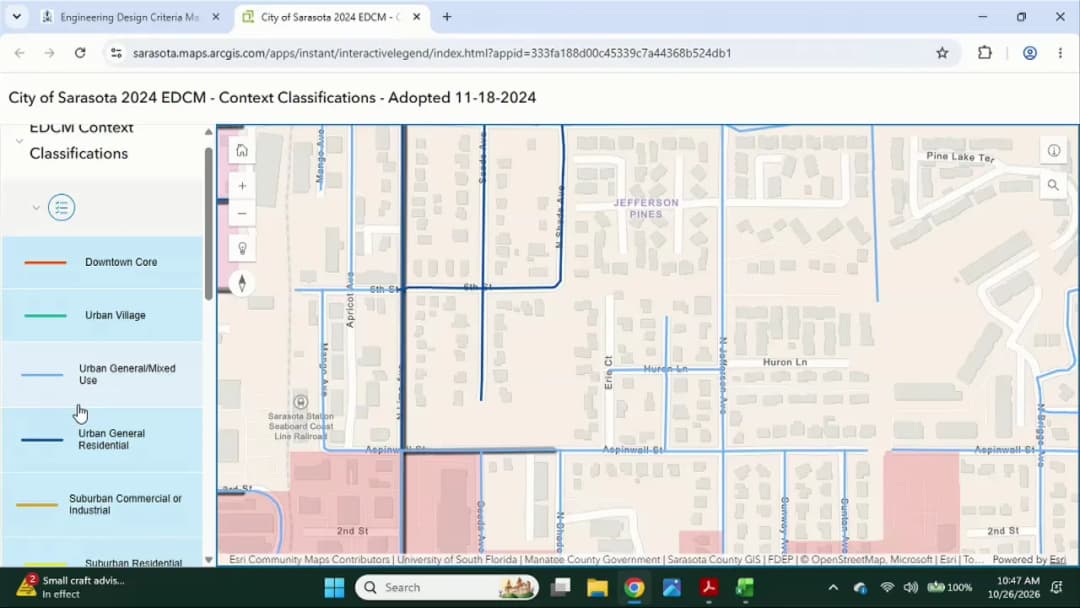
The Sarasota City Commission held a workshop on October 26, 2026, covering two main topics: state comments on the Comprehensive Plan Transportation Chapter update and the City Manager’s 100-Day Report. The order of the agenda items was swapped so the Transportation Chapter was heard first. No formal public testimony was taken during this workshop session. Discussion Items Comprehensive Plan Amendment 26-PA-02 (Transportation Chapter Update) Staff presented revisions to the Transportation Chapter—the first comprehensive update in nearly a decade—responding to Florida Commerce comments and Senate Bill 180 (SB 180) restrictions. The proposed change introduces a Volume-to-Capacity (V/C) ratio alongside the existing Level of Service (LOS) metric, with a greater emphasis on multimodal and operational improvements rather than roadway widening alone. Staff noted that Florida Commerce flagged 25 of 150 action strategies as potentially more restrictive or burdensome under SB 180, requiring language shifts (e.g., “shall” to “should”) for provisions on sidewalks, transit shelters, and micromobility. Commissioner Ahearn-Koch questioned the timing of the update, suggesting the city wait until the statewide SB 180 moratorium expires in October 2027 to avoid weakening its regulations. She raised concerns that proposed thoroughfare map changes (e.g., reclassifying Orange Avenue and Circus Boulevard to collector status) were not specifically called out to affected neighborhoods during public outreach. She also noted discrepancies and duplicate entries in the thoroughfare tables and a lack of version numbering on draft documents. Vice-Mayor Ohlrich asked about the necessity of updating now rather than by the 2029 deadline. Staff responded that the 2026 base year for the travel demand model would require costly rework if delayed, and that adopting the chapter now gives developers a transition period before SB 180 expires, turning current “requests” into future “requirements.” Mayor Trice focused on pedestrian safety, expressing concern that delaying the update would jeopardize safety improvements (e.g., crash-history review for development near failing corridors). He stated the chapter is largely aimed at city government objectives, not just developer requirements. Commissioner Alpert noted the update cleanses the plan of references to expired programs like Transportation Concurrency Exemption Areas, calling it an essential modernization regardless of SB 180. Commissioner Battie commended staff for being proactive, stating the current 2002 standards are largely inapplicable to today’s city needs. Staff confirmed the next step is the November 2, 2026 City Commission public hearing for first reading. The amendment will return for a second reading before being submitted to Florida Commerce for final review. City Manager 100-Day Report City Manager Karie Friling presented a 23-page report summarizing her first 100 days. She reported participating in over 350 meetings, stabilizing leadership (appointing Jennifer Jorgensen as Deputy City Manager and hiring Deidra Greene Larkins as Economic Development Manager), implementing a hiring freeze on general fund positions, and focusing on fiscal discipline. She noted $50 million in recovery costs from the 2024 storms and a goal of restoring reserves to 25% over two years, up from roughly 17%. She outlined a need for a commission-led strategic plan, stronger infrastructure resilience against flooding, and permanent protections for parks and open spaces, including exploring a “Friends of Sarasota Parks” nonprofit. She also proposed an Assistant City Manager for Community Development and a Sarasota Advisory Group of Experts (SAGE) to tap resident talent. Vice-Mayor Ohlrich praised the report’s focus on strategic planning but noted that page 20, while discussing underserved areas, neglected to mention District 3, which he called the “totally ignored district.” Commissioner Ahearn-Koch praised the report overall but stated she had issues with pages 11 and 12, which contain recommendations on changing the commission’s meeting rules. She expressed strong support for reestablishing a robust strategic plan and for prioritizing economic development and parks as infrastructure. Commissioner Alpert welcomed the focus on economic development, noting a recent rise in empty storefronts on Main Street and the need for proactive business recruitment. Commissioner Battie praised Friling for her deep engagement with District 1 and Newtown, and for hiring a local economic development manager who understands the community. Mayor Trice commended the city manager’s focus on listening and strategic planning. He offered a suggestion for the commission to consider scheduling legislative and quasi-judicial hearings in the morning, when members are fresher, rather than at the end of long days. Key Outcomes - No formal votes were taken. - The Transportation Chapter update will proceed to first reading before the City Commission on November 2, 2026. - Staff will correct duplicate and inconsistent entries in the thoroughfare plan tables from the backup materials. - The City Manager’s recommendations on commission rules and procedures (pages 11-12 of her report) were acknowledged for future deliberation by the full commission.
The Sacramento Ethics Commission met on Monday, October 26, 2026, at 5:30 PM at City Hall Complex, 915 I Street, Sacramento, CA. A quorum was established with four members present; Commissioner Maikhou Thao was absent. The commission unanimously approved the consent calendar, adopted updates to the Ethics Commission Procedures, and approved the 2026 Annual Report for referral to the Personnel & Public Employees (P&PE) Committee. No members of the public submitted speaker slips or testified during the meeting. Consent Calendar - The commission approved the September 28, 2026 meeting minutes, the Ethics Commission Complaint Log, and the Follow-Up Log (File IDs 2026-00073, 2026-00248, and 2026-01880) by a single motion from Commissioner Emery, seconded by Vice Chair Velasquez. The motion passed unanimously with no nays or abstentions. - Chair LaFaso noted that the follow-up log appeared to say the FPPC would speak in 2007 but that this was intended to read 2027. - During discussion, Chair LaFaso asked whether the city clerk could reverse a jurisdictional dismissal after receiving city attorney advice. Legal counsel Gary Lindsay advised that, under the current procedures, the clerk's dismissal decision is final. Chair LaFaso then requested that the city clerk and city attorney's office develop a protocol for consulting more frequently on gray-area jurisdictional matters before such decisions become final; both the clerk and legal counsel agreed. Public Comments & Testimony - No public speakers appeared for the consent calendar, for the procedures update, for the annual report, or for non-agenda public comment. Discussion: Update to the Sacramento Ethics Commission Procedures (Item 4) - The proposed updates included delaying entry into the complaint log when the city attorney is consulted and no longer treating complainant and respondent names as confidential. - City Clerk Mindy Cuppy explained that the existing confidentiality rule was designed to avoid a chilling effect and to encourage complaints. She confirmed that anonymous complaints would still be permitted under the proposal. - Chair LaFaso said the confidentiality rule had not been discussed when originally adopted, had not always been followed, and that publishing complainant names could discourage frivolous complaints. He said he was not proposing to publish respondent names. - Commissioner Emery supported the change, stating it would create consistency and clearer expectations. Commissioner Kelly also supported it, saying an accessible log helps the public and the commission understand what is pending. Vice Chair Velasquez suggested monitoring whether anonymous complaints increase after the change. - Mr. Lindsay answered a question about possible closed sessions, stating that the Brown Act does not permit the commission to hold closed sessions for complaint matters because they are not personnel or litigation matters, and most people subject to commission jurisdiction are not city employees. He further explained that a city code amendment could not overcome the Brown Act. - Commissioner Kelly moved to adopt the procedures as drafted; Commissioner Emery seconded. Chair LaFaso offered a drafting amendment to remove the redundant word 'information' from the phrase 'confidential materials information' in the redlined procedures. The maker and seconder agreed. The motion passed unanimously. Discussion: 2026 Annual Report (Item 5) - City Clerk Cuppy introduced the draft annual report, noted that the chair had reviewed it, and said minor amendments could be made from the dais. - Chair LaFaso observed that the training goal in the report lacked specifics and would be developed at future meetings. He proposed adding a sentence stating that the commission will seek out in-house resources to minimize training costs, citing roughly $3,500 in recent training spending. The commission supported the addition. - Commissioner Emery discussed the need to restart community outreach, noting she had given at least half a dozen presentations in a prior year and wanted to build a list of community groups and outreach opportunities. Chair LaFaso appointed an ad hoc committee on systemic outreach consisting of Commissioners Emery and Tao; Commissioner Tao was absent and appointed in absentia. The appointment was not added to the annual report because the committee might not materialize. - Vice Chair Velasquez identified minor punctuation and formatting issues, including an apparent labeling error in the report, and offered to provide corrections by email. - Vice Chair Velasquez moved to adopt the annual report as amended from the dais and to forward it to the Personnel & Public Employees (P&PE) Committee rather than bring it back to the full commission for final approval. Commissioner Kelly seconded. The motion passed unanimously. - The next P&PE Committee meeting was noted as December 1, 2026, where the report could be presented. Commissioner Comments, Ideas, and Questions - Commissioner Kelly asked about 2027 commission meeting dates. City Clerk Cuppy said the city council was expected to adopt the meeting calendar in November and distribute it afterward. - Commissioner Kelly reported that he had contacted the director of finance about auditing campaign statements, but received a response similar to the city auditor's: potential conflicts of interest and no interest in doing the work. He said this likely foreclosed in-house auditing options, leaving the FPPC or outside contractors as possibilities if the audit process is restarted. - Chair LaFaso noted that the existing ad hoc committee has an April deadline and that the FPPC presentation might occur sometime in 2027. - City Clerk Cuppy clarified that the term end date for Chair LaFaso, Vice Chair Velasquez, and Commissioner Emery is January 1, 2028, correcting inaccurate information that had appeared online. Key Outcomes - Approved the consent calendar unanimously. - Adopted the amended Sacramento Ethics Commission Procedures unanimously. - Approved the 2026 Annual Report unanimously and referred it to the P&PE Committee. - Directed the city clerk and city attorney's office to develop a consultation protocol for gray-area jurisdictional dismissals. - Appointed an ad hoc committee on systemic outreach consisting of Commissioners Emery and Tao.
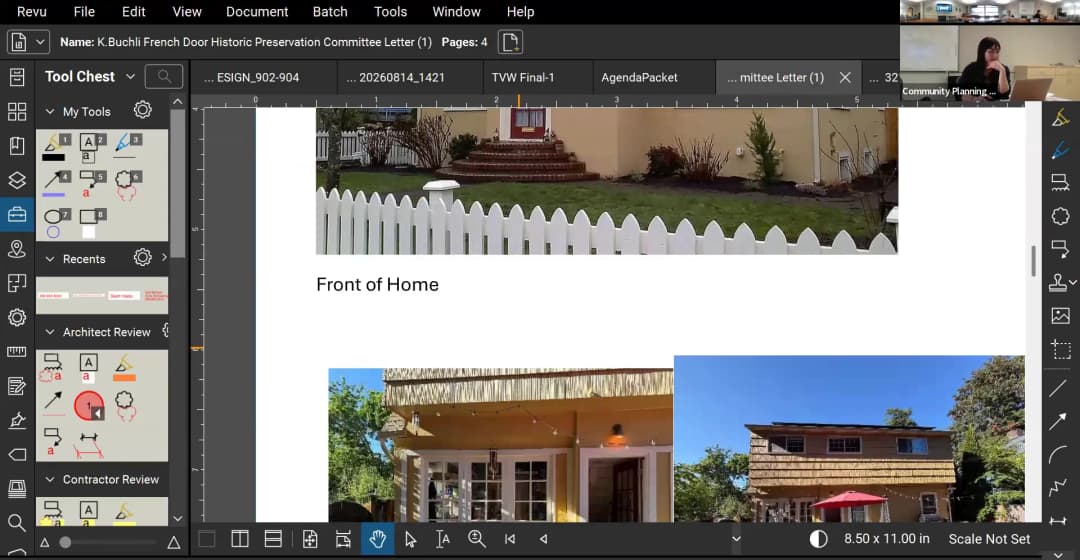
The Olympia Heritage Commission met from 5:39 p.m. to 6:41 p.m. on the recorded meeting date of 2026-10-26. Although the transcript repeatedly calls this the September Heritage Commission meeting, no agenda or minutes were available to confirm the discrepancy. Commissioners Cotter, Bowman, Patrick, Kimball, and Becker were present; Stedman was excused and Nace was absent. Consent Calendar - Commissioners approved the meeting agenda by consensus on a motion. - Commissioners approved the previous month's meeting minutes by consensus on a motion. Public Comments & Testimony - No public comment was offered and no members of the public appeared on the attendee list. Announcements - Staff announced that the city did not receive its Certified Local Government (CLG) grant; there were many applicants and higher-priority projects were selected, so the commission plans to try again. Commissioners thanked staff for the application work. - A commissioner announced a podcast recording, 'Info at the Archives,' at Nicole's bar the next day from 5:30 to 7 p.m. on the history of the state capitol building. - Staff noted a preservation roundtable in Portland on October 10 focused on preserving historic African American churches, including a free church tour, discussion, and lunch from 8:30 a.m. to 2 p.m. Discussion Items: Event Recaps and Upcoming Events - Harbor Days: Commissioners described a successful booth with an activity for community members to write memories of the Sandman and place them in bottles. A large sign showed where Sandman pieces will be located. The booth was busy, especially Saturday, and attendees were engaged. Staff reported the Port has moved the Sandman to the next deconstruction phase, and a council resolution to delist it is scheduled for mid-November as a consent item. - Thurston County Heritage Day: Not recapped; a commissioner said Stephanie may share details at the next meeting. - South Capitol Barbecue: A commissioner attended in a library capacity and spoke with neighborhood residents Jerry and Sue; many were still surprised at the cost of a survey, so the effort is a slow process. No commission display materials were seen. - Pacific Northwest Field School: One commissioner attended the week-long field school at Ginkgo Petrified Forest State Park with 9 to 11 participants. Work included restoring garage doors, masonry, and wood windows, along with evening lectures and a field trip to a tribal museum and Wanapum Dam. The commissioner praised the experience and offered to share photos and more details. - Artswalk: The commission has Friday coverage but urgently needs Saturday volunteers. The planned activity will gather material for a historic preservation zine, using prompts about what makes Olympia distinct, surveys, and crowdsourced drawings. The sign-up will be resent with a deadline. - Trivia: Trivia is postponed for now because of scheduling changes; it may be revived in winter. Discussion Items: Committee Reassignments - Commissioners discussed filling gaps, especially the Heritage Review Committee because site visits usually happen Monday around noon and take about 15 minutes. Staff will send a committee list and more practical descriptions of time commitments. - Commissioner Kyle volunteered to join the MORE committee to broaden participation. - Commissioner Melissa proposed trying committees to find a good fit and announced she will be away for five weeks starting Monday, through November 1, missing the next meeting. Commissioner Michael offered to help with design review in her absence. Reports - Design Review - French door project: At the individually listed Vance House, the rear facade's existing wood windows were not original and were being replaced with fiberglass French doors. Approval included a condition to stucco the infill to match the house. Commissioners noted no one can see the rear facade from the street. - Design Review - Evergreen Inn: The applicant formally filed for tax valuation and heritage register listing. The building was completed in 1971 in the Pacific Northwest regional style, has 196 rooms, and is being converted to housing with a proposed rehabilitation budget of about $15 million. The project is also going through state review, and staff will verify qualified rehabilitation expenditures. A quick turnaround is needed before the end of the year. - POG committee: Staff has not yet checked in with the South Capitol Neighborhood Association but plans to discuss next steps and possible phasing. Key Outcomes - Agenda and minutes approved by consensus. - CLG grant denial was accepted; the commission will apply again in the future. - The Sandman delisting resolution is expected before council in mid-November as a consent item. - Staff will resend the Artswalk volunteer sign-up with a deadline and will distribute committee descriptions and membership lists. - More volunteers are needed for the Heritage Review Committee; Kyle was added to the MORE committee. - Michael offered to cover design review while Melissa is away. - The meeting adjourned at 6:41 p.m.
The Municipal Service and Properties Committee met on Monday, October 26, 2026, to consider eight ordinances covering parks, public works, and capital projects. Key discussion items included an Olympic Torch Relay host agreement, a controversial proposal to purchase Miles School for Fire and EMS administration, and multiple road resurfacing projects. The committee held the Miles School project while advancing several other infrastructure items, though a split vote occurred over a joint road resurfacing project linked to the planned Browns stadium relocation. Discussion Items - Olympic Torch Relay Host Agreement (Ordinance 1176-2026): Director of Parks and Recreation presented a proposal to enter a host agreement with the Los Angeles Organizing Committee for the 2028 Olympic and Paralympic Games. The torch relay would be a single-day event in early May 2027, covering up to five miles in Cleveland. Council members Casey and Shaw expressed strong support, with Shaw suggesting a route through Rockefeller Park and the Cultural Gardens. - Signal Support Pole Requirements Contract (Ordinance 1284-2026): Public Works sought authorization for a two-year requirements contract to replace aging signal support poles (35 poles at $620k). Councilman Harsh successfully introduced two amendments requiring written notification for cooperative purchases and removing vague language on appropriation accounts. Commissioner Mavic confirmed the city can perform these replacements. - Fire Truck Collision Repair (Ordinance 1281-2026): An emergency ordinance authorizing a non-competitive repair contract ($301,379) for a fire engine damaged in a collision. The vehicle was under warranty, mandating repairs by the manufacturer. Councilman Casey questioned insurance status, confirming the city is self-insured and seeking full restitution from the at-fault driver. - Vehicle Donation for Workforce Development (Ordinance 1280-2026): Public Works will donate 2-3 retired city fleet vehicles annually for three years to Roadworthy Inc., a nonprofit providing transportation for workforce training. Councilman Starr described the program as supporting youth job access. Councilman Shaw requested the committee obtain the nonprofit's financial records (e.g., 990 form) before proceeding. - Miles School Purchase / Fire & EMS Admin Building (Ordinance 1242-2026): Capital Projects proposed a $4.5 million renovation of the former Miles School (purchased from CMSD for $975k via a sale-leaseback) to house fire and EMS administrative offices. This item generated the most opposition. Councilman Casey strongly opposed, calling it a potential "disaster project" reminiscent of the South High School renovation, citing distance from downtown and union opposition. Councilwoman Hudson questioned the EMS restocking plan and urged more direct union consultation. Councilman Shaw requested testimony from fire chiefs before a vote. The committee chair held the piece for further discussion. - Brook Park Road Resurfacing (Ordinance 1205-2026): A multi-city project with Brook Park and Parma to resurface Brook Park Road. Cleveland's share was $394,000. The discussion was highly political. Councilmen Casey and Shaw opposed the expenditure, viewing it as a subsidy for the Haslam Sports Group's planned stadium in Brook Park. Councilman Harsh supported it as necessary regional infrastructure upkeep separate from stadium politics. Councilwoman Gray supported it, deferring to the ward councilman. A motion to place the item on a path to approval was successful on a split voice vote (2-1). - Shaker Boulevard Resurfacing (Ordinance 1240-2026): A $10.6 million project addressing speeding (over 50% of drivers over the limit), crash safety (150 crashes in five years), and pedestrian/bike infrastructure. The project includes separated bike lanes and speed tables. Extensive community engagement (15 events, 300+ survey responses) was noted by the city and supported by council members Gray and Shaw. The item was approved as amended. - State Road Resurfacing (Ordinance 1241-2026): A $2.485 million project to resurface a critically deteriorated 0.46-mile stretch of State Road in Old Brooklyn. Councilman Harsh expressed strong support and reserved ward funds for traffic calming safety improvements to prevent speeding on the newly smoothed road. The item was approved as amended. Key Outcomes - Approved: Olympic Torch Relay Host Agreement (1176), Signal Support Pole Contract (1284), Fire Truck Repair (1281), Vehicle Donation (1280), Brook Park Road Resurfacing (1205), Shaker Boulevard Resurfacing (1240), State Road Resurfacing (1241). - Held: Miles School Project (1242) held by the committee chair for further consultation with fire leadership and union representatives. - Split Vote: The Brook Park Road project (1205) passed over documented opposition from Councilmen Casey and Shaw. - Directives: The administration was directed to provide financial transparency on the Roadworthy non-profit and to organize a meeting to discuss safety measures for the State Road project.
Leesburg Town Council met for a work session on October 26, 2026, in the Council Chamber at Town Hall, 25 West Market Street. The agenda listed a Fiscal Year 2028 Budget Work Session (Public Works and CIP), Zoning Ordinance Rewrite 'Dive List' discussions, and increased civil penalties for zoning violations. The available transcript contains no discussion of the Budget Work Session and opens mid-way through the zoning use discussion; no meeting minutes were available. The recorded discussion covered use-table 'dive list' items, short-term residential rentals, data center standards, zoning enforcement penalties, future agenda topics, and a closed session. Zoning Ordinance Rewrite – 'Dive List' Use Discussions - Staff and council reviewed Article III use tables, with staff explaining that many proposed changes were intended to implement the Town Plan and streamline administrative approvals. Several council members expressed concern about preserving public input and protecting existing residential neighborhoods. - Bed-and-breakfasts: Staff confirmed that bed-and-breakfasts are permitted by right downtown and are special exceptions in residential suburban and residential historic districts. A council member asked whether protections for traffic, appearance, and parking had been removed; staff said those concerns are covered by off-street parking requirements, special exception criteria, and compatibility standards, and offered to add standards back if any had been dropped. - Hotels: Staff described the draft proposal to allow hotels as permitted or limited uses in non-residential and mixed-use districts, with hotels not allowed in residential districts. A downtown hotel would be a limited use subject to a 50-room maximum and a requirement that at least 60% of gross floor area be used for lodging. Several council members objected that limited-use approval is administrative and provides no public hearing. Council informally polled in favor of making hotels a minor special exception in downtown, and in favor of keeping hotels permitted in mixed-use and innovation center districts. Council also expressed support for eliminating or restricting the separate commercial inn category. - Places of worship/public assembly: Staff presented use standards for limited-use approval, including noise compliance, traffic management plans, occupancy caps, and accessory-use limits. Councilmember Wilt asked for public input for all places of assembly, not only places of worship. Council informally polled four in favor of making places of worship/public assembly minor special exceptions across all discussed districts, including mixed-use districts. - Drive-throughs: Staff reviewed proposed treatment of restaurants, banks, and pharmacies with drive-throughs, including removing drive-through restaurants from mixed-use districts because they conflict with pedestrian-oriented goals. Councilmember Cummings proposed eliminating banks with drive-throughs in downtown, and four council members supported that change. Other drive-through permissibility provisions were left as proposed. Staff noted walk-up ATMs would not count as drive-through facilities. - Cemeteries: A council member raised the two Mount Zion cemeteries, noting that one is zoned medical center and the other is in the historic residential district, and asked whether the Black cemetery would be protected differently. Staff said the zoning difference was not intentional and came from existing district mapping, and agreed to review the mapping. Staff also cited state code protections governing cemetery removal. - Staff noted that the dive list item about maximizing administrative handling of minor matters was intended to find uses that could move from legislative to administrative review. Other dive list questions were held until the November 9 meeting. Short-Term Residential Rentals - Staff presented draft changes to short-term residential rental regulations. The draft would require registration in town code rather than a home occupation permit, keep existing limits of one short-term rental per parcel and a maximum of six lodgers for stays under 30 days, and add an operator residency requirement of at least 185 days per year. The Planning Commission had also recommended a 90-day-per-year cap on short-term rental use. - Council discussed the difficulty of verifying residency, whether existing permit holders would be grandfathered, and whether the town could cap the number of short-term rentals in a neighborhood. The town attorney said Virginia jurisdictions have generally not used numeric caps, but the town can regulate use impacts. - Town staff and the town attorney explained that the 185-day residency requirement is intended to prevent corporate or absentee ownership, while the 90-day cap was intended to limit the intensity of use. Staff said it was comfortable with the residency requirement but did not support the 90-day cap. - Council informally polled four in favor of the 185-day residency requirement, so that remained in the draft. The 90-day cap did not receive four votes, and a proposed alternative 180-day cap also did not receive four votes. Council directed staff to strike the 90-day cap while retaining the residency requirement. - Councilmember Cummings requested a future work session to explore incentives for converting short-term rentals into long-term rentals. Staff agreed to research options, likely in time for the December meeting. Data Center Use Standards - Staff reviewed existing data center standards, which were developed with industry representatives and the Piedmont Environmental Council. Data centers are currently proposed as a special exception only in the industrial research district. Standards address building placement, mass and articulation, fenestration, equipment screening, landscaping, generators, and substations. - Staff cited economic development research showing approximately 230 data centers in Loudoun County, with 56.5 million square feet in operation or under development and 35.7 million square feet approved in the pipeline, and said demand still outpaces supply. - Council discussed generator hours, battery backup, and adaptive reuse. Staff said generator operating hours were not included because generators must operate during emergencies and substation outages. Council members expressed concern about continuous generator use during heat events and asked whether the town could require adequate battery backup. The town attorney said the town could require terms like 'adequate' or 'sufficient,' but enforcement could be difficult, and energy-efficiency requirements are better addressed through proffers. - Council did not vote to add generator-hours restrictions, battery backup mandates, or adaptive reuse incentives. Staff was directed to continue monitoring Virginia Municipal League efforts and state-level data center policy. Increased Civil Penalties for Zoning Violations - Town Attorney Chris Spera and staff presented the draft zoning enforcement framework. The draft ordinance tracks the maximum civil penalties allowed by state code, with enhanced penalties available for multifamily residential violations under new state law. Staff said it does not recommend adopting the higher multifamily penalty maximums. - Staff described current enforcement: a complaint-based system, a courtesy letter, a notice of violation with appeal rights to the Board of Zoning Appeals, and referral for legal enforcement if needed. Since 2021, the town has gone to court 14 times on zoning cases, plus two additional declaratory judgment cases involving deceased property owners. - Possible options discussed included more proactive enforcement, skipping courtesy notices, seeking court injunctions or temporary restraining orders for egregious cases, asking the General Assembly to raise fine limits, and making unpaid zoning fines statutory liens against property. - Councilmember Wilt asked which tool would address cases where stop-work orders are ignored. The town attorney said temporary restraining orders and injunctions are available tools and can be pursued without following the normal fine process. - Council expressed support for the current outreach-first approach, for continuing the legislative request for higher penalties, and for using temporary restraining orders in egregious cases. No formal vote was taken on penalty levels. Future Meeting Topics - Staff previewed the November 9 work session agenda: live-work parking requirements, sustainability incentive measures, attainable housing, setback consistency, zoning map review, gateway district boundaries, carriageway townhomes overlay review, and legislation from the 2026 Virginia General Assembly related to accessory dwellings, parking, high-energy-use facilities, solar facilities, and affordable housing. - Retail cannabis was tentatively scheduled for December 7. Staff also noted that a timeline for setting the tax rate is already in progress. Closed Session - The Council voted to convene a closed session under Virginia Code § 2.2-2711(A)(7) and (8) to consult with legal counsel and staff about potential litigation related to zoning matters and encroachment on town-owned airport property. The motion was seconded and passed. The meeting adjourned following the closed session. Key Outcomes - Council informally supported making hotels a minor special exception downtown and keeping hotels permitted in mixed-use and innovation center districts. - Council informally supported making places of worship/public assembly minor special exceptions across the board. - Council informally supported eliminating banks with drive-throughs downtown. - Council approved the 185-day operator residency requirement for short-term residential rentals and rejected the 90-day and 180-day rental caps, directing staff to strike the 90-day cap. - Council did not add new data center generator, battery backup, or adaptive reuse requirements. - Council will continue pursuing state legislative changes for higher zoning penalties and will use temporary restraining orders where appropriate. - A closed session was authorized for legal consultation on zoning and airport property encroachment matters.
At the October 26, 2026 Leesburg, Virginia meeting, officials reviewed proposed zoning changes affecting bed-and-breakfast and hotel uses in the downtown district. The main point of contention was a proposed increase in the bed-and-breakfast room cap to 15; members called that too high and converged on eight. They also compared the definitions of bed-and-breakfasts and hotels and discussed streamlining downtown hotel approvals. Discussion Items - The draft amendment would raise the bed-and-breakfast room cap to 15 across the board. Staff member Mr. Watkins confirmed the existing ordinance limits bed-and-breakfasts to five rooms. - A bed-and-breakfast in the residential-historic district would remain a special exception requiring planning commission and town council approval; the existing cap in that district is five rooms. The transcript contains a conflict on this point: one exchange suggests the residential-historic cap was unchanged, but staff then said the 15-room cap applied 'across the board.' - Staff described a bed-and-breakfast as overnight accommodations with a morning meal in a single-family detached residence that is currently permitted as a single-family dwelling, has a resident manager living on site, and has no cooking facilities in guest rooms. The ordinance does not distinguish new versus old construction. - The draft would make downtown hotels a limited use instead of a minor special exception, subject to no more than 50 rooms and a requirement that at least 60 percent of gross floor area be used for lodging. Member Positions - The mayor questioned whether a 15-room house could still function as a bed-and-breakfast, said lowering the 15-room cap is important, and noted five might be a little low; they said some localities require the house to be at least 50 years old. - Dr. Simena Johnson cited Virginia Code 35.1, which defines a bed-and-breakfast as having no more than 18 transient guests on a single day, and said she was comfortable with nine rooms but not 15. - Mr. Cummings said he would support lowering the cap to a number in the five-to-eight range and would have no problem leaving it at five; he noted the Colonial Inn has roughly five rooms, later corrected to ten guest rooms. - Another member said eight rooms could be the 'sweet spot' because known eight-bedroom homes would make excellent bed-and-breakfasts, while noting that one of the eight rooms would have to be used by the owner or manager. Key Outcomes - Members informally converged on eight rooms as a compromise bed-and-breakfast cap after considering five, six, seven, and nine; at least four members indicated support for eight. - No formal vote was recorded in the transcript excerpt, and final action on the zoning amendment was not shown. The hotel limited-use proposal remained under discussion.