The Prince George's County Cannabis Reinvestment and Restoration Board met on October 8, 2026, to review community engagement data, discuss the board's branding, and establish a timeline for the first grant application cycle with the assistance of County Grants Director Shannon Rogers. Consent Calendar - The board unanimously approved the meeting minutes from September 9, 2026. Discussion Items Community Engagement & Survey Results - Staff presented feedback from 69 community surveys and three town halls held in September. Desired investments included road repairs, stop sign cameras, financial literacy programs, healthcare infrastructure, and first-time homebuyer support. - Board members discussed the need for broader outreach, especially in the southern part of the county and districts that have not yet hosted town halls. - Natalie Doris offered Iverson Mall in District 7 for a town hall on October 28, 2026. Karen Yang offered to secure a venue in District 3. A virtual town hall was also proposed to increase accessibility. Board Branding and Pending Legislation (CB93-2026) - The board extensively discussed the stigma associated with the word "Cannabis" in its official name. Members noted that over half of potential participants at town halls disengaged because of the name. The board expressed unified support for aligning its name with the state's "Community Reinvestment and Restoration Fund" while remaining transparent about the cannabis tax funding source. - Staff provided an update on CB93-2026, which would rename the board and require current members to reapply for four-year terms, maintaining continuity until new appointments are made. - Chair Carpenter identified a significant conflict between the strict timeline required by the proposed legislation and the realistic operational timeline for grant processing presented by the Grants Director. Grant Application Process & Timeline - Shannon Rogers presented a detailed timeline and process. The county's grants management system will support the application, with a dedicated grant analyst assigned to the board. - Proposed Timeline: Applications will be open for 60 to 90 days. Board review of applications is expected to take 6 to 8 weeks. Payouts to grantees will follow 2 to 3 weeks after allocation decisions. - A draft application and scoring rubric are available for board review. The county can directly notify over 600 pre-registered community organizations when the grant opens. Key Outcomes - Next Meeting: Scheduled for October 21, 2026, featuring Courtney Davis (Deputy Director, Maryland Office of Social Equity) as a guest speaker. - Grant Application Review: Board members will review the draft application and rubric and provide feedback at the next meeting. - Town Halls: An in-person town hall in District 7 (October 28, 2026) and a virtual town hall are being finalized. - Legislative Feedback: The board will formally relay its concerns regarding the feasibility of the legislated timeline in CB93-2026 to the County Council. - Compliance: A letter has been transmitted to the state regarding the board's spending plan to meet compliance deadlines. - Public Comment: A new public comment period was added to the agenda but deferred to the end of the meeting. The meeting was adjourned before it was conducted.
The Public Meeting Index
The Public Meeting IndexThe Memphis City Council met on October 8, 2026, to act on MLGW fiscal consent items, planning and development cases, add-on and same-night agenda items, and to receive public comment. The raw transcript opens with a reference to October sixth, which is a discrepancy from the supplied meeting date. Unless otherwise noted, roll-call votes recorded all present members voting yes. Consent Calendar - The MLGW fiscal consent agenda, items 9 through 16, was approved unanimously. Approved funding included: $1,488,978 to TDOT for Lamar Phase 2 electric facility relocations; $250,000 increase and renewal with Allen & Hoshell; $228,000 increase and renewal with Integrity Solutions for external corrosion direct assessment; $261,531 increase and extension with First Tech for MLGW payment centers; $1,686,234 purchase order to All Tech for Class 5 and Class 8 bucket trucks; $94,479.97 for Radian Research electric meter testing; $616,601.30 water meter parts purchase order to Badger Meter; and $1,087,500 external auditing services contract to Clifton Larson Allen LLP. - Consent add-on items 32 and 33, the two data center zoning ordinances, passed on first reading. Councilmember Easter Thomas asked to be removed as co-sponsor of item 33. Public Comments & Testimony - Richard Massey supported a one-year moratorium on data centers. He said nearly 500 communities across the country, including multiple Tennessee jurisdictions, have paused data center development, and argued Memphis is acting from behind and needs time for community engagement, impact studies, and regulations rather than a rushed 45-day process. - Paul Klein, vice chair of the Sierra Club Chickasaw Group and co-chair of Climate Reality Project Memphis, supported a one-year moratorium. He cited concerns about rising electric bills, fossil-fuel generation, air pollution, water use, noise, and land use, and said a 90-day pause is not enough. - Jasmine Houston asked the council to pause and said decisions are being made without truly hearing residents. She said Memphis is putting profit over people and losing quality of life. - Alexa Pouncey said more than 200 people attended the prior Tuesday meeting and expressed concern that some attendees were not allowed to return, noting that they were Black. She said the situation was being mishandled. - Jessica Miller, a professional activist, said she attended every meeting since the moratorium was introduced. She said no one who spoke asked the council to reject the moratorium, that comment cards should have been considered before the hold was voted on, and that residents should not be shamed for attending. - Sophia Mason, a constituent of Councilman Spinoza, supported the resolution to remove ICE and the National Guard from the Memphis Safe Task Force and asked the council to pass it on October 20. - Brandy Price asked whether the data center ordinances cover heat distribution and monitoring of collected data. She cited examples in Denmark where data center heat is reused for homes and warming centers, said the council needs expert input, and supported a moratorium. Councilman Spinoza said a future meeting would bring in experts and he would answer the question. - Alexander Perkins cited Apple's Denmark data center, Meta's Utah center, Independence County, Arkansas's five-year moratorium, and 29 Tennessee jurisdictions with moratoria. He said XAI Colossus 1 paid $24.5 million in city and county property taxes, while Colossus 2 gas turbines are expected to cause more than $30 million per year in environmental damages according to the Southern Environmental Law Center. - Amber Sherman, an organizer, disputed claims that the moratorium is a ban or would stop existing data centers. She described worsening air quality and said she now needs an $800 inhaler because of it. She supported the moratorium. - Justin Pearson questioned notices about possible bans from council meetings, said the process should not chill First Amendment rights, and described impacts on Westwood, Boxtown, and Whitehaven over 855 days since Elon Musk's announcement. He cited a cancer risk 4.1 times the national average and an F air quality grade, and supported a pause. - Keyshawn Pearson, executive director of Memphis Community Against Pollution, said two years of community meetings, letters, and Southern Environmental Law Center presentations have not produced action. She demanded a pause and said the October 20 vote will show whose side the council is on. - Isaac Freeman, former president of Tennessee Young Democrats, supported a moratorium and called for policies to improve air quality. Discussion Items - Item 4, a resolution directing the zoning administrator to submit an application to replace the City of Memphis zoning map, passed unanimously. - Item 5, special use permit SUP 25-37 for a gas station at 1681 East Raines Road, passed with Councilmember Cooper Sutton voting no and Councilmember White abstaining. The applicant said the drive-through was eliminated, alcohol and tobacco would not be sold, and the adjacent property would be improved. The council added a condition that food trucks would not be permitted on the subject property. - Item 6, special use permit SUP 26-14 for a car wash at 2451 Summer Avenue, passed unanimously with an amendment changing hours of operation from 8 a.m. to 6 p.m. to 7:30 a.m. to 7:30 p.m. A comment card from Sander Snowden, who was not present, was read in support. - Item 7, planned development PD 26-05 at 2604 Covington Pike, was held without objection until October 20, 2026. - Item 8, ordinance ZTA 26-02 establishing a procedure for replacing the zoning map, passed on third and final reading. Planning staff said the ordinance only authorizes public notice for the upcoming zoning map update and does not approve the Memphis 3.0 plan. A letter from residents was made part of the record. - Add-on item 24, calling for removal of ICE and the National Guard from the Memphis Safe Task Force, was held until October 20, 2026. - Add-on items 25 through 28 and 30 were approved: $150,000 for the Safeways crime-prevention initiative in apartment complexes; $1,453,600 for Memphis Police Department in-service training; Myrtle Winfield appointed to the Board of Ethics; retired Judge Lois Lambert Ryan appointed Board of Ethics Chair; and nominal conveyance of 3628 Summer Avenue to Broad Avenue Community and Economic Development Corporation. - Add-on item 29 was approved, accepting and appropriating $129,220.45 in federal TDOT grant funding for the Range Line sidewalk enhancement project. - Item 17, pension ordinance third/final reading; item 18, Memphis Shelby County Building Home Program amendment third/final reading; and item 22, short-term rental public nuisance enforcement ordinance, all passed. Item 22 creates a three-violation standard, a public nuisance enforcement pathway, possible damages of $1,000 to $50,000 for qualifying nearby property owners, and city recovery of enforcement costs. Several council members were added as co-sponsors. - Item 23, the seven-year initial lease with renewal option for Bluff City Pickleball at 940 Early Maxwell Boulevard, was held until October 20, 2026, after Councilwoman Green raised concerns about roller derby. Memphis Parks Director Justice Bowden said roller derby has a permit at Davis Community Center through 2027. - Same-night minute items, listed as 2, 16, and 25 through 30, were approved in one motion. Key Outcomes - MLGW fiscal consent items 9 through 16 were approved unanimously. - Item 4 was approved unanimously; item 5 was approved with one no vote and one abstention; items 6 and 8 were approved unanimously; item 7 was held to October 20. - Data center first-reading ordinances, items 32 and 33, were approved, and Councilmember Easter Thomas was removed as co-sponsor of item 33. - Add-on resolutions 25 through 30 were approved; item 24 was held to October 20. - Items 17, 18, and 22 were approved; item 23 was held to October 20. - Same-night minutes were approved. - Items held to the October 20, 2026 council meeting include items 7, 23, and 24.
The DeKalb County Board of Registration and Elections convened its regularly scheduled meeting on October 8, 2026, at 9:30 AM. The board addressed a voter registration challenge, received an operational update from Director Keisha Smith, and discussed election security and preparation for the upcoming November election. A significant debate occurred over a motion to amend the agenda, which ultimately failed. Public Comments & Testimony - Michael Beach (Poll Manager): Commended the office for poll worker training. Criticized the requirement for check-in clerks to call a manager for every problem and expressed strong opposition to a new State Election Board (SEB) rule requiring a handwritten sequential numbered list of voters, describing it as unnecessary, stress-inducing, and a potential privacy violation. - James Edmondson: Commented on the SEB's role and noted that federal law prevents DOJ agents from entering polling places without approval from local officials. - Betsy Shackleford: Praised the board's work and leadership, calling it patriotic, and praised the recent poll worker training as the best in 10 years. - Rob Boyle (First meeting attendee): Expressed concern that the board voted down an agenda amendment without discussion, stating he felt all topics should be heard. Recited the Pledge of Allegiance. - Kendra Bogowski (Chair, DeKalb County Republican Party): Thanked staff for a joint party meeting and transparency. Stated that a board member of the minority party should not struggle to get items on the agenda (referencing Travis Bowden). Informed the board of upcoming get-out-the-vote events that could cause long lines and urged enforcement of 150-foot campaigning rules. - John Salvison (Candidate for U.S. House, 5th District): Thanked the board for their work amidst confusion from the state level and urged them to work together and avoid division. - Janet Grant (Area Poll Manager): Expressed support for a court decision allowing voters to return absentee ballots at any early voting site and thanked DeKalb for using this option. Echoed concerns from training about the SEB's new handwritten list rule adding stress, time, and errors for poll workers. - Joy Wasson (DeKalb Voter): Asked the board to publicly post poll tapes from advanced voting for transparency (citing a proposal by Scrutineers). Urged board members to ask the SEB to rescind a resolution authorizing its executive director. - Bethan Frullman (Voter Access Advocate): Emphasized focusing on making voting easy for eligible voters rather than removing people from the rolls. Discussion Items - Voter Registration Challenge (Jeremiah Bell): The board heard a challenge from James Edmondson, a veteran who has lived at his address since 1971. He stated that Jeremiah Bell registered to vote using Mr. Edmondson's address (4592 Mercer Road). Director Smith reported that Bell's original registration (via DDS in 2024) listed 4599 Mercer Road, directly across the street, and a handwritten form changed the address to 4592. Bell has not voted in DeKalb County. The board deliberated on the burden of proof, the risk of disenfranchising a valid voter, and the implications of a potential scrivener's error. - Director's Report: Director Smith presented registration statistics (577,209 total as of Oct 8; 1,807 applications left to process), absentee ballot numbers (9,843 issued, 46% of 2022 levels and 37% of 2024 levels), and updates on Logic & Accuracy Testing (expected to complete Oct 10). Budget updates and a new advertising campaign ("DeKalbVotes.com") were highlighted. - SEB Handwritten List Rule: Deputy Director Dr. Jesse Harris detailed the training and procedure for the new SEB rule requiring a handwritten sequential list in addition to the electronic poll pad. - Risk Limiting Audit: The board was informed of the upcoming audit scheduled for November 13-18, with 100 teams of two, tentatively planned at the Toby Grant Recreation Center. Key Outcomes - Agenda Amendment Rejected: A motion by board member Travis Bowden to add three items (groups organizing to vote at polling locations, non-citizens on voter rolls, DOJ record preservation directive) to the agenda failed. The original agenda was then approved. - Voter Challenge Denied: The board voted to reject the 21-2-229 challenge against Jeremiah Bell, finding the challenger failed to meet the burden of proving the voter was not qualified to remain on the roll. - Investigation Ordered: A motion by Gail Lee directing the VRE office to investigate the residency of the challenge voter at the 4599 address and consider a future 21-2-228 hearing was approved. - Resend Notices Ordered: A motion by Dale Lohman directing the department to immediately resend voter registration notices to both addresses (4592 and 4599) to initiate the return mail process and the inactive voter clock was approved. - Voter File Processing: Staff confirmed all eligible, timely-filed voter registrations will be processed before early voting begins on Monday, October 13. - Logic & Accuracy Testing: The testing for all equipment (touch screens, scanners, poll pads, hubs) is expected to be completed by Friday, October 10.
Date: October 8, 2026, 09:30 UTC (the agenda listed 1:30 PM PT; the reason for the discrepancy is not specified). The Neighborhood Services and Education Committee (NSE) of the San José City Council met to review annual reports from the Senior, Parks and Recreation, and Youth Commissions; receive a status report on the Children and Youth Services Master Plan; and review the Animal Care and Services annual report. The meeting included discussion on commission roles, master plan implementation, and animal shelter operations, with public comments on several items. Consent Calendar - The consent calendar included the Senior Commission and Parks and Recreation Commission Annual Reports and Work Plans (CC 26-115) and the Youth Commission Work Plan (CC 26-116). - Councilmember George Casey removed item CC 26-115 for separate discussion. After discussion and public comment, the committee approved the consent calendar as presented unanimously. Public Comments & Testimony On the Parks and Recreation Work Plan (from consent calendar removal): - Ken Brennan, a three-year Parks and Recreation Commissioner speaking in his individual capacity, urged the committee not to approve the work plan as presented. He argued that the work plan lacked items addressing operational performance and reflected PRNS leadership priorities rather than oversight needs. He requested a one-month delay to incorporate meaningful oversight priorities. On the Animal Care and Services Annual Report: - Lynn Paulson criticized the lack of public access to shelter animals and transparency, stating that audit recommendations 6, 7, and 24 were inadequately implemented. - Dinah Hayes acknowledged the increase in spay/neuter services but said it remains far below community need. She noted that shelter intake data does not capture animals turned away or taken directly by rescues, and urged prioritizing spay/neuter with real accountability. - Ann (reading a letter from a former volunteer) described low volunteer morale and retention issues, with experienced volunteers leaving due to frustration. She stated that new volunteer retention is below 15% and that the city should evaluate volunteer experience, not just counts. - Andy Shane shared his experience adopting a cat with undisclosed medical issues, leading to $2,000 in unexpected veterinary costs. He questioned the shelter's medical care and adoption procedures. - Mike Wagner contested the report's claim of strong live outcomes, noting a 17.2% decline in cat/kitten adoptions, a 39% decline in three years, and a 67% increase in kitten euthanasia. He pointed out data inaccuracies and said the report was misleading. Open Forum (items not on the agenda): - Emma spoke about a pending sweep of an encampment near Allender Dog Park, affecting residents formerly part of the Jungle. She stated that an email from the city could stop the sweep and asked the committee to support the residents. - Raul (Blair Beekman) commented on the sale of a data center at Harry Lane, urging a deliberate community process and praising Councilmember Campos for her careful approach. Discussion Items Parks and Recreation Commission Work Plan - Councilmember Casey raised concerns about the commission's role and the work plan development process. He sought clarification on the oversight vs. advisory roles and suggested empowering the commission to take on more work. Angel Rios (City Manager's Office) and staff explained that the commission's role is advisory per charter, and the work plan was developed by the commission with staff guidance, approved by a majority vote. Casey also inquired about measurable performance metrics for park maintenance and proposed a pilot program for skilled volunteer maintenance work to address the backlog. Staff noted union and liability concerns but agreed to explore options. Chair Ortiz expressed hesitance to change commission dynamics given the majority was satisfied with the work plan but supported further discussion. The committee did not make changes; the consent calendar was approved. Children and Youth Services Master Plan Status Report (CC 26-117) - Andrea Flores Shelton (Assistant Director, PRNS) presented updates: the grand opening of the Capitol Park Navigation Center operated by GRAIL Family Services, with $200,000 in child care capital improvement funds; collaboration with County Social Services for on-site eligibility workers; and consideration of a bridge library at the site. Chair Ortiz raised safety concerns after a recent shooting at Capitol Park and ongoing issues with gambling and drinking. Staff described efforts to secure the facility and work with police. Councilmember Campos asked about alignment with the county's child care blueprint and development of a governance structure. Staff indicated they are working on a governance model and will present it to council later. The committee accepted the report. Animal Care and Services Annual Report (CC 26-118) - John Cisrelli (Director, PRNS) and Monica Wiley (Deputy Director) presented the report, highlighting 7,000+ spay/neuter surgeries, a licensing transition to DocuPet, 19,065 field service calls, 48 new rescue partners, and an 18% cost recovery model. The report noted a 95% live release rate for dogs but a drop in cat live release rate from 86% to 80%. Discussion focused on expanding spay/neuter capacity to reach a target of 10,000 surgeries per year, the classification of kittens as unhealthy/untreatable (often unweaned, but 89% saved), and the need to improve volunteer and rescue partner relations. Councilmember Casey emphasized volunteer retention and trust-building. Councilmember Candelas supported scaling spay/neuter and acknowledged the transition challenges. Chair Ortiz requested more detailed historical data and inclusion of Asilomar intake/outcome tables in future reports. Vice Chair Doan raised facility capacity issues and suggested purchasing an adjacent lot. The committee accepted the report. Key Outcomes - The consent calendar (Senior Commission, Parks and Recreation Commission, and Youth Commission work plans) was formally accepted. - The Children and Youth Services Master Plan status report was accepted. - The Animal Care and Services annual report was accepted. - Staff will provide a briefing on commission roles and responsibilities to clarify advisory vs. oversight functions. - Animal Care and Services will include year-over-year breakdowns of cat and kitten adoption, euthanasia, and live release rates, as well as complete Asilomar data in future reports. - The administration will explore expanding in-house spay/neuter capacity and increasing volunteer involvement. - A Levitt Pavilion update is scheduled for the committee's December meeting as part of the PRNS Community Impact Report. - The committee received and noted open forum comments regarding the encampment sweep and the data center sale.
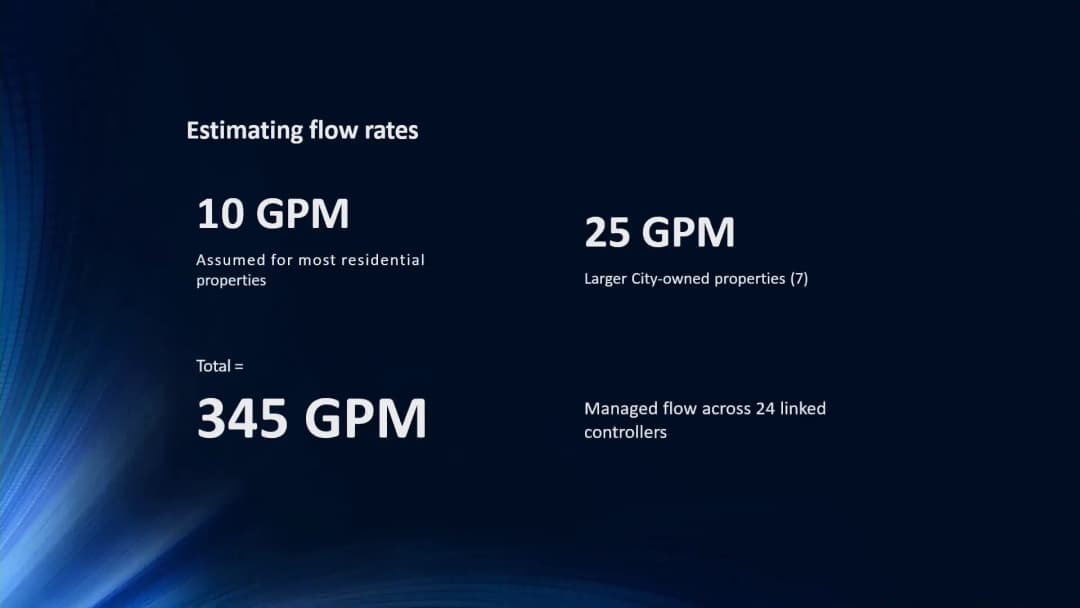
The Hastings Utility Board met on Thursday, October 8, 2026 at 9:00 AM in the Council Chambers of Hastings City Hall. The meeting covered electric reliability performance, lead water service and main replacement progress, results of a smart watering pilot program, and preliminary discussions on a computational load rate for data centers. The board unanimously approved the consent agenda and adjourned at 9:49 AM without entering closed session. Consent Calendar - Approval of minutes from the September 10, 2026 meeting: Moved by Dewalt, seconded by Rutt. Roll call vote: all five members present (Kvols, Dewalt, Meeske, Rutt, Mertens) voted aye. Motion carried. Public Comments & Testimony - Discrepancy noted: The official minutes record no citizen communications. However, the raw transcript contains an exchange initiated by an unidentified speaker (likely a board member or manager) who stated they were contacted by an individual asking about water usage at the generating stations—specifically whether the wells are metered and if estimates of water consumption per unit can be provided. The manager agreed to compile information and get back to the requestor. This item did not appear under formal citizen communications on the agenda or minutes. Discussion Items - Manager’s Communications: The manager acknowledged that October 4–10, 2026 is both Public Power Week and Public Natural Gas Week, commending utility employees for maintaining safe and reliable service. - Utility Electric Reliability Report (J.C.): The electric department presented four key reliability indices for Hastings Utilities (HU) compared to a peer “Rate Class” of similar-sized utilities (customer count 7,000–15,000). - SAIDI (System Average Interruption Duration Index): HU 5-year average of 12.92 minutes/year vs. Rate Class 38.42 minutes—meaning HU customers experience about 25.5 fewer minutes of interrupted service annually. - CAIDI (Customer Average Interruption Duration Index): HU 5-year average 92.17 minutes per outage; this closely matches the Rate Class benchmark. The presenter noted HU’s practice of physically driving or walking lines before re-closing breakers for safety adds time but prevents hazards. - SAIFI (System Average Interruption Frequency Index): HU 5-year average 0.13 outages/customer vs. Rate Class 0.47—a 46.2% reduction from 2021, with a five-year low of 0.078 in 2025. - ASAI (Average Service Availability Index): HU 5-year average 99.99750%—nearly 100% uninterrupted power. - Summary (2021–2025): HU customers experience outages 3.6 times less often than peer utilities; annual outage duration decreased approximately 51% between 2021 and 2025. - Lead Water Service and Main Replacement – History and Progress (Brandan Lubken): - Prioritization drivers: Break history, size/fire flow, and lead services. Average main breaks per year: 7.5 (1988–present). Break rate is up 50% from 2000–2025 (10-year rolling average). Oldest mains date to the late 1880s (approaching 140 years). Cast iron mains constitute 37% of the system but cause 84% of failures. Mains built 1920–1939 (9% of system) are responsible for 28% of failures; mains built 1980–present (50% of system) cause only 3% of failures. - Fire flow: HU has 23 miles of 4-inch water mains. National fire code requires minimum 1,500 GPM at hydrants; 4-inch mains supply only 500–1,000 GPM. Fire flow was recognized as the primary driver for main replacement. - Lead & Copper Rule (LCR) / Lead & Copper Rule Improvements (LCRI): Stricter penalties, lower action level (10 ppb vs. 15 ppb), expanded notification. All municipalities must remove all lead services within 10 years after the rule takes effect (November 1, 2027). About 70% of known lead services are on 4-inch mains. - Revised goals: Remove 100% lead services by 2037 (accelerated from 2040). Replace 1–1.5 miles of main per year currently, ramping to 1% system replacement per year by 2040. As of October 2026, HU has replaced 322 lead services and 4 miles of water main since program start. A planned two-mile project with 150 lead services would bring completion to 30–33% before the federal mandate deadline. - Cost efficiency: HU’s in-house lead replacement cost is $4,500 per service (among the lowest in Nebraska per state SRF staff). Local contractor potholing costs $230 per pothole. For comparison: Omaha M.U.D. budgets $12,000/service, Detroit internal crews $9,300/service, Cleveland reported $1,800/pothole. HU has secured a $2 million loan (62% forgivable, 38% zero-interest 30-year loan) and received $1 million in forgivable reimbursements to date. - Smart Watering Pilot Program Results (Brandan Lubken): - 24 smart landscape irrigation controllers were installed (12 residential, 12 on city parks properties) between May 18 and September 20, 2026. - Estimated water savings: 1.4 million gallons, representing a 33.5% reduction compared to the reconstructed irrigation total. Seven sites accounted for 81% of savings. - Peak demand management: Four targeted watering shifts were successfully executed during anticipated peak events by deferring selected controllers; no actual capacity threat occurred during the pilot. - Preliminary program sizing: Assuming 60% peak overlap and 90% response, approximately 120 devices (at 12 GPM each) could shave 800 GPM off peak—equivalent to deferring one well’s capacity. Phase 2 public rollout began the week before the meeting, with 30 new devices arriving and social media outreach yielding 5–6 early signups. - Computational Load Rate – Discussion (Derek Zeisler, Shane Stone): - Staff reported that Nebraska state law has changed to ensure that data centers (computational loads) cover all costs and do not shift costs to existing ratepayers. Hastings is in discussions with multiple potential data center developers. - A dedicated rate class for computational loads is being developed with assistance from a consultant. Key components include energy, capacity, transmission, and O&M costs that are currently embedded in general rates and must be extracted and separately allocated. - Advantages for Hastings: existing excess capacity, high reliability (as shown in the electric report), and a recent ordinance change requiring developers to fund upfront infrastructure improvements—protecting the utility’s cash reserves. - Staff plan to return at the next board meeting with a proposed rate structure for board consideration. Key Outcomes - Unanimous consent: Approved minutes of September 10, 2026. - No substantive votes were taken on the discussion items; they were presented for information and board awareness. - Directive: Staff will return next month (November 2026) with a proposed computational load rate structure for board review and potential recommendation. - Adjournment: Motion by Meeske, seconded by Mertens. Roll call: all ayes. Meeting adjourned at 9:49 AM.
The Columbus, Indiana Parks Board met on October 8, 2026, beginning with staff reports while waiting for a quorum and then formally convening for financial and action items. No agenda or minutes were available; this summary is drawn from the raw transcript. The board approved routine minutes, the proposed park user fee schedule, a $1.2 million Freedom Field playground expenditure, and claims/payrolls, and discussed master planning, e-bike safety, facility emergency access, national accreditation, and fundraising staffing. Staff Reports - Rec sports: Fall soccer ended in September with 100 teams and over 1,000 participants; Lincoln Park hosted three tournaments involving 131 teams, and the turf will allow play to continue at least three more weekends. A free public skate is scheduled for October 16; the Sentinel hockey season opens October 9 at Hamilton against Northern Michigan; a golf outing had 80 golfers. - Facilities and field house: A kickoff meeting was held for the Hamilton locker room buildout, funded through READI 2.0 and foundation funds, with substantial completion targeted by end of 2026. The field house hosted IUC athletics and Girls Wrestling Nationals (97 teams, 17 states, over 2,000 wrestlers) with no parking complaints. Two fitness-center shell spaces remain in quoting/buildout. - Events and aquatics: The farmers market closed in September with positive vendor feedback; fall rentals continued at Mill Race Park; the final outdoor movie drew 75–100 attendees and sold out of popcorn. CFD’s swift water rescue team completed annual skills testing at the pool; staff attended the NRPA conference and are working on year-end budget preparation. - Personnel: A new resource development manager will be introduced at the next board meeting; recruitment emphasized local candidates and longevity because recent managers have left quickly. Financial Update - General fund: Revenues are trending upward; expenses are higher than prior year but as expected; cash balance is exactly 60% of annual budget, matching the stated target. - Non-reverting fund: Revenues are up; $430,000 of capital has been paid from this fund year to date, compared to $9,000 by this time in 2025 and none in 2024; cash remains strong. - Field house fund: Only $140,000 of the approved $200,000 city subsidy has been drawn; other revenues are growing and the fund is performing as intended. Cash balance is 47% of budget and expected to strengthen in the busy season. - The Commons: City subsidy is on track; lease revenue is higher because all four spaces are now leased; pass-through revenue totals $54,757. Expenses are largely staff-related, with eight staff supported by the fund (one split 80/20); no capital has been spent from the fund. - Combined cash and encumbrances: Combined cash balance is $8.274 million, or 64% of budget. Of $3.665 million encumbered, $1.752 million has been spent; staff are actively tracking outstanding projects. Consent Calendar & Routine Approvals - Minutes – September 10 regular meeting: Approved 3–0. - Minutes – September 15 special meeting: Approved 3–0. - Claims and payrolls: Approved by voice vote; no roll call was recorded. Discussion and Action Items - Park user fees: The board adopted the proposed fee schedule. Notable changes include Plumbus Youth Soccer Camp rising from $71 to $76 (with the $10 early-registration discount retained), batting-cage tokens rising from $1 to $2, new fitness/wellness membership and daily-rate options, golf and Hamilton fee adjustments, new Hamilton programs including Yoga on Ice (in the community room) and Glow Hockey, Safe Sitter title changes and a new Safe at Home by Safe Sitters class, and new fencing programming with Solutine Fencing Club. Staff said the fee changes are intended to encourage new users and diversify access. A board member supported the modest golf increases, noting the course is priced below comparable local courses. - Freedom Field playground: The board approved $1.2 million in costs against the Parks Department buying-group quote. The full design exceeds that amount; the balance will be covered by donor funds through the Heritage Fund. The inclusive playground includes climb elements, an accessible maze, a We-Go-Round accessible merry-go-round, built-in shade and seating, and accessible swings. Construction was shifted from late 2026 to early 2027 to avoid a three-month winter closure, with completion expected by spring if weather cooperates. Staff discussed an MOU with BCSC to provide annual maintenance funds. One board member raised a process concern, saying the board should have seen the design earlier as a major stakeholder; staff agreed to share future major-facility designs with the board before media release. - Farmers market season: Board members asked whether the market could continue into October. Staff said downtown events, vendor availability, and the logistics of rain locations make extension difficult; they are testing a winter/spring market and have asked master planners to include it as a programming option. - Facility emergency access: A board member described an ambulance driving across turf fields at Blackwell after an injury and asked whether emergency access plans are shared with EMS. Staff said facility action plans exist and they will coordinate with dispatch on access points, including possible field-layout-specific routes, similar to ongoing trail marker/access work. - Turf maintenance: A board member asked about not using wear plates on turf fields. Staff said high-traffic turf was installed in key areas, pitcher/home plate areas use removable pads, and worn sections can be cut out and replaced using extra turf on hand. - Master plans and departmental initiatives: Two strategic master plan public input sessions were held (Donner Park/Center and Mill Race Park); a live project tracker and website are active; three stakeholder meetings included 36 representatives. City council approved the 2027 general fund budget, capital, staff requests, and a 3.5% COLA for all staff. A salary/compensation study is underway. An e-bike trail safety working group is developing education campaigns and ordinance updates; board members asked to receive the group’s minutes. Staff are beginning a two-to-three-year national accreditation process. A Heritage Fund grant request seeks $50,000 for a fundraising consultant plus funding for a Lilly Family School of Philanthropy certification course for the incoming resource development manager. Key Outcomes - Approved the September 10 and September 15 meeting minutes, the park user fee schedule, the $1.2 million Freedom Field playground expenditure, and claims/payrolls. - Directed staff to include the board earlier in major capital design processes and to share e-bike working group minutes with the board. - Staff will coordinate facility emergency access information with dispatch and continue the winter/spring market and turf maintenance evaluations. - The new resource development manager will be introduced at the next board meeting; the Heritage Fund grant request and BCSC MOU remain next steps. - Master planning public engagement will continue with additional stakeholder sessions.
The Spokane Valley Hearing Examiner Pro Tem, Jay Istone, convened an administrative appeal hearing on October 8, 2026, at 1:02 PM (resuming at 1:19 PM after a brief pause) to consider the appeal of a dangerous dog determination issued by Spokane County Regional Animal Protection Services (SCRAPS) under job number 90033. The hearing involved two dogs—Papa (owned by appellant Shade Kilgalen) and Tarek/Tariq (owned by appellant Kate Case Gulam Sarwar)—and an incident on August 8, 2026, where turkeys were killed or injured on property near 4900 block of N McDonald Rd, Spokane Valley. The hearing examiner will issue a written decision within 15 days. Hearing Overview - Date & Time: October 8, 2026; originally set for 1:00 PM, started at 1:02 PM, paused until 1:19 PM for late arrival of appellant Kilgalen, then proceeded with evidence and arguments. - Parties Present: - Appellants: Shade Kilgalen and Kate Case Gulam Sarwar (both present). - SCRAPS: Represented by Officer Chris Miller. - Witnesses for SCRAPS: Officer Chelsea MacArthur (responding animal control officer) and Ben Wick (property owner/complainant). - Legal Standard: SCRAPS bears the burden of proof by a preponderance of the evidence to show the dogs are dangerous under Spokane Valley Municipal Code. Evidence Presented by SCRAPS - Officer Chelsea MacArthur testified: - Responded to an emergency complaint from Danica Wick at approximately 7:30 AM on August 8, 2026. - Found two dogs running at large in the vicinity; the complainant positively identified them as the dogs involved in the turkey attack. - Impounded the dogs as strays; both owners arrived shortly after to reclaim them. - Issued a misdemeanor citation to Mr. Gulam Sarwar for the dog being at large and causing injury/death to an animal; issued infractions to Mr. Kilgalen. - Noted that Tarek had a prior potentially dangerous dog designation (case 85869) for a previous incident involving chickens, and both owners acknowledged that Papa was also involved in that earlier incident but was not caught. - Ben Wick (property owner) testified: - At approximately 6:37 AM, heard a disturbance near turkey pens, saw two dogs inside the pen, ran outside, and scared them off. - Found three turkeys injured; one died shortly after, a second died later, and a third had minor injuries. - The turkeys were broad-breasted white show turkeys raised by children for the interstate fair; the pen was fully enclosed with wire top and gate. - Identified both dogs from photographs shown by Officer Miller—citing distinctive markings (white stripe on chest, facial markings) that he remembered from when the dogs looked at him during the incident. - Exhibits: SCRAPS submitted a 96-page file (exhibits A–K) including photographs of the dogs at large, intake photos, and microchip records; also submitted a 26-page file from prior case 85869 involving Tarek. Testimony from Appellants - Shade Kilgalen (testified under oath): - Denied telling Officer MacArthur that Papa was involved in the prior incident with Tarek; said that claim was never made or proven. - Argued that the fact the turkeys were prize show birds belonging to children should not be used against the dogs, as dogs cannot know that. - Disputed Officer MacArthur’s statement that coffee shop workers had encountered the dogs before; said the dogs had never been in that area. - Kate Case Gulam Sarwar (declined to testify, citing potential pending criminal case; hearing examiner advised him of the right to remain silent). Closing Arguments - Ms. Bose (appearing on behalf of both appellants for closing argument): - Argued that no proper notice of intent was delivered to the appellants, violating due process. - Contended that SCRAPS failed to prove the dogs were responsible for the turkey deaths—no witness saw the dogs actually attacking, the turkeys could have been dead already, and the dog description (brown and white) did not match Mr. Gulam Sarwar’s black-and-white dog. - Criticized the identification process, noting that the witness described the dog while viewing a photo on screen, which was unfair. - Raised discovery issues, stating the case file provided to Mr. Gulam Sarwar was incomplete, which could prejudice his criminal defense. - Asked for the dangerous dog determination to be dismissed and for all charges to be withdrawn. - Officer Miller (for SCRAPS): - Responded that both appellants received full copies of the case file—Mr. Gulam Sarwar picked up a copy in person, and Mr. Kilgalen was mailed one. - Emphasized that the dogs were found running at large in the immediate vicinity shortly after the incident, the witness positively identified them, and the turkeys were injured with one dying. - Noted that Tarek’s prior potentially dangerous dog designation (case 85869) was final as no appeal was filed, and that the current incident (off-property severe injury/death to an animal) supports a dangerous dog declaration for both dogs. Key Outcomes - No immediate decision: Hearing Examiner Istone will issue a written decision within 15 days of the hearing (by October 23, 2026). The decision may accept, reject, or modify the dangerous dog determination for each dog. - Right to appeal: Any party may appeal the hearing examiner’s decision to Spokane County Superior Court within 20 days of receiving the written decision, under RCW 7.16. - Pending criminal charges: Mr. Gulam Sarwar faces a misdemeanor citation; Mr. Kilgalen faces infractions—these are separate from the administrative dangerous dog determination. - Discovery issue raised: Ms. Bose alleged incomplete discovery; SCRAPS asserted full files were provided.
The Public Art and Design Board of Clearwater, Florida, met on October 8, 2026 at 4:00 PM in the Main Library Council Chambers. The meeting covered updates on public art installations, the city budget and art fund, upcoming events, and discussions on supporting local artists. Key presentations were given by the Finance Department and the Arts and Cultural Affairs Manager. Public Comments & Testimony - Beth Daniels, President of the Clearwater Arts Alliance, provided a brief update and invited board members to upcoming Alliance events. - Betsy Adler, also with the Clearwater Arts Alliance, reported that three sculptures previously installed on Cleveland Street were deinstalled due to rain, and three new sculptures will be installed the following Tuesday (October 13). The new sculptures are by Donald Janella ("MOA"), Robin Morgan ("Mantum Yore"), and Lee Bell ("Delphine"). The project was previously funded by the Clearwater Redevelopment Agency. A community survey indicated a preference for local artists; the new sculptures are from Sarasota and St. Petersburg. They will be on display for 18 months. Discussion Items - Finance Department Presentation (Item 4.1): Hunter Carlson (Office of Management and Budget) presented the FY2027 city budget, approved last month. The $800 million budget is balanced, with a rollback millage rate of 5.8773 mills. The city's share of property tax is about 30%. Public safety remains the largest expenditure. The Arts and Cultural Affairs Fund balance as of October 5 was $842,000.84, with an annual general fund contribution of $35,000 and a 1% vertical construction project contribution (capped at $200,000). Potential reductions under Amendment 3 (property tax reform) could cut the Arts Alliance contribution by $10,000, the arts fund by $15,000 (reducing annual contribution to $20,000), and eliminate the $20,000 public arts grant program. Staff remains neutral on the ballot measure. - Public Art Unveiling of "Ketch" (Item 4.2): Amber Bryce reported that the sculpture by Nevada artist Eileen Gay was unveiled on September 29 at Clearwater Beach Marina. It depicts a ketch boat with dolphins, celebrating maritime heritage. A geocache is hidden in the piece. - Coachman Park Iconic Public Art Installation (Item 4.3): The call for artists closed on September 30, receiving 179 applications (149 via CAFE, 30 via Monochronicle). The budget is $200,000–$250,000. A new jury process using Monochronicle's rubric system will be employed, and finalists will be asked for concept renderings. - Chalk the Bay Art and Music Festival Update (Item 4.4): The application period closed with 104 submissions; 45 artists were invited (31 2D, 12 3D, 2 mural walls). The budget is approximately $60,000. Emerging artist and student spots remain open. The festival will take place January 15–17, 2027, including a 5K color run. Live music is scheduled. Sponsorships are still being sought. - Art Everywhere Initiative (Item 4.5): A countywide arts initiative led by Creative Pinellas and Visit St. Pete-Clearwater runs November 1–December6. The closing celebration will be at Coachman Park in conjunction with the Clearwater Sister Cities Lantern Festival. A mobile pass with event listings is available. - Director's Report (Item 5): Two mural walls in Coachman Park are approaching their three-year anniversary and need rotation. Staff proposed Damian Mitchell (New York-based) for one wall, and for the second, either Beth Mormouth, Patricia Clue Deirdin, or Chris Van Boren (Clearwater-based artists). Board members expressed interest in a Clearwater artist. It was agreed to proceed via email poll to select artists. - Board Members to be Heard (Item 6): Maggie (Creative Pinellas) promoted upcoming exhibitions and the Art Everywhere initiative. Beth Daniels announced the Clearwater Arts Alliance's Canvas event on November 4 (fundraiser with auction), and the Clearwater Light Up Clearwater holiday events. A discussion arose about the lack of visibility of Clearwater artists; suggestions included creating an artist database, hosting art meetups, and leveraging Creative Pinellas's existing artist pages. Potential partnerships with Beach Art Center and St. Pete College were noted. Amber Bryce mentioned photography installation in the library and collaborations with high school art programs. Key Outcomes - No formal votes were taken during the meeting. The board agreed to select mural wall artists via email poll. - Staff will consider creating a Clearwater artist database for future reference. - The Chalk the Bay festival sponsorship drive will continue; board members were encouraged to share opportunities. - The board received information on potential budget reductions for arts funding under Amendment 3, but no action was taken. - Upcoming events were announced: Art Everywhere (Nov 1–Dec6), Chalk the Bay (Jan 15–17, 2027), and others.
This meeting took place on October 8, 2026. No agenda, minutes, or transcript were provided, so no substantive discussion, decisions, or public testimony can be summarized. All details about the meeting are unavailable in the source materials.
The Budget and Public Employees Committee met on October 8, 2026, to discuss Board Bill 59, which would place a ballot measure before voters in April 2027 to reallocate a portion of a half-cent sales tax (originally dedicated to North-South Metrolink) to allow for bus rapid transit (BRT) or other mass transit initiatives. The bill was held in committee after extensive discussion and public testimony raised concerns about vague language and lack of public trust. No vote was taken. Consent Calendar - Approval of minutes from September 30, 2026: The committee unanimously approved the minutes from the previous meeting. Public Comments & Testimony - Gwendolyn Cox (Ward 10) questioned the level of public engagement, stating that only about 52 people attended a previous open house and noted the city's population loss and vacant lots. She expressed skepticism about the need for BRT and urged more discussion on improving the current transit system, including fixing bus connections. - Elise Schaefer (Ward 6, Policy Manager for Missouri Coalition for the Environment) urged the committee to pass BB59 with an amendment requiring all funded projects to be fossil fuel-free, citing climate goals. She shared survey data: 67% of respondents said transit was not convenient, 73% said buses/trains don't run frequently enough, but 70% would use transit more if service were more frequent, and 78% would use it more if it were more convenient. - Melinda Long (Ward 11) criticized the bill's language as too vague, saying "other mass transit initiatives" could include rail, water, or aerial systems. She expressed lack of trust in the Board of Aldermen, not Metro, and asked that the bill be amended to add express buses rather than BRT. - Mrs. Alexander (Ward 11) stated that the community had previously informed the city and Metro that light rail was too expensive and unsafe. She argued that the current BRT proposal still includes language allowing light rail, and that the community’s request to add express buses was denied. She asked the committee not to vote that day and to allow more community input. - Zach B. (Ward 11) opposed the bill in its current form, calling it intentionally vague and leaving the fund open to pillaging. He argued that light rail is a better long-term investment, citing its ability to attract residents and economic development. He criticized the city for giving tax abatements to developers while claiming lack of funds for transit. Discussion Items - Presentation and Discussion of Board Bill 59: - Alderman Aldridge, the bill's sponsor, explained that BB59 would amend the language of the 2017 Proposition One sales tax (dedicated to North-South Metrolink) to allow flexibility for bus rapid transit or other mass transit initiatives. He noted that the light rail project was too costly ($1.1 billion for 5.6 miles) and that BRT would serve 11.5 miles, 23 stations, at an estimated cost of $360 million to $590 million. He emphasized that no new taxes are proposed and that over $100 million in funds have been collected and can only be used for transit. - Toby Roach (Metro) presented that 33 of 39 national projects in the federal Capital Investment Grant queue have shifted to BRT due to cost and efficiency. He highlighted that BRT would double the coverage area, serve dense transit-dependent neighborhoods, and allow for a full street solution with pedestrian and bike amenities. He stated that 84% of existing Metro riders use transit to get to work, and 74% have incomes under $60,000. - Kim Sellis (CEO, Citizens for Modern Transit) supported the bill, noting that the pivot to BRT increases the project footprint from 5 miles to 11.5 miles and opens access to St. Louis County. She mentioned a study showing that homes near high-frequency transit routes in St. Louis saw 144% price appreciation compared to 67% for those near less frequent routes. - Charlie Hinderleiter (St. Louis Realtors) supported the bill, citing national examples (Eugene, OR: BRT led to 49% residential price appreciation; Boston: 84% commercial appreciation). He stressed that transit access expands job access and economic mobility. - Scott Ogilvie (City Planning) answered questions about the breadth of the phrase "other mass transit initiatives," acknowledging that it would allow the city to pivot without a new voter vote, though any future capital project would require public processes and board approvals. - Alderman Sonye expressed concern that the language was too broad and would allow the city to change transit modes without going back to voters. She stated she supports BRT but wanted a narrower scope or a requirement for future voter approval on major pivots. - Alderman Velazquez shared similar concerns, noting that excessive flexibility could lead to inaction if public sentiment shifts. - Alderman Browning raised concerns about public trust, noting that many residents are skeptical after past transit changes. He emphasized the importance of frequency (targeting 10-minute service, not 25) and questioned the likelihood of federal funding under the current administration, which has only funded one CIG grant nationally. He also promoted upcoming open houses on October 19 and 22, 2026, for public education on BRT. Key Outcomes - Board Bill 59 was held in committee: No vote was taken. Alderman Aldridge agreed to hold the bill to allow further conversations with colleagues, community, and stakeholders to refine the language, particularly regarding the scope of "other mass transit initiatives." - Next steps: The committee encouraged public participation in upcoming open houses (October 19 at Rung for Women, October 22 at Polish Heritage Center, and a virtual session on October 26) to provide input on the project. - Adjournment: The committee adjourned with a motion from the alderman from the ninth, seconded by the alderman from the 14th, carried by voice vote.