4281
SEP 24, 2026 · COLORADO SPRINGS, COLORADO · CITY COUNCIL
Colorado Springs City Meeting - September 24, 2026 (Partial Transcript)
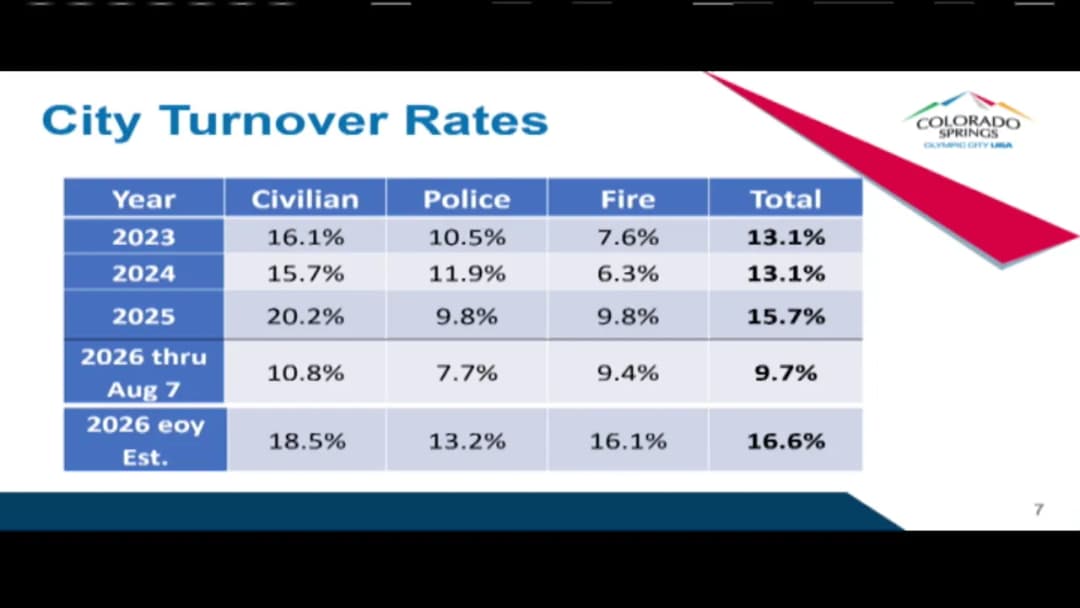
BUDGET EQUITY ANALYSIS 100%
This summary is based solely on a single excerpt from the meeting transcript. No agenda, minutes, or other details were available. Discussion Items - A speaker (likely a city staff member or council member) explained their method for annualizing year-to-date financial figures. They stated they took the amount through August, divided it by seven (the number of full months through August), and multiplied by twelve to estimate an annual basis, making it comparable to other full-year data. Key Outcomes - No decisions, votes, or formal outcomes can be inferred from the limited transcript.
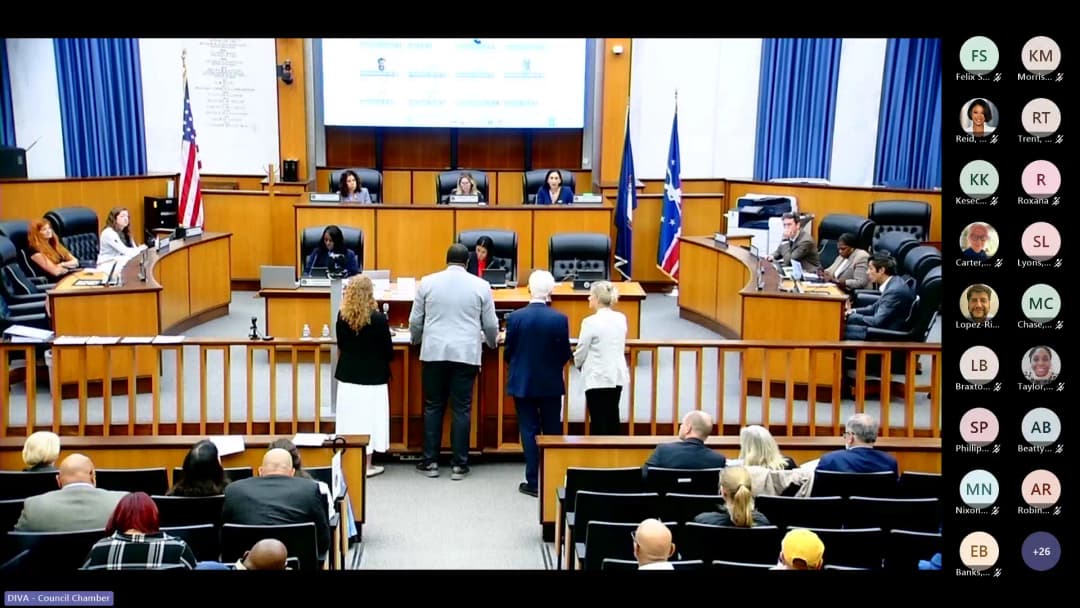
The Governmental Operations Standing Committee of the Richmond City Council met on September 24, 2026, at 4:00 PM. The committee considered eight agenda items, including a major solar power purchase agreement (PPA) project, amendments to railroad property use licenses, lead service line replacement funding, support for state constitutional amendments, an immigration information disclosure policy, GRTC board nominations, the 2027 legislative agenda, and a resolution establishing a transparent process for the legislative agenda. The most extensive discussion centered on the solar PPA, with detailed questions about risk, contract terms, and financial implications. Consent Calendar - The minutes from the May 27, 2026 and June 24, 2026 meetings were approved as presented without amendment. Public Comments & Testimony - Solar PPA (Items 1-39): Multiple speakers expressed strong support. Maria Deuster (Community Climate Collaborative) spoke in favor, citing $20 million in projected savings and the urgency of federal tax credits expiring at the end of 2027. Carolyn Pugh (C3) highlighted that the project originated from a competitive grant and noted that the city has worked toward solar for over a decade. Kirk Johnson (Public Utility Services Commission member, 30+ years in electric utilities) endorsed the PPA as the least risky way to add renewables, noting that wholesale energy costs in PJM rose 40% in the first half of 2026. Kevin Sferrini (Chair, Public Utilities & Services Commission) reported a unanimous commission letter of support and noted that DPU accounts for nearly 70% of municipal electricity consumption; he emphasized that cost savings could be passed to DPU customers and that solar contracts offer cost certainty amid Dominion rate increases (23% in July 2026, additional 20% in 2027). An unnamed speaker discussed workforce development opportunities for formerly incarcerated individuals. Lee Williams (Sierra Club advocacy chair) aligned with prior speakers and stated the Sierra Club is "100% behind this PPA agreement." A citizen noted Virginia's renewable energy goals (30% by 2026) and that Dominion’s renewable capacity is only 10%; he also remarked on parity with Henrico County. Dave Evans (Sustainability and Resilience Commission member) referenced RVA Green 2050 and called the project a cost-saving win-win. Angela Fontaine (RVA Green equity roundtable member) urged the committee to take the first step, saying "the hardest step is sometimes the first one." Chris Page (Commonwealth Power founder, small business perspective) expressed confidence from his company's experience building over 100 solar projects on schools. - Immigration Information Resolution (Item 44): Adam Howard, a public defender, spoke in support, stating the policy is critical to protect undocumented individuals and urged the committee to pass it with resounding support. Discussion Items - Solar PPA (Items 1-39): The committee heard extensive presentations and Q&A. Laura Thomas (Office of Sustainability) described the project as one of the largest single steps toward net-zero emission goals, with a nearly 1 percentage point reduction in emissions. She noted that the contract had been signed by all required city officials, and what needed council approval were the site leases (required every 5 years). Electricity costs rose $4.4 million this fiscal year and are projected to increase $4.1 million next year. The vendor, Secure Solar Futures (represented by Tony Smith), stated the company assumes capital, interest rate, supply, and regulatory risks; the city only pays for electricity generated at a fixed rate of 12.78 cents/kWh for 25 years (compared to Dominion’s 17 cents/kWh). Dawn Alexi (energy program officer) explained that to qualify for tax credits, 5% of equipment had to be ordered by July 4, 2026 (done on June 25) and paid in full/delivered by October 8. The tax credits are passed through to the city via lower rates. On structural concerns, Tony Smith assured that no panels are installed until an engineer certifies the roof can handle the load (typically 3-6 lbs/sq ft), a permit is obtained, and the roofer confirms warranty preservation. CAO Odie Donald noted that a risk assessment was conducted and all identified risks were closed; the contract was vetted by insurance carriers and legal. Councilmember Abu-Baker raised fiduciary concerns about a 25-year commitment, termination fees (up to $28 million in the first year for default, but only triggered if the city fails to pay for electricity received), and the absence of indemnification and decommissioning bonds that other localities (Prince William, Fairfax, Roanoke) included. Councilmember Gibson expressed concerns about the seven LLCs formed in August 2026 (backed by unnamed investors), limited indemnification, lack of decommissioning bonds, and potential risks if the solar company goes bankrupt. She also questioned why the city's contract lacked standard terms from other jurisdictions. Councilmember Lynch asked about roof reliability and the potential need for CIP funding; Tony Smith stated the vendor assumes all risk if roofs fail structural analysis, and there is no obligation for the city to spend on roof repairs. The committee also discussed installation impact on building operations; Smith confirmed no disruption to daily operations. After extensive debate, Councilmember Jordan moved to forward the items to full council with a recommendation for approval, but lacking a second, she instead moved to forward with no recommendation, which was seconded and approved unanimously (3-0). - Railroad Property Licensing (Item 40): Scott Morris (Director of Public Utilities) explained the ordinance would allow expedited licensing agreements with railroads for public infrastructure projects, reducing delays. No public comment. The committee voted unanimously to recommend approval. - Lead Service Line Replacement Funding (Items 41-42): Scott Morris explained that $7.3 million from the Virginia Resources Authority would offset rate increases and allow replacement of private service lines. No public comment. Voted unanimously to recommend approval. - Constitutional Amendments Resolution (Item 43): Councilmember Gibson introduced the resolution supporting reproductive freedom, marriage equality, and restoration of voting rights. No public comment. Unanimously recommended approval. - Immigration Information Resolution (Item 44): Councilmember Jones introduced the resolution, stating it emerged from community conversations to clarify the city's role regarding immigration status disclosure and federal enforcement. One public speaker (Adam Howard) supported. Unanimously recommended approval (with multiple co-patrons added). - GRTC Board Nominations (Item 45): The committee approved the nomination of Odie Donald II, Nicole Jones, and Ellen Robertson to the GRTC board. Unanimously recommended approval. - 2027 Legislative Agenda (Item 46): RJ Warren (Council Chief of Staff) presented the draft agenda with six priorities (CSO assistance, water treatment plant, anti-displacement, tenant protection, blighted property, short-term rental regulation) and policy statements. He recommended no final action on September 28, but to continue to October 13 after presentation from lobbyists. Two potential amendments (good cause eviction, tree canopy) were noted. The committee voted to recommend approval to full council. - Legislative Agenda Process (Item 47): RJ Warren explained that this resolution would replace the prior limit of five legislative priorities with a transparent process developed collaboratively. Councilmember Gibson moved to amend and forward; after discussion, the committee voted to recommend approval with amendment to the attachment. Key Outcomes - Items 1-39 (Solar PPA): Approved committee recommendation to forward to full council with no recommendation (vote: 3-0). The committee emphasized that the administration would provide a full written risk assessment before the September 28 council meeting. - Item 40 (Railroad Licensing): Recommended approval to full council (vote: 3-0). - Items 41-42 (Lead Service Line Funding): Recommended approval to full council (vote: 3-0). - Item 43 (Constitutional Amendments): Recommended approval to full council (vote: 3-0). - Item 44 (Immigration Information): Recommended approval to full council (vote: 3-0). Multiple council members added as co-patrons. - Item 45 (GRTC Board): Recommended approval to full council (vote: 3-0). - Item 46 (Legislative Agenda): Recommended approval to full council (vote: 3-0), with final action anticipated on October 13, 2026. - Item 47 (Agenda Process): Recommended approval to full council with amendment (vote: 3-0). The amendment will be presented at the formal meeting on September 28.
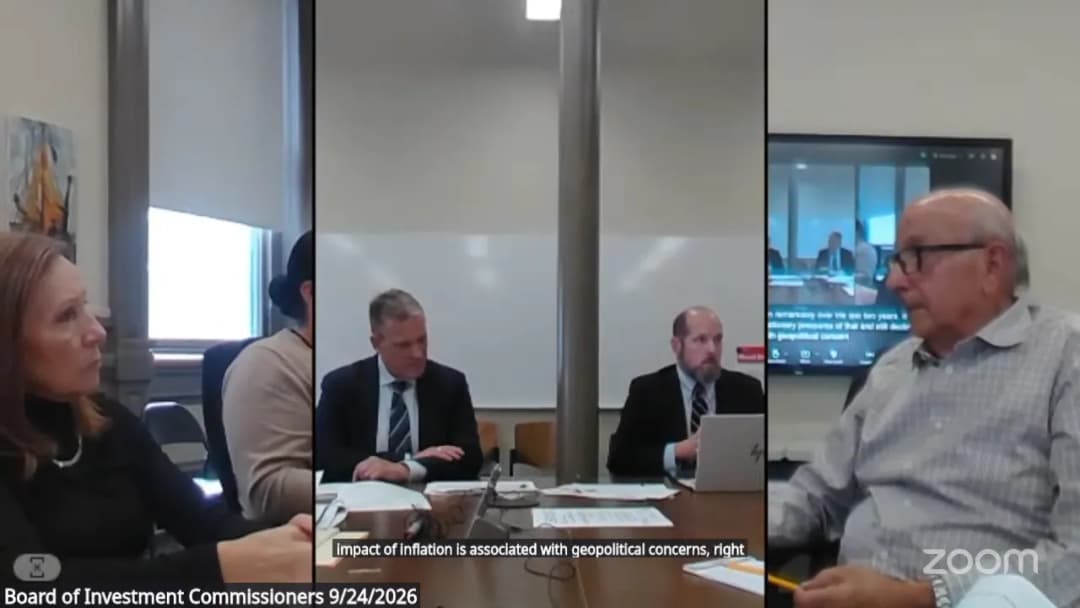
The Providence Board of Economic Commissioners met on September 24, 2026, with Chairman Mayor Smiley presiding. Commissioners present included City Treasure Huston, Mr. Costello, Mr. Hirsch, and others; Councilwoman Ryan was absent. The meeting focused on investment performance updates for the City's retirement system and other trust accounts, with a notable discussion about potential changes to the hedge fund portfolio. Discussion Items - Retirement System Investment Performance (as of August 31, 2026): Julian Green presented the report. The portfolio's market value stood at approximately $690.8 million. The month return was 1.8%, and year-to-date return was 10.3% (beating the benchmark). Public equities comprised 66.9% of the portfolio, fixed income 18.6%, hedge funds 7%, and cash 7.5%. Fixed income returns were flat due to rising yields. Equity returns were strong, led by small-cap stocks. Two public equity managers (Willow Creek and Boston Partners) underperformed year-to-date but have outperformed since inception. Year-to-date returns for the total public equity portfolio were 14%. - Hedge Fund Portfolio and Renaissance Fund Discussion: Commissioners expressed concerns about the Renaissance hedge fund due to high volatility (twice that of typical long-short equity managers) and lack of transparency. The investment advisor stated that they are in the process of recommending a termination of Renaissance and replacing it, noting that on a blank sheet of paper they would not have employed Renaissance. The fund has historically rewarded the portfolio but the volatility is deemed inappropriate for minimizing total fund volatility against benchmarks. - Cash Deployment and Asset Allocation: The cash balance (7.5% of assets) is planned to be deployed largely into equity (slightly overweight) and fixed income, targeting about $15 million in cash retained. This will be executed in coordination with the Department of Finance over the coming weeks. - Inflation and Energy Prices: A commissioner asked about the impact of energy prices on inflation and portfolio. The advisor noted that commodities have risen (Bloomberg Commodities Index +35% year-to-date) and inflation remains sticky at about 3.4% year-over-year. Removing energy would lower inflation but not eliminate concerns. The Fed's recent rate hike signals that inflation is not isolated to energy. The cumulative effect of inflation over multiple years is a concern for Main Street consumers. - Other Trust Accounts: The advisor reported that all other trust accounts (e.g., City Council Parks and Recreation Fund, Edward Aquin Grattur Trust) are allocated similarly to the retirement system and have outperformed their benchmarks year-to-date and one-year, driven by a managed overweight to equities. No significant cash flows expected in September. Cash balances are maintained through regular spending. Key Outcomes - The Board approved the investment performance report for the retirement system (motion by Commissioner Wink, seconded by Treasurer Huston; all in favor). - The Board accepted the report on other trust accounts (motion by Treasurer Huston, seconded by Commissioner Hirsch; all in favor). - Item three (discussion on possible vote to rebalance) had no recommendation; the Board moved to accept the agenda item as presented (no further action). - The Board voted to adjourn (motion by Commissioner Wink).
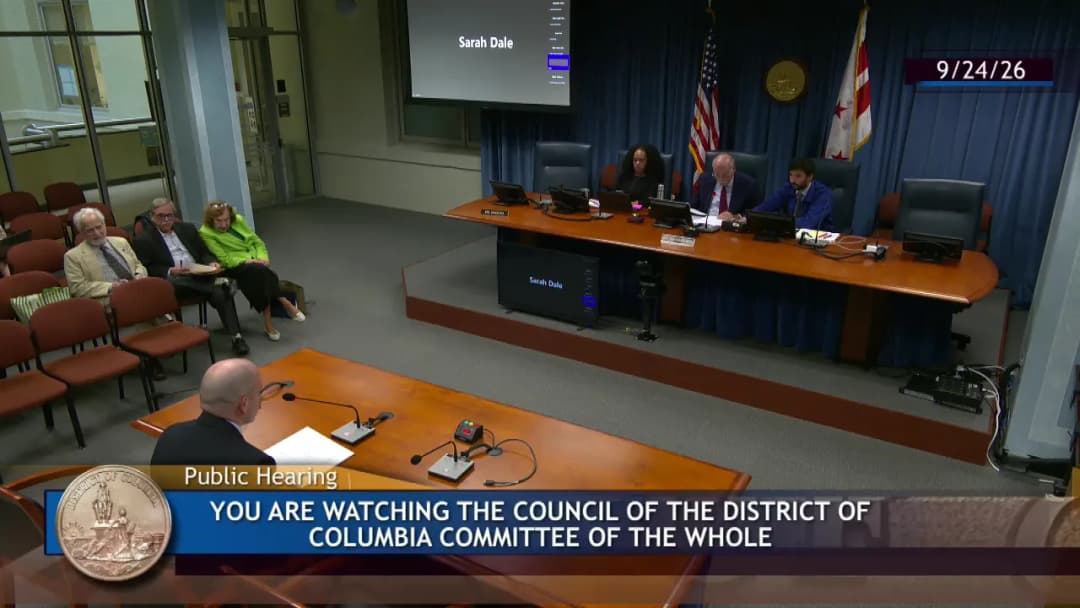
The Committee of the Whole of the Council of the District of Columbia, chaired by Phil Mendelson, held a public hearing on September 24, 2026, to consider three bills related to naming and renaming DC public school buildings. The hearing covered proposed designations for a new middle school in Ward 1 (Alma Thomas Middle School replacing the initially proposed Dolores Tucker name), the Elizabeth M. Goodman Health School (renaming from C. Melvin Sharp Health School), and the Malcolm X Elementary School (official recognition of the commonly used name). The meeting began late due to security barriers around downtown. Public Comments & Testimony - Ward 1 & 2 Education Council (Sarah Dale): Supported naming the new middle school after Alma Thomas, a renowned DC artist and former educator at Shaw Junior High. Noted a community survey showed strong support; over 150 signatures from feeder schools. No opposition known. - Anne Louise Taylor (Seaton parent): Spoke in favor of Alma Thomas, citing her art accessible to children and her role as an educator. Shared a story about her son recognizing an Alma Thomas painting in a Senate office. - Swathi Bojedla (Seaton PTO President): Supported Alma Thomas, emphasizing her legacy as a Shaw Junior High teacher and her connection to the neighborhood. Also praised Dolores Tucker but supported honoring her via a street name. - Alexandra Cembrana (parent): Advocated for more community input in school planning, specifically dual-language programming for the new middle school and pedestrian safety concerns at other schools. Noted lack of focus on naming once the school site was secured. - Joan Goodman Churchill (daughter of Elizabeth Goodman): Testified in support of renaming Sharp Health School after her mother, highlighting her mother's work creating programs for hospitalized, homebound, suspended, and pregnant students. - Edridge Rich: Supported renaming Sharp to Goodman, recounting his father's advocacy with Goodman to build the accessible health school for children with disabilities. - Zara Barry Young (Principal of Malcolm X Elementary): Asked for official recognition as Malcolm X Elementary, noting the name is already on the new building and that materials honoring Mildred Green have been moved to the Sumner School Museum. No opposition known. - Selim Adolfo (ANC Commissioner): Expressed strong support for Malcolm X Elementary, stressing the importance of positive role models for students. - Stephen Lamb (pediatrician): Supported Goodman naming, citing the importance of honoring DC values and integration. Conducted a community survey that produced no alternative names. - Abraham Clayman (DCPS Deputy Chief for Intergovernmental Affairs): Stated DCPS has no objection to any of the three bills. Provided cost estimates: $0 fiscal impact for Malcolm X (already signed), no fiscal impact for Alma Thomas name if enacted by end of 2026 (covered by modernization budget), and $100,000 for renaming Sharp to Goodman (new pin letters, removal of old lettering, and new marquee). Discussion Items - New Middle School Name (Ward 1): Councilmember Nadeau initially introduced Bill 26-12 for Dolores Tucker Middle School. However, community feedback overwhelmingly favored Alma Thomas, a former Shaw Junior High art teacher and celebrated artist. Nadeau withdrew support for the original bill and introduced a companion street-naming bill for Dolores Tucker. Witnesses confirmed no opposition to Alma Thomas. Chairman Mendelson indicated a second hearing on the name change may not be necessary. - Elizabeth M. Goodman Health School: Councilmember Janice Lewis George introduced the bill to rename Sharp Health School. The current namesake, C. Melvin Sharp, was a segregationist school board president who refused to integrate DCPS (Bowling v. Sharp case). Elizabeth Goodman was the first principal of the health school, a pioneering educator who established programs for students with disabilities, pregnant students, and suspended students. Community engagement included ANC4C, Ward 4 Education Alliance, and petitions. No opposition reported. Chairman Mendelson questioned the $100,000 cost estimate, suggesting DCPS re-evaluate it. - Malcolm X Elementary School: Bill 26-698 would officially designate the school as Malcolm X Elementary, a name already in use on the new building. The original name Mildred Green Elementary is no longer used in signage. The school's principal and ANC commissioner voiced strong support. No opposition. Key Outcomes - Consensus on names: All three naming proposals received broad community support with no documented opposition. - Vote not taken: The hearing was for testimony only; no votes were held. The record will remain open until 5:00 p.m. on October 8, 2026, for additional written testimony. - DCPS position: No objection to any bill. For the Goodman renaming, DCPS requested $100,000 in funding, which would be pursued in FY2028-2029; Chairman Mendelson urged DCPS to review the cost estimate. - Next steps: The committee will consider the testimony and written submissions before reporting the bills to the full Council for a vote.
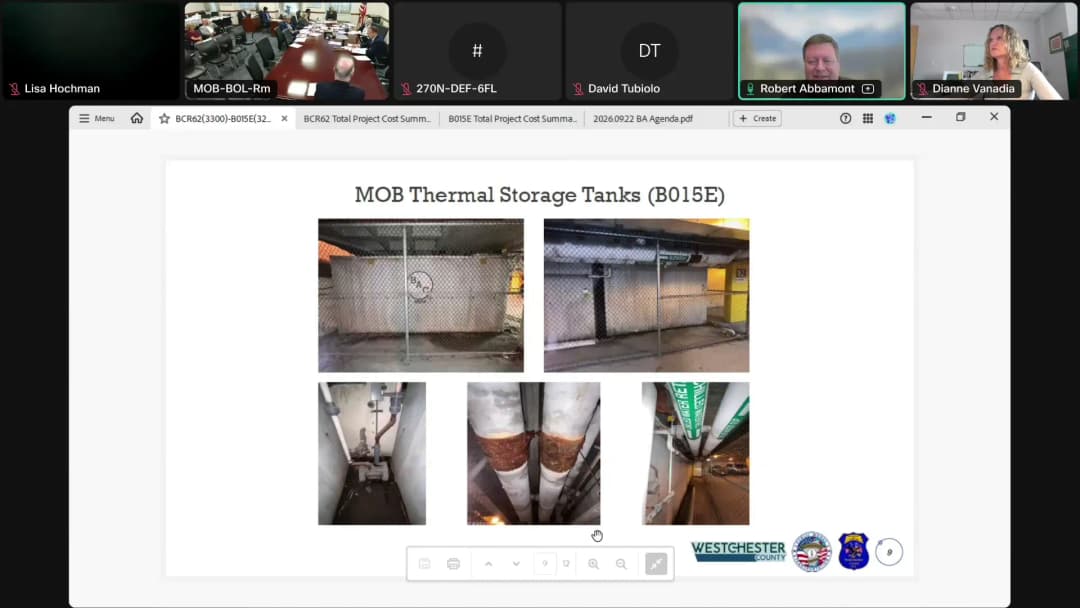
This joint meeting of the Budget & Appropriations, Parks & Environment, Infrastructure & Housing, and Public Safety & Veterans committees convened at 10:16 AM on September 24, 2026 (noting agenda and minutes show September 22, 2026, but the user-specified date of September 24, 2026 is used per instruction). The meeting covered over a dozen agenda items, including bond acts for farm protection, flood mitigation, affordable housing conveyance, bus shelter agreements, capital improvements at the White Plains complex and correctional facility, sewer district modifications, and various municipal agreements. The meeting adjourned at 12:50 PM. Votes were recorded for each item, with most passing unanimously. Consent Calendar - Item 443 & 444 (Septic Reimbursement Extension): Reauthorized the septic reimbursement program for an additional six years (through 2032) and added a three-year application deadline. Passed unanimously by B&A and Legislation committees. - Items 459 & 460 (Senior Tax Exemption): Amended senior real property tax exemption to add higher exemption levels (55%, 60%, 65%) for incomes below $50,000. No fiscal impact on county taxes. Passed unanimously. - Items 327, 332, 333, 334, 335, 397 (Various Memos & Local Laws): Included special prosecutor quarterly updates, brownfield redevelopment, first‑generation home buyer down payment matching, youth career pre‑apprenticeship, commercial conversion readiness, and strengthening tethering law. All passed on voice votes. - Items 398, 423, 424, 429 (Receive & File): Memos on local business prompt payment, property tax relief for first‑time home buyers, AI mold legislation, and down payment assistance were received and filed. Discussion Items - Item 406 – Farm Protection Study (Bond Act $400,000): Commissioner Blanca Lopez (Planning) presented a study to assess the county’s entire food system—production, distribution, access—not just farmland. The study will include stakeholder outreach, mapping agricultural districts and food pantries, and identifying county interventions such as cold storage and transportation hubs. Legislators expressed strong support, noting the importance of connecting farms to food pantries and leveraging Hilltop Hanover Farm. The bond act passed unanimously in both B&A and Parks & Environment. - Items 466, 467, 468 – Flood Mitigation, Harrison Avenue, Yonkers: Presented by Planning staff. The project will create a stormwater wetland in Tibbetts Brook Park, raise a berm, and improve drainage to address recurring flooding. The amended bond act added $1.85 million (total project $1.97 million) and an amended intermunicipal agreement with Yonkers. Construction expected in 2027. Passed unanimously in B&A, Infrastructure & Housing, and Parks & Environment. - Items 408, 409, 410 – Sewer District Modification, Mount Pleasant: Steve Elia (DEF) explained removal of two parcels (52 and 62 Larrys Lane) from the Saw Mill Valley Sanitary Sewer District because they are not served by sewers and will not be in the near future. The change reduces the district’s equalized full value by 0.0058% and frees reserve capacity. No objection from the Health Department. Passed unanimously in B&A and Parks & Environment. - Item 447 – Valhalla (Grasslands) Parking Study (Bond Act $200,000): David Kvinge (Planning) presented a study to evaluate existing and anticipated parking demand on the Grasslands campus, with phase 1 results in 4–5 months and full study by end of 2027. The bond passed unanimously in B&A and Infrastructure & Housing. - Items 448, 449 – Complete Streets Municipal Assistance Program (Bond Act $4.195 million): Stephen Courage (Planning) summarized four construction projects in Tarrytown, Mamaroneck, Tuckahoe, and Sleepy Hollow. These include sidewalk widening, pedestrian safety improvements, bump‑outs, and a river walk extension. The program awarded 8.5 of 16 million total; remaining funds allocated for design‑phase projects. Passed unanimously. - Item 465 – Conveyance of 330 Riverdale Avenue, Yonkers: Leonard Gruenfeld (Planning) presented the transfer of a 170‑unit affordable housing development to WB (Walder‑Boulder). All units now at or below 60% AMI (originally 34 units at 130% AMI), affordability extended 50 years. Purchaser will invest $1 million in capital improvements. Legislators raised concerns about monitoring and that the original restrictive covenant was not updated to reflect the lower AMI. Passed unanimously. - Item 407 – IMA with Insight for Bus Shelter Program: Mike Swee (Public Works) explained a 5‑year agreement with Insight for advertising on 300 bus shelters. County receives $225,000 in year 1, rising to $325,000 by year 5; 50% of revenue is distributed to municipalities per shelter. Insight also maintains and cleans shelters. Questions covered response times and snow removal. Passed unanimously. - Items 416, 417 – Exterior Infrastructure Repairs, White Plains Complex: Robert Abermont (Public Works) presented a capital budget amendment and amended bond act ($2.54 million) to create a new vestibule at the county courthouse entrance, improving ADA access, security, and energy efficiency. Construction will take about 9 months. Passed unanimously. - Items 453, 454 – Snow Removal Equipment Building at Airport: Lauren Walsh (Airport) requested a bond act decrease of $1.869 million (to $3 million) due to increased FAA/state grant eligibility. The new building will house 17 bays for snow removal equipment, meeting FAA requirements. Legislators noted potential federal funding uncertainties. Passed unanimously. - Items 455, 456, 458 – Elevator Modernization & Chiller Replacement: Robert Abermont described a $30.75 million bond act to replace 17 elevators at the correctional facility and upgrade chillers/cooling towers at the White Plains complex. The chiller project moves equipment out of a flood‑prone basement, creates a service tunnel, and includes thermal storage for energy savings (expected $105,000 annual savings, 953 million BTU reduction). Passed unanimously. - Item 411 – DA Office IT Upgrades: Charlie Forzano (District Attorney) requested a bond increase to $473,000 to match the approved capital budget, after earlier savings projections proved inaccurate due to vendor price changes. Passed unanimously. - Items 445, 446 – Prisoner Transportation Contracts (Greenburgh & New Rochelle): Routine two‑year renewals to reimburse towns for increased staff costs. Passed by B&A and Public Safety & Veterans. - Item 437 – National Night Out IMA Amendment (Eastchester): Passed without discussion. - Item 412 – Combined Sewer Overflow and Electrical Rehab, North Yonkers Pump Station: Bond act for $3 million for design/construction management. Equipment is over 30 years old. Legislator queried overflow impacts and coordination with Yonkers; DEF noted overflow is a city issue. Passed unanimously. - Items 418, 419 – Underground Pipe Leak Detection System: Additional $500,000 for design (total $750,000) to replace chemical piping at the plant. Construction expected $6 million, design takes 9 months. Passed unanimously. - Item 421 – Yonkers Joint Resource Facility Settling Tank Design: Additional $5 million to complete design and construction administration for rehab of primary and final settling tanks, combining phases to reduce mobilization costs. Construction period 2 years. Passed unanimously. - Item 452 – Pump Station Rehabilitation (Flint Ave, Sutton Manor, Beach Ave, Park Circle): Bond act for $8 million for design/construction management of four pump stations in the New Rochelle sanitary sewer district. Work includes mechanical, electrical, flood‑proofing upgrades. Passed unanimously. Key Outcomes - All bond acts, amendments, capital budget amendments, IMA amendments, local laws, and resolutions on the agenda passed, most by unanimous vote. No items were defeated or tabled. - The committees approved funding for a major food system study, flood mitigation in Yonkers, sewer district parcel removals, campus parking studies, complete streets projects, affordable housing conveyance, bus shelter agreement, capital improvements at county complexes, airport and plant upgrades, and prisoner transportation contracts. - No public testimony was heard. - The meeting was adjourned at 12:50 PM.
The Cleveland County Excise Board held its regular meeting on Thursday, September 24, 2026, at 10:00 AM in the Cleveland County Office Building, Norman, Oklahoma. Notice of the meeting was properly posted on Wednesday, September 23, 2026. The board approved the prior minutes, heard no public comments, reported no new business or board statements, and adjourned. Approval of Minutes - Board members unanimously approved the minutes of the regular meeting of August 27, 2026, by a 3–0 roll call vote after a motion and second. Public Comments & Testimony - No public comments were offered. The chair asked for public comment on the agenda item and received none. Board Member Statements and Announcements - None were made. Key Outcomes - The August 27, 2026 meeting minutes were approved unanimously (3 yes votes). - The board confirmed there was no business before the committee at this time. - The meeting adjourned by unanimous roll call vote following a motion and second.
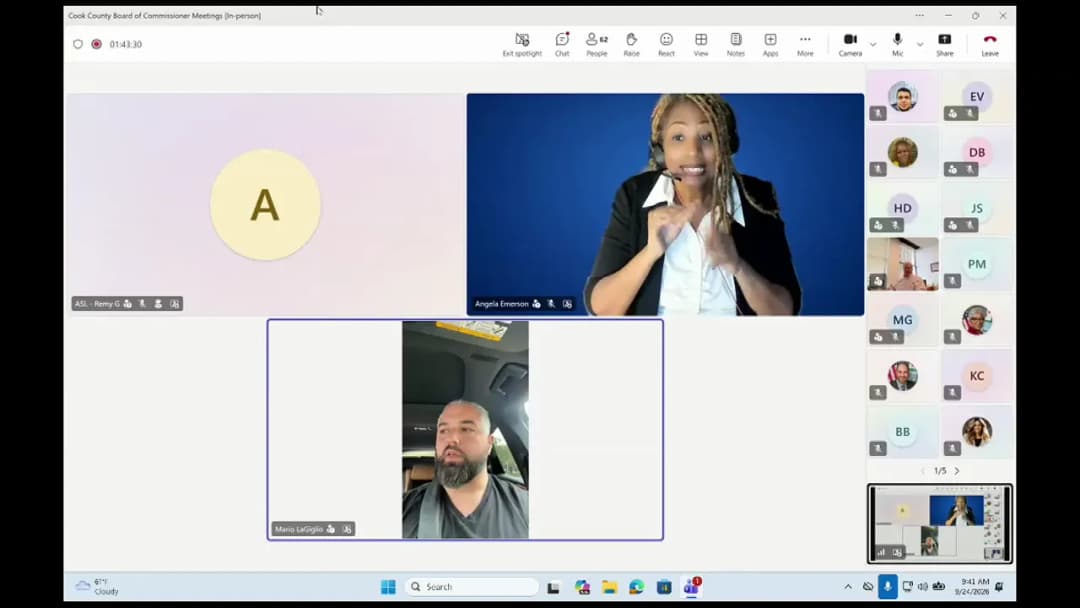
The Cook County Board of Commissioners met on September 24, 2026, at 3:15 PM. President Preckwinkle presided. A quorum was present with 11 commissioners present and 6 absent (Commissioners Anaya, Gaynor, Lowry excused, McCaskill, Miller absent, Moore absent initially but later added, Stamps absent initially). The meeting opened with roll call, Pledge of Allegiance, and a land acknowledgment. It included public testimony on pending ordinances and resolutions, followed by a separate consent calendar session where numerous resolutions were honored and approved. Public Comments & Testimony - Amtrak Maintenance Facility (Resolution opposing relocation): Multiple speakers opposed relocating Amtrak's maintenance facility from 14th Street (industrial area) to Canal Street in the 11th Ward. Alderman Nicole Lee noted 6,741 residents within 500 feet of the proposed site vs. 29 at the current site, with 67.5% Asian, 10.3% Hispanic, 2.8% Black, and 35.6% limited English. Paul Lu (Chinese American Service League) stated 3,000 clients live within half a mile. Alice Chu, Yosenia Lopez (Chicago Board of Education), and Mario Legiglio (resident 120 feet from the site) cited concerns over 24/7 operations, diesel fumes, a 500,000-gallon fuel tank, lack of environmental impact study, and poor community engagement (failed translation equipment at a September 17 meeting). The current facility is next to Union Station; moving it across a drawbridge and freight main line could cripple Amtrak service, said Andrew Fox (former Amtrak employee). Deb Ahrens (retired Amtrak employee) witnessed health issues from diesel. The Chicago Federation of Labor's Bob Ryder and Nick Desideri opposed the resolution, arguing the current facility is outdated and the project is an important investment, and urged delay for more transparency. - Immigrant Data Sharing Ordinance (26-2426): Over a dozen speakers supported the ordinance to restrict county information sharing with third-party data brokers who could transmit data to ICE. Fred Sow (Illinois Coalition for Immigrant and Refugee Rights) stated ICE uses brokers like LexisNexis to circumvent local protections. Maria Morales (Immigration Law and Justice) noted a 46-page report on personal data. Others highlighted Operation Midway Blitz and the need to close the data loophole. - Birth Certificate Fee Waiver for Domestic Violence Survivors: Delaney Hefner (Family Rescue) and Kayla Posley (Network Advocating Against Domestic Violence) supported expanding fee waivers to all survivors, not just those in shelters. Hefner described a client who lost a housing opportunity because she could not afford birth certificates for six children. Posley noted 157 days with no shelter beds last year. - Guaranteed Income Program: Several speakers (Deedra Thompson, Karen Christensen, Challa Garcia, Renee Garner Elms, Siobhan Shelby) urged increased funding for the county's permanent guaranteed income program ($7.5 million for FY26). They cited success from pilots (75% felt more financially secure, 70% reported better mental health, 94% could handle emergencies) and the need for timely, transparent implementation. - Jail Deaths and Independent Oversight (Resolution 26-2018): Over a dozen speakers called for independent oversight of Cook County Jail. Pastor Kidrick Emery cited Matthew 25:36 and Hebrews 13:3. Alan Mills (attorney, 45 years) noted that from 1972-2018 the jail had federal monitoring, but after it ended 85 deaths occurred; lawsuits against the county failed because commissioners cannot control the jail. Micah Clark Moody and Harley Pomper (South Side Weekly) reported on the death of Martinez Duncan (died in a burning cell while deputies were ordered not to enter). They asked whether it is policy to pepper spray into a burning cell and why his cellmate was not transported for five hours. Simon Crow read testimony from an incarcerated person about witnessing deaths. Bella Bas urged divestment from jail and investment in health care. - O'Hare Flyer Opposition: Sarah Hicks and Donald Glazier urged the board to oppose the O'Hare Flyer (private passenger rail). They cited the Brightline in Florida (196 deaths since 2017, $5.5 billion debt, $476 million public money) and concerns about noise, vibration, and disruption to Thatcher Woods Forest Preserve (45 bird species, 250 native plants). They requested a full environmental assessment and public hearings along the 11-community route. - Other Comments: James McCoy raised flooding issues, noting $400 million in federal aid for Chicago and $250 million for Cook County after 2023 floods, but little action. Zoe Lee, Jessica Jackson, and George Blakemore voiced complaints about property rights and evictions. Consent Calendar The board convened a separate consent calendar meeting after a brief recess. Commissioners presented and voted to approve the entire consent calendar, which included multiple resolutions honoring individuals and organizations. Key recognitions: - Dr. Peggy Montes on her 90th birthday and work on the Commission on Women. - Women's Business Development Center on its 40th anniversary (helped secure $185 million in financing for women/minority-owned businesses). - Rich Koniski for his service as PACE Board Chairman (appointed 2006, third longest-serving chairman). - Sis Killen, Superintendent of Transportation and Highways, on her retirement after 14 years of service (first woman in role). - Tim O'Connor on his retirement after 54 years of county service. - Senator Laura Fine for her 14 years of service in the Illinois State Senate, recognized by Commissioner Britton. - St. Sophia Bulgarian Orthodox Church on its 80th anniversary. - Ovarian Cancer Awareness Month (noting 21,000 new diagnoses, 12,450 deaths annually, racial disparities). - Casa of Cook County for advocacy (served 12,000 children since 1986, currently 1,100, with 3,500 still unreached). - Dr. Ram Duke for 31 years at Cook County Health. - Laverne Moore on her retirement after 34 years of county service. - Michael W. Lewis for service to the RTA. - Reverend David Coleman (posthumously). - National Association of Hispanic Nurses, Illinois chapter, on its 40th anniversary. - Hispanic Heritage Month. - National POW/MIA Recognition Day. - Jesse L. Jackson Young Voter Empowerment Law (Senate Bill 1786) – Dr. Joanne Roberts presented an implementation toolkit. Commissioners also expressed condolences for Jamie Jones, Secretary to the Board, who recently passed away. Key Outcomes - The consent calendar was approved unanimously by a roll call vote of 11 ayes (with 6 absences recorded earlier). - The board heard public testimony on multiple pending items (Amtrak facility, data sharing ordinance, birth certificate fee waiver, guaranteed income, jail oversight, O'Hare Flyer). No votes were taken on these items during this meeting; they will be considered in future committee meetings. - The meeting adjourned after the consent calendar session. Next Steps: The proposed ordinances (26-2426 on data sharing, birth certificate fee waiver expansion, and resolutions on Amtrak facility opposition, jail oversight, and O'Hare Flyer opposition) remain pending for further committee deliberation and a future vote.
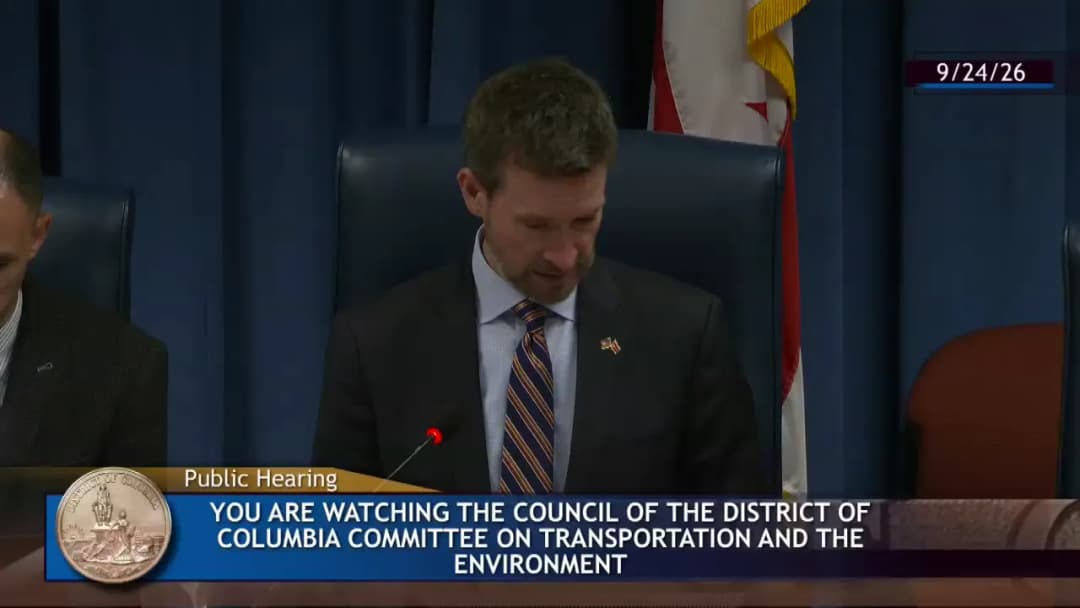
On Thursday, Sept. 24, 2026, at 10:09 a.m., the D.C. Council Committee on Transportation and the Environment, chaired by Ward 6 Councilmember Charles Allen, held a public hearing in Room 120 of the John A. Wilson Building and via Zoom. Councilmembers Brianna Doe (Ward 1), Brooke Pinto (Ward 2), and Denise Lewis George joined. The hearing examined Bill 26-90, the Neighborhood Management Authority Act of 2025, and Bill 26-424, the Porch Fest Permitting Amendment Act of 2025. No written agenda or minutes were available in the record. The transcript refers to the Ward 1 councilmember inconsistently as both "Brianna Doe" and "Nadeau." The written record remained open until Oct. 8, 2026. B26-90 would allow creation of neighborhood management authorities as district instrumentalities, with boards, annual budgets, audits, public meetings, and the possible authority to levy property or possessory-interest taxes; the introduced version also named the Duke District and Columbia Heights NMAs, created a Columbia Heights performance parking zone, and transferred the DC USA Garage Unit. B26-424 would let district residents request block party permits for Porch Fest or other distributed neighborhood festivals if music occurs on personal property, no fees are charged, and other block-party requirements are met. Opening Statements - Councilmember Brianna Doe said Columbia Heights needs a sustained place management entity and that a long-sought Duke District BID is now moving forward; she announced her intent to amend the bill to remove the proposed U Street/Duke District NMA. She said the NMA would not impose a new property tax unless established through a petition process, and it could work alongside Main Streets and BIDs. - Councilmember Brooke Pinto expressed initial concern about an NMA on U Street, welcomed the successful BID petition effort, and supported removing the U Street NMA so the Duke District BID can proceed. - Councilmember Denise Lewis George voiced support for both bills and highlighted Petworth Porch Fest as a beloved volunteer-led event that the Porch Fest bill would protect. Public Comments and Testimony Bill 26-90 - Neighborhood Management Authority Act - Billy Easley (ANC 1A10) supported the Columbia Heights NMA, linking it to safety and coordination, and recommended adding a local nonprofit seat to the NMA board. - Christine Miller (ANC 1A05) supported the bill for Columbia Heights with guardrails: expanded resident roles, accountability, a DC USA garage utilization study, emergency/construction parking processes, quarterly reporting, and reduced/free garage access for seniors and low-income residents. She said the garage is a roughly 1,000-space public asset with substantial unused capacity. - Gary Decker (ANC 1D07) supported the Columbia Heights NMA, comparing it to the D.C. Green Bank and saying an independent instrumentality can attract investment without becoming another permanent general fund claim. - Jeremy Sherman (ANC 1A04 and ANC 1A chair) strongly supported the NMA, saying BIDs' property-owner assessments can be passed to tenants, while the NMA's initial funding would come from garage and parking revenue. He noted the area has the twelfth-busiest Metro station, and that five ANCs passed resolutions, 24 commissioners reaffirmed support, and 52 neighbors/business leaders signed a petition. - Miguel Trinidad Duramo (ANC 1B chair) said U Street's extensive community engagement, including business roundtables and door-to-door outreach, produced a strong preference for a BID; he supported the Columbia Heights NMA and emphasized the 14th Street Latino corridor. - Matt Fay (ANC 1B) said the U Street preference was clearly for a BID and that he hoped the committee would strike U Street from the NMA legislation so the BID would be the only place management entity there. - Jess Ball Batea (ANC 1A01) and Daniela Kelly (ANC 1A09) supported the Columbia Heights NMA. Kelly recommended low-income set-asides in the DC USA garage and using micromobility company revenue or taxes to help fund the NMA. - Stacey Lee Banks (Lee's Flower and Card Shop), Kamal Ben Ali (Ben's Chili Bowl), Reggie Van Lee (Howard Theater Foundation), and Chip Ellis (Howard Theater Development Group) opposed the NMA for U Street as untested and insufficiently detailed. They said they had no objection to Columbia Heights pursuing an NMA and thanked Councilmember Doe for her press release proposing removal of U Street. - Michael Wagner (Quadrangle Development Corp.) supported the Duke District BID, reporting the petitioners secured 59% of assessed value and 31% of parcels, and planned to submit the BID application when the DSLBD application window opens Oct. 16. - Alexander M. Padro (Shaw Main Street) opposed creating NMAs altogether, saying existing agencies, Main Streets, and BIDs are sufficient if adequately funded; he cited a documented return of more than $3 per municipal dollar invested in Main Streets. In response to a question, he confirmed he also opposed an NMA for Columbia Heights. - Sarah Thompson (Queen's English) strongly supported the Columbia Heights NMA, describing safety, cleanliness, and vacancy problems; she said the buildings next to her restaurant had been vacant for about 3.5 of the last 7 years, including the last 3 years. - Francisco Ramos Meyer (former Columbia Heights/Mount Pleasant Main Street director) supported the NMA but asked for guaranteed board seats for residents, small-business owners, nonprofit directors, and street vendors, plus non-lapsing multi-year funding. - Colleen Hawkinson (D.C. BID Council) and Kristen Barden (Adams Morgan Partnership BID) did not oppose the NMA concept but objected to the bill's provision that would permanently bar a BID from forming in an NMA's boundaries. Barden urged preserving flexibility and supported the Porch Fest bill. - Rose Donna (Wonderland Ballroom), Emily Morrison (Studio Acting Conservatory), Allie OSeth (Dandelion Collective), and Claire Danenbaum (Columbia Heights resident) supported the Columbia Heights NMA. Danenbaum cited a Hollywood dispatch-center model that diverted 90% of nonviolent calls from police. - Frank Chauvin (former ANC commissioner) supported removing U Street and urged a five-year sunset/reauthorization, clear preservation of future BID options, and explicit assurance that residential properties would not be assessed. - Antonella Durateen and Reza Jafari (resident and owner of Trilogy Atelier and Zeba) supported the NMA, describing deteriorating conditions around the Civic Plaza/DC USA, including public drug use, trash, rodents, and business declines. - Keith Krasinski (candidate, ANC 1D06) supported the NMA and asked for boundaries covering areas north and south of the main corridor and representation from affected ANCs. - Tim Hampton (Columbia Heights resident) supported the NMA but asked for language barring NMA staff or board from lobbying on street-parking supply or revenue to avoid a conflict of interest. He also opposed a 51% business-owner board requirement and supported nonprofit participation without a mandatory seat. - Sheera Davidson (ANC 1A08) supported the NMA, calling public space economic infrastructure, and urged a nonprofit/cultural institution seat, advisory roles for all affected ANCs, no formal role in liquor licensing or parking decisions, and resources allocated to each commercial corridor. - Jean Hamza (930 Club/Atlantis/Lincoln Theater; Duke District BID steering committee) asked the committee to carve U Street out of the NMA bill and allow the BID to proceed, noting concerns about Lincoln Theater oversight and the NMA's lack of a sunset. - Jenna Russell, Yaya Sardari, and Aaron Palmer supported the Columbia Heights NMA, with Sardari emphasizing fair treatment of regulated businesses and vending, and Palmer citing fragmented agency responsibility for public spaces. Bill 26-424 - Porch Fest Permitting Amendment Act - Zachary Israel (Petworth Porch Fest Coordinating Committee) strongly supported the bill but said the May 30, 2026 Petworth Porch Fest still saw dozens of block-party permits rejected, often without explanation, despite a temporary law in effect. He asked for decision deadlines 10-15 business days before the event, written denial grounds, an appeal process, limited denial grounds, and an option for one consolidated application. He said Petworth Porch Fest drew thousands, with more than 430 musicians/bands on over 160 porches. - Kristen Barden said block-party permits are an important safety tool because participating porches and bands are not finalized until close to the event. - Sabrina Rhodes (Empower DC, ANC 5D02) supported easing block-party permitting, saying the current process discourages community gatherings in places like Ivy City, where over 70% of residents are renters. - A resident testifying as Ms. Stamper supported reducing administrative barriers to Porch Fest, asked for better snow removal and sidewalk safety, and noted planned investment around Benning Road and desire for safe access to RFK. - Sam Bonar (D.C. Community Wealth Builders) supported the Porch Fest bill and suggested residents should be able to close their own streets rather than requiring DPW/MPD-only closures. - Chair Allen noted Capitol Hill's first Porch Fest on Oct. 10 would have 164 bands and 53 front porches. Government Witnesses - Clint Osborne, Director of HSEMA, testified in opposition to the Porch Fest bill as written, saying multiple simultaneous street closures can impede first responders. He described the Mayor's Special Events Task Group process and recommended adding the word "solely" to the bill's line 48 to preserve other denial grounds. He also said HSEMA's vehicular terrorism prevention task force report had been sent to the City Administrator and recommended temporary/permanent barriers, with work underway at Capital One Arena and Eastern Market. - Sharon Kirschbaum, Director of DDOT, also opposed the bill in its current form, saying block-party permits are designed for isolated, single-block closures, and DDOT must retain discretion to evaluate cumulative safety and transit impacts. She noted MPD has final approval authority on street closures. - In response to committee questions, DDOT said Petworth Porch Fest generated roughly 30 block-party applications, with about 10-12 approved, and that there is no fixed numerical threshold; the design and location of closures matter. DDOT acknowledged a gap between single-block permits and full MSETG review and said it is looking at a lighter-touch process, not necessarily legislation. - Chair Allen pressed for faster progress on bollards and barriers, especially around Eastern Market. HSEMA said the report is in transmittal to the Council and that temporary barrier vendors and procurement are being pursued. Key Outcomes - Councilmember Doe committed to amending Bill 26-90 to remove the U Street/Duke District NMA, clearing the way for the Duke District BID, which met petition thresholds and may submit its application Oct. 16. - Multiple U Street business and ANC witnesses opposed the U Street NMA but, with one exception (Alexander Padro), did not oppose a Columbia Heights NMA; Columbia Heights witnesses and ANCs strongly supported the NMA. - BID representatives raised concerns about the bill's exclusivity provision, and Councilmember Doe said she wishes to work on language so BIDs and NMAs can complement each other. - DDOT and HSEMA opposed Bill 26-424 as drafted but offered to work with the Council and Porch Fest organizers on administrative improvements, including a potential lighter-touch coordinated review. - The committee left the hearing record open for written testimony through Oct. 8, 2026, and the hearing was adjourned.
On September 24, 2026, at 10:05 a.m., the Committee on Health, chaired by Councilmember Christina Henderson, held a hybrid public hearing in Room 412 of the John A. Wilson Building to consider three permanent bills: Bill 26-606 (Vaccine Administration Protection Amendment Act of 2026), Bill 26-688 (Student Health Care Amendment Act of 2026), and Bill 26-725 (School Health Certificate Modernization Amendment Act of 2026). The hearing included testimony from public witnesses and government officials from DC Health. No votes were taken; the record remains open until October 8, 2026. Public Comments & Testimony - Sarah Buckley (parent, Parents United for School Health) supported both bills, noting that only 28% of students had a universal health certificate (UHC) on file in FY2025 and 13% in FY2026. She emphasized the need for an automated digital system, prohibition of provider fees, and inclusion of alternative epinephrine devices (e.g., nasal spray). - Robin Resch (parent, nurse, Parents United for School Health) supported both bills, citing that only 8,497 out of more than 84,000 students (10%) submitted a UHC this school year. She stressed the importance of digital submission and standardized emergency medication policies. - Justin Palmer (DC Hospital Association) supported B26-725’s digital system and fee prohibition but expressed concerns about the proposed tiered licensing fee structure, recommending adjustments to keep DC competitive with Maryland and Virginia. - Dr. George (pediatrician, DC AAP) strongly supported B26-606, noting rising vaccine exemptions and coverage gaps (e.g., MMR coverage 10 percentage points lower in private schools than public). He argued the bill protects providers administering evidence-based vaccines. - Rachel Johnston (DC Charter School Alliance) supported B26-725’s digital system and fee prohibition but recommended annual affirmation of health information and preserving standalone epinephrine training. - Anika Collins (school nurse, private school) opposed B26-725, arguing that a centralized digital system could create safety gaps and liability issues if data is inaccessible or inaccurate. She called for an opt-out pathway for schools with existing secure systems. - Chris Gamble (Children’s Law Center) testified on licensing fee provisions, advocating for a fee structure based on actual board costs rather than educational attainment, and recommended universal licensure recognition and periodic reviews. - Kristen Yokum (Paul Public Charter School) supported the digital system but highlighted implementation challenges: 54% of school days without a nurse, delayed access to DC Health’s DOSIS system, and need for simple epinephrine training. - Martita Fleming (Washington Latin Public Charter School) supported digital submission to reduce data entry burden on nurses and preserve annual health certificate requirements. - Dr. Clint Peebles (Medical Society of DC) supported B26-725’s goals but urged caution on blanket fee prohibition, suggesting distinctions for complex forms. He opposed using education alone to set licensing fees and supported lower fees overall. - Chris Alvia (Capital City Public Charter School) supported the digital system but urged separate digital tracks for lead and dental forms, preserving annual updates, and maintaining standalone epinephrine training. - Kurt Gallagher (DC Dental Society) supported tiered licensing fees and digital submission but strongly opposed prohibiting fees for completing oral health forms, citing administrative burden. - Pat Stamper (educator) shared a personal story about an anaphylaxis emergency without a nurse present, advocating for more school nurses and simplified epinephrine training. - Dr. Jessica Rubin (pediatric dentist) opposed the fee prohibition, explaining that completing forms requires significant staff time (e.g., 40-50 patients/day). She suggested a reasonable cap instead of a ban. - Maria Luisa Marquez (Clinica del Pueblo) supported B26-606, noting that falling MMR vaccination rates (92% average, below herd immunity) and regional measles cases make provider protection urgent. - Dr. Charlie Coulter (pediatric dentist) supported tiered licensing fees and digital submission but strongly opposed the fee ban, estimating 50-100 form requests per day in summer, costing $5,000/month in staff time. - Dr. Takisha Preston (dentist) supported the digital system only if integrated with existing EHRs, and opposed the fee ban. She noted that 100% of her patients request forms, and she questioned the reported 16% compliance rate. Discussion Items - Vaccine Administration Protection (B26-606): Councilmember Henderson asked about current protections, adverse event tracking, and the rationale for the bill given federal changes. DC Health’s Sarah Beckwith explained that federal vaccine injury compensation is at risk, and states like California and New York have passed similar laws. The bill protects providers and employers from liability for vaccines recommended by designated medical organizations. - School Health Certificate Modernization (B26-725): Discussion centered on the low compliance rates (10% UHC, 16% oral health), the burden on families and providers, and the need for a digital submission system. Councilmember Henderson challenged DC Health’s data, noting that private and charter schools may not be reporting. Multiple witnesses described fragmented processes: paper forms, manual data entry into multiple systems (Aspen, SHIMS, DOSIS, ICP). DC Health proposed a two-prong digital solution: EHR integration and a provider portal. - Student Health Care Amendment (B26-688): The bill transfers the undesignated epinephrine program from OSSE to DC Health, designates the Maryland Poison Center, and dissolves the never-established Perinatal and Infant Health Advisory Committee. Witnesses raised concerns about requiring lead testing before the digital system is operational and about enforcing annual health forms. - Licensing Fees: Councilmember Henderson pressed DC Health on the stalled audit of health professional fees, noting egregious disparities (e.g., dental assistant $190 in DC vs. $20 in Maryland). DC Health’s Sarah Beckwith stated they are working with West Virginia University on a study and propose a tiered fee structure based on regional average income, not education. Councilmember Henderson expressed frustration with the pace of reform. - School Health Suite Staffing: Vacancy rates remain high (18% overall, 25% of RN positions). DC Health reported 7 RNs in onboarding, but acknowledged turnover after implementing a cluster model. The councilmember noted that private schools have better staffing and digital systems. Key Outcomes - No votes were taken on any of the three bills. - The hearing record will remain open until 5:00 p.m. on Thursday, October 8, 2026, for written testimony. - Councilmember Henderson indicated that further conversations are needed on the digital system, fee prohibition, and annual vs. key-grade submission of health forms. - DC Health committed to developing a digital UHC system but did not provide a timeline; they will continue provider and school engagement. - The committee will hold a separate roundtable on certified nurse aide training challenges later in the day.
The Greenways Development Committee met on September 24, 2026, to review and discuss the long-awaited draft of the replacement for the 2014–2024 strategic plan guiding greenway development in Indianapolis and Marion County. The meeting began without a quorum, preventing approval of prior minutes or formal votes, but proceeded with a presentation by Daniel, the project lead, and extensive committee discussion. Public Comments & Testimony - Committee member Craig expressed strong opposition to the draft plan, stating it "rejects my point of view entirely" and that he will file formal objections. He criticized the plan as a "field of dreams" approach that does not address how to motivate people to use trails. He noted that the words "run," "runner," "running," "exercise," and "fitness" do not appear in the document (except in the organization name Indy Runners and Walkers), while the word "recreation"—which he argued includes sedentary activities like playing video games—is used. He called the phrase "where feasible" regarding restrooms and water fountains "a license to do nothing" and argued the one-mile access standard is inequitable for disadvantaged neighborhoods where physical barriers or safety concerns make that distance prohibitive. He stated he will write objections and will not sign a letter of support. - Other committee members raised additional concerns, including: lack of accessible trailheads on the far east side (e.g., the Penzi Trail), insufficient restrooms and amenities, the need for design standards requiring trailhead access within one mile, and the importance of co-locating restrooms with existing facilities (e.g., Grassy Creek Environmental Nature Center). Shreya asked about aligning development frontage with trails (e.g., Indy Fresh Market's back facing the path) and ensuring design recommendations reach developers. Carlos questioned funding differences with Hamilton County, where a separate business tax supports trails, and noted Indianapolis's historically low park funding. Discussion Items - Daniel presented an overview of the draft Greenways Master Plan, emphasizing its role as part of the city's comprehensive plan (which unlocks grant scoring benefits). Current statistics: 120 miles of existing/under-construction trails, 370,000 people within one mile of a greenway, and 310,000 jobs within one mile. The proposed expansion would bring 800,000 people (including 115,000 seniors and 180,000 youths) and over half a million jobs within a mile, reaching 80% of Marion County residents. The plan is organized into chapters covering vision, design, prioritization, enhancement, sustainment, and a "make it happen" playbook. Key values are connected, fair, and beloved. Public engagement included hundreds of conversations, six formal comments, and outreach at events like a bike rodeo. Next steps include continuing public comment through fall/winter 2026, then seeking approval from the Metropolitan Development Commission (MDC) to become part of the comprehensive plan, potentially in fall/winter 2026 or into 2027. - Daniel responded to questions about plan length (270 pages, similar to previous plan and peer cities) and noted an eight-minute summary and website with clickable links are being developed to improve accessibility. He addressed the one-mile standard as a "Goldilocks" metric balancing walkers, bikers, and drivers, though acknowledged it is not perfect. For amenities like restrooms, he stated the plan includes frequency maps and recommendations but that "where feasible" language reflects challenges with infrastructure in less-developed areas (e.g., the Penzi Trail). He noted the plan has recommendations for site design and frontage in mixed-use, residential, and industrial zones, and that these tie into the land use plan and zoning code. - On e-bikes, Daniel clarified the plan's chart reflects current Indiana code and city code, not a new ordinance, and recommends annual review of regulations for new mobility devices. Craig questioned the origin of specific speed recommendations and why the e-bike subcommittee was not consulted; Daniel offered to share references. The e-bike subcommittee meeting was cancelled due to public notification requirements, and discussion was deferred. - Committee members discussed the possibility of writing a letter of support for the plan. While several expressed general support and saw the plan as a strong foundation, Craig dissented. Due to lack of quorum, a formal committee letter cannot be voted on, but individual members may sign a joint statement. Key Outcomes - No votes were taken due to lack of quorum. The July 29 minutes could not be approved. - Two Google Drive folders were created: one for community resources and one for policy recommendations, with shared documents for input. - The e-bike subcommittee discussion was deferred pending further coordination and potential invitation of a subject matter expert from Carmel. - The committee acknowledged that while the plan is a foundation, further policy recommendations addressing accessibility, restrooms, trailheads, and equity are needed. Next steps include continuing public comment, MDC approval process, and ongoing outreach to non-English-speaking communities and developers. - Daniel encouraged committee members to submit comments, share the plan, and send letters of support (which can be used for grant applications).