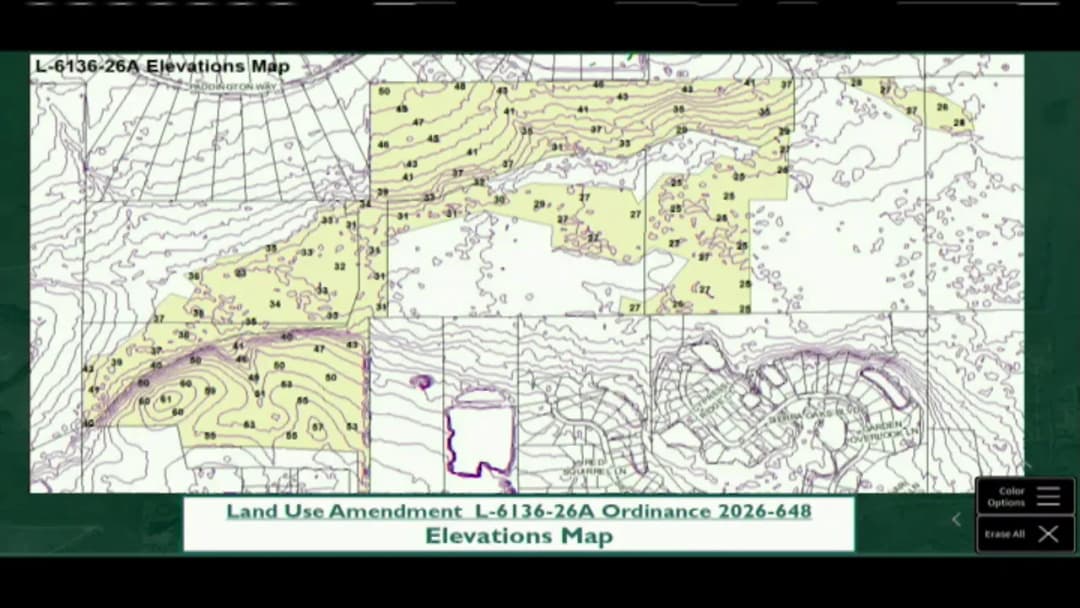
The Jacksonville Waterways Commission convened on September 17, 2026, at 11:05 AM in the Council Chamber, City Hall. Key topics included a status report on water quality and manatees, public comment on the George Crady Bridge Fishing Pier and FIND, review of two ordinances, and updates on subcommittees. The meeting adjourned at 12:04 PM. Public Comments & Testimony - John Nooney spoke about the Florida Inland Navigation District (FIND) and the Waterways Commission, referencing prior comments on boat ramp access and trust funds. - Leatrice Bell thanked the Commission for continued attention to the George Crady Bridge Fishing Pier issue and urged expedited action, noting that the community has waited 30 years. Chair Johnson and Vice Chair Gay commended her advocacy and discussed efforts to reopen the bridge, including exploring grant options and state delegation meetings, while noting that Community Benefits Agreement funds could not be used due to legal advice. Discussion Items - St. Johns River Status Report on Water Quality & Manatees – Dr. Gerard Pinto (Jacksonville University) reported that rainfall is 4–5 inches below normal for the year, leading to elevated salinity levels: 25–30 ppt at Mayport (normal seawater is 35 ppt), 13–18 ppt at JU/Dames Point, 11–15 ppt downtown, and 6–8 ppt at Buckman Bridge. A manatee survey found 7–8 manatees, mostly past Buckman Bridge. There have been 16 manatee mortalities this year (4 from watercraft, 3 from canal lock). Doctors Lake is covered in algae; Microcystis was detected but not producing toxins. Red tide occurred in Fort George Inlet, prompting a health advisory. Dr. Pinto noted that algae blooms do not appear to affect manatees, and that buffers and following the city’s fertilizer ordinance can help mitigate nutrient runoff. Matt Jones asked about the Queens Harbor canal lock; Dr. Pinto reported the lock manager disputes state findings, and U.S. Fish & Wildlife is evaluating retrofitting options. - New Business – Ordinance 2026-0648 (Large-Scale FLUM Revision) – Ed Lukacovic (Planning Department) presented a proposed revision of 300.87 acres from Agriculture (AGR) to Rural Residential (RR) at Garden St, Plummer Rd, Messer Rd, Kings Crossing Dr, and Paddington Way. The site contains 167.17 acres of wetlands (135.09 Category II, 32.08 Category III) and lies in the Trout River basin. Development potential would increase from 120 units (AGR) to up to 600 units (RR with water/sewer). Water and sewer line extensions from Garden Street would be needed. The motion to recommend approval passed, with only CM Gay opposing. - New Business – Ordinance 2026-0698 (Funding for State of the River Report) – Dr. Pinto read an email from James Richardson (Environmental Protection Board) explaining the ordinance appropriates $111,233 from the Environmental Protection Fund to Jacksonville University for the 19th State of the River Report. The bill includes waivers for continuous funding, direct contracting, and procurement exemption, consistent with past practices. Adam Hoyles (EPB) supported the report as a synthesis of river data. CM Peluso expressed support and asked to be added as co-sponsor, but requested future reports include specific policy recommendations for policymakers, noting the report’s cost of over $100,000. Dr. Pinto said he would take the recommendation back to the group. The motion to recommend approval passed without objection. - Subcommittee Updates - Artificial Reef Subcommittee – Chair Marc Hardesty reported that a reef was deployed 28 miles off Mayport in late June using concrete culverts donated by businesses, with support from the Jacksonville Offshore Sport Fishing Club. Plans include three more reefs in the coming year, funded by state grants and private contributions. Governor DeSantis authorized multi-million-dollar expenditures for artificial reefs. Hardesty requested and received a regular agenda slot for updates. - Fort George River Sandbar Vessel Speed Regulation Task Force – Chair Matt Jones stated the task force is preparing a formal, publicly noticed meeting in compliance with Sunshine Law. Jones also noted that artificial reef deployment creates revenue for the city. - FIND Subcommittee Formation – Chair Johnson reappointed Jon Michael Barker as chair of the Florida Inland Navigation District Subcommittee. Adam Hoyles expressed desire to continue serving on the subcommittee. Formation was declared, with members to be appointed at the next meeting if needed. Key Outcomes - Minutes Approved: The minutes of the August 28, 2026 meeting were approved without objection, with a clarification that the agenda was taken out of order due to Dr. Pinto’s absence. - Ordinance 2026-0648: Recommended approval (vote: all in favor except CM Gay opposed). The ordinance will be transmitted to state agencies for review. - Ordinance 2026-0698: Recommended approval unanimously. The appropriation of $111,233 for the 19th State of the River Report moves forward, with a suggestion to include policy recommendations in future reports. - Subcommittee Updates Acknowledged: Artificial Reef Subcommittee to have regular agenda spot; Fort George Task Force proceeding with formal meeting; FIND Subcommittee formed with Jon Michael Barker as chair.
The Public Meeting Index
The Public Meeting IndexThe Boston City Council Committee on Education, chaired by Vice Chair Brian Warrell (District 4), held a hearing on Docket 0507 to discuss strategies to prevent homelessness among Boston Public Schools students. The hearing began at 2:10 PM and featured opening statements from councilors, followed by two panels: the first from BPS and the Mayor’s Office of Housing Stability, and the second from community partners including United Way, Boston’s Higher Ground, FamilyAid, Greater Boston Legal Services, and a youth representative. Key topics included the scope of student homelessness (5,405 students in 2024-2025, over 10% of BPS enrollment), the effectiveness of programs like the Early Homelessness Intervention Program (EHIP), challenges in identifying at-risk families, and the need for sustained funding and cross-sector coordination. Discussion Items - Opening Remarks and Context: Councilor Weber, lead sponsor, outlined the severity of student homelessness, citing a Boston College School of Social Work report. He shared a personal story of a Boston Latin School graduate and registered nurse currently living in an emergency shelter with her two children. Councilors Braden, Flynn, Colletta Zapata, and Fitzgerald emphasized the need for affordable family housing, expanded prevention programs, and a coordinated response. - First Panel – BPS and City Administration: Corey McCarthy, Chief of Student Support, BPS, detailed the district’s Homeless Education Resource Network (HERN), school-based homeless liaisons, and the EHIP partnership with FamilyAid. Since its inception, EHIP has served 3,000 families and helped 1,300 secure permanent housing. The Access to Counsel program, launched in January 2025, has screened 248 households and provided full legal representation to 170 families. Danielle Johnson, Director of the Mayor’s Office of Housing Stability, presented an Eviction Prevention Action Plan based on over 10 years of data: non-payment is the cause of 70% of evictions, which are concentrated in three zip codes. The panel discussed upstream prevention, early warning indicators, and the difficulty of identifying families before they become homeless. - Second Panel – Community Partners and Lived Experience: Christy Staples (United Way) called for upstream prevention, coordinated response systems, and expanded affordable housing pipeline. Dr. Brandy Brooks (Boston’s Higher Ground) shared her own childhood experience of homelessness and stressed the need for vouchers, prevention investment, and sustained collaboration after housing is obtained. Tom Byrne (Boston College) presented research showing EHIP families experienced improved housing stability (from 49% to 84% in their own housing), reduced chronic absenteeism (from 61% to 52%), and better parent and child well-being. Tom Luciano (FamilyAid) noted that 90% of their clients are people of color, 75% are single mothers, and average household income is $13,500/year; the organization retains 88% of families in housing after placement. Edna Ehrlich (GBLS) highlighted the importance of early legal intervention and noted barriers to entering the state shelter system, including a reduced cap of 3,500 units statewide. Vinnie Schmidt (Boston Youth Action Board) shared his lived experience in the shelter system and called for more staff with lived experience, better treatment of youth, and systemic change. - Funding and Capacity Challenges: Multiple speakers noted that federal ESSER and grant funding for programs like EHIP have sunset or are at risk. BPS currently invests $1.8 million directly in schools for homeless supports ($600 per student), but the need is greater. FamilyAid and other providers reported that they lack the capacity to serve all 5,400+ students and their families without additional resources. The potential loss of EHIP funding ($450,000) and shelter cuts were cited as critical concerns. Key Outcomes - No formal votes were taken; the hearing was informational and aimed at identifying strategies and resources. - Councilors committed to continued advocacy for funding, including state-level changes to shelter eligibility and increased support for EHIP and Access to Counsel. - Councilor Flynn raised the possibility of reconvening a commission similar to one under Mayor Walsh that addressed student homelessness, and Councilor Weber suggested exploring private funding partnerships. - The need for improved early identification tools, such as a screening tool being piloted by Boston College, and better communication about available resources (e.g., flyers, school liaisons, housing authority partnerships) was emphasized. - Next steps include ongoing collaboration among council, BPS, the Mayor’s Office of Housing Stability, and community partners to scale effective interventions and secure sustainable funding.
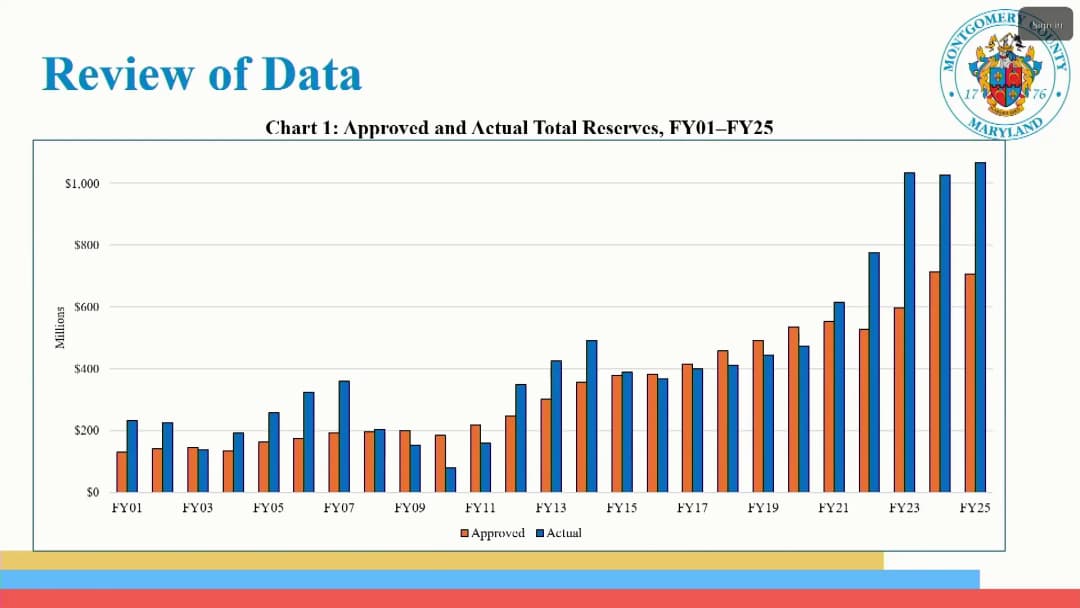
The Government Operations and Fiscal Policy (GO) Committee, chaired by Councilmember Kate Stewart and joined by Councilmembers Shebra Evans and Sidney Katz, along with Council Vice President Marilyn Balcombe, convened on September 17, 2026, to receive the final report from the Infrastructure Funding Workgroup and to discuss strengthening the County's Reserve Policy. The session focused on quantifying the county's $1.2 billion annual infrastructure funding gap and developing a more robust fiscal framework for maintenance, capacity, and fiscal resilience. Infrastructure Funding Workgroup Report Council staff Mr. Smith and Ms. Ndou presented the findings of the year-long Infrastructure Funding Workgroup. The workgroup found the county does not lack funding tools but needs a strategy to match tools to specific needs. - Needs Analysis: The county faces approximately $559.3 million per year in deferred maintenance (71% unfunded) and approximately $700 million per year for new capacity and upgrades (totaling about $14.1 billion over 20 years). - Stakeholder Engagement: The workgroup conducted surveys in 6 languages (receiving 200 responses) and held listening sessions. Industry stakeholders argued that development impact taxes stifle growth and that economic conditions are the primary driver for development. Community feedback indicated a perception that the county has a spending problem rather than a revenue problem, but no consensus existed on specific investment priorities between schools and transportation. - Funding Options Reviewed: The workgroup evaluated a countywide property tax increase as the most equitable, predictable, and sustainable option for raising new revenue. Options such as land value taxes, vacancy taxes, excise taxes, and local sales taxes (which require state authority) were considered but had significant drawbacks regarding equity, sustainability, or feasibility. The group did not identify a strong replacement for current development impact taxes. - Recommendation: For maintenance needs, the workgroup recommended prioritizing existing tax revenue differently rather than creating new taxes. For new capacity and upgrades, the workgroup suggested the county build a broad-based coalition to support a specific project or suite of projects before proposing a tax increase. - Council Discussion: Councilmember Katz discussed the need to consider operating costs alongside capital costs and questioned the impact of large transit projects like BRT versus placemaking. Chair Stewart asked the workgroup to elaborate on land value and vacancy taxes, which the group noted were challenging due to limited available underutilized land in the county. Council Vice President Balcombe highlighted the persistent disconnect between impact tax collections and the Capital Improvements Program (CIP) geographic nexus. Review of Montgomery County Reserve Policy The committee revisited the 2025 Davenport Report, which recommended strengthening the county's reserves. - Current Policy: The county targets total reserves equal to 10% of Adjusted Governmental Revenues (AGR), composed of the Unrestricted General Fund Balance and the Revenue Stabilization Fund (RSF). - Davenport Recommendation: Increase the total reserve target to 13% of AGR to meet the Government Finance Officers Association (GFOA) 60-day minimum expenditure threshold and align with top AAA-rated peers. - Current Risk: Mr. Smith noted that while the county has met the 10% target, the composition has shifted heavily toward the RSF, leaving the undesignated balance dangerously low. Because revenues have exceeded projections, the county has used budget resolutions to skip mandatory RSF contributions. - Committee Direction: The committee reached a consensus directing Mr. Smith to draft a memo to the full County Council proposing: 1. Increasing the total reserve target to 13% of AGR, with the RSF set at 10.5% and the undesignated reserve at 2.5%. 2. Amending the fiscal policy resolution to include a specific maintenance funding target as a percentage of AGR, directly tying the reserve policy to the infrastructure needs identified by the Workgroup. Chair Stewart expressed a preference for this integrated approach over creating multiple separate funds, which the committee felt could create unnecessary complexity and confuse the public. Key Outcomes - Directive: Staff (Mr. Smith) was instructed to draft a memo to the full County Council reflecting the committee's consensus on strengthening the reserve policy and integrating infrastructure maintenance funding goals into fiscal policy. - Future Agenda: The committee announced a separate review of the county's Tax Increment Financing (TIF) process, scheduled for the GO Committee on October 22, 2026.
The Tax Increment Finance (TIF) Advisory Board of Bozeman, Montana met on Thursday, September 17, 2026, at 12:00 p.m. The meeting covered a special presentation on the Montana State University (MSU) Innovation Campus, public comments on the campus’s defense‑related tenants, and a vote on the North Park TIF Assistance Program application criteria. Consent Calendar - Minutes Approval: The board unanimously approved the minutes from the August 20, 2026 meeting. (Motion by a member, seconded, all in favor.) Public Comments & Testimony - Non‑agenda public comment: None received at the start of the meeting. - Comment after special presentation: - Audriana Carreon (MSU student): Urged the city to limit investment in companies involved in war profiteering. Noted that several Innovation Campus tenants have provided technology or aid to Israel during the Gaza conflict and benefit from TIF funding. Requested preventative measures to ensure companies directly involved in a genocide recognized by the United Nations do not benefit from TIF funding now or in the future. - Daisy Baertschi (recent MSU graduate in conservation biology and ecology): Expressed concern that 48% of MSU research funding comes from the Department of Defense (which she referred to as the Department of War). Stated that MSU has not been transparent about tenants on the Innovation Campus, particularly regarding war profiteering, and referenced a company (Reveal Technology) whose technology was allegedly used by Israel. Criticized the extension of the TIF district for another 25 years and called for reduced reliance on the military‑industrial complex. Discussion Items - MSU Innovation Campus – Special Presentation - Presenter: Mike Veselik, Assistant Vice President for Federal Relations & Economic Development at MSU. He provided an overview of the 42‑acre campus (west of 19th Avenue, north of Garfield, south of College), initially a research park that saw little development until a partnership with Charter Realty began around 2017. - Buildings described: - Applied Research Lab (20,000 sq ft, classified research up to TS/SCI and Q level – only commercially available classified space in Montana). - EngineWorks (78,000 sq ft, multi‑tenant incubator, including QCorp for quantum computing and a spin‑out Resilient Computing). - Aurora (80,000 sq ft, houses Aurora’s LIDAR technology for autonomous trucking; market cap $14 billion). - TIF investment: $3.6 million from the South Bozeman Technology District (formed 2012) for road extension (Technology Boulevard) and sewer capacity. The developer fronted the infrastructure cost, providing an interest‑free loan to the city, repaid from new increment (tax collection jumped from $30,000 to $520,000 annually). - Future plans: Big Sky Science Center (life sciences, anchor tenant Center for Biofilm Engineering), Applied Research Lab Phase 2 (non‑classified), and an EngineWorks expansion. MSU Alumni Foundation owns the land; Charter builds and leases buildings. The campus is zoned as a Planned Development Zone (PDZ) allowing higher density. - Board discussion: - Board member asked about food/retail; Veselik replied that the development agreement ties uses to the university mission (possible coffee shop, but not large commercial). - Board member inquired about the purpose of the TIF district and whether local TIF funds subsidize federal government activities. David Fine explained the district aims to attract high‑wage, value‑adding industries; the road and infrastructure investments enable private development that generates new property tax value. - Board member clarified that land is state‑owned (not taxable) but TIF captures increment from building improvements; the infrastructure improvements were funded via a developer advance, making the structure efficient. - Board member asked whether the board should consider limiting tenancy based on ethical concerns (e.g., defense contracts). Several board members responded that the board’s role is limited to infrastructure (roads, pipes, sidewalks) and that dictating tenants is outside its purview and would politicize decisions. Key Outcomes - North Park TIF Assistance Program Application Criteria – David Fine presented revised criteria based on previous board feedback: - Increased points for value‑adding industries. - Clarified definition of public‑private partnerships as projects implementing adopted city plans (e.g., climate plan, parks plan). - Standardized point values. - Vote: The board unanimously (all ayes) approved a motion to recommend that the Bozeman City Commission adopt the updated criteria. Applications over $50,000 will be brought to this board for review. - Adjournment: The meeting adjourned at approximately 1:30 p.m.
The Albemarle County Board of Supervisors met Thursday, September 17, 2026, at 6:30 p.m. The board recognized World Alzheimer's Day and a historic-site leader, reviewed tourism marketing and a regional transit study, received updates on the police chief search and community development, considered a steep slopes overlay district zoning amendment, and took up committee reports and public comment. No consent-calendar agenda or motion counts were available in the transcript. Proclamations & Recognitions - Dementia-friendly communities / World Alzheimer's Day: The board endorsed the dementia-friendly community idea and recognized World Alzheimer's Day (September 21). Supervisor LaPisto-Kirtley (transcribed as "Lapisto Curtley" and "Lapisto Kirkland") shared that his older brother, whose birthday is September 22 and who worked at Sloan's, has dementia and is cared for by his wife. A presenter said dementia "touch[es] all of us" and "is not a specific interest group." The county is proud to join other jurisdictions endorsing dementia-friendly communities, both as an organization and for its citizens. - Mickey Tavern (as transcribed) leadership: The board recognized a decade of leadership and service to Mickey Tavern with a proclamation signed September 16, 2026. A family member "played a key role in helping transform Mickey Tavern from very quiet, modest museum into a significant historic site"; supervisors called it a "real cultural touchstone." Public Comments & Testimony - Item 7: No speakers signed up. - Item 14: One speaker asked whether the board will be ready to answer yes-or-no questions "next spring during your community budget town halls" about transit. The speaker supported governance changes, noting that 20 years ago governance "was the one thing that was the obstacle to making any progress," criticized the cost-per-rider chart for a "fail compliance attitude," and encouraged the next report to include a "2030 scenario of the political prioritizations of what we think the steps should be." Discussion Items Tourism & Destination Marketing Update - Staff reported Albemarle County holds two positions on the tourism board, and county tourism staff use the county's performance review system. The county is a leisure destination with weekend visitation "but we don't see as much visitation during the middle of the week," making it hard to hire full-time hotel and restaurant staff. - Branding work ran August 2023–June 2024 and produced an identifiable brand; the "Downs and Towns" collaboration produced more than 600 images. Monthly hospitality events are about 20 minutes of content and 45 minutes of networking. Accessibility work continues for the remaining two years of the three-year plan. - Supervisors asked about specific business needs and rural business opportunities, with one noting zoning may not support them. Staff are working with economic development and will write support into the next strategic plan. Supervisor LaPisto-Kirtley noted Courtney has presented to the Charlottesville City Council, raised whether DMOs should do more organizing locally, and referenced a university facility built at about twice what was promised—though still under the scale of the area's largest venue—noting 55 breakout rooms matter for large groups. Regional Transit Study & Governance - Staff said the study "was trying to look at all this other work" to identify transit priorities. A supervisor expressed frustration that the county has a limited "seat at the table" during implementation. - Supervisor LaPisto-Kirtley said "I would rather it happen under the auspices of CARTA than under the auspices of the city and CAT," and "support[ed] heartily the comments made about how the changes to the governance have to happen next." - A supervisor noted Buckingham Connect "may only have 15 people on it when it's coming across the border, but it's full by the time it gets to town," recalling the late Donna Shaughty's point that 55 people are picked up before reaching work. - Upcoming: an October 6 joint meeting of the city and county, with the University of Virginia present, and a September 27 reception for the Chapel Hill Carbera (as transcribed) Chamber of about 35 people visiting the community. Steep Slopes Overlay District ZMA - Staff presented background on the program, specific ZMA proposal details, and impacts, noting the overlay district content "is not the only factor that must be considered during the rezoning review process." The board asked questions; no vote was recorded. Police Chief Recruitment - Tuck Parrish will interview each board member individually to identify the leadership qualities, experience, and attributes the next police chief needs; the resulting profile will inform the search. Community Development Overview - Bart Savoda presented on permit review, inspections, and turnaround times. Staff noted the local unemployment rate and population make the inspector candidate pool "very small," and discussed certification maintenance for retired staff, adding "that requires a lot more time and effort, and you're doing it, so thank you." Election Information Coordination - A partner in the CAPE office has collaborated with the register's office to provide clear, timely election information; board members could use it between now and the November election. Board Committee Reports & Notices (Item 17) - TJPDC: A first look; presentation materials are on the TJPDC website. A meeting two days after a disbursement recorded roughly "58" at the time, which "shows kind of the rate at which they're filling that," with space filled "as space comes available" at Cityspace, 100 Fifth Street Northeast, Charlottesville. - Community master plans: With only three neighborhoods chosen per cycle and implementation plans running three years each, neighborhoods not selected could wait "at least a decade" and as long as 30 years before their plans return. - Upcoming: Joint meeting with the Charlottesville City Council on October 6 and a board meeting the next day. Key Outcomes - Two proclamations recognized: dementia-friendly communities/World Alzheimer's Day, and a decade of Mickey Tavern leadership. - Tourism support will be incorporated into the next strategic plan. - Transit governance under CARTA was endorsed by a supervisor; no formal action. The board was asked to prepare yes/no answers for spring budget town halls. - Police chief profile to be developed from one-on-one board interviews. - Steep slopes ZMA discussed; no action recorded.
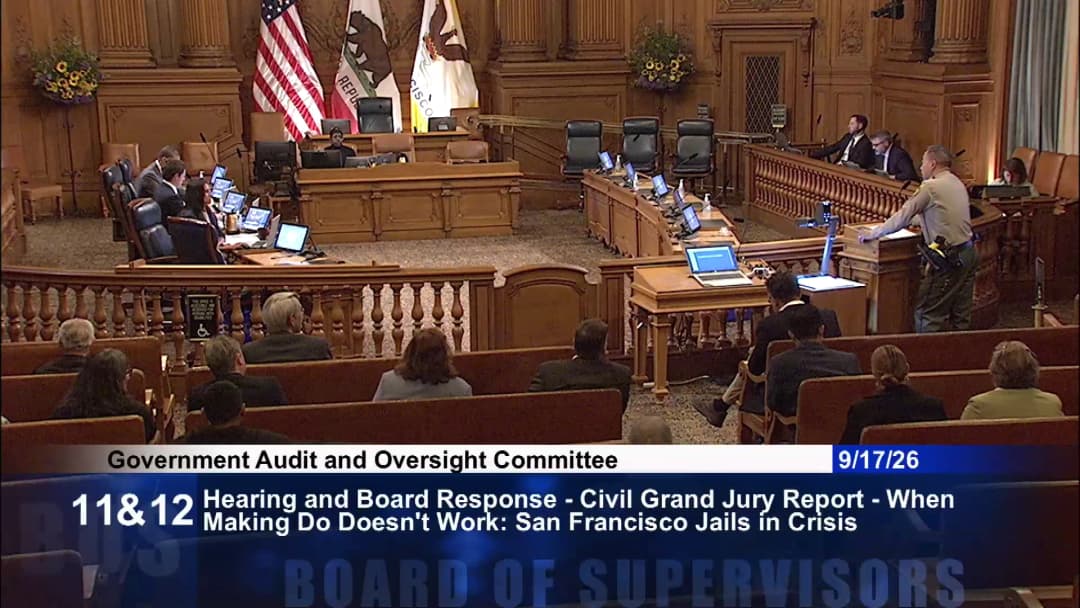
The Government Audit and Oversight Committee of the San Francisco Board of Supervisors met on Thursday, September 17, 2026, convening at 18:15. Chaired by Supervisor Stephen Sherrill, with Vice Chair Supervisor Jackie Fielder and Supervisor Alan Wong, the committee considered 14 agenda items, including two ordinances, one resolution, five civil grand jury reports and related board responses, and a settlement authorization. The meeting featured extensive public testimony and detailed presentations from civil grand jury members, city officials, and department heads. Public Comments & Testimony - Item 1 (Elections to Retirement Board, Health Service Board, Retiree Health Care Trust Fund Board): Fred Sanchez, retired deputy chief and president of Protect Our Benefits, and Dr. Teresa Palmer, vice president of Protect Our Benefits, spoke in strong opposition, arguing that removing campaign disclosure requirements from boards overseeing billions of dollars in public assets would invite corruption and cronyism. They urged the committee to vote no. - Item 2 (Behested Payment Waiver for Film SF): Ike Kwan of the San Francisco Travel Association spoke in favor, noting that film and television are powerful destination marketing tools and that the waiver would allow in-kind collaboration without direct financial support. - Items 11-12 (Jail Conditions): Aisha McCain, sister of Eric McCain who died at a permanent supportive housing site, urged the board to fully adopt the civil grand jury's recommendations on critical incident reports, stating that three prior deaths at the same site had not been connected due to lack of data analysis. She criticized the notion that public disclosure might deter providers from reporting incidents. - No public comment was offered on other items. Discussion Items Item 1: Ordinance Eliminating Campaign Reporting for Retirement Board, Health Service Board, and Retiree Health Care Trust Fund Board Maeve Skelly (President Mandelman's office) and Michael Canning (Ethics Commission) presented the ordinance. Since 2018, only seven candidates filed disclosures, with total reported fundraising of just $78.60 and no third-party spending. The Ethics Commission found the requirements burdensome, requiring candidates to open bank accounts even if no money is raised. Vice Chair Fielder raised concerns about eliminating Form 700 filings for trustees overseeing billions of dollars. Canning noted that Form 700 requirements could be retained through other code sections. The committee voted to forward the ordinance to the full board without recommendation (3-0). Item 2: Behested Payment Waiver for Film SF Maeve Skelly presented a resolution authorizing the Film Commission to solicit donations and in-kind support from San Francisco Travel Association and hotels for six months to promote San Francisco as a film destination. The waiver is required because these entities are classified as restricted sources. Vice Chair Fielder praised the specificity of the waiver. The committee forwarded the resolution with positive recommendation (3-0). Items 3-4: Civil Grand Jury Report – Outdoor Public Warning System (Sirens) Rob Chancellor presented the report, noting the system has been inoperable since 2019. Estimated replacement cost was $20 million (a few years old). DEM Executive Director Mary Ellen Carroll discussed challenges: sirens cannot provide specific instructions, geography affects sound, and they are monolingual without looping. Chair Sherrill proposed board responses partially disagreeing with findings F6 (any siren approach requires digital systems) and F9 (status quo produces costs without progress), and agreeing with findings F7 (sirens add complexity without actionable instructions), F10 (unresolved question consumes capacity), F11 (lack of clear public explanation), and F12 (negative implications). The committee adopted amendments and forwarded Item 4 with positive recommendation, and filed Item 3 (3-0 each). Items 5-6: Civil Grand Jury Report – Fog of Warning (Alert SF) Rob Chancellor presented that Alert SF has approximately 76,000 text and 62,000 WhatsApp subscribers, which is low relative to the city's population. DEM's Jackie (outreach lead) described promotional efforts: $10,000 in digital ads, 60 in-person events per year, and expansion to WhatsApp. DEM is working on criteria for wireless emergency alerts and multilingual messaging. Chair Sherrill proposed agreeing with findings F14 (no promotional plan), F15 (no strategy for visitors/commuters), and F16 (no unified mobile-first multilingual destination), and declining recommendation R6 (to determine resourcing via budget process). The committee adopted amendments and forwarded Item 6 with positive recommendation, and filed Item 5 (3-0 each). Items 7-8: Civil Grand Jury Report – Wildfire Risk in Glen Canyon Rick Carroll presented findings that aging eucalyptus groves pose a wildfire danger, with fragmented vegetation management across Rec & Park, DPW, PUC, and the school district. He noted that DPW's
The Assembly Budget and Finance Committee of the Whole met Thursday, September 17, 2026, from about 10:00 a.m. to 11:07 a.m. in City Hall Room 155. No agenda or minutes were available, so this summary is based only on the meeting transcript. Committee members participating in the room or by phone included Chair Donald Handelin, Anna Brawley, Sydney Scout, Baldwin Day, Johnson, Martinez, Gerger, Roland, McCormick, Park, and Voland. The committee received standing reports and continued a presentation on municipal service areas. No public comment was offered. Standing Reports - Budget Advisory Commission: Chair Ian Mills reported on the commission's recent meeting with OMB Director Browse about the 120-day memo. The commission passed Resolution AIM 146 2026, listed on the September 15 assembly agenda. Mills described the resolution as encouraging communication and engagement with the community, cooperation between the assembly and school district where feasible, and consideration of the long-term cost of maintaining infrastructure, especially through a density lens, noting that low-density development tends to have higher maintenance costs than the tax-based supports it generates. Mills is working with Member Scout on district-one town halls to gather budget input. Asked by Member Baldwin Day for concrete engagement suggestions, Mills said the resolution does not include specific guidance but he is happy to discuss ideas offline. - MOA Trust: Investment Director Kevin Liu reported a monthly return increase of 1.7% over the previous month, an $8.4 million increase in August. Year-to-date return was up 8.3%, driven by positive global markets as the tech selloff slowed. The Nasdaq returned 4.2% in August, and the S&P 500 reached an all-time high in August. No questions were asked. - Revenue Report: Deputy Treasurer Lauren Crawford said revenues are coming in essentially as forecast. In response to questions, she said ambulance service fee (SEMT) reimbursements from the state are received as a single lump sum based on the prior year, require completion of the ACFR, and can take more than a few months but less than a year. On the room tax, Crawford said a third of the revenue goes to general government outside the tax cap, with the other two-thirds going to other entities; online reports provide breakdowns such as hotel classes and short-term rentals. Member Handelin requested a follow-up email with the room-tax breakdown, and Member Baldwin Day suggested a future briefing on the bed/room tax, noting it becomes complicated with bond agreements for the Dena'ina Center. Budget and Financial Reports - Budget to Actuals: OMB Director Browse said the municipality was 66.3% through the fiscal year as of the end of August and underspent by about 3%. High spends in the Chief Administrative Officer department are driven by venues contracts and risk. Maintenance and operations was at 51% spent, well under normal, due to a prior assembly appropriation. Municipal manager was underspent largely because of an unspent non-labor software set-aside in the safety department. The TANS expense line showed zero because funds had not yet been transferred into TAN spend, expected by year-end. - Labor versus Non-Labor: Browse said payroll segmentation this year makes labor percentages look slightly off because more than 26 payroll periods are allocated due to splitting the beginning and end of the year. Non-labor highlights included CAO at 83% spent, Municipal Attorney's Office at 91% (reflecting a large contract encumbered at the beginning of the year), and PME at 88%; OMB has asked Director Kolhas whether PME's figure is an accounting anomaly or a specific spend. - Overtime: Finance is in an overspend category due to property appraisal work. APD and AFD overtime is higher than normal, related to budget adjustments and vacancies. Browse said overtime analysis is underway, including whether regular staffing could reduce overtime, particularly in the fire department where some overtime is tied to reimbursable state call-outs such as MCT operations. - Travel: Total travel budget is $589,000; $320,000 (54%) had been spent, with no department overspent. - Alcohol and Marijuana Taxes: Browse reported that prior questions about alcohol tax encumbrances likely resulted from the HANA conversion between platforms. Next month the congregate shelter annual operations contract line item will move due to assembly action. Alcohol tax grant programs are out the door and program operations are under spend. Asked about a possible year-end shortfall, Browse said OMB is not concerned; a prior fund balance may accommodate any overspend, and revenue projections show a slight increase in alcohol tax for 2027. Marijuana tax and ACE fund grant programs are moving out the door, tax-collection alignment will be handled before year-end, and board administration is on or under spend. - ACE Fund: Browse noted the ACE fund board has provided budget recommendations to the assembly. A work session on the ACE fund is scheduled Friday, October 2, 2026, from 2:10 to 3:10 p.m. Service Area Presentation and Discussion - OMB Director Browse continued the service-area presentation begun in August. She reviewed the definition of service areas, where they are authorized, common types across Anchorage, how they are paid for, who runs them, the 21 individual LERSAs on the Hillside, differences between Eagle River and Girdwood, and how the more than 60 active service areas have evolved since the 1970s. - Browse displayed a spreadsheet of service-area mill levies. She explained that six major funds are part of the tax cap; the traditional five majors are the first four in a highlighted box plus ARDSA. The Anchorage Building Safety Service Area had no levy this year but has levied in past years. Not every service area pays into each fund, depending on whether residents voted into or out of those service areas over time. - Tax-cap mechanics: Browse and the clerk present explained that areas under the tax cap can be increased only by a vote of all municipal voters, while individual LERSAs and other outside-the-cap service areas have their own voter-approved mill-rate caps and can raise their mill rate with approval only of service-area voters. The clerk noted there are roughly 180 ballot styles because precincts can contain multiple LERSAs. Browse explained that Girdwood's attempts to use full-faith-and-credit debt have often failed because the entire municipality votes on that backing, even though only service-area residents would repay the debt. - Member questions on service-area equity: Member Voland asked about Stuckagain Heights without parks and rec, meaning it does not pay into the parks and recreation service area. She noted Glen Alps shows no fire levy and a lower total levy of 12.08, and asked whether fire service would still respond. Browse said the practical answer is likely yes, but non-emergency response is tied to the service-area structure, and detailed mapping would be needed for a full answer. Member Voland raised concerns that CASA, which shows many small levies and some blanks, could let lower-levy service areas avoid raising their own funds while area-wide voters subsidize facilities. Browse acknowledged the service-area model creates these tensions, and that blending all services area-wide would raise questions for smaller communities. - Member Handelin asked whether the municipality bills for responses to areas without fire service; Browse said it generally invoices for such service and noted Eagle River's fire arrangement. A clarification was offered that Eagle River is part of the Anchorage-area program, while Chugach is slightly different. Handelin observed that we have some areas with representation, but no taxation. - Member Baldwin Day questioned how areas came to be outside certain services, saying some residents appeared to have a premium subscription to the municipality without paying for it. Browse said this resulted from historical decisions made 50 years ago, including small neighborhoods that were formerly cities, and from the nature of a combined city-borough. Baldwin Day called the result horrifying. Key Outcomes - No formal votes or resolutions were taken at this meeting; the reports and service-area presentation were for information and discussion. - The committee directed no immediate action, but the service-area conversation is expected to continue, with the chair suggesting the Transportation & Infrastructure Committee as another venue for deeper mechanics. - Future updates will include FEMA, ARPA, and fund positions during the October/November budget process, with possible detail through December and first-quarter revisions. - The ACE fund budget work session is scheduled for Friday, October 2, 2026, from 2:10 to 3:10 p.m. - OMB will provide additional monthly reports, including a look at finance overtime and a possible room-tax briefing.
The Wilmington Board of Adjustment met in a quasi-judicial public hearing at 1:00 p.m. on Thursday, September 17, 2026, in City Council Chambers at 929 N. Front St., Wilmington, NC, and adjourned at 2:54 p.m. Members present were Chair Jeff Hovis, Vice Chair Patrick Moore, Alain Norman, and Troy Demers; alternates Jim Downey and Greg Thompson participated; Graham Mitchell was absent. Vice Chair Moore recused himself from the first evidentiary hearing, and Alternate Thompson served in his place. The Board approved the prior meeting’s minutes, denied a variance for 1110 Windsor Drive, upheld the Historic Preservation Commission’s approval for 814 Macumber Alley, and received the FY 2026 Annual Report. Consent Calendar - The Board voted 5–0 to approve the meeting minutes. The agenda and oral proceeding identified the minutes as those of August 20, 2026, while the written minutes describe them as the July 16, 2026 minutes; the record does not resolve that discrepancy. Public Comments & Testimony - Matt Nichols, attorney for neighboring property owners at 1103, 1109, and 1117 Windsor Drive, opposed the variance, arguing the cabana’s location was a design preference rather than an unnecessary hardship, that the recent subdivision contributed to the claimed limitations, and that no renderings or landscape plan had been provided. He also objected to the applicant’s non-attorney agent representing the owner in a quasi-judicial proceeding and submitted a letter from Rodney Turner into the record. - Mike Nichols, 1109 Windsor Drive and a licensed landscape architect, opposed the variance, presenting conceptual alternatives with a smaller or relocated cabana that would not require a variance, and argued the 38-inch tree was not a specimen tree with special protections. - Eric Rylander, 1203 Windsor Drive, opposed the variance, raising concerns about the structure’s location, size, and potential future uses. - Louise Hicks, 1130 Windsor Drive, expressed concern about whether the structure could be separately occupied or used for short-term lodging. - Noel Tyrpak, project manager, addressed the design questions, describing the cabana, the attached pergola, and explaining that it was not an accessory dwelling unit. - Anthony Demings, 812 Macumber Alley, appealed the HPC approval, arguing the proposed residence was too large and incompatible, too close to the 12-foot alley, and effectively a two-story house despite being described as one-and-a-half stories. He also argued the HPC’s continuation procedure was improper and that revised plans were not posted until about six days before the July hearing. Discussion Items - 1110 Windsor Drive – Variance (BADV-BOA-2026-0006): Planner Todd Rademacher presented the request for a variance from City Code Section 18-199 to permit an accessory cabana in front of the principal residence on a 0.9991-acre R-15 lot. Staff originally identified an 8.9-foot encroachment measured from the front porch, then clarified that the correct measurement was from the residence’s front exterior wall, excluding the porch, making the corrected encroachment 18.7 feet. Applicant representative David DesChamps said the 1940 home is set farther from Windsor Drive than neighboring homes, already encroaches about 6.3 feet into the rear setback, and that relocating the cabana would affect a 38-inch chestnut oak with an arborist-recommended 16-foot tree protection zone. Staff clarified the tree is classified as a significant tree, not a specimen tree. The applicant said the design had been evaluated over about 18 months and that alternatives would change the desired relationship among residence, pool, and cabana. The Board questioned whether the hardship was self-created or the result of design preference, and the variance was denied. - 814 Macumber Alley – HPC Appeal (BAHPC-BOA-2026-0007): The Board reviewed whether the Historic Preservation Commission complied with the five review factors when it approved the new home construction. The city received a major works application April 6, 2026; HPC hearings were held May 14, June 11, and July 9, 2026, with the July proposal approved 6–0; the appeal was received July 21, 2026. Assistant City Attorney Whitley Stavich noted exhibits A and E were outside the HPC record and could not be considered. HPC advising attorney Gina Essey responded that continuances were determined by commission vote, that the July proposal was a completely new design, and that revised materials were published online about two weeks before the July hearing; Demings disputed the timing. The Board deliberated on whether the July hearing was properly handled as a continued item, whether the revised plans were available sufficiently in advance, and whether the appellant had adequate procedural opportunity; one member expressed concern about notice and plan availability. A motion to uphold the HPC decision was made by Mr. Demers, seconded by Vice Chair Moore, and passed 4–1. - FY 2026 Board of Adjustment Annual Report: Brian Chambers noted the annual report was included in the meeting packet; no formal presentation was made, and members were invited to identify corrections. Key Outcomes - Approved the prior meeting’s minutes 5–0, subject to the date discrepancy noted above. - Denied the 1110 Windsor Drive variance 5–0. - Upheld the Historic Preservation Commission’s decision for 814 Macumber Alley by a 4–1 vote; Jim Downey voted no. - Received the FY 2026 Annual Report for informational purposes. - The next regular Board of Adjustment meeting is scheduled for Thursday, October 15, 2026.
The Government Operations and Fiscal Policy Committee met on September 17, 2026, with four members present (Chair Burroughs, Vice Chair Adams, CM Ivey, CM Oriadha) and one excused absence (CM Blegay). The committee considered one appointment, eight bills, and one resolution. Key topics included an ethics appointment, a community safe spaces reporting portal, a package of elderly property tax relief bills, affordable housing requirements for surplus county property, and returning citizen employment initiatives. Appointment - APPT-17-26 – Board of Ethics: Krishnan Natesan, MPA, M.Div., was nominated to fill a vacant seat with term expiring 12/01/2030. After introduction by the County Executive’s office and remarks from Mr. Natesan, the committee voted 4-0 to recommend favorable appointment to the full Council. Legislation CB-086-2026 – Community Safe Spaces Act (Reporting Violations) - Sponsored by Dernoga and Olson. The bill broadens reporting of unauthorized use of county property and harmful conduct, creating an online platform for reports. Office of Law noted potential legal risks under Supremacy Clause; sponsor Dernoga argued the bill does not limit ICE activity but provides a reporting mechanism for existing law. The committee voted 4-0 to recommend favorable. CB-094-2026 – Property Tax Credit for Elderly Individuals of Limited Income - Sponsored by Oriadha and Hunter. Establishes a county tax credit equal to 50% of the state’s homeowners property tax credit, not to exceed the net county levy. The committee adopted an amendment clarifying the 50% language. Fiscal estimate from OMB: $700k/year by 2028 (based on 2024 data). The bill was held for further discussion at the next GOFP meeting (September 24, 2026) along with related tax bills. CB-095-2026 – Real Property Tax Deferral for Elderly or Disabled Homeowners - Expands eligibility, increases deferred amount, reduces interest rate. Held for September 24 meeting. OMB estimated potential annual deferral up to $13 million if all eligible homeowners participate, but noted current program usage is negligible (40-60k/year). CB-098-2026 – Property Tax Credit – Reduced Rent for Elderly or Disabled Tenants - Provides credit to owners who reduce rent. Held; OMB unable to estimate fiscal impact. CB-117-2026 – Property Tax Cap for Elderly Individuals - Establishes a tax cap in form of credit. Held. OMB estimated annual cost of $2.6 million. CR-091-2026 – Local Impact Grant Funds Multiyear Plan - Resolution to transmit the Multiyear Plan for review. Held for September 24 meeting. CB-100-2026 – Surplus County Property – Affordable Housing Development - Sponsored by Oriadha. Requires evaluation of surplus properties for elderly/affordable housing and mandates 1/3 affordable units in certain projects. The committee adopted amendments creating a financial feasibility waiver with a reporting requirement to the Council. The bill was voted favorably as amended (4-0). CB-101-2026 – Returning Citizen Employment Opportunities Act of 2026 - Requires 5% of work hours on contracts ≥$1M be performed by returning citizens. The committee adopted an amendment changing the requirement to 5% of new hires (rather than all work hours), and clarified it applies to new contracts rather than renewals/extensions, per Procurement’s recommendation. The bill was voted favorably as amended (4-0). CB-102-2026 – Re-entry Employment Incentive Program Modifications - Increases employer reimbursement from $5 to $10/hour, raises minimum qualifying wage from $15 to $25/hour, establishes 6-month payment schedule after 90-day probation, and creates a non-lapsing fund. The committee voted favorably (4-0). Key Outcomes - Appointment: Krishnan Natesan recommended favorably to full Council. - Passed favorably: CB-086, CB-100 (as amended), CB-101 (as amended), CB-102. - Held for September 24, 2026 meeting: CB-094, CB-095, CB-098, CB-117, and CR-091. - Amendments adopted: CB-094 (clarification of 50% credit language); CB-100 (feasibility waiver with reporting); CB-101 (new hires threshold, new contracts only). - Concerns raised: CM Oriadha expressed frustration with lack of timely fiscal data from Administration on tax bills. OMB and Finance officials requested more collaboration to balance senior tax relief with budget constraints. Chair Burroughs urged inter-branch meetings before next GOFP meeting. - Vote tally: All votes were 4-0 with one excused absence (CM Blegay).
This was a regularly scheduled meeting of the Hillsborough County Commission on Human Trafficking, held on September 17, 2026, at 6:00 PM. The meeting covered fiscal year-end updates, project reports, a forthcoming community town hall, law enforcement operations, and strategic planning for future funding and partnerships. Thirteen members were present in person, establishing a quorum. Consent Calendar - Minutes Approval: The minutes from the prior board meeting were moved, seconded, and unanimously approved. Public Comments & Testimony - Kim Joanidas (virtual): Thanked the commission for its hard work and expressed gratitude. Discussion Items - Certificate of Appreciation: The chair and vice chair presented a certificate of appreciation to an outgoing commissioner (referred to as Commissioner Sapata/Cepeda) for years of service and leadership in anti-human trafficking efforts. The commissioner noted she had secured recurring annual funding of $267,000 for the commission through her term. - Steering Committee Report (August 27, 2026): - Survivor Ventures emergency housing funding was rolled over to fiscal year 2027 due to timing constraints; the contract now runs through April 2027. - A government employee human trafficking training RFQ received two proposals; award is pending procurement review. - The “Don’t Buy It on Tampa Bay” campaign continues; a community event is scheduled for September 22, 2026. - The hotel/restaurant outreach had approximately 50 volunteers; 147 site visits were made (129 hotels/motels, 18 restaurants), with 85% of hotels accepting soap products and 93% accepting resource folders. - The 2030 strategic plan is under development, with a focus on implementation and consolidation of existing data. - September 22 Town Hall Preview (Vice Chair Grover Skipper): - Doors open at 4:30 PM at the Children’s Board; event runs 5:00–7:00 PM. - Program includes human trafficking 101 training by a survivor leader, a panel discussion with two survivor leaders, Detective Aguar, and Special Prosecutor Rita Peters, and a PSA from Thaddeus Bullard (Titus O’Neil). - Over 90 registrants as of the meeting; target audience includes youth aged 15 and older and their parents. - Crisis support and a quiet room will be available. - Statewide Shield Operation (Detective Aguar): - FDLE-led operation targeting missing juveniles; 163 juveniles recovered statewide, 46 in the Tampa area (Pinellas, Hillsborough, Pasco). One recovered minor was a confirmed human trafficking victim. - Commission funds (previously approved) were used to purchase supplies for the recovery hub; Detective Aguar thanked the commission for their quick response. - Fiscal Year-End Staff Report (Lisa, Commission Administrator): - Fiscal year 2026 ends September 30; all projects are completed or funded. - Unexpended funds from Survivor Ventures ($111,250 total carried over, including $1,250 unencumbered) were carried to FY27 with management and budget approval. - The government training ITB is in procurement review; 14 proposals received; $20,000 allocated. - Children’s Network of Hillsborough County contract: through July, $57,899 of $100,005 spent; 10 community youth and 9 foster youth served; youth stipend line expected to be nearly fully spent. - Contract Amendment Discussion: - Survivor Ventures has been providing 20–30 days of housing at their own expense beyond the contracted 5-day emergency limit. The board discussed whether to amend the contract to allow longer stays, but noted funding constraints and the need for transitional housing. No action was taken; the issue was referred to the steering committee. - Funding for FY27 Marketing Campaign: - The current “Don’t Buy It” campaign supported by FKQ marketing cannot be sustained at the same level due to budget limitations. Partnerships and a “Friends of the Commission” private-sector fundraising mechanism are being explored; approval from the Board of County Commissioners would be required. - Members suggested hosting business roundtables and identifying champions to help secure corporate support. - Pasco County Human Trafficking Commission Request: - Pasco’s commission asked to air human trafficking/sex-torsion video snippets at USF Tampa in January 2027. The board expressed support, with a request to reciprocally promote Hillsborough County’s commission at any Pasco events. Key Outcomes - Unanimous Approval of Minutes - Support for Pasco County Video Campaign: The board agreed to the request, contingent on reciprocal promotion. - FY27 Funding Rollover Approved: Management and budget carried forward $111,250 in commission funds (including $1,250 unencumbered) to fiscal year 2027. - Next Steering Committee Meeting: Scheduled for October 20, 2026, to discuss strategic plan, contract amendment possibilities, and partnership development. - Adjournment: The meeting was adjourned by motion and unanimous vote.