Browse by city
Date range
Search help

Search titles, summaries, topics and stored transcripts together. Keywords may match separately; put the whole query in double quotes for a phrase. Matching follows word analysis, so punctuation is not exact. Both dates are included. Documents are not searched.

SHOWING 71–80 ENTRIES
71
FEB 25, 2025 · DAVIS, CALIFORNIA · CITY COUNCIL & PLANNING COMMISSION
City of Davis/UC Davis/Yolo County Annual Public Meeting Summary - February 25, 2025

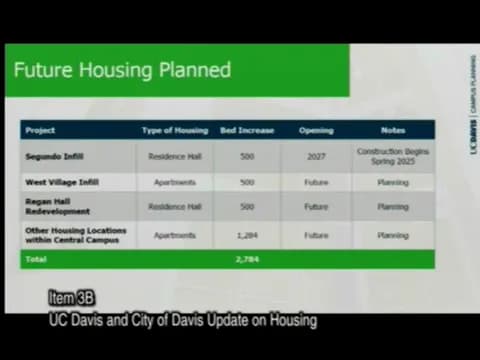
This special joint meeting of the Davis City Council, UC Davis, and Yolo County was held on Tuesday, February 25, 2025, from 5:00 PM to approximately 7:30 PM in the City of Davis Community Chambers. The meeting featured updates on UC Davis economic impacts, housing progress, the Hate-Free Together initiative, and the Crisis Now mental health program, along with public comments on a range of topics including LGBTQ+ rights, infrastructure, immigration enforcement, and mental health services. Public Comments & Testimony - Beth Bourne (Davis resident, UC Davis employee) expressed opposition to the Hate-Free Together campaign, arguing that transgender identity concepts harm children and that schools should focus on biology. She cited statistics: 1 in 22 UC Davis students identifies as transgender, and claimed six girls at Davis High School had breast amputations due to gender transition. - Mary Lou Rosetto (UC Davis alum, homeowner) urged the partnership to address poor road conditions, citing Alvarado Avenue between Anderson and Sycamore Lane as an example. She asked what UC Davis contributes to mitigate infrastructure wear from expanded population and bus traffic. - Norby Kumigai (Davis resident) spoke against recent ICE detentions in Davis, drawing parallels to the World War II internment of Japanese Americans. He referenced Executive Order 9066 and urged opposition to the new administration's detention policies. - Kimberly Mitchell (UC Davis alum, community member) presented recommendations for Crisis Now: expand co-responder hours beyond 9-5, extend crisis intervention training to all first responders (including dispatch, fire, EMS), and work toward a crisis stabilization unit (psych ED) in Yolo County. She submitted a detailed policy brief. - Alan Hirsch (Davis resident) suggested renaming Hate-Free Together to avoid framing issues as conflict between 'hater' and 'victim,' advocating for a focus on maintaining civil society and productive dialogue. - Eileen Samets (Davis resident) urged UC Davis to build more on-campus apartments, noting the campus has 5,300 acres but is the only UC not committed to 50% on-campus housing. She called for taller buildings (seven stories) and updates on Solano Park redevelopment and faculty/staff housing. - Claudia Kritch (Davis resident) expressed concern about a UC Davis employee known nationally for lawsuits related to civil liberties, stating the individual is detrimental to the community's reputation and asking how to move forward. - Liam (Davis resident) called for stronger enforcement of anti-hate initiatives, citing a 2024 Pride event where Beth Young allegedly assaulted someone. He urged action to prevent family tragedies. - Nitya (UC Davis student, president of NAMI on campus) expressed support for partnership on mental health and offered to be involved. Discussion Items UC Davis Economic Impact Report Presented by Tom Martens (Economic & Planning Systems Vice President) in place of David Zehnder. Key findings: - UC Davis supports 68,300 jobs statewide and generates $13.2 billion in total economic activity (direct, indirect, induced). - Within the City of Davis, direct economic output is $1.5 billion; regionally (Greater Sacramento) it is $5.6 billion; total UC Davis (including health system) regional impact is $9.6 billion. - Fiscal impact analysis: UC Davis-related residents and employees generate more tax revenue for the City of Davis and Yolo County than the cost of municipal services they consume. Revenue sources include property tax, sales tax, transient occupancy tax, etc. (University-owned land does not pay property tax.) - Aggie Square (Sacramento innovation campus) construction adds $2 billion in regional activity; ongoing operations will add $500 million annually. - Councilmembers asked about the dotted line on the chart (expenditure comparison) and clarified that property tax figures reflect actual revenue returned to the city. Supervisor Allen noted the university does not pay property tax on its buildings. UC Davis and City of Davis Update on Housing City presentation (Sherry Metzger, Community Development Director): - Since 2023, 297 units completed (e.g., Marco at Cannery, Celeste on Childs Road). 360 units near completion (Plaza 2555 with 200 units, Research Park Drive with 160 units). Total city pipeline: 2,062 units (including approved/pending). An additional 3,000 units are subject to voter approval (Measure J/R). - A new Housing Dashboard was launched to track projects by status. Councilmember Neville suggested adding income-level comparisons to RHNA targets. - RHNA target: 2,075 units; moderate/above-moderate units met, but lower-income units still lag due to financing challenges. - Mayor Vaitla noted that of the 6,000 pending units shown on the dashboard, over 3,000 are subject to voter approval and should be clearly labeled. UC Davis presentation (Lucas Griffith, Executive Director of Campus Planning & Sustainability; Mike Sheehan, Associate Vice Chancellor for Housing): - Since 2018 LRDP MOU, UC Davis has added 6,000 new beds while enrollment grew by 2,600 — more than doubling the housing ratio. Vacancy rate in Davis increased to 4%; rent escalation dropped to 1.6%. - Currently 15,000 students live on campus (41% of Davis-based enrollment). New projects: Segundo Infill (500+ beds, opening 2027), West Village Infill (500+ apartments), Reagan redevelopment (400+ beds, 2030). - Affordability: Orchard Park rents are 30% below comparable new construction; West Village rents track below market. A need-based rent subsidy program distributes over $800,000 annually. Segundo received a $43 million state grant for affordable housing. - On-campus vacancy is near 100% occupied. Transportation: new on-campus housing reduced biking; Unitrans ridership shifted. Partnership with YTD on 'Moving Forward Together' sustainable transportation plan. - Supervisor Frerichs thanked the university for fulfilling MOU obligations and avoiding litigation. Councilmember Chapman noted the value of negotiated agreements. Hate-Free Together Update Presented by Megan Macklin (UC Davis), Jenny Tan (City of Davis), and Oliver Snow (Yolo County). Highlights: - In 2024, executive committee attended community events and engaged over 600 people. Bi-monthly Zoom meetings with local organizations (20-30 participants each). Website (hatefreetogether.org) launched with resources. - City of Davis received a $300,000 California Creative Corp grant for artist-led community engagement. Five artist groups (Bike City Theater, Davis Repertory Theater, Davis Shakespeare Ensemble, Bahia Yackson, Jessica Marie Ross) created the CARE project (Community Artists Research Engagement). Events reached over 2,000 community members in Davis and Woodland. Initial findings: 29% increased awareness of social justice issues; 32% more likely to take action. - Strategic planning process for 2025: Phase 1 (now) – develop mission/values; Phase 2 (May-July) – contract with community consultant for summit; Phase 3 (June-Sept) – develop plan; Phase 4 – present draft at next annual meeting. RFP for consultant in early March. - Councilmembers expressed strong support, especially in light of rising 'othering.' Vice Mayor Neville and Councilmember Partida noted the importance of the work. Supervisor Frerichs highlighted the need for collaboration. Mayor Vaitla asked about focusing on undocumented immigrants; presenters said discussions are ongoing and website has immigrant resources. Yolo County Crisis Now Update Presented by Dirk Brazil (Interim County Administrator): - Crisis Now has three components: 24/7 call center, mobile crisis response/co-responders (two-thirds in place), and a sobering center (still in development). $2-2.5 million invested so far. - Sobering center: estimated $3 million build and $850,000 annual operating cost. Federal earmark from Congressman Thompson is uncertain. City of Davis committed $900,000 in ARP funds; Woodland and West Sacramento are working on agreements. - Councilmember Neville emphasized the importance of a receiving/sobering center for youth mental health (75% of mental illness emerges by age 25). She invited UC Davis to partner. - Councilmember Chapman noted a recent meeting between UC Davis, county, and city to identify gaps and avoid duplication (e.g., UC Davis Health 34 program runs 24/7 for students). Supervisor Frerichs suggested expanding co-responder hours and crisis intervention training to all first responders, and visiting Marin County's crisis stabilization unit. - Vice Mayor Neville clarified the combined receiving/sobering center model improves fiscal viability by drawing multiple funding streams. - Mayor Vaitla directed that Kimberly Mitchell's policy brief be shared with county and UC partners. Key Outcomes - No formal votes were taken; the meeting was informational and collaborative. - The Hate-Free Together initiative will proceed with a strategic planning process in 2025, including a community summit and consultant-led plan, with a draft presented at the next annual meeting. - The Crisis Now sobering center development remains contingent on federal funding and ongoing city-county MOUs. UC Davis expressed willingness to collaborate through a gap analysis with the county. - UC Davis and City of Davis will continue housing efforts; the city will update its Housing Dashboard to include RHNA income-level tracking and clearer labeling of voter-dependent units. - UC Davis confirmed it cannot exceed LRDP enrollment without a new plan, and will continue to build housing in line with the 2018 MOU. - The city manager clarified that public comment at the special meeting was limited to the scheduled 20-minute period, but additional comments were allowed at the council's discretion after the agenda items.
HOUSING 24% · ECONOMIC DEVELOPMENT 13% · MENTAL HEALTH AWARENESS 12% · COMMUNITY ENGAGEMENT 12%
72
FEB 18, 2025 · DAVIS, CALIFORNIA · CITY COUNCIL & PLANNING COMMISSION
Davis City Council Meeting Summary - February 18, 2025

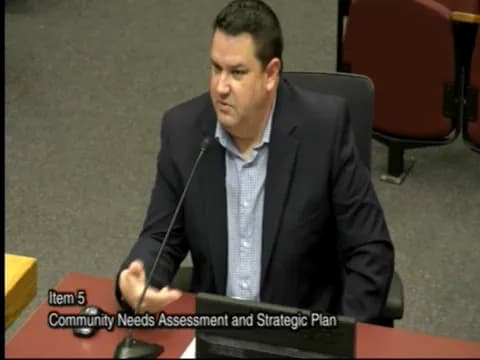
The Davis City Council met on Tuesday, February 18, 2025, starting at 6:30 PM. The meeting included consent calendar approvals, public comments on antisemitism and other topics, presentations from Yolo County Housing and the Parks and Community Services Department, and discussions on future agenda items. Councilmember Deos was absent, resulting in 4-0 votes on all actions. Consent Calendar - Items A-H were approved unanimously (4-0). Key items included: a task order for the Elevated Tank Replacement Project; a contingency increase for the F Street Parking Structure Elevator Modernization; an agreement with PG&E for electric vehicle fleet electrification; acquisition of the "Tablet Command" incident management system for fire dispatch; purchase of a stationary ventilation training prop; acquisition of a self-contained breathing apparatus fill station; on-call transportation planning and engineering services agreements with five firms; and a second reading of an ordinance designating a new stop intersection. Public Comments & Testimony - Dr. Sarah Marsh Crowder (Bike City Theatre Company) expressed thanks for city arts support, noting the company’s reliance on city grants and collaboration with the Arts Department. - Amir Cole (HRC member) criticized a fellow HRC member for promoting a book by Ahed Tamimi, citing a 2023 post in which Tamimi made violent antisemitic statements. Cole argued that promoting such a person should disqualify someone from serving on the Human Relations Commission. - Dan Ovadi (resident) reported an ongoing antisemitic booth at the Davis Farmers Market, displaying swastikas, blood libel, and conspiracy theories. He noted a new HRC subcommittee on hate but said improvement is lacking. - Daphne Ramiel (Jewish community member) expressed heartbreak over the return of the Bibas family hostages in body bags and described feeling targeted and dehumanized by groups and individuals, including those on the HRC. She called for recognition of antisemitism without requiring proof. - Ellen Miller (Davis Corral singer) spoke about the Davis Corral and Youth Choir, then addressed public comments on antisemitism, arguing that the farmers market booth is a clownish free speech exercise and that shutting down such speech is dangerous, citing Germany. She also requested that elevator modernization include a urinal (time expired). - Unnamed speaker (public comment) cited a 2017 sermon at the Islamic Center of Davis by Imam Amar Shahin that contained violent antisemitic statements and noted the Imam's tribute to Yahya Sinwar and support for the UC Davis encampment. The speaker urged the council to be aware of this. - Voicemail from Connor Woman (comment on item 4) supported the Yolo County Housing strategic plan but advocated for directly publicly funded and democratically controlled social housing, while also supporting voucher programs as a complement. - Voicemail from General Roman (comment on item 3C) supported electrification of the city fleet but expressed concern about PG&E dominance and rate increases. He also announced a UC worker strike on February 26-27. Discussion Items - Item 4: Yolo County Housing Draft 5-Year Strategic Plan – Executive Director Ian Evans presented an overview of Yolo County Housing programs (seasonal migrant centers, public housing, housing choice vouchers, etc.) and the three pillars of the draft plan: People, Housing, Administration. Goals include increasing homeownership opportunities by 50% by 2029 and increasing affordable housing units by 15% over five years. Council members asked about partnerships, funding challenges (federal tax credit market, Prop One timing), and the need for workforce housing. Council expressed interest in collaboration, particularly on down payment assistance and community navigators. - Item 5: Community Needs Assessment and Strategic Plan (Parks & Community Services) – Director Deanne Machado presented findings from an extensive community engagement campaign (843 survey responses). Key findings: residents prioritize maintenance of existing parks over new construction; top facility needs are shade structures, lighting, and restrooms; there is strong demand for teen, senior, and working family programs. A detailed park inventory identified $14.7 million in repair and replacement needs over 10 years (including $3-4 million for aquatics). The strategic plan outlines five goals: enhancing accessibility and engagement, sustainable funding, sustainability/climate resiliency, technology/innovation, and workforce development. Council praised the data-driven approach and expressed support for an inclusive playground at Playfields Park. Councilmember Partida raised concerns about going cashless and excluding those without technology. Councilmember Vaitla noted the unmet capital need is $7.2 million after accounting for existing funds. Key Outcomes - Consent Calendar approved 4-0. - Item 4: Council received the presentation and provided feedback. No formal vote was required; council members expressed interest in future collaboration. - Item 5: Council approved a motion (4-0) to adopt the 2024 Community Needs Assessment and Strategic Plan, authorize the City Manager to proceed with design and grant applications for an inclusive playground at Playfields Park, and direct staff to use the plan to prioritize budget actions, capital projects, and programming. - Item 6A: AB 1234 reporting acknowledged. - Item 6B: Council placed several items on the long-range calendar: a special city-county-university meeting on February 25; a CAP update on March 4 (with request to coordinate with general plan circulation element); a homelessness strategic plan follow-up on March 18; an update on extremely low-income housing survey (requested by Councilmember Partida); and a feasibility study on municipal utility and Greenfield ordinance, tentatively set for April 1 (requested by Mayor Vaitla).

AFFORDABLE HOUSING 25% · PARKS AND RECREATION 18% · PUBLIC COMMENT 13% · PROCEDURAL 10%
73
FEB 13, 2025 · DAVIS, CALIFORNIA · CITY COUNCIL & PLANNING COMMISSION
City of Davis Planning Commission Meeting - February 13, 2025

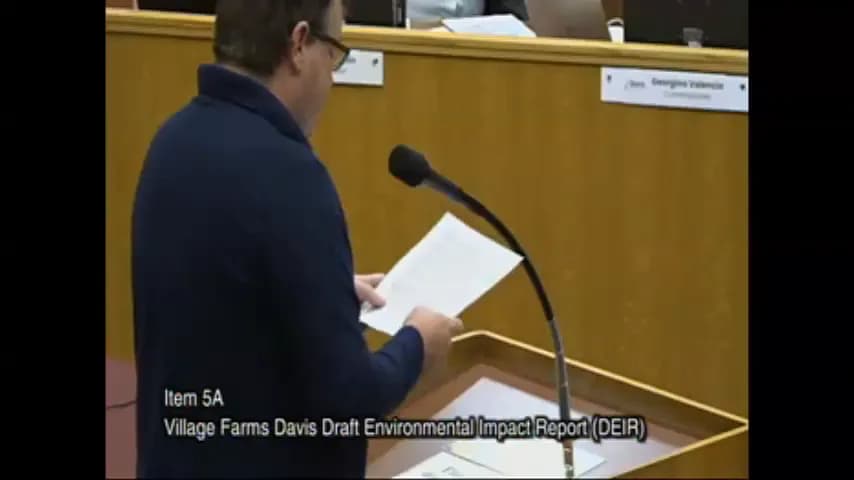
City of Davis Planning Commission Meeting - February 13, 2025\n\nThe Planning Commission convened to receive public and commissioner comments on the Draft Environmental Impact Report (DEIR) for the Village Farms Davis project, a proposed mixed-use development of 1,800 units on approximately 500 acres north of Covell Boulevard. No action was taken; the meeting served as a formal comment period on the DEIR. Note: The agenda listed the meeting date as February 12, 2025, but the provided information states the meeting took place on February 13, 2025.\n\n Consent Calendar\n- The agenda was approved by unanimous consent.\n\n Public Comments & Testimony\n- Approximately 40 minutes of recorded comments and numerous in-person speakers addressed the commission. Key themes included:\n\n Opposition\n - Several speakers (e.g., Jim Flanagan, David McLaughlin, Eileen Sammits, Nancy Price) argued the DEIR lacks a reduced-footprint alternative that avoids the floodplain, the old landfill, and sensitive habitat. They cited concerns about toxics (PFAS, arsenic, manganese) from the unlined landfill, removal of 952 trees, impacts on Swainson's hawks and vernal pool tadpole shrimp, and flood risks to downstream neighborhoods like Wildhorse.\n - Speakers from the Davis Citizens Planning Group (Alex Accamore, Anthony Palmier, Tim Keller, Gabriel Ehrlich, Richard McCann) urged a transit-oriented, higher-density design with fewer single-family homes, more attached units, and grade-separated bike/pedestrian crossings. They argued the project as planned would not reduce vehicle miles traveled (VMT) or provide affordable housing for the missing middle.\n - Residents of Cannery (Andrew McElroone, Elizabeth Colbrigh) and Wildhorse (Chris Carter, Nicholas Pinter) warned of traffic safety, flooding, and liability issues, noting the Cannery’s unfulfilled promises and the city’s inability to oversee large projects.\n - Other speakers (e.g., Sharon Montooth, Juliet Beck, Dave McKay) emphasized traffic congestion at Covell and Pole Line, lack of safe bike routes, and the need for a comprehensive traffic plan before adding 1,800 units.\n\n Support\n - Several callers (Edith Diegel, Rudy, Lauren Gary, Sherry, Laura Macdonald) supported the project for providing much-needed housing, especially for young families and first-time buyers. They cited the 20% affordable housing commitment, down payment assistance, and thoughtful planning including greenbelts and parks.\n - One speaker (Alan Pryor) challenged toxicity claims, citing Water Board letters stating no risk if the development uses city water, and noted that monitoring wells show contaminants migrating away from the site.\n - Others (e.g., Kara, Jessica Chapman) highlighted potential benefits for school enrollment and community vitality.\n\n Discussion Items\nVillage Farms Davis Draft Environmental Impact Report (DEIR)\n- Staff (Principal Planner Dara Dungworth) and consultant (Nick Papani of Rainey Planning) presented an overview: the project includes a pre-General Plan amendment, pre-zoning, and a development agreement. The DEIR analyzes the proposed project and a Biological Resource Preservation Alternative (BRPA) that preserves 47 acres of habitat. Significant unavoidable impacts include scenic vistas, agricultural land conversion, air quality (criteria pollutants and GHGs), and VMT.\n- Five alternatives were studied: No Project, Lower Number of Units (1,395 units), Agricultural Resource Preservation (1,330 units), Higher Number of Units (2,700 units), and Off-Site (Aggie Research Campus site). The Higher Units alternative would meet regional VMT targets.\n- The 45-day public review period ends February 25, 2025. Written comments can be emailed to Dungworth.\n\nCommissioner Comments\n- Vince McLaughlin: Requested a reduced-footprint alternative south of the drainage channel, better analysis of ingress/egress on F Street, and elaboration on groundwater monitoring and liability.\n- Georgina Valencia: Emphasized the need for a stormwater control plan, guaranteed bike/pedestrian undercrossings, and realistic planning for the educational farm.\n- Greg Rowe: Criticized the alternatives analysis as “corrupted,” noting that increasing density to 2,700 units solely to meet VMT thresholds is unprecedented. Called for a reduced-acreage alternative similar to the 2004 Covell Village EIR. Stated that grade-separated crossings must be a baseline feature on the ballot.\n- Catherine Brinkley: Agreed that the DEIR lacked a viable reduced-footprint alternative but noted VMT is a valuable metric. Recommended combining higher density with a smaller footprint to protect critical habitat. Surprised water quality was not deemed significant.\n- Johannes Troost: Focused on traffic impacts, arguing that the project would worsen already-congested intersections at Covell and Pole Line. Stated a comprehensive traffic plan for the entire north corridor is needed before proceeding.\n- Michelle Weiss (Chair): Stressed that grade-separated crossings are non-negotiable, called for a solution at F Street/railroad, and raised concerns about storm drainage, tree removal, and forever chemicals. Noted that the environment’s effect on the project (e.g., toxics) must be addressed even if CEQA does not require it.\n- Additional commissioner requests: Cannery residents’ concerns must be addressed with a detailed mitigation discussion (Vince), and the potential for rising groundwater intersecting with reconstructed Channel A should be studied (Greg).\n\n Key Outcomes\n- No vote was taken. The commission will submit written comments on the DEIR by the February 25 deadline.\n- The final EIR will respond to all comments and include a mitigation monitoring program.\n- The project will return to the Planning Commission for a public hearing on certification of the final EIR and recommendation to City Council, tentatively in May 2025.\n- The City Council would then consider certification and entitlements; if approved, the project would go to voters in November 2025 under Measure J/R.\n- Future meetings (February 26, March 12 and 26) will include general plan update updates and a new commission task process.

VILLAGE FARMS 26% · ENVIRONMENTAL PROTECTION 23% · TRANSPORTATION SAFETY 10% · HOUSING 9%
74
FEB 4, 2025 · DAVIS, CALIFORNIA · CITY COUNCIL & PLANNING COMMISSION
Davis City Council Meeting: February 4, 2025 - Black History Month & Economic Development

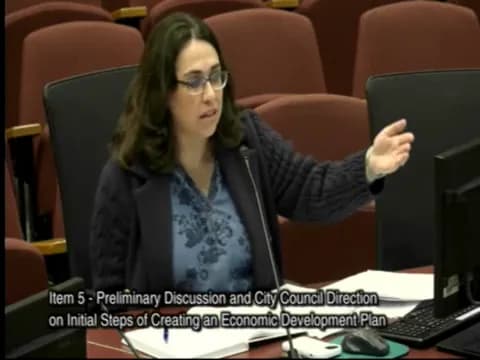
The Davis City Council met on February 4, 2025, starting with a ceremonial presentation for Black History and Black Futures Month, followed by announcements and public comments. The main discussion focused on developing an economic development strategic plan, resulting in the formation of two subcommittees and direction to explore a living wage standard. Consent Calendar - Approved unanimously (5-0) without discussion. Items included: - Item 4A: Replacing restrooms in Community Park. - Item 4E: Second reading of an ordinance establishing a framework for a down payment assistance plan. - Item 4G: City sponsorship of a film screening on February 19, 2025, about Japanese American incarceration during World War II. - Item 4D: Establishing an all-way stop at the intersection of 6th and C Streets. Public Comments & Testimony - Alan Miller (Old East Davis Neighborhood Association) reported four accidents in one week at 5th and J, calling it an emergency and requesting Jersey barriers to restrict left turns at I, J, and K streets. - Jerry Howitt (Stories on Stage Davis, Davis Arts Alliance) thanked the council for a grant that allowed resumption of in-person events and brought attendees from Sacramento and the Bay Area. - Elaine Roberts Musser opposed the down payment assistance program (consent item 4E), citing unknown costs, lack of funding, city financial struggles, and existing programs. She urged the fiscal commission to review the plan. - Alan Hirsch raised concerns about inadequate bus stop design (e.g., at F and Covell), dangerous e-bike interactions on shared trails, and tree ordinance changes that he said allow the city to use mitigation funds for tree removal rather than replacement. - Joel Rappaport (Davis Independent Music Initiative, Davis Arts Alliance) thanked the council for grants supporting local music, noting that Davis now has zero dedicated music venues compared to seven in 1998. - Mark Hushing (Transportation Commission member, speaking personally) encouraged mode shift and bike infrastructure investment, noting that he was recently hit by a car at the same intersection as 18 months prior, this time with his nine-year-old child. - John Killer urged tight program guidelines for the down payment assistance plan, specifically to prevent subsidizing UC Davis student housing, arguing it is the university's responsibility. - Catherine Keller shared concerns about program funding but also acknowledged benefits of first-time homebuyer assistance, and supported excluding students from eligibility. - Todd Adelman opposed the all-way stop at 6th and C, suggesting daylighting (removing parked cars) instead of a stop sign. - Recorded comments supported replacing Community Park restrooms and the film screening, and opposed the stop sign. Discussion Items Item 5: Economic Development Strategic Plan Director Katie Yancy presented staff recommendations for a plan focused on job retention and creation, proposing a living wage standard (replacing the current high-wage standard) and four targeted industry clusters: business & entrepreneurship, retail/hospitality/tourism, advanced manufacturing, and agriculture/water/environmental technologies. Staff outlined potential business retention, attraction, and "economic gardening" programs. The city manager emphasized the need for council direction on timeline, scope, and subcommittees. Council members discussed: - Living wage standard: Broadly supported as a guiding objective; staff clarified it would be operationalized later through an ordinance. - Industry sectors: Council expressed caution about committing to specific sectors without more analysis, noting the need to align with Davis's identity (e.g., sustainability, ag-tech) and avoid sectors requiring large land parcels (e.g., advanced transportation/logistics). Vice Mayor Neville noted that federal representatives view Davis as ag, food science, biomedical, and clean energy. - Approach: Council unanimously preferred a hybrid approach—continuing ongoing programs (process streamlining, business outreach) while developing a comprehensive strategic plan. Mayor and council set a target of completing the plan by end of 2025. - Subcommittees: Two subcommittees were formed: 1. Business Retention & Expansion (Councilmembers Partida and Deos) to focus on existing business support, including the two-by-two meetings with DDBA and Chamber. 2. Brand, Identity, and Future Growth (Councilmember Chapman and Vice Mayor Neville) to focus on attracting new businesses and developing a cohesive economic identity. - Immediate directions: Staff were directed to proceed with: - Refreshing the Chamber MOU to include a business walk and survey program. - Continuing permit streamlining and ERP system updates. - Exploring workforce development inclusion in the CDBG consolidated plan (coming in March). - Developing small business preservation programs. - Regional engagement: Council requested presentations from Valley Vision and Greater Sacramento Economic Council. Key Outcomes - Consent Calendar approved 5-0, including the down payment assistance ordinance second reading, restroom replacement, film sponsorship, and all-way stop. - Economic Development Strategic Plan: Council adopted a hybrid approach (plan development + concurrent implementation of certain programs), with a goal of completion by end of 2025. - Subcommittees formed: Two ad hoc committees (Retention/Expansion and Brand/Growth) with two councilmembers each. - Living wage standard: Staff directed to explore and operationalize a living wage objective as part of the strategic plan. - Immediate actions: Staff to refresh Chamber MOU for business walk/survey, continue process streamlining, and prepare workforce development components for the CDBG consolidated plan. - Public safety follow-up: Staff noted that Ryan Chapman (Public Works) will return with a final proposal for interim safety improvements at 5th and J after community outreach. - Other: Council acknowledged attendance at League of Cities training and Chamber installation dinner; long-range calendar to be updated.

ECONOMIC DEVELOPMENT 61% · PUBLIC COMMENT 8% · PUBLIC ENGAGEMENT 6% · AFFORDABLE HOUSING 5%
75
JAN 22, 2025 · DAVIS, CALIFORNIA · CITY COUNCIL & PLANNING COMMISSION
Planning Commission Meeting: Palomino Place Project & 2025 Officer Elections - January 22, 2025

Planning Commission Meeting: Palomino Place Project & 2025 Officer Elections - January 22, 2025\n\nThe Davis Planning Commission met on January 22, 2025, at 7:00 PM in Community Chambers. The meeting included the election of 2025 officers and a public hearing for the Palomino Place project, a major infill housing development. The commission certified the project's environmental impact report and approved the vesting tentative subdivision map and affordable housing plan with amendments, including an increase in affordable units and a developer contribution for down payment assistance.\n\n Consent Calendar\n- Approved minutes from five prior meetings (July 10, August 28, September 11, September 25, and October 9, 2024) with a correction: references to "closing a public hearing" were changed to "closing public comment."\n\n Public Comments & Testimony\n- Several residents spoke during the public hearing:\n - Marjorie Longo expressed concerns about stormwater drainage into Channel A, noting lack of city inspection and easement.\n - John Johnston, a former Natural Resources Commission member, raised climate action plan concerns, stating the project's per capita VMT would increase by nearly 10% above city average, and urged higher density to reduce VMT.\n - Jim Hogi, president of Berry Athletic Foundation, spoke in support of the pentathlon center.\n - Caden, a UC Davis student, spoke on behalf of a civil engineering student who expressed concerns about car dependency and peripheral development.\n - Albert Lynn and other Caravaggio Drive neighbors expressed support for the project following a settlement with the developer that included a 15-foot land dedication for a tree buffer.\n\n Discussion Items\n- Palomino Place Project (Planning Application 22-45): Proposed up to 139 single-family lots, a 45-unit affordable apartment site, and a potential pentathlon training facility on a 25.8-acre site north of Covell Boulevard and Monarch Lane. Staff presented project adjustments including 188 total units (143 market-rate, 45 affordable minimum), a 15-foot buffer for neighbors, and off-site improvements. The project was processed under builder's remedy, SB 330, density bonus law, and a settlement agreement.\n- Environmental Review: Nick Papani from RAND Planning presented the subsequent EIR, comparing impacts to the approved 2009 Wild Horse Ranch EIR. The final EIR included responses to public comments, a master response on VMT, and minor revisions. Adding 13 additional units was deemed not to affect the analysis.\n- Applicant Presentation: Matt Keisling highlighted the project's diversity of housing types, proximity to amenities, and sustainability commitments. The applicant agreed to increase affordable units from 33 to 50 minimum and to contribute $80,000 for down payment assistance for cottage units.\n- Commission Deliberations: Commissioners discussed traffic concerns at Covell and Monarch (mitigated with signalization and turn pockets), the viability of the pentathlon center, and affordable housing details. A motion to eliminate the pentathlon center failed for lack of a second.\n\n Key Outcomes\n- CEQA Certification: The commission certified the Subsequent Environmental Impact Report, adopted findings of fact and a statement of overriding considerations, and approved the mitigation monitoring program.\n- Vesting Tentative Subdivision Map: Approved with conditions, including the four additional ranch house lots and the nine townhome lots as default if the pentathlon is not built.\n- Affordable Housing Plan: Approved with a minimum of 50 affordable units (up from 33, and above the city's 27.45-unit requirement), constituting 24% of total units.\n- Down Payment Assistance: The developer will contribute $80,000 to the city for down payment assistance for first-time homebuyers of the cottage units (income 80-120% AMI), or implement independently if the city program is not operational.\n- Density Bonus Concession: The affordable housing developer is entitled to request one concession or incentive under state density bonus law.\n- Chair and Vice Chair Elections: Michelle Weiss was elected Chair and Alan Bennett Vice Chair for 2025, both unanimously.\n- Future Meetings: The next meeting on February 12, 2025, will include a public comment session on the Village Farms Draft EIR.

AFFORDABLE HOUSING 37% · PROCEDURAL 11% · TRANSPORTATION SAFETY 10% · LAND USE 9%
76
JAN 21, 2025 · DAVIS, CALIFORNIA · CITY COUNCIL & PLANNING COMMISSION
Davis City Council Meeting – January 21, 2025: Proclamations, Camping Ordinance, Down Payment Assistance

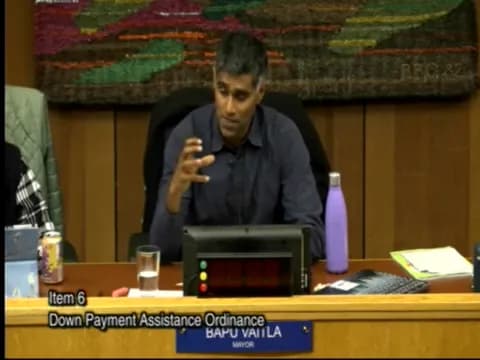
The Davis City Council met on Tuesday, January 21, 2025, starting at 6:30 p.m. in the Community Chambers. The meeting included ceremonial presentations honoring outgoing Mayor Josh Chapman, the adoption of a consent calendar, a presentation on arts and culture grant outcomes, introduction of a down payment assistance ordinance, and approval of 2025-26 liaison assignments. All votes were unanimous (5-0) unless noted. Ceremonial Presentations - Proclamation Honoring Mayor Josh Chapman: Councilmembers and staff praised Mayor Chapman’s leadership, consensus-building skills, and focus on equity and community well-being during his 2024 term. The proclamation was presented on behalf of the city. - Welcome to New Mayor and Vice Mayor: Mayor Bapu Vaitla and Vice Mayor Donna Neville were formally welcomed for 2025. Consent Calendar - Item 4A – Camping Ordinance Implementation Policy: Approved resolution establishing an enforcement policy for the city's camping ordinance (DMC 26.11). Vice Mayor Neville clarified that the resolution does not change the existing ordinance but outlines implementation procedures, including providing notice and offering services. - Item 4B – Equipment Procurement for WWTP: Approved contract with Connexus Industries Inc. for concrete resurfacing. - Item 4C – Electric Vehicle Fleet Grant: Approved acceptance of SMAQMD grant funds for EV fleet replacement. Councilmember Deos commended staff for securing grant funding. - Item 4D – Independent Police Auditor Contract Extension: Approved amendment to extend OIR Group contract. - Item 4E – Varsity Theater Lease Amendment: Approved seventh amendment shortening option periods and providing rent relief. - Item 4F – DYSA Batting Cage at Community Park: Approved resolution authorizing construction. - Item 4G – Revised Position Listing and Salary Table: Approved citywide salary table and authorized positions. - Item 4H – UC Davis Active Sensor Evaluation Study: Received as informational. - Item 4I – Surveillance Technology Report (ALPR): Received as informational, with public hearing to follow. - Item 4J – Fiscal Commission Minutes: Received as informational. Public Comments & Testimony - Menorah Lighting (Public Comment Before Consent Calendar): Multiple speakers (including a member of Chabad of Davis) expressed concern that the city refused a request for a public Hanukkah menorah lighting. Speakers cited Supreme Court precedent and argued that the refusal raises questions of religious inclusivity. One speaker linked the refusal to the city’s prior ceasefire resolution timing. Speakers urged the council to reconsider and allow the menorah to be placed near the Christmas tree. - Camping Ordinance (Public Comment on Item 4A): Representatives from the Night Market organization expressed concern that the camping ordinance implementation policy would hinder their ability to serve the homeless with tents and tables. Another speaker highlighted the lack of shelter space, noting that a shelter in Woodland had no openings and that a person was forced to seek a 5150 psychiatric hold instead. - Arts & Culture (During Item 5): Una Hatton, chair of Arts Alliance Davis, announced a 2025 public comments campaign to share arts success stories at each council meeting. - Down Payment Assistance (Public Comment on Item 6): Multiple speakers supported the ordinance, including representatives from Interfaith Housing Justice Davis who urged a $1 million annual allocation. Some speakers raised concerns: Alan Miller argued it would inflate housing prices; Dan Carson recommended sending the proposal to the Fiscal Commission and Social Services Commission for review, citing risks and lack of cost estimates. One speaker, David Thompson, reported previous city-assisted single-family homeownership programs had suffered abuse and administrative costs. Discussion Items - Item 5 – Yolo Community Foundation Arts and Culture Grant Presentation: Executive Director Jessica Hubbard and Program Manager Carolina Valverde presented outcomes of the $500,000 grant funded by the city. Funds supported 20 organizations (5 with facilities, 4 with paid staff, 11 volunteer-run). Nearly 50% of funds went to staff salaries; 33% to programmatic costs. The grant helped organizations pivot to virtual programming and build capacity. Councilmembers expressed appreciation for the partnership. - Item 6 – Down Payment Assistance Ordinance: Assistant City Manager Kelly Stachowicz presented a framework ordinance to establish a down payment assistance program for first-time, income-qualified homebuyers (up to 120% AMI). The ordinance sets a framework; program details (funding, loan terms, equity share) would be defined later via resolution. Council discussed risks (foreclosure, administrative costs, silent second mortgages) and the need for detailed guidelines. Councilmember Chapman suggested sending to the Fiscal Commission and Social Services Commission for input on program guidelines. Councilmember Neville requested stronger language requiring that assistance be used solely for home purchase in Davis. Councilmember Deos emphasized not duplicating existing programs and managing risk. Key Outcomes - Ordinance Introduced (Item 6): The council voted 5-0 to introduce the ordinance (first reading) with an amendment adding language that any assistance shall be used only toward the purchase of a residence within Davis city limits. - Subcommittee and Commissions Referral: The council directed the Fiscal Subcommittee (Neville, Vaitla) to work with staff on budget priorities, including funding for affordable housing. The council also referred development of program guidelines to the Fiscal Commission (to minimize financial risk and recommend terms) and to the Social Services Commission (to ensure maximum benefit to applicants). These referrals were approved 5-0. - Liaison Assignments (Item 7): Approved 2025-26 council liaison appointments with modifications: Councilmember Chapman replaced Councilmember Partida on the Shriners subcommittee; Councilmember Partida remained on DJUSD 2x2; Vice Mayor Neville remained on the Yolo Animal Services Planning Agency; Councilmember Deos was added as alternate for Yolo County Transit District (subject to confirmation that an alternate is accepted). Motion passed 5-0. - Other: City Manager reported upcoming police community conversations (Jan 22, 23, 29, 30) and G Street grand opening (Jan 27). The council noted long-range calendar items, including a request from Councilmember Deos to bring forward Measure JRD exemption options soon. - Adjournment: The meeting adjourned.

AFFORDABLE HOUSING 42% · PROCEDURAL 17% · COMMUNITY ENGAGEMENT 10% · ARTS AND CULTURE 7%
77
JAN 8, 2025 · DAVIS, CALIFORNIA · CITY COUNCIL & PLANNING COMMISSION
Davis City Council Meeting Summary: General Plan Consultant, Inclusionary Housing, Mayor Selection (January 8, 2025)

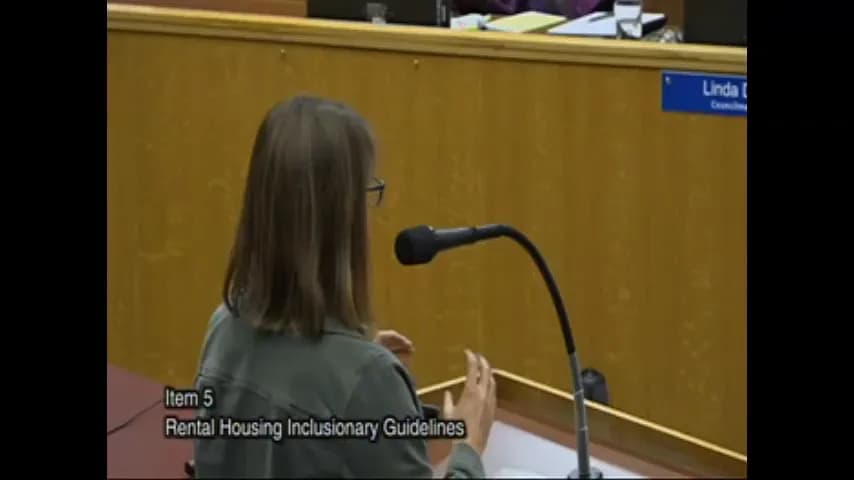
The Davis City Council meeting covered announcements, public comment, the consent calendar, the 2025 General Plan update consultant contract, rental housing inclusionary guidelines, and the 2025 mayor/vice mayor selection. The supplied meeting timestamp is 2025-01-08 14:45:00+00:00; the raw transcript opens with Tuesday, January 7, 2025, at 6:33 p.m., a discrepancy noted here. Consent Calendar - The council approved the meeting agenda and then the consent calendar, 5-0, with no items pulled. City Manager Brief Announcements - The draft Environmental Impact Report for Village Farms Davis was released for public review on January 7, with a 45-day comment period ending February 21, 2025. Comments will receive responses in the final EIR. - A Make Davis Sparkle downtown cleanup is scheduled for Friday, January 10, at 8 a.m., meeting at G Street Plaza. Partners include the Chamber of Commerce, Downtown Davis Business Association, Davis Picks It Up, Recology, PG&E, and Smith Funeral Home. - A remembrance ceremony for Officer Natalie Corona will be held Friday, January 10, at noon at the Davis Police Department, 2600 Fifth Street. - The Senior Center patio grand opening open house will be January 16, 3-5 p.m., featuring a new concrete patio, steel pavilion, seating, native landscaping, lighting, heaters, and catering counters. - A downtown trash pickup event will be held Saturday, January 18, 11:30 a.m.-2 p.m., meeting at E Street Plaza; volunteer sign-up is at cityofdavis.org/volunteers. - The 31st annual Dr. Martin Luther King Jr. celebration will be Monday, January 20, at the Veterans Memorial Theater, with the theme “Economic Justice in the Dream: Building a Fair and Inclusive Economy.” The art exhibit opens at 10 a.m., the program begins at 10:30 a.m., and a march to Central Park follows at about 11:45 a.m. Public Comments & Testimony - General public comment: Alan Miller complained about cars in bike lanes, litter along the railroad tracks, and a lack of enforcement related to daylighting and DoorDash parking. A prerecorded comment argued that housing people experiencing homelessness or at risk of homelessness would reduce harmful behavior by removing the circumstances that cause or worsen trauma and mental health struggles. - General Plan item public comment: Alan Miller expressed skepticism about the value of updating the General Plan based on past plans not being followed. Mary Jo Brian asked staff to share the League of Women Voters community engagement plan with the consultants. Judy, speaking for the Davis Community Action Network (DCAN), said DCAN completed a year-long Community Voices series and wants to share its report. A prerecorded comment supported the consultant approach for this major plan update, praised outreach through commissions and the broader community, and recommended a separate liaison body with non-commissioner members. - Inclusionary housing public comment: Several speakers supported the staff recommendation, including Martha Teeter, Judy Yennis of DCAN, Gaina Lambang, Ellen Callark of Interfaith Housing Justice Davis speaking personally, Barbara Clutcher, and prerecorded speakers Ben and another resident. They generally favored a higher in-lieu fee so developers would build affordable units on site, supported land dedication as an alternative, and wanted funds to go into the housing trust fund. - Inclusionary housing public comment opposing or questioning the $608,000 fee included: Robbie Chapel, a commercial real estate broker, who argued development is difficult and cited Berkeley building 5,000 units with claimed rent declines of 40-50%; a speaker transcribed as Wesley, who said the fee level would guarantee the in-lieu option is never used and suggested a modest fee across all projects like Sacramento; Doug Busby, a local market-rate and affordable housing developer, who said his own projects would not be affected but called the $608,000 fee destructive, estimated it at about $100,000 per market-rate unit and a 20-25% cost increase, and noted neighboring cities charge roughly $5,000-$10,000 per unit; Corey Calfe, a land-use attorney speaking as a constituent, who worried the fee would turn off the spigot of new housing and urged keeping the current fee or using an inflationary or gap-financing increase; and Port Tellis, an aspiring developer, who said his project could not be built under the proposed fee and asked the council to do its own research. - Mayor selection public comment: One in-person commenter jokingly suggested Rob Roy. A prerecorded comment supported rotation, recommending Vice Mayor Bapu as mayor and Councilmember Donna Neville as vice mayor, and suggested considering more frequent rotation of facilitation and ceremonial duties. - Long-range calendar public comment: Alan Miller suggested the city use chair/vice chair titles and shared a story about restorative justice after a driver hit his cactus. Discussion Items - 2025 General Plan Update Consultant Contract: Staff recommended approving a resolution authorizing the City Manager to execute a contract with Raimi & Associates for the General Plan update. Staff described the General Plan as a vision and policy document, noted the eight required elements, and explained that the environmental justice element is voluntary but included. The process is expected to take two to three years, with the final year including the EIR. Council discussed the timeline, risks of scope creep, community engagement methods, and the relationship between land use and economic development. Vice Mayor Vitele requested that staff develop a General Plan steering committee process, that the Planning Commission start a subcommittee on land use/mobility concepts, and that the Open Space and Habitat Commission start a subcommittee on high-priority conservation, open space, habitat, and agricultural easement areas. Councilmember Neville asked about the greenway concept, and staff described regional connectivity planning. The contract motion carried 5-0. - Rental Housing Inclusionary Guidelines: Staff presented options for an in-lieu fee for projects not meeting the 15% inclusionary requirement. Figures discussed included the recommended $608,000 per unit based on total development cost, $369,000 per unit for construction costs only, about $250,000 per unit for average recent market-rate rental projects, and a former/2016 fee of $84,110 per unit. Staff recommended a 10-year maximum installment payment using the LAFE rate and net present value, with an option for one-time payment, and discussed a lower fractional-unit fee when a developer builds all required whole units on site. Council debated the right fee level, possible sliding scales by project size and density, land dedication, conversion of existing units, revenue sharing, and the need for better parcel-specific cost data. Councilmember Neville challenged the claim that Berkeley rents fell sharply, saying Berkeley Rent Board data showed rents flat. A motion to set the fee at $369,000 failed 2-3. A subsequent motion to set the fee at $250,000, with fractional units for on-site compliance projects set at half that amount, carried 4-1. - Designation of Mayor and Vice Mayor for 2025: The council discussed district rotation, at-large mayoral options, and whether the titles should be mayor/vice mayor or chair/vice chair. A motion nominated Vice Mayor Bapu as Mayor and Councilmember Donna Neville as Vice Mayor for calendar year 2025. The motion carried 4-0-1, with Vice Mayor Bapu abstaining. Staff was asked to return with options for future mayor-selection processes. - AB 1234 Reports and Long-Range Calendar: No AB 1234 meeting reports were offered. Staff noted the next regular meeting is January 21, 2025, and that future reports will include mayor-selection options and inclusionary housing follow-up. The February 4 discussion of an economic development strategic plan was also noted. Key Outcomes - Approved the agenda and consent calendar 5-0. - Approved the City Manager’s contract with Raimi & Associates for the General Plan update, 5-0, with directives for a steering committee process and planning/open space commission subcommittees. - Set the rental housing in-lieu fee at $250,000 per unit, with fractional units for projects that otherwise provide their on-site 15% requirement set at $125,000 per fractional unit. The vote was 4-1. - Rejected a motion to set the in-lieu fee at $369,000 by a 2-3 vote. - Directed staff to return with further options on sliding-scale or project-size-based in-lieu fee structures and related refinements. - Elected Vice Mayor Bapu as Mayor and Councilmember Donna Neville as Vice Mayor for 2025, 4-0-1 with the Vice Mayor abstaining. - Referred future work on mayor/vice mayor selection options and inclusionary housing follow-up to upcoming staff reports.

AFFORDABLE HOUSING 25% · PROCEDURAL 17% · GENERAL PLAN UPDATE 14% · IMPACT FEES 13%
78
DEC 17, 2024 · DAVIS, CALIFORNIA · CITY COUNCIL & PLANNING COMMISSION
Davis City Council Meeting – December 17, 2024: Budget Priorities, Swearing-In, and Subcommittee Formation

The Davis City Council met on December 17, 2024, to certify the November 5 general election results, swear in three councilmembers, and discuss initial budget priorities for fiscal years 2026–2027, including the allocation of new Measure Q sales tax revenue. The council also formed two subcommittees: one on pavement management and one on strategic budget planning. Consent Calendar - Approved resolutions authorizing agreements with the California Department of Tax and Fee Administration for the new Measure Q transactions and use tax, including audit services. - Authorized staff to pursue a comprehensive study of the Playfields batting cages facility, including community engagement and financial feasibility. - Approved a task order for the H Street Storm Drain Pump Station (SDS3) replacement project. - Approved the list of commissions to review the Village Farms Davis and Shriners projects. - Adopted on second reading an ordinance amending the tree ordinance to revise administrative processes and establish a Tree Permit Appeal Board (CEQA exempt). - Received and filed commission minutes from the Climate and Environmental Justice Commission, Human Relations Commission, Open Space and Habitat Commission, and Transportation Commission. Public Comments & Testimony - Elaine Roberts Musser commended the Utilities Commission's work on the H Street pump station project but criticized the council for merging the Utilities Commission into the Finance and Budget Commission, stating that utility ratepayer expertise was lost. - Interfaith Housing Justice Davis presented a $2,886 check to the Affordable Housing Trust Fund from their housing forum proceeds and urged the council to allocate $1 million annually to the trust fund, emphasizing the need for transformative investment. - Heather Caswell (Davis Community Vision Alliance) requested funding for a full-time downtown police officer and $50,000 for public safety web videos to empower businesses, citing threats from a mentally ill repeat offender. - Alan Lorax (voicemail) objected to the tree ordinance revisions, arguing they remove community participation and give the city manager and consultants unchecked power to remove trees without appeal to council. - Ellen Kaloric (speaking for herself) recommended $1 million annually for the Affordable Housing Trust Fund to fund down payment assistance and emergency rental assistance. - Martha Teter urged prioritizing homelessness and affordable housing, supporting the Downtown Streets Team and case management services. - Patrick (resident) supported a full-time downtown police officer and prioritizing road maintenance, green belts, and unfunded liabilities. - Alan Miller (poem) criticized the rapid increase in sales tax and expressed concern that new revenue would not go to basic services like pavement repair. - Georgina Valencia asked for a down payment assistance program funded by Measure Q. - Ron (resident) prioritized street fixing, criticized a proposed new downtown firehouse, and advocated for staff to leverage state housing grants. - Brett (Davis Downtown Business Association) requested restoration of a downtown bicycle police officer and consideration of expanding respite center hours to weekends. - Elaine Roberts Musser urged the Fiscal Commission to be involved from the beginning in budget development and called for a long-term forecast before new spending commitments. - Connor Gorman (voicemail) supported restoring reserves and pavement funding, and if leftover, prioritizing affordable housing and renter resources. Discussion Items 1. Election Certification and Swearing-In (Item 1) - Council unanimously approved a resolution certifying the results of the November 5, 2024 general municipal election for council seats in Districts 2, 3, and 5 and Measure Q (essential services tax). - Linda Deos (District 2) was sworn in by her wife, Donna Neville (District 3) by her husband, and Josh Chapman (District 5) by his sons. Outgoing Councilmember Will Arnold was recognized. - Public comments congratulated the new council and thanked Arnold. 2. Proclamation for Senator Bill Dodd (Item 2) - Senator Dodd was unable to attend due to a family emergency. The council read a proclamation honoring his service, including his advocacy for climate resilience (SB 256, 2023) and the creation of the Berryessa Snow Mountain National Monument, as well as his recognition of local nonprofits and small businesses. 3. Initial Budget Priorities for FY26 and FY27 (Item 6) - City Manager Mike Webb, Assistant City Manager Kelly Stachowicz, and Finance Director Elena Adair presented an overview: - Measure Q, a 1-cent general sales tax passed in November, will generate an estimated $11 million annually, with revenues starting July 2025 (sales tax rate effective April 2025). - The general fund reserve is currently at about 7.5% ($6.3 million), well below the policy target of 10–15% ($9.5–$14 million). Staff requested direction on how quickly to restore the reserve. - The city has an unfunded OPEB liability of $42 million (52% funded). Staff presented options to fund at 50%, 75%, or 100% of the annual required contribution. - Other needs include: pavement management (ideal annual investment $9 million, currently $6.5 million), ERP system replacement, urban forestry, health insurance and YC Parmia insurance cost increases, deferred capital projects (Veterans Memorial Theater, Arlington Roundabout, traffic safety), fleet replacement, employee contract negotiations, general plan update, climate action plan, homeless services (including Downtown Streets Team renewal), affordable housing, and facility maintenance. - Councilmember discussion: - Neville emphasized restoring the general fund reserve and OPEB funding as top priorities; supported a pavement subcommittee and a separate subcommittee for broader budget priorities; advocated for transparency reports on how Measure Q funds are used. - Partida supported a three-year reserve restoration plan to allow flexibility for other community needs; supported OPEB funding at 50–75%; noted that ERP, deferred maintenance, and fleet replacement are critical; supported a pavement subcommittee and a second subcommittee for strategic planning. - Vaitla proposed a detailed priority list: restore reserve to 15% over three years (max annual contribution $2.25M), $2M/year to affordable housing fund, $1M/year to climate fund, fund OPEB at 50–100%, ERP ($300K/year), restore deferred CIPs and pavement management. Supported pavement and strategic budget subcommittees. - Deos (new councilmember) emphasized fiscal responsibility, preferring one-to-two-year reserve restoration, but open to compromise; supported OPEB funding at 100% if possible; highlighted need for visible community projects to show Measure Q impact; volunteered for pavement subcommittee. - Mayor Chapman supported a two-to-three-year reserve restoration; supported OPEB at 50–75%; emphasized that many department needs are not yet listed; called for transparency and suggested district-based community meetings. - Council voted unanimously to: - Appoint a Pavement Management Subcommittee (Councilmembers Partida and Deos). - Appoint a Budget Strategic Planning Subcommittee (Councilmembers Vaitla and Neville). - Staff will return with further details, including options for reserve restoration over two or three years. 4. AB 1234 Reports and Long-Range Calendar (Item 7) - No meetings attended at city expense were reported. - The next regular council meetings are January 7 and January 21, 2025. - Councilmember Deos requested an update on city facilities assessments (Kitchell Report); staff confirmed an existing report and plans to update it. Key Outcomes - Unanimously approved the consent calendar. - Unanimously approved the election certification resolution. - Unanimously formed a Pavement Management Subcommittee (Partida and Deos) and a Budget Strategic Planning Subcommittee (Vaitla and Neville) to refine budget priorities and funding strategies. - Council provided initial direction on general fund reserve restoration (preference for a two-to-three-year plan, with final decision deferred) and expressed support for funding OPEB, pavement management, ERP, affordable housing, climate action, and deferred capital projects, pending further subcommittee work. - Staff will incorporate council feedback into the FY26-27 budget development process, with a proposed budget expected in spring 2025.

BUDGET EQUITY ANALYSIS 22% · PROCEDURAL 15% · PUBLIC ENGAGEMENT 11% · ENGINEERING AND INFRASTRUCTURE 8%
79
DEC 3, 2024 · DAVIS, CALIFORNIA · CITY COUNCIL & PLANNING COMMISSION
Davis City Council Meeting: December 3, 2024 – Proclamations, Camping Ordinance, Fire Station, and Commission Reforms

The Davis City Council met on December 3, 2024, at 6:34 PM, adjourning after 11:35 PM. The meeting featured ceremonial proclamations, a contentious debate on a camping ordinance, direction on Fire Station 31 improvements, approval of a tree permit appeal board, and adoption of a new commission-initiated task review process. The council also extended a pass-through agreement with Yolo County and reviewed the long-range calendar. Consent Calendar - Item 4A: Second reading of an ordinance amending sewer regulations (adopted). - Item 4C: Commission minutes approved. - Item 4B was pulled for separate discussion (see below). Public Comments & Testimony - Camping Ordinance (Item 4B): Over a dozen speakers, including Tracy Olsen (Yolo County Public Defender), representatives from Aggie House, Hope at Davis, and community members, opposed the ordinance, arguing it criminalizes homelessness without adequate shelter alternatives. Several noted that misdemeanor convictions hinder access to housing. A small number of speakers supported the ordinance, citing public health and safety concerns. - Commission Reforms (Item 6B): Speakers like Alan Hirsch and Elaine Roberts Musser criticized the proposed process as limiting commission autonomy and violating the Brown Act. - Tree Ordinance (Item 6A): Alan Hirsch opposed the changes, citing lack of public input and potential for reduced tree protections. - Other: Comments on tree maintenance, bike path hazards, air quality, and sidewalk resources. Discussion Items - Item 4B – Camping Regulations Ordinance (Second Reading): Councilmember Neville proposed three amendments: 48-hour notice (except emergencies), informing individuals of available services, and a first-time infraction (escalating to misdemeanor on second violation). Staff noted current 72-hour notice practices and preferred a misdemeanor penalty for officer discretion. The motion to amend failed. A substitute motion to adopt the ordinance as written passed 3-2 (Mayor Chapman, Councilmember Arnold, Councilmember Partida in favor; Vice Mayor Vaitla, Councilmember Neville opposed). The council then directed staff to return with a companion resolution outlining implementation guardrails, passed 5-0. - Item 5 – Fire Station 31 Improvements: Staff presented three location options: existing Fifth Street site (cost $41.6M), Fifth Street with residential ($126.4M), and Civic Center site ($37M). Council consensus favored eliminating the Civic Center site due to impacts on park space, school routes, and traffic. Staff will proceed with design for the Fifth Street location and explore feasibility of adding residential units, returning with cost estimates and financing options. - Item 6A – Tree Permit Appeal Board: The council introduced an ordinance establishing a three-member appeal board (city manager, community development director, and outside arborist) to hear appeals on tree removal permits. The board would meet quarterly. The motion passed 5-0. - Item 6B – Commission-Initiated Task Review Process: After public comment and discussion, the council approved the staff recommendation creating a process for commissions to request council approval before agendizing new tasks requiring significant city resources. The council also formed a subcommittee (Councilmembers Neville and Partida) to evaluate the process for one year. The motion passed 5-0. - Item 7 – Yolo County/City of Davis Pass Through Agreement Extension MOU: The council authorized the city manager to execute an MOU extending development restrictions to 2037, aligning with tax increment payments. Approved 5-0. - Item 8 – City Council Long Range Calendar: No action taken; next meeting scheduled for December 17, 2024. Key Outcomes - Camping ordinance adopted 3-2; companion resolution to be developed. - Fire Station 31: directed to design at Fifth Street site; Civic Center site eliminated. - Tree Permit Appeal Board established (5-0). - Commission-initiated task process approved (5-0) with a one-year trial and subcommittee review. - Pass Through Agreement MOU extension approved (5-0).

HOMELESSNESS 27% · PUBLIC COMMENT 17% · COMMUNITY ENGAGEMENT 12% · PROCEDURAL 11%
80
NOV 20, 2024 · DAVIS, CALIFORNIA · CITY COUNCIL & PLANNING COMMISSION
Davis City Council Special Meeting: Homeless Services, Encampment Response, and Camping Ordinance — November 20, 2024

On Wednesday, November 20, 2024, beginning at 6:09 p.m., the Davis City Council held a special meeting in the Community Chambers, 23 Russell Boulevard, on a single agenda item: the city's homelessness services ecosystem, resource deployment, the post-Grants Pass legal landscape, and proposed revisions to Municipal Code camping regulations. Social Services & Housing Director Dana Bailey and Police Chief Todd Henry presented the staff report, councilmembers asked questions, and the council heard extensive public comment. At the conclusion, the council unanimously directed staff to implement an Encampment Response Protocol, return with expanded service options and costing, and improve community encampment reporting; it then voted 3-2 to introduce an ordinance that would make public camping on designated public and private property a misdemeanor. Public Comments & Testimony - Daniel, who said he had experienced homelessness, criticized the presentation for lacking hard numbers on housing availability and for not distinguishing among different needs within the unhoused population. - Martha Teeter, board president of DOVE and convener of the Davis Homelessness Alliance, urged humane expansion through trained community advocate navigators, youth-focused supports especially for LGBTQ youth, and regional coordination through continuums of care; she cited a Minneapolis blueprint credited with a 43% decline in youth violent crime. - Randy McNear, executive director of the Davis Farmers Market, welcomed the discussion, said businesses want more training and tools, and noted the market has had to obtain five restraining orders. - Doug Busby, board chair of Davis Community Meals and Housing, thanked staff and supported the proposed ordinance changes as reasonable and humane. - Michael Shearer, a longtime resident and volunteer with three nonprofits, said many unhoused people are long-term Davis residents, opposed criminalizing camping, and urged more temporary shelter and compassionate engagement. - Ash Dreyer, a Woodland resident, worried that a camping ban would harm vulnerable people, remove an option for escaping abusive housing, and deter bike-camp visitors; she asked for stronger outreach instead. - Tracy Favor, executive director of Davis Community Meals and Housing, strongly supported the staff proposals, praised their compassionate approach, reported that more than 160 people used the Paul's Place resource center in one day, and noted that the city does not yet fund the full approximately $1 million annual operational cost. - Michael Cadrick Odyssey Scalardo, who provides mutual aid, argued that tents and camping equipment are survival gear and that prohibiting them strips essential protection from people who have no other shelter. - Gaina Lambang noted that Paul's Place and the respite center are closed on weekends, called for more funding, and urged the council to keep working toward services rather than arrests. - Ellen Caloric, co-chair of Interfaith Housing Justice Davis speaking personally, said she was encouraged by outreach services but could not support the ordinance without assurances that evicted campers would be offered shelter and that their possessions would be protected; she also raised concerns about fines and jail. - Heather Caswell, owner of The Wardrobe, said her life had been threatened by an unsheltered man and described the restraining order process as dysfunctional; she proposed funding the Safety Awareness Empowerment Network (SANE), a $50,000 program of business training, cameras, shared video evidence, and offender mapping, and submitted a sign-on letter from businesses. - Lynn Yaxan, a downtown property owner and resident, praised the city's services, said there are more than 20 provider partners and five full-time city positions, supported the ordinance, and asked the council to consider SANE; she reported spending $80,000 per year on security and maintenance related to unhoused activity on her property. - Alan Miller, a resident, cited news reports of fires at camps and described fire, theft, trash, loose dogs, drug use, and feces as public nuisances; he argued that the current approach enables some individuals and called for prioritizing public safety and cleaning the city. - Matt Best, superintendent of Davis Joint Unified School District, thanked staff and encouraged the council to act deliberately and with speed while continuing to show humanity and compassion. - Sarah, a former UC Davis student and current resident, said people need regular food and knowledge of services, and asked that those who need more support receive it. - Ezra, a downtown business owner, said businesses are often left to handle people in crisis, described a security guard being beaten, and asked the council to set and enforce clear community boundaries with consequences for violence and threats. - Brett Lee, a longtime resident, made three requests: open the respite center on weekends, add an intermediate 'gentle ask' step to move people along before enforcement, and create a no-loitering buffer around public restrooms. - Oliver Gennata, a Davis native, argued that homelessness is a circumstance rather than a fixed category, criticized repeated cleanup costs as high as $50,000, and said criminalization and probation cycles worsen addiction and mental illness. - Mary Ann Kirsch, a DOVE board member and St. Vincent de Paul volunteer, said callers often have nowhere to go, recounted a domestic-violence survivor who ended up under a bush near Target, and pleaded for more night shelter beds beyond the current eight and the full Forth & Hope shelter. - Judy, a public commenter, said the proposed ordinance had been posted only the day before and compared it unfavorably to best practices; she cited a Forth & Hope staffing shortage that she estimated would reduce its capacity by about 50 beds, and argued that voting on the ordinance that night was hasty and would lead to more jail. - Kathy Bullis, a volunteer with Davis Picks It Up, thanked city staff for trash collection and requested more trash cans and bathrooms, citing concerns about needles and children's safety. - Edward Johnson, executive director of Grace in Action, said many unhoused clients need not only resources but also 'soft skills' and mentorship; he was uncertain about the ordinance but urged more people to walk alongside those in need. - Shoshan Azatz of Heart of Davis said clearing encampments without providing shelter merely moves people, and urged the council to study model ordinances, safe parking, and safe camping before approving the proposal. - Ben (recorded voicemail), a Davis resident, urged rejection of the ordinance, calling it cruel and ineffective given the lack of a year-round overnight shelter and family shelter. - Sophia Elkehell, a Davis resident, voter, and UC Davis law student, strongly opposed the ordinance, arguing that changed Supreme Court law does not make criminalization moral and that people should be allowed to survive in public spaces until homes are provided. - Ana Heck (recorded voicemail) opposed camping bans and sweeps, describing Los Angeles sweeps that threw away IDs, birth certificates, ashes, medications, and medical devices, making access to services harder. - Barbara Cletter (recorded voicemail) said removing encampments without available shelter beds just forces people from one unsanctioned location to another and does not create a meaningful path out of homelessness. Discussion Items - Staff presentation: Bailey described the Social Services & Housing Department (created in 2022; six-person staff), the outreach team, and its citywide engagement. She highlighted 667 outreach contacts and 508 unique individuals engaged, partnerships with Downtown Streets Team, Davis Community Meals and Housing, the county, schools, and faith communities, and success stories of people moving into housing. Annual costs mentioned included roughly $1 million for Paul's Place operations and resource center, $350,000 for the Daytime Respite Center, and $450,000 for the Downtown Streets Team employment program. - Encampment and legal context: Chief Henry described the June 2024 U.S. Supreme Court decision in Grants Pass v. Johnson, which overruled the earlier Boise v. Martin framework, and Governor Newsom's Executive Order N-1-24. Davis saw reported encampments rise from two to four per month before June 2024 to seven to eight per month after. Cleanup costs ranged from about $177 for a small camp to nearly $3,000 for large camps, and each cleanup could take from two hours to multiple days. A small cleanup requires at least two public safety or code enforcement officers at $88.60 per hour; large camps can require up to eight police employees. - Current and proposed ordinances: The city currently has two camping ordinances covering parks and open space, but they are inconsistent and do not cover all public and private property. The proposed ordinance would repeal Sections 27.02.160 and 27.03.090 and add Article 26.11, prohibiting camping, occupying camp facilities, or using camp paraphernalia on designated public and private property. Staff said it would maintain the existing notification process except for exigent health and safety circumstances, allow enforcement of recurring conduct, and align Davis with other Yolo County jurisdictions. Violations would be misdemeanors rather than infractions; staff stated arrests would be extremely rare and were not the goal. - Encampment Response Protocol: The proposed protocol is a three-step process: outreach and engagement first, compliance second, and enforcement as a last resort. Community members would be directed to use the My Davis app for debris or low-level concerns and 911 or non-emergency dispatch for crises or public safety emergencies. Police and outreach teams would coordinate with mobile clinicians and embedded professionals, and a postcard would explain reporting options to businesses. - Council discussion: Councilmember Neville asked detailed questions about CARE Court, SB 43, the winter shelter, and outreach capacity, but ultimately opposed the ordinance because it would make sleeping outside a misdemeanor and lacked procedural guardrails. Councilmember Partida supported the ordinance as a 'push' to connect some individuals to treatment and CARE Court pathways, while emphasizing that homelessness is not to be criminalized and that the city must also build housing. Vice Mayor Vaitla said he trusted staff but did not trust the ordinance; he argued it would be ineffective and criminalize homelessness, and he called for more community navigators, sanctioned camping and safe parking discussions, and stronger pursuit of permanent supportive housing funding. Councilmember Arnold supported the ordinance as a measured rebalancing after the Boise decision, while calling for careful implementation, companion policy guidance, and six-month check-ins. Mayor Chapman said the increased encampment reports and concerns from businesses and service providers warranted additional tools, while emphasizing that outreach and services remain the foundation. - Service expansion and funding: Staff said they are exploring Crisis Now mobile crisis response, transport to and from Forth & Hope, a potential fixed-route shelter shuttle, contracted encampment cleanup, expanded respite center hours, community navigator programs, and potential sanctioned camping or safe parking. Dana Bailey noted that the funding landscape is shifting, with state funds emphasizing housing construction while operating support for services is drying up. Key Outcomes - The council approved the agenda 5-0. - The council voted 5-0 to direct staff to prioritize and implement the Encampment Response Protocol, return with options and costing for expanded services, and approve changes to the community encampment reporting system. Friendly amendments added community navigator development, research on Prop One permanent supportive housing funding, and examination of downtown outreach and Downtown Streets Team expansion. - The council voted 3-2 to introduce the revised camping ordinance on first reading. Councilmembers Arnold and Partida and Mayor Chapman voted yes; Councilmember Neville and Vice Mayor Vaitla voted no. The ordinance will return for a second reading, and the vote included direction for staff to report back on enforcement data and check in with the council every six months. - The council voted 5-0 to direct the Social Services Commission to create ad hoc committees to (1) develop a procedure for selecting members of a Homeless Strategic Plan implementation task force and (2) examine the needs and design of a community navigator program.

HOMELESSNESS 59% · PUBLIC SAFETY 21% · PROCEDURAL 8% · MENTAL HEALTH AWARENESS 2%
OPENPUBLICA · PUBLIC MEETING INDEXUPDATED DAILY · openpublica.com