Browse by city
Date range
Search help

Search titles, summaries, topics and stored transcripts together. Keywords may match separately; put the whole query in double quotes for a phrase. Matching follows word analysis, so punctuation is not exact. Both dates are included. Documents are not searched.

SHOWING 21–30 ENTRIES
21
JUN 9, 2026 · GRAND ISLAND, NEBRASKA · CITY COUNCIL
Grand Island City Council Meeting - June 9, 2026

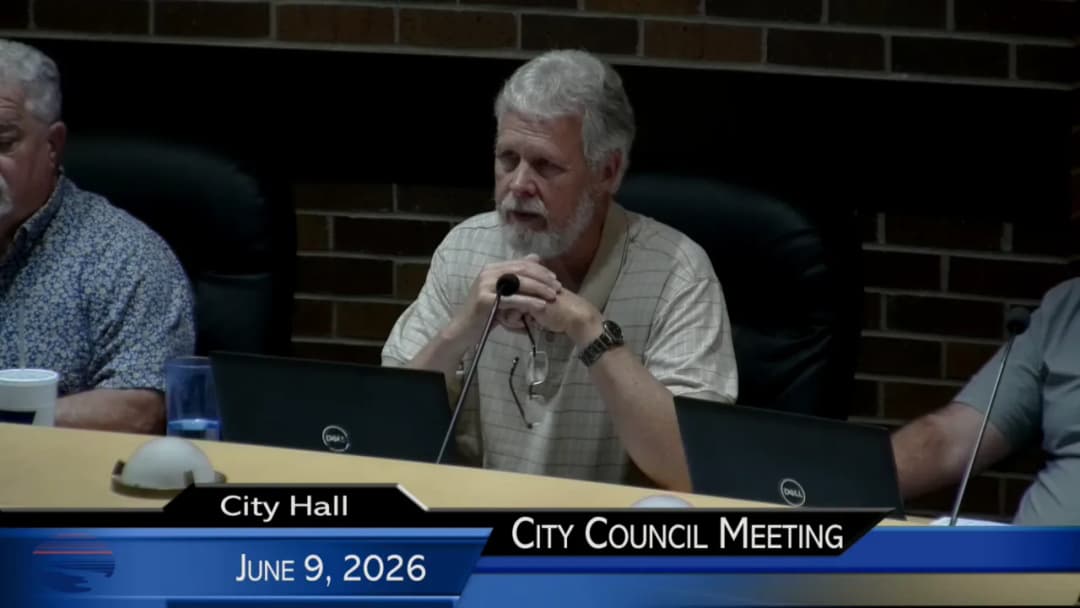
This meeting of the Grand Island City Council convened at 7:00 p.m. on June 9, 2026, under the Open Meetings Act. The council recognized state champion track and field athletes, received the annual audit report, approved a consent agenda, debated and approved a $21.5 million loan for lead service line replacement, held public hearings on easement acquisitions, approved zoning changes, and adopted a water rate increase of 8% per year for three years. Councilmember Hazie opposed both the loan and the rate increase, citing concerns about costs to ratepayers. Recognition & Awards - The mayor and council presented certificates and city pins to state track and field champions: Celia McCoy (Class A girls 100m and 100m hurdles), Amory Krafka (Class B girls pole vault), and the relay team of Thomas Schneider, Thomas Birch, Braylon Wolfe, and Graham Stava. Coaches Kip Ramsey, Michael Lynn, Brandon Harrington, Dave McNeil, Keith Kester, Kevin Mayfield, and Andrea Mack were also recognized. Consent Calendar - Approved consent agenda items 7A through 7N with the exception of item 7E (lead service line loan), which was pulled for separate discussion. The motion carried unanimously. Discussion Items - Audit Presentation (Item 6B): Tim Lenz of Bergen KDV presented the city’s annual audit. He reported an unmodified (clean) opinion on the city’s financial statements, compliance with the adopted budget, and no findings on federal programs subject to single audit. The city had no internal control deficiencies noted. - Lead Service Line Replacement Loan (Item 7E): Ryan Schmitz, Public Works Director, requested approval of a second loan from the State Revolving Fund for $21.5 million to continue the lead service line replacement program. He reported that of 895 services vetted, 532 (59.4%) were found to contain lead. To date, 244 services have been replaced (178 by Myers Construction, 66 by city crews). The program aims to replace 250 services per year. Of the $21.5 million requested, only $7.7 million would be repayable (at 0% interest over 30–40 years); the remainder is forgivable. Councilmember Hazie opposed, arguing that the cost ($12,000 per service line) would be passed to all ratepayers via a 25% water rate increase, and that property owners historically bore responsibility. Councilmembers Nickerson and O’Neill supported the program as a health and safety measure. The motion passed. - Public Hearings (Items 8A & 8B): - 8A: Acquisition of permanent easements for the State Street/Deers Avenue improvements. No public testimony was offered. Approved. - 8B: Acquisition of easements for the 13th Street Sanitary Sewer Main Extension (Engleman Road to 60th Road), funded 75% by LB 600 state funds. No public testimony. Approved. - Rezoning – Sterling Estates (Item 9A): Ordinance to rezone Lot 2 of Sterling Estates 9th Subdivision to allow four buildings with 120 units (previously six buildings with 90 units). Approved. - Water Rate Increase (Item 9B): Ryan Schmitz and consultant John Kraske presented a proposal for 8% annual increases over three years to address capital needs, including the lead service line program, increased administrative costs (up 44%), and declining water usage (down 6% since FY23). The average residential customer would see an increase of $1.94 per month the first year, totaling about $6/month over three years. Grand Island currently has the lowest water rates in the state; even after the increase, it would remain among the lowest. Councilmember Hazie opposed, citing a 60% rise in administrative costs over five years and the burden on fixed-income residents. Councilmember Nickerson supported, noting the small absolute increase ($2/month) and the need to fund critical infrastructure. The motion passed. - Salary Ordinance (Item 9C): Ordinance to move the newly created water distribution crew chief position from non-union to the IBEW utilities group, aligning with other crew chiefs. Approved. - Rezoning – 40 Acres West of Highway 281 (Item 9D): Ordinance to rezone 40 acres south of Gunther Road from transitional agriculture to commercial development. Planning commission recommended approval. Council approved the ordinance and the related resolution (2026-139). Key Outcomes - Approved consent agenda (items 7A–N, minus 7E) – unanimous. - Approved resolution 2026-143 for $21.5 million State Revolving Fund loan for lead service line replacement – passed (one dissenting vote from Hazie implied). - Approved resolution 2026-153 for State Street easement acquisition – passed. - Approved resolution 2026-154 for 13th Street sewer easement acquisition – passed. - Approved ordinance 9A (Sterling Estates rezoning) – passed. - Approved ordinance 9B (water rate increase – 8% per year for three years) – passed (Hazie opposed). - Approved ordinance 9C (salary ordinance) – passed. - Approved ordinance 10074 and resolution 2026-139 (rezoning 40 acres west of Highway 281) – passed. The meeting adjourned after completing all agenda items.
WATER AND WASTEWATER MANAGEMENT 47% · FISCAL SUSTAINABILITY 15% · BUDGET EQUITY ANALYSIS 10% · PROCEDURAL 8%
22
JUN 2, 2026 · GRAND ISLAND, NEBRASKA · CITY COUNCIL
Grand Island City Council Meeting - June 2, 2026: Woodsonia Veterans Village Proposal

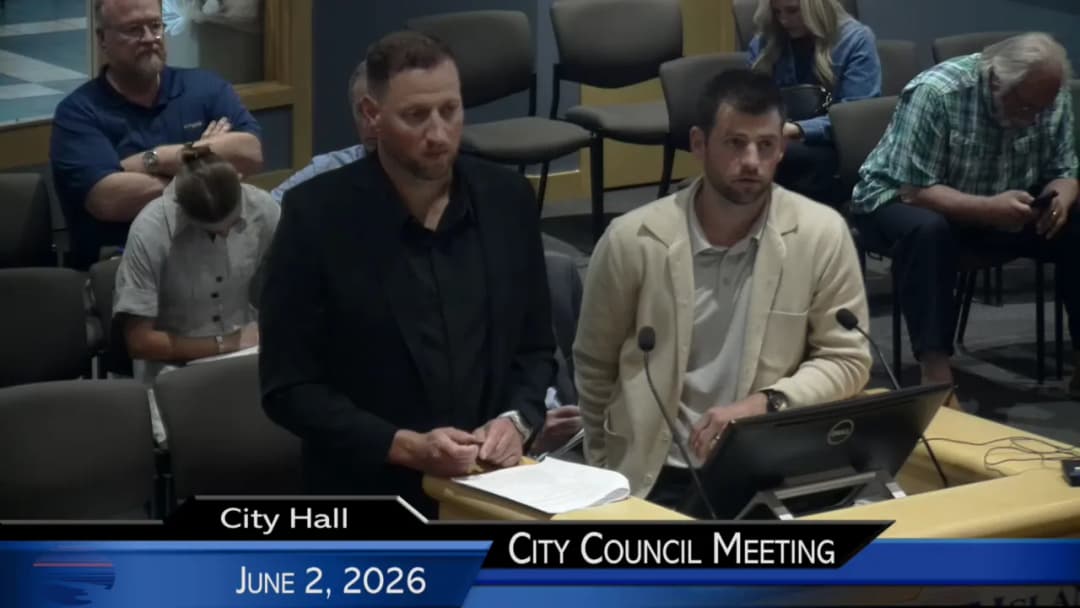
The Grand Island City Council met on June 2, 2026, at 6 p.m. to receive a presentation from Woodsonia Real Estate, Inc. on items identified as non-negotiable or deal breakers for the Veterans Village redevelopment project, as authorized by council motion on May 12, 2026. The meeting focused on an updated memorandum of understanding (MOU) featuring significant changes aimed at simplifying the public-private partnership, including private ownership of the sports complex and a land purchase. Council members expressed general support for the framework, with many citing they had reached an 80% agreement level. The mayor directed staff to finalize agreements by the end of June 2026 to secure state funding and avoid legislative changes. Public Comments & Testimony - Gary (resident): Expressed full support for the project, emphasizing the need for youth facilities. He stated the current high school swim team uses an embarrassing small pool and that Grand Island, as one of Nebraska's largest cities, should have a sports complex. He urged council to get the project done so children can be proud of the city. - Jerry Ginolevich (YMCA board member): Expressed excitement about the YMCA's potential partnership with the city to develop a new swimming pool in the Good Life District. He noted a feasibility study is underway and expressed confidence in Chief Industries' fundraising ability. - Chuck (citizen): Spoke in favor of the project, calling it comprehensive and visionary. He highlighted the pros outweighing the cons, noting the land is inherited from the veterans home site and that voters approved the Good Life District for redevelopment. He supported the sports complex as a revenue generator and the aquatic center as a win, and asked council to move forward on what is doable. Discussion Items - Presentation by Kent Seacrest (Woodsonia): He outlined six guiding principles for the project, emphasizing the need for a long-term commitment, use of legislative tools (TIF, Good Life District, Community Improvement Act), and acceptance of risk. He noted that Veterans Village has site limitations, including a Burlington Northern Santa Fe rail corridor with 42 trains per day (average 4.5 minutes each, causing over 3 hours of blockage). He urged council to agree on the big principles (80%) to avoid getting stuck in details. - Presentation by Drew (Woodsonia): He presented the updated MOU, highlighting five critical project components: (1) acquisition of 191.53 acres for $3 million, (2) phase one site work (grading, lake expansion, utilities, trails, amphitheater, pedestrian bridge), (3) sports complex (165,000 sq ft with 16 volleyball courts, 8 basketball courts, 8 pickleball courts, 25,000 sq ft indoor turf, outdoor artificial turf, batting cages), (4) YMCA-aquatics facility ($22 million from phase 1A bonds, with a 12-month period for YMCA/Chief to design and fundraise; if unsuccessful, city can proceed with an RFP for a minimum aquatic facility), and (5) conveyance of an improved school site to Grand Island Public Schools for $1. He stated that no Good Life funds would be used for private improvements until these five critical components are completed. - Funding details: Phase 1A bonds projected at $82 million ($75 million bonds + $7 million cash on hand), with $60 million for sports complex and $22 million for YMCA-aquatics. Phase 1B bonds (based on new sales from Conestoga Marketplace and other developments) estimated at $27.65 million. A total promissory note of $120 million from Good Life funding was requested, capped at maximum term through 2054. Additional financing tools included a Community Improvement District (CID) with a 1.5% property tax levy (150 basis points) on all private improvements except the sports complex, and an Economic Development Area (EEA) occupation tax of 2% on sales within Veterans Village for sports complex maintenance. TIF of $62 million was also requested. - Councilmember Hossey: Supported the project, noting the funding structure is reasonable and not a general obligation of the city. He flagged management and the CID as minor issues but not showstoppers. He emphasized the project delivers what was promised to voters. - Councilmember Sheard: Asked detailed questions about the promissory note, minimum viable financing, timeline, and public access to the sports complex. He stressed the need for protections if Woodsonia sells the complex, such as a right of first refusal. He suggested a committee for oversight, but Woodsonia preferred not to add complexity. - Councilmember Nickerson: Requested input from bond counsel and city administration before making a final decision. He noted that many details (e.g., YMCA contract, CID impact on homebuyers) need further analysis. - Councilmember O'Neill: Emphasized the need to protect the public and limit long-term taxpayer exposure. He supported private ownership if it includes public scheduling commitments. He questioned the YMCA partnership and the legal mechanism for conveying land to the YMCA for $1. - Councilmember Brown: Stated he reached 80% agreement and supported moving forward with immediate negotiations. - Councilmember Stelk: Initially at 50% but after listening, he reached 80% support. He asked about a timeline for full project completion (Woodsonia estimated critical components within 36-48 months after bond issuance). He asked for a contract with the YMCA to be available for review. - Mike Rogers (bond counsel): Explained that Good Life District funds can be used for private development costs, including the sports complex and YMCA facility. He recommended separating the land sale from the Good Life funding to simplify legal compliance. - Kerry Fisk (city attorney): Noted that a straightforward private ownership model would be much simpler to negotiate than a public-private hybrid. She said a land sale ordinance could be brought back to council by the end of June, but publication timelines would require a later meeting. Key Outcomes - Council members indicated general agreement at the 80% level with the framework presented, allowing staff and Woodsonia to proceed with detailed negotiations. - Mayor Steele directed that final agreements be presented to council by the end of June 2026, citing the need to secure Good Life District funding before potential legislative changes or state budget recissions. - Bond counsel advised that the land sale and Good Life funding should be treated as separate transactions, with the land sale subject to policy decisions on price, restrictions, and clawbacks. - Woodsonia agreed to a timeline: phase 1A bond issuance anticipated by September 1, 2026, with site work starting 30 days later, sports complex construction in 2027–2028, and critical components complete within 36–48 months. - The YMCA-aquatics component will have a 12-month window for design and fundraising; if not secured, the city may proceed with an alternate plan. - No formal vote was taken. Council agreed to continue public discussions at a future meeting, with the next meeting expected to review a finalized MOU or land sale agreement.

ECONOMIC DEVELOPMENT 39% · PUBLIC ENGAGEMENT 23% · PARKS AND RECREATION 9% · PROCEDURAL 5%
23
MAY 26, 2026 · GRAND ISLAND, NEBRASKA · CITY COUNCIL
Grand Island City Council Meeting - May 26, 2026

The Grand Island City Council met on May 26, 2026, with Mayor Steele presiding. Councilmembers Sheard, Stelk, Nickerson, Brown, Mendoza, O'Neill, and Lanfeer were present; Conley, Hazi, and Pollock were absent. City staff included Jill Grinnere (City Clerk), Carrie Fisk (City Attorney), and Keith Kurtz (Public Works Director). The meeting covered a consent agenda, public hearings for liquor licenses, easements, rezoning, and development plans, followed by resolutions on a land option and wastewater rates, and concluded with an executive session on a regulatory matter. Consent Calendar - The council unanimously approved the consent agenda, items A through N (motion by Councilmember Sheard, second by Councilmember Lanfear). Public Comments & Testimony - Gunther SID Rezoning (7D): Michael Stenson, representing Collaboration Real Estate, spoke in support, describing the project as a Hyatt hotel with retail development. James McGurus, an adjacent property owner, spoke in opposition, citing loss of privacy and a perceived surplus of hotels in the area. - Sterling Estates Development Plan: Deborah Klein of SG Communities spoke in support of the third-phase expansion comprising 120 units in four 30-unit buildings. Discussion Items - Rezoning and Plat for Gunther SID (Ordinance 10074): Staff (Chad Nabity) reviewed the proposal to rezone 40 acres from TA to CD and approve the preliminary/final plat for the SID. Discussion focused on the 107-room Hyatt Studios hotel, private water supply not eligible for TIFF, SID financing, and timeline. Councilmembers questioned market need and long-term viability. The applicant noted the brand's push into mid-level markets and the hotel's proximity to Interstate 80. The ordinance was approved on first reading. - Amended Development Plan for Sterling Estates (Ordinance 10075): Following the public hearing, the council read the ordinance for first reading; no formal action or vote was taken. - Camp Augustine Option Agreement (Resolution 2026-140): City Attorney Fisk presented a three-year option to sell the 156-acre Camp Augustine property to the Nebraska Game and Parks Foundation at appraised value with a 1% deposit. The foundation intends to fund the purchase and future state park development entirely through donor dollars. Council discussed timeline, public access during transition, and that the deposit covers the city's carrying costs. The resolution was approved. - Wastewater Rate Study (Resolution 2026-141): Consultant John Kraske presented a rate study recommending 4% annual increases for residential customers and 6% for high-strength users for fiscal years 2028, 2029, and 2030, effective October 1, 2027, to fund capital needs including the $100 million South Interceptor Project and an $11 million clarifier. Council discussed the proactive planning vs. waiting for a large spike, comparisons to peer communities, and the necessity of the projects for accommodating growth. The resolution was approved. Key Outcomes - Consent agenda approved. - Public hearings 7A (liquor license), 7B (catering designation), and 7C (utility easements for State Street Road Improvement) were each approved via motions. - Ordinance 10074 (Gunther SID rezoning) approved on first reading. - Ordinance 10075 (Sterling Estates) read for first reading; no vote taken. - Resolution 2026-140 (Camp Augustine option) approved. - Resolution 2026-141 (wastewater rate changes) approved. - Council adjourned to executive session to discuss a regulatory matter. After returning, they authorized the city attorney to develop and submit a proposed settlement (motion by Councilmember Sheard, second by Councilmember O'Neill, adopted). The meeting was adjourned.

WATER AND WASTEWATER MANAGEMENT 28% · ENGINEERING AND INFRASTRUCTURE 19% · PARKS AND RECREATION 14% · PROCEDURAL 10%
24
MAY 12, 2026 · GRAND ISLAND, NEBRASKA · CITY COUNCIL
Grand Island City Council Meeting - May 12, 2026: Good Life District Negotiations, Blight Studies Approval

The Grand Island City Council met on May 12, 2026, at 7:00 PM to consider a consent agenda, public hearings on two blight studies, an annual library report, and an extensive presentation on Good Life District negotiations with Woodsonia. The meeting included public testimony and council discussion on the future of a sports complex and aquatic center. Key approvals included two blight and substandard studies, and a motion to schedule a study session for further negotiations. Consent Calendar - Approved items A through K unanimously (motion by Councilmember O'Neill, second by Councilmember Stelk). No items were removed for discussion. Public Comments & Testimony - Skills USA Recognition: Council recognized first, second, and third place winners from the Skills USA state competition, including students in emergency medical technician, health knowledge bowl, engineering technology, mobile robotics, precision machining, and automated manufacturing technology. Certificates were presented. - Grand Island Public Library 2025 Annual Report: Library Director Celine Swan reported circulation up 40%, 27,282 visitors (up from previous year), meeting room usage up 1,671 uses, borrowers up 1,654, and program attendance down slightly. The bookmobile received no negative community feedback. Library board provided over $30,000 for programs and $200,000 for the new bookmobile. Council members expressed strong support. - Public Hearing on Blight Study for Habitat for Humanity (CRA 42): Staff, consultant Keith Marvin, Habitat representative Lindsay Jurgins, and attorney Zach Butts spoke in favor. The 17-acre site on St. Paul Road is adjacent to previously blighted areas. Over 80 affordable homes are planned over several years. No opposition. - Public Hearing on Blight Study for "The Tree Folks" (CRA 43): Staff described 195 acres east of North Road, between Capitol Avenue and Highway 2. Northview HOA President Brandon Wagner and resident Kurt Cook spoke in support, citing sewer lift station expenses and overburdened infrastructure. Councilmember Averchek questioned blight percentage limits. Gerald Pools questioned the city's percentage of blighted land. No opposition to the study itself. - Public Comments on Good Life District: Gerald Pools argued the 2024 mail-in ballot had low turnout (28.65% of registered voters) and opposed selling veterans' land for a dollar. Ray O'Connor (YMCA) emphasized need for an aquatic center over a sports complex, citing decades of unmet promises. Former Mayor Jay encouraged collaboration. Mary Burley (Economic Development Corporation) shared personal story of 27 weekends of travel sports and urged progress. Discussion Items - Good Life District Negotiations Presentation: City Attorney Carrie Fisk and Deputy City Attorney Matt Boyle provided a detailed overview: - Legal framework of the Good Life District Transformational Projects Act and Economic Development Act, including the city's program ordinance. - Revenue instability: monthly collections ranged from $50,000 to $1.2 million, with an average below $700,000, complicating bonding capacity. - The city controls program funds; the applicant's permission is needed only for funds generated on property owned by the applicant if used for another business. - 80% of disbursements to private businesses must go to revenue-generating projects; the city's program defaults to zero non-revenue expenses unless council approves up to 20%. - Negotiations with Woodsonia: over 90 meetings, constant proposal changes (sports complex size varied from 95,000 to 165,000 sq ft, commercial development shrank to one hotel, one restaurant, and 2,500 sq ft retail), and withdrawal of the April 6, 2026 proposal, replaced by four discussion items. - Risks: lack of enforceable written commitments, front-loading of non-revenue expenses, and poison pills allowing termination at Woodsonia's sole discretion. - City has three paths: city-led development, request for proposals, or private application through the statutory process. - Council Discussion: Councilmembers expressed frustration with stalled progress and changing terms. Several emphasized the importance of both a sports complex and an aquatic center. Mayor Steele stated he would veto any motion to create a council committee, arguing it would delegate the council's duty and that transparency is best served by full council meetings. - Woodsonia Presentation: Representatives (Mitch and Drew) addressed council, stating they are committed to the project and willing to provide an updated memorandum of understanding (MOU) within a week. They acknowledged deviations from the original state application and requested direct communication with council. They expressed openness to a study session. Key Outcomes - Approved Blight Studies: - Resolution 2026-122 (CRA 42, Habitat for Humanity) approved unanimously. - Resolution 2026-TAC 123 (CRA 43, "The Tree Folks") approved unanimously. - Motion for Future Negotiations: Councilmember Stelk moved to invite Woodsonia to a study session on June 2, 2026, at 6:00 PM, with the expectation that Woodsonia provide an updated MOU to the mayor within one week. The motion was seconded and adopted. - Motion to Establish Council Committee: Councilmember O'Neill moved to create a council committee to review Good Life District applications after administrative review. The motion failed after discussion; Mayor stated he would veto if passed. - Next Steps: The council will hold a study session on June 2, 2026, dedicated to Good Life District negotiations. The city continues to advance infrastructure planning, including RFPs for engineering services and sports facility management. The council emphasized the need for an aquatic center as a transformational component.

PUBLIC PRIVATE PARTNERSHIPS 21% · PUBLIC ENGAGEMENT 19% · ECONOMIC DEVELOPMENT 14% · MISCELLANEOUS 11%
25
APR 28, 2026 · GRAND ISLAND, NEBRASKA · CITY COUNCIL
Grand Island City Council Meeting – April 28, 2026

The Grand Island City Council met on April 28, 2026, at 7 p.m. to discuss a financial and budget update, approve multiple resolutions, including a major LB 840 grant for Case New Holland and a $25 million bond ordinance, and hear public comment. Councilmembers Sheard and Pollock were absent. Consent Calendar - The council approved the consent agenda (items A through J) without discussion or removal. Public Comments & Testimony - Jerry Poles spoke in opposition to the proposed $25 million bond ordinance. He criticized the council for spending large sums while debating small items, argued the city should set aside funds rather than borrow, and expressed concern about rising project costs (e.g., Island Oasis water park) and future staffing for the pool. He urged the council to “stop spending” and better manage taxpayer money. Discussion Items - Recognition of State Speech Champions – The council presented certificates and lapel pins to Grand Island speech team members for outstanding performance at the state championships. Coach Dr. Jordan Ingall noted the team had four state champions (Kinley and Brianna are juniors, hoping to return next year). - National Guard Boss Flight Recognition – Councilmember Doug Brown and ESGR volunteers Todd Hossey and Major Lindaham reported on the April 22 Boss Flight event hosted by the Nebraska Air National Guard. Over 50 community leaders participated. GIPD Sergeant Jason Wood received the Employer Patriot Award for supporting National Guard employees. The council thanked all involved. - City Financial & Budget Update (FY 2027 Preview) – City Administrator Patrick Brown presented a detailed financial overview: - National economy: GDP growth at 0.5% (Q4 2025), unemployment 4.3%, CPI inflation 3.3%. - Nebraska: unemployment 3% (Jan 2026), but state revenue forecasts cut by $175 million for FY 2026‑27. - Grand Island: municipal equalization fund drops from $1.6 million to $823,000 next year. - Sales tax revenue: year-to‑date $14.7 million of $29.7 million budgeted; growth only 1.4% (≈$250,000 increase). - Good Life District occupation sales tax: budgeted $7 million, received $3.4 million so far; many retailers not checking the required box, causing missed revenue. Councilmembers discussed the lack of enforcement mechanisms and the risk to bonding capacity. - Proposed FY 27 budget shows a $3 million deficit even with 1% revenue growth, and with requested new FTEs (costing $1.6 million), the deficit could reach $4.6 million. - The city’s five‑year projection worksheet indicates negative ending cash by FY 2028 under current assumptions. - Councilmembers (Stelk, Nickerson, Hawsey, O’Neill) emphasized the need for conservative budgeting, sustainability, and aligning decisions with facts, not emotions. - Public Hearing – Liquor License (Lucky’s Bar & Beer Garden): No public testimony; council approved the Class C license upon final inspection. - Public Hearing – Right‑of‑Way Easement (State Street/Deers Avenue Project): No testimony; council approved the permanent easement for Grand Island Joint Venture LLC. - Resolution 9A – Yard Waste Operations Contract: Public Works Director Keith Kurtz presented a proposal from a private operator to run the yard waste site for three years with possible extensions. The contract includes free service to residents, capped commercial rates, and a provision for storm‑damage events. Cost: $945 for the remainder of this year, increasing annually. The existing site cost $143,000 in 2025. The council approved the resolution. - Resolution 9B – Case New Holland LB 840 Application: Mary Burley of the Grand Island Area Economic Development Corporation presented a $388,000 LB 840 grant to support a $48 million expansion of the Case New Holland plant, including a redesigned Axial‑Flow combine. The company will add 45 FTEs (baseline 680). The council praised the company’s community involvement (United Way, Hope Harbor donations). The LB 840 fund balance after approval would be $644.52. The resolution was approved. - Resolution 9C – Appointment of Finance Director/Treasurer: Patrick Brown introduced Chelsea Steinkey as the new finance director/treasurer. Steinkey has private‑sector accounting experience and is pursuing a master’s in HR. The council approved the appointment. - Resolution 9D – Payment to Central Nebraska Humane Society: The council approved payment for February and March 2026, following earlier concerns about contract oversight. Approved. - Ordinance 10A – Salary Ordinance (Water Crew Chief): Ryan Schmidt explained a net‑neutral reclassification using a retirement to create a water crew chief position, improving departmental structure. Approved. - Ordinance 10B – Irrigation Well Inspection Fee Change: Revised Section 1528 to exempt irrigation wells from mandatory inspection fees when re‑connected; only the standard turn‑on charge applies. Approved. - Ordinance 10C – $25 Million Bond Ordinance: Authorizes up to $25 million in tax‑supported bonds for improvements to Heartland Event Center, Island Oasis, and to refinance a 2016 promissory note (Veterans Park). Councilmember O’Neill moved approval; after public comment from Jerry Poles, the council discussed bundled financing, annual payments, and the use of food‑and‑beverage and hotel‑occupancy tax revenues to service the debt. The ordinance was approved. Key Outcomes - Consent agenda approved (items A–J). - Public hearings: Lucky’s Bar liquor license (approved); State Street easement (approved). - Resolution 9A: Yard waste operation contract awarded (approved). - Resolution 9B: LB 840 grant of $388,000 to Case New Holland for 45 new FTEs (approved). - Resolution 9C: Chelsea Steinkey appointed finance director/treasurer (approved). - Resolution 9D: Payment to Central Nebraska Humane Society for Feb‑March 2026 (approved). - Ordinance 10A: Salary classification for water crew chief (approved). - Ordinance 10B: Revision of irrigation well inspection fee (approved). - Ordinance 10C: $25 million bond issuance authorized (approved). - Council directed staff to continue monitoring Good Life District revenues and pursue educational outreach to retailers. - The FY 2027 budget process will emphasize conservative revenue forecasting and close monitoring of expenditures; further discussion on FTE requests is expected.

FISCAL SUSTAINABILITY 32% · PUBLIC ENGAGEMENT 12% · PROCEDURAL 11% · ECONOMIC DEVELOPMENT 8%
26
APR 22, 2026 · GRAND ISLAND, NEBRASKA · CITY COUNCIL
Grand Island Mayor Press Conference on Good Life District Negotiations – April 22, 2026

Mayor Steele held a press conference on April 22, 2026, to update the public on the status of the Good Life District negotiations with Woodsonia, clarify misconceptions, and outline the city's plans moving forward. The mayor emphasized the city's commitment to building the sports complex and aquatic center, and proposed conducting all future negotiations in open city council meetings for transparency. Key discussions centered on Woodsonia's land offers, funding sources, project timeline, and community concerns. Public Comments & Testimony - Brad Mellama (Grand Island Tourism) asked whether funds used for tree removal and site prep work came from city funds or Good Life District proceeds. Utilities Director Ryan Schmidt confirmed the funds came from Good Life District proceeds. - A private citizen thanked the mayor for his leadership, expressed optimism about resolving sticking points, and sought clarification on whether Good Life District revenue flows to the applicant rather than the city. Attorney Kerry Fisk explained that the city holds a restricted fund for all Good Life District revenue, with some limitations on revenue from property owned by the applicant, but the applicant does not control all revenue. - Another citizen asked about plans to work with Woodsonia in the future and requested advice for other cities; the mayor declined to advise other mayors. - A speaker expressed disappointment with the mayor's comments, questioned their accuracy, and asked for firm commitments: no more private executive sessions, community involvement, and a committee for transparent oversight. The mayor reiterated his preference for open city council meetings but noted he could not commit to no closed sessions due to issues like property acquisition where public disclosure could harm the city's interest. - Spencer raised concerns about the funding flow, referencing state senators' statements that funds follow the applicant, and urged rescinding the request for proposals (RFP) to focus on a community committee. Kerry Fisk clarified that the city has never attempted to take over Woodsonia's applicant status—it is not legally possible—and that revenue distribution follows state statute and city code. Discussion Items - Mayor Steele detailed the history of negotiations with Woodsonia, noting that the company's initial offer of $1 for approximately 150 acres of city-owned land was rejected. A later proposal of $10,000 per acre was deemed plausible but included provisions allowing Woodsonia to terminate all agreements while keeping the land and up to $10 million in cash payments before any construction. Other provisions allowed cancellation if Woodsonia found any condition on the land unacceptable in its sole discretion, and prevented the city from forcing Woodsonia to build anything. The mayor described these as unacceptable. - The mayor reported that the state's collection of Good Life revenue has dropped significantly and become inconsistent, reducing the city's bonding capacity. He noted that it may take a year for collections to stabilize, causing delays. - The city is moving forward independently by issuing RFPs for design and management of the sports complex and aquatic center, as well as engineering services for infrastructure. The deadline for RFP responses is May 6, 2026. The mayor clarified that this does not close the door on Woodsonia, but is necessary to make progress. - The mayor emphasized that other Good Life Districts in Kearney and Bellevue are already building, while Grand Island has lost many months in negotiations. He stated that building must start in 2026 is no longer feasible. Key Outcomes - The City Council is scheduled to discuss Woodsonia's latest proposal at its May 12, 2026 open meeting. The mayor encouraged public attendance. - The city will not rescind the RFPs; responses are due May 6, and design work will proceed regardless of negotiations. - The mayor committed to conducting future negotiations in open city council meetings, though he could not commit to eliminating closed sessions entirely, citing legal exceptions such as property acquisition discussions. - No votes were taken at this press conference; it was informational only.

ECONOMIC DEVELOPMENT 39% · PUBLIC PRIVATE PARTNERSHIPS 28% · PUBLIC ENGAGEMENT 15% · ENGINEERING AND INFRASTRUCTURE 8%
27
APR 14, 2026 · GRAND ISLAND, NEBRASKA · CITY COUNCIL
Grand Island City Council Regular Meeting - April 14, 2026

The Grand Island City Council held a regular meeting on April 14, 2026, at 7 p.m. The council received a presentation on the first-year economic impact of the Grand Island Casino Resort, approved an increase in the hotel occupation tax, allocated LB 840 funds for livestock shows, authorized improvements to Staley Park's train area, and adopted several other items. All votes were unanimous unless noted. Consent Calendar - Items 7A through 7V were approved, with the exception of 7T (Staley Park train area improvements), which was removed for separate discussion and vote. Discussion Items - Grand Island Casino Resort Presentation: Dan Fiala presented a first-year economic impact report for the Grand Island Casino Resort. He reported 431 employees (86.5% live in Hall County), $245 million total economic impact, including $185 million in construction, $18 million spent with Nebraska vendors, $3.8 million in direct city/county taxes, and over $16 million in wages. Council members praised the operation and asked about visitor origin (80% within 90 miles, 25% from Hall County) and growth projections (steady growth for 5–7 years). Fiala encouraged reinvestment in Fonner Park. - Staley Park Train Area Improvements (Item 7T): Todd McCoy (Parks and Recreation) presented a $2.784 million bid from Mid-Plains Construction for improvements inside the train area, funded by $2.25 million in city budget and over $750,000 in private donations. The project includes LED lighting, a bridge, playground, picnic shelters, and landscaping. A bike track was excluded but may be a future phase. The contractor aims to complete most work by October 1, 2026, with the custom dragon-themed playground to be finished by spring 2027. The council approved the bid. - LB 840 Application for Grand Island Expo Events and Livestock Shows (Resolution 9A): Mary Burley (Grand Island Area Economic Development Corporation) presented an application for $600,000 over two years ($300,000 per year) to support national and state livestock shows at Fonner Park. The funding would offset deficits in show budgets, replacing the previous Gilka partnership. Council members expressed strong support, noting the economic impact and competition from larger cities. Councilmember Stelk urged the city lobbyist to pursue state funding. The resolution was adopted. - Hotel Occupation Tax Increase (Ordinance 10A): The council considered raising the hotel occupation tax from 2% to 4%, generating an estimated additional $500,000–$800,000 annually for capital improvements at the Heartland Event Center and other Fonner Park campus assets. City Administrator Patrick Brown presented a comparison showing Grand Island would be at 16.5% total lodging taxes (median of peer cities). Brad Mellema (Grand Island Tourism) expressed concern about communication and the inclusion of Island Oasis. Council members supported 4% over the previously considered 5%, with Councilmember Pollock advocating for 5% but the motion for 4% passed. The ordinance was adopted. - Vacation of Public Right-of-Way (Ordinance 10B): The council approved vacating an alley near Claiborne and Elm streets for Hope Harbor redevelopment, with utility easements reserved. No objections were raised. - RV Storage Regulations (Ordinance 10C): The council approved an ordinance amending codes for RV parking and storage to improve clarity and enforcement. Key Outcomes - Approved Staley Park train area improvements (bid of $2,784,000 to Mid-Plains Construction). - Adopted Resolution 2026-98 approving LB 840 funds of $600,000 for Grand Island Expo events and livestock shows (2026–2027). - Adopted Ordinance 10,068 increasing hotel occupation tax from 2% to 4%, effective May 1, 2026. - Adopted Ordinance 10,069 vacating a public alley for Hope Harbor. - Adopted Ordinance 10,070 amending RV storage regulations. - The council directed the city lobbyist to explore state funding for livestock shows to provide a long-term solution beyond the two-year LB 840 allocation.

ECONOMIC DEVELOPMENT 34% · PUBLIC PRIVATE PARTNERSHIPS 26% · PROCEDURAL 15% · PARKS AND RECREATION 9%
28
APR 7, 2026 · GRAND ISLAND, NEBRASKA · CITY COUNCIL
Grand Island City Council Meeting - April 7, 2026: Discussion on Permitting Mobile Food Units

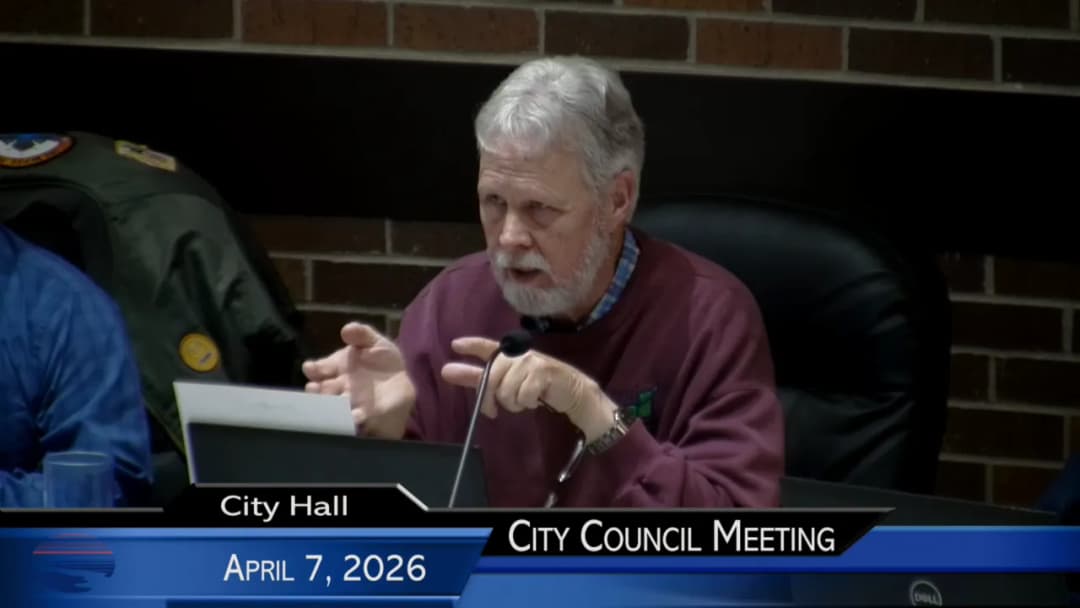
On April 7, 2026, the Grand Island City Council met to discuss a proposed permitting process for mobile food units (food trucks). The meeting was led by City Council President O'Neill, with a presentation from Division Chief Phil Thomas of the Fire Department. The proposal aims to align with the adopted 2021 International Fire Code, which requires permits for mobile food units, but for which the city lacked a process. Key discussion points included safety requirements, fees, compliance timelines, enforcement, and community outreach, including Spanish-language materials. Discussion Items - Presentation by Division Chief Phil Thomas: Thomas outlined the current lack of a permitting process for mobile food units, noting that the fire code requires permits but none are issued. He described two public meetings held—one in English (attended by over 100 people) and one in Spanish with an interpreter—to gather feedback. The proposed process includes annual safety inspections (propane leak tests, hood inspections, fire extinguisher inspections), an online application via Citizen Serve, and a multi-department review. Fees proposed: $100 annual permit, $25 per day for special event/temporary use, and an increase in the state fair inspection fee from $1,600 to $2,000 to cover additional inspections of food trucks. Implementation would begin March 2027, with annual permits starting April 1, 2027. Thomas emphasized that the proposal reduces liability, aligns with code, and supports responsible businesses, noting that some operators already meet requirements while others lack type one hoods for grease-laden cooking. - Councilmember Sheard: Expressed support for welcoming food trucks as a vibrant part of the city. Asked about Spanish-language materials (Thomas confirmed Spanish versions are available and the website can be in Spanish). Inquired about the timeline for permits—estimated two weeks for existing compliant trucks, one to two months for new trucks. Asked about enforcement responsibility (Thomas indicated code enforcement would handle it, and the finance department monitors social media for advertising). Raised the issue of out-of-town trucks needing expedited permits; Thomas acknowledged a need to address this. - Councilmember Nickerson: Asked about feedback from the two public meetings. Thomas noted only one negative comment (a vendor asking how the city would pay for a new type one hood) and that most feedback was about what steps to take. Discussed the type one hood requirement and the importance of regular cleaning. Asked about costs for compliance: propane leak testing $75, hood cleaning $400, extinguisher inspection $150 annually. Councilmember Brown (a city administrator) added that his restaurant is inspected every six months and hood cleaning costs $300-$400. Thomas noted that a list of service providers was distributed at the meetings. Nickerson also questioned the state fair fee increase from $1,600 to $2,000; Thomas clarified the increase covers additional inspector time for 60-70 food trucks during the fair, not per unit. The increase was debated but ultimately seen as reasonable. - Councilmember Hossey (Hawsey?): Stressed the need for coordination between the fire department, health department (Central District Health), and finance to create a single, proactive compliance effort. Expressed concern that annual health inspections are insufficient for mobile food units compared to restaurants, and that code enforcement is currently reactive and complaint-driven, making it ineffective for mobile units. Suggested a more proactive inspection schedule rather than relying on complaints. Also raised zoning issues: mobile units can operate in districts allowing restaurants, but temporary use permits are needed for parks or residential areas. Noted that some vendors prepare food at home, which raises additional health concerns. Thomas responded that not all trucks need type one hoods (e.g., hot dog vendors), and that health department oversight covers food safety. - Councilmember Landfair: Attended the library meeting and praised the presentation. Expressed concern about enforcement for non-compliant operators. Thomas outlined that code enforcement can issue fines and daily fines, but acknowledged difficulty in tracking mobile units. Landfair felt the proposal was reasonable for businesses to manage. - Council President O'Neill: Emphasized public safety, noting recent fires and explosions in Hastings and the higher public proximity to cooking equipment in mobile units. Supported the bulk inspection idea (a "food truck rodeo") to reduce costs and encourage compliance. Asked about the $10,000 in estimated total fees from the 100 current food and beverage tax filers; Thomas confirmed the $100 fee per truck would stay in the fire department. O'Neill also noted that annual fire extinguisher inspections are already required. - Councilmember Brown: Provided additional cost estimates: hood cleaning $300-$400, fire extinguisher inspection $150 per year. - Councilmember Sheard (additional): Suggested leveraging a potential informal group of food truck operators to promote compliance and pride in regulation. City Administrator Patrick Brown noted that the Citizen Serve software can send automated renewal reminders, helping with proactive compliance. Key Outcomes - No formal vote was taken; the discussion was for information and feedback. - The council generally supported the proposal but requested further refinement on enforcement mechanisms (proactive vs. reactive) and coordination among city departments. - Division Chief Thomas will incorporate feedback, particularly regarding a more proactive compliance approach and clarifying the state fair fee structure, before bringing a final ordinance for approval. - The timeline to begin permitting remains March 2027, with an annual permit cycle starting April 1, 2027. - Spanish-language versions of the permit materials and website will be provided to ensure accessibility.

MOBILE FOOD UNIT REGULATION 38% · PUBLIC SAFETY 38% · PUBLIC HEALTH 16% · PROCEDURAL 4%
29
MAR 24, 2026 · GRAND ISLAND, NEBRASKA · CITY COUNCIL
Grand Island City Council Meeting - March 24, 2026

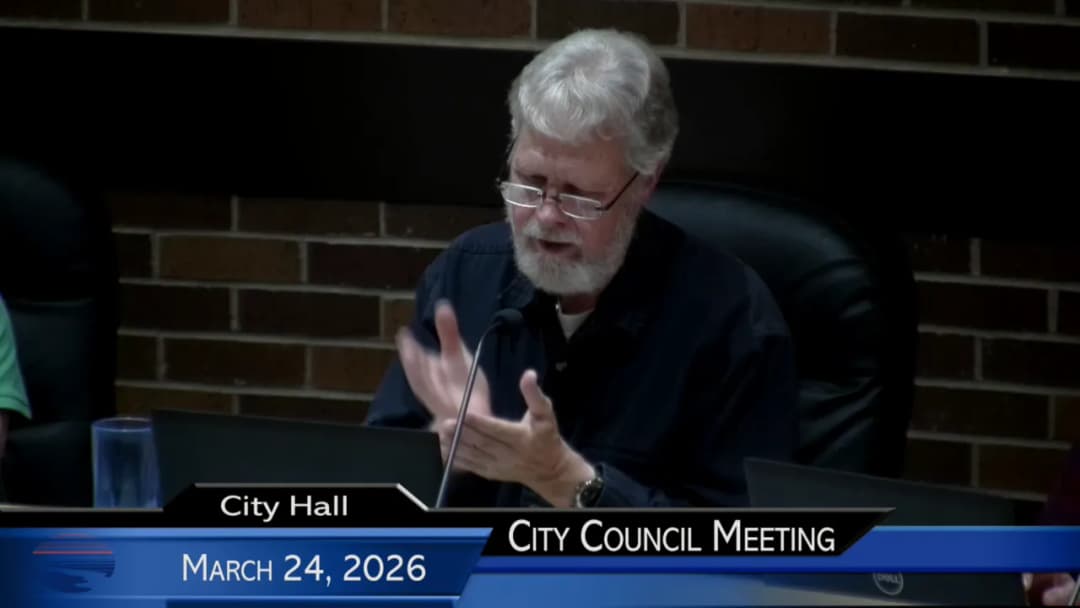
The Grand Island City Council met on March 24, 2026, at 7:00 p.m. to discuss a variety of items including recognition of the state champion girls bowling team, a presentation from the Central District Health Department, consent agenda items, multiple public hearings, and several resolutions and ordinances. The meeting lasted until approximately 10:13 p.m. after an executive session. Consent Calendar - The consent agenda (items 7A through 7O) was approved by motion, with the exceptions of items 7B (payment of claims) and 7I (microTIF application), which were pulled for separate consideration. Councilmember Nickerson removed item 7B. Public Comments & Testimony - Jerry Pools spoke against the use of tax increment financing (TIF), citing rising costs, school funding impacts, and a 2016 article criticizing the council for not negotiating shorter TIF terms. He also expressed concern about bending rules, referencing the earlier debate on the Humane Society payment. - Central Nebraska Humane Society President (name not given) stated that the contract had been negotiated with the city attorney and that they had wanted drop-off language included, but it was not. They felt the city was “beating them up” over the issue. - Ashley Meister, Executive Director of the Humane Society, explained the process for public drop-offs and reclaim fees, and noted that the police department determines whether an animal is “placed by the city” by issuing an L-number. Discussion Items - Recognition of Grand Island Senior High Girls Bowling Team: The team was recognized for winning the state championship in February 2026. Coaches Brad Ernest (head) and assistants Paul Lee and Brittany Baker were also honored. Councilmember Nickerson noted the team’s four-year finals streak. - Central District Health Department Presentation: Teresa Anderson and Lisa Falcon presented on the department’s national accreditation (received February 18, 2026), noting that only 13–14% of health departments nationwide are accredited. They also discussed the Rural Health Transformation Project, with $1.8 million potential per year for five years, and two awarded grants: $233,000/year for five years for a strategic national stockpile, and $147,000 for an oral health grant to hire a dental hygienist. Councilmember Hawsey praised the department’s work. - 7B – Payment of Claims: Councilmember Hawsey moved to amend the claims to remove a $25,000 monthly payment to the Central Nebraska Humane Society, arguing the payment was due 52 days early and violated the contract’s “in arrears” provision. After debate, the amendment failed on a 4-4 tie vote (mayor’s negative vote did not count). The original claims were then approved. - 7I – MicroTIF Application (Horizon Builders): Chad Nabity explained the microTIF program for vacant lots. Four applications were approved (total of seven ever). The motion to approve passed. - 8A – Zoning Change (Shady Bend Road): 22 acres from TA to M1 Light Manufacturing, consistent with the future land use map. Approved. - 8B – Zoning Change (Gun Barrel Road): 37 acres from TA to LR (large lot residential), allowing up to four lots. Approved. - 8C – Site-Specific Redevelopment Plan for Sterling Apartments (TIF): A $20.5 million project with 120 units, requesting $4 million in TIF. Bruce Schreiner presented the “but for” analysis, showing a 6.8% cap rate with TIF versus 5% without. Councilmember Hawsey and Nickerson supported the project, noting the need for housing and the developer’s readiness. The motion to approve Resolution 2026-72 passed. - 8D – Conditional Use Permit for Telecommunications Tower: Replacement of a 100-foot monopole at Stuhr Museum. Approved. - 9A – Rider Baseball Field Renovations Change Order 1: $520.35 credit, new contract total $3,746,120.35. Approved. - 9B – Island Oasis Improvements Change Order 1: Total change order $440,778, including a $165,000 cave feature for mini golf. Councilmember Nickerson questioned the cost, but after discussion (including that the project has a budget contingency of about $1.4 million), the motion to approve passed. - 9C – Purchase of Trojan UV System: $1.1 million plus single-source designation for future parts. Approved. - 9D – Central Nebraska Humane Society January Shelter Billing: Councilmember Hawsey moved to amend the amount to $6,058.28 (excluding public drop-offs), arguing the contract only covers animals “placed by the city.” After extensive debate, the amendment failed. The original billing amount was approved. - 9E – Railside BID Speaker System: $50,000 from Keno funds, with total project cost $135,000. Approved. - 9F – Bookmobile Purchase: Catie Swan presented the request, noting $100,000 from the library foundation and a potential grant. The motion to approve passed. - 10A – Ordinance Amending Civil Service Rules: A minor amendment to incorporate civil service rules by reference. Approved. - 11A – Executive Session: Motion to enter executive session to discuss real estate negotiations. Approved. Key Outcomes - Amendment to remove $25,000 from Humane Society payment (7B): Failed on a 4-4 tie vote. The original claims were then approved. - Amendment to reduce January billing to the Humane Society (9D): Failed. The full billing was approved. - All other motions and resolutions passed (full council approval, with Councilmembers Mendoza and Pollock absent). - Next Steps: The Humane Society billing issue is expected to be discussed further at an animal control meeting on April 30, 2026. The bookmobile will be ordered, with delivery expected in December 2026. The Island Oasis project is on track for a July 2026 opening of phase one.

ANIMAL WELFARE 24% · PROCEDURAL 12% · PUBLIC ENGAGEMENT 8% · FISCAL SUSTAINABILITY 8%
30
MAR 10, 2026 · GRAND ISLAND, NEBRASKA · CITY COUNCIL
Grand Island City Council Meeting - March 10, 2026

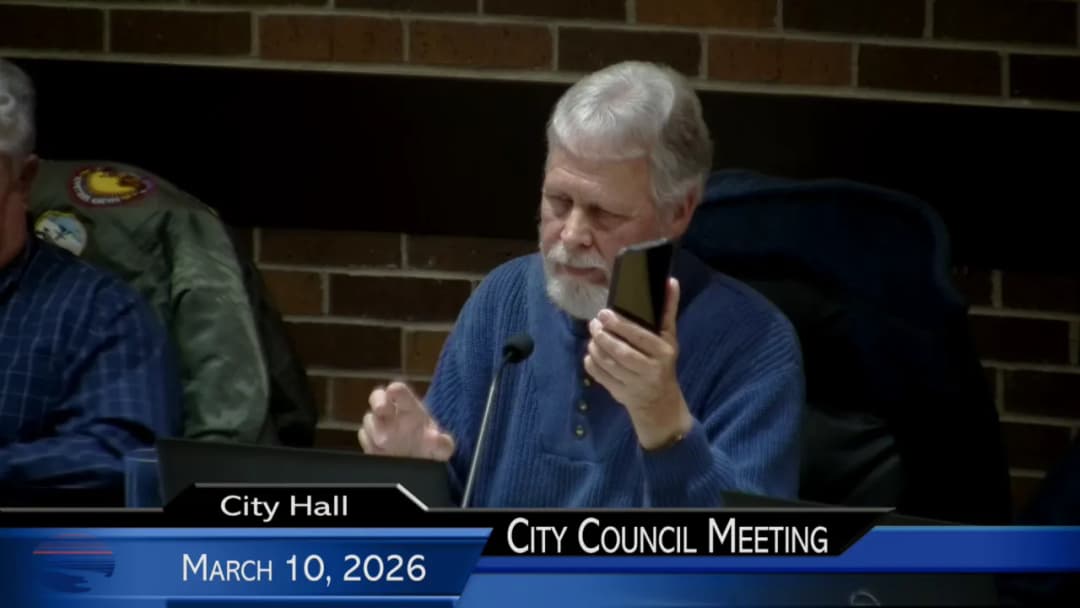
The Grand Island City Council met on March 10, 2026, at 7 p.m. to discuss a VenueWorks annual report and funding request, address a disputed payment to the Central Nebraska Humane Society, refer two blight and substandard studies to the Hall County Regional Planning Commission, receive guidance on cross-street banners, and approve several ordinances. All council members were present, along with city staff. Consent Calendar - The consent agenda was approved with the exception of item 6C (payment of claims). The council approved items A through B and D through J. - Item 6C was taken up separately after a motion to amend was adopted. Public Comments & Testimony - Liquor License Public Hearing: Melissa Field Grove, owner of Third Street Trees LLC, spoke in support of her application for a Class D liquor license at 305 North Broadwell Avenue. She stated her commitment to strict compliance with Nebraska alcohol and tobacco laws. The police department and Nebraska State Patrol recommended denial. The council voted to deny the application. - Easement Public Hearing: Mr. Schmitz explained that a five-foot easement was inadvertently omitted from the original plat of a property at 3019 and 3023 Colorado Avenue. No public testimony was given, and the council approved the vacation of the easement. Discussion Items - VenueWorks Annual Report and Funding Request: Jack, representing VenueWorks, presented a detailed report on the Heartland Event Center’s 2025 performance. Key statistics: - Economic impact: $18 million, including 35,000 room nights, $12 million direct impact, and about $500,000 in local tax contributions. - Total attendance of 75,000 across events. - Highlights included a sold-out Love Volleyball game (5,219 attendees, the highest in league history) and successful concerts (Lindsay Sterling, Ian Munsick). - A new naming rights deal with Big Iron Auctions for 15 years, $2.1 million ($140,000 per year). - Suite revenue increased 85-90% by bundling tickets with leases. - Funding request: $145,000 to cover a deficit, partly due to previous lack of naming rights income. Council members expressed strong support for the work and voted to approve resolution 2026-58. - Payment of Claims (6C): Mr. Hawsey requested to remove a $7,903.28 claim from the Central Nebraska Humane Society for kenneling per diem. He cited concerns about billing inconsistencies, including payment for a snake, chickens, and a bird at $45/night, a 23-day stay for one animal costing over $1,000, and public drop-offs being billed to the city instead of the Humane Society’s own role. The city attorney noted that the contract distinguishes between animal control (city responsibility) and public drop-offs. City Administrator Patrick Brown confirmed a review process would occur. The council approved the payment of claims as amended (total $3,951,995.34) and will reconcile the disputed amount at the next meeting. - Blight and Substandard Study - CRA Area 42: Approximately 17 acres in northeast Grand Island for a Habitat for Humanity development. Lindsay Jergens (Habitat) stated ambitions for affordable single-family homes. The council voted to refer the study to the planning commission. - Blight and Substandard Study - CRA Area 43: Property at Highway 2 and North Road for industrial flex buildings, with a need for sewer extension. Grant Calarose, the owner, was present. The council voted to refer the study to the planning commission. - Cross-Street Banners on Utility Poles: Mr. Schmidt asked for council guidance on continuing the free installation of banners for 11 nonprofits annually. Concerns included liability (uninsured risk if a banner falls), cost ($465 per installation using a crew of four for two hours), and fairness in selecting groups. Council members offered divergent views: some favored continuing due to community benefit, others argued against because of liability and precedent. No motion was made; staff will bring a formal proposal later. - Ordinance 10A - Electric Utility Commercial Deposits: Mr. Schmitz explained that a previous version erroneously attached the first reading’s redline rather than the second. The council suspended rules and approved the corrected ordinance (10-063) to match the intended changes. - Easement Vacation - Northwest Gateway 2nd Subdivision: Approved after suspension of rules. Key Outcomes - VenueWorks Funding Request (Resolution 2026-58): Approved unanimously. The council commended the team for revitalizing the event center, noting a “hot venue” status and record-breaking attendance. - Payment of Claims (6C): Approved as amended, removing the $7,903.28 Humane Society claim pending reconciliation. The city will bring a report to the next meeting. - Liquor License Denial (Resolution 2026-56): Motion to deny passed. - Easement Vacation (Resolution 2026-57): Approved. - Blight Studies Referrals (8A and 8B): Both referred to the Hall County Regional Planning Commission for review on April 1, 2026, with return to council on May 12, 2026. - Cross-Street Banners: No action taken; staff will develop a formal policy considering liability, cost recovery, and consistency. - Ordinance 10-063: Approved to correct code changes for electric utility deposits. - Executive Session: The council moved into closed session to discuss real estate negotiations (item 11A). No action was taken publicly afterward.

EVENT CENTER MANAGEMENT 35% · PROCEDURAL 16% · PUBLIC ENGAGEMENT 16% · ANIMAL WELFARE 9%
OPENPUBLICA · PUBLIC MEETING INDEXUPDATED DAILY · openpublica.com