Browse by city
Date range
Search help

Search titles, summaries, topics and stored transcripts together. Keywords may match separately; put the whole query in double quotes for a phrase. Matching follows word analysis, so punctuation is not exact. Both dates are included. Documents are not searched.

SHOWING 11–20 ENTRIES
11
AUG 11, 2026 · JACKSON, MISSISSIPPI · MEETING PORTAL
Finance Committee Meeting: August 11, 2026 Budget Discussions

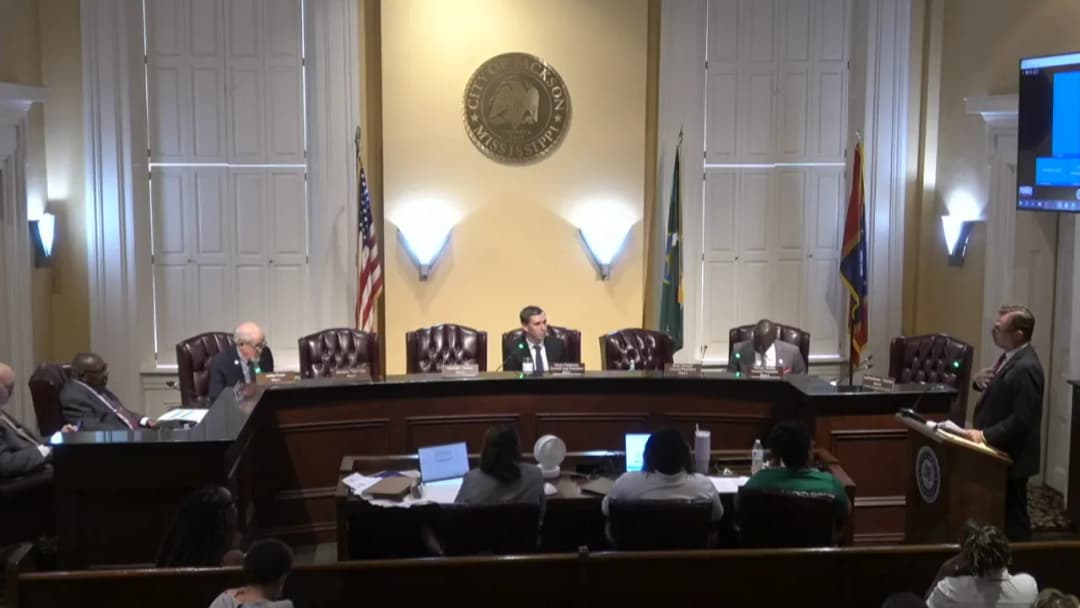
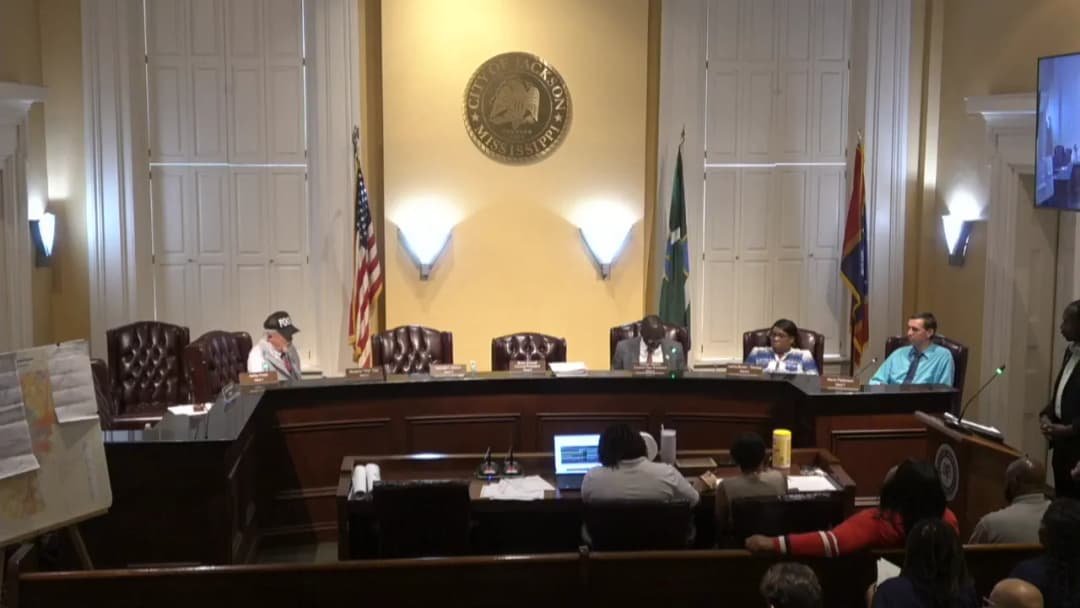
The Jackson City Council Finance Committee met on August 11, 2026, to review proposed budgets for the Grants Division, Human and Cultural Services, Municipal Clerk, and Human Resources. Presentations included fiscal year 2027 budget requests, performance metrics, and challenges. Council members discussed funding priorities, community festivals, park inventory, and HR issues. Discussion Items - Grants Division: CFO Jillian Caldwell presented a proposed budget of $310,354, a decrease of $31,433 from the FY26 adopted budget. Grants Administrator Sandra Bell reported a 97.6% grant success rate in 2026, with $5.2 million awarded and $21.7 million pending. The division uses AI for grant writing. Council members Foote and Hartley emphasized the need for full disclosure of matching requirements and minimizing ratifications. Councilman Foote requested metrics on grant applications and success rates. - Human and Cultural Services: Director Pamela DC Jr. presented the department's services, including senior services (2,200 congregate meals and 2,800 home-delivered meals monthly), youth programs, Jobs for Jacksonians (expungement program), ADA compliance, the Arts Center of Mississippi, Smith Robertson Museum (infrastructure issues), recreation (pools, pickleball courts), the zoo ($1.7 million annual cost, water bill issues, PR challenges), and the golf course (revenue at all-time high). Council members discussed the need for a parks inventory, community festival funding, and the zoo's public perception. CAO Peter Taylorson noted that the zoo, golf course, and Mynelle Gardens are not revenue-positive. - Municipal Clerk: Angela Harris presented the office's functions, including TSA pre-check and passport services. Revenue of $112,000 through July 31, 2026, covers two salaries. Challenges include staff shortages and TSA system failures. Council noted the non-election year budget but stressed preparation for the 2029 general election. - Human Resources: Director So you're Martin presented a proposed budget of $829,893, a reduction of $285,049 from the previous year. Accomplishments include onboarding 98 employees and training 227 supervisors. Challenges include employee retention, compensation, and technology. Council discussed exit interviews, CDL driver retention, and vacancies in public works. Councilman Foote requested a summary of exit interviews by department. Key Outcomes - Council members indicated intentions to offer amendments to increase community events funding to $200,000 and to reduce the grants and contributions to contingencies line to below $50,000. - Council requested a comprehensive parks inventory (including amenities and attendance) and a summary of exit interviews by department (without names). - The committee voted unanimously to go into closed session for an executive session on personnel matters.

PARKS AND RECREATION 15% · GRANTS MANAGEMENT 14% · PERSONNEL MATTERS 14% · BUDGET EQUITY ANALYSIS 11%
12
AUG 10, 2026 · JACKSON, MISSISSIPPI · MEETING PORTAL
Jackson Finance Committee Budget Briefing - August 10, 2026

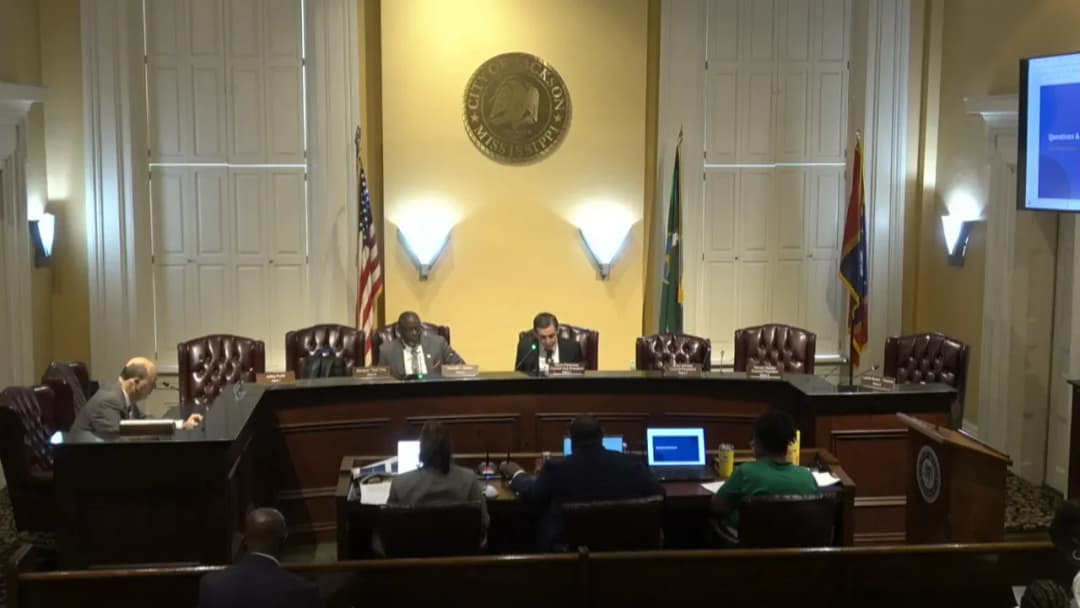
The Jackson City Council Finance Committee met on August 10, 2026, at 2:00 PM to review proposed budgets for the Department of Administration, the Chief Administrative Officer (CAO), the Mayor's Office, and the City Attorney. Committee members discussed staffing levels, vacant positions, personnel cost multipliers, technology improvements, and savings initiatives. No formal votes were taken; presentations were received for further deliberation. Discussion Items - Department of Administration (CFO Julian Caldwell): The proposed FY27 budget is $4.37 million, a $1.8 million reduction from the FY26 budget of $6.17 million. The largest cost drivers are personnel and contractual services (primarily the audit). An org chart showed seven divisions (controller, budget, treasury, director of administration, fiscal operations, purchasing, municipal court services) and approximately six finance managers. Several vacant positions are considered critical and being filled. The office expects to save $1.3 million from reduced staffing. The CFO reported that utility account reviews identified non-existent or no longer needed accounts, such as the leveled Tisdale Library, leading to savings. Interest revenue from JP Morgan Chase has increased to $180,000/month (up from $15,000–$17,000). The FY24 audit is expected to be completed by end of August 2026. The city has improved spending controls by designating two individuals per department authorized to move funds, reducing from 120+ people. - Chief Administrative Officer (Peter Taylorson): The CAO's office proposed a flat budget from FY26, keeping three vacancies unfilled (two assistant CAOs and one office coordinator). Taylorson emphasized leading by example and noted the need for at least one of those vacancies to be restored for redundancy. He highlighted the potential for technology and AI to right-size government, citing examples like park reservation systems and special event permits that remain manual. The city spends $2.2 million annually on software. - Mayor's Office (Mayor Horn): The proposed budget totals $811,000, a $120,000 reduction (16%) from the current year, with 94% for personnel. The office includes the mayor's office proper ($689,000) and the Violence Prevention Division ($122,000). Positions include special assistant, receptionist, constituent services, and a faith-based coordinator for violence prevention programs. - City Attorney (Drew Martin): The department's finance-recommended budget is $10.39 million; Martin requested a revised $11.3 million (approx. $900,000 more) to account for step raises and unfilled positions. He noted that staff are underpaid compared to neighboring jurisdictions. The office maintains 130 litigation cases (down from 155) and is looking to add AI tools (Westlaw Co-Counsel, PACERPRO, IMANage) to automate clerical tasks. Major budget items include $1.9 million property insurance, $1.7 million workers' comp, $1.9 million tort claims fund (statutory), $380,000 for lobbyists, and $240,000 for a public defender contract expiring this year. Martin proposed repurposing vacant administrative slots to create a public records expert and an investigator for blight/nuisance cases. Key Outcomes - The committee will continue budget discussions in subsequent meetings. The grants presentation was postponed to the next day (Wednesday, August 11, 2026). - An executive session on personnel matters was deferred to the following day's work session. - The committee requested that future presentations include full org charts with salary, funding source, vehicle, and phone assignments. - The CAO and City Attorney each emphasized the need for technology investments (AI, software) to reduce manual processes and improve efficiency. - The City Attorney noted that upcoming pay plan amendments and contract renewals would be brought before the council.

PERSONNEL MATTERS 34% · BUDGET EQUITY ANALYSIS 30% · PENDING LITIGATION 15% · TECHNOLOGY AND INNOVATION 9%
13
AUG 10, 2026 · JACKSON, MISSISSIPPI · MEETING PORTAL
Jackson Finance Committee Budget Study Session - August 10, 2026

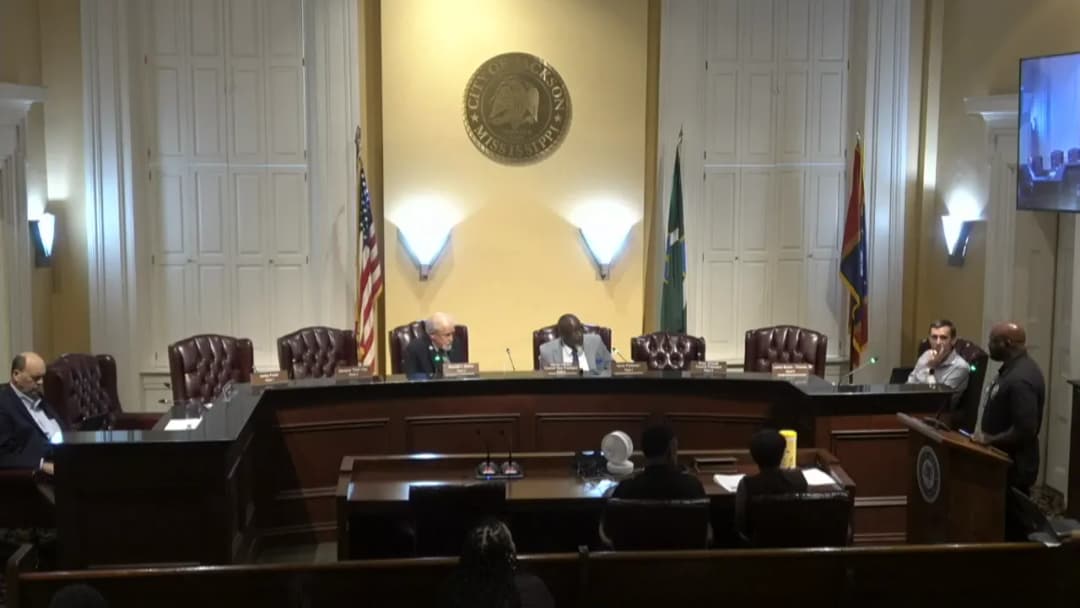
On Monday, August 10, 2026, at 9:07 a.m., the Jackson City Council Finance Committee convened for a budget study session to review the proposed FY2027 budget. The meeting was chaired by Councilman Clay, with participation from the Mayor, CAO, CFO, Budget Director, and council members. The session focused on the administration's proposed $112.9 million general fund budget, which is 16.8% smaller than the FY26 adopted budget due to the elimination of one-time revenues and a commitment to sustainable spending. The meeting also covered the opioid settlement fund and the city's financial outlook. Discussion Items - Budget Overview and Five-Year Trend: CAO Peter Taverson provided a framing of the city's financial progress over the past year, noting that the city now has verifiable revenue numbers, has addressed deferred maintenance (e.g., reopening Daley Murray Hall and the Davis McNair Planetarium), and has improved Civil Service Commission operations. He emphasized that the proposed budget is built on realistic revenue rather than shifting sands. CFO Caldwell and Budget Director Jackson presented the budget at a glance: total proposed general fund revenue and expenditures both at $112.9 million. They explained that FY26 had relied on $11 million in one-time funds (fund balance draw and transfers) that are not repeated in FY27. The five-year trend showed revenue peaking at $118 million in FY23 and declining, while expenditures grew through FY25, producing deficits of $4.5 million in FY24 and $12.9 million in FY25, covered by fund balance. FY27 is the first year where revenues and spending are deliberately balanced without relying on reserves. - Revenue Details: Property tax (60% of revenue) and state sales tax (28.8%) together account for 88.8% of general fund revenue. The proposed revenue mix removes $7.75 million in applied fund balance and $3.2 million in operating transfers. Councilman Clay raised concerns about specific revenue estimates, such as realty taxes (projected at $37.5 million vs. actuals below $36.5 million in recent years) and rail car taxes (projected at 218,000 after a 200% increase from $1,534 received this year, historically between $60-80,000). Council members advocated for conservative estimates, with Councilwoman Clay suggesting the budget should be closer to $105-106 million to avoid overprojections. The administration agreed to revisit numbers based on updated assessments. - Expenditure Breakdown: Police and fire together are $58.4 million, or 51.7% of the budget. Personnel costs (salaries, wages, benefits) are 69.6% of the total budget, and adding other services/charges (contracts, utilities) brings that to nearly 86%. Capital outlay and debt service are each only about 1%, limiting flexibility. Department cuts were not across-the-board but targeted after individual department work with finance. Public works, IT, municipal clerk, administration, and general government saw reductions of 25-35%. - Special Funds: The city's outstanding bonded debt is $142.5 million, with $20 million due in FY27. The employees' benefit fund (self-insured health plan) cost $19.1 million in FY25, and FY26 is on track for $20.3 million (6.6% increase). The city's share of health plan costs rose from 77% to 83%. The PERS (public employee retirement system) contributions continue to strain resources. - Opioid Settlement Fund: Councilman Clay noted that while spending opioid settlement funds on furniture and shelving is legal, the spirit of the funds is to abate the opioid crisis. He recommended holding the funds in a separate account and developing a plan informed by those affected by the crisis. The administration agreed, stating they have avoided spending such funds on unrelated items (e.g., canceled $30,000 in furniture). The funds are currently held separately from the general fund. Council members discussed potential uses across departments (police, violence prevention, homeless services) but emphasized the need for input from crisis-affected individuals. - Future Outlook and Personnel Costs: Mayor Horn discussed the need to "resize" Jackson, noting the city covers 113 square miles for 144,000 people (built for 205,000). He called for a conversation about which streets and services to maintain. The administration committed to salary adjustments for lower-paid employees in FY27 and higher-paid employees in FY28, funded through efficiency savings and attrition. Economic growth was identified as a long-term solution, with a need to consolidate economic development organizations under a unified strategy. Key Outcomes - No votes taken; this was a study session for information gathering. Council deliberation is scheduled for the following week, with a public hearing the week after, and final budget adoption by September 15, 2026. - Directive to revise revenue estimates: Council members urged conservative projections, with Councilwoman Clay suggesting a target of $105-106 million. The administration will update revenue numbers based on late-August assessments. - Opioid settlement funds to be held in a separate fund: The council and administration agreed to keep these funds separate and develop a spending plan that aligns with the settlement's purpose, with input from affected individuals and departments. - Commitment to salary adjustments: The administration indicated a path to salary increases for lower-paid employees in FY27 and higher-paid employees in FY28, contingent on savings from attrition and efficiency. - Continued focus on resizing the city: Mayor Horn's call for a strategic discussion about reducing the city's footprint was acknowledged as a topic for future planning.

BUDGET EQUITY ANALYSIS 50% · FISCAL SUSTAINABILITY 15% · TAX REVENUE 8% · PUBLIC WORKS 7%
14
AUG 6, 2026 · JACKSON, MISSISSIPPI · MEETING PORTAL
Jackson Planning and Economic Development Committee Meeting - August 6, 2026

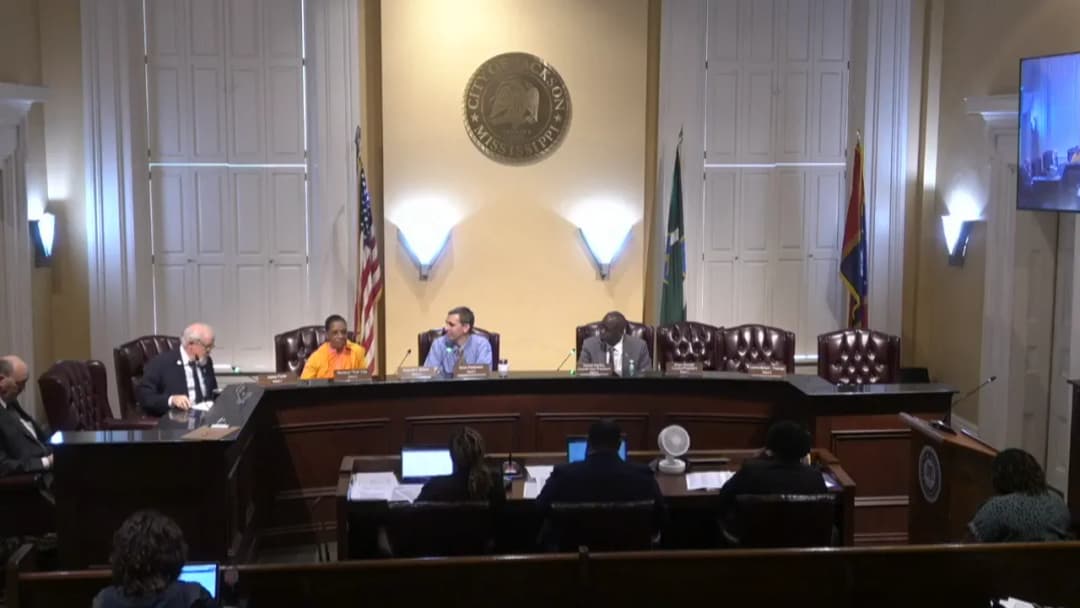
The Planning and Economic Development Committee of the City of Jackson met on August 6, 2026, at 2:30 p.m. to discuss code enforcement reorganization, blight remediation, the unhoused population, and apartment conditions. The meeting was chaired by the committee chair, with Councilmembers Parkinson, Hartley, and others participating, along with Chief Brackney (JPD), Planning Director Angela Brown, Code Enforcement Manager Robert Brunson, and City Attorney Peter Taberson. Discussion Items Proposal to Move Code Enforcement from Planning to JPD - Councilman Stokes had proposed an ordinance to move code enforcement to the Jackson Police Department. Councilman Parkinson opposed the wholesale move, stating it was a "blunt instrument" and that the issue required a careful scalpel. He noted that the city's convoluted process and state law constraints are major obstacles. Councilman Hartley echoed the need for state support and suggested the issue be referred to the legislative committee. Chief Brackney expressed willingness to explore areas of overlap but cautioned against moving the entire planning and economic development department. He noted that code enforcement was previously under JPD and that certain overlaps (e.g., vehicle removal) could be streamlined. The committee agreed to keep the item in committee and directed Director Brown and Chief Brackney to produce a list of overlapping functions and necessary ordinance changes within one month. Blight and Abandoned Properties - Director Brown presented data: nearly 3,000 new blight cases, over 6,000 active cases, over 800 taken to court. The city spent $900,000 to demolish 40 properties (average residential cost $17,000–$20,000; commercial up to $1 million) and collected only $12,000 in revenue. Additional $1 million is allocated for 20 more properties. Councilmembers emphasized the need for massive funding, noting the state owns 1,900 properties in Jackson and has not addressed them. Councilman Hartley outlined the Blight Task Force, including new equipment (excavators, skid steers, trucks) and 20 additional personnel slots. The plan is to target each ward monthly, starting with safety hazards. Councilman Hartley also mentioned a HUD grant application draft due next week. The committee discussed the need for strong enforcement and collection of liens. Unhoused Population and Clutch Program - Director Brown described the Clutch program, a housing-first model contracted to house 300 individuals quickly, with rental assistance, case management, and mental health services. The contract is signed by Clutch but pending the mayor's signature. A community meeting is set for September 1, implementation planning for September 15. Councilman Parkinson expressed strong support, noting the model provides both compassion and enforcement. Councilman Hartley raised concerns about the potential for clients to return to the streets and about enforcement of no-camping rules. The committee discussed the need for better communication to counter misinformation. Apartment Conditions (Addison Place) - Code Enforcement Manager Robert Brunson reported that at Addison Place, 45 units lack water, the owner owes over $300,000 to the water utility, and the manager is not providing adequate services. Councilman Hartley asked about legal options. Attorney Peter Taberson stated that the legal system is not designed for quick resolutions, especially for absentee landlords. The committee discussed requiring bonds for apartment complexes and using ordinance changes to hold owners accountable. Councilman Hartley requested that Director Brown attend the planning meeting to address this humanitarian issue. The committee also discussed the role of private equity firms in property deterioration and the need to identify and pursue them. Key Outcomes - Directive: Director Brown and Chief Brackney to produce a list of overlapping code enforcement functions and recommended ordinance changes within one month. - Directive: Director Brown to provide a draft HUD grant application by next week. - Action: The committee will keep the code enforcement reorganization proposal in committee for further study. - Action: A community meeting on the Clutch program is scheduled for September 1, 2026. - Referral: The issue of state law constraints on blight remediation will be referred to the legislative committee, and the city's lobbyist will be engaged to seek streamlined state processes. - Follow-up: The committee will explore ordinance changes to require bonds from out-of-state property owners and to strengthen the vacant property registry. - No votes were taken on any of the discussed items.

HOMELESSNESS 18% · CODE ENFORCEMENT 15% · PUBLIC SAFETY 14% · BLIGHT REMEDIATION 12%
15
JUL 27, 2026 · JACKSON, MISSISSIPPI · MEETING PORTAL
Jackson City Council Finance Committee Meeting - July 27, 2026

The Jackson City Council Finance Committee met on Monday, July 27, 2026, at 11 a.m. to discuss a proposed amendment to the fiscal year 2025-2026 municipal budget, addressing an anticipated revenue shortfall. The meeting was called to order by the committee chair, who thanked Councilwoman Tina Clay for her leadership. The purpose was to review the budget amendment (agenda item 49 for the council meeting on July 28) and ensure council members were comfortable before voting. Key points included clarifying the statutory deficit, reviewing proposed revenue and expenditure adjustments, and requests for actuals and further breakdowns. Discussion Items - Budget Amendment Overview: The Chair explained that the amendment was necessary due to an anticipated shortfall in revenues, as per Mississippi Code Section 21-35-25. The administration had been working with department heads to reduce spending conservatively. The proposed budget reduces total general fund expenditures from approximately $135-136 million to around $112-113 million to align with expected revenues. - Clarification on Statutory Deficit: Peter Taylor, CAO, refined the language, stating that the city has a statutory deficit as the adopted budget exceeded revenues. The amendment would codify the conservative spending already in practice. - Request for Actuals: Councilman Foote requested actual revenue and expenditure data through June 30 and through the current date (July 20) to better inform the decision, expressing concern that without actuals, the numbers might not reflect reality. He also asked for a breakdown of the $22 million reduction in expenditures, specifically questioning $4.6 million in operating transfers and payroll savings. - Revenue Details: The committee reviewed specific revenue lines, including current realty taxes ($37,044,158), current personal taxes, ad valorem taxes on automobiles, interest and damages on delinquent taxes. Concerns were raised about declining sales tax from car dealerships leaving Jackson. - Expenditure Breakdown: The proposed budget shows reductions across departments. Councilman Foote asked for detailed explanations of where the $22 million was not spent, particularly in payroll due to vacant positions. - Debt Service: Councilman Foote emphasized the need to understand debt service payments and find ways to control them for future budgets. - Future Budget Process: The Chair noted the need to begin work on the FY27 budget soon after the amendment is passed. Key Outcomes - The committee agreed to reconvene at a work session at 4 p.m. on July 27 to review actuals provided by the CFO, with the goal of voting on the amendment at the council meeting on July 28. - The CFO committed to providing actual revenue and expenditure data through the current date, as well as further breakdowns of payroll and operating transfers. - No formal vote was taken during the finance committee meeting.

FISCAL SUSTAINABILITY 64% · BUDGET EQUITY ANALYSIS 24% · PUBLIC WORKS 4% · PROCEDURAL 3%
16
JUL 15, 2026 · JACKSON, MISSISSIPPI · MEETING PORTAL
Jackson City Council Finance Committee Meeting - July 15, 2026

The Finance Committee of the Jackson City Council met on July 15, 2026, at 10:04 AM. The meeting focused on the city's financial health and proposed budget adjustments for the remainder of the fiscal year. The chair clarified that the city is not operating at a deficit, but revenues are lower than anticipated. Key discussion items included cost-saving measures, banking updates, and contract reviews. Discussion Items - The chair outlined suggestions from the state auditor's office to manage expenses: limit overtime to essential services (police, fire, central employees), eliminate all professional service categories not yet utilized, hold capital outlays except for already-purchased items, freeze operating expenses (excluding payroll), freeze travel, and halt new equipment purchases. The chair noted these changes cannot be implemented until the budget is approved, so a test run will be conducted by removing all categories with zero expenditure for FY 2526 and reducing other professional categories to actual spending. - The chair also recommended improving accounting practices by setting a monthly deadline (e.g., the 15th) to reconcile all bank statements and post all data in real time, except for tax payments from the county which lag until the 20th. - The chair suggested that the FY 2627 budget should be based on the average of the past three years' actuals to create a more conservative and realistic budget. Departments were instructed not to spend based on paper money but only on available bank balances. - Peter Taverson, CAO, thanked the committee for the direction and noted continued collaboration between the council and administration on the budget. He expressed confidence that the 2027 budget process would be more informed than the previous year. - CFO Jillian Caldwell reported that approximately 90% of the city's funds, about $90 million, are now held at Chase (the new bank). A small amount remains at the old banks (Cadence, Huntington) to clear outstanding checks. She indicated she would prepare a report on interest earned on the new accounts. - A council member requested an update on the contracts put in place by the previous administration, specifically citing the parking meter contract that had generated no funds. They suggested reviewing all contracts for compliance and potential renegotiation to increase revenue. - The chair responded that legal will look into the contracts and that the CFO will prepare a report on spending versus budget for each department by the end of July. Key Outcomes - The chair directed the CFO to proceed with the outlined budget adjustments (removing zero-use categories, reducing professional services, etc.) and report back with numbers. - The committee agreed to wait for the CFO's report before further budget discussions. - The council member's request for a review of all existing contracts, particularly those from the previous administration, was acknowledged, and legal will examine them. - No formal votes were taken; the meeting was adjourned with the understanding that the CFO and legal would provide follow-up information.

FISCAL SUSTAINABILITY 83% · PUBLIC ENGAGEMENT 17%
17
JUL 6, 2026 · JACKSON, MISSISSIPPI · MEETING PORTAL
Planning Committee Meeting on Data Center Ordinance and Economic Development – July 6, 2026

On July 6, 2026, the Jackson Planning Committee met to discuss a draft data center ordinance, the planning process, and economic development opportunities. The meeting, chaired by Councilman Foote, included presentations from City Attorney Drew Martin, Planning Director Angela Brown, and Hinds County Economic Development Authority Executive Director Hunter Gardner. Council members expressed concerns about the timing and transparency of the ordinance process, the need for expert scientific review, and the potential impacts of data centers on Jackson's neighborhoods. The meeting served as an informational session ahead of a public hearing on a proposed moratorium on data centers scheduled later that evening. Discussion Items - Draft Ordinance Review (City Attorney Drew Martin) - Martin presented a draft ordinance (version 3, internal iteration 27) that would define data centers, data center-related facilities, and power restrictions; allow data centers by use permit in C-3 and I-1 zones and as permitted use in I-2 zones; and establish site plan review requirements. Key provisions prohibit temporary generator use unless permanent power is installed and meet emission standards; require proof of adequate water systems and traffic impact studies; and give the city council final approval authority over site plans. Martin emphasized the ordinance is a work in progress, not ready for introduction, and is intended to give the city a regulatory framework to prevent issues like those in South Haven. He noted that without such an ordinance, the city would have limited control over data center development. - Councilwoman Clay questioned why the committee was discussing an ordinance when the scheduled public hearing was about a moratorium, arguing the process felt rushed and inappropriate. She stated the meeting was a "waste of time" because the ordinance was not final and the public had not been properly informed. - Councilman Foote supported the meeting as educational, stating it would help the council make well-informed decisions. Councilman Grizzell requested a color-coded draft to show which council members' input was included, and noted some of his suggestions were not reflected. - Martin acknowledged that the ordinance does not yet incorporate all public comments from previous hearings but that efforts are being made. He stated that a final version could be ready within 30 days if the council chooses to proceed. - Planning Process Overview (Planning Director Angela Brown) - Brown explained the zoning and site plan review process: any new business must go through zoning, then site plan review by a committee including planning, public works, Jackson Water, and fire departments. The planning board, with representatives from each ward, holds public hearings and makes recommendations to the city council. Brown noted that Jackson’s zoning ordinance is outdated and lacks definitions for data centers, and the city does not have in-house expertise for noise and environmental reviews. She recommended hiring a third-party specialist or contracting out such services. - Councilman Hartley asked about the largest development the city has recently permitted; Brown replied that there have been no major industrial projects in recent years. Councilwoman Clay criticized the planning department for not actively recruiting new industry, stating she had seen "zero" development in 22 months. Brown agreed the city needs to focus on economic development. - Economic Development Presentation (Hunter Gardner, Hinds County EDA) - Gardner described his role and the recent Amazon data center project in Clinton: a $1 billion retrofit of an existing building in the Clinton Industrial Park, expected to generate $3 million annually for the city of Clinton, $3 million for the county, and $6 million for schools in tax revenue (fee-in-lieu-of-taxes agreements), with payments tripling after 10 years. The data center uses air cooling (no water for servers) and meets sound standards. Gardner emphasized that power availability is the most critical factor, and that Jackson has not yet had a utility study confirming sufficient power for a data center. - In response to council questions, Gardner said companies prioritize speed, risk, and money; a moratorium could signal that Jackson is not business-friendly. He stated that the city needs a long-term economic development strategy and that his organization is willing to collaborate. Councilwoman Clay pressed for a meeting to focus on non-data-center opportunities, such as advanced manufacturing or grocery stores, particularly in Northwest Jackson. Gardner agreed to follow up and mentioned a grocery store prospect looking at South Jackson. - Councilman Parkinson asked whether a moratorium would kill potential projects given high demand; Gardner said both could be true but that a moratorium creates perception hurdles. He cited examples of companies leaving New Jersey due to regulatory delays. Councilwoman Clay argued that the council should not be "fear-mongered" into approving data centers without proper safeguards and that a six-month delay would not change the investment climate. - Councilman Hartley raised concerns about the suitability of a large tract of land (owned by Sam) for alternative uses like a power plant, and Gardner noted that advanced manufacturing and food/beverage projects are also being considered in the region. He emphasized that the city needs a 20-year plan and that current projects require significant upfront work. Key Outcomes - No votes were taken; the meeting was informational. - The draft ordinance remains a work in progress; City Attorney Martin will continue to incorporate council and public input, and a final version could be ready in approximately 30 days if the council proceeds. - Councilwoman Clay and others insisted on transparency, requesting that the ordinance be clearly marked as a "draft" and that the process not bypass the public hearing on the moratorium scheduled later that evening. - It was agreed that the city needs to contract with environmental and engineering experts to help evaluate data center applications and site plans. - Councilman Grizzell requested a color-coded version of the draft showing which council members' suggestions were included. - Hunter Gardner committed to following up with the council to discuss a broader economic development strategy, including potential projects beyond data centers. He will provide a list of Hinds County EDA board members and schedule a deeper dive meeting. - The meeting adjourned at approximately 5:54 p.m., with a public hearing on the proposed moratorium scheduled to begin in 26 minutes (6:20 p.m.).

ECONOMIC DEVELOPMENT 41% · DATA CENTER REGULATION 22% · COMMUNITY ENGAGEMENT 9% · TECHNOLOGY AND INNOVATION 8%
18
JUN 4, 2026 · JACKSON, MISSISSIPPI · MEETING PORTAL
Jackson City Council Work Session: RTCC, Cameras, Park Rangers, and Animal Control - June 4, 2026

The Jackson City Council held a work session on June 4, 2026, receiving updates from Police Chief Michelle Brackney and other officials on several public safety and operational issues. Discussions focused on the Real-Time Command Center (RTCC) and camera system failures, park ranger deployment, fuel and overtime management, and the state of animal control. The meeting was adjourned early and rescheduled for the following week. Discussion Items - RTCC and Camera System Update: Chief Brackney reported that an audit of the city's camera system found that close to 400 of over 700 cameras are non-functional. Some of these cameras are outdated and may need replacement. The city continues to pay for utilities and SIM cards on the non-functional cameras. The vendor, Active Solutions, has not provided a maintenance schedule or timely repairs; the company owner claims maintenance language in the contract is a "placeholder," which the city attorney suggested may be a matter for potential litigation. Additionally, approximately 10 business or community partners with fusis systems have not had their cameras accessible to police. The chief noted that the RTCC has not been staffed 24/7, and she directed precincts to assign officers to cover it. A plan to move 911 dispatch into the RTCC is under discussion to improve coordination, and the chief expressed a need for professional (non-sworn) staff to monitor cameras, as using sworn officers is more costly. - Park Rangers: Chief Brackney stated that park rangers have been redeployed from headquarters back to precinct roll calls to ensure they are actually working in the parks. There are only four park rangers for over 54 parks, and the council acknowledged this is insufficient. The chief clarified that all patrol officers are expected to patrol park areas, not just park rangers. The council also discussed using park rangers or patrol officers to provide security at the zoo to potentially eliminate a paid security position. - Fuel and Overtime: The chief reported that the overtime budget appears depleted on paper, but some overtime costs are reimbursed through grants. For example, a Mississippi Highway Patrol overtime grant of $160,000 has only expended $18,000. She stated she will alert the council if actual overtime funding runs short. Regarding fuel, the chief noted that fuel cards are managed by the fire department, and she did not have immediate data on the number of cards or city vehicles. Council members raised concerns about employees taking city vehicles outside the 40-mile limit and using them for secondary employment. The chief confirmed there are no GPS trackers on vehicles and that she is reviewing secondary employment practices to recover costs. - Animal Control: Chief Brackney described the current animal control facility as "not habitable for humans" and in poor condition. The city is exploring a new non-kill shelter concept called "Angel's Place," potentially funded through private partners and fundraising. Council members noted that the existing facility, though only about 22 years old, has poor location, no natural ventilation, and foundation issues. Councilman Foote provided a letter from the group JCARES requesting the city reestablish a functioning animal control service. The chief confirmed that animal control officers still respond to calls, but animals taken in are likely euthanized due to capacity issues at other facilities. - 311 App: Council members expressed frustration that the 311 app is not functioning properly, with citizen reports going unaddressed for months. The CAO stated he requested data on the app's performance from the city clerk. Key Outcomes - No formal votes were taken; the meeting was a work session for discussion and updates. - The city will send letters to businesses and community partners whose fusis cameras are inaccessible. - The council will revisit the RTCC, camera budget, and personnel needs during the upcoming FY27 budget process, which is due in approximately three months. - The chief will provide a memo on fuel card usage and take-home vehicle policies. - The meeting was adjourned early and rescheduled for the following week to allow additional time for Fire Chief Thomas's presentation. - The council expressed support for centralizing secondary employment requests through an app and for creating an online system for citizens to request cameras.

PUBLIC SAFETY 32% · TECHNOLOGY AND INNOVATION 28% · ANIMAL WELFARE 14% · FISCAL SUSTAINABILITY 11%
19
MAY 21, 2026 · JACKSON, MISSISSIPPI · MEETING PORTAL
Finance Committee Meeting on Budget Cuts - May 21, 2026

The Jackson City Council Finance Committee met on May 21, 2026, at 3:30 PM to discuss expenses and budget cuts. The committee reconvened on May 22, 2026, at 10:00 AM. The goal was to balance the budget using $112 million in revenue by cutting $23 million in expenditures. The committee reviewed line-item expenses, identified savings from vacancies, and debated categories such as vehicles, professional services, and overtime. Discussion Items - Budget Overview: The committee identified a $23 million gap between anticipated revenues and budgeted expenditures. The CFO stated that $10 million in savings had already been identified from vacancies (annual salaries for unfilled positions), including fringes. Of that, $3.2 million is for sworn police and fire positions. The committee agreed to reserve the $3.2 million for potential hiring of qualified officers and firefighters, using $6.8 million from vacancies toward the deficit. This left approximately $16.2 million to find. - Expense Line-Item Review: The committee examined the first 40 pages of the monthly financial report, focusing on categories that appear across departments: - Vehicles: Every department has a fuel line. The CAO noted a new vehicle policy has been signed to reduce personal use and pooling. Council members questioned whether all departments need assigned vehicles; some suggested a citywide pool for savings. - Other Professional Services (6419): This broad category for consultants, contracts, and fees varied widely across departments. The committee requested a breakdown and noted that $10 million in earlier cuts may not have fully addressed this category. The CAO committed to providing a detailed list by department for the FY27 budget. - Overtime: The committee noted that overtime is budgeted in nearly every department. Council members argued that non-first responder departments (excluding police, fire, and public works) should use comp time instead of overtime. The CAO agreed to review policies. - Salaries and Vacancies: Confusion arose over the $10 million in vacancy savings versus an additional $10 million in cuts claimed by the administration. After discussion, the committee concluded that the $10 million in vacancy savings is the same as the previously identified $10 million in cuts. They agreed to move forward with $6.8 million from vacancies and $2 million from the administration department, totaling $8.8 million, leaving about $14.2 million to find. - Recess and Reconvene: At 4:44 PM, the committee voted to recess and reconvene at 10:00 AM on May 22, 2026, to continue the line-item review. The motion passed with one opposed. - May 22, 2026, Session: The committee continued reviewing pages 12-21 of the report. Key discussions: - Human and Cultural Services: The committee explored the art center, municipal auditorium (Thalia Mara Hall), and other facilities. It was noted that Thalia Mara Hall is now operated by Visit Jackson, yet a salary line remains. The CFO confirmed that the salary for a former employee has been moved to the art center. The committee identified $44,000 to be transferred. - Capital Outlay: The lease for the 633 building (human and cultural services) was discussed. The CAO indicated that most departments can be moved to the Hood Building, saving approximately $25,000 per month ($300,000 annually). The committee urged fast action. - Utility Costs: The committee noted that utility bills for the Hood, Porter, and City Hall buildings are currently under the public works department, which is misleading. They recommended site-based budgeting. - Overall Savings: The committee reviewed a top-down analysis showing that through March 31, 2026, the city had spent only 43.9% of the budget, indicating a lower run rate. Councilman Foote noted this is encouraging but emphasized that line-item cuts are still needed. - Executive Session: The committee moved into executive session to discuss personnel matters. No votes or actions were taken. Key Outcomes - Vacancy Savings: The committee agreed to use $6.8 million from vacancy savings (excluding sworn police/fire positions) toward the $23 million deficit. This is part of the $10 million in already-identified cuts. - Training Document: The committee requested the administration produce a training document showing the $10.7 million in easy cuts (non-personnel, non-operational) so that the council can vote on them separately. This will allow the committee to focus on the remaining $13 million. - Next Steps: The finance team will provide a detailed breakdown of the other professional services category and a summary of the $10.7 million in cuts by June 3, 2026. The committee will continue working sessions to identify the remaining savings. - Public Hearing: A public hearing on the budget is scheduled for June 18, 2026. The final budget must be adopted by June 30, 2026. - Anonymous Suggestion Box: Councilman Parkinson requested an anonymous email inbox for employees to submit budget suggestions. The CAO agreed to set it up. - Grants Report: Councilman Hurley requested a statistical report on grants applied for and received. The CAO will follow up with the grants team.

BUDGET EQUITY ANALYSIS 66% · PERSONNEL MATTERS 12% · PUBLIC ENGAGEMENT 7% · FISCAL SUSTAINABILITY 4%
20
MAY 14, 2026 · JACKSON, MISSISSIPPI · MEETING PORTAL
Jackson City Council Planning Committee Meeting - May 14, 2026

The meeting was called to order at 3:35 PM on Thursday, May 14, 2026, with three council members on the dais, Council President Grisell participating remotely, and Councilwoman LaShea Brown Thomas expected. The committee discussed blight, code enforcement, the Bloomberg Innovation Team's work, the Clutch program for unhoused individuals, and the status of the Jackson-Hinds Library System. No formal votes were taken, but several directives and next steps were established. Bloomberg Innovation Team Presentation - Dr. Francine Sutton (Civic Designer) and Dr. Paris Smith (Data Analytics Manager) introduced the Bloomberg City grant (funded until 2027). They presented four ideas from community ideation sessions: streamlining the permitting process, improving communication via the 311 app, adopting a "Love Your Block" micro-grant program for neighborhood beautification, and updating land use/zoning policies. - The "Love Your Block" grant application is due June 1, 2026, for $270,000 ($70,000 for micro-grants, $200,000 for two fellows). A decision is expected in fall 2026. - Dr. Smith noted that Ward 5 has the highest density of blight and suggested targeting main corridors (Terry Road, McDowell Road) for demolition and grass cutting, with signs to credit the work. - Council members expressed support for the team's work and encouraged them to help develop a HUD master plan for blight. Councilman Hartley provided a draft template for a city master plan to apply for HUD funding. - The team agreed to coordinate with the planning department and provide regular updates to the council every two weeks. Blight and Code Enforcement Update - Robert Brunson, Manager of Code Enforcement, reported that all code enforcement titles have been consolidated under one division (Community Improvement), now with 12 officers (up from 5-6) divided into north, central, and south divisions (15 total staff). - Officers average 20 inspections per day, totaling over 100 inspections daily. There is a backlog of 4,500 ready cases: 201 commercial and 4,342 residential properties. Ward 5 and Ward 3 have the highest numbers. - Challenges include: owners hiding behind LLCs, properties going to tax forfeiture, and lack of funding for curing violations. Brunson requested stronger ordinances to hold people accountable, not just properties. - Councilman Parkinson proposed a volunteer code enforcement program (deputized, trained volunteers) to increase capacity, citing 20 volunteers in Ward 7 ready to participate. He asked the planning department to set up a trial program. - Councilman Hartley requested legal research on ordinances to address burned-out properties, suggesting a model from other cities. Clutch Program (Unhoused Individuals) - Angela Brown (Planning and Development Director) and Liz Brister (Downtown Jackson Partners) presented the Clutch program, a consulting model from Houston that focuses on rapid rehousing and closing encampments. - The program has three components: rental assistance for housing, rapid response (hotels, bus tickets), and supportive services. The total cost is $10 million over two years, with $3 million from the city, $3 million from a partner, and $3 million to be raised from private/philanthropy. - A pilot (proof of concept) costing under $50,000 is planned for summer 2026, with a full start date of October 1, 2026. The program aims to rehouse approximately 1,400 individuals out of an estimated 1,600-1,700 in the system. - Council members expressed support and concern about funding and the need to address the "drop-off" population (people brought to Jackson). Councilman Hartley emphasized the need for a coordinated homeless division (strategic initiatives) and enforcement to prevent new encampments. - The council agreed to continue fundraising efforts and work with the administration to finalize the plan. Library System Update - Jean Williams, Executive Director of the Jackson-Hinds Library System, reported that the system has 5 libraries in Jackson and 7 in the county (12 total). Financial challenges include historic overspending (exceeding income by $300,000/year in the 2010s), stagnant/declining per capita funding, and reduced state and federal grants (federal funding now less than $10,000/year). - The library faces a fiscal problem in 2027 with the current footprint. The Medgar Evers Library is closed afternoons due to HVAC issues; Johnson Controls expects repairs in 4-6 weeks. - Plans for reopening: Redeemer Church at Chastain Middle School (short-term lease), Udore Wealthy (co-location with partners, HUD grant of $3.75 million secured), and Richard Wright (assessment needed). Reopening Tisdale would strain the budget by $400,000 annually. - The library has a $1.5 million endowment (at Community Foundation) but can only access 4% of interest annually. - Council members noted the library's role in economic development and homelessness services, and encouraged continued partnerships. Key Outcomes - The Bloomberg Innovation Team will continue to develop the HUD master plan with the council and provide biweekly updates. The "Love Your Block" grant application will be submitted by June 1, 2026. - Code Enforcement will work with the legal department to draft ordinances for burned-out properties and volunteer code enforcement programs. Councilman Parkinson will coordinate a trial in Ward 7. - The Clutch program pilot will proceed this summer; fundraising for $3 million will continue. The city will seek a fiscal agent for donations. - The library system will explore co-location opportunities and pursue repairs; the city will assess the Richard Wright and Udore Wealthy buildings. - Councilman Hartley will send a formal request for legislative recommendations on blight, code enforcement, and burned-out properties.

HOMELESSNESS 31% · ENGINEERING AND INFRASTRUCTURE 17% · AFFORDABLE HOUSING 15% · TECHNOLOGY AND INNOVATION 8%
OPENPUBLICA · PUBLIC MEETING INDEXUPDATED DAILY · openpublica.com