Special Joint Meeting of Arlington City Council and Planning & Zoning Commission – August 1, 2024
STREAMING COPY IN PREPARATION — RECORDING AVAILABLE FROM THE ORIGINAL SOURCE
Special Joint Meeting of Arlington City Council and Planning & Zoning Commission – August 1, 2024
On August 1, 2024, from 3:03 p.m. to 6:26 p.m., the Arlington City Council and Planning and Zoning Commission held a special joint meeting in the Council Briefing Room. The session focused on aligning roles, responsibilities, and expectations between the two bodies; clarifying legal frameworks for zoning decisions; discussing how staff reports and economic development strategies inform decision-making; and exploring ways to improve communication and the quality of development outcomes. No formal votes were taken; the meeting was an educational and alignment workshop.
Discussion of Roles and Responsibilities
- Assistant City Attorney Galen Gatten presented the procedural path for rezoning, including the role of staff, P&Z, and City Council. He emphasized that P&Z commissioners are appointed by the full City Council and represent the city as a whole, not individual districts.
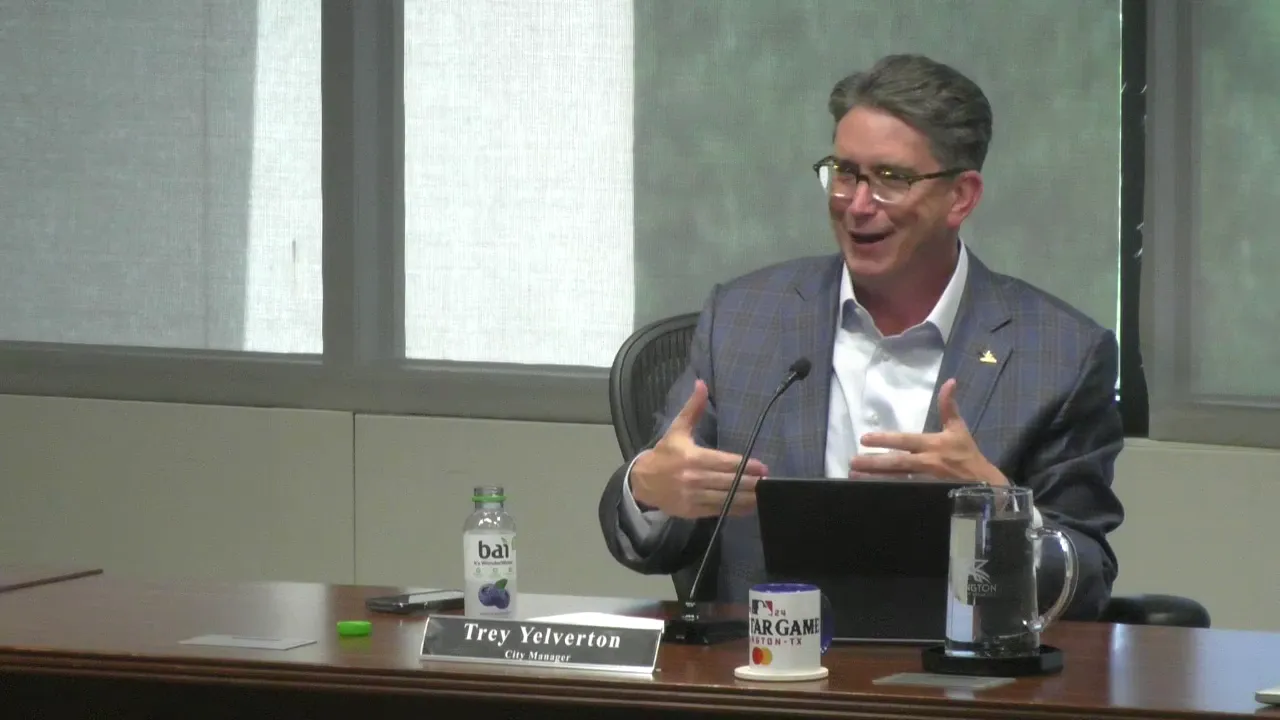
- City Manager Trey Yelverton noted that land-use decisions create a "fiscal map" that determines city revenue and service capacity. He urged the group to view zoning as a competition for investment.
- Councilmember Andrew Piel articulated a guiding policy: every zoning decision should be evaluated by whether it makes it more or less likely that a family will buy an older Arlington home and fix it up. He stressed the city should demand high-quality development and not accept substandard projects.
- Councilmember Rebecca Boxall cautioned against conflating lower brand tiers with lower design quality and advocated for more mixed-use zoning (e.g., RMU – Residential Mixed Use) to support redevelopment and walkability.
- Councilmember Barbara Odom-Wesley argued that national trends (post-COVID housing preferences, e-commerce, and remote work) must be considered alongside the existing comprehensive plan, which she described as outdated.
- Chairperson Nunez highlighted the importance of council-to-commission communication, noting that P&Z often lacks information about economic development incentives discussed in executive session. Galen Gatten advised P&Z to focus on planning and zoning criteria and not on project financing or city incentives.
Appeals from Planning and Zoning Commission Denial
- Planning Director Gincy Thoppil presented data on appeals over the last five years: 29% of P&Z denials were not appealed; 45% of appealed cases were not granted a hearing by City Council; 26% were heard, and all of those were ultimately approved.
- Councilmembers noted that appeals often arise when an applicant fails to present a full case to P&Z and then appears before Council with additional information. The group discussed whether the remand option (sending a case back to P&Z) is underutilized; only one remand has occurred.
- Councilmember Roel Gonzalez stated he values P&Z’s independent judgment and urged commissioners to rely on their own analysis rather than direction from individual council members.
Property Owner's Right to Zoning Category
- Galen Gatten explained that zoning is a police power, not a contractual right, and that rezoning must be justified by objective criteria in the Unified Development Code (UDC) and comprehensive plan. He clarified the difference between legal nonconforming uses and vested rights, and that Texas law does not guarantee a property owner the right to a particular zoning category.
Discussion of Information Used in Decision Making
- Staff Reports: Gincy Thoppil outlined the content of staff reports, including criteria from the UDC (land use, impacts, compliance), analyses of edges/adjacent uses, prior actions, and maps of use saturations. She noted that fiscal impact analyses were removed from reports years ago due to concerns about staff bias.
- Fiscal Impact Analysis Debate: Councilmember Andrew Piel favored reinstating fiscal impact information, stating he can weigh it against other factors. Trey Yelverton noted the city can produce such analysis but that it is informational, not directional. Vice Chair Sumter and Chair Nunez expressed caution about potential bias and extra burden on small developers. Councilmember Barbara Odom-Wesley supported including it as expert input. The group reached consensus to add fiscal impact analysis to staff reports where feasible.
- Deviations: Commissioner Blake and others noted that the word "deviation" has a negative connotation. Gincy Thoppil agreed to rename the section to "Deviations and Mitigations Offered" to clearly note when an applicant provides compensating improvements. This change was accepted.
- Staff Recommendations: The group discussed whether staff should include a formal recommendation (approve/deny). Most participants opposed, noting it could shift accountability from the decision-making bodies to staff and create an adversarial dynamic. Staff will continue to provide "staff considerations" but not recommendations.
- Comprehensive Plan Update: Gincy Thoppil reminded that the 2015 comprehensive plan (99 Square Miles) is being updated over the next 18–24 months, with public engagement beginning with a steering committee. Until then, the existing plan remains the guiding document.
Discussion of Economic Development Strategies
- Marty Wieder, Executive Director of the Arlington Economic Development Corporation (AEDC), presented the city’s economic development strategic plan (adopted 2022) and highlighted target areas: the Entertainment District (ranked 6th best sports business city), downtown, and the Arlington Municipal Airport area. He cited the eSpace project at the airport, which is expected to create 400 jobs by year five at an average salary of $95,000, and 2,000 jobs by year ten.
- Councilmember Boxall asked about transit in economic development modeling. Wieder noted that Via (microtransit) is seen as an entrepreneurial solution, and the upcoming FIFA World Cup in 2026 will test shuttle connectivity to CenterPort TRE station.
- Commissioner Payne asked about addressing aging apartment complexes. Wieder and Yelverton explained that the EDC is constrained by statute and cost, but examples like the Caravan Hotel redevelopment show the city can leverage incentives when private partners step forward.
- Councilmember Piel emphasized that zoning decisions (e.g., rezoning greenfield for multifamily) can discourage developers from redeveloping older properties, because easier greenfield development is more profitable. He encouraged P&Z to consider the long-term message of their zoning choices.
Discussion of Alignment Between Planning and Zoning Commission and City Council
- Mayor Ross and Trey Yelverton closed the session by noting the importance of continued communication. Yelverton stressed that the upcoming comprehensive plan update is a once-in-a-generation opportunity to align land-use policy, fiscal planning, and community values. He thanked P&Z commissioners and council members for their service and the productive dialogue.
Key Outcomes
- Staff will add fiscal impact analysis information to future staff reports (where available and relevant).
- The term "deviations" in staff reports will be changed to "Deviations and Mitigations Offered" to better reflect reciprocal improvements.
- Staff will continue to provide "staff considerations" but will not include formal staff recommendations (pro/deny).
- P&Z commissioners and council members affirmed the importance of independent judgment, early communication on policy, and working together to demand high-quality development.
- The comprehensive plan update process will proceed with a steering committee and public engagement over the next 18–24 months.
Meeting Transcript
Everybody, we're gonna go ahead and call those stars. So please find your seat, sit down and let's be quiet so we can get this thing underway. Thank you. That was good. Welcome. This is an unusual session we're having here. Um, I'm excited to sit down and uh hear what staff has to say, hear everybody's comments in regards to that. And uh maybe we can all learn a little something. We're gonna start off with Galen. Where'd you go? There you are, hiding back there. Thank you, Your Honor. And thank you, ladies and gentlemen. I'm pleased to speak to you today. And I see we have one commissioner, Mr. Blake here virtually. Yes, sir. Uh, very happy to uh share some time with you. Uh, just wanted to let you all know the purpose, what uh I hope we will accomplish in this first session. Uh, just give you a little bit of uh a primer on roles and responsibilities, and then hopefully the goal of this is that you will see each of these discussion items should build, and you should see some repeating themes. Uh, but definitely the intent is that uh you're not just sitting here listening to us talk that hopefully there can be a free flow of ideas between the commission uh and the council and uh and hear uh what your thoughts are. So with that, I'm just gonna jump right in to roles and responsibilities. So first I want to discuss the procedural path for rezoning land in the city of Arlington under Texas law, the criteria for consideration, similar goals, different viewpoints, and different focus of review. And also for the record, I'm your land use attorney, Galen Gatton. So let's get started. So many of you who have been on the PNZ for some time will recognize this side of the screen very well. This is the process that you are very familiar with. Uh as you know, staff prepares a preliminary report to the PNZ, uh, and in that report prepares uh considerations based on the project uh in front of you. Uh then under state law, the a public hearing is scheduled uh in front of the P and Z. That's a notice to the residents uh that goes out not only in the newspaper published, but also uh written notice uh letters within 200 feet as part of the protest process to let the local residents surrounding the development uh know about the project. And then also there's all the courtesy notices that the city does on top of this uh through next door other social media platforms. Uh and then from that you have the recommendation from the PZ. Planning and zoning, considering and basing on an objective criteria, makes its recommendation to the city council. And it's important to remember that all of that analysis that's done, not only the hearing the concerns from the citizens, but also uh hearing the applicant's case, and we do call it a case because the burden is on the applicant. So from that recommendation, then it goes over to City Council. The final staff report is prepared, and that will incorporate P and Z stipulations that the commission has felt to put uh on the project. And once again, it includes staff considerations. A public hearing, the second public hearing under state law is held. Uh the notice to residence is sent out, and once again, an opportunity to hear concerns. I'll I'll I won't dwell on that right now, but we will talk about that under criteria here in a little bit. And then let me let me enter just real fast. I didn't say this at the beginning. Folks, I don't want to get too formal here, but this is a good education process for all of us. So if y'all come up with questions during this stuff or comments or anything like that, don't hesitate to just shoot your hand up. I uh I don't want us to get since we've never done this. I don't think any of us has an opportunity to sort of be together. I don't want y'all to hesitate to ask questions in the midst of things or anything like that. So just shoot your hand up and we'll we'll just learn as we go. So uh I just wanted to let everybody know that, Galen. So sorry to interrupt.
openpublica.com