Aurora City Council Study Session – August 11, 2026
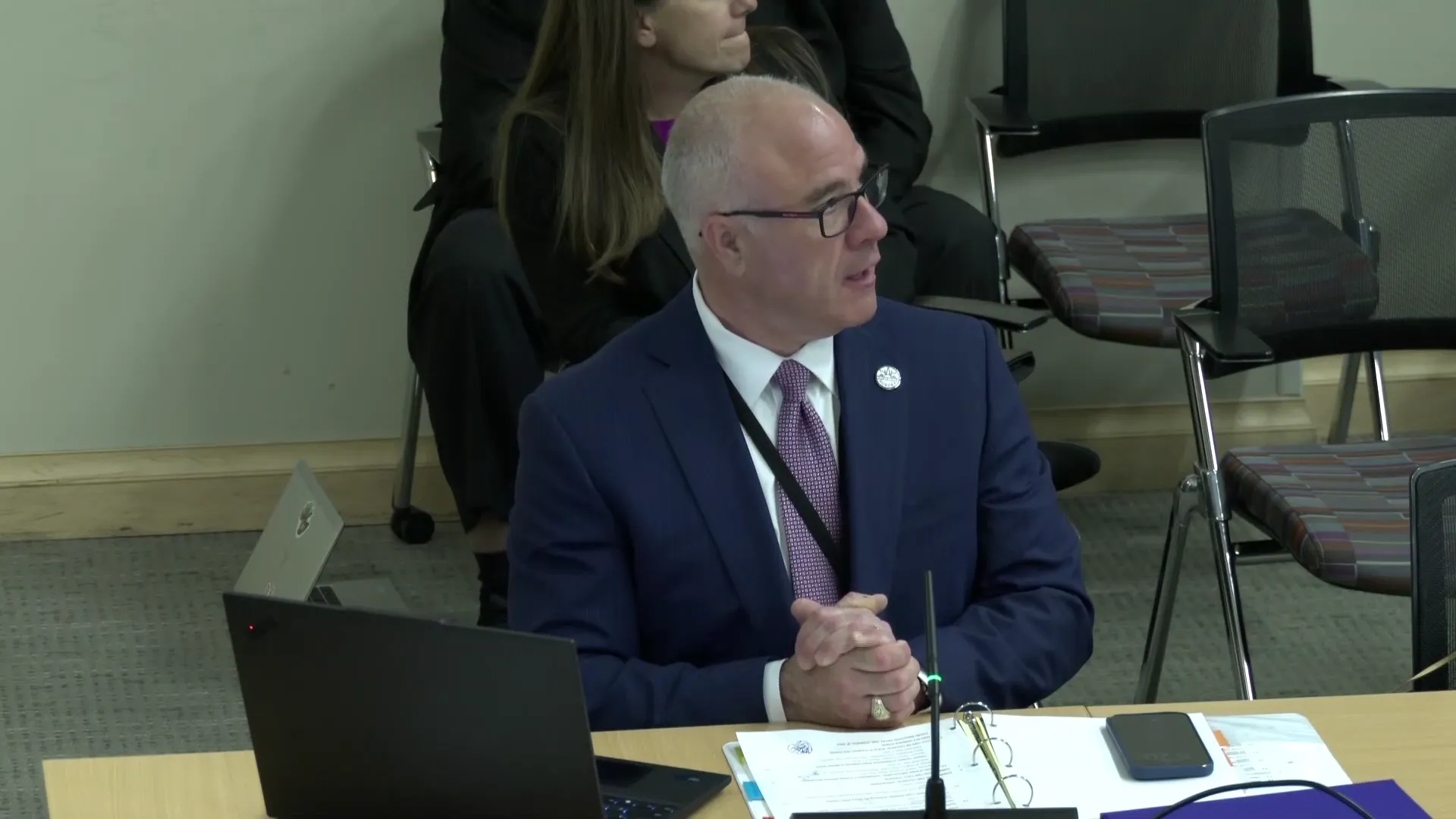
STREAMING COPY IN PREPARATION — RECORDING AVAILABLE FROM THE ORIGINAL SOURCE
Aurora City Council Study Session – August 11, 2026
On August 11, 2026, the Aurora City Council held a study session to discuss updates to public notice and appeal processes for development applications, a proposed socioeconomic impact permit, financing for heavy fleet vehicles, amendments to council rules of order and procedure, and an appointment to the Fitzsimons Redevelopment Authority (FIC). Mayor Kaufman presided, and the following council members were present: Andrews, Bergen, Coombs, Gardner, Hancock, Horton, Jackson, Lawson, Medina, and Wiles. No mayor’s or issue updates were given. The consent calendar (items 2A–2D) was approved without objection.
Consent Calendar
- Items 2A through 2D were moved forward without objection.
Public Comments & Testimony
- No formal public comment period was held. During the rules discussion, Mayor Pro Tem Coombs mentioned receiving email feedback from the public regarding proposed changes to the public comment periods, but no testimony was taken.
Discussion Items
3A – Notice and Appeals Unified Development Ordinance (UDO) Update
Senior Planner Sarah Weil presented an overview of the project, which aims to balance transparency with efficiency in development review. Staff research from eight Front Range communities showed wide variation in mailed notice, sign posting, and appeal procedures. Council provided initial feedback on six policy questions:
- Question 1 (Explore options): No objection to moving forward.
- Question 2 (Enhanced notice for public hearings vs. administrative decisions): Councilmember Bergen objected, but the item moved forward. Several members discussed the rationale for differentiating notice, with concerns raised about community input on administrative approvals.
- Question 3 (Expand mailed notice to a buffer area): No objection. Mayor Pro Tem Coombs supported using a defined buffer rather than adjacent owners only.
- Question 4 (Sign postings at the start of projects requiring a public hearing): No objection. Staff noted that signs would be placed and removed during the first review period to avoid prolonged posting.
- Question 5 (Appeals of administrative decisions – direct to council or via Planning and Zoning Commission): After initial confusion, Councilmember Bergen ultimately expressed support for the current system (direct to council) but then objected; the item nevertheless moved forward.
- Final question (Other changes): Mayor Pro Tem Coombs suggested including tenants in notice requirements; no objection was raised.
3B – Socioeconomic Sales and Service Impact Permit (SSIP)
Trevor presented the proposal to prevent clustering of high-risk businesses (liquor stores, payday lenders, vape shops, etc.) by attaching a permit to the general business license. Key elements include 300-foot spacing between such uses, 1,000-foot separation from extended-stay motels, and a prohibition on these uses in retail centers with more than 50% vacancy or exhibiting blight. The permit would fund place-based crime prevention (CPTED) and risk terrain modeling. Councilmember Bergen asked about enforcement, grandfathering, and the vacancy rule. Mayor Pro Tem Coombs noted that feedback from a business town hall helped shape exemptions for small grocery stores. The item moved forward without objection.
3C – 2026 Lease Purchase Financing for Heavy Fleet Vehicles
Andrew Jameson presented an ordinance to authorize up to $10 million in lease purchase financing for 13 heavy fleet vehicles, including four fire apparatus (two ladder trucks and two engines) and four dump trucks. The financing term is 60 months with a maximum interest rate of 5.5%. Approved at the Management and Finance Committee. No questions were raised, and the item moved forward.
5A – Rules of Order and Procedure Amendments
Mayor Pro Tem Coombs led discussion on proposed changes to council rules. Key amendments addressed the censure process:
- Censure resolutions would first be reviewed by the city attorney, who would present legal analysis in executive session. A consensus of council is required to move forward.
- The threshold to pass a censure resolution was raised from two-thirds (six votes) to three-fourths (seven votes) after Councilmember Bergen argued for a higher bar to prevent politicization. Councilmember Hancock and others supported the change.
- Sanctions beyond public admonishment (e.g., removal from committee assignments, forfeiture of travel budget) require a three-fourths vote. The default sanction remains public admonishment.
- City Attorney Pete agreed to add language that censure is intended for egregious conduct that council cannot overlook.
- Also discussed: restoring public comment to two one-hour periods (first hour with priority for students 18 and under, second hour for those who did not speak earlier). Mayor Pro Tem Coombs stated she would send amendments based on public feedback for the regular meeting.
- Section 12 (censure) was moved forward with the three-fourths threshold; no objection.
5B – Appointment to Fitzsimons Redevelopment Authority (FIC)
Mayor Pro Tem Coombs noted a vacancy on the FIC board. Councilmember Hancock expressed interest, and Councilmember Andrews also volunteered. A vote was taken: Councilmember Andrews was appointed to the FIC with support from the mayor, Councilmember Hancock, and Councilmember Andrews (self-nomination).
Key Outcomes
- Status of 3A (UDO Update): Staff will continue exploring options and bring forward code amendments in early 2027, incorporating council’s feedback on notice, appeals, and tenant inclusion.
- Status of 3B (SSIP): The proposal will proceed to a regular meeting for a vote; direction was given on spacing, vacancy restrictions, and exemptions.
- Status of 3C (Lease Purchase): The ordinance will be presented for adoption at a regular meeting.
- Status of 5A (Rules Amendments): The censure threshold was changed to three-fourths; the city attorney will add egregious conduct language; other amendments will be submitted for the regular meeting agenda.
- Appointment: Councilmember Andrews was appointed to the FIC board, filling the vacancy.
Meeting Transcript
The Royal City Council for Monday, August 10, 2026 is called the order. Would the clerk please call the roll? Mayor Kaufman. Here. Councilmember Andrews. Councilmember Bergen. Here. Mayor Pro Tim Coombs. Councilmember Gardner. Councilmember Hancock. Here. Councilmember Horton. Councilmember Jackson. Councilmember Lawson. Here. Councilmember Medina. Councilmember Wiles. There's no mayor's update. Are there any issue updates? Seeing none. Is there any objection for moving the consent calendar forward? Number two A through two D. Saying none, the consent calendar, number two A through two D will move forward. Um 3A. Notice and appeals unified development ordinance UDL update. Um good afternoon, Council members. My name is Sarah Weil, and I'm a senior planner in Planning and Business Development Department. Thank you for the opportunity to provide an overview of the work we have been doing related to public notice and appeals and to obtain your initial feedback as we continue evaluating potential improvements to these processes. So before discussing the project itself, I wanted to quickly go through the role that public notice plays in the development review process. At its core, public notice is intended to promote transparency, keep community members informed, and provide opportunities for meaningful public participation when decisions are being made. As we move through this presentation, many of the topics we will discuss center on how to best balance these objectives with an efficient and predictable review process. So this project provides an opportunity to evaluate the city's public notice and appeal processes for development applications and identify potential improvements for council's consideration. Staff is exploring ways to create a process that is clear, transparent, and equitable for applicants, residents, and decision makers. Potential areas of focus include improving efficiency and predictability for administrative applications that meet adopted code requirements while creating more meaningful public involvement for applications that require public hearings. Staff is also seeking feedback on opportunities to refine the appeal process in a way that supports fairness, transparency, and public confidence. So this project is currently in phase three, so we have met with Planning and Zoning Commission, the Development Review Advisory Board, Planning and Economic Development Committee, and now the full city council to gather input before drafting potential code amendments. Earlier this summer, we also spent time researching best practices and what other communities do for notice, as well as auditing our existing zoning code. If council would like us to move forward with this, we could have the changes adopted in early 2027. So before comparing Aurora's processes to those of neighboring communities or discussing potential changes, we thought it would be helpful to establish a baseline understanding of how the current development review process works. So following application submittal, staff sends notices to all adjacent property owners based on county property records, as well as registered neighborhood organizations within one mile of the site. Staff and outside reviewing agencies then conduct multiple rounds of review to evaluate the application for compliance with city requirements and identify any necessary revisions. Some projects also have a neighborhood meeting during this stage. Neighborhood meetings are currently required for all applications by the unified development ordinance, but the requirement may be waived if no comments are received during the initial review period. Once major comments have been addressed, the application moves into the decision making phase. Prior to a decision or hearing, the applicant is responsible for mailing notices to all adjacent property owners as well as registered neighborhood organizations within one mile and for posting signs on the property at least 10 days before the date. Currently, the same notice requirements apply regardless of whether an application is approved administratively or through a public hearing. Following a decision or hearing, applications may be subject to an appeal or call-up period. Appeals may be filed by an adjacent property owner within 10 days of the decision, while call-ups require a majority vote of city council. At this point in the presentation, I wanted to share some of what we've found in our research from other communities along the front range. Our team research zoning codes from Boulder, Westminster, Denver, Lakewood, Lone Tree, Parker, Castle Rock, and Colorado Springs.
openpublica.com