OPENPUBLICA · PUBLIC MEETING RECORD
Record of Proceedings
General Meeting of Citizens: Dispute Over UNE Research Pier Permitting and Location (October 23, 2025)
City Council & Committees — Thursday, October 23, 2025
BodyBiddeford, Maine
SessionCity Council & Committees
DateThursday, October 23, 2025
StatusFILED
Video Record
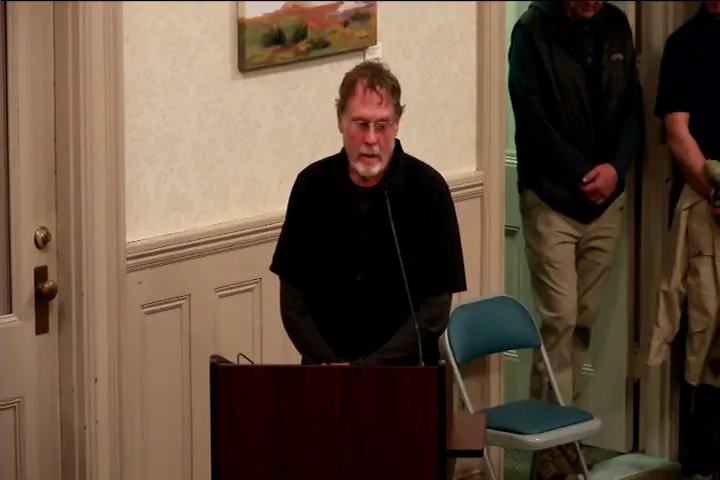
STREAMING COPY IN PREPARATION — RECORDING AVAILABLE FROM THE ORIGINAL SOURCE
Transcript — Verbatim
Speaker numbers apply only to this recording. Names come from transcript evidence. “Possibly” marks uncertain attribution.
Discussion Breakdown — Share of Meeting
Engineering And Infrastructure40%
Public Engagement19%
Community Engagement14%
Procedural10%
Environmental Protection9%
Land Use Planning8%
Summary of Proceedings
General Meeting of Citizens: Dispute Over UNE Research Pier Permitting and Location (October 23, 2025)
This General Meeting of the Citizens, held pursuant to the Biddeford City Charter on October 23, 2025, was convened to address public concerns over the permitting process and proposed location of the University of New England's (UNE) research pier. Dozens of residents and stakeholders voiced frustration over the removal of local Harbormasters from the approval process, the bypassing of city ordinances, and a perceived lack of transparency and local knowledge in decision-making. The meeting was moderated by citizens' moderator Craig Pendleton, who noted that the City Council had no regulatory authority over the project at this stage.
Public Comments & Testimony
- Wade: Expressed sadness over a missed opportunity. Described how, in 2015, former Harbormaster Marshall Alexander reviewed UNE's plans and suggested a better location with deeper water. He argued the subsequent removal of the current Harbormaster (Alexander's former assistant) by the former City Manager for alleged bias was unjust, as the Harbormaster was acting on expert local knowledge.
- Carol Alexander (Ward 1): Provided a detailed timeline, stating the removal of the Harbormaster and his assistant was an "egregious abuse of power" by the former City Manager. She characterized the replacement Harbormaster as a "faux harbormaster" who met none of the criteria (residency, experience, training). She argued the permitting process was run in reverse, bypassing required local Harbormaster approval, and called for the process to restart from "square one."
- Steve Martin (45 Western Ave): Contended that the City Manager violated the City Charter by removing the Harbormaster, arguing the Charter dictates the Harbormaster answers only to the City Council. He stated the pro tem Harbormaster did not meet state law (Title 38 1A) training requirements or city residency criteria. He called the process a "railroad job" and favored starting over.
- Sean Tibbetts (Mooring holder): Stated his mooring is directly affected by the proposed location. He argued that at least seven moorings would need to be relocated, not the two publicly cited, for the pier to be functional. He noted that no local Harbormasters (from Biddeford or Saco) were consulted.
- Ken Bicks (Ward 1): Criticized the Planning Board process, alleging the City Solicitor improperly directed the board on what they could not consider (such as tides, setbacks, and mooring interference). He described this as intimidating and biased, and noted the chair cast the deciding vote after a tie.
- Diane LaRivier (Pool St): Identified as the wife of the current Harbormaster. She requested the entire process be restarted with her husband included as the legal expert.
- Joe Emmons (Ward 1): Suggested city ordinances may need revision to prevent a single individual (the City Manager) from making such impactful decisions. He questioned how the UNE pier benefits Biddeford citizens, noting UNE is a non-profit institution that does not pay property taxes.
- UNE Alumna (Class of 2008): Expressed personal frustration, contrasting UNE's environmental curriculum with its past project impacts (wetlands, light/sound pollution). She argued the proposed pier disregards expert opinion and will undermine the marine ecosystem and local navigation.
- Kyle Noble (Ward 1, Hills Beach Rd): Presented a detailed timeline. He stated UNE threatened a lawsuit in February 2024 if an alternate location was approved. He argued that UNE's environmental assessment misrepresented the Harbormaster's recommended pier and that the Maine Department of Marine Resources (DMR) failed to require a proper alternatives analysis. He called for a return to "square one" for a genuine alternatives analysis.
- Mark Johnson (River resident/mooring holder): Argued the removal of the local Harbormaster sets a dangerous precedent, allowing any applicant to seek a more favorable reviewer. He questioned the public benefit of the project to Biddeford. He supported a pier but insisted the decision on location must rest with the Harbormaster.
- Gary McMullan (Old Pool Road): Recounted the City Solicitor informing the Planning Board that courts would likely overturn a denial. He read from 2001 Saco River Corridor Commission (SRCC) minutes showing UNE committed to a 250-foot no-development buffer from the river, which he argued was overlooked in the current process. He called on the city to "correct course."
- Sam Picor (Ward 7): Criticized the City Council for failing to add a discussion item on the pier to a recent agenda (October 21), calling it evidence of a "broken process." He urged the Council to find a quick resolution.
- Walter Alexander (Ward 1): Son of former Harbormaster Marshall Alexander. He detailed the timeline: the alternate site offered in 2015/16, the wait for his father's resignation, and the sidelining of the current HM. He noted UNE's payment in lieu of taxes doubled to $100,000 in the same period. He called the process "suspicious" and argued the pro tem Harbormaster lacked required state-mandated training.
- Jim Emerson (Pool Road): Emphasized the critical importance of local knowledge, citing previous city projects (a wind turbine, flood maps) that failed due to reliance on consultants over local experts. He advised the Council to be more proactive in their wards.
- Chris Stone (Ward 1, Hills Beach Rd): Argued the City Council should have intervened sooner. He stated the city's Master Plan is "broken," notably missing the 250-foot buffer zone from its maps, and called for a full review of the system.
- John McCurry (Ward 2): Noted all three mayoral candidates agreed the process was flawed. He reminded the Council that the Harbormaster's stated duty is to ensure "equal access for all" on the river.
Key Outcomes
- No Formal Action: The meeting was a public forum under the City Charter. No formal votes, motions, or decisions were made by the City Council.
- Consensus on Process Failure: A strong majority of speakers agreed the permitting process was fundamentally broken, calling for it to be restarted from the beginning with local Harbormaster involvement.
- Calls for Systemic Review: Multiple residents urged the City Council to review and revise the Master Plan and city ordinances to ensure local knowledge is respected and proper procedures are followed in future developments.
- Next Step Identified: The upcoming Zoning Board of Appeals hearing, scheduled for November 13, was identified as the next formal opportunity for review of the project.
Meeting Transcript
All right, everybody, thank you. Sorry about the uh short delay there where we're make sure everything's uh getting appropriately broadcasting broadcast. Uh thank you for being here tonight for community conversation. I'll call the general meeting of the citizens to order. Uh general meeting of the citizens is being held pursuant to Article 12, Section Four of the Biddeford City Charter, which provides that general meetings of the citizens qualified to vote in city affairs may from time to time be held to consult upon the public good to instruct their representatives and to take all lawful measures to obtain redress of any grievances according to the right secure to the people by the constitution of this state, and such meetings may and shall be duly warned by the city council upon requisition of one hundred qualified voters of said city, and a moderator shall be selected by the majority vote of the citizens attending the meeting. Tonight's meeting was called under that authority, providing an opportunity for citizens to address matters of public concern directly to the city council. The agenda for tonight's meeting is determined by the attendees, and once we begin, the discussion will be guided by the citizens and their chosen moderator. Before we start, I'd like to invite everyone to please rise and join me in the Pledge of Allegiance. Thank you. With that, I now hand the proceedings over to the attendees and their chosen citizens' moderator, Mr. Craig Pendleton, who will preside over the discussion from here. Craig. The reason we are here tonight is to address public concern over the permitting process and proposed location of the research peer at University of New England. It is important we stay focused on that subject so that each and every citizen that would like to speak can express their opinion this evening. For those watching at home or on the internet via the city website, here is a very generalized synopsis of what has transpired to date. Local residents and city employees have repeatedly raised concerns over the proposed location. City employees, specifically the Habermaster and Assistant Habermaster, were removed from their roles as written into the city ordinances by the former city manager for alleged bias. There are concerns over moorings that will be impacted should the peer be built in the proposed location. Then recently, concerns have been raised that a previous permitting decision by Soccer River Corridor Commission, which established a 250-foot buffer zone on the UNE property was overlooked during a current permitting process. Citizens then collected enough signatures to hold this meeting tonight. Citizens have followed city ordinances and filed for a review by the zoning board of appeals. That hearing will take place on November 13th. With all that said, we need to stay civil, no name calling, no swearing coming from me, that's a statement. Do not address specific individuals. Please use their title, not their first names, such as former harbormaster or former city manager. I will try to keep us moving along. Please try to focus your comments and not ramble. I will not be using a stopwatch, but if someone starts to go off the rails and repeat themselves over and over again, I will interject so that everybody gets a chance. And I knew Marshall Alexander, he was a little bit older than me, but uh I knew him, became aware of him back in uh junior high anyway, and he was this guy that just as a teenager went out with a skiff and started lobstering. He had the call of the sea. He just, you know, just loved it. And he went on to become one of the most respected, experienced commercial fishermen in the whole state of Maine. There's no question about that. You look into his history and you will see. So I I'm here because I'm sad about a couple of things that have to do with Marshall Alexander and the university, both, because I feel there was a missed opportunity in 2015, and correct me if I'm wrong because I might not have all the dates right, but as I understand it, uh the college first came before the city with plans to build a pier, and I say, my gosh, with a marine sciences uh study program and everything, I would want to peer if I was the college. Absolutely. Be able to go out to your boats and get out onto the water easily. I would want to pier. So anyway, they had a plans drawn up, from what I can tell, and they presented them to uh the former harbormaster, and there were other people in attendance, and the former harbormaster uh reviewed the plans, and with his knowledge, and I want to tell you this guy, he knew currents, he knew winds, he knew depths, he knew migration of sand. I mean, this guy was unbelievable in his knowledge of the ocean. So he's at the meeting, and I feel very badly, because there was a missed opportunity. Because the college wanted a peer. You have one of the most knowledgeable, experienced, qualified people sitting right there to review your plans. He looks at the plans, and he says, you know, you've got a spot right next to where your your proposed peer is that makes a lot more sense. And you know, there was an opportunity. The college right then and there could have said, you know, we've just heard from one of the
SUMMARIZED BY OPENPUBLICA AI
TRANSCRIPT VIA PUBLIC VIDEO
openpublica.com
openpublica.com