OPENPUBLICA · PUBLIC MEETING RECORD
Record of Proceedings
Biddeford City Council Workshop on Beach Management Plan – June 9, 2026
City Council & Committees — Tuesday, June 9, 2026
BodyBiddeford, Maine
SessionCity Council & Committees
DateTuesday, June 9, 2026
StatusFILED
Video Record
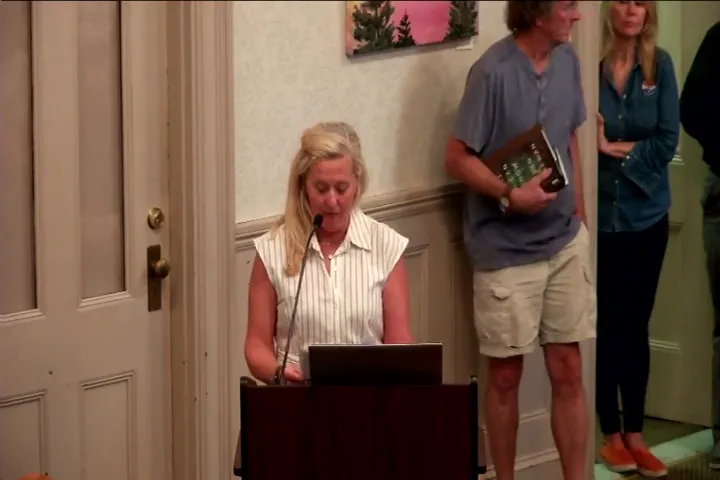
STREAMING COPY IN PREPARATION — RECORDING AVAILABLE FROM THE ORIGINAL SOURCE
Transcript — Verbatim
Speaker numbers apply only to this recording. Names come from transcript evidence. “Possibly” marks uncertain attribution.
Discussion Breakdown — Share of Meeting
Environmental Protection39%
Community Engagement18%
Emergency Preparedness16%
Engineering And Infrastructure11%
Procedural8%
Public Engagement6%
Fiscal Sustainability2%
Summary of Proceedings
Biddeford City Council Workshop on Beach Management Plan – June 9, 2026
On June 9, 2026, the Biddeford City Council held a workshop to discuss developing a comprehensive Beach Management Plan (BMP) for the city's public beaches, with a particular focus on Gilbert Boucher Park. The meeting featured presentations from Will (University of New England) and Lauren Folk (Anchor QEA/York County), alongside city and county officials. The workshop highlighted the damage from the January 2024 storms, the availability of federal and state funding, and the urgent need for coordinated community action and planning.
Public Comments & Testimony
- Kim Matthews (Ward 1, Biddeford Coastal Preservation Coalition): Strongly advocated for immediate action, stating a formal Beach Management Plan is a prerequisite for FEMA funding and that delaying action limits options and increases costs.
- John Dropinski (Hills Beach, Environmental Consultant): Praised the work of UNE and local groups, emphasizing that beach resilience is central to the city's sustainability goals.
- Mary Lou Pitch (Middle Beach Homeowner): Urged the city to narrow the wide public access path at Middle Beach to protect the dunes neighbors spent approximately $200,000 restoring, suggesting a split-rail fence or stairs.
- David Plabbin (VP, Save Our Shores Saco Bay): Proposed cross-community collaboration between Biddeford, Saco, and Old Orchard Beach to share resources, data, and reduce costs, noting Saco is currently developing its own BMP.
- Debbie Melakin (Fortunes Rocks Resident): Expressed support for the effort and requested that Fortunes Rocks not be overlooked in the planning process.
- Unnamed Hills Beach Homeowner (40-year resident): Cautioned the council not to overlook the needs of private property owners along Hills Beach, who make up a significant portion of the tax base and require education and support for coastal management on their land.
Discussion Items
- Beach Management Plan Overview (Will, UNE): Detailed the devastating impact of the January 2024 storms, including approximately 4.5 acres of dune loss at Fortunes Rocks, Middle Beach, and Biddeford Pool, and 1.5 acres at Hills Beach (which has fully recovered since). Will explained that dune systems naturally promote beach growth while seawalls exacerbate erosion. He defined the scope as the city's public beaches (Boucher Park, Fortunes Rocks, Middle Beach, Biddeford Pool) and identified Gilbert Boucher Park as the initial priority due to its existing dune system and available grant funding.
- Funding and Engineering (Lauren Folk, Anchor QEA / Robbie Fecto, City EMA Director): The city announced $1.67 million in federal congressionally directed spending for York County coastal resiliency, of which Biddeford's portion is estimated at ~$378,000 (subject to a 25% local match). A ~$72,000 Community Action Grant has been secured for preliminary work at Boucher Park. Lauren explained the process of achieving FEMA Category G status for engineered dunes, which requires strict engineering standards, annual topographic surveys, vegetation monitoring, and a formal maintenance plan to qualify for future disaster reimbursement. Over $450,000 remains available in the Maine DEP Coastal Sand Dune Restoration Fund.
- Council Deliberations: Councillor Badney questioned beach priority; Robbie and Will confirmed Boucher Park as the immediate focus due to manageable scale and funding. Councillor Lassard asked "who is driving the bus" to ensure clear accountability, with Robbie confirming his role as the administrative lead who will bring a formal MOU with York County before the council. Councillor Lassard also floated the concept of a structural "hybrid dune" (a structural core with sand and dune grass) as a potential legislative idea for future beach protection. Councillor Boss inquired about solutions for Fortunes Rocks; Robbie noted the road likely needs elevation but engineering costs are a significant challenge. Councillor Woods raised questions about matching the federal grant funds.
- County Coordination: Art Cleaves (York County EMA) confirmed the county's readiness to administer the grant and facilitate coordination among coastal towns.
Key Outcomes
- The City Manager's office (Robbie Fecto) will work with York County to finalize the scope of work and an MOU for the federal funding, to be brought back before the City Council for approval.
- The council directed staff to identify a dedicated local working group to oversee the BMP development, with Robbie Fecto serving as the primary city lead and point of contact.
- Councillor Lassard committed to bringing the issue of narrowing the public beach path at Middle Beach to the Capital Projects Committee and to discussing county-wide coastal coordination at the York County Budget Committee.
- City staff will monitor the Maine DEP Coastal Sand Dune Restoration fund for an upcoming application call to support additional restoration work.
- The workshop served as the launch of a broader community engagement process, with plans for future sessions to gather input on specific management strategies across the city's coast.
Meeting Transcript
And for those of you who just arrived, we do have an overflow room right next door in the conference room if you'd like to sit down and there's a screen in there as well. Thank you. Good evening. I will call the Tuesday, June 9th, City Council workshop to order. First order business is the attendance, of which councillor Council President Beaupre, Councillor Dowdy, and Councillor Kurtz are excused. All other members are present. Please stand for the Pledge of Allegiance. Thank you all for joining us this evening. We have very important presentation and important work ahead of us for the city related to our beach management plan and discussion. So I want to thank all those for all the work they put in to date. And with that, I'll turn it over to Will, who's gonna provide us a presentation. And uh Will, would you prefer if questions happen throughout the presentation or at the end? Uh either is fine. Okay. Whatever you all, yeah, whatever you all would like. So if questions come up, feel free to raise your hand and we'll happy to. Thank you. Um thank you everyone, and and thank you everyone for coming. This is an awesome turnout, and thank you especially to the mayor and city manager for helping us plan this and put this together. Uh Director Fechtow, thank you for for being here and helping helping plan this. Thank you, Brad, uh uh leading the Sustainability Commission. Um and we have a few special guests joining us as well, Lauren Folk from Anchor QEA uh working with the county emergency management, as well as uh Director Art Cleves is on on Zoom from York County. I know he regrets that he can't be here in person, but I'm glad really glad we can have him on Zoom. Um so we have uh all the all the people here uh I think that are really um working on this and excited, excited for this conversation. Um of the pretext to this is that the uh January 2024 storms that we all remember uh caused millions of dollars to damage across uh the city. Uh and you can see that here in this picture, devastated dunes on many of our beaches. Uh the bathhouse was destroyed and has since been uh moved back. Roads were damaged. Um this was really a devastating storm. Uh one that broke records, um, but certainly uh will not stand for long. I think we we all know that a bigger storm is coming our way uh sometime uh this century. Uh beaches, just a very brief background on how beaches work. Um it's very natural for the sand to move in and and out of these systems. And so we know that in the winter uh sand tends to come out, uh comes offshore uh into sand bars, and then in the summer it tends to come back uh more slowly. So in the winter you get these big events that can pull sand off. In the summer it kind of trickles back in. And so this is part of that uh natural cycle and something that we've been monitoring uh for uh decades. Um we need to do our best to understand this cycle so that we can help promote a healthy beach. What's in our future is sea level rise. Um I don't want to get too much into it, although I'm very happy to talk about the nitty-gritty of sea level rise if you if anyone is interested. Uh but we know we have sea level rise coming from us from uh melting land ice around the planet. Uh and this is what 10 feet of sea level rise could look like uh in our community. Um this is roughly if you were to take the 2024 storms in terms of that the storm surge that we saw and the sea level rise we're expecting in 2100. This is a realistic scenario of what could happen. And so you see many areas of the city are underwater, including Olive Hills Beach, the areas along Mile Stretch Road, parts of Biddeford Pool, parts of Granite Point, but our coast lots of our coastal communities are underwater here. And so part of what our what we want to do tonight is have a conversation about how we prepare for this, how we prepare our community to deal with this future of higher sea levels and stronger storms.
SUMMARIZED BY OPENPUBLICA AI
TRANSCRIPT VIA PUBLIC VIDEO
openpublica.com
openpublica.com