Bloomington City Council Study Meeting: 2026 Preliminary Tax Levy and General Fund Budget Discussion - August 18, 2025
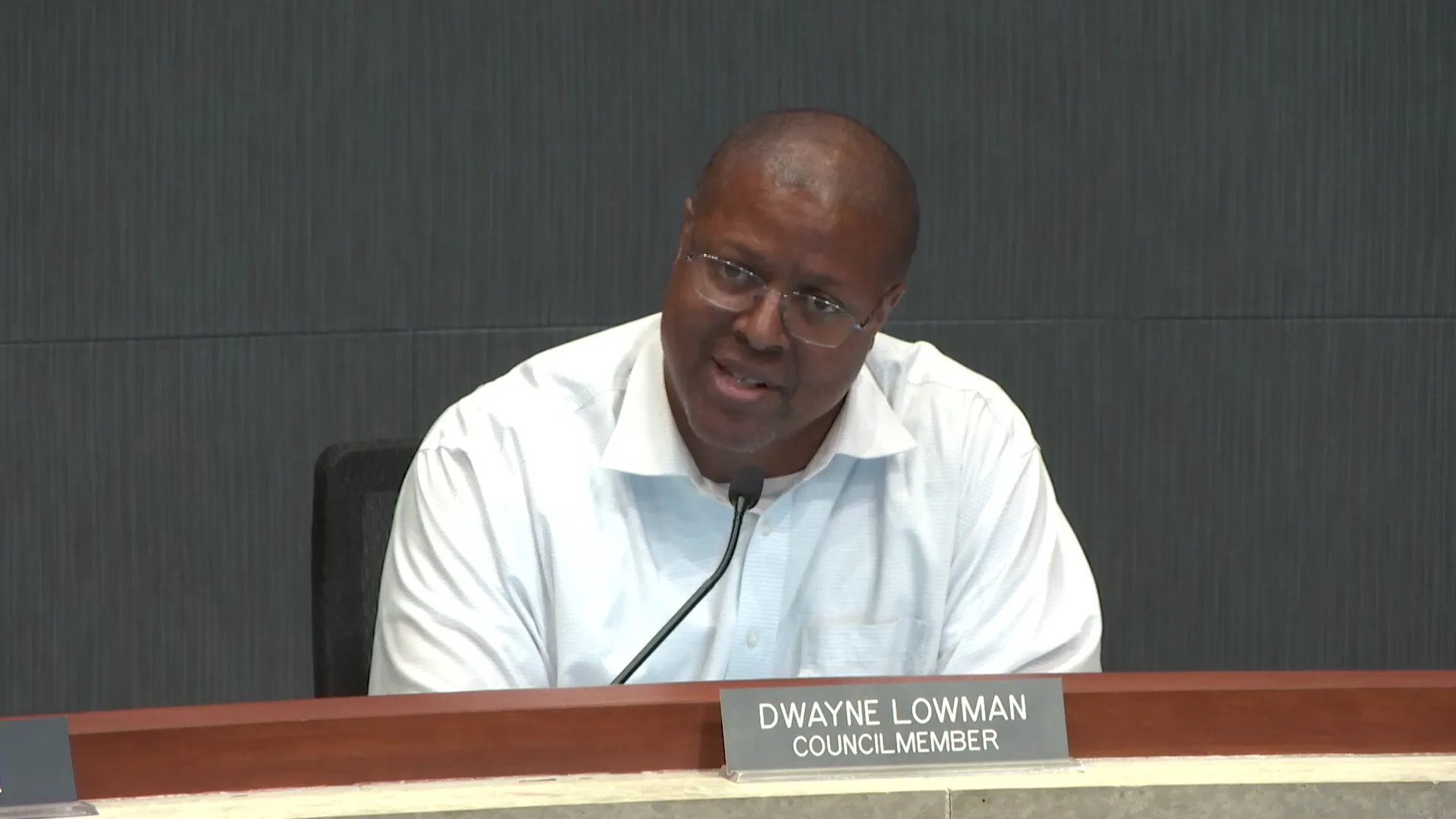
STREAMING COPY IN PREPARATION — RECORDING AVAILABLE FROM THE ORIGINAL SOURCE
Bloomington City Council Study Meeting: 2026 Preliminary Tax Levy and General Fund Budget Discussion - August 18, 2025
The Bloomington City Council held a study session on Monday, August 18, 2025, with the sole agenda item being a discussion of the 2026 preliminary tax levy and general fund budget. Kari Carlson, city finance director, presented the budget forecast, reductions achieved, and the path forward for priority-based budgeting. The meeting included a public comment period and council discussion but no formal votes. The council will set the preliminary levy at its September 8, 2025 meeting.
Public Comments & Testimony
- Luminita Volmer, a 42-year resident, expressed that her property taxes now equal 2.5 months of her Social Security income and have risen sharply since 2017. She warned that if trends continue, she will not be able to afford taxes in 10 years, and that current policy is driving long-term residents out of Bloomington.
- Julene Burgerson, a resident of 30+ years, asked whether the proposed 9.44% levy increase translates directly to a similar percentage increase on individual property tax bills. The mayor explained that city property taxes are only about one-third of a total bill, with the remainder going to county and school district. She suggested that the city consider eliminating property taxes for residents aged 65 and older (noting the council lacks authority to do so) and reported that she knows six families, including her own, who are considering moving due to tax burdens.
- Bob Volmer raised two questions: (1) whether the council knew that Kennedy High School was dropping its hockey program when the city approved the ice garden renovation (funded by a separate half‑cent sales tax), and (2) what feedback staff had received at community budget tables. He also noted that another resident at the farmers market had dropped homeowner’s insurance to afford property taxes.
Discussion Items
-
Staff Presentation (Kari Carlson): The initial 2026 tax levy forecast showed an increase of approximately $15.7 million (nearly 18%), driven largely by expiring funding sources: one‑time public safety state aid (6 positions), American Rescue Plan funds (3 fire battalion chiefs), and the first of two FEMA SAFER grants (18 firefighters, expiring Q1 2026). Revenue growth from lodging/admission taxes, permit, and licensing fees is flat.
Several levers reduced the projected increase:
- Scaling back or deferring capital projects reduced debt‑service impact from $4.2 million to $1.5 million (from ~5% to 1.7% levy increase).
- Lowering the Normandale Lake District levy from $450,000 to $250,000 (a $200,000 reduction by moving a $5 million pedestrian bridge project).
- Transferring $2.55 million of the 2024 year‑end $4.4 million surplus (from revenues above budget and expenses below budget) to stabilize the 2026 levy; the remaining surplus would be used for one‑time capital needs. The strategic priorities fund balance would then exceed $10 million.
- Holding health insurance premiums flat (0% increase) due to a favorable 96% claims‑to‑premium ratio through the Minnesota Healthcare Consortium, saving $850,000.
- Limiting staffing growth and pursuing internal reallocation.
These combined reductions total $7.4 million, lowering the proposed preliminary levy increase to 9.44% (about $8.3 million). The general fund budget shows public safety (police $41M, fire $17M) accounting for nearly half of expenses. The council will set the preliminary levy (the maximum possible) on September 8; the final levy will be adopted December 22 after additional priority‑based budgeting (PBB) reviews and a truth‑in‑taxation hearing on December 8.
-
Council Questions and Clarification:
- Councilmember Carter asked about Normandale Lake District projects (pedestrian safety at Normandale & 84th, sanitary sewer projects) and whether federal grant revenue (SAFER, public health) is at risk due to federal cuts. Staff expressed cautious optimism.
- Councilmember D'Alessandro requested the commercial‑residential property tax split (historically ~50‑50).
- Councilmember Rivas asked how the city plans to offset the expiring SAFER grant. Staff described modeling a gradual draw on the fire pension obligation fund to smooth the impact to a 1.5–2% annual levy increase over six years.
- Councilmember Lohman asked about enterprise funds (golf, ice garden — both performing well), health insurance volatility, the value of the city’s AAA credit rating, and the feasibility of using strategic dollars to backstop health insurance spikes. Staff noted the employee benefits fund balance can buffer spikes.
-
Council Discussion: Members thanked staff for reducing the forecast from ~18% to 9.44% and emphasized the importance of public engagement.
- Councilmember Nelson urged residents to stay involved and consider property tax refund programs; he asked for deeper dives into grant opportunities and the new sponsorship/advertising program.
- Councilmember Moore highlighted the balance between helping long‑term residents remain in their homes and attracting young families who expect modern amenities (e.g., a functional pool). He noted that some reductions simply defer costs.
- Councilmember Lohman stressed the need for consistency in levy growth and warned against pushing costs to future years; he pointed to the snow‑removal service as a difficult example where cutting costs proved politically untenable.
- Councilmember D'Alessandro encouraged residents to also pressure Hennepin County, the school district, and other entities to constrain their levies; he supported the PBB process to align spending with priorities.
- Councilmember Rivas expressed skepticism about some recent spending (e.g., snow‑removal equipment purchases that later led to calls to eliminate the service) and argued that the city should cut non‑essential projects rather than keep increasing taxes.
- Councilmember Carter requested a dedicated conversation on the strategic priorities fund, specifically to address tree‑removal needs; she also asked for a re‑evaluation of snow‑plowing costs (current service is inadequate).
- Mayor closed by reiterating that the budget reflects community values (public safety, parks) and that the council must balance competing resident opinions while keeping Bloomington attractive and functional.
Key Outcomes
- No formal vote was taken. The council will set the 2026 preliminary tax levy (maximum amount) at its meeting on September 8, 2025. The proposed preliminary levy is a 9.44% increase over 2025.
- Staff will refine the budget through priority‑based budgeting (PBB) between September and December, seeking opportunities to reduce the levy before the final adoption on December 22, 2025.
- The council will hold study sessions on: utility rates (Oct 20), deeper budget review (Nov 24), and truth‑in‑taxation hearing (Dec 8).
- Public feedback will continue to be collected via the city’s budget webpage (blm.mn/budget) and the “Let’s Talk Bloomington” survey.
- Councilmembers expressed interest in further analysis of sponsorship/advertising revenues, the strategic priorities fund allocation (especially for tree disease removal), and the operational cost of snow‑plowing services.
Meeting Transcript
Good evening, everyone, and welcome. I will call our Bloomington City Council meeting to order. Tonight is Monday, August 18th, 2025. This is a study meeting of our city council. And we have exactly one item on our agenda this evening. It's item 5.1. It's a discussion of our 2026 preliminary tax levy and general fund budget. And the way we're going to do this, uh, we are going to have a presentation from Kari Carlson on regarding the budget process and where we are from a budget standpoint. We're then going to open it up for a uh a round of public comment on it. Uh it's not officially a public hearing, it's a public comment opportunity. And uh we'll invite anyone who wishes to speak will be able to speak. And then we will have a council discussion on the same. And we'll we're still working on our same nine o'clock deadline with our council meeting tonight, so we've got that to consider as well. So that is the one and only organizational business item that we do have this evening. Any questions on that, Council? Very good. Let's dive right in. Ms. Carlson, good evening and welcome. Good evening, Mayor and Council. For we don't have tonight's presentation. We don't have to move the agenda. Sorry, I'm just trying to advance the slide. One moment. There you go. Okay, for tonight's presentation, I'll start with some background and our initial forecast for 2026. And then from there, I'll walk through the different levers we've identified to lower the projected tax levy. We'll also look at the preliminary general fund budget for 2026 and share an update on our priority-based budgeting process. I'll close that section with the 2026 budget calendar and key milestones ahead. And after the presentation, as you said, we'll open the floor for public comment where each person will have up to three minutes. Then we'll look to the council for discussion and guidance on the preliminary levy. So at the end of last year, as we looked ahead to 2026, our initial tax levy forecast was showing an increase of about 15.7 million, which would be just under 18 percent. And a big factor driving uh this forecast was expiring funding. So there's funding that is ending in 2026, and that includes um some one-time public safety state aid that is funding uh six positions, some American Rescue Plan grant funds that are also coming to an end this year that has been funding three fire battalion chiefs, as well as uh the first of our two safer grants through FEMA that have been funding um enabled us to bring on 18 firefighters for each of those grants, and as we've been talking about, that um grant will be ending the first quarter of 2026. And we do have a can you hear me okay? If we get a little closer to the microphone, we'd appreciate it. Thank you. Okay. Um so the expiring funding sources are as I said, the public safety state aid, the American Rescue Plan uh grant funds, as well as our first of our two safer grant funds. And then as we're looking at the revenue outlook for 2026, as we've talked about before, the lodging and admission tax has come back from the pre-pandemic levels, which is wonderful, but we're not projecting huge growth for 2026. And so that won't be making up the the expiring funds, the grant funds. And then also looking at the forecast for permit revenue and licensing revenue, those also look flat, look flat. So knowing that these challenges are coming, um, right away beginning in January, the core budget team became planning to just start looking at ways to reduce this large projected tax levy. And so that work has continued. We've done regular analysis, collaboration across departments, and it will remain ongoing as we refine this 2026 budget. So the first lever we'd like to talk about is um capital projects and debt planning. So in our original forecast at the end of last year, a couple capital projects would have driven a big increase in debt service for 2026. So since then we've scaled back or pushed out some of those projects, which dropped the impact from $4.2 million in the tax levy down to $1.5 million. And so that means the tax levy increase for debt is now down at $1.7% as opposed to almost 5%. And then also on the slide, I just wanted to emphasize that the projects at the bottom, which are the new community center, the ice garden renovations, and the 9 Mile Creek and Moore Park upgrades, those are funded separately with the half percent local sales tax that was approved by voters.
openpublica.com