Duluth City Council Agenda Session – June 11, 2025
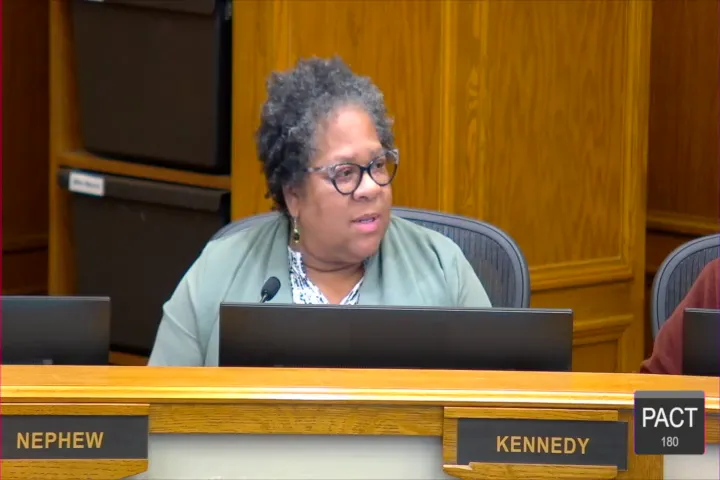
STREAMING COPY IN PREPARATION — RECORDING AVAILABLE FROM THE ORIGINAL SOURCE
Duluth City Council Agenda Session – June 11, 2025
The Duluth City Council held an agenda session on June 11, 2025, to discuss and ask questions on several items ahead of its regular hearing at 6:00 PM. The session centered on a proposed Tax Increment Financing (TIF) policy, consent agenda items, and ordinances. No final votes were taken; the session served as a preparatory discussion.
Consent Calendar
- Items 3–6 (Street Preservation & Plow Truck): Resolutions authorizing engineering agreements for the 2026 Street Preservation Project in Gary New Duluth, Duluth Heights, Kenwood, Chester Park UMD (up to $93,612 with MSA Professional Services), Lincoln Park (up to $199,975 with SEH Inc.), Morley Heights (up to $116,920 with LHB Inc.), and the purchase of a 2025 Freightliner plow truck chassis ($154,977 from Boyer Trucks). No questions were raised.
- Items 7–9 (Public Safety Grants & Equipment): Resolution accepting a $90,250 HIDTA grant for the Lakespeak Drug Corridor Initiative; agreement with St. Louis County for a substance use response team coordinator; and purchase of handgun and rifle accessories from Strikers for $158,500. Councilor Kennedy questioned transparency around firearm purchases under the $150,000 threshold, noting that the handgun and rifle purchases themselves were not before council. Chief Snow explained the red-dot sighting system improves officer focus and reduces mistaken shootings. No objections to advancing the items.
- Items 10–11 (Zoo Forestry Grants): Acceptance of a $150,000 Urban and Community Forestry Program grant and sub-recipient agreement with Arrowhead Zoological Society for Lake Superior Zoo grounds revitalization. No questions.
Discussion Items
- Resolution 393 – TIF Policy: Councilor Randorf and Councilor Forsman (read in) introduced the first-ever city/DITA policy on development incentives for tax increment financing. Manager Trisha Hobbes described research from eight cities (Elk River, Minneapolis, Rochester, St. Paul, others) and collaboration with Rochester. Councilor Durwachter asked about the definition of blight (anchored in state statute), vetting of developers (financial documents required in application), and payback periods (determined with financial consultant Ellers, statutorily up to 26 years). Councilor Kennedy signaled a possible amendment for priority uses. Councilor Wall asked about affordability requirements for housing TIF (statutorily set) and expressed concern about displacement/gentrification; Manager Hobbes noted these could be addressed in the application process. Councilor Randorf highlighted the prohibition on TIF for vacation rentals (under 30 days). Councilor Mayo asked if existing TIF projects would be affected—Attorney Lair confirmed the policy would apply to applications already in process. Councilor Durwachter pulled Resolution 393 to allow for amendments.
- Ordinance 13 – Tenant Notice of Rights: Councilor Durwachter asked about enforcement. The response (from an unidentified speaker) stated that enforcement is baked into the ordinance: life safety inspectors will check for required language in leases and placards during site visits.
Key Outcomes
- Resolution 393 (TIF Policy) was pulled by Councilor Durwachter to allow for amendments; it will return at a future meeting.
- Consent calendar items (3–11) and ordinances (12–16) were read and discussed without formal action; they will be considered at the 6:00 PM hearing.
- No other decisions or referrals were made during the agenda session.
Meeting Transcript
Agenda session. Counselor Forzman is just not here. Counselor Randorf, will you read in for Counselor Forsman? I sure can. Thank you, President Temonic. We're on item two. It's resolution 393, a resolution approving a policy on development incentives for tax increment financing. Thank you. Counselor's any questions? Counselor Durwachter. Thank you, President Tomonic. And I want to thank the authors for bringing this forward. I think it's a really great idea to have an official policy with um with uh really specific language. And um I have a lot of questions, and so I'm I'll just start uh with one. Um I at some point, I don't know if it was uh maybe in the cover memo, I just mentioned that there was a lot of research that had been done uh with other cities, and so uh one curiosity I have is which cities were those and um what officials were consulted with in those cities. Mr. Staling. Council President Tonic, Councillor Dur Walker, I'll invite uh Trisha Hobbes forward. Thank you. President Tomonic, Councilor Dur Walter question. There were I believe about eight cities that were referenced and consulted. Um off the top of my head, I will send you whatever it is that I'm missing. But we have Elk River, Minneapolis, Rochester, St. Paul, um, there was another Metro one. So we we tried our best to find every city that did have a TIFF policy. Um obviously not everything is apples to apples with Duluth, but we really wanted to come together and look at what are the themes that they move forward, what were the objectives that they had identified within their policy, and then we really worked to hone in on which of those uh made the most sense for Duluth. Uh we had a couple conversations in the most depth with Rochester, as that was the one that we really found a lot of similarity with. So our staff had uh gone down to Rochester in November, and I had a really great conversation with my counterpart in Rochester who leads their economic development work. Okay, thank you. Yeah, of course. Uh thank you, Counselor Durwachter. Counselor Kennedy. Thank you, President Tamonic. Um thank you to Counselor Randorf and Counselor Foresman for uh the work they've done on this along with me. Um I may be bringing forward an amendment on I'm looking specifically at priority uses number three and um looking at some of the considerations which would be appropriate maybe across our city, but I could I will let you know. I just want to let you know that there may be something coming forward. Thank you, Councillor Kennedy. Counselor Mayo. Thank you, President Tomonic. I'd like to thank the counselors who worked on this. Um I had uh just a couple of questions. I think it's good for again good for us to have um some sort of policy in existence. Um I was wondering, is there anything existing in code that we have that uh Ms. Hobbs, if there uh is anything that we are currently using when we're evaluating these TIFF proposals or if this would be brand new? President Tamonic, Councilor Mayo, we do not have a TIFF policy on record, and so um our financial consultant from Ellers had spoken to you all just about a year ago, uh little little under a year ago. And that was one of the the things that he shared and we really wanted to lean in on with him is state statute provides some very specific uh requirements around how TIFF can be used, but there's a lot that's left up to the municipality or the authority, and so that's where the city gets to convey their values, their goals, and that was just something that we didn't have. And at that point, we had been working on the policy for a couple of months, and so we've really taken the time to invest in researching and understanding uh what might be what might be necessary and helpful and valuable in understanding the objectives that all of you have shared as well as our DITA commissioners and of course the community. So this would be a first ever TIFF policy for both the city and DITA. Okay, and um to follow up on that if I may. Go ahead.
openpublica.com