Hampton City Council Work Session: FY2026 Budget & CIP Briefings - April 9, 2025
STREAMING COPY IN PREPARATION — RECORDING AVAILABLE FROM THE ORIGINAL SOURCE
Hampton City Council Work Session: FY2026 Budget & CIP Briefings (April 9, 2025)
The Hampton City Council convened a work session on April 9, 2025, at 1:02 p.m. in Council Chambers, with all seven members present. The primary focus was on two budget briefings: the City Manager's Recommended FY 2026-2030 Capital Improvement Plan (CIP) and the Highlights of the City Manager's Fiscal Year 2026 Recommended Budget. The meeting also included a closed session for appointments and legal consultation, and the city's 2025-2026 budget process timeline was outlined.
Capital Improvement Plan (FY 2026-2030)
- Management Analyst Taiub Mohammad and Budget and Management Analyst Kenneth Barrentine presented the five-year CIP, which allocates over $460 million across seven strategic priorities.
- Projects must cost more than $50,000 and have a useful life of at least five years to be included.
- Funding sources include bonds, general fund, dedicated sources (e.g., stormwater fees), and state/federal funds. Challenges cited include limited resources, state/federal mandates without matching funds, and rising maintenance costs.
- Priority breakdown: Economic growth 5.7%, Educated citizenry 14.5% ($66.8M), Excellence in government 49.2% ($226M), Family resilience and economic empowerment 0.4% ($2.07M), Living with water 13.7% ($63M), Placemaking 9.8%, Safe and clean community 6.5%.
- Key projects highlighted: downtown investments, Hampton City Schools maintenance/technology, street/traffic maintenance, Head Start facility renovation ($570,000), Riverside Psychiatric Emergency Department ($1.5M), resilient Hampton projects ($14.4M biennial), stormwater improvements, playground/community center innovations ($3.8M), Fire Station 4 roof replacement, and War Memorial Stadium concourse improvements ($124,000).
FY 2026 Recommended Budget Briefing
- City Manager Mary Bunting presented a preview of the FY26 budget (full release April 15). Total proposed budget: $677,930,817, a 5.39% increase from FY25.
- Real estate tax rate: Proposed reduction from $1.15 to $1.14 per $100 assessed value—the fourth consecutive annual decrease.
- Fee adjustments: No increase in solid waste user fee; stormwater fee increase of $1 per ERU per month; wastewater management fee increase of $2.74 per CCF per month (to meet DEQ consent decree requirements of $230M by 2040). Courthouse security fee increase from $10 to $20 per case.
- Employee compensation: Proposed 3.5% general wage increase, fully funded 4.5% healthcare premium increase, and a 1.5% scale adjustment for civilian employees.
- School funding: Hampton City Schools budget of $307,189,611 (6.28% increase), with the city contributing $99,081,479 based on the 61.83% funding formula—$41,865,911 above the state SOQ match.
- Strategic investments: Five new ALS technicians, new 911 center at 100 Exploration Way, traffic signal upgrades, cemetery maintenance grants, one short-term rental inspector, Hopeful Hampton program, living with water projects, City Hall renovations, Mill Point Park repairs (despite public opposition), and funding for Hampton 250 and Sail Virginia commemoration.
- Position: City Manager Bunting expressed strong support for the budget, emphasizing fiscal responsibility while addressing federal workforce and tariff uncertainties. She noted a freeze on new positions/programs until federal impacts are clearer.
Council Discussion & Positions
- Councilwoman Campbell clarified her memo, explaining her preference for a $1.11 tax rate (not $1.14), and advocated for selling vacant city property to return it to tax rolls, enforcing plan books, and holding the line on development deals.
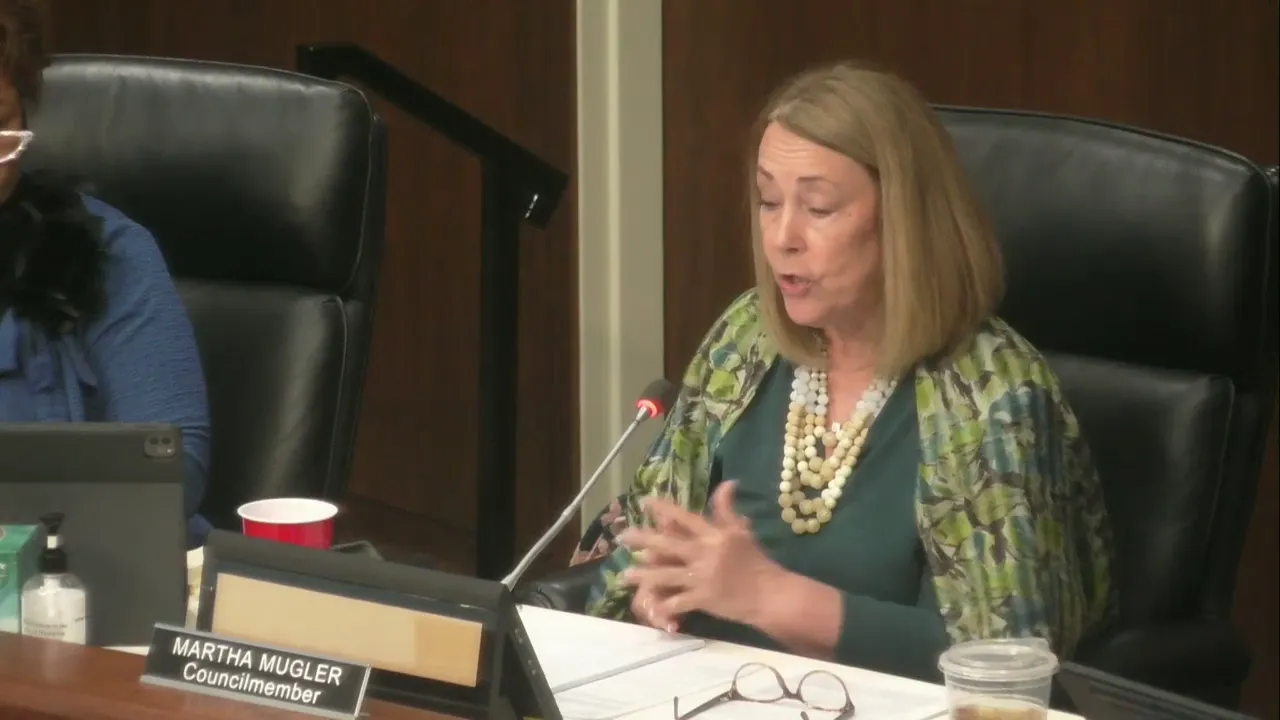
- Councilwoman Mugler, Councilwoman Ferebee, Councilwoman Harper, Councilman Bowman, and Mayor Gray all expressed support for increasing the proposed employee wage increase from 3.5% to 4%, citing alignment with school board raises and employee morale.
- Mayor Gray expressed concern about losing federal grants for resiliency projects (e.g., Aberdeen neighborhood) and asked about the standard for playground surfacing, noting the city would continue local investments.
- Vice Mayor Brown praised the budget for protecting earmarks and grants given federal uncertainties.
Key Outcomes
- No formal votes on the budget or CIP were taken; the work session served as a briefing and discussion.
- City Manager Bunting agreed to explore the feasibility of a 4% wage increase and return with options for council consideration.
- Budget schedule: Public hearing on April 23, first reading on May 7, final vote on May 14.
- The council unanimously approved a motion to enter closed session (7-0) at 2:34 p.m. and later certified the closed session (7-0). The meeting adjourned at 4:21 p.m.
Closed Session & Appointments
- The council voted unanimously to enter closed session to discuss appointments to the Hampton Commission on the Arts and the Virginia Municipal League 2025 Policy Committees, and to consult with legal counsel on potential litigation settlements.
- After reconvening, the council unanimously certified the closed session. No formal appointments were announced during the public portion.
Meeting Transcript
Good afternoon and uh welcome to Hampton City Council work session. Um it is uh that time of the year for budget discussions and presentations, and so we have a lot to uh cover on our agenda. So with that I ask the clerk to call a roll. Council Badman. Present. Here. Council Will Campbell. Present, present. Council Margaret. Present, Councilman Butler, present, very present. President. And uh with that, I will turn it over to City Manager to uh introduce the first presentation. Thank you, Mr. Mayor. Um, as you noted, it's uh that time of year again, and it's hard to believe it's that time of year again because it seems that each year um the months and days go faster than the before. Um before we get started with uh first our capital improvement plan and then the proposed manager's recommended budget. I do want to acknowledge that the two presentations you and the community are going to receive today represent the work of a lot a lot of people, some of whom are in the audience today, and many of whom um are uh in their offices, and then again, many citizens who participated in and getting to today's point. So I want to pause and just recognize those who are in the audience from our budget team, our finance team, our assistant city managers, and department heads who've participated in the process, if you don't mind a point of professional privilege and allowing those who have worked behind the scenes to please stand and be recognized. Absolutely. Please do. Come on. A lot of work goes in behind the scenes, a lot of long days and long nights and weekends as we make sure that we can present a very sound uh plan for you and our community. So, first up, we're gonna talk about our five-year capital improvement plan, the first year of which is going to be embedded in our uh manager's recommended budget for you. The five-year capital improvement plan or CIP for short is going to be presented by uh Shu Mohammed, uh management analyst and Kenneth Barrentine, a budget and management analyst. I think they're gonna do a tag team presentation, and so we'll call them up to the podium for them to make that presentation for you. Good afternoon, everyone. Mayor, council members, city manager, and city attorney. I am Shu Mohammed, and this I'm a management analyst with the city manager's office, and beside me is Kenneth Barentine, a budget management analyst from the um division uh from the budget division of the manager's office. Without further ado, let's just get into the FY26 FY30 CIP presentation. So before we get into the details, I want to give you a quick overview of what we'll be covering today. We'll start with a general overview of the capital improvement plan, what it is, how it works, and the kinds of projects it includes. Then we'll talk about how we pay for it, walk through different funding sources like state and federal dollars, dedicated taxes or fees and bonds. And we'll also touch on some traditional uh challenges that we're continuing to work through. After that, we'll break down the FY26 to FY30 plan, giving you a look at how funding is distributed across the five years. From there, we'll take a deeper dive into the specific projects organized by the priorities set by council, priorities such as infrastructure, water resilience, safe neighborhoods, and so on. And finally, we'll go over to the next steps, what's coming up on the calendar, and how that this all fits into the overall budget process. By the end, we hope to provide a solid foundation for understanding both the big picture and the details of the CIP. Let's start with a quick overview of what the capital improvement plan is. Basically, this is the city's five-year roadmap for funding major long-term investments. This includes things like purchasing property or equipment, building new facilities, improving infrastructure, and supporting community initiatives that need more than short-term funding and attention. To be included in the CIP, a project needs to cost more than $50,000 and have a useful life of at least five years. So we're talking about substantial, durable investments that serve the community over time. All right, building on that overview. Here are a few key goals that guide us in how we approach the capital improvement plan each year. First, we use this plan to help prepare the capital budget portion of the manager's recommended budget. So, as Mary said, the first year of that five year CIP becomes the year's official capital budget. Second, we're always working to protect the city's strong bond rating. That rating impacts our borrowing costs, so keeping it healthy is crucial for long-term financial stability and making big big investments more affordable for the city. Next, we aim to strike the right balance between investing in new or growing parts of the city and making sure we can take we take care of our existing infrastructure and community assets. And lastly, the CI the CIP helps us tackle major priorities.
openpublica.com