Hampton City Council Meeting – February 15, 2024: Public Hearings, Zoning Amendments, and Franchise Agreements
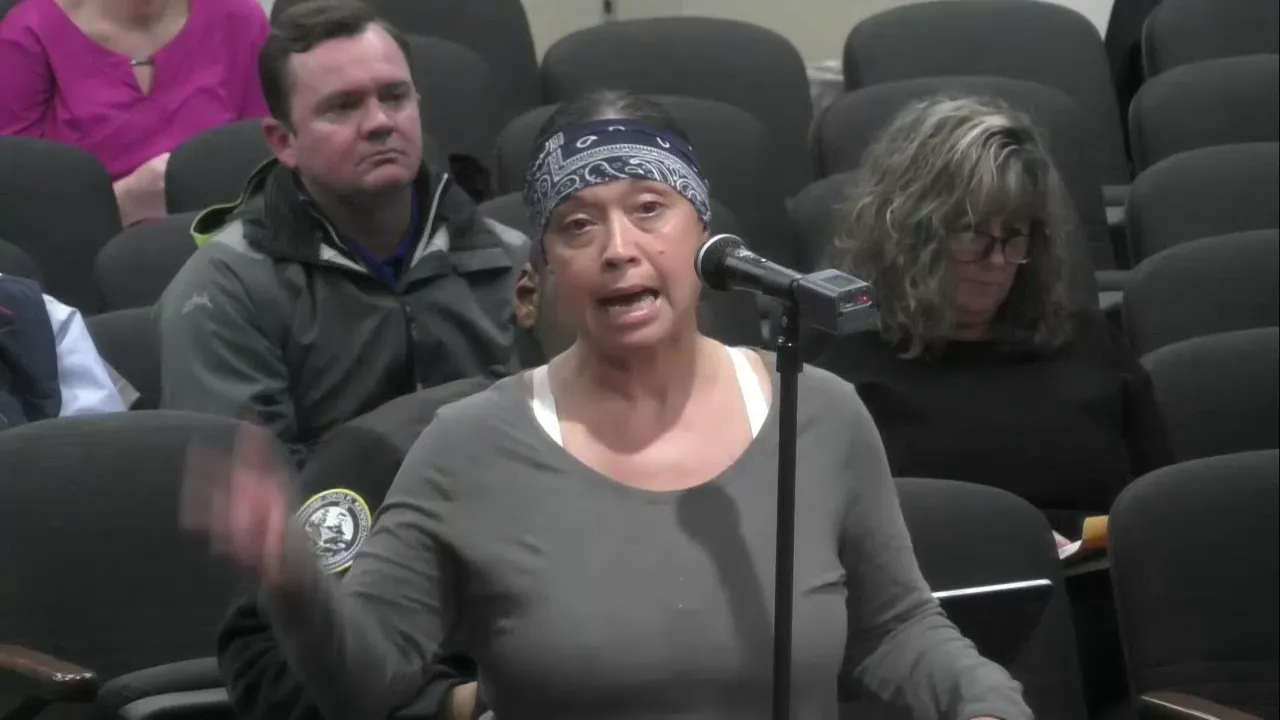
STREAMING COPY IN PREPARATION — RECORDING AVAILABLE FROM THE ORIGINAL SOURCE
Hampton City Council Meeting – February 15, 2024
The Hampton City Council convened on February 15, 2024, at 8:30 PM (EST) to conduct a regular business meeting. The agenda included several public hearings on zoning amendments, a use permit for an event space, franchise agreements for wireless providers, and a revocable license for a youth sailing program. The council also received public comments on short-term rentals, child safety, and other community concerns. All public hearing items were approved unanimously.
Consent Calendar
- Approved the consent agenda as a single motion, which included: amendments to the FY24 budget to allow two encroachments into sanitary sewer and drainage easements for fence installations; appropriation of $6,092,394 from the Capital Budget Committed Fund Balance for city vehicle maintenance, pedestrian bridge repairs, sheriff office vehicle replacements, and similar projects; and approval of minutes from seven prior city council meetings.
Public Hearings & Testimony
- Use Permit 23-0350 (Harbor Center Event Space): No public speakers. The applicant, Iselle Washington of Library's Group Inc. (representing Hampton University), expressed support for the permit with 14 recommended conditions. The council approved the permit unanimously.
- Zoning Amendments for Daycare Outdoor Play Areas and Outdoor Dining (Items 24-0013 through 24-0016): No public speakers. Staff presented amendments to permit outdoor play areas for commercial daycare centers in the C1, downtown, and Coliseum Central districts, and to allow outdoor dining in the C1 district. Councilmember Gray requested staff review hours of operation for outdoor play areas to extend them during daylight saving time. Councilmember Mugler sought clarification on outdoor dining restrictions. All four amendments were approved unanimously.
- Mitigation Bank Definition and Use (Items 24-0006 and 24-0007): Public speaker Nicole McGill (representing the Wind Center, a mental health nonprofit) expressed concerns about the potential for wetland destruction and urged continued review of the ordinances. She also requested that nonprofits be involved in any redevelopment. Staff clarified that mitigation banks create wetlands, not destroy them, and that the ordinances do not enable development. The council approved both ordinances unanimously.
- Franchise Agreements for Wireless Providers (Items 24-0075, 24-0076, 24-0077): Public speaker Nicole McGill spoke on each item, asking for eco-netting (community benefit) and quality-of-service standards. She also noted that the agreements allow above-ground infrastructure, but staff clarified that any construction requires separate right-of-way permits. The council approved all three franchise agreements (CELCO/Verizon, Crown Castle Fiber, Cox Wireless Access) unanimously.
- Revocable License for Youth Sailing Virginia (Item 24-0051): No public speakers. The council approved a revocable license agreement for Youth Sailing Virginia to use a portion of the Mill Creek Pier for sailboat storage and launch, as part of the city’s recreational facility at Fort Monroe. Unanimous approval.
Public Comments
- Nicole McGill (on non-agenda items) referenced VA Code 18.2-369 regarding abuse of vulnerable adults, including those with severe mental illness living independently.
- Nancy Little (Pasture Point resident) raised concerns about short-term rentals in her historic neighborhood, citing parking, traffic, and emergency access issues. She noted two properties operating without permits and asked how the city would regulate compliance.
- Lisa Edwards (disabled veteran) requested more qualified personnel trained in effective communication and accurate profiling, particularly in the VA hospital and courts.
- Craig Knopp (Hampton resident) discussed First Amendment audits, where individuals film in public spaces. He asked whether city workers and police are trained on legal boundaries to avoid lawsuits, and whether the city has a contract with the post office for disturbance monitoring.
- Caitlin Hoff Oakes (short-term rental host) advocated for host-friendly regulations that allow professionally managed homes, emphasizing the economic benefits from traveling employees, nurses, NASA interns, and military contractors.
- Kelly Hanley (Pasture Point resident) described parking issues adjacent to a short-term rental property and requested a 20-foot parking restriction near corners to improve emergency vehicle access.
- Celeste Miller (student) criticized Mayor Tuck for cutting off her speech at a previous meeting (October 2023) regarding her experience at Hampton Elementary School. She called for “Celeste Law” requiring bathroom checks every 30–90 minutes and suggested the mayor should step down.
- Nikia Miller (Celeste’s mother) stated that the city council’s apathy forced her to take the issue of child safety (including a Cody Alert) to the Virginia General Assembly, where a K-12 subcommittee voted 22-0 to protect children. She criticized the mayor for claiming the council had no responsibility for school safety, while the school system’s legal response attributed responsibility to the city.
- Janine Belgrave (Hampton resident) proposed a public awareness campaign (“I Love the City I Live In”) to promote civic pride and smart city development, and asked who to partner with.
- Regina Mays (short-term rental host) expressed support for short-term rentals, noting she has operated an Airbnb successfully for seven years with minimal issues.
- Johnny Carroll (Hampton citizen) requested that the soccer field at Old Buckroe Road and Andrews Boulevard be renamed as a memorial to Cody Bigsby, a child who went missing. He made an impassioned plea for the council to consider the renaming.
Discussion Items
- The city manager noted that a presentation on short-term rental regulations (from a stakeholder committee) would be available online, and that staff would prepare ordinances for future council consideration. He emphasized that there will be opportunities for public comment on those recommendations.
Key Outcomes
- Use Permit 23-0350 approved (7-0).
- Zoning amendments 24-0013, 24-0014, 24-0015, 24-0016 approved (7-0 each).
- Zoning amendments 24-0006 and 24-0007 (mitigation bank) approved (7-0 each).
- Franchise agreements 24-0075 (Verizon), 24-0076 (Crown Castle), 24-0077 (Cox Wireless) approved (7-0 each).
- Revocable license 24-0051 (Youth Sailing Virginia) approved (7-0).
- Appointments: Deferred action on items 16–22 (various appointments) to February 28, 2024. Appointed Demetria Sweat to the Hampton VA 250 Committee (term expiring October 31, 2026) by unanimous vote.
Meeting Transcript
People who produce the wonderful local products we enjoy. Brought to you by the Virginia Farm Bureau. Here's what's coming up on the program this week. Some Virginia young farmers have been working to save farmland in their community. Gardeners who want to preserve their crops this summer should start planning now. And we have some fun visiting a Skidsteer rodeo in the Shenandoah Valley. Between the blue beach. It's just a peak. Home in the hard. Welcome back to Rio Virginia, everyone. We're coming to you this week from Bowen's Farm in Brunswick County, where collards like these are part of Chef Tammy's recipe this week. First, Loudoun County Farm Bureau members are meeting with local leaders in an effort to preserve valuable farmland in their Northern Virginia community. Norm Hyde reports it's an uphill battle. Growing up in urban Fairfax, Virginia, CR Principe never expected to find her calling in the farms of nearby Loudoun County. We are growing food for people's families, and I love that. I love working with my body. I love doing something that was really productive in the sense that I my work was producing something physical, tangible, and necessary. Loudoun County has some excellent soils and climates for growing. You can grow veggies, you can grow grains, livestock, hay, grapes, all sorts of stuff. And it really could be that Loudoun County could be a breadbasket for the wider DC area, but we have to preserve our soils. Right now, the value of land is really high because people are sort of moving out from the DC area. The development companies are buying up land as fast as they can and they're building houses as fast as they can out here. So what we're trying to do is make it a requirement that they save 75% of the prime agricultural soils on any development. Loudoun County is one of the fastest growing communities in the state. The Loudoun County Farm Bureau, which put forth a local zoning amendment called the Prime Soils Initiative, says it would allow new housing developments to grow while also preserving one of the county's greatest natural resources. When we divide a piece of land, 100 acres, say, into a cluster subdivision, like we talked about, um the land that is preserved that has to be set aside has to include the prime agricultural soils that are so like abundant in this region and key for growing absolutely anything from cattle to you know tomatoes. Um that has to be set aside first. And then you can use the remaining parcel of land to put your houses. And actually, we've crafted it so that it doesn't impact density, it doesn't impact the yield of lots that developers will get off of there. All it does is say you have to put the prime soils into an agricultural preservation lot first, whether you put a house on it or not. We are losing farmland really fast compared to the rest of the country. So by saving it now, it will preserve the possibility of that land being farmed. Otherwise, the soil will just be bulldozed, paved over, completely ruined for any future agricultural purpose. Loudoun County actually has a higher concentration of prime agricultural soils than any other region in the state of Virginia. We have so many, just it's amazing soil, it can grow absolutely anything. We're losing it because besides being amazing to grow crops in, it's also extremely cost effective to drop drain fields in. So when they do cluster subdivisions, it is the place they go to first to put houses. So we're losing it very, very rapidly. Um, standard operating procedure is to take a parcel, drop the houses on the prime soils, and then set aside the rocky wooded steep slopes and get bonus density in exchange for nothing that's farmable. Um, so fixing that, fixing that imbalance. And then if we don't save these soils, um they're gone, they're gone forever. The local lobbying effort has been led by the Farm Bureau's young farmers and began in earnest a year ago with a panel discussion with the chairman of the Board of Supervisors. The outreach effort has been recognized by the American Farm Bureau Federation as an innovative way to tackle the difficult question of preserving farmland in fast growing communities. In the pandemic, we saw uh grocery store shelves go empty, but our local farms and our local farm stores still had food on the shelves. And as we go into uh an era where like climate change and the globalization that allowed the COVID-19 pandemic to spread so quickly, those sorts of crises I believe will happen more and more often, and I think it would be wise as a region, as a county to preserve farming, to support farming so that we have stronger local farm food security. And it's really hard to convince local government that that should be a priority. It needs to be tackled from both the state and the local level completely. Um we are a Dillon Rule state, which means our localities cannot do anything in their policies that exceed what is allowed by Richmond. So Maryland, for example, has I believe it's close to 16 policies focused on ag preservation and the transition of older farms to new owners with incentives, with um programs to help even bringing money to the table on closing costs on a property. A lot of those we can't use in Virginia and in Loudoun because Richmond doesn't have legislation on them.
openpublica.com