Planning Commission Study Session on Magnolia Tank Farm EIR – August 27, 2019
STREAMING COPY IN PREPARATION — RECORDING AVAILABLE FROM THE ORIGINAL SOURCE
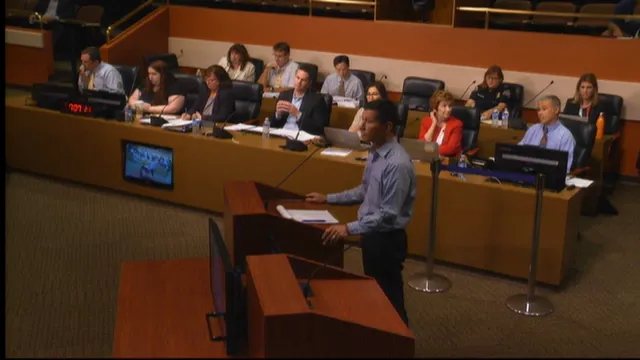
Huntington Beach Planning Commission Study Session – August 27, 2019
The Planning Commission convened a study session on August 27, 2019, to continue reviewing the Environmental Impact Report (EIR) for the proposed Magnolia Tank Farm project. The session focused on sea level rise, traffic impacts, and responses to commissioner questions regarding hazardous materials, noise, and other environmental concerns. The meeting also included public comments opposing the project.
Public Comments & Testimony
- Several residents spoke against the project, citing inadequate EIR analysis, historical contamination from the adjacent ASCON landfill, and risks to public health. Speakers emphasized the need for a complete environmental evaluation and urged rejection of the project until ASCON remediation is resolved.
- Carrie Swann, Nancy Bukos, Robin Sladeck, Sharon Messick, Tara Barton, Bob Vale, Trina Billich, Shamie Dingus, Stephanie Hansen, and Amber each provided testimony, detailing alleged failures in the EIR, including insufficient soil gas and groundwater testing, false historical representations, and risks from pile driving and construction vibrations.
- Public speakers argued that the tank farm and ASCON site should be treated as one contaminated area and that the EIR downplayed health risks from chemicals like benzene and dibenzanthracene.
Discussion Items
- Sea Level Rise Presentation (David Cannon, Anchor QEA): Cannon presented the coastal hazards vulnerability assessment, concluding that under current projections, the site is safe from flooding through 2050, but by 2100 there may be limited flooding from flanking around Magnolia Street. The Cosmos model was found to exclude the existing flood wall, so a custom HECRAS model was developed. Commissioners raised concerns about the impact of sea level rise on surrounding infrastructure and groundwater.
- Traffic Impact Presentation (Dan Close, LLG): Close reported that the proposed project would generate about 5,500 daily trips. Under the city’s methodology, only two cumulative impacts (Brookhurst/Adams and Brookhurst/Hamilton) were identified, both mitigable. Under Caltrans methodology, two cumulative impacts in Newport Beach were deemed significant and unavoidable. Commissioner Scandura questioned whether the Hogue Hospital expansion was driving impacts at certain intersections and requested further analysis. Commissioner Kalmick asked about bike and pedestrian circulation and the lack of vehicle miles traveled (VMT) analysis.
- Response to Commissioner Questions (Kathleen Brady): Brady addressed written questions from Commissioners Scandura, Grant, and Kalmick. Topics included: the percentage of internal trip capture (5-10%), noise assumptions from AES/Poseidon, attenuation factors for soil gas, and the city’s process for selecting EIR consultants. It was noted that the city hires the EIR consultant, not the applicant.
- Hazardous Materials Discussion (Mauricio Escobar, geologist, and fire department staff): Escobar provided an overview of the site’s history and testing methodology. He stated that all soil, soil gas, and groundwater sampling to date has shown concentrations below residential screening levels. Commissioners pressed for clarity on the city’s standards for soil contamination, the role of DTSC, and the need for a comprehensive presentation on the city’s evaluation process.
Key Outcomes
- The Planning Commission scheduled a public hearing on the Magnolia Tank Farm EIR for October 8, 2019.
- Staff agreed to provide a written memorandum responding to all commissioner comments and to prepare a presentation on the city’s hazardous materials evaluation process for the next study session.
- The commission requested additional analysis on five intersections (excluding the Hogue Hospital expansion) to clarify cumulative traffic impacts.
- The next study session (September 10, 2019) will cover the specific plan portion of the Magnolia Tank Farm project.
Meeting Transcript
I call the planning commission studies session to order. Roll call, please. Commissioner Scandura. Here. Commissioner Ray. Here. Thanks, Chair Grant. Here. Chair Garcia. Here. Commissioner Kalmick. Here. Commissioner Perkins. Here. Commissioner Mandick. Here. All present. We have a quorum. Thank you. Can I have a um a motion to approve the uh agenda? So moved. Second. Commissioner Grant. Commissioner Mandic. Mandic. I was gonna start with a K for some reason. Okay. Please vote. All eyes. Motion carries. And we have project review, future agenda items. 19-902 environmental impact report for 17-001 Magnolia Tank Farm. As you recall, Commissioners, this was the study session for the environmental impact report for the Magnolia Tank Farm from the last Planning Commission study session, and we're continuing on with the same item this evening. We ran out of time to do all of the presentations, so we'll be turning it over to Ricky Ramos and then the rest of the consultant team to do the presentation. So with that, um we'll turn it over to Ricky. Thanks, Jane. So tonight we're going to begin with a sea level rise presentation by David Cannon, and that's going to be followed by uh traffic overview by Dan Close with LLG. And then Kathleen Brady will lead the response to the questions. Um I do want to mention that we have consultants uh tonight here as well for noise, hazards, hydrology, civil engineering, and soils, in case you have any questions in those disciplines. So with that, I'm gonna go ahead and turn it over to uh David for his presentation. Yes. Thank you. Thank you. Thank you for having me here tonight. Um so yeah, I'm David Cannon with Anchor QEA. I'm a coastal engineer, uh special and my role on the project team is to look at uh sea level rise, look at sea level rise vulnerabilities and adaptation measures. So the approach that we developed for the project, um first we looked at using the best available science, which is the practice that the state of California has um has developed when looking at sea level rise. Um we followed applicable state policy and utilize the most relevant sea level rise policy guidance. Uh guidance in this case is the state develops policy, and then each of the state agencies, it's up to them to develop specific guidance for how they're going to implement the state policy. We conducted a coastal hazards vulnerability assessment, and in doing that, we looked at year 2020, um, which is basically with existing mean sea level, sea level where it is today.
openpublica.com