Lakewood City Council Committee of the Whole Meeting - May 12, 2026
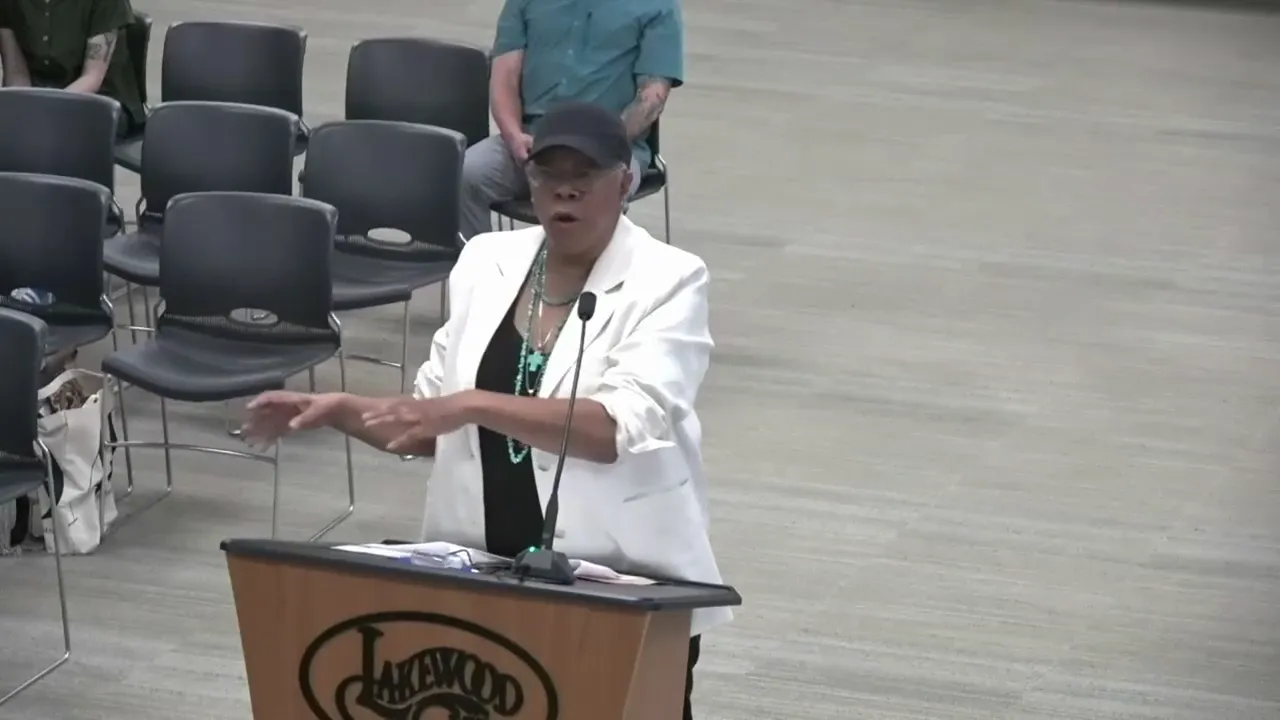
STREAMING COPY IN PREPARATION — RECORDING AVAILABLE FROM THE ORIGINAL SOURCE
Lakewood City Council Committee of the Whole Meeting - May 12, 2026
The Committee of the Whole met on May 12, 2026, to discuss several proposed charter amendments for the November 3, 2026 general election. The primary focus was on ranked choice voting (RCV) and its interconnection with amendments regarding elected official salaries, council appointment procedures, and ward redistricting. Council heard from the Director of the Cuyahoga County Board of Elections and received public comment.
Public Comments & Testimony
- Chris Bindle expressed support for ranked choice voting, arguing that primary election costs (approximately $3,000 per precinct, 37 precincts in Lakewood) would offset any ballot printing or software upgrade costs. He opposed Option 2 (allowing council to adopt RCV via ordinance) and favored Options 1, 3, or 4, emphasizing that voters should decide, not council.
- Dean Jackson, a member of the Charter Review Commission, noted the commission's recommendation aimed to avoid state funding loss. He suggested that waiting for a better political environment (e.g., after the November election) or including a trigger clause that delays implementation until state law is repealed were viable paths.
- Michelle Jackson, representing Rank the Vote Ohio, provided technical details: the Clear Ballot software upgrade was federally certified on November 19, 2025, and the state Board of Voting Systems Examiners had the upgrade on its January 2026 agenda. She cited Portland’s first RCV election, noting a one-time software cost of $225,000 and additional ballot sheet costs of $313,000 in 2025, but emphasized that primary election costs countywide are covered by the county, not individual municipalities.
Discussion Items
- Ranked Choice Voting Options: President Kepple outlined four options:
- Option 1 (Ordinance 21-2026): Direct voter adoption with severability clause; effective January 2029.
- Option 2 (Ordinance 27-2026): Charter amendment allowing council to adopt RCV via ordinance (Charter Review Commission’s original recommendation, but potentially triggers SB63).
- Option 3 (not drafted): Direct voter adoption triggered only if SB63 is repealed.
- Option 4: Wait until after the November 2026 election to assess legal and political changes. Council members expressed varied positions:
- Vice President Baker leaned toward Option 2 or doing nothing, citing distrust of future councils but respect for voters.
- Councilman Evans favored direct charter amendment (Option 1 or 3) as a statement for home rule.
- Councilwoman Strebig supported RCV but opposed risking local funding, preferring to wait (Option 4).
- Councilman Bixenstine saw value in RCV but was uncertain on the best option, emphasizing risk assessment.
- Councilman Bullock expressed caution, noting that charter changes are high-stakes and that RCV may have unknown side effects; he called for broader community dialogue.
- Director Perlotti’s Presentation: Tony Perlotti, Director of the Cuyahoga County Board of Elections, detailed implementation challenges: current equipment cannot conduct RCV, software upgrades and certification from the Secretary of State would be needed, costs unknown and likely passed to the municipality. He highlighted potential voter confusion with multi-contest ballots, overvote/undervote issues, and the need for a long runway (several years) for voter education. He noted that RCV results cannot be fully certified until all provisional and absentee ballots are counted (21 days post-election).
- Interconnection with Other Amendments: President Kepple explained that if RCV is adopted (eliminating the primary), the salary review ordinance (Ordinance 16-2026) and the council vacancy appointment ordinance (Ordinance 17-2026) would need date adjustments. The ward redistricting ordinance (Ordinance 19-2026) is independent.
- Ward Redistricting: Council discussed Ordinance 19-2026. Vice President Baker proposed an amendment to replace the language requiring the Planning Commission's proposals to be adopted unless council finds specific flaws; his amendment would require council to place the divisions on the next docket and make them effective in 90 days if no action is taken. This amendment passed unanimously. Councilman Bullock then proposed a further amendment requiring each ward to include both Lake Erie and the southern boundary of the city to maintain socioeconomic balance, but due to time constraints and differing document versions, discussion was postponed to the next meeting.
Key Outcomes
- Vote Passed: Vice President Baker’s amendment to Ordinance 19-2026 (ward redistricting) was approved by voice vote. The amendment changes the adoption mechanism: the Planning Commission’s proposed ward divisions go to council’s next docket, and if council takes no action within 90 days, the recommendations take effect.
- Deferred: Councilman Bullock’s proposed amendment to require each ward to include Lake Erie and the southern boundary was not voted on; discussion will continue in June.
- No Decision on RCV: Council did not reach consensus on which ranked choice voting option (if any) to advance. Further deliberation is scheduled for a future Committee of the Whole meeting in June.
- Other Charter Amendments: Discussion of Ordinance 16-2026 (salary reviews) and Ordinance 17-2026 (council appointment process) was postponed until the next meeting, as their language depends on the RCV decision.
Meeting Transcript
All right, we will call committee of the whole to order. Without objection, I'm gonna excuse the absence of Councilwoman Hamilton Steiner. Um since, as you all know, um she served on charter review commission. She has recused herself from the conversation about the charter amendments, and since that is the bulk of tonight's conversation, um she has opted out of abundance of caution not to attend. Um and then next I will move to approve the minutes of the May 11th committee of the whole without the necessity of a reading. So moved. Uh motions made in second, any discussion. Hearing none, all those in favor, aye. And that was passes. Okay, so as indicated in my preamble tonight, we're talking charter amendments, um, potential charter amendments. We have already voted two out of committee back favorably back to full council. Um most of the ones remaining tonight have some tie-in to ranked choice voting, save for redistricting. Um it really makes sense to start off with talking about ranked choice voting because our decision there may affect how we want to move forward with or not with the others. So, as I'm sure you've all read my lengthy communication and in detail about how these are all interconnected. Um, but so starting with the ranked choice voting one, we have um when charter review commissions, the final report recommended uh asked us to put an uh an amendment on the ballot potentially that would um give council the option to adopt, if adopted by the voters, would give council the option to adopt ranked choice view uh voting through via ordinance or resolution. Uh we had conversation about that in previous committee of the whole uh when we talked with the law department and looked at the um the opinion from the legislative services center about uh whether or not that option, while I believe the charter review commission intended that to be give council the most actually it said to give council the most flexibility. Um that was before SB63 passed, and uh that legislative opinion would suggest that should council adopt by ordinance or resolution that it would in fact uh trigger SP 63, which could threaten local funding. So that is why so but that language as essentially recommended by the Charter Review Commission, um, just so that we could compare apples to apples is put forward in ordinance 27 2026. And then because we had that opinion about um that it would potentially be less risky if council wanted to move forward to have it uh ranked choice voting directly adopted by voters via charter amendment from the but directly by the voters with um so ordinance 21 2026 presents it that way uh with um and includes a severability clause that would make it null and void should um essentially the language of SB63 as well as um or if it the uh it would be found non-constitutional. So those are two potential um ways to move forward. There are others, um so one that is not drafted currently would be to um essentially again go directly to the voters via charter amendment, but uh that it would not go into effect until SB63 is repealed. So that would be kind of an option three. So instead of saying it's severability, it would just not go into effect. And then option four would be to wait um until after uh maybe the November election, which would allow us to see shifts in the legislative and legal landscape, more time for public dialogue and engagement prior to a charter vote. So those are four options as I see them about this moment, and I'll pause there and allow council members um to uh chime in. Councilman Bolt. Thanks, madam chair. So first thanks for putting so much work into all of these um and for being clear and organized. Um before talking about rank choice voting, are do you anticipate tonight that we're gonna have time for some of the others on the agenda, or is tonight mostly about the first topic? Or is tonight mostly about the first topic? I think that depends how quickly we determine if we if this body has no interest in moving forward with anything at this time, then we can start working on the other ones, or we know how we would we we know what we need to do with the other ones. If it's we want to contemplate one of um what I'm gonna call option one or two or three, then uh we'll probably need to spend more time on that because we won't know the other ones, for instance, the one about the um elected position salaries has timing related to primary or not. So the language of that would be affected. Um this is all laid out in that extremely long communication, but um several of the other ones. So what the specific language of those are would be affected by whether or not there's a primary, so that would potentially have implications on what we decide with ranked choice voting. That answers your question. The um the redistricting one is not necessarily connected. So we we if we have time to talk about that, we could move on to that as well. So and and while while I've got you, so the four options are uh I would say option one, ordinance twenty-one, twenty twenty-six. That's the one that was um where it would be adopted directly by the voters into the charter with the severability clause. Option two would be ordinance twenty-seven twenty twenty-six for charter to allow council to adopt an ordinance resolution in the future if we wanted to. Which is what the charter review is. Which is what the charter review commission recommended. Um but they again they recommended that before SB sixty three and then after we had the committee of the whole where we thought that may um essentially automatically trigger SB63. And then three would be it's not drafted, but the idea being that it's adopted directly by charter should SB63 be repealed, so it only goes into effect if that's repealed, or option four is wait and um look at this in the future. And uh how are how are one and three different uh one is it goes into effects, but the severability clause and actually I might turn to the law department in this, but how a what I would understand is severability clause, like it goes into effects, but the severability clause would negate it. Whereas uh trigger law one would be it would not go into effect until SB3 was repealed. So if voters said yes, we want to do this. So if you think about this with some of the um like some states have the abortion laws where if uh yeah that trigger laws, so it it's it can't be in effect because it's in violation of you know um the so one and three are similar but with important differences, similar concepts, but but a little mechanical differences that are worth talking about. Okay.
openpublica.com