Las Cruces City Council Work Session on Strategic Plan and Vacant Property Ordinance - June 8, 2026
STREAMING COPY IN PREPARATION — RECORDING AVAILABLE FROM THE ORIGINAL SOURCE
Las Cruces City Council Work Session - June 8, 2026
On Monday, June 8, 2026, at approximately 1 p.m., the Las Cruces City Council held a work session chaired by Mayor Eric Enriquez. The meeting focused on two main agenda items: an update on the city's strategic plan and a proposed vacant and abandoned property maintenance ordinance. Council members engaged in facilitated discussions with consultants from Single Space Strategies and heard a detailed presentation from community development staff on the vacant property ordinance.
Discussion Items
City Strategic Plan Update (Item 1.1)
- Consultant Presentation: Brittany Poss, Vice President of Data and Research at Single Space Strategies, presented a landscape analysis and needs assessment for updating the city's strategic plan for the next two to five years. The report highlighted key challenges including housing shortages, economic diversification needs, aging infrastructure, and constrained fiscal conditions. Key data points: Las Cruces has grown 5% since 2020, home prices have risen faster than wages, and the city has a younger demographic (highest age groups 20-29 and 30-39).
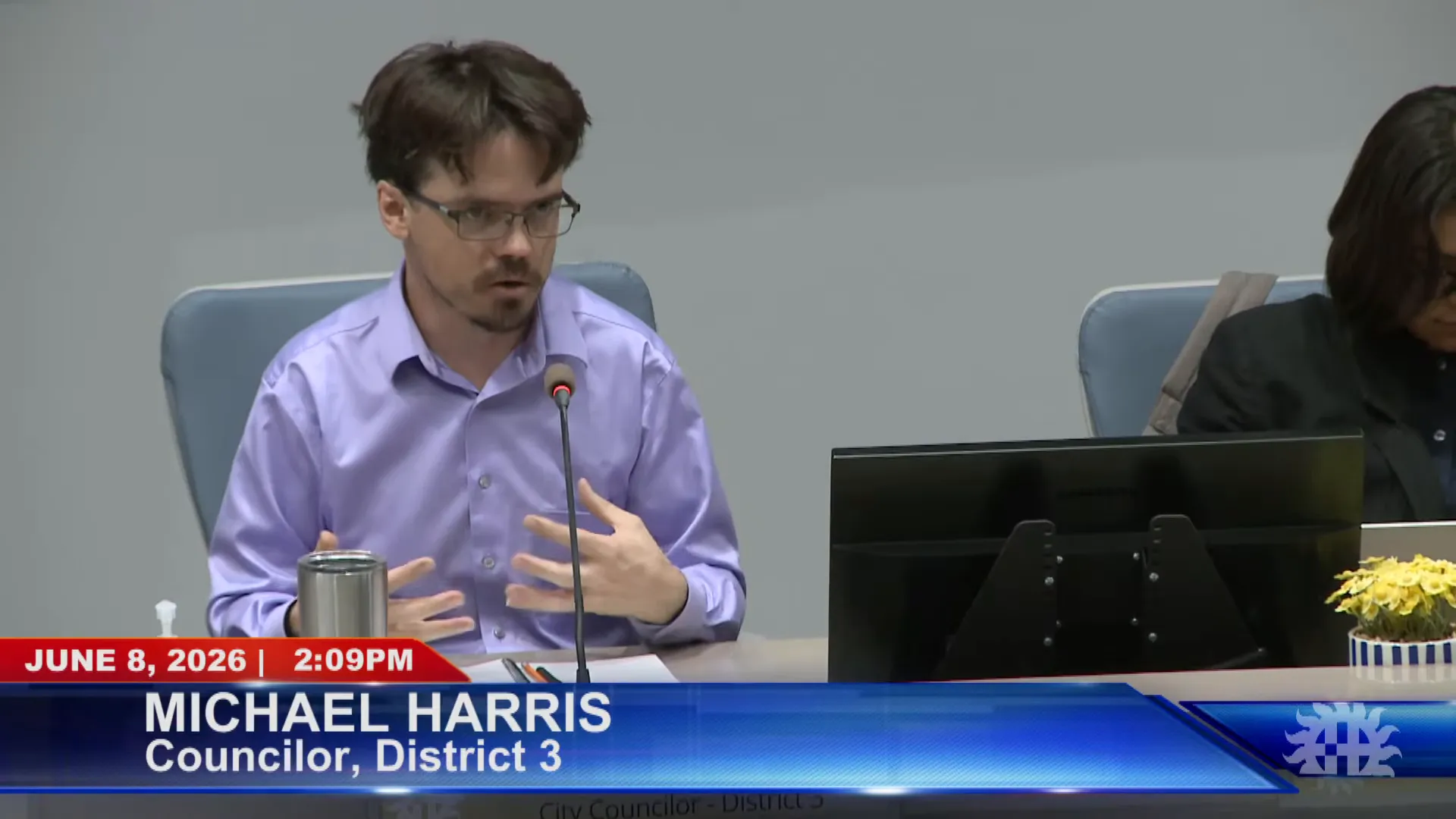
- Council Discussion on Priorities: Council members participated in a round-robin facilitation led by Janelle Johnson. The consensus was that economic diversification and workforce retention are the top priorities, with several councilors noting the need to move beyond traditional economic development toward economic mobility. Councilor McClure emphasized communication and housing diversity; Councilor Coran stressed economic diversification and sustainability; Mayor Enriquez highlighted budget constraints and economic development; Councilor Harris agreed on economic diversity and noted housing is improving with the new zoning code; Councilor Matisse called for balancing public safety, infrastructure, and economic growth; Councilor Bencomo focused on aligning priorities with resources and economic mobility, noting that the city's age distribution skews young. The group also discussed which strategic tensions (e.g., growth vs. stewardship, public safety perception vs. measurable improvements) should be explored in upcoming public engagement meetings.
- Next Steps for Public Engagement: Consultants will hold six district public meetings in late July 2026, followed by focus groups and a survey. Council members suggested using relatable language, providing food, engaging hard-to-reach populations (e.g., working people, low-income households), and leveraging schools and community events. Councilor Bencomo requested bilingual meetings and use of community schools as venues. Consultant Angie Poss summarized feedback, noting alignment on economic diversification, housing, and the need to align priorities with resources.
Vacant and Abandoned Property Ordinance (Item 1.2)
- Staff Presentation: Chris Favor, Community Development, presented a proposed ordinance to establish a registry and fee structure for properties vacant for two years or more. The goal is to encourage reactivation and prevent blight, complementing the existing Nuisance Abatement Team (NAT) program. Staff identified approximately 900 properties with vacant structures and 768 vacant parcels. Exemptions include government-owned properties, active building permits, probate/litigation, active listings at no more than 130% of fair market value, and historic preservation efforts. Proposed fees: residential $500 (year 1), $1,000 (year 2), $2,000 (year 3+); commercial $2,000 (year 1), $4,000 (year 2), $8,000 (year 3+). Fees would be due annually, with a reset when property status changes.
- Council Discussion: Councilors generally supported the ordinance. Councilor Coran questioned the 130% fair market value threshold and suggested 120%; asked about using fees to fund the program (staff confirmed fees would go back into NAT); and requested a timeline for implementation. Councilor Bencomo asked about preventing abuse of the for-sale exemption and expressed concern about two-year waiting period for neighborhoods like MacArthur. Counselors Harris and Matisse supported lowering the market value threshold and removing the government-owned property exemption (Mayor and Councilor Matisse argued the city must lead by example). Mayor Enriquez suggested using the Planning and Zoning Commission for appeals and a fast-track process for fire-damaged properties. City Attorney Henry added that the fee revenue would explicitly fund the program. Councilor McClure supported the leniency but emphasized accountability. The ordinance is expected to be brought for adoption later in summer 2026, with public outreach and online system buildout through the end of the fiscal year.
Key Outcomes
- No formal votes were taken on either item; this was a work session for discussion and direction. A motion to adjourn passed unanimously with Councilors Matisse, Harris, Bencomo, Coran, and Mayor Enriquez in favor; Councilor Munoz was absent.
- Strategic Plan: Council provided clear direction to consultants to focus public engagement on economic diversification, housing diversity, aligning priorities with resources, and addressing trade-offs such as growth vs. stewardship and public safety perception vs. measurable improvements. The next public meetings are scheduled for late July 2026.
- Vacant Property Ordinance: Council expressed broad support for the ordinance with several modifications to be incorporated: lower the market value threshold to 120% (or lower), remove the government-owned property exemption, ensure fee revenue supports the NAT program, and consider adding a fast-track process for emergency conditions. Staff will refine the ordinance and bring it back for adoption later in summer 2026.
Meeting Transcript
Your life. Well, good afternoon, everyone. Welcome to the work session. Today is Monday, June 8th, 2026. It's approximately 1 p.m. I'm Mayor Eric Enriquez. We will start with a moment of silence for the brave men and women of the United States Armed Forces as they protect our interests around the globe as well as our courageous men and women from the Las Cruces Police and Fire Department as they protect our city. If you join me in the pledge. Okay, so our first item on the agenda 1.1 is city strategic plan update. Chris? Thank you, Mayor. Good afternoon, Mayor, City Council, Chris Favor for the record. So as everybody knows, we've been working on updating the city strategic plan, which effectively is up the end of this calendar year. Earlier in the spring, council and the mayor met with our consultants from uh single space strategies to sort of discuss what they'd like to see moving forward that's been incorporated into uh landscape and needs assessment. And so our consultants are here today to uh facilitate the first of three work sessions. There'll there'll be another one in August, and then I believe in September, unless I have the months wrong, but so this will be the first of three. Um like to have a good discussion back and forth with the document that was sent over last week. Uh and so I will go ahead and turn it over to Brittany Poss with the consultants to take it from here. Thank you. Good afternoon, Mr. Mayor, Counselors. We're super excited to be here with you. My name's Britney Poss. I'm the vice president of data and research at Single Space Strategies. Uh and I'm joined here by my team. This is our president, Angie Poss, our vice president of strategic implementation, uh, Janelle Johnson, this is our director of data and research, John Wagner, associate director of research, Jessica Knox, and our director of government affairs, uh, Sydney Teyas. And we're rolling deep because we're all just really excited about this project. Uh we uh got to spend some time down here in February, spending time with some of you and some of the uh other city leadership. And ever since we've been thinking and talking and writing about the challenges facing Las Cruces and sort of the opportunities that we see, and we're super excited to report that out to you, and then have a discussion about sort of what you all see in the next two to five years. So um, oh sorry, I didn't even pull up my presentation. I'm so excited. Okay. So uh just to sort of back up one step, once you uh talk about, you know, what the strategic plan is. We uh, you know, this today is a really pretty early step in the process. Uh we're not deciding anything. No one is coming here with like here is your strategic plan. Uh what we've done is we put together uh a landscape analysis and needs assessment to sort of get us all on the same page, have a shared analysis and a shared language to start talking about uh what could be and should be in the strategic plan for the next two to five years. So, what is a strategic plan? A strategic plan is a practical decision-making tool uh for the city. It's gonna help city council and city management identify priorities, align budgets, and make choices about what realistically can be implemented in the next two to five years. And that time horizon is really important. So Las Cruces, as you all know, already has long-term vision documents, including Elevate Las Cruces. But the purpose of this strategic plan is different. It's about what should be focused on now and what should come first and how that progress should be communicated and tracked. A strong strategic plan is gonna help the council to stay relevant and actionable and transparent. We're hoping that it captures emerging issues, it sets a roadmap for achievable outcomes, guides resource allocation, right? Especially in this sort of constrained fiscal climate that so many municipalities are facing, and support public reporting through the city's dashboard. So the report that you all were sent last week, the landscape analysis and needs assessment is a starting point for that discussion. So it brings together lots of data, leadership input, information on the community, to identify themes, opportunities, trade-offs that need to be discussed before priorities are finalized into a strategic plan. Just as importantly, again, this this report does not set final priorities.
openpublica.com