Common Council Special Budget Workshop Session 1 - April 13, 2026
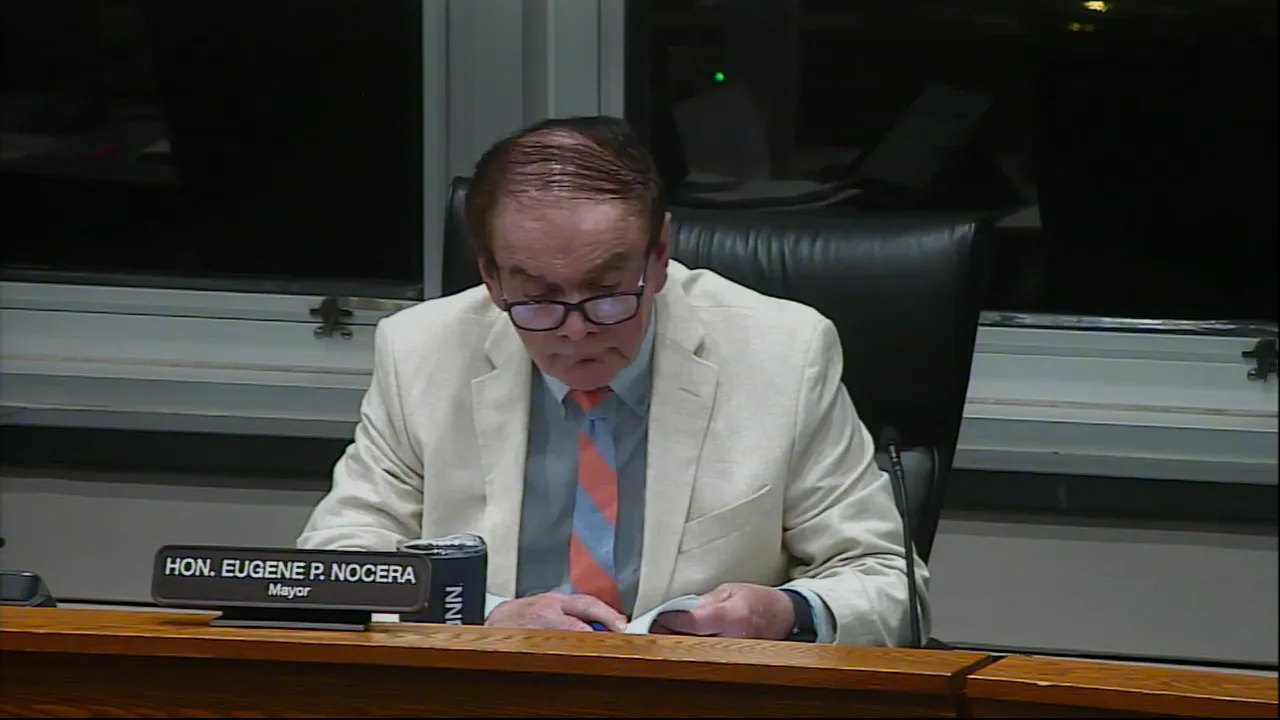
STREAMING COPY IN PREPARATION — RECORDING AVAILABLE FROM THE ORIGINAL SOURCE
Common Council Special Meeting – Budget Workshop Session 1 (April 13, 2026)
This was the first of three budget workshops for Fiscal Year 2026-2027, convened by the Middletown Common Council. Mayor Eugene Ocera delivered an opening overview of the city's fiscal challenges, followed by presentations from eight departments: Arts & Culture, Probate Court, Youth Services, Health Department, Fire Department, Emergency Management, Transit District, and Russell Library. Council members questioned department heads on proposed budgets, staffing, and operational needs. No votes were taken; the workshop was informational to inform council decisions.
Mayor’s Opening Remarks
- Mayor Ocera summarized a projected $14 million deficit between current revenue and next year's needs, driven by minimal grand list growth, exhaustion of federal relief funds, rising health care costs (16.8% increase on city side), and contractual salary increases after five of seven union contracts expired in mid-2025. He noted the city's bond rating was downgraded from AAA to AA+ by S&P, citing inadequate reserves. The proposed budget includes a 5.449% general fund expenditure increase, with the Board of Education receiving a 3.11% increase. 21 city positions are funded at $1 (effectively frozen) to save over $2 million. The mayor stressed the need for multi-year planning and noted potential state aid decisions by May 6, 2026.
- Finance Director Carl Erlacher explained that employee benefits rose 20.31% due to pension smoothing from a prior investment loss and three-year health insurance increases. He cautioned against reducing pension contributions below the actuarially determined amount ($7 million).
- Council members questioned the S&P downgrade, the lack of multi-year financial forecasting, and the use of salary reserves. Mayor Ocera and Director Erlacher defended the budget's prudence and noted that the state's ECS funding to Middletown has remained flat while the Board of Ed receives additional Alliance District grants.
Arts & Culture (Keisha Michaels)
- Keisha Michaels, Arts Office Director, presented changes to the Oddfellows Playhouse circus program. The city had historically handled registration and collected fees ($34,000), which went to the general fund. Starting this year, Oddfellows will take over registration and keep those fees, reducing the city's contribution from $99,000 to $65,000 (a $34,000 decrease).
- Council members expressed concern about the total city support for Oddfellows (including building ownership) and questioned the program's cost-effectiveness. Councilwoman Salafia noted she is considering cutting the line item. Ms. Michaels stated she is working toward a more equitable financial relationship over time.
- A request for Wesleyan University to co-sponsor the circus with $120,000 was declined by President Roth.
Probate Court (Judge Francis Leverts-Suzick)
- Judge Suzik requested full funding of $59,602.05 (Middletown's 57% share of the court's $104,565 total operating budget) rather than the mayor's proposed flat $42,930. The additional ~$17,000 is needed for mandated upgrades (phone system, recorder, security) and higher postage/supply costs. The court's HR costs are paid by the state.
- Councilman Lafredo acknowledged that the probate court is a state-mandated expense and the city likely must fund the full request. Judge Suzik provided documentation of the four-town cost allocation.
Youth Services (Director Justin Carbonella)
- Director Carbonella noted the loss of a diversion coordinator (youth development specialist) due to a hiring freeze. This position manages first-time youthful offenders, diverting 30-70 youth per year from the justice system with a 92% success rate. The state has shifted status offense responsibilities to Youth Service Bureaus. He also highlighted a new data-sharing agreement between the city, police, and Board of Ed.
- Council members asked about the difference between the two youth worker positions. The diversion coordinator is a licensed clinical master's-level role; the youth worker is a bachelor's-level non-clinical role. The diversion position is critical for case management.
Health Department (Director Joseph Elack – online)
- Director Elack presented the health department budget online from a conference. He noted the relocation assistance line is set at $30,000, though actual costs were $115,000 last year; policy changes aim to reduce future outlays. The warming center grant was reduced from $25,500 to $20,500 at the mayor's request for a 5% cut.
- A public health sanitarian enforcement officer position is funded at $1 (vacant since February). This role handles inspections of 362 food establishments, 73 personal services, 21 daycares, 27 pools, and lead poisoning investigations (threshold lowered to 5 µg/dL). The remaining two sanitarians are stretched thin.
- A new on-call stipend for sanitarians and the housing code enforcement officer (per the 466 union contract) requires $16,200, but the budget line is only $15,000. Director Elack requested the line be adjusted to $16,200.
Fire Department (Chief David Albert)
- Chief Albert submitted a $17,418,518 budget, a 3% decrease from initial proposals due to $300,000 in cuts. Major increases: health insurance (+17%), pension (+13%), and overtime (+17%) due to CT Paid Leave and FMLA. Overtime for minimum manning is projected at $530,000 expended this year.
- The alarm technician position saw a salary decrease because a retiree was replaced at step one. Chief Albert discussed a proposed shared mechanic position with Public Works to reduce escalating apparatus repair costs (currently $200/hour labor, $90,000 in parts last year). He expressed concern about the fleet's age and emissions-related failures.
- Councilwoman Spitola asked about warranty status of apparatus; all equipment is out of warranty.
Emergency Management (Director Rob Cronenberger)
- Director Cronenberger presented a ~$109,000 budget, reduced by 5% as requested. Reductions came from contractual services (eliminated AV equipment warranty), phone lines, and building repairs ($2,000 reduction). The only increase was workers' comp ($600). He requested the $2,000 be restored as a contingency for generator repairs at the high school shelter and a $30,000 water leak at the Maya Lane facility (old Army Reserve base).
- A custodian position (5 hours/week) is funded at $1.
Transit District (Brendan Gardy, Planner; Helena, Finance Director – online)
- Transit District reported a 3% increase request (to $345,725), but the mayor's budget reduced it to $342,565. The district provides fixed-route, ADA paratransit, dollar ride, and extra-mile on-demand services. Recent service expansions (evening and Sunday service) are 100% state-funded. Ridership increased 25% in the past year (to 256,000 fixed-route rides). The required local match for state grants is about 13%.
- Councilmen asked about a route change on Saybrook Road; the district explained a time-saving detour onto the highway. Councilwoman Hart praised new bus shelters.
Russell Library (Director Ramona Berkey)
- Director Berkey reported the library received the Connecticut Library Association's Excellence in Public Library Service Award and is a top-five finalist for Best Cultural Attraction for Families (CT Magazine). The mayor's recommended budget is a 1.4% total increase, but non-contractual lines decreased 5.1% (cuts from repairs/maintenance, general admin, network maintenance).
- The library's budget is 1.31% of the total city budget, down from 1.53% in 2018. Inflation has risen 31% since 2008; the library budget has increased only 18%. Despite this, usage is up: circulation +3.2% (vs. statewide -7.5%), children's materials +63%, program attendance +22.4%. Four full-time clerk positions remain funded at $1.
- Director Berkey noted the aging building (elevator, chiller, plumbing) and that a city grant writer could help secure grants for a potential rebuild. Contractual salary adjustments for FY27 ($43,916) are in the city's salary adjustment line, not the library's budget.
Key Outcomes
- No votes were taken; this was a workshop.
- The council received requests for budget adjustments:
- Probate Court: increase line item from $42,930 to $59,602.05 (additional ~$17,000).
- Health Department: increase stipend line from $15,000 to $16,200.
- Emergency Management: restore $2,000 to building repairs line.
- Transit District: council to decide whether to accept the mayor's reduced figure or the district's request.
- The council will receive a detailed list of positions funded at $1, including vacancy durations and a list of temporary positions, as requested by Council members.
- The council will receive further details on contractual services ($40,000) and training line items as promised by the mayor.
- The next two budget workshops will cover remaining departments and allow for further deliberation.
Meeting Transcript
This meeting is being recorded. Good evening, everyone. Please rise if you're able to do so. Councilwoman. Let's see. Councilwoman Spitola, please leave us in the Pledge of Allegiance. Thank you. The United States of America and to the Republic for which it stands. Our nation under God, indivisible, with liberty and justice for all. Okay. So you're all here for the first of uh three workshops. Uh today is Monday, April thirteenth, and we have our mayor who is with us, Eugene Ocera. He's sitting out in the audience, so we can't see him on camera now. We have eight departments that will be presenting this this evening. Along with the mayor, we have a subdepartment, arts and culture, probate court, youth services, health department. I know that Director E. Lac will be online, fire department, emergency management, transit district, and Russell Library. Okay. Thank you, Councilwoman Barkwell, and it's a pleasure to be here. And I have to say, this is the first time I've seen this room set up this way with the with the view of Court Street and the river, and I think this is the way it should always be. Okay, thank you, Mayor. Extra special. So let me begin um this process. I think it's important that you allow me to read into the record what what uh uh variables um are so important uh to consider when we propose this budget, the mayor's budget, because this was an extraordinary, extraordinary um set of variables. So I'm not gonna read my full narrative that you all got copies of, but I think it's important that um you allow me for a second to read into the record you know why we we are where we are. When I took office in uh June of 2025 as acting mayor, I had the honor of becoming your mayor following the November 2025 election. One of the first issues faced before me was the looming uh projected deficit driven by several fiscal shocks occurring at the same time, each reinforcing the other. But they are very real, and they require clear and honest explanation. Let me just point out that if the council and I just wanted to move this budget forward, a status quo budget that with the existing revenue we have this year into next year. We would have to we would be asking um for a five mil increase because there is a 14 million dollar deficit between the revenue we have this year and what we need for next year. Let me explain how that happened. Over the past two years, we have experienced revenue erosion combined with significant spending pressures and persistent inflation, creating a very difficult budget environment. The major factors have been a minimal growth of our grand list, something Middletown has not seen in recent memory, because property taxes, as we all know, generate the largest share of city revenue, and even small changes in our grand list have a significant impact on our budget. Despite a slight change in the SP bond rating this year, going from triple A to A plus, we entered the 2627 budget cycle with a fundamentally sound fiscal foundation, but there are intensifying cost pressures. Even with this adjustment, our bond rating remains rare amongst mid-sized Connecticut cities who do not have the advantage of large suburban tax base, which reflects the Middletown's longstanding, fiscal discipline, responsible debt management, strong reserves, and our combined commitment to meeting pension obligation. However, the convergence of several factors that include rising health care costs. Let me point out the city this budget calls for the city side, a 16.8% increase in our health care costs. On the BOE side, 8.8. The BOE is state insured, we're self-insured. I was just talking to our director of finance. This is an unusual year because we see across the state, these numbers are not coming down. Usually they start to trickle down. It's like a game that insurance companies play, perhaps. I'm not accusing them of game playing, but it seems to always come down. It's not coming down. There's also, of course, an exhaustion of federal relief funds, minimal growth in our grand list. Labor costs have increased during this same period. In mid-2025, five of the seven major union contracts expired. At the same time, include and that included local 466, UPSU, the police union, the Middletown Schools Administrators Association, the Russell Library employees. Only our firefighters contract, which runs through 2027, remain in effect.
openpublica.com