Common Council Special Meeting: Budget Workshop Session 3 – April 20, 2026
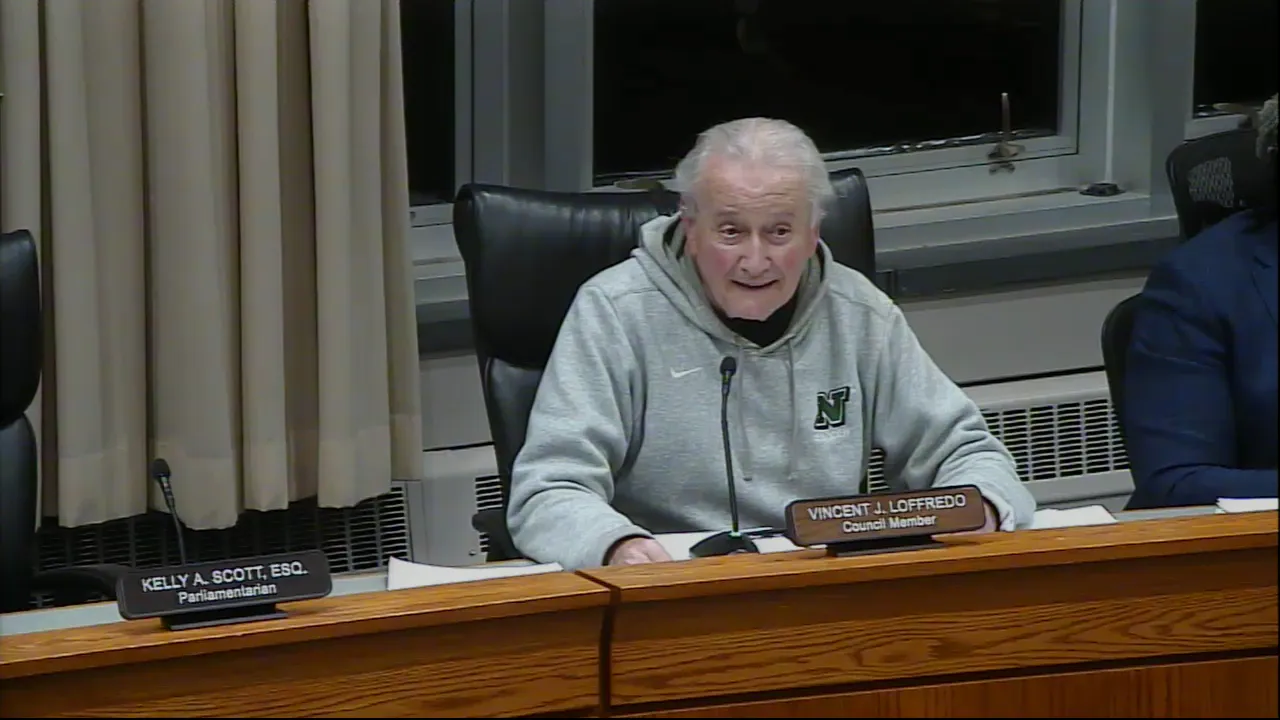
STREAMING COPY IN PREPARATION — RECORDING AVAILABLE FROM THE ORIGINAL SOURCE
Common Council Special Meeting: Budget Workshop Session 3 – April 20, 2026
The Common Council held a special workshop on April 20, 2026, to review budget proposals for several city departments, including the Assessor, Old Burying Grounds, Central Communications, Recreation and Senior Services, Police, Public Works, and the Board of Education. The meeting featured presentations from department heads and board members, followed by questions from council members. No formal votes were taken; the council will continue budget deliberations before adoption on May 13 or 15, 2026.
Assessor & Board of Tax Review
- Assessor Damon Barrash stated he could not achieve the requested 5% reduction due to $6,200 in contractual increases (software, licensing) that left only $29,000 in discretionary spending. Eliminating the $12,000 audit line would return tenfold in new tax revenue.
- The mayor's budget reduced one assessment aid position to $1, leaving only one clerk for a department handling over 8,000 phone calls, 1,600 renters, 400 elderly, 36,000 motor vehicles, and 8,500 emails annually. The assistant assessor position has been vacant for 20 years.
- The grand list grew only 1% due to a $35 million assessment deferral for the Springside apartment complex, reducing taxable value from $27 million to $580,000. The city is in litigation over an $8 million reduction appeal on another complex.
- Barrash requested restoration of the $80,970 salary for the assessment aid position, warning that further cuts would be devastating during the upcoming 2027 revaluation.
Old Burying Grounds
- Jim Sarbaugh (Vice President) and Debbie Shapiro (Treasurer) presented. The nonprofit maintains eight city-owned cemeteries with a volunteer board. In 2025, they spent $157,336.55, including $20,000 for stone restoration, $16,300 for tree work, $5,840 for fence repair, and $96,435 for landscaping. The city contributed $90,846, and the endowment ($609,000 as of Dec 31, 2025, including most of the city contribution) covered the remainder.
- They requested $151,448.65 for fiscal year 2027, an increase of $60,602.65 over the current city contribution, to cover ongoing stone restoration, tree work, and a new fence at New Farm Hill Cemetery (estimated $22,000).
- Council questioned the use of endowment funds, which exceeded the recommended 5% draw. The endowment is largely from donations.
Central Communications (Page 27)
- Director Bobby Grover reported that the mayor's budget eliminated two 911 dispatcher trainee positions (reduced to $1), severely limiting the hiring pipeline. One trainee position has been vacant since September 22, 2025; the other is currently filled but will become vacant in June 2026 upon promotion.
- Overtime is already over budget: $223,732 spent through April 12, 2026, against a $219,000 budget, with a projected $75,000 shortfall by year-end. The deputy director position has been vacant all year, adding to the burden.
- Revenue increased 8% from state 911 funding, the Portland interlocal agreement, and Verizon tower lease. The budget includes contractual increases for radio tower leases and Motorola maintenance.
Recreation & Senior Services (Page 40)
- Director Kathy Lekowitz presented three modest contractual increases totaling $30,601.85, offset by a $50,000 revenue increase (net $20,000 positive to the general fund). Increases include 3% for Estuary Transit (dial-a-ride), $23,000 for seasonal staff wages (minimum wage increase), and $4,720 for energy lease.
- Since July 1, Recreation had 13,905 registrations and the Senior Center 20,510 registrations. Revenue contribution to the general fund has more than doubled from $179,000 in FY23 to a projected $430,000 in FY27.
- Lekowitz noted that buying out the energy lease at the Rec Center could save approximately $2.8 million, but the previous administration chose not to proceed. Operational costs include $150,000 in senior nutrition grants and two state mandates: Connecticut Paid Sick Leave and potential new regulations for municipally-run camps.
Police Department & Animal Control (Page 20)
- Chief Eric Costa reported a 12.8% reduction in crime. The mayor's proposed budget of $18.8 million is $745,000 below the department's request. Three officer positions are frozen, only 5 of 12 crossing guard positions are funded, and a scheduling clerk position is unfunded.
- The department needs approximately 135 officers to maintain current operations. Overtime for special events (parades, fireworks, Pride, Juneteenth) is not yet reflected in the year-to-date $15,000; it will exceed $100,000 by year-end.
- Training costs: $20,000 for a firearm platform upgrade for all 120 officers. The department holds national CALEA accreditation, costing $17,500–$20,000 annually. The firing range shared with the FBI could generate revenue from neighboring towns, but has not been pursued.
- Chief Costa emphasized the department's commitment to community engagement and professionalism.
Public Works (Page 28)
- Acting Director Robert Russo and Acting Deputy Director Brian Gartner highlighted increased workload, aging infrastructure, and staffing vacancies that have persisted for over three years. The department is relying heavily on overtime.
- Key capital projects funded by the 2026 infrastructure bond include chiller replacement at City Hall, building management system upgrades, roof replacements at City Yard, and road work (approximately 10 miles of roads via chip sealing, crack sealing, hot-in-place recycling, and milling/paving). Priority roads include Green Street, Ferry Street, Martin Luther King Boulevard, Prospect Street, and Liberty Street (partial due to construction).
- Other projects: Westlake Dam spillway repairs (engineering contract with Lorerro Engineering), Westlake pedestrian bridge repairs, and installation of a new walking path and restroom at Butternut Hollow (completion summer 2026) and a pavilion and restroom at Smith Park.
- The department requests five additional plow trucks to improve service reliability.
Board of Education
- Interim Superintendent Dr. Ellen Adley, Board Chair Sheila Janiels, and finance staff presented. The board's proposed budget is $107 million, a 4.3% increase ($4.37 million) over the current $103 million. This includes $387,000 in unanticipated costs: $32,000/month for electricity at Wilson Middle School (previously not fully billed) and a $60,000 workers' compensation increase.
- The budget reduces 12.5 staff positions, eliminates 6th grade Spanish (students will take Spanish in 7th and 8th grade), and ends the IB program at Lawrence School. New investments include special education compliance officers (two positions, $263,000), a preschool supervisor, and increased intervention programs at the middle school. The Legacy Academy program brought back three out-of-district students and prevented six outplacements, saving an estimated $500,000.
- Per-pupil spending is $25,070, the second highest in the DERG (District Reference Group). Councilman Magnifito questioned the high spending relative to academic outcomes, noting that Middletown's proficiency rates in math and ELA are below the DERG average. Dr. Adley acknowledged the data but noted that the gap closes by high school (SAT scores near the state average). He attributed high costs to special education (37% increase in 5 years), food service (first in DERG), and higher salaries.
- City Finance Director Carl Urlacher explained that the Board of Education's total expenditures in the ACFR (Table 2, page 112) include pension contributions, OPEB, and depreciation, making the $158 million figure not directly comparable to the operating budget. The board's operating budget grew from $82 million in 2019 to $103 million in 2025, an average of 3% per year.
Key Outcomes
- No formal votes were taken; this was a workshop to gather information. The council will continue budget discussions and adopt the final budget on or before May 15, 2026. Several departments requested additional funding or restoration of positions, including the Assessor ($80,970 for a clerk), Old Burying Grounds ($60,602 increase), Central Communications (two dispatcher trainee positions), and Police (unfreezing officer positions). The Board of Education's $107 million request is $3.4 million above the mayor's proposed $106.6 million.
Meeting Transcript
Jane, we have no audio. You need to turn your mic on, please. Yeah, it's all right. Thank you. All right, welcome everyone. Last week we were all dying of the heat and we're putting our sweaters on. Uh for housekeeping purposes. Um at this point, um Linda, who is online. Okay. Umline we have Councilman Anthony Gennaro, Councilman Darnell Ford, Councilman Jonathan Pellino, and Councilwoman Kelly Sweeney. And me. Okay. Can you hear me? Yeah, one more time, if you could. Yeah. We have Councilman Anthony Gennaro. Councilman Darnell Ford. Um, Councilwoman Kelly Sweeney, and Councilman Jonathan Belino. Thank you. You're welcome. All right. So welcome to uh workshop number three. And the order to n this evening is our assessor and board of tax review is first. Is Damon online? Oh, there you are. Come on up. Uh my budget based uh Damon for the record of you state your name and position, please. My name is Damon Barrash, I'm here. Yeah, your mic is gonna help help us out with that. There you go. Thank you. Uh name is Damon Brosh. I am the assessor for the city of Middletown. All right, do you want to make your presentation? Um, sure. Uh so my budget really, as I spoke to you, Mayor Um, I know that there was an ask for a five percent reduction uh proposal in our budget. Um quite frankly, I uh could not achieve that. Um if I look at the budget from last year, after I take out all the salaries, I come up with a number of 76,000 dollars, 437. Out of that, roughly 50,000 is for contractual obligations. Uh so those are uh software fees and licensing uh services that we have to have on a regular basis. So that basically only leaves uh about 29,000 in what we would call discretionary spending. But out of that, that would include uh the purchase of pricing guides uh for motor vehicles, uh continuing education certifications, audits, and things of that nature. So even though it's not much 289, there's a number of things that we do utilize that for. If we were to do a 5% reduction, and we looked at the base without the salaries, the five percent off of 72,615 would be about 3800. However, I would have to also then counter the contractual increases that we have for again um contractual obligations, uh software agreements and things of that nature. That went up by $6200 this last year alone. So to try to find $3,800 in savings and a sixty-two hundred dollar reduction for those other increases would mean that I would have to come up with about a ten thousand dollar reduction to find a five percent uh amount. And that's roughly basically one-third of whatever I had left. Um there's just no way to do that effectively. The only way that I could do it would be to remove one line item, which is for audits.
openpublica.com