Phoenix City Council Work Study – Federal Infrastructure Update and Recognition of Mo Stein – February 11, 2025
STREAMING COPY IN PREPARATION — RECORDING AVAILABLE FROM THE ORIGINAL SOURCE
Phoenix City Council Work Study – Federal Infrastructure Update and Recognition of Mo Stein – February 11, 2025
The Phoenix City Council held a work study session on February 11, 2025, beginning with a special recognition of Mo Stein for his leadership on the city's three most recent general plans (2002, 2015, and the 2024 Plan passed as Proposition 488 with 79% voter support). The council then received an update from Deputy City Manager Mario Paniagua and Infrastructure Implementation Manager Larry Smallwood on the city's success in securing federal grants under the Bipartisan Infrastructure Law (BIL) and Inflation Reduction Act (IRA).
Special Recognition: Mo Stein
- Mayor Gallego led the recognition, noting that Stein chaired the 2002, 2015, and 2024 general plan updates and that the 2024 plan received 79% of the vote – described as an incredible consensus.
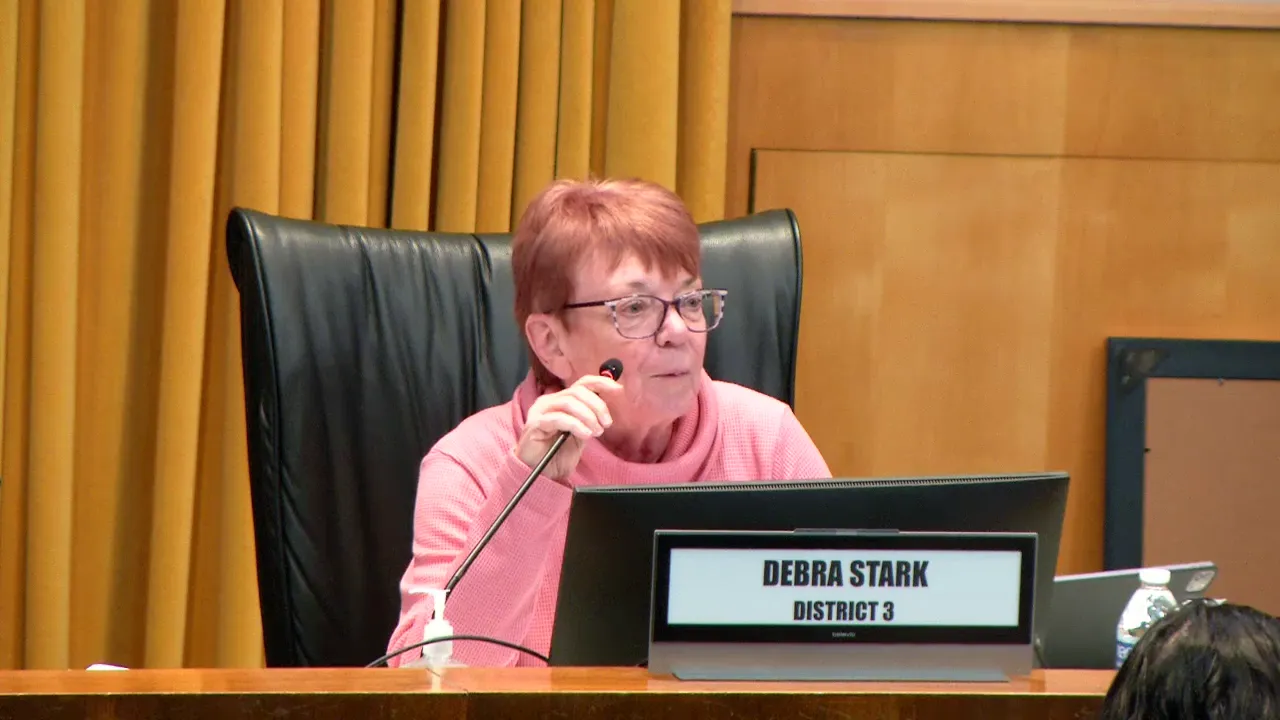
- Councilwoman Stark (formerly Planning Director) praised Stein as a champion for planners and the planning department.
- Councilman Robinson said Stein provides invaluable education on Phoenix's layout and history.
- Councilwoman Pastor expressed gratitude for Stein's hands-on contributions to the city.
- Mayor Gallego presented Stein with signed copies of the general plan covers from the three mayors under whom he served.
- Stein was also asked to help with the downtown strategic plan going forward.
Federal Infrastructure Law (BIL/IRA) Update
- Mario Paniagua and Larry Smallwood presented the city's achievements: to date, Phoenix has been awarded nearly $750 million in federal dollars for 30 grants.
- Key projects highlighted:
- Third Street Rio Salado Bike and Pedestrian Bridge and Pathway ($25 million) – connecting South Central and Midtown Phoenix, with a design selected by community vote.
- Indian School Road Corridor safety improvements ($16.4 million) – enhancing lighting, medians, sidewalks, and bike lanes from 39th to 91st Avenues; the corridor sees 30,000–50,000 vehicles daily and has been a high-crash area.
- 35th Avenue and Grand Avenue intersection reconstruction ($146.6 million, the largest discretionary grant in region's history) – replacing a dangerous six-legged intersection with a safer four-legged design, eliminating two at-grade rail crossings and serving 140,000 daily travelers.
- Sky Harbor Airport Crossfield Taxiway U project (cumulative $156.3 million from three grant awards) – improving efficiency and accommodating future growth.
- Transit electrification: funding for zero-emission buses (battery electric and hydrogen fuel cell) as part of a goal to convert the heavy-duty fleet to 100% zero emission by 2040.
- Pending applications: 12 additional applications for projects including Deer Valley Airport taxiway, 64th Street extension, Levine area conveyance channel, stormwater improvements, solar projects, recycling facilities, smart irrigation controllers, quick-build active neighborhoods, Rio Corridor vision planning, sustainable road materials, and advanced water purification at the North Gateway Water Reclamation Facility.
- Challenges: uncertainty due to recent federal executive orders and a temporary freeze on federal funds (two temporary restraining orders issued). Staff acknowledged questions about the impact on awarded grants but noted there are more questions than answers.
- Council members expressed strong support for the grant programs, emphasizing the importance of infrastructure for safety, water security, economic development, and quality of life. Several noted the projects' bipartisan nature and urged continued federal partnership.
Key Outcomes
- No formal votes were taken; the session was informational.
- Council unanimously expressed appreciation for the staff's work and directed continued pursuit of federal grants.
- Mayor Gallego highlighted the 35th Avenue/Indian School project as the region's largest-ever discretionary grant and stressed the need to avoid politicizing infrastructure.
- The meeting concluded with the mayor thanking all staff involved and adjourning the work study.
Meeting Transcript
Be a good class for you to come and take. We have stoves, refrigerators, microwaves, and I know this will be a great place for you to come and enjoy and learn to cook. And this is our wonderful game room space where it's designed for youth and adults to come hang out and engage in a friendly game of pool table, hockey, or foosball. This is also a great space for parents to come hang out while their parents their children are taking classes here at our lovely community center. This is one of the amenities that is included in your membership here at the Cesar Thomas Community Center. And this is our beautiful upstairs fitness center that is designed with cardio machines, free weights, weight machines, and if fitness is one of your goals, this might be a place for you. Out here, we have this beautiful view of the Estrella Mountains where while you're working out, you can have a great view here. This also has an outdoor space that is designed to take a class, maybe like an outdoor yoga or meditation class. Also a reservable space. So if you have a meeting and you'd like to enjoy the beautiful weather here in Levine, this might be the spot for you. And this is our wonderful indoor walking track. So if you don't want to be outside, you want to get out of the sun for a little bit, you can come in here and take some laps. These photos date back to the 50s, and you will see some of the lovely traditions that still happen here in the Levine village, such as the Barbecue Parade and the Levine Parade. Welcome to Phoenix in about a minute. Today we visit an amazing site in North Phoenix, the Deer Valley Petroglyph Preserve. A quarter mile long nature walk featuring petroglyphs and natural desert plants. The preserve has an incredible museum and gallery with exhibits like the Southwest Ceramics, Manos and Metades, the Agave, the Hedge Path Hills Historical Exhibit, and the Roosbelt Platform Mount Study. But the main attraction will always be the petroglyphs in the baseline boulders. More than 1,500 symbols full of history and storytelling from the indigenous cultures that live here before us. So don't miss this amazing opportunity and visit this historical site right in your backyard. The building you see behind me was built in 1929. Known as the Sun Mercantile Building, built by a man by the name of Xing Tang. He was the very first Chinese-born businessman to build such a warehouse within the city limits of Phoenix. He was also the father of Thomas Tang, the city council member, and later an appeals court judge for the United States. It didn't take long for Mr. Tang to make this warehouse the largest grocery warehouse in the city of Phoenix. It was not only in the heart of the warehouse district, it was in the heart of the second Chinatown in Phoenix. The Sun Mercantile Building has been on the National Register of Historic Places since 1985 and is currently owned by the Phoenix Suns organization. As a citizen of Phoenix, you can certainly come visit here at 3rd Street in Jackson and experience a building that is important to the city of Phoenix, the warehouse district, and also to our Asian American community. I think when you when you consider the Cine Capri and the impact it had on Phoenicians and Phoenix and society around this area, you gotta stop for a second and really understand where Phoenix is a city was at that time. I mean in the early 60s, Phoenix had just come from about a 10-year span where the population of our city increased 400%. So Phoenix has always been associated with growth, but especially in the early 60s, we just reached a point where we're almost about 500,000 people. So it was really growing like crazy. Shopping had moved from downtown. All of that was really growing at a very rapid pace. Movie theaters in town with a just on the leading edge of what we're called multiplexes, where they're very common now, where you go and there's 10 or 12 theaters in one shopping mall or something. You have all kinds of choices. Well, that was just beginning. They were single screen theaters. Paramount, Arizona hired a guy named Ralph Haver to design the uh Cine Capri Theater. They really wanted a one of a kind, massive, um very ornate, luxurious theater uh that rivaled theaters anywhere in the country, and that's what they wanted. They hired Ralph Haver, who at that time was a very prominent architect in Phoenix. He was primarily known for designing homes and residences and different kinds of retail buildings. Before we go to call to order, we have a special recognition today. Like all cities, every 10 years, the city of Phoenix require takes a general plan to our voters to ensure that long-term growth in Phoenix develops responsibly while maintaining high standards of quality of life. This November, voters got to decide three Phoenix-specific propositions, including Prop 488, our general plan. All three passed, but the general plan stood out by getting 79% of Phoenicians to support it. It's close to 80%, and I can't get 80% of people in my own family to agree on what we're having for dinner. So an incredible consensus. One of the reasons for this wide said spread support is an individual who is here with us today, our chair, Mo Stein.
openpublica.com