OPENPUBLICA · PUBLIC MEETING RECORD
Record of Proceedings
Pittsburgh City Council Post-Agenda: Permit Reform Update - October 28, 2026
City Council — Wednesday, October 28, 2026
BodyPittsburgh, Pennsylvania
SessionCity Council
DateWednesday, October 28, 2026
StatusNEW · FILED
Video Record
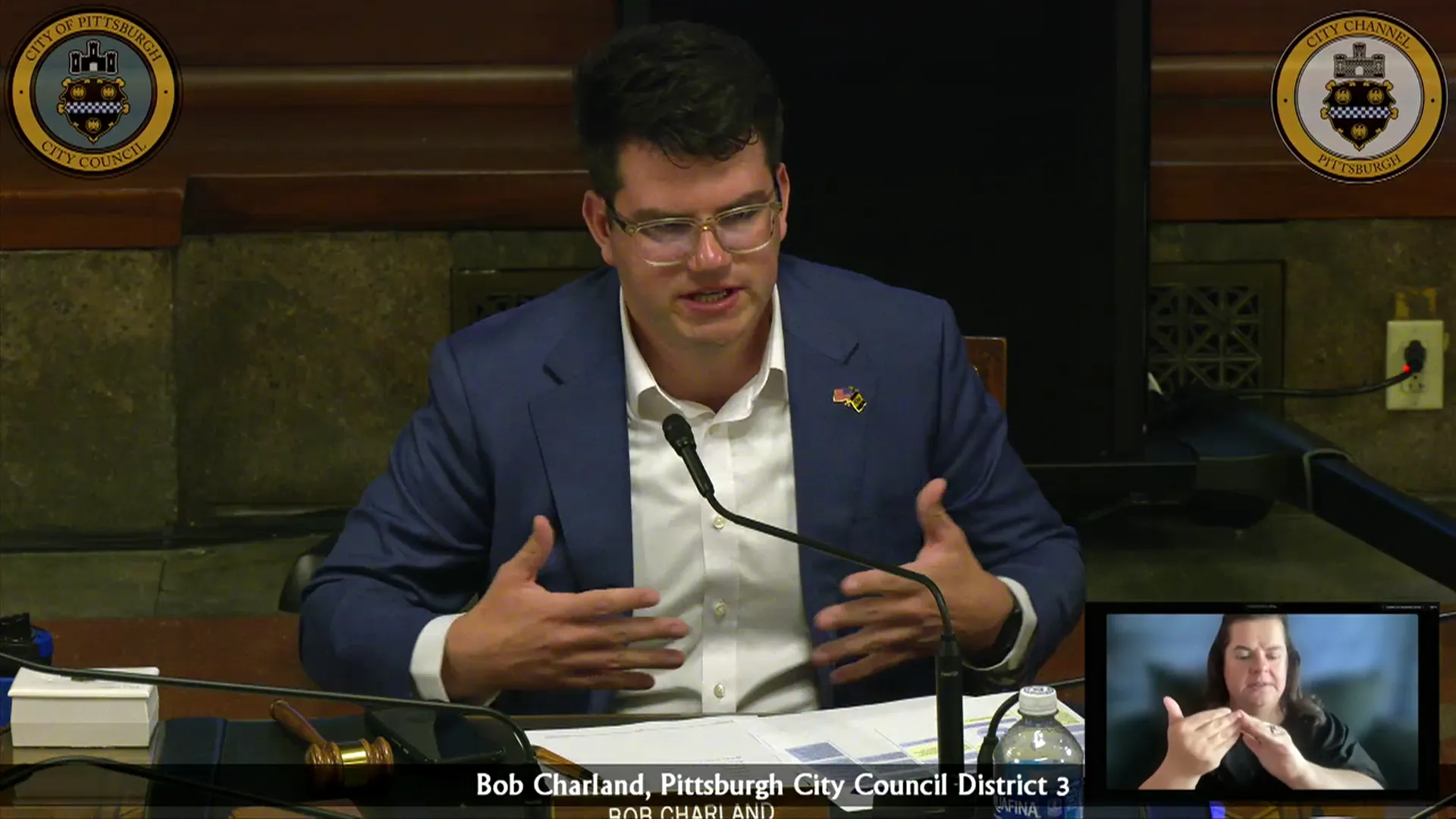
STREAMING COPY IN PREPARATION — RECORDING AVAILABLE FROM THE ORIGINAL SOURCE
Transcript — Verbatim
Speaker numbers apply only to this recording.
Discussion Breakdown — Share of Meeting
Permit Reform40%
Permitting19%
Permitting Process12%
Zoning Code9%
Economic Development6%
Technology and Innovation4%
Public Engagement3%
Transportation Safety2%
Data Collection1%
Summary of Proceedings
Pittsburgh City Council Post-Agenda: Permit Reform Update - October 28, 2026
The Pittsburgh City Council, led by Councilperson Robert Charland, convened a post-agenda discussion on the status of the City's permitting reform initiative. The session featured a detailed presentation from the Mayor's Office and department heads detailing the significant progress made over the preceding ten months to streamline the permitting process.
Discussion Items
- Permit Reform Presentation: The Mayor's Office presented a comprehensive update on the 10-month reform effort. Key statistics included a 67% reduction in city processing time, with the median review time falling from 21 days at the start of the year to 7 days overall (11 to 4 for single-family, 24 to 14 for commercial). The median time to get a permit is now about 3 days, and 59% of the 12,373 applications analyzed were complete at intake.
- Phase One Accomplishments: The administration highlighted the successful launch of several initiatives, including the new Permit Tracker, the Easy Permits pilot (issuing permits for minor work like roofing in one business day), a Virtual Inspections pilot, and a revamped Pre-Application Meeting process aimed at providing a clear "project roadmap" upfront.
- Zoning Code Reforms: The team celebrated the passage of zoning amendments, including the elimination of redundant regulations and cleaning up obsolete code sections.
- Future Phases: Phase two focuses on the review process, while phase three is anticipated in 2027 for inspections and certificates of occupancy. The city joined the Bloomberg Cities Idea Exchange's speedy permitting cohort.
- Council Responses and Questions:
- Councilwoman Warwick: Expressed strong support for the 67% speed improvement. She highlighted the importance of having all three agencies present at pre-application meetings and praised the Permit Tracker for giving homeowners independent verification of permit status.
- Councilwoman Salemetro: Praised the reduced timelines but raised concerns about elderly residents with limited tech literacy, emphasizing the need for accessible phone and in-person support.
- Councilperson Strasberger: Inquired about how applicants find the "front door" of the process. He questioned the potential for further zoning burden reductions for small projects and the potential for creating a fast-track for affordable housing through the Bloomberg cohort.
- Councilman Coggill: Speaking as a contractor, he strongly praised the Easy Permits system for roofing, stating it makes the city competitive with suburbs. He expressed surprise that the requirement for a separate city license had been removed for state-licensed contractors on most residential work. He questioned the necessity of final inspections on simple jobs and raised an issue with the lead certification requirement, which he feels creates an unnecessary burden for contractors whose work doesn't involve lead.
- Councilman Charland: Emphasized the critical importance of marketing these reforms to national developers and small contractors to change the narrative that Pittsburgh is hard to build in. He noted a discrepancy in revenue: while the value of construction submitted is $900 million higher than last year, permits issued are $400 million less, signaling a delay in issuance. He challenged the administration to aggressively tell the story that "Pittsburgh is open for business."
Key Outcomes
- Overwhelming Support: Council members praised the progress made in reducing permit processing times and improving interdepartmental coordination.
- Call for Outreach: Strong encouragement from Council to the administration to improve communication of these reforms to contractors and the development community.
- Actionable Concerns: Council highlighted lead certification reform and non-digital access for residents as areas needing attention.
- Follow-up: Councilman Charland proposed a follow-up post-agenda in approximately six months to review the progress of phase two and the Bloomberg grant work.
Meeting Transcript
Good afternoon and welcome to Pittsburgh City Council's cable cast post agenda on permit reform. I'm Councilman Councilperson Bob Sharlin and I will be chairing this post-agenda post-chend post-agenda discussion today. We're off to a strong start. So today's post agenda is about permit reform and something that I I think we have not done an adequate job telling the story of in the city. I know it's something that a lot of folks have been working really hard these ten months this year on speeding up the process. And perma reform is one of those things that is generally not that sexy, but for our council offices, it is a thing that we hear about all the time. And you know, I'm part of a national network of uh members from local municipalities, and for them, this is like the hot button topic. It is the sexiest thing to talk about, uh the thing that everyone wants to talk about. We've got a really good story to tell. And the reason for having this post agenda today is because I don't believe that that message has got out there that Pittsburgh is making big strides on their permitting. We're trying to make it easier to attract investment, we're trying to make uh more folks want to do work in the city, uh, open their businesses, build their homes, and I think we need to get the narrative out there more, specifically in national media for folks to hear hear about the work that we're doing. Um I know that it's something that I've heard from you know from individuals who've gone through the permitting process this year that it has gotten a lot easier, but I don't think it's a narrative that has reached national proportions in the way that we would like it to, and I hope that this post agenda can serve um as a way to start that process here. So I have some invited guests here from uh well, mayor's office, but also a lot of other departments allow you to introduce yourselves. The folks that are really working on this uh process over the last 10 months. Um, and if you would like to introduce yourselves now. Thank you very much, Councilperson. My name is Matt Singer. I work as Deputy Chief of Staff to the Mayor. I'm Ben Forstate, I'm special projects manager in the mayor's office. Good afternoon, Tally O'Brien, policy analyst in the mayor's office. Neil Gerbeck, uh assistant director at TLI of Systems Operations. Thanks for having us. Hello, Alyssa Hannesek, also assistant director, but of construction and the Department of Permits Licenses and Inspections. Katie Weddick, I'm the assistant director of policy and permitting with the Department of Mobility and Infrastructure. Carolyn Ristow, I'm the zoning administrator with the Department of City Planning. Great. Uh and for the record, we are joined by uh Councilwoman Warwick, Councilwoman Salmetro, and Councilwoman uh Wilson. And if you would like to start your presentation now, uh we will have questions after that. Sure. I'll get started. Uh first, thank you, Councilperson Charlotte, for calling this post agenda, and thank you, Council, for your interest in this topic. Uh, you've heard quite a bit about permitting reform over the last several months, but we haven't had the opportunity to sit down and walk through the full scope of what we know what we've accomplished and where we're headed. When Mary O'Connor took office, he made modernizing Pittsburgh's permitting system an early priority, issuing an executive order directing us to undertake a comprehensive review of the process. When I I appeared before council at the beginning of the summer, I made the point that the city has an obligation to get permitting right. Unlike many of the challenges facing Pittsburgh, this is a process that we own from beginning to end, and we shouldn't be punishing residents for trying to do the right thing. When people hear about permitting reform, they often think about large developments. But the vast majority of applications, the city processes are much more ordinary. They're for residents making repairs to their homes, small businesses improving spaces, and property owners trying to maintain their buildings. Permitting has a direct impact on the quality of life in our neighborhoods and the vibrancy of our city. What we discovered early on is that there is no single problem responsible for permitting delays. It's a combination of issues from unclear requirements and complicated codes to inconsistent procedures and communications across departments. Looking at the entire process from both the applicants and the city's perspective to identify unnecessary friction and remove it. And much of this pro and much of the progress we've made has come directly from working with the employees who administer these processes every day. A central part of our approach is recognizing that not every application should follow the same path. Complex projects require more attention and coordination, but straightforward applications should be able to move quickly. The goal isn't to review everything faster, it's to make sure we are giving every application the level of scrutiny that actually requires.
SUMMARIZED BY OPENPUBLICA AI
TRANSCRIPT VIA PUBLIC VIDEO
openpublica.com
openpublica.com