San Diego Economic Development & Intergovernmental Relations Committee Meeting - September 4, 2024
STREAMING COPY IN PREPARATION — RECORDING AVAILABLE FROM THE ORIGINAL SOURCE
San Diego Economic Development & Intergovernmental Relations Committee Meeting - September 4, 2024
The Economic Development and Intergovernmental Relations Committee of the San Diego City Council met on September 4, 2024, at 10:00 a.m. UTC. The committee received presentations on the Port of San Diego, a municipal code amendment establishing the Cultural Affairs Department, the Fiscal Year 2024 Consolidated Annual Performance and Evaluation Report (CAPER) for HUD programs, and the San Diego Workforce Partnership. The committee also voted on consent items and heard extensive public testimony. All three members present (Vice Chair Lee, Councilmember Foster, and the Chair) voted unanimously on items requiring action. Councilmember Campbell was absent. Note: The chair's name is transcribed inconsistently in the raw transcript as both 'Kimpio' and 'Campillo'.
Consent Calendar
- Approval of past committee minutes: Moved by the Chair, seconded by Vice Chair Lee, passed 3-0.
- Consent agenda item #1 (moved to end of meeting): Based on public comments, this item involved an amendment increasing the not-to-exceed amount for an art-in-the-park project from $165,000 to $205,000 due to project delays. The committee approved the item unanimously without further discussion.
Public Comments & Testimony (Non-Agenda)
- Jennifer DePoyan (Space for Art, Districts 3 and 8; resident of District 1) expressed full support for implementing AB 812, which would allow cities to reserve up to 10% of very low-, low-, or moderate-income housing units for working artists within cultural districts. She requested creation of a local tenant preference ordinance for artists and emphasized that San Diego is the only city among the 10 most expensive cities in the U.S. without large-scale affordable artist housing.
- Megan Stewart expressed concern about the economic harm of marijuana retailers, citing a CEO of NABIS describing the industry as a 'wave crashing in slow motion.' She noted that grower and brand numbers have fallen by more than 70% and that marijuana companies owe California over $730 million in unpaid taxes. She urged caution about expanding the marijuana industry.
- Becky Rapp (affiliated with the American Cancer Society) expressed support for smoke-free workplace protections and urged the committee to join the American Cancer Society in asking Governor Newsom to veto AB 1775, which would allow marijuana cafes.
- Peggy Walker, speaking from a public health perspective, called for closer scrutiny and inspection of high-potency THC manufacturing, citing concerns from medical and scientific fields about harms to teenagers and social costs. She noted that a conditional use permit for a local manufacturing plant was recently approved without investigation.
- Joy Sunata (District 3) spoke positively about the World Design Capital 2024 events, the Balboa Park pavilion, the student design competition, and a book titled 'Declaration of Interdependence of San Diego and Tijuana.'
- Judy Strang expressed concern about increased car insurance rates tied to driving under the influence, citing San Diego ranking seventh among cities with high DUI rates and a 62% increase in fatal crashes involving marijuana-impaired drivers in California over the last three years.
- An anonymous speaker (identified as 'the original') expressed opposition to sanctuary city policies, claiming that undocumented immigrants receive priority access to services and housing over local residents. The speaker criticized funding to Catholic Charities and Jewish Family Services, referencing $43 million, and called for declaring an emergency in the Tijuana River Valley.
- Madison, a young person, expressed concern about low workforce return rates for 18-25 year olds, linking it to marijuana use. She cited statistics that 42% of 19-30 year olds used marijuana in the past year, 29% in the past month, and 10% daily. She urged the city to prioritize internship programs for teens and young adults.
- Nancy Logan expressed concern about the substance use crisis and health inequities, citing a Kaiser Family Foundation survey finding that two-thirds of adults say they or a family member have been addicted to alcohol, marijuana, or drugs, and that white adults (51%) are more likely than Black or Hispanic/Latino adults (35%) to receive treatment. She urged a pause on new businesses profiting from addictive drugs.
Discussion Items
Item 4: Port of San Diego Commissioner Report
- Vice Chair Danielle Moore, Commissioner Michael Zuquet (also transcribed as Zouquette), and Commissioner Sid Varakara (also transcribed as Varachra) presented. They highlighted:
- Economic impact: 64,000+ jobs and $9.2 billion in annual economic impact from more than 800 tenants, cargo, and cruise operations. $1.9 billion invested since 1962.
- FY25 operating budget: revenue growth approaching 2%, rising from $311 million to $316 million. The maritime industrial impact fund was doubled from 2% to 4% of maritime industrial revenue, bringing $1.5 million this year. $3 million allocated for a wetlands mitigation bank at Pond 20; $2 million per member city for infrastructure; $8.3 million added to reserves, totaling $84.5 million.
- Grants secured: $5 million (Department of Transportation, 10th Avenue Marine Terminal planning), $1.4 million (Caltrans, debris removal), $4.24 million (California GoBiz, port efficiency), $2 million (HUD, Freedom Park), $40,000 (San Diego Office of Emergency Services), $2.3 million (Homeland Security), and $2.7 million (Air Pollution Control District, electrical infrastructure).
- Maritime clean air progress: 60% of the Maritime Clean Air Strategy measures implemented; first all-electric tugboat built by Crowley Maritime, saving 30,000 gallons of diesel per year; 16 zero-emission cargo handling units acquired; shore power at all terminals expected by next year; zero-emission truck stop planned in National City.
- CEO search: More than 700 applications received; ad hoc committee reviewing; Randa Coniglio continues to serve.
- Seaport San Diego: Exclusive negotiating agreement extended to October 2027; discussions ongoing with city and county on financing public infrastructure.
- East Harbor Island: 450-room hotel (Sunroad Enterprises), 10 acres of public space/promenade, Topgolf site, and RFP for an entertainment district.
- Freedom Park at Navy Pier: $65 million project creating a 10-acre veterans park; demolition of the Navy headhouse began that day; construction expected to start early next year.
- Cruise: Approximately 100 cruise calls per year, bringing several hundred thousand visitors.
- Cesar Chavez Park: Encampment of refugee families and unhoused individuals cleared; all families placed in temporary housing through partnerships with Perkins Elementary School and Catholic Charities.
- Gaylord Pacific Resort in Chula Vista: 1,600 rooms, opening next summer, projected $500 million annual economic impact, 600,000 room nights pre-booked, expected to employ 1,000 to 4,000 people.
- Tijuana River pollution: $450 million allocated for wastewater treatment plant repairs, but $1 billion needed; AJR 12 urges federal action.
- Caulerpa infestation: Eradication efforts ongoing; port provided $92,000 for surveys and declared a state of emergency.
- Public comment: Joy Sunata praised the report and the work. The anonymous speaker again criticized the port for prioritizing refugees over local unhoused residents.
- Committee discussion: The Chair asked about Topgolf timeline; Commissioner Zuquet said environmental review is underway, with lease negotiation expected next year and construction a few years away. Councilmember Foster asked about job opportunities for District 4 residents; Commissioner Moore emphasized workforce partnerships, an inclusion summit in January 2025, and community college connections. The Chair asked about the Port Summer Student Worker Program; Commissioner Moore said it is on hold for redesign, with expectations for next summer.
Item 2: Amendments to Municipal Code to Establish Cultural Affairs Department
- Jonathan Glus, Executive Director of Arts and Culture, and Christine Jones, Chief of Civic Arts Strategies, presented. The ordinance formally establishes the Cultural Affairs Department in the Municipal Code, creating it as a city department separate from the citizen Commission for Arts and Culture. The department was first created in the FY2021 budget but formal action was delayed due to COVID-19. The ordinance aligns duties/functions of the Commission with actual practice and city budget processes. The Commission retains its name. Functions include managing competitive grants, cultural policy, community engagement, cultural districts, Lyceum Theater, and public art.
- Public comment: Joy Sunata supported the amendment and praised the name change and collaboration. The anonymous speaker again criticized COVID as a scapegoat and expressed anger about pandemic policies.
- Committee discussion: Councilmember Foster asked about designated cultural districts and how AI/ changing art definitions would be addressed. Glus said this is a cleanup measure; the cultural plan will address definitions later.
- Vote: Motion by the Chair, second by Vice Chair Lee. Passed unanimously (3-0).
Item 3: FY2024 Consolidated Annual Performance and Evaluation Report (CAPER)
- Melissa Viaplana (Community Development Coordinator) and Nadine Hassoon (Community Development Specialist) presented. The CAPER covers FY2024 (July 1, 2023 – June 30, 2024), the final year of the five-year consolidated plan. Key points:
- The city partnered with 50+ nonprofits on 131 projects, investing $28 million in federal HUD funds (CDBG, HOME, ESG), completing 47 projects. Outcomes included serving 46,700 people, 318 households, 219 businesses, and improving two nonprofit facilities and one public facility.
- Affordable housing: 64 households benefited; examples included Amana CED apartments ($1.5M HOME, 11 units), Milejo Village ($2.5M, 15 units), Harris Family Senior Residences ($1.75M, 11 units), and conversion of the Rancho Bernardo Hotel into 175 affordable senior units ($4M).
- Homelessness: $3.4 million in CDBG/ESG supported services to 7,100+ individuals; overnight shelters served 12,000+ people; tenant-based rental assistance served 142 households.
- Small businesses: 219 small businesses and 357 low/moderate-income entrepreneurs supported. Accessity provided technical assistance to 46 clients; 31 received loans between $300 and $100,000, creating 11 jobs and maintaining 70 jobs.
- Workforce development: Workshop for Warriors provided 16-week advanced manufacturing training to veterans.
- Public facilities/infrastructure: Sidewalk on Elm Avenue ($250,000 CDBG, leveraging ~$918,000) estimated to impact 5,000 low/moderate-income individuals.
- Community services: CARES Act-funded services included behavioral health, meal delivery, food distribution, senior lunches, language assistance, and educational advocacy. Examples included Ocean Discovery Institute, Bayside Community Service, and Wesley House.
- Nonprofit facility improvements: Over $1 million in improvements; examples included Family Health Centers of San Diego Diamond Neighborhoods Remodel and Urban Core HVAC upgrades.
- Fair housing: Legal Aid Society operated a fair housing hotline, conducted investigations, workshops, and hosted the annual Fair Housing Conference.
- Next steps: CAPER released for public comment September 3; public comment ends September 18; Consolidated Plan Advisory Board meeting September 11; presentation to full City Council September 17; submittal to HUD by September 28.
- Public comment: Joy Sunata urged staff to always include cost per unit for affordable housing projects, citing the Rancho Bernardo project cost of over $900,000 per unit. The anonymous speaker again criticized perceived prioritization of immigrants over local residents.
- Committee discussion: Councilmember Foster questioned the difference between 'people served' and true economic outcomes, noting zero job creation reported. Staff (Michelle Morano) explained HUD outcome measures and that no job-creating activities were funded in FY24, with microenterprise assistance being a primary measure.
Item 5: San Diego Workforce Partnership Presentation
- Tony Young, Interim President/CEO and former Councilmember, presented. Key points:
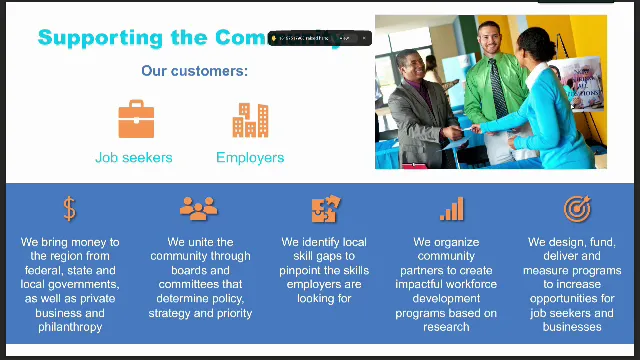
- The Workforce Partnership is a consortium of the City and County of San Diego, serving the entire county. In the last year, it served 76,000 job seekers and 803 employers.
- Six career centers across the region; participant demographics are fairly equitable by gender and race/ethnicity.
- Services for job seekers: dislocated workers, low-income individuals, parents/families, young adults, foster youth (at YMCA), veterans, and justice-involved individuals.
- Employer services: new hire training, incumbent worker training, layoff aversion, rapid response, recruitment assistance, strategic planning.
- Alignment with the city's economic strategic plan.
- New initiatives: $5 million for re-entry services for justice-impacted individuals; $5 million for EMS/paramedic/firefighter career pathways; goal to add 300 substance abuse counselors by 2026, with six cohorts trained.
- Strategic Vision 2030 plan: 14 forums held so far, five more planned; report expected by end of December.
- Public comment: Joy Sunata praised Tony Young and honored Councilmember Foster for his commitment to workforce issues. The anonymous speaker criticized treatment of undocumented immigrants.
- Committee discussion: Vice Chair Lee (also a policy board member) asked about feedback from forums; Young said partners want the Workforce Partnership to be a convener, not a competitor. Councilmember Foster expressed interest in re-entry and EMS/fire training opportunities, especially near Lincoln High School.
Key Outcomes
- Approved past committee minutes (3-0).
- Approved consent agenda item #1 (art-in-the-park amendment) (3-0).
- Approved ordinance to establish the Cultural Affairs Department (3-0).
- Received and discussed the Port of San Diego report, the FY2024 CAPER, and the Workforce Partnership presentation as informational items (no votes).
- The committee will next meet on Wednesday, October 2, 2024, at 2 p.m.
Meeting Transcript
Good afternoon, everyone. Welcome to the economic development and intergovernmental relations committee meeting of September 4th, 2024. Our committee liaison Sarah Jordan will provide information and instruction for the public on how to participate. Thank you, Chair Kimpio. Well, members of the public are able to attend the meetings in person. This meeting is being televised and live streamed on the city's website. And the council administration will continue to make arrangements for the public to comment using the Zoom webinar platform. Members of the public who wish to provide virtual testimony must enter the virtual queue by raising their hand before the virtual queue closes. The queue will close when the last virtual speaker finishes speaking, or five minutes after in-person testimony ends, whichever occurs first. This will allow for better meeting management between the two platforms and ensure the committee is able to manage and conduct city business. We appreciate the public's cooperation. Chair Kempio. Thank you. We'll now call this meeting to order and I'll call the roll. Vice Chair Lee here. Councilmember Foster. Here. Councilmember Campbell will be absent today, and I am present. Also present with us is Gillian Andalina, Deputy Director of the Office of the IBA, Deputy City Attorney Daphne Scogum from the Office of the City Attorney, Stephen Hill, Senior Policy Advisor from the Office of the Mayor. Sarah, please continue with public comment instruction. Thank you, Chair. If you're in person, please complete a speaker slip located at the entrance of the committee room and place it on the train indicated at the table at the front of the room. Please do so in a timely manner to ensure proper meeting management. In-person testimony will conclude before virtual testimony begins. Members of the public can join the webinar by computer tablet or smartphone by accessing the link, which is listed online in the preamble language of the agenda on the city's webpage. So join the Zoom webinar by telephone, please dial 1669-2545252. And when prompted, input webinar ID 161-965-4979 pound. This information is also available on the agenda and it will appear on the screen during the public comment period for each agenda item. And as a reminder, members of the public who wish to provide virtual testimony must enter the virtual speaking queue by raising their hand before the queue closes. So please fix that uh so I don't have to keep telling you guys. Thank you for your testimony and chair with no other hands in the virtual queue. That concludes public comment on the past committee minutes. Okay, we'll now take committee members' questions and entertain a motion. I'll make a motion to approve the minister. I have a second. I have a second from Vice Chair Lee. Any comments or questions from the council members? Hearing none, let's go to our vote. Vice Chair Lee. Yes, committee member Foster. Yes. And I am also a yes. That passes with three members present. Let's proceed to non-agenda public comment. The council members respect and appreciate the public's input and are fully committed to protecting every participant's free speech rights at council and committee uh meetings. Sarah, please proceed with our non-agenda public comment. Thank you, Chair. Per rule 2.7 non-agenda public comment is an opportunity for members of the public to comment on items that are not on the agenda but are within the subject matter jurisdiction of this committee. Each speaker will have two minutes. If you're in person, please come up to the reserve seats at the front of the room when your name is called and be prepared to come up to the lectern in the order called.
openpublica.com