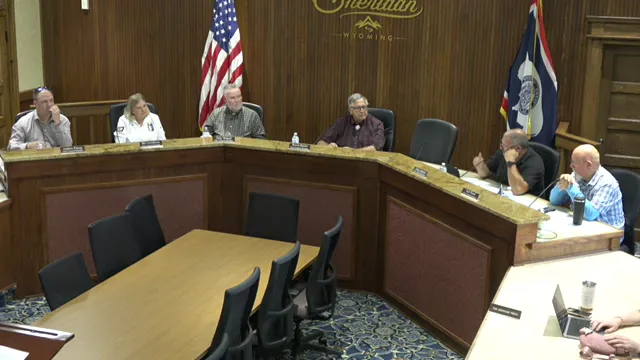
City Council Study Session – June 22, 2026
STREAMING COPY IN PREPARATION — RECORDING AVAILABLE FROM THE ORIGINAL SOURCE
City Council Study Session – June 22, 2026
This study session, held on June 22, 2026, featured presentations and council discussion on the FY27 Master Fee Schedule and the city's Special Event Policy. No public comments were taken as it was a study session. The council will consider formal adoption at a future regular meeting.
Discussion Items
-
FY27 Master Fee Schedule – City Clerk Ashley Foster presented the first comprehensive review of the fee schedule since July 2023. The focus is on cost recovery and updating current operations, not generating new revenue. Key proposed changes include:
- Special event permits: separating alcohol and non-alcohol permits, reducing the application timeline to 21 days for non-alcohol events, and increasing the late fee for alcohol-included events to $100 (from $50).
- Records requests: a simplified flat fee of $5 for up to 30 minutes of staff time (up to 3 hours), with no charge for requests fulfilled in 5 minutes or less. This has reduced average fulfillment time from 8.5 days to 1.5 days.
- Printing fees: simplified to a flat per-page cost regardless of color or duplex.
- Planning and zoning: new fees for actual costs of legal ads and postage (applied only to the applicant), and a $50 sign permit review fee for all sign permits (with exemptions for construction, directional, election signs, etc.).
- Non-compliance fee for barricades: if the city must intervene after hours due to an event organizer’s failure to secure barricades, a fee of $336 (based on two staff, truck, trailer, and two-hour overtime minimum) will be assessed.
- Fingerprinting: a new $5 per card fee (typically two cards needed) as allowed by statute.
- Utility rates and golf fees continue to be approved via separate resolution and updated annually.
- The fee schedule would be approved as a standalone document (one reading), not a resolution. Council discussion included concerns from Councilmember Lumen about the impact on nonprofits versus for‑profit businesses, particularly the cost of insurance for special events. Ashley noted she would research insurance costs and that the city supports nonprofits through other means. The council encouraged public input at the next meeting.
-
Special Event Policy – Ashley Foster presented a draft policy to create a single, consistent process for special event permits, reduce staff burden, and allow discretion. Key elements:
- A special event permit is required for use of city property, public right-of-way, traffic impact, city services, alcohol, or public impact. Private gatherings without alcohol or public impact do not require a permit.
- New requirements: copy of ID for all alcohol permits (except existing liquor license holders), inclusion of walks and 5Ks, revised alcohol rules in city parks (no BYOB at open-access events; sales only by licensed liquor license holders for malt beverages, or by catering permit for hard alcohol). For private events in parks with alcohol, a city park use permit with open container permit ($50 per 24 hours) is needed; sales require a licensed liquor license holder.
- Public notification: now the applicant’s responsibility (submit proof if a complaint is received), reducing city staff involvement.
- Additional conditions (e.g., amplified restrooms, security) may be attached; conditions can be appealed to the city administrator within five days. Full denial of a permit may be appealed to the governing body if time allows.
- Council discussion focused on enforcement of deadlines. Councilmember Lumen argued for stronger consequences (changing “may” to “shall” for denial of incomplete or late applications). Councilmember Woods suggested an automatic late fee. Councilwoman supported moving from “may” to “shall” for incomplete applications after a certain point. Ashley emphasized discretion to avoid harming businesses that have all paperwork ready but submit late due to circumstances beyond their control. Currently, she has never denied a permit. The policy includes a provision that if an applicant does not respond within 10 days, the application is considered inactive and closed. Next steps: Ashley will send the draft to common applicants for feedback and consider an educational session.
Key Outcomes
- No votes were taken at the study session. The FY27 Master Fee Schedule and the Special Event Policy will be presented for formal adoption at a future regular meeting (likely in two weeks).
- Council directed staff to consider feedback from nonprofits and businesses, and to research insurance costs related to special events.
- The special event policy discussion highlighted a consensus that enforcement of deadlines needs improvement, but discretion should be preserved for responsible applicants.
Meeting Transcript
Okay. Ladies and gentlemen will stand up for the pledge, please. And one notion individual justice for all. Thank you very much. Sometimes we do it, sometimes we don't. I think it's good to do it. Ladies and gentlemen, this is our June 22nd study session. Obviously, the mayor is not with us tonight. We wish him well. Tonight is like I said, it is a study session, so there is no comments from the public. But we will start this evening with our city clerk Ashley Foster on discussion of the 27 master fee schedule. Thank you, Ashley. Thank you, Mayor Pro Tem. Good evening, Council. So we've got two items to discuss tonight. They somewhat go hand in hand, but not completely. So the first one we will discuss is our FY27 master fee schedule. This is the first comprehensive study of the fee schedule since its last approval in July of 23. We are looking to just make it more reflective of current operations. It just needs to be updated essentially. So in order to review this, I went way back to 94, tried to find every single thing I could find regarding code so that we could really get the most comprehensive plan that we could so we don't have to keep redoing this. So we really just have evaluated everything that we're doing currently and tried to capture it the best. What I really want to stress is the focus of a master's fee schedule is not on generating new revenue. People hear fee schedule and they think we're charging them new rates, think we're charging them new things and finding new things to charge them for. Really all we're doing is capturing what we are already charging when we do propose new fees, which there are some in here that we'll discuss, those go before yourselves. But that really is not the focus of a master fee schedule. I will not be presenting how much revenue we will get from these things because that is not the point. So this will consolidate everything into that one reference point. Super quick point of order here is I do know how numbers work. They do not go in order because they are by theme. Um so it's just the easiest way for people, they don't always know which division or department they're looking for. So it's based on um what the kinds of things that they're looking for to try to be the most user-friendly as possible. Okay, so um starting up in the left hand, top left hand side, you'll see a page number that is reflective of the um master fee page that it's on. So special event permits. Um we've talked about these obviously with the ordinance change that are that are in the works. Um the change that is being proposed, the current time requirement for special events is 60 days. Um however, the largest reason for the time delays and the additional processing is for alcohol, so we would like to separate those things out. So special events, um, we are looking to move those into an alcohol not included and an alcohol included. Um, if alcohol is not included, then it will join the rest of the permit timelines, which are 21 days. Um the some of the we kind of referenced this, um, but some of the things that we talked about for the 60-day timeline that it provides. The biggest issue that we go back and forth about is if insurance needs to be verified, if we didn't receive it, if the coverage is accurate, um, and then sometimes they need to revise their insurance policy that that builds in time for them to do so. Sometimes that can take up to a week or so. Um if they need to get a letter of good standing from an external agency, if they're a liquor licensee from outside of the city of Sheridan, they have to get a letter directly from that clerk or that licensing authority. That can take time. Um, if they are on a property that they do not own, they need the property owner letters. So there's many more moving parts with special events that can cause those delays. Um late applications often require everybody to kind of drop what they're doing and review those. So this it takes away from the day-to-day resources. Um, increasing the late fee. So we are proposing for the late fee for alcohol included to increase to 100.
openpublica.com