Stamford Zoning Board Meeting on BMR Text Change - November 19, 2024
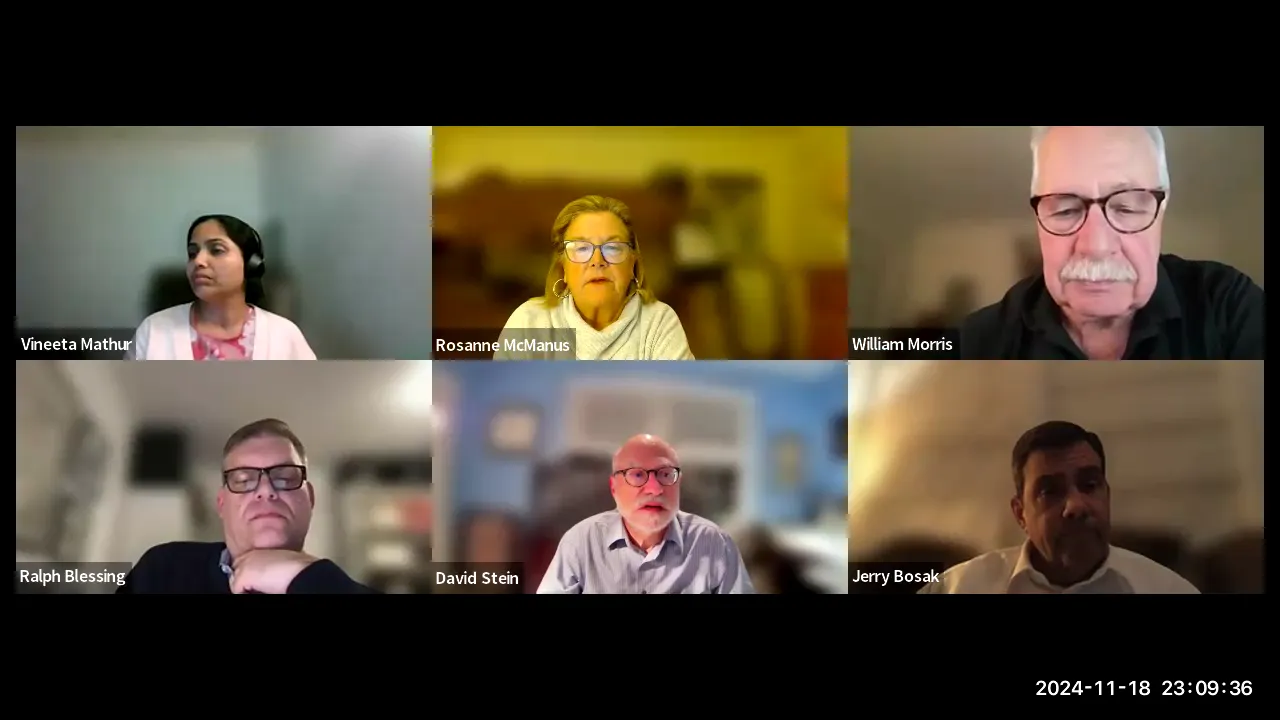
STREAMING COPY IN PREPARATION — RECORDING AVAILABLE FROM THE ORIGINAL SOURCE
Stamford Zoning Board Meeting on BMR Text Change - November 19, 2024
The Stamford Zoning Board held a meeting on November 19, 2024, primarily to discuss and vote on a text change (Application 224-24) to the city's Below Market Rate (BMR) program. The proposal included increasing the on-site BMR requirement from 10% to 14%, increasing the fee-in-lieu payment amounts, and making fee-in-lieu an as-of-right option (previously requiring a special permit). After extensive public comment and board deliberation, the board approved the text change with an amendment requiring an annual staff report on the BMR program.
Consent Calendar
- Minutes of November 4, 2024, and November 6, 2024 (special meeting) were approved unanimously.
Public Comments & Testimony
- Sue Halpern (resident) questioned the use and location of fee-in-lieu funds, specifically asking about $1.3 million allocated to 95 Elmcroft Road and funds from the Smith building. She advocated for on-site BMR units over waiting for fee-in-lieu funded projects.
- Gina Calabriz (300 Seaside Avenue) opposed making fee-in-lieu as-of-right, arguing it would subvert the purpose of the BMR program and lead to more segregation. She expressed concern about industry capture of the regulatory body.
- Monica Twal (37th Street) called the text change "wishy-washy" and argued it economically benefits developers at the expense of homeowners and taxpayers.
- Michael Moore (President of Stamford Downtown) asked for clarification on the impact of the change on the Transit Center Development District (TCDD), noting the BMR ratio would increase from 12% to 14%.
- Cynthia (phone 7466) opposed as-of-right fee-in-lieu, advocating for maintaining public input and regulatory control to ensure equitable development.
- Rick Redness (former Inclusionary Housing author) encouraged flexibility and warned against focusing only on fee-in-lieu and percentage, noting other factors like building type and homeownership complexities. He agreed with Barry's point on homeownership challenges.
- Monica Twal (second time) objected to Rick Redness speaking, claiming he was "coaching" the board from a pro-developer standpoint.
- Ray Matthew clarified that Rick Redness is a homeowner and his input is valid.
- Gina Calabriz (second time) acknowledged stakeholders' right to speak but raised concerns about industry capture of the regulatory body.
- Dave Adams (speaker) agreed with Gina Calabriz and asked "who benefits?" – residents being pushed out or developers.
Discussion Items
- Board members and staff (Emily and Ralph) responded to public comments, defending the fee-in-lieu as-of-right change as necessary to create deeper affordable units (30-40% AMI), larger units, and geographic diversity. They noted that fee-in-lieu allows production of more units and serves lower-income households compared to typical on-site 50% AMI studios.
- The board debated the as-of-right provision. Some members opposed giving up control, while others argued it provides flexibility in exchange for higher BMR contributions. A compromise was reached to add an annual report requirement.
- The board discussed amending the text to require an annual report by January 15th from Land Use Bureau staff on the BMR program for the prior year, including number of units approved on-site, number of projects using fee-in-lieu, amounts committed and paid, and use of funds by the Affordable Housing Trust Fund.
Key Outcomes
- Application 224-24 (BMR Text Change) was approved 4-0, as amended to include the annual report requirement. The text change makes fee-in-lieu as-of-right, increases on-site BMR from 10% to 14%, increases fee-in-lieu payment amounts, and includes other amendments.
- Application 224-01 (31 Maple Street parking text change) and Application 224-02 (31 Maple Street townhouses) were opened and continued to December 2, 2024.
- Application 224-31 mod (clarification text change) was continued to December 2, 2024.
- Application 223-35 (Rock Riman extension) was approved, extending the approval to December 26, 2025.
- Application 213-14 (Edge Hill independent living units) was continued to December 2, 2024, pending conditions.
Meeting Transcript
Beginning and they're included on on site. They are units that get built within the period of time that the building is constructed. If you go and you go the fi and lu route, now you're waiting five to six years just to get to an end result where you're going to get some units. I recognize that you know there is uh there's there's an incentive because you think that you're gonna get three times the amount of units, you know. But the reality is is that the the what we're you know looking at in terms of like how many people are migrating out of New York City. We don't have time for that. And uh, you know, we already have residents that are being pushed out of town because of the fact that the the prices are skyrocketing. I think it it would not be in the best interest of this board to uh cede or or acquiesce it's it's it's discretion on the fee and lieu. Um otherwise, I think that most of this tax change is you know not bad. I just don't think that uh that's that's you know, really something that you guys want to go with. Thank you. Good. Thank you. Next, we have Ms. Sue Halpern. Hi, good evening. Thank you for letting me um give me this opportunity to speak. This is Sue Halpern. I live on Elmcroft Road, and I have a couple of questions. I know I think Emily had a slide I saw briefly about the funds, the fee and loo funds, and there were, I know there's one project in particular, 95 Elmcroft Road that has 1.3 million dollars, I think it is in allocated funds. And you know, that project's been hanging around for a few years now. Um I was just wondering where that money is. I mean, are you take if is there a time period that if if a developer or uh um a nonprofit doesn't use the money in a certain period of time, do they default on that money? Or I mean it seems like you know, that that's been several years, and if nothing's happening and it's happening, why can't we take that money back and give it to someone else that could use the money? And also, um, I was wondering, you know, when the Smith was built, I I understand there were several million dollars that was supposed to be paid in fee and loo, and whether it had to go to St. John's Towers or what have you, but I was just wondering where that money uh did it ever come in, you know, you you kind of wonder where uh, you know, way where is this fee and loo money being used? If it's not going to be used, can somebody else can you take them back and use it for another developer uh to help somebody else? So thank you. That's really and you have several apartment buildings already approved now, high rises or what have you. And it would be great if they provide the BMR units since they're they've already been approved to be built, you know, and like Mr. Adams said by the time you wait for developer to come in and apply for another development to use fee and loo funds, you know, you're waiting. It could be a few years. So thank you. That's that's all I have to say. Thank you. Okay, you raised some good point, Sue. Thank you. Next, we have Miss Gina Calabriz. Good evening, Gina Calabries, 300 Seaside Avenue. I sent an email earlier this evening that has some of my comments about the BMR. Um earlier, Ms. Gordon said that she didn't think it would make much of a difference to have as a right versus special permit. Well, there's an old saying, if it ain't fixed, if it ain't broken, don't fix it, right? If it's working fine, then why this change? I am, I do wonder what the impetus for this change is. And I am somewhat cynical about these things. Um the purpose section of the BMR program says that one of the purposes and and one of the goals this city has is to achieve a diverse and balanced community and create mixed income communities and new developments. Um, allowing Fi and Lu as a right would totally subvert the purposes of the per of the BMR program in Stanford. And it sounds like more elite progressive hypocrisy that turned off a lot of voters in this last election. And that needs to be pointed out.
openpublica.com