Tacoma City Council Special Meeting: Federal Update – March 25, 2025
STREAMING COPY IN PREPARATION — RECORDING AVAILABLE FROM THE ORIGINAL SOURCE
Tacoma City Council Special Meeting: Federal Update – March 25, 2025
Note: The transcript indicates the meeting was called on March 21, 2025, but the official meeting date is provided as March 25, 2025. This summary uses the latter date as instructed.
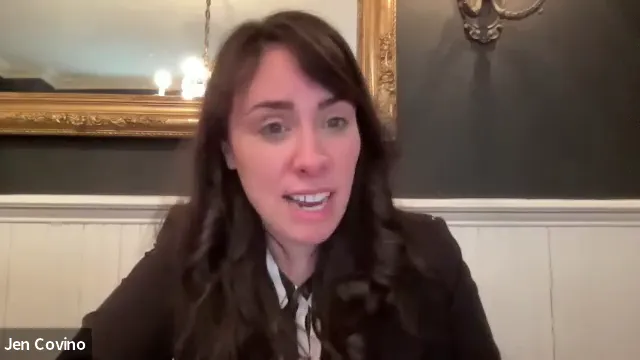
The council convened a special meeting for a federal update from Jen Cavino, president of Cavino Smith and Simon, the first of a series of every-other-Friday briefings. Cavino reviewed recent executive actions, judicial rulings, and legislative developments, followed by council questions.
Discussion Items
-
Executive Order 14238 (Continuing the Reduction of the Federal Bureaucracy): Targets agencies including the Institute of Museum and Library Services (IMLS), U.S. Interagency Council on Homelessness (USICH), Community Development Financial Institutions Fund (CDFI Fund), and Minority Business Development Agency (MBDA). Cavino noted that CDFI Fund support generates $8 of private investment per $1 of federal money, and IMLS represents only 0.0046% of the federal budget but generates $50 billion in economic impact. The MBDA is codified in statute, so its core functions are protected, but non-statutory programs are at risk. USICH coordinates homelessness efforts across 19 agencies.
-
Executive Order 14239 (Achieving Efficiency Through State and Local Preparedness): Aims to reduce FEMA’s role by empowering state/local governments. A national resilience strategy is due within 90 days. Cavino expressed concern about the phrase “ending subsidization of mismanagement” and unclear funding implications.
-
Executive Order on Education (Improving Education Outcomes by Empowering Parents, States and Communities): Initiates dismantling of the U.S. Department of Education, which requires congressional approval (60 Senate votes). Programs like Title I and IDEA may be reassigned to other agencies (e.g., DOJ, DOL, SBA, Treasury). Potential impacts on after-school and summer programs.
-
Judicial Developments:
- Birthright citizenship: Supreme Court asked plaintiffs to respond by April 4; nationwide injunction could be lifted in 28 states/territories.
- EPA greenhouse gas reduction fund: Temporary restraining order blocked cancellation of $20 billion in Inflation Reduction Act funds.
- Transgender military ban: District court ruled Pentagon cannot enforce ban, citing misquoted studies.
-
Legislative Update:
- Continuing resolution (CR) for FY2025 enacted through end of fiscal year, with anomalies: $4.5 billion for rental assistance (HUD), additional FEMA disaster relief, and VA funding. No earmarks or community project funding included. Democrats expressed concern about potential impoundment.
- Budget reconciliation process: Republicans aim to advance $4.5 trillion in tax cuts offset by $2 trillion in spending cuts. House Energy and Commerce Committee must reduce deficit by $880 billion, likely through Medicaid work requirements for able-bodied adults without dependents. Tax reform vehicle may include Low-Income Housing Tax Credit (LIHTC) expansion (bill reintroduced by Sen. Cantwell, co-sponsored by Sen. Murray).
- Timeline: House Speaker Johnson hopes for a bill by Memorial Day; realistic estimates suggest September/October.
-
Immigration Policy: Administration invoked the Illegal Aliens Act for detentions; courts are challenging its use. Cavino advised the city to educate residents about their rights.
-
Council Questions:
- Councilmember Bushnell asked about FEMA funding and free lunch programs. Cavino noted no roadmap for FEMA changes, but Congress appropriates funds. School lunch programs are not currently targeted, but an executive order on terminating benefits to undocumented populations may create administrative burdens.
- Councilmember Tiers asked about reconciling increased funding with workforce reductions (DOGE cuts). Cavino highlighted ongoing legal challenges and the April 14 deadline for agency RIF plans. She also noted potential travel bans affecting up to 43 countries, with three tiers of severity.
- Councilmember Walker asked about tracking impacts on Tacoma. City Manager Elizabeth responded that a cross-functional federal response team meets weekly, tracking EOs, grants, and contracts. They have developed a resource sheet for public-facing employees and a protocol for potential ICE interactions. No public-facing communication about the team has been issued yet.
- Councilmember Sadake asked about the continuing resolution and budget reconciliation. Cavino explained the federal budget process, anomalies, and how Medicaid work requirements could achieve cost savings.
Key Outcomes
- No formal votes were taken. The meeting established the first of regular federal update briefings (every other Friday).
- The city manager’s office will continue to monitor federal actions and may consider releasing a public update on its internal response team.
- Council members are encouraged to share news stories with constituents regarding potential travel bans and other policy changes.
- The next federal update is expected in two weeks.
Adjournment
The meeting adjourned at approximately 5:37 PM (seven minutes over the scheduled time).
Meeting Transcript
All right. I would like to call to order the city council special meeting of March 21st, 2025. Our agenda item today is a federal update with Jen Cavino, president of Cavino Smith and Simon. During our February 11th study session, Jen offered to hold regular meetings where she would provide the council with a brief update, a brief federal update, and also take any questions that the council may have. This is the first of those meetings, which will be held every other Friday. If there's nothing else before we start, Jen, I will turn it over to you to begin the discussion. Good afternoon. Thanks so much, Deputy Mayor, for that introduction. And I want to thank the rest of the council for taking the time to join me here this afternoon. I want to just provide a quickly a quick overview of recent federal developments, including uh recent executive actions taken by President Trump and his administration and outline potential considerations for how those executive orders may impact your local government operations or the lives of your constituents. So over the course of the past week, there have been several executive orders that have been signed into law. And I'm gonna provide a quick review of some of those key actions that may be of the most concern to the city of Tacoma. First, I wanted to provide you with an update on executive order 14238, which was signed last Friday evening. That's entitled Continuing the Reduction of the Federal Bureaucracy, which is intended to reduce the scope of the bureaucracy by eliminating or reducing functions deemed either unnecessary or non-essential to the government. And this executive order implicates a number of agencies, including the Institute of Museum and Library studies, the U.S. Interagency Council on Homelessness, the Community Development Financial Institutions Fund, CDFI Fund within the U.S. Department of Treasury, the Minority Business Development Agency, as well as a few other institutions that may not be of concern to domestic policy. Obviously, uh the city should take note that this executive order seeks to reduce the functionality and the workforce that supports those agencies. And we understand that uh city is already um hearing concerns being expressed by constituents. The CDFI fund, first I'll start with, provides financial support to community development entities to offer loans and supportive services in underserved communities to help spur economic development, non-statutory eliminations and reductions of this fund, uh raising bipartisan concerns back here in Washington, DC, with uh Senator Mike Crapo of Idaho and Virginia Senator Mark Warner offering a joint statement that the CDFI fund's public-private partnership model aligns with the administration's emphasis on ensuring that taxpayer dollars are spent effectively with measurable impact, noting that every dollar injected into a CDFI generates at least eight more dollars from private sector investment in these underserved communities. The Institute of Museum and Library Studies is also been implicated with this executive order. IMLS, as it's known as an acronym, uh is dedicated to providing critical resources to both museums and libraries across the nation through policy development, research, and grant making programs. Uh basically uh the executive order will threaten roles that uh provide museums and library workers uh with with jobs, education, conservation, and grant making functions uh that represent just.0046 of the overall federal uh budget, as museums nationwide generate more than 50 billion dollars worth of economic impact. Moving on uh to the minority business development agency, which I know is is one of uh the city's uh, you know, often often um cited policy priorities, you know, alignment with the work that the MBDA does. Uh, you'll know the MBDA promotes growth and competitiveness of minority business enterprises through both public and private sector investments, policy and research functions. The agencies functions are codified in statute. So the executive order ought not change the trajectory of the agency moving forward, but programs that are not codified into the statute that are administered by MDBDA uh could be at risk moving forward. And finally, just to share the interagency council on homelessness, usage is the acronym by which we refer to it, is an interagency working group that col uh coordinates um uh issues involving homelessness across 19 different departments and agencies and supports public and private partnerships throughout the country to help prevent and address the issue of homelessness. Obviously, the role within the federal government is particularly critical given the fact that homelessness has been on the rise nationwide for several years since the pandemic. And so folks are concerned that with usage being work uh walked backwards, there'll be a lack of coordination across federal agencies. So that's a brief overview of the first executive order worth noting this week. Second, I'll quickly move on to executive order 14239 entitled Achieving Efficiency Through State and Local Preparedness, which is in support of the administration's plans to reduce the work of the federal government by further empowering state and local governments and individuals to conduct their own risk-informed decision making, which would be walking back the role and responsibility of the federal emergency management agency. The plan here, it's an order that's directing uh cabinet-level officials uh to come back to the White House with recommendations that would empower state, local, and individual preparedness and inject quote unquote common sense into infrastructure prioritization and strategic investments through risk-informed decision making. The order does not specify what approaches state and local governments should take for preparedness or how they should begin to take a more active role. It'll take some time for uh for the cabinet to promulgate recommendations, but we just want to note that it's causing some level of consternation amongst state and local government officials who may welcome some certain reforms to the emergency management process, uh, but fear that the lack of clarity and the lack of uh resources that would be um uh directed by FEMA otherwise, you know, may not be appropriate for how this country conducts its uh uh resiliency efforts. And finally, uh yesterday, most of you are likely familiar with the news that uh President Trump has now signed an executive order entitled Improving Education Outcomes by Empowering Parents, States and Communities, which is intended to initiate a process of dismantling the U.S. Department of Education, which is an act that would actually require congressional authorization to accomplish. I would note that you would need 60 votes in the Senate to formally abolish the department. That was established by President Jimmy Carter back in 1979. And during her confirmation hearing, Secretary of Education, Linda McMahon had acknowledged that closing the department would require congressional approval. Nevertheless, we've seen the administration take uh take quick action with previous EOs. And we do believe that the president is indicating that more so than eliminating the functions. Um, it seems as though the administration would try to reassign programs that have been established by federal statutes, such as Title I or the Individuals with Disabilities for Education Act to instead continue to exist under the helm of a different agency. So as an example, um the administration would like to transfer uh civil rights investigations and enforcement activities over to the U.S. Department of Justice, career and technical education and workforce development programs could be reassigned to the U.S. Department of Labor. And we understand that President Trump, in remarks just about 10 minutes ago, indicated he would like to see student loan administration be taken on by the small business administration or the U.S. Department of Treasury. Now, obviously, the city does not have direct oversight of its schools, but uh you may hear from families in the community and some uh advocates are concerned that uh these cuts will have adverse impacts that could impact uh some elements of the the city's priorities, particularly with cuts to after school and summer programs that augment in school learning and skill building for positive youth development. So just wanted to make you aware of that.
openpublica.com