OPENPUBLICA · PUBLIC MEETING RECORD
Record of Proceedings
Whitehall City Council Special Meeting on Removal of Councilman Dixon (Dec 16, 2025)
City Council — Tuesday, December 16, 2025
BodyWhitehall, Ohio
SessionCity Council
DateTuesday, December 16, 2025
StatusFILED
Video Record
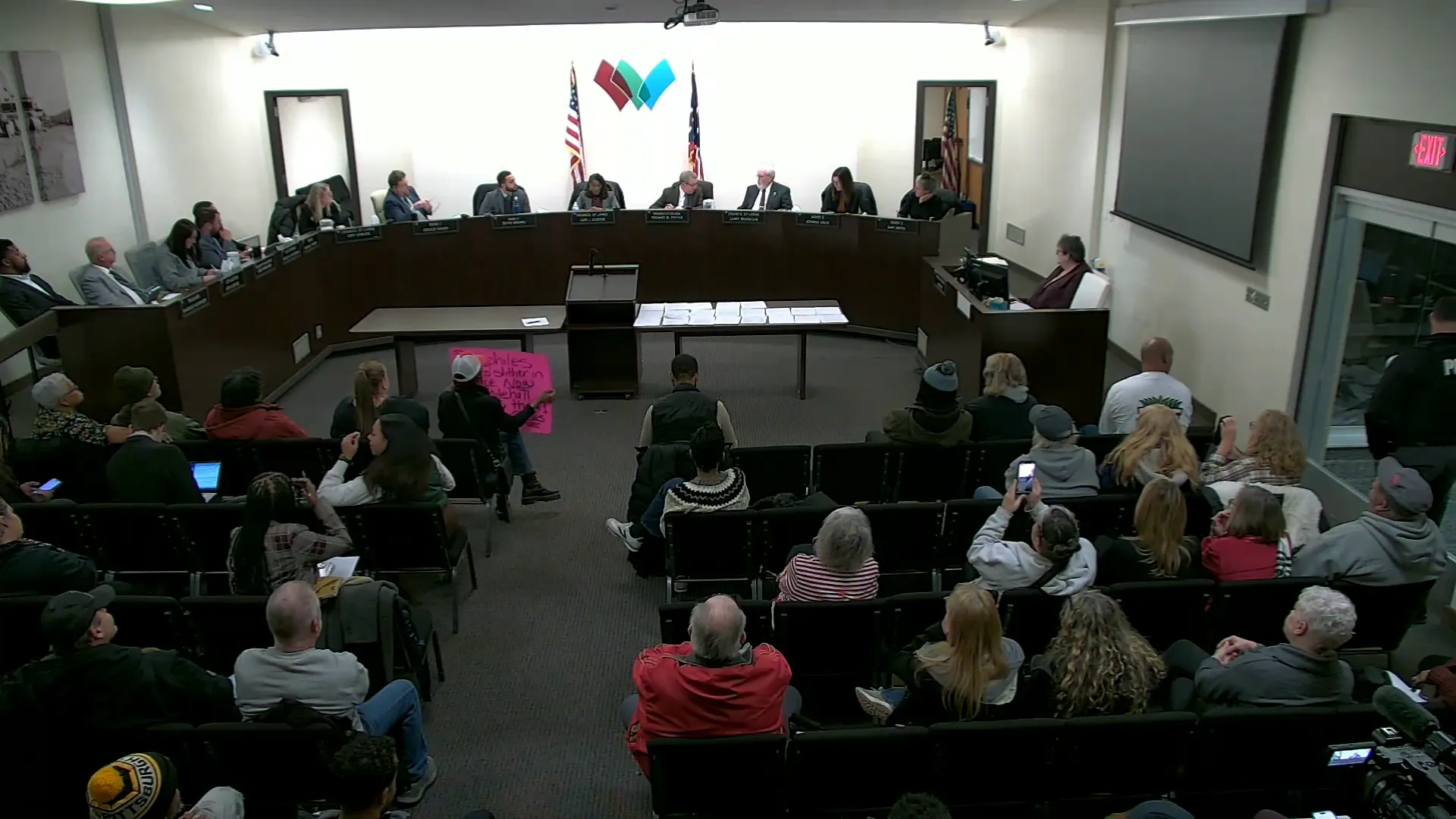
STREAMING COPY IN PREPARATION — RECORDING AVAILABLE FROM THE ORIGINAL SOURCE
Transcript — Verbatim
Speaker numbers apply only to this recording.
Discussion Breakdown — Share of Meeting
Government Structure61%
Public Safety20%
Procedural19%
Summary of Proceedings
Whitehall City Council Special Meeting on Removal of Councilman Dixon (Dec 16, 2025)
The Whitehall City Council held a special meeting on December 16, 2025, to consider the removal of Councilman Gerald Dixon for gross misconduct. City Attorney Nicodemus outlined the legal framework, explaining that the council was to determine if the circumstances warranted removal under Charter Section 7, not to decide criminal guilt. A unanimous vote of the six remaining council members was required for removal.
Discussion Items
- Legal Framework: The City Attorney explained removal for gross misconduct does not require a connection to official duties or a criminal conviction. He noted that the discussion had to be public because Ohio law prohibits executive sessions for the removal of an elected official.
- Sponsor's Statement (Councilmember Amy Harcar): Ms. Harcar read a letter requesting Mr. Dixon's resignation, arguing that the circumstances undermined public confidence and constituted an administrative matter council must act on.
- Councilmember Amy Smith: Ms. Smith stated the allegations fall squarely under gross misconduct and that it is not Mr. Dixon's place to remain on council while the matters are pending in court.
- Councilmember Devin Brown: Mr. Brown emphasized the need to send a message to victims and uphold integrity, stating the alleged activities break public trust.
- Councilmember Jo Anna Heck: Ms. Heck expressed concern for children and vulnerable residents, questioning how Mr. Dixon could fully participate given a court order to stay away from children.
- Councilmember Larry Morrison: Mr. Morrison argued the process was being rushed, noting Mr. Dixon had an upcoming court date and no official duty remained for the year.
- Councilman Gerald Dixon: Mr. Dixon declined to speak substantively, stating he would wait for the justice system process to conclude.
- Procedural Clarification: The City Attorney confirmed that individual meetings council members held with the police did not violate the Open Meetings Act as they did not constitute a quorum.
Key Outcomes
- Vote on Resolution 051-2025: Council voted on the resolution to remove Councilman Dixon from office.
- Vote Tally: The roll call vote was: Larry Morrison (No), Amy Smith (Yes), Jo Anna Heck (Yes), Lori Elmore (Yes), Devin Brown (Yes), Amy Harcar (Yes).
- Result: The resolution failed. The charter requires six affirmative votes for removal, but it only received five.
- Remaining Term: Councilman Dixon retains his seat for his current term, which ends December 31, 2025.
- Future Term: The City Attorney stated a new action would be required for removal in Mr. Dixon's next term, beginning January 1, 2026.
Meeting Transcript
Good evening, everyone. I'd like to welcome you to the Whitehall City Council special meeting for December 16th, 2025. Ms. Hodg, would you please call Roller? Dixon. Present. Morrison. Present Smith present. Heck present. Elmore, present. Brown. Present. Park Carn Potter. Present. At this time, before we get started, I'd like to turn this over to our city attorney who could walk through the basic structure of the events this evening. All right. Thank you, Mr. President. Um, I've had a lot of questions from council and everybody on how this works, so um I've gone with what I know, and if this sounds like jury instructions, there's a reason. Um, this is a matter of first impression for Whitehall. Um, so I appreciate everyone's time as we as we uh work to make sure that this is done in compliance with the charter and the laws of Ohio. Absent recall petitions for individual council members. You as council as a body are solely responsible for the administration of conduct of council members, including discipline when it is deemed appropriate. Charter Section 7 specifically permits council to remove a council member for various reasons, including gross misconduct. Unlike Malfeasance requiring conduct to be related to official duties, or a crime of moral turptitude requiring a conviction, removal for gross misconduct does not require a connection to official duties, a conviction, or even charges be filed. Felony charges have been filed against Councilman Dixon. You are not fact finders to determine beyond a reasonable doubt if he did in fact commit the crimes for which he has been charged. This is a matter involving administration of this body, and it is not a criminal proceeding. You may wait for the criminal proceeding to resolve if you so choose, but you are not required to. While Councilman Dixon's comments may be used in a criminal proceeding, your determination here tonight does not affect the pending criminal matter. Again, you're not determining guilt or innocence. You are determining with the information you have whether or not councilman Dixon has committed or engaged in conduct which you determine to be gross misconduct for which he should be removed from council removed from council. Each of you will need to determine for yourself how much weight you give the fact that councilman Dixon is presumed innocent and that this matter is currently pending in court. Some courts have defined gross misconduct as intentional, willful, deliberate, or an even reckless act, but one that is beyond mere minor breaches of standards. Other courts are more direct. Gross misconduct is that which shocks the conscience. Some of you have asked me to give you an opinion whether these allegations rise to this level. It's inappropriate for me to give this opinion because it is you that must determine if councilman Dixon has committed gross misconduct. Each of you should use your own experiences in making this determination. Your discussion on this matter must be public. Such a meeting is not permitted under Ohio law for two reasons. First, executive session is a privilege for the public body. That is council as the legislative authority for the city. While the mayor, myself, other elected officials, and members of the administration are routinely invited to executive sessions. We are not members of the public body and therefore can be excluded from those meetings. But councilman Dixon is a current member of council, and since he is a member of this public body, you cannot exclude him from an executive session. Second, Ohio's open meeting law prohibits executive sessions for the discussion of the removal of members. Specifically, revised code 121.22 G1 states, except as otherwise provided by law, no public body shall hold an executive session for the discipline of an elected official for conduct related to the performance of the elected officials' official duties or for the elected officials' removal from office. With no exception provided by law, your discussions must be in an open meeting. Charter Section 7 requires notice of the charge and an opportunity to be heard on the charge.
SUMMARIZED BY OPENPUBLICA AI
TRANSCRIPT VIA PUBLIC VIDEO
openpublica.com
openpublica.com