City Council Workshop on 2024 Survey Results and Budget Framework - January 28, 2025
STREAMING COPY IN PREPARATION — RECORDING AVAILABLE FROM THE ORIGINAL SOURCE
Wichita City Council Workshop: 2024 Community Survey and Budget Framework - January 28, 2025
On January 28, 2025, the Wichita City Council held a workshop starting at 9:00 AM in the First Floor Board Room to review the 2024 Community Survey results and discuss a strategic framework for the 2026-2027 budget. The session included presentations from Polco on survey findings and from Porch Light Insights on data-driven decision-making, followed by council discussion on pillar definitions and goals.
2024 Community Survey Results
- Presenter: Sonia Wittink, COO of Polco (with NRC research arm).
- Methodology: 461 completed surveys from a random address-based sample (margin of error 4.6%). Data collection ran November 4 – December 23, 2024. Results were weighted to match adult demographics.
- Key Findings:
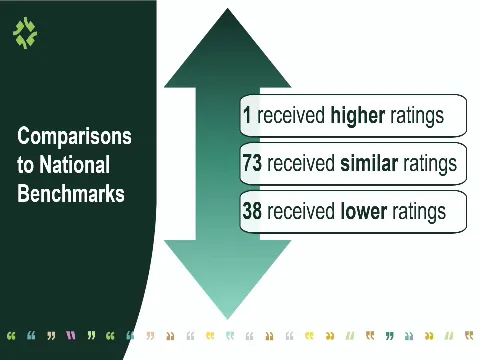
- Compared to 2023, 22 ratings improved, 85 stayed similar, and only 3 declined.
- Safety and economy were identified as top priorities. 9 in 10 residents said safety is essential/very important; only 4 in 10 felt safe overall in Wichita.
- Positive ratings increased for many services (e.g., municipal court +13%, public information +13%, street repair +14%).
- Crime prevention, affordable housing, and drinking water were the highest-ranked service priorities.
- Cost of living rated positively (58% excellent/good), above national benchmarks.
- Discussion: Council members asked about downtown vibrancy metrics and the potential for ongoing, statistically valid community feedback through Polco's panel. Staff noted the tool is more like a focus group than a statistically valid survey.
Strategic Budget Framework (Porch Light Insights)
- Presenters: Julie Steenson and Kate Bender. They outlined an iterative cycle to align strategy, budget, performance, and data.
- Background: Work began in 2023 with departmental pilots (library, fire, public works); now moving to a citywide framework.
- Proposed Pillars: Based on the city’s existing mission statement:
- Well-Run City
- Keep Wichita Safe
- Grow Our Economy
- Build and Maintain Dependable Infrastructure
- Provide Conditions for Living Well
- Goal Framework: Each pillar has a definition (developed by department leadership), goals, and strategies. Examples provided for “Living Well” pillar: ensure opportunities for residents with limited ability to pay.
Council Discussion on Pillar Definitions and Goals
- Well-Run City: Council requested adding “efficiency” and “transparency”; debated “stakeholder” vs. “resident” (keeping “stakeholder” to include businesses/nonprofits). “Data-driven” and “governance” also suggested. A new goal on shared services was debated; some council members were cautious about “consolidation” language but open to “exploration of shared services.” City manager will draft a sixth goal.
- Keep Wichita Safe: Council asked to add “technology” as a goal (e.g., new RMS, Arctic system). Emphasis on partnering with other agencies (sheriff, courts). Goal 1 (addressing underlying causes) clarified as including library services for literacy.
- Grow Our Economy: Council stressed the city does not create jobs; language should support workforce development and economic policies that enable job growth. Added a goal to review regulatory policies that may hinder growth. Housing goal should focus on “more affordable” and safe housing, with private sector incentives.
- Build and Maintain Dependable Infrastructure: Council advocated reordering goals to prioritize maintenance of existing assets over new construction; “multimodal transportation” should be reworded to focus on streets. Water infrastructure praised for forward-thinking.
- Provide Conditions for Living Well: Council asked to add partnership language to the community literacy goal (e.g., with USD 259, nonprofits). In “Keep Wichita Safe,” empowering residents as partners should be the first goal.
Key Outcomes
- City manager Bob Layton will incorporate council feedback into revised pillar definitions and goals, which will serve as the criteria for evaluating budget requests for 2026-2027.
- No formal votes were taken; consensus was that explored shared services could be added as a goal pending further definition.
- Staff will align existing performance measures with the final goal framework and develop strategies, tactics, and actions.
- Upcoming budget process steps: Q4 2024 financial report in February, budget workshops in April and May (including community budget simulator), state-mandated budget presentation on July 15, public hearings in August, and adoption on August 26.
- Workshop concluded with reminder of next regular city council meeting on February 4.
Meeting Transcript
And uh I think you'll find the results informative and interesting. And then after that, we're going to outline for you a strategic framework for the preparation of the 2026 and 2027 budget. And if we can get uh feedback from you on direction, this will serve as the guidance for staff as we prepare uh budget recommendations for you for those fiscal years. So, with that, I'm first gonna turn over to Elizabeth uh Goldtree to uh give you a little bit of a uh preem, make some preliminary comments and to lead us into the survey discussion. Thank you. Good morning, everyone. Um, as mentioned, there are two primary components of this workshop, and they will both guide the budget process this year. Um, a lot of times I hear people referring to a budget cycle as being easy or hard. Um, and even in one of those so-called easy years, if a budget is already balanced, I feel that there's a responsibility to align resources with community priorities, and I think that that responsibility, that feeling of responsibility is shared amongst all of us. Um, with that in mind, the starting point today is um to receive feedback from the community from our annual community survey. Sonia Wittnank, WIT Inc., I'm sorry, with Polco has joined us today, and she will be providing an overview of those results. Thanks for joining us, Sonia. Um right. Well, thank you very much, um, mayor and council members for inviting me today. I'm happy to be here to present a summary of the findings from the 2024 Wichita Community Survey. As mentioned, my name is Sonia Wittink, and I'm the COO of Pulco. I've been working with local and state governments for the past 25 years to help them do fulfill their research needs. Uh it's a passion of mine, so I love to be with you, all the folks in local government improving our communities. Before I began, I would like to thank uh Jim Jonas and Elizabeth Goltry for their thoughtful and detailed feedback throughout the project. Um, they were incredible partners to my staff and uh especially during survey development and implementation. We love how passionate they are about data, and it's been just wonderful to work with them. Uh also like to acknowledge my colleague, Grace Arneson, who's was Wichita's uh Wichita's NCS project manager. She did the bulk of the work, and I get to come and present. Um so we greatly appreciate your continued partnership. It's an honor to have been gathering this important feedback with you since 2010. So just a little bit about Polco. We provide tools to local governments that they use to empower resident voices and get input on strategic planning and budgeting and performance measurement. We strive to make civil online engagement accessible for your community. Um NRC is the research arm of Polco, and we've been working with hundreds of jurisdictions nationwide for the past 30 years. We're well known for our national benchmarking surveys such as the National Community Survey, which we'll discuss today, and the National Employee Survey. We learn a lot when working with governments, and we're really proud to share that knowledge and support thought leadership, and we partner with ICMA and NLC on that. Before we dive into the results, I want to emphasize that there's a variety of ways that this information can be used to, you know, most commonly jurisdictions use their survey to monitor trends and resident opinion over time, to measure government performance and ratings of public trust, to inform budget processes and strategic plans as you guys are doing today. Our results allow you to benchmark your community's characteristics and services against other communities in our database. And we hope as these findings are presented, it'll bring additional and important context to the thoughtful work that you're doing for your community. About the survey, the National Community Center survey, or the NCS, is a standardized five-page comprehensive survey used to assess resident opinion about community and local government. The NCS survey questions are categorized on 10 facets of community livability to provide a holistic picture of Wichita from the perspective of residents. These facets have been identified through extensive research as the most impactful to the quality of life for your community. There are many survey items included in each of these 10 underlying each of these 10 facets and the facets align with municipal departments, making it easier for staff and city staff to quickly find information that's important specifically to them. One of the advantages to a local government of participating in our community survey is the ability to compare your ratings to those from communities across the nation, just to have a little more context on you know what everyone does well and then what everyone struggles with. And so NRC was the first organization to conceive of the idea of doing benchmarks, and we currently have about 500 communities in our benchmark database to compare to. Wichita received comparisons to the entire benchmark database, which I'm going to call national benchmarks throughout this presentation, but also opted to receive custom benchmark comparisons to a subset of communities, and those communities are those with a population between 200 and 500,000. And that can just be an easier target because you know, you know, you might you might be compared to like large cities, very small cities, but something a little closer to your own can can give an even better context. So I'm gonna go a lot into some survey details about just uh some will find it fascinating and some might find this part boring, but um how a survey conducted really matters, and we use our expertise to ensure your results are representative. Uh we select our sample without bias, over sound, we oversample multifamily housing, and make statistical corrections for common response disparities, such as older adults tend to respond more than the younger adults. All households within Wichita were eligible to participate in the survey. We use a US Postal Service list of all households because it is the most comprehensive coverage of all of your residents. If you think about utility billings, sometimes there's a multifamily home that maybe the people in there don't get a utility bill, but the landlord does. So those people would be missed. So there's just different reasons to use different uh or we the reason we find the US Postal Service to be the most inclusive list. Maybe quickly ask a question.
openpublica.com