Browse by city
Date range
Search help

Search titles, summaries, topics and stored transcripts together. Keywords may match separately; put the whole query in double quotes for a phrase. Matching follows word analysis, so punctuation is not exact. Both dates are included. Documents are not searched.

SHOWING 251–260 ENTRIES
251
AUG 29, 2024 · SACRAMENTO COUNTY, CALIFORNIA · BOARDS AND COMMISSIONS
Sacramento Metropolitan Air Quality Management District Board Meeting - August 29, 2024

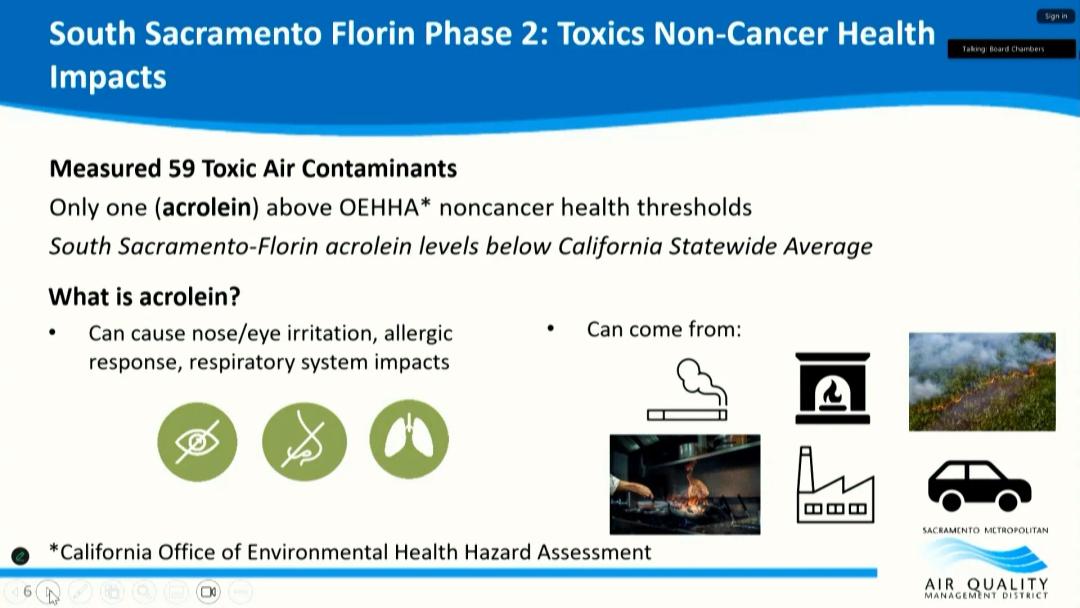
Note: The transcript indicates the meeting was held on August 22, 2024, but the provided date for this summary is August 29, 2024. This discrepancy is noted. The board meeting of the Sacramento Metropolitan Air Quality Management District convened on August 29, 2024, at 12:20 PM UTC. The meeting began with roll call, the Pledge of Allegiance, and board clerk announcements. Quorum was initially lacking, but the board waited approximately 10 minutes for Director Vang to arrive before proceeding with votes. The meeting covered an off-agenda introduction, a consent calendar, a public hearing, and two discussion items. Consent Calendar - Items 1 through 4 were approved unanimously. The consent calendar passed with a motion and second, and a roll call vote showed all directors present voting in favor. Public Comments & Testimony - No public comments were made during the meeting. The board clerk noted that no members of the public wished to speak on any item. Discussion Items 1. Introduction of New Hearing Board Member - Kathy Pettard introduced Dr. Kelter, a new member of the hearing board. Dr. Kelter has a 30-year career in public health, including work at the California Department of Public Health and the Centers for Disease Control. He expressed delight in joining the board after 16 years of retirement. The appointment was expected to be approved after the consent calendar. 2. Community Air Protection Program Update – South Sacramento Florin - Leah Collin, an air quality specialist, presented results from the community air monitoring program. Key findings: - Phase 2 monitoring (August 2020 – December 2021) at six locations found black carbon levels highest at a site in the northwest corner of the community, near a truck route, distribution centers, and Highway 99. This site had levels similar to the Sacramento region's near-road site (Burcut Drive, 70 feet from I-5). - PM10 levels were also highest at that site but lower than the county's peak site. - PM2.5 levels at South Sacramento Florin sites were higher than the county's peak site, though equipment differences may account for some variation. - Of 59 toxic air contaminants measured, only acrolein exceeded California's non-cancer health thresholds, but it remained below the statewide average. Acrolein can cause respiratory and eye irritation. - Phase 3 monitoring (April – December 2023) at Fern Bacon Middle School using a portable lab showed ozone levels exceeded the 2015 standard on six days, and PM2.5 exceeded the 24-hour standard on one day (likely due to wildfire smoke). The average PM2.5 was below the annual standard, but winter data were incomplete. - The South Sacramento Florin Community Steering Committee re-evaluated boundaries and expanded them (shown as red hatch), incorporating adjacent communities. The district will recruit new steering committee members for the expanded area. - Director Maple expressed support and offered to partner on outreach. Director Geta thanked staff for their work at the CARB hearing and praised community engagement. 3. District Headquarters Relocation Status Update - Megan Shepherd, Director of Administrative Services, presented an update. Key points: - Current downtown Sacramento office market: 14.2% vacancy rate, low demand for large spaces, limited financing for office building buyers. - Only one offer was received on the current headquarters building, and no other interest has emerged. The building debt will be paid off in 2027; annual operating costs are $500,000. - The district plans to maintain a patient approach, waiting 2–3 years before reassessing. Short-term (next year): continue hybrid work with one in-office day per week. Long-term (2–3 years): possibly seek new tenants, remodel, or move to a smaller space (15,000–18,000 sq ft) with shared workspaces. - Director Maple suggested exploring adaptive reuse of the building for housing, as other downtown buildings are being converted. Staff agreed to look into that. 4. Board Comments – Clean Air Day - Vice Chair Aquino inquired about Clean Air Day activities. Dr. Ayala confirmed the district is a co-sponsor and will provide details at the next meeting. Director Geta, chair of the regional Clean Air Day, noted that grants of $500–$1,000 were awarded for events on or near October 2, 2024 (first Wednesday of October). Activities include tree planting, bike education, traffic calming, and free RT rides. Public Hearing - Item 4: Amendments to Rule 101 – General Provisions and Definitions - Diana Calazzo presented the amendments. The rule is being updated to: (1) bifurcate the definition of volatile organic compounds (VOC) into a district-specific list (for toxicity and public health) and a federal list (for emission reduction credits), (2) add 11 compounds to the exempt compound list (backdated from EPA additions), and (3) clarify disclosure of air pollution data by removing notice requirements for non-trade-secret information. The amendments have no practical impact on regulated sources and received no public comments. The resolution was approved unanimously. Key Outcomes - Consent Calendar (Items 1–4): Approved unanimously. - Rule 101 Amendments: Adopted by a unanimous vote; staff directed to forward the rule to CARB and EPA. - Community Air Program: The presentation was received; the steering committee boundaries were expanded; staff will recruit new members. - Headquarters Relocation: The district will continue to market the building, maintain a hybrid workplace, and reassess in 2–3 years. Adaptive reuse for housing will be explored. - Clean Air Day: The board will receive a detailed update at the next meeting in September 2024. - The meeting adjourned after the public hearing, with no further business requiring a quorum.
ENVIRONMENTAL MITIGATION 52% · PROCEDURAL 20% · FACILITY MANAGEMENT 13% · ENGINEERING AND INFRASTRUCTURE 9%
252
AUG 28, 2024 · SACRAMENTO COUNTY, CALIFORNIA · BOARDS AND COMMISSIONS
Sacramento County Workforce Diversity Committee Meeting - August 28, 2024

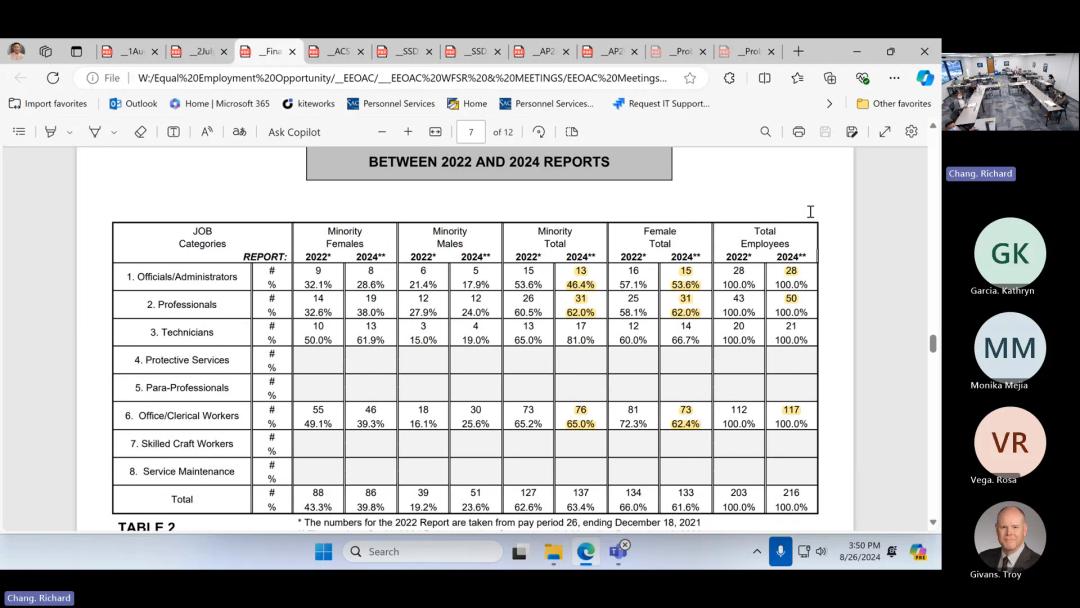
The meeting was called to order at 3:30 PM by the acting chairperson. Roll call was taken with several members present; absences of Amanda, Lieutenant Hodgkins, and Martin were approved (with one abstention). Minutes from July 22, 2024, were approved (with one abstention). A guest, Monica, introduced herself as an interested observer. The meeting focused on reviewing annual workforce statistics reports for multiple county departments, with discussion on representation, recruitment challenges, and complaint data. Guest speaker Troy, Director of Community Development, provided an overview of his department and its hiring difficulties. Public Comments & Testimony - Monica introduced herself and expressed interest in learning about and supporting the committee's work. Discussion Items - Guest Speaker: Troy (Director of Community Development) : Troy described the department (400+ FTEs across five divisions, including planning, building permits, engineering, code enforcement). He noted that positions like construction and building inspectors require journey-level trade experience, which narrows the applicant pool. The department is working with DPS to revise job specifications and is reaching out to professional associations (e.g., Hispanic Engineers Association, Women in Transportation) and local colleges (e.g., Cosumnes River College). Patrick Hunter asked about vacancy rates; Troy replied that planning has about a 28% vacancy rate and promised to provide specific numbers for other divisions. - Department of Finance (2024 workforce stats) : Presented by staff. In 2024, Finance had 216 employees: 63.4% minority and 61.6% female. Breakdown by job category, hires/terminations, promotions, and five EEO complaints (two complaints with multiple allegations) were reviewed. No questions asked. - Animal Care Services (2023 workforce stats) : In 2023, the department had 51 employees: 35.3% minority and 76.5% female. Patrick Hunter noted that minority representation was lower than the 2020 census benchmarks and asked about recruitment initiatives. The department representative (unnamed) stated that recruitment follows standard county processes plus active social media posts (Facebook, Instagram) for animal care positions. She added that animal control officer positions are especially hard to fill; the department has 67 FTEs currently, with about 61 filled. - Sheriff's Department (2023 and 2024 workforce stats) : In 2024, the Sheriff's Department had 2,002 employees: 41.2% minority and 31.8% female. Protective services accounted for the largest job category. The department reported five EEO complaints in both 2023 and 2024. Several committee members (including the chair) expressed doubt that only five complaints existed among 1,800+ employees, suggesting that internal affairs may handle a broader range of complaints not captured in EEO data. The committee requested a representative from the Sheriff's Department to attend a future meeting to explain their complaint process. - Airport (2023 and 2024 workforce stats) : In 2024, the Airport had 322 employees: 53.7% minority and 29.5% female. Service maintenance was the largest job category. Questions arose about the difference between filled and allocated positions. Staff referenced a dashboard showing 370 total positions and 21 vacancies. - Probation Department (2023 and 2024 workforce stats) : In 2024, Probation had 644 employees: 65.1% minority and 51.7% female. Protective services dominated the workforce. Patrick Hunter recalled that Probation’s former committee member (Marlon) stated the department aims to mirror the demographics of the population it serves. The committee noted Probation had only one EEO complaint in 2024 and discussed how its model could be replicated elsewhere. Key Outcomes - The committee approved member absences and the July 22 meeting minutes. - Troy (Community Development) was asked to provide detailed vacancy data by division via email. - The committee formally requested a representative from the Sheriff’s Department to speak at a future meeting about how EEO and other complaints are investigated and documented. - Upcoming meetings: September 23, 2024, will feature presentations from Stephanie Jackson (DEI office) and Chad Ren (Finance Director). - A motion to adjourn was made and seconded; the meeting ended after discussion of budget positions.

PERSONNEL MATTERS 45% · DIVERSITY, EQUITY, AND INCLUSION 13% · LAW ENFORCEMENT OVERSIGHT 11% · ENGINEERING AND INFRASTRUCTURE 9%
253
AUG 26, 2024 · SACRAMENTO COUNTY, CALIFORNIA · SACRAMENTO REGIONAL TRANSIT BOARD MEETINGS
Sacramento Regional Transit Board of Directors Meeting - August 26, 2024

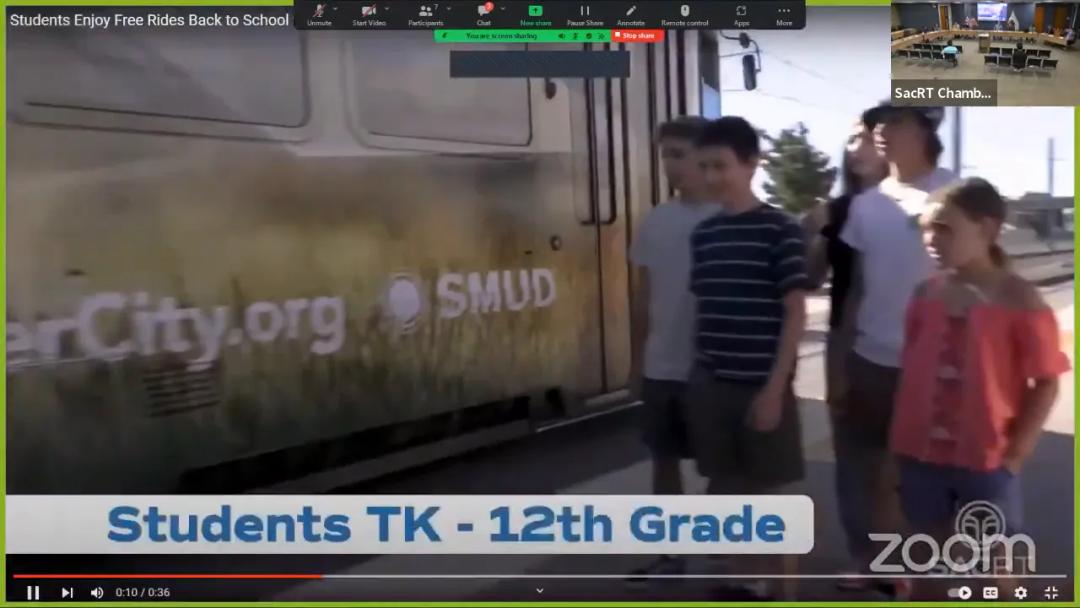
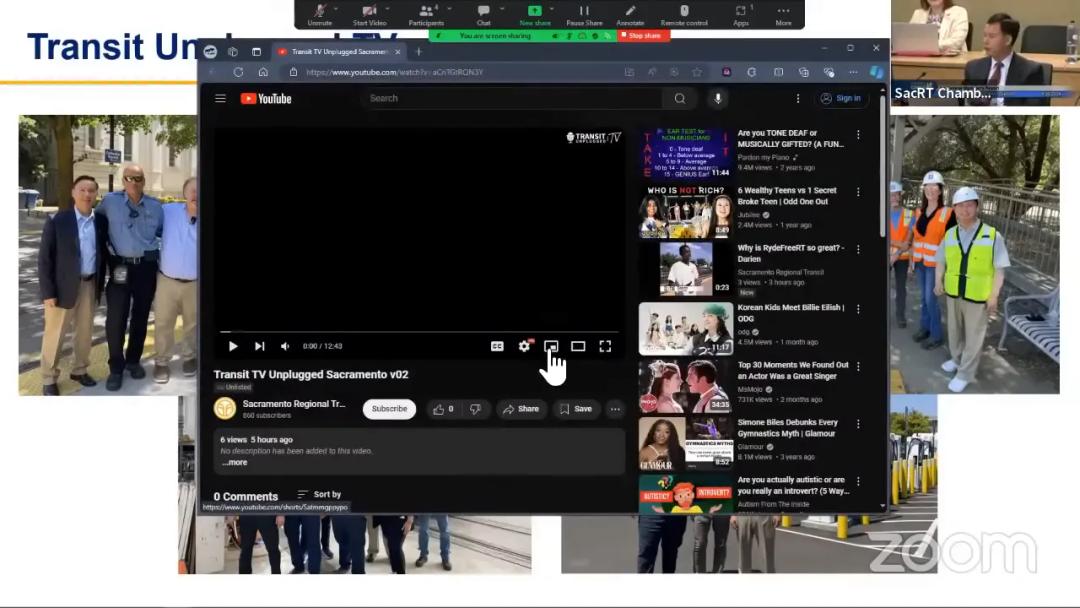
The Sacramento Regional Transit Board of Directors met on August 26, 2024, at 4:02 PM. The meeting included approval of a consent calendar, a resolution commending outgoing Director Brett Daniels, an update on the Light Rail Modernization project, extensive public testimony on safety and operational issues, and a general manager's report. The board recessed into closed session for real estate and labor negotiations. Consent Calendar - Items 2.1 through 2.12 were approved unanimously on a motion and second, with all directors present voting in favor. No abstentions or oppositions were recorded. Resolution Commending Brett Daniels - Resolution 2024-08090, commending outgoing Director Brett Daniels, was approved unanimously. Director Daniels was absent due to travel and internet issues; the certificate will be presented at a future date. Public Comments & Testimony - Jennifer Coleman (30-year rider) reported ongoing telephone interference issues with RT's dispatch radio and requested removal of a ringing tone she experiences. She also asked why Excel cannot be used to provide credit when passengers lack exact change. - Jeffrey Tardi Gia (frequent public speaker) criticized the lack of responses to items delegated to the general manager, citing an eight-year delay on the I-80 elevator project. He also noted that Connect Card machines at Sacramento Valley Station and 29th Street have been non-functional for months, and fare vending machines often cannot accept change. - Helen O'Connell raised concerns about pay equity between RTGo and Big Bus operators, noting that RTGo drivers are paid less despite driving the same vehicles and performing mandated services. - Dan Allison (Sacramento Transit Advocates and Writers) invited board members and staff to participate in "Week Without Driving" (September 30 – October 6), a national event to experience life without a car. He noted that 30% of Americans cannot drive or choose not to. - Crystal McGealy (ATU 256 President) provided a summary of safety issues: 84% of operator respondents reported verbal assaults, 16% said it occurs daily, and 17% said they were reprimanded for reporting incidents. She highlighted that ATU was not included in early planning for the new low-floor trains. She also reported that a driver at Arden Del Paso could not access a restroom and defecated on themselves. She presented a two-week snapshot of assault data and called for transparency. - Brian Griggs (paratransit operator and shop steward) described poor conditions of paratransit buses, including extreme heat (20+ degrees above outside), excessive noise (exceeding 84 decibels), and inadequate maintenance due to understaffing. - David Halford (ATU Light Rail representative) presented data from the safety committee covering May 2023 to May 2024: 91 incidents across all transit divisions, averaging one problem every four days. A poll of members found 84% verbally assaulted, 27% assaulted weekly, 36% experienced physical assault, 31% sexual harassment, 9% assaulted with weapons, 17% stalking, and 60% believe assaults have increased in the last five years. He called for operator training on assault documentation. - Michael Bevins (transit advocate) proposed several ideas: transit corridors (e.g., Watt Avenue), bike cargo trains, express trains, and a demonstration bus route on the planned Green Line to the airport. - Eve Wynn (Elk Grove division union rep) reported that children on buses are cursing, threatening drivers, and smoking marijuana. She requested that RT contact schools to suspend offending riders. - Heller Chapel (light rail operator and shop steward) expressed safety concerns about the new S700 low-floor trains: operators have not been trained on stopping positions (only one of 25 stations has a marker), tripping hazards inside trains, handrails too high for short operators, and a step-down of up to 30 inches when exiting to use route selectors (Cal/OSHA allows 18 inches). She stated that management is rushing the launch, causing anxiety. - Vanessa Nichols (CBS operator) reported that interlock doors pop open during service, water leaks, high decibel levels (72-89 on older buses, 70-80 on newer), and lack of follow-up on assault reports. She herself was assaulted and heard nothing after filing. - Joyce Adams Watkins (44-year veteran, retiring) supported the union, emphasizing safety, restroom access, and the need to address assaults over fare disputes. - Ann Pruitt (reservations employee) cited ergonomic issues (broken chairs, extreme cold in the new building at 1400 29th Street) and said management told them nothing can be done about the temperature. - Artemis Molier (light rail operator, 12 years) raised safety at Watt Avenue Station (where a police officer was shot), lack of security, and training issues on the new trains: insufficient cab space for a trainer, unsafe dismount (3 feet down), and tripping hazards without warning decals. Discussion Items - Light Rail Modernization Update (Item 4.1) – Carmen Alba presented: All station platforms must be raised to 8 inches to accommodate new passenger-activated bridge plates on the S700 fleet. Construction is phased, with weekend shutdowns. Revenue service is projected to begin late October or early November. 20 new S700 LRVs have been received; 14 are conditionally accepted and SACRT-ready (decals, stop announcements). Minimum weekday service requires 8 LRVs on the Gold Line; weekends require 9 for both Gold and Green lines. Training is 95% complete. Community outreach included tours for the Mobility Advisory Council (MAC) and bicycle advocates. Staff is working on open items: in-person customer service support, exterior ramp deployment tone, and barricades at Gold Line mini-high ramps. Future items include between-car barriers, bike racks, and activation strip. Marketing has a Community Assistance Program (CAP) where employees volunteer to assist riders. Director Serna asked about exterior wrapping for revenue; staff said no wrapping for two years due to warranty. Public comment from Coco (Sacramento Transit Advocates) requested transparency on decision-making, especially regarding disability access issues. - General Manager's Report (Item 8) – Henry Lee thanked the public and union members for feedback. He acknowledged safety concerns, noting that RT has added 80 security guards, 20 police officers, and 70 ambassadors, but acknowledged that communication with operators about police actions needs improvement. He announced a new item in the GM report (8.1.3) to track responses to feedback from previous board meetings. He highlighted the upcoming launch of low-floor vehicles on the Gold and Green lines, with a press conference on September 3 at Township 9 Library Station. He showed a video from the Transit Unplugged TV podcast featuring RT and community partners. He also reported on a trip to South Korea with Director Jennings and Director Kozlowski, praising Seoul's transit system (3.4 billion annual riders, 2-minute headways). He noted that RT receives only 20% of a one-penny sales tax, far less than peers. Key Outcomes - Consent calendar (items 2.1–2.12) approved unanimously. - Resolution 2024-08090 commending Brett Daniels approved unanimously; to be presented later. - Light Rail Modernization update received as information; no action taken. - Board directed the general manager to provide a memo to the board and public addressing safety concerns raised in public testimony, and to provide an update at the next meeting on conversations with the union regarding safety. - Director Serna suggested exploring collaboration with the Downtown Sacramento Partnership and county to enhance safety around transit stations. - The board recessed into closed session at approximately 5:30 PM for real estate negotiations (Item 13.1) and labor negotiations (Item 13.2). Chair Kennedy stated no report was expected from closed session.

PUBLIC TRANSIT 57% · PUBLIC SAFETY 17% · PROCEDURAL 10% · PUBLIC COMMENT 7%
254
AUG 20, 2024 · SACRAMENTO COUNTY, CALIFORNIA · BOARD OF SUPERVISORS
Sacramento County Board of Supervisors Behavioral Health Services Retreat – August 20, 2024

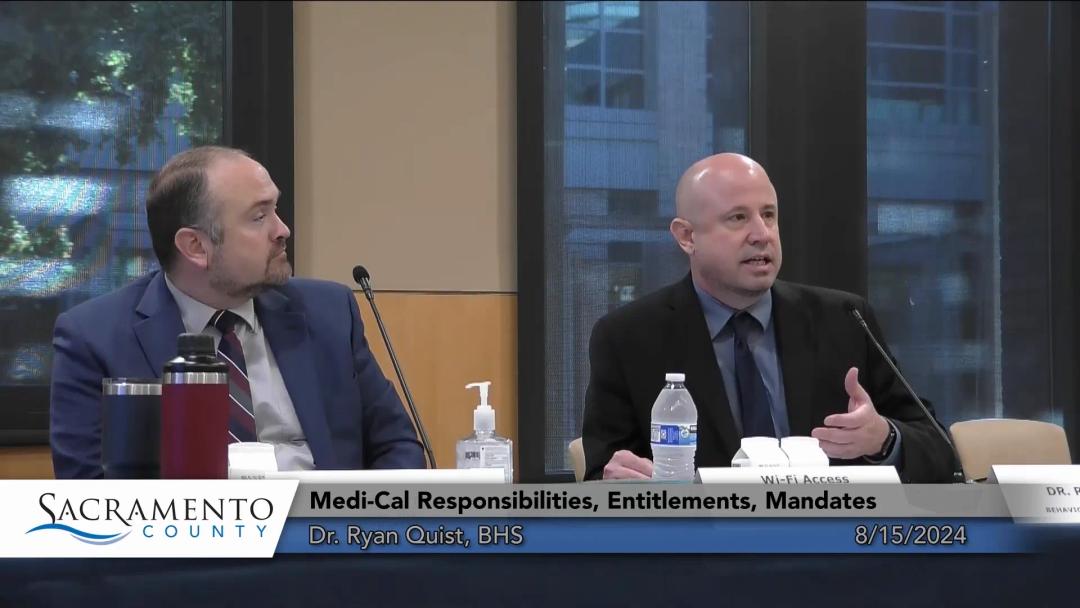
On August 20, 2024, the Sacramento County Board of Supervisors held a special all-day retreat focused on behavioral health services. The meeting provided a comprehensive overview of the county's behavioral health continuum, highlighted new and upcoming initiatives, and included presentations from the UC Davis MIND Institute, the Behavioral Health Youth Advisory Board, and county staff. The retreat was chaired by Supervisor Kennedy and featured extensive discussion on the complexity of the system, funding challenges, and the need for community integration. Public Comments & Testimony - Nancy Brinelson (Family Advocates for Individuals with Serious Mental Illness) expressed support for new initiatives such as assisted outpatient treatment, CARE Court, and SB 43, but urged the board to prioritize family voice and integration of various advisory boards. She noted that the system is designed to let people become severely ill before they qualify for involuntary treatment. - Wade Brinelson (co-chair, Advocates for Individuals with Serious Mental Illness) recommended stronger collaboration between the county's behavioral health system and schools, including using California Department of Education Healthy Kids survey data to measure outcomes. He also noted that many schools have mental health programs that could be better integrated. - Dr. Karin Sacco (mental health board chair and CWRT advisory committee co-chair) praised the Community Wellness Response Team (CWRT) but highlighted that community awareness of 988 and CWRT is very low. She urged the board to provide additional resources for marketing and to require 911 dispatchers to refer calls to 988. - Jim York (member of the public and person in recovery) offered to bring AA/NA meetings into tiny home facilities and stressed the importance of consistent, daily support for individuals in recovery. Discussion Items - Behavioral Health Care Continuum Overview – Dr. Ryan Quist and staff presented the division's mission, funding sources ($668 million budget, 660 FTEs, 90% contracted out), and services for 40,000 consumers annually. They explained the distinction between the county's responsibility for serious mental illness/substance use disorders and managed care plans for mild-to-moderate needs. The presentation covered child and family services (FIT, wraparound, TBS, full-service partnerships), adult services (core outpatient, FSPs, housing supports), substance use disorder treatment (withdrawal management, MAT, residential), and inpatient/acute services (CSUs, psychiatric hospitals, and a new youth CSU/PHF under BCHIP Round 4). - UC Davis MIND Institute Overview – Dr. Marjorie Solomon described the institute's history, research (268.7 million in NIH grants), clinical care (8,000 patient visits annually), and community outreach (training, support groups, mobile van). She emphasized the institute's focus on neurodevelopmental conditions and the transition to adulthood services. - Behavioral Health Special Initiatives – Staff presented the Thrive programs (justice-involved full-service partnerships), the CalAIM 90-day pre-release benefit, the Community Wellness Response Team (CWRT) (which went 24/7 in March 2024, with 150 field responses in Q4 2024, 70% resolved in community), and the Homeless Engagement and Response Team (HART) (outreach to encampments and shelters). - Behavioral Health Youth Advisory Board – Two youth representatives, Cloud Peterson and Rada Chowhan, presented their advocacy efforts, including recommendations for school-based mental health clinicians, telehealth apps (Bright Life Kids, Soluna), and challenges in youth recruitment. They requested the board's assistance in promoting vacancies and sharing social media posts. - Behavioral Health New Initiatives – Staff discussed several upcoming changes: - Proposition 1 (Behavioral Health Services Act): Effective July 1, 2026, consolidating MHSA from five funding buckets to three (housing, full-service partnerships, and behavioral health services/supports). The state is still defining allowable uses; 30% must go to housing, with 50% of that for chronically homeless. The board was informed that the county will need to conduct community planning. - CalAIM: Includes payment reform, mobile crisis benefit (required for Medi-Cal, but county funds allow all residents to access CWRT), and behavioral health as a hub for enhanced care management. Delays in provider reimbursement from managed care plans were noted. - BH Connect (IMD waiver): Opt-in decision expected soon; would allow federal funding for facilities 16 beds in exchange for new community-based services (ACT, FACT, first-episode psychosis, transitional rent, supported employment, peer support, etc.). Staff noted many services are already in place. - SB 43: Expands grave disability definition to include severe substance use disorder. The county deferred to Jan 1, 2025; staff provided an update on criteria, due process, and early data from two counties that went live (few clients meeting SUD-only criteria, most are released after 72-hour hold). A final recommendation on implementation date will come in October/November. - CARE Act (SB 1338): Slated for Dec 2024 implementation. Staff clarified it does not allow court-ordered treatment; it creates awareness of individuals not voluntarily seeking care. Courts are developing processes. - Increased Bed Capacity: MHRC beds increased from 131 to 175; substance use residential beds expected to increase from 196 to 472 by 2025-26. BCHIP Round 3 ($23.5M for MHRC) is being restructured with a community partner; Round 4 ($21.8M for youth CSU/PHF) is on track; Round 5 includes partnership with Wellspace for 150 beds. Key Outcomes - No formal votes were taken; the retreat was informational. - Staff will return to the board in October/November 2024 with a recommendation on whether to proceed with SB 43 implementation on January 1, 2025, or defer further. - A board letter on BH Connect (IMD waiver) opt-in with cost-benefit analysis is expected in the coming months. - The BCHIP Round 3 MHRC project will be brought to the board for approval in September or October 2024 to transition the grant to a community-based organization. - The Behavioral Health Services Act (Prop 1) community planning process will begin once state guidance is released, likely in early 2025. - The youth advisory board requested that supervisor offices help promote board vacancies and share social media content. - Staff acknowledged ongoing efforts to improve CWRT marketing and collaborate with 911 dispatchers to divert calls to 988.

PUBLIC HEALTH 32% · MENTAL HEALTH SERVICES 11% · SOCIAL WELFARE POLICY 10% · BEHAVIORAL HEALTH 9%
255
AUG 19, 2024 · SACRAMENTO COUNTY, CALIFORNIA · BOARDS AND COMMISSIONS
Sacramento Transportation Authority Board Meeting - August 19, 2024

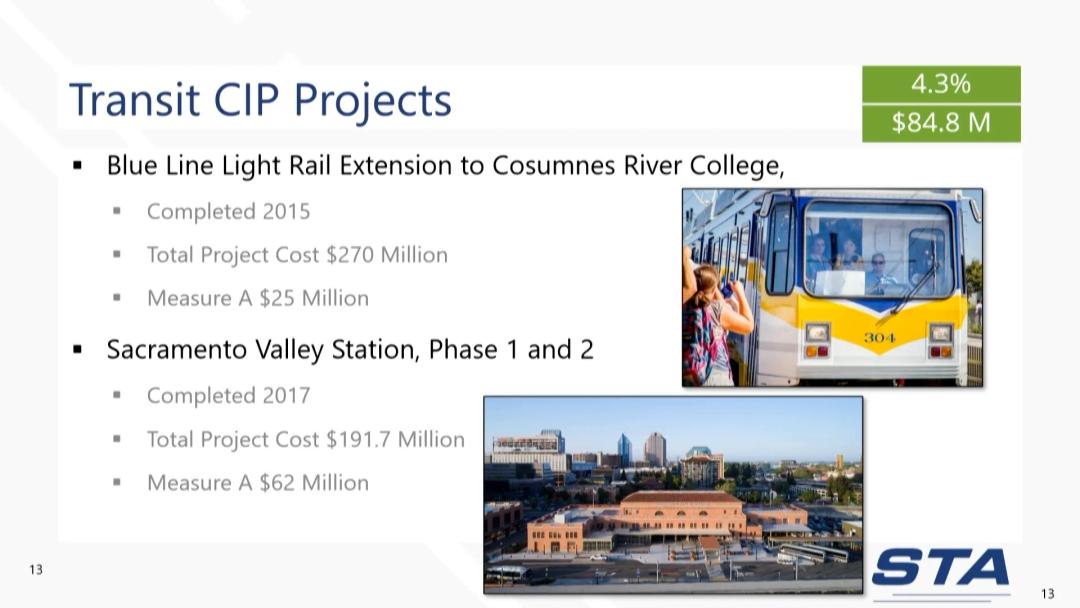
The Sacramento Transportation Authority (STA) board met to discuss grant awards, the SB1 local partnership program, digital outreach enhancements, and Measure A accomplishments. The board approved consent items and the SB1 ranking process, and received presentations on the new website/social media and Measure A achievements. One public comment raised accessibility concerns about the website. Consent Calendar - Items 3 through 8 were approved unanimously via voice vote (routine approvals including prior meeting minutes and financial reports). Public Comments & Testimony - Randy Hicks (representing California for Disability Rights) criticized the new STA website for not being accessible to individuals with disabilities, citing issues with screen readers, small font sizes, and complex navigation. He recommended consulting with disability organizations such as the Society of the Blind or the county's Disability Compliance Office. Director Maple thanked him and requested staff review the website for ADA compliance and consider meeting with Mr. Hicks for improvements. Discussion Items - Executive Director's Report (Kevin Busey): Reported over $104 million in grant awards for Sacramento County projects, including $76.8 million for SAC RT's zero-emission fleet (hydrogen fuel cell buses and maintenance facility modernization) and $25 million from RAISE for the Grant Line Road Safety Project by Capitol Southeast Connector. Noted changes in statewide propositions affecting sales tax measures: removal of the taxpayer protection act and amendment of ACA1 eliminating the lower voting threshold provision. Discussed a sales tax proposal from SMART (Sac Metro Advocates for Rail and Transit) similar to Steinberg's 2023 plan, but STA staff identified challenges including lack of guaranteed funding for active transportation, rail, and large capital projects, and restrictions on capacity-increasing projects. Busey also noted that STA lacks authority under public utilities code to manage a measure with a housing component. He mentioned SACOG's regional prioritization effort and plans for a countywide prioritization in September. - Item 9: SB1 Local Partnership Program – Staff presented the competitive ranking process for Cycle 4 (estimated $144–188 million available, max $25 million per project, requires 1:1 match, construction only). STA will act as nominating agency. Process: call for projects, agency presentations in September, board ranking in October, formal action and application submittal in November. The board unanimously approved the process. - Item 10: Digital Presence & New Website – Jennifer Dahl and Dustin Terrington presented boosted social media engagement (42 Facebook posts, 2,800 followers, 209% engagement increase; 30 Instagram posts, 300 followers, 46% increase since February). New website launched March 2024, 100% ADA compliant per staff. Features include transparent financial dashboards (Power BI), investor relations page, and integrated ITOC information. Directors applauded the efforts. Chair Serna and Director Speace discussed the possibility of using the website to communicate funding gaps and stakes of Measure A expiration, noting the distinction between education and advocacy. Executive Director suggested that planning activities demonstrating needs can be transparent without advocating. - Item 11: Measure A Accomplishments Over 15 Years – Kevin Busey presented that Measure A (half-cent sales tax + developer fee) reached its halfway point (30-year measure passed in 2004, effective 2009–2039). Raised $1.94 billion (95.6% from sales tax, less developer fees than anticipated). Key accomplishments: $634 million in grants leveraged, five interchanges completed, bus/carpool lanes on I-80 and US 50, 12 local arterial projects, transit CIP (Blue Line extension, Sac Valley Station), transit operations funded (25% of SAC RT operating budget), street maintenance (29% of region's pavement program), traffic safety, active transportation, and air quality programs. Director Kent raised concerns about the disincentivizing effect of impact fees on development in rural communities. Key Outcomes - Consent Items 3–8: Approved unanimously. - SB1 Local Partnership Program Process (Item 9): Approved unanimously. Call for projects to begin immediately, with prioritization by the board in October. - Website and Social Media Presentation (Item 10): No action taken; staff to follow up on ADA compliance concerns raised by public comment. - Measure A Accomplishments (Item 11): No action taken; presentation received. - Closed Session: The board unanimously approved an increase in Executive Director Kevin Busey's compensation step from step 8 to step 9, as reported by the Chair after closed session. (Note: The transcript indicates the meeting date as Thursday, August 8, 2024, while the instruction specifies August 19, 2024. This summary uses the provided date per instruction.)

TRANSPORTATION SAFETY 32% · TECHNOLOGY AND INNOVATION 22% · PUBLIC COMMENT 20% · PROCEDURAL 15%
256
AUG 19, 2024 · SACRAMENTO COUNTY, CALIFORNIA · BOARDS AND COMMISSIONS
Sacramento County Planning Commission Meeting - August 19, 2024

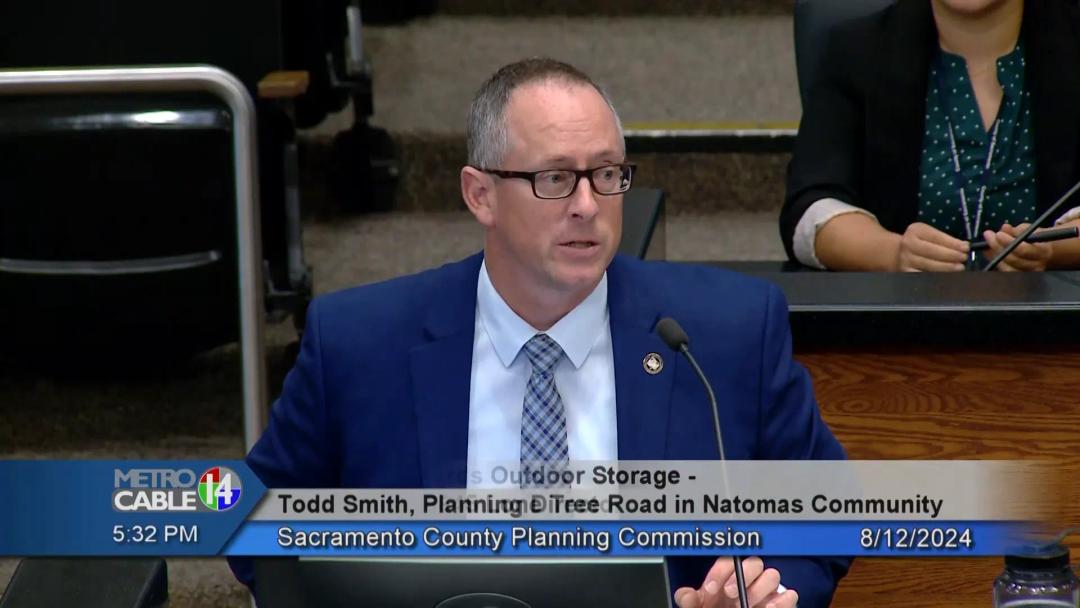
Note: The transcript indicates the meeting occurred on August 12, 2024, but the required date for this summary is August 19, 2024. The following content reflects the proceedings as transcribed. The Sacramento County Planning Commission met on the evening of August 19, 2024 (as specified) at 5:41 PM adjournment. The Commission considered two items on the non-contested portion of the agenda, both of which were approved unanimously. The meeting also included a brief report from the Planning Director and scheduling updates. Consent Calendar - Item 1 (PLMP 2024 00008) – Use permit for heavy equipment storage at 6645 Lone Tree Road, Nethomas community. Applicant John Thomas Sellow testified that the permit would add heavy equipment storage to an existing use, addressing inconsistencies in zoning such as allowing semi trucks but not water trucks or dump trucks. The applicant agreed with all conditions of approval. Staff recommended approval. The commission voted unanimously to approve. - Item 2 (PLMP 2023 00196) – Use permit amendment, special development permit, and design review at 4331 (address not fully provided). Applicant Dominic Cardenas (Quick Back Car Wash) thanked the commission and staff, and agreed with all conditions. Commissioner Sporhan noted that conditions from a previous permit had been satisfied and the staff report clarified superseded conditions. The commission voted unanimously to approve. Public Comments & Testimony - No public comments were received for either agenda item or during the general public comment period. Discussion Items - Planning Director’s Report – Director Todd Smith provided updates: upcoming Board of Supervisors items on the infill program, countywide RHNA rezone program, and the Winding Ranch project (August 20, 2024). Future commission hearings: August 26 agenda includes Mission Avenue apartments east and west (heavy turnout expected); September 9 hearing includes a draft Environmental Impact Report for the West Jackson Highway Master Plan (no action on merits, only public comment on the EIR). Commissioner Borja asked about Governor’s recent executive order (July 31) on streamlining development; the director did not recall it and offered to discuss offline. - Miscellaneous Scheduling – Commissioner Borja and others noted attendance for upcoming meetings. Key Outcomes - Both items (PLMP 2024 00008 and PLMP 2023 00196) were approved unanimously (5-0). - The Commission will next meet on August 26, 2024, for the Mission Avenue apartments hearing. - The meeting adjourned at 5:41 PM.

PROCEDURAL 63% · CODE ENFORCEMENT 21% · LAND USE 16%
257
AUG 19, 2024 · SACRAMENTO COUNTY, CALIFORNIA · BOARDS AND COMMISSIONS
Sacramento Area Sewer District Board Meeting - August 19, 2024

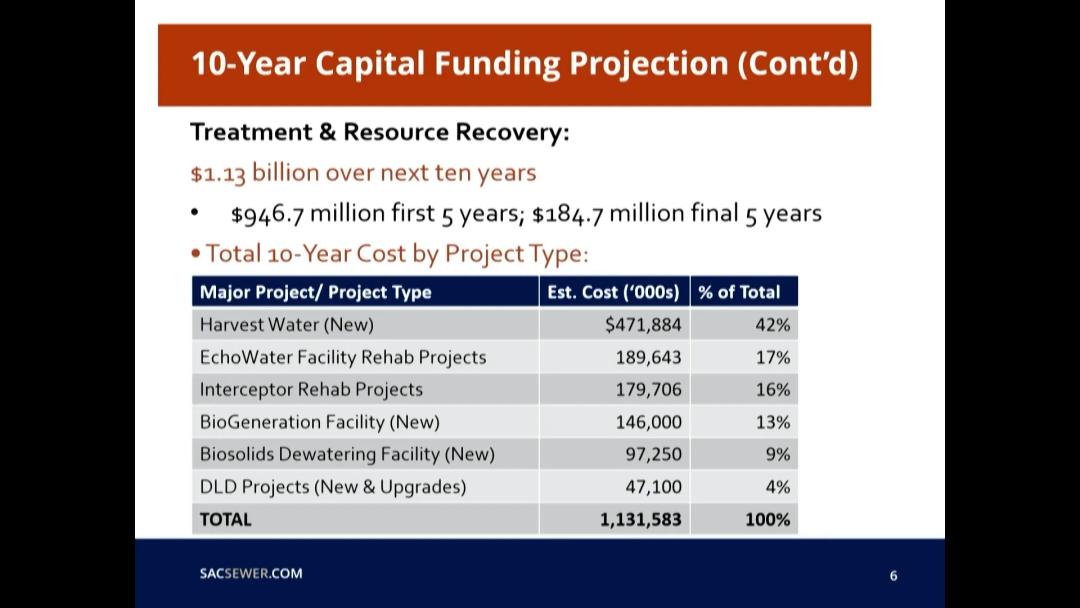
Discrepancy Note: The meeting transcript states the meeting occurred on Wednesday, August 14, 2024, but the provided source material specifies the meeting took place on 2024-08-19 11:28:43+00:00. The summary below reflects the transcript content with the date as given. The Sacramento Area Sewer District Board convened on August 19, 2024, to address consent items, a delegation of authority for employee benefits agreements, and an update on the long-term financial plan with capital funding projections. The meeting was called to order with a quorum present; all members participated. The board unanimously approved consent items, the benefits delegation, and the financial plan recommendations. Consent Calendar - Items 1 through 5 were approved unanimously via motion by Director Maple and second by Director Viegas. No questions or public comments were raised. Public Comments & Testimony - No public comments were submitted for agenda items or for issues not on the posted agenda. Discussion Items - Staff Introductions and Engineer Update: The District Engineer introduced recently promoted section managers William Yu (Engineering Section Manager at Echo Water Facility) and Helen Hugh (O&M Manager II, overseeing daily operations and employee development). The Engineer also announced a $3 million state grant for the Harvest Water Project from the State Water Board’s revolving fund and noted the next meeting (August 28) is canceled; the next meeting will be September 11. - Delegation of Authority to Execute Employee Benefits Agreements: The Engineer requested broad authority to finalize and execute a series of agreements with vendors for employee benefits (e.g., dental, vision, pet insurance) following a competitive broker selection. The board had approved benefit concepts earlier; due to time constraints, the Engineer asked to execute agreements and later present them as a package. The motion carried unanimously. - 2024 Long-Term Financial Plan and Capital Funding Projection: Director of Finance Tepa Bundha presented the updated 10-year financial plan. Key points: - The district holds AA+ credit ratings (S&P, Fitch, Moody’s) on both collection and treatment systems. - Inflation has raised operating costs, but recent rate increases have stabilized net revenues. - A June 2024 bond refunding eliminated variable-rate debt; all debt is now fixed-rate. - Capital spending projection: $220 million over 10 years for the collection system (front-loaded in first 5 years), and $1.13 billion for the treatment and resource recovery system (with $1 billion in first 5 years; Harvest Water Project accounts for 42% of 10-year spending). - Assumptions: customer growth at 0.5% (conservative), cost inflation 2-5%, interest income at 3%, and significant grant funding (septic conversions 99% grant-funded; Harvest Water 65% grant-funded; Biogen facility expects up to $52 million in Inflation Reduction Act tax credits, 36% of project cost). - Operating costs projected to grow 5.1% annually, revenues 3.2% (Director Kaplan clarified that revenue base is larger, so revenue growth in dollars covers cost growth). - Debt management: collection system has $159 million outstanding; no new debt planned. Treatment system has $961 million outstanding; anticipates $225 million new debt for Harvest Water (amount may decrease due to lower bids). - Possible future action: refunding Build America Bonds to reduce federal subsidy risk. - Introduction of Viviana Dazo: Director Viegas introduced his assistant deputy Viviana Dazo, a bioengineering graduate from West Sacramento, who attended to observe board operations. Key Outcomes - Consent calendar (Items 1-5) approved unanimously. - Delegation of authority to execute employee benefits agreements approved unanimously (motion by Director Kaplan, second by Director Tao). - The board unanimously voted to receive and file the 2024 update of the long-term financial plan and approve the 10-year capital funding projections for both the collection system and treatment/resource recovery system (motion by Director Kaplan, second by Director Maple).

BUDGET AND FINANCE 59% · ENGINEERING AND INFRASTRUCTURE 19% · PROCEDURAL 13% · PERSONNEL MATTERS 6%
258
AUG 19, 2024 · SACRAMENTO COUNTY, CALIFORNIA · BOARDS AND COMMISSIONS
Sacramento First Five Commission Meeting Summary - August 5, 2024

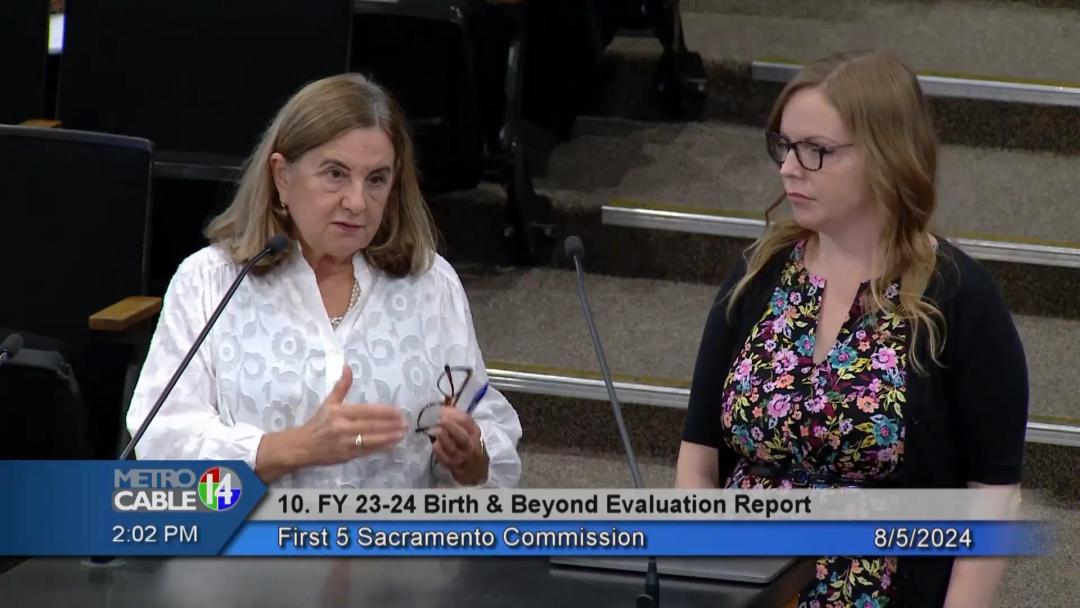
The Sacramento First Five Commission met on Monday, August 5, 2024, to approve the revised FY 2024-25 budget and 10-year financial plan, approve the updated 2024-27 implementation plan, receive updates from committees and staff, and hear presentations on the Birth and Beyond evaluation and the WIC lactation support program. All actions were approved unanimously. Consent Calendar - Approved the June 3, 2024 draft action summary by unanimous vote. Public Comments & Testimony - Alexandria Page (former Birth and Beyond home visitor): Expressed strong support for Birth and Beyond, calling it "one of the greatest works of Sacramento." She raised a concern about the data categorization of multiracial children, noting that those with Black heritage should be included in Black/African American data because they have "black experiences." She also emphasized that housing is the number one crisis, leading to basic needs struggles like food, clothing, and hygiene items, and criticized long waitlists for housing vouchers. Discussion Items - Executive Director's Report: Provided updates on communications (new swag for commissioners, 25th anniversary planning, PLTI graduation with 31 graduates, new social media vendor), Ready work (participatory grantmaking process, racial equity presentations, internal capacity building), child safety forward community gathering (first of annual gatherings with 20 parents), and state budget updates (CalWORKs home visiting cuts avoided, $1.3 million for court-mandated parenting classes restored). - Advisory Committee Update (June 14, 2024): The committee met with Commissioner Wirtz and discussed participatory grantmaking; appointed two new members (David Ahmad and Keisha Harris) by unanimous vote. - Evaluation Committee Update (July 15, 2024): Reviewed Birth and Beyond annual report and Building Strong Families Program report (ARPA-funded); noted key statistics: 805 unduplicated individuals, 795 families, 1,282 referrals, 72% received services, top needs: housing (32%), food (28%), baby essentials (24%). - Financial Planning Committee Update (July 30, 2024): Reviewed revised recommended budget and 10-year financial plan; no allocation changes; approved updates. - Policy and Advocacy Committee Update (June 18, 2024): Changed regular meeting to second Wednesday; discussed state budget advocacy, livable wage statement, racial equity work. - FY 2024-25 Revised Recommended Budget and 10-Year Financial Plan: Presented by Kristen Scheiber. No line item changes; carry-forward fund balance increased by $1.3 million to $2.33 million, reducing reserve release; Prop 10 revenue projections increased by 1.3%, reducing the 2027 strategic plan allocation reduction from 37.3% to 28.4%. Approved unanimously. - 2024-27 Implementation Plan Update: Presented by Executive Director Julie. Plan updated with approved funded partners and finalized indicators; some TBD items for Ready/systems change work to be phased in. Approved unanimously. - Birth and Beyond Evaluation Report (FY 2022-23): Presented by Jessica Irwin (ASR). Key findings: served 5,000 parents/caregivers and 3,000 children; home visiting served 964 families; 18% of developmental screenings identified needs; 62% of home visiting participants also received crisis intervention; CPS substantiation rates lower with more home visiting hours (0.4% for 24+ hours); Black/African American participants showed zero substantiation for 8+ hours in some models; parenting education showed improvements; crisis intervention served 3,400 families with 98% progress; SELs served 1,700 families with 17.2 average hours. Discussion included data categorization (multiracial not included in Black/African American), need for dad-specific classes, and housing as primary crisis. - WIC Lactation Support Program: Presented by Lisa Matthews and Amelia Shendau. Exclusive breastfeeding rate at 27.6%, up 2.5% over two years; awarded USDA WIC Breastfeeding Award of Excellence (Premier). Addressed impacts of formula costs/shortage, provider messaging, and hospital notification systems. Key Outcomes - Approved June 3, 2024 action summary (unanimous). - Appointed David Ahmad and Keisha Harris to advisory committee (unanimous). - Approved FY 2024-25 revised recommended budget and 10-year financial plan (unanimous). - Approved updated 2024-27 implementation plan (unanimous). - Noted no action on Birth and Beyond or WIC presentations. - Chair Cerna invited commissioners to National Night Out event at Jack Davis Park on August 6, 2024. Additional Notes - Commissioner Katari joined meeting late (noted during budget vote). - Meeting live-streamed on Metro Cable 14 and available for replay August 9, 2024. - No agenda or minutes were available; summary based solely on the transcript.

PUBLIC HEALTH 30% · SOCIAL WELFARE POLICY 23% · COMMUNITY ENGAGEMENT 19% · PUBLIC ENGAGEMENT 7%
259
AUG 13, 2024 · SACRAMENTO COUNTY, CALIFORNIA · SACRAMENTO REGIONAL TRANSIT BOARD MEETINGS
Sacramento Regional Transit Board Test Meeting - August 13, 2024

The Sacramento Regional Transit Board of Directors held a technical test meeting on August 13, 2024, to prepare for an upcoming board meeting. The session focused on testing audio/visual equipment, microphone placements, clock visibility, and Zoom connectivity. Public comments were also heard on transit service and events. Public Comments & Testimony - A transit advocate expressed disappointment that Route 81 bus frequency was not increased to every 15 minutes and that service hours were not extended, emphasizing the importance of reliable transit for car-free residents. - Jeff Tartigia thanked the board for a light rail event showcasing new S700 trains. - Glenn Manekorn mentioned researching funding grants. Discussion Items - Extensive testing of audio systems, including wireless microphones, speaker zones, and feedback prevention. Adjustments were made to balance volume levels across the room. - The positioning of a digital clock was discussed to ensure the board chair could see it during meetings; a glare issue was identified and a solution (moving the clock over a logo) was agreed upon. - Zoom connectivity and streaming to YouTube, closed captioning, and Metro Cable 14 were tested and confirmed working. - A suggestion to add a clock to the podium was noted for future consideration. Key Outcomes - The audio system was balanced to reduce feedback and improve clarity. - The digital clock will be repositioned to avoid glare and improve visibility for the chair. - No formal votes were taken; the test was deemed successful for a future board meeting. Note: The raw transcript indicates this test was held in preparation for a July 23, 2024 meeting, but the meeting date is given as August 13, 2024 per instructions.

MEDIA PRODUCTION 56% · PROCEDURAL 28% · PUBLIC TRANSIT 10% · PUBLIC COMMENT 3%
260
AUG 7, 2024 · SACRAMENTO COUNTY, CALIFORNIA · SACRAMENTO REGIONAL TRANSIT BOARD MEETINGS
Sacramento Regional Transit Board Meeting – August 7, 2024 (Transcript Discrepancy Noted)

Note: The meeting transcript references a meeting date of July 22, 2024, but the provided metadata indicates the meeting occurred on August 7, 2024. This summary uses the metadata date and highlights the discrepancy. The meeting was a short, largely procedural session focused on consent calendar approvals, public comments, and a brief General Manager's report. Significant time was devoted to testing new audio/visual equipment and troubleshooting microphone and timer issues. Consent Calendar - Items 2.1 through 2.7 were approved unanimously via voice vote with no public comment or board discussion. No roll call was taken. Public Comments & Testimony - Kay Crum (self-described transit rider and SACRT advocate) expressed concerns about Route 81 bus frequency (every 30 minutes), which causes travel disruptions if a bus arrives early or a signal delays them. They also requested review of the RT website for accessibility, asked about public bathrooms at the Watt I-80 Transit Center, questioned the use of key codes/Connect Card for entry, and inquired about the number of incidents on the system this year. - Helen (self-identified person of color) praised the June 1 light rail event showcasing new S700 trains and the unification of three lines at 13th Street. She encouraged scheduling similar celebrations at stations served only by the Blue or Gold Lines to increase community inclusion. Discussion Items - General Manager's Report (Henry): Henry provided updates on: record heat waves (average 107°F in first 12 days of July), participation in the U.S. Transportation Infrastructure Summit, a meeting with Congressman Kylie, the groundbreaking of the Watt I-80 Transit Center Improvement Project ($26 million investment in a disadvantaged community), and a $77 million grant from the FTA Low-No Emission program. He concluded by urging everyone to stay cool. - Director Maple: Recommended providing a 5% pay increase to employees, noting that the request is being reviewed by John as part of the final budget process. No formal vote was taken. Key Outcomes - Consent calendar items passed unanimously. - The board heard public comments but took no immediate action on the issues raised. - The General Manager’s report was received without formal action. - Director Maple’s recommendation for a 5% employee pay increase was acknowledged as under consideration. - Meeting was adjourned after approximately 10 minutes of formal proceedings, followed by extended technical debrief on microphone placement, timer tones, and remote participant audio. Technical Testing Observations - Prior to and after the formal meeting, board members and staff tested new microphone systems, camera angles, and the public comment timer. Issues included microphone sensitivity, echo from live streaming, and the timer’s beep tone. Staff noted adjustments will be needed for softer-spoken speakers and remote participants.

MEDIA PRODUCTION 31% · PROCEDURAL 23% · PUBLIC TRANSIT 21% · MISCELLANEOUS 17%
OPENPUBLICA · PUBLIC MEETING INDEXUPDATED DAILY · openpublica.com