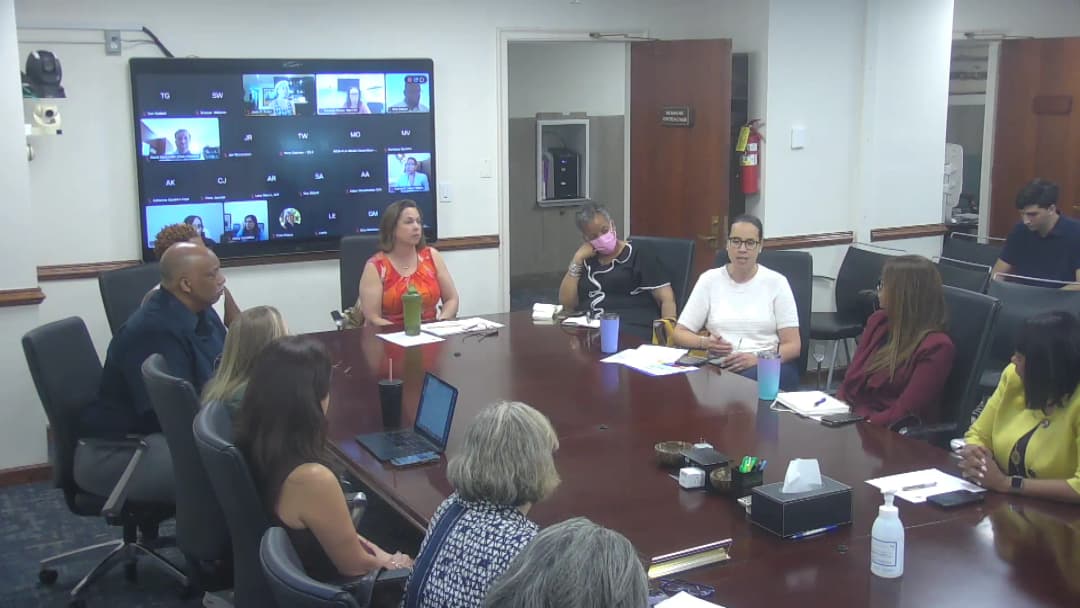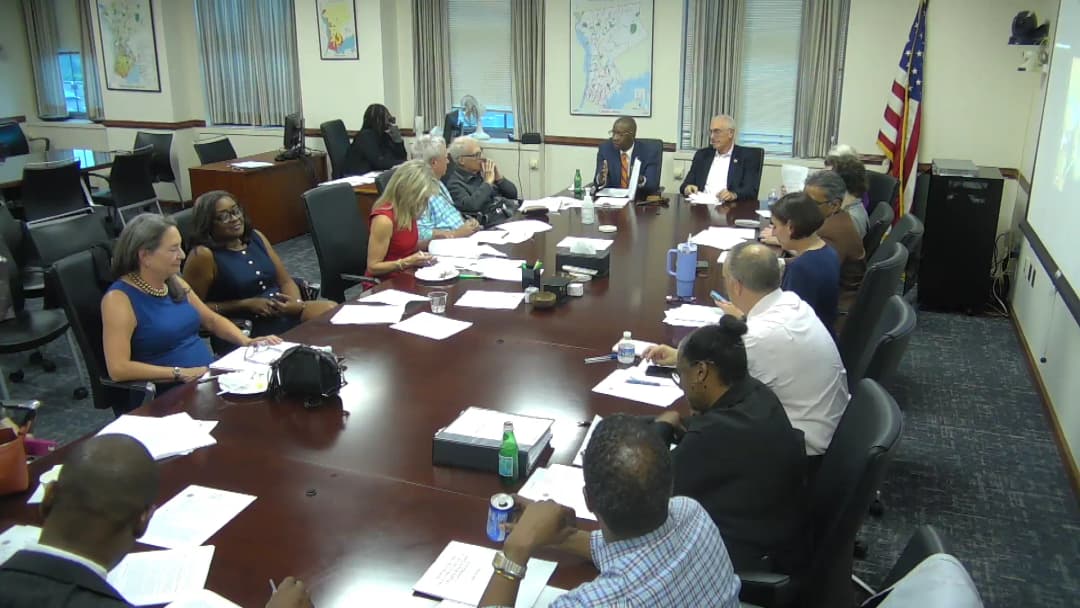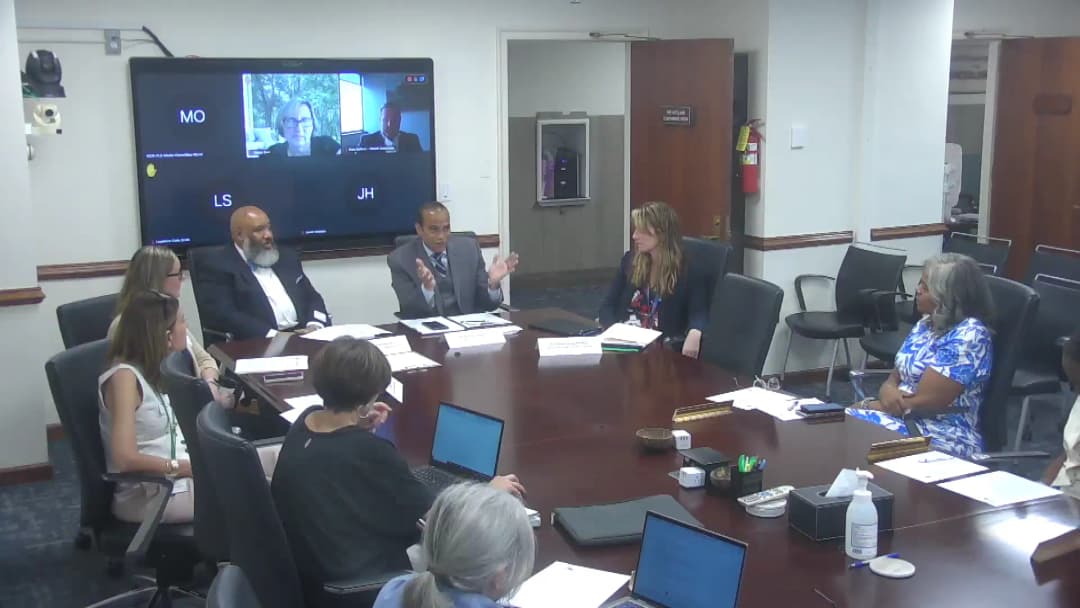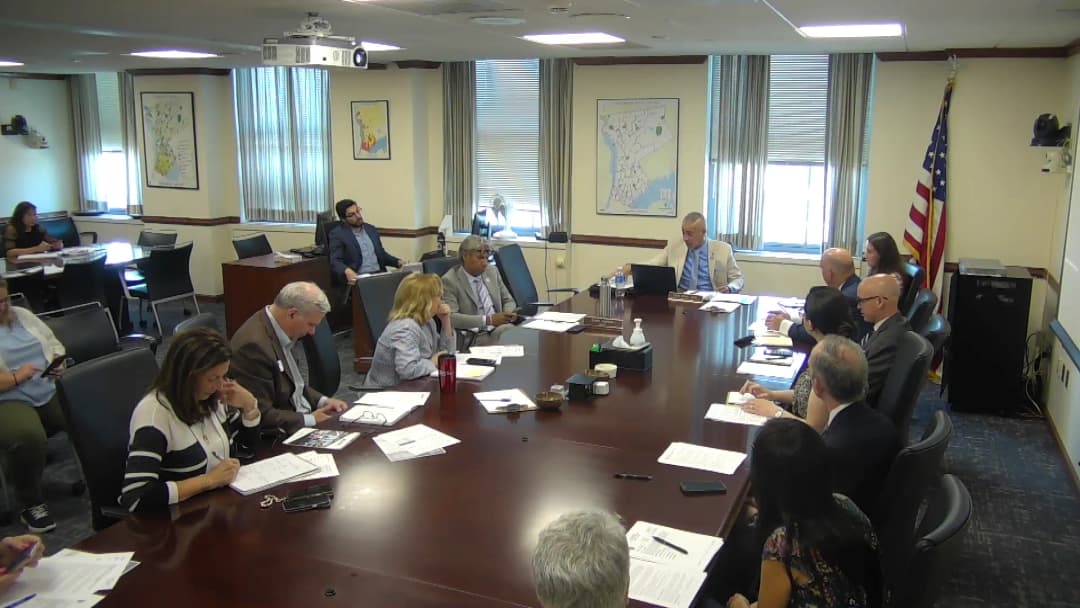
The Westchester County Board of Legislators' Affordability and Economic Development Task Force held its first meeting on June 25, 2026, at 1:00 PM in the Committee Room of the Michaelian Office Building, White Plains, NY. Chair Colin Smith (District 1) convened the meeting to outline the task force's scope, priorities, and next steps. No formal votes were taken; the meeting focused on introductions, framing the work, and gathering initial input from invited stakeholders. Discussion Items - Chair's Opening Remarks: Chair Smith explained the task force's two-track approach: (1) a public-facing listening process across Westchester's diverse communities, and (2) a background data inventory to ground recommendations in fact. He identified ten major areas for examination: economic and labor conditions, small business and economic development, tourism, housing, transportation, workforce affordability, child care, education and workforce training, sustainability/energy/utilities, and county action/advocacy. He emphasized that the task force does not begin with answers but is framing the right questions. - Stakeholder Introductions: Participants introduced themselves and their organizations, highlighting key perspectives: - Viola Soufaj (Westchester County Association): Noted alignment with the task force's goals. - Michael Ramita (Westchester County Association): Raised concern that the mission may have expanded significantly since initial discussions; Chair Smith clarified that goals are aspirational and the process is organic. - Jen Naylor (Westchester Community College): Highlighted the college's annual tuition of $5,500 and that 35–40% of students receive Pell or other aid. - Kathleen Irving (NY Apartment Association): Represented rent-stabilized housing owners; advocated for balanced housing policy. - Tim Foley (Building and Realty Institute): Noted that housing costs are driven by rising fuel, insurance, electrical bills, and building supplies (exacerbated by tariffs). - Janet Berlung Fry (Westchester Women's Agenda): Cited housing, child care, food insecurity, and health care as key issues for women and families. - Laura Newman (Child Care Council of Westchester): Stressed that child care is an economic development and workforce issue; Westchester has the largest number of child care programs in the state outside NYC and 850 child care programs, many home-based, facing insurance and cost challenges. - Laura Sady (Hudson Gateway Association of Realtors): Emphasized the need for attainable housing (for those earning too much for subsidies but too little to afford market-rate). - Natasha Caputo (Westchester County Tourism and Film): Reported tourism is a $2.4 billion industry supporting over 22,000 jobs; film industry has nearly $1 billion in economic impact. - John Rabbit (Business Council of Westchester): Called for focusing on the affordability of doing business, including regulations and mandates. - Bridget Gibbons (Director of Economic Development): Noted that Westchester's population grew by 6,000 between 2024-2025, the highest of any NY county, and that there are 35,000 businesses; affordability is a constraint on continued growth. - Jan Fisher (Nonprofit Westchester, remote): Stated that nonprofits employ 18% of the county's workforce, yet 22% of that workforce lives at federal poverty level. - Pedro (on behalf of Westchester Partners construction): Highlighted rising material costs, price volatility, and challenges for legitimate contractors; union members are leaving the county due to cost of living. - Legislator Anat Nambiar (District 7): Stressed the importance of balancing aspirational goals with measurable starting points; affordability is a problem of success due to proximity to NYC and Stamford. - Scope and Method Discussion: The group debated how to conduct community outreach. Ideas included in-person listening tours, virtual meetings, and a countywide survey to reach a broad audience. Laura Sady and others advocated for an anonymous survey to avoid skewed input from only the most vocal residents. Janet Berlung Fry emphasized the value of storytelling for less tech-savvy and immigrant communities. Chair Smith noted that if the task force waits too long, it may conflict with the county budget calendar. John Rabbit suggested reviewing county regulations and mandates as part of the work. - Gaps Identified: Participants noted missing perspectives from utilities/energy (clean energy providers), healthcare, insurance, and direct immigrant community representatives. Chair Smith confirmed outreach is ongoing. Key Outcomes - The task force was formally launched with an initial set of members representing business, housing, child care, tourism, economic development, nonprofit, labor, and education sectors. - No formal decisions or votes were taken; the meeting was foundational and exploratory. - Chair Smith committed to distribute a recap and proposed schedule within the next few days, and to solicit further recommendations for participants and methods. - Next steps include organizing listening sessions in different regions of the county (e.g., northern tier, river towns, sound shore, Yonkers) and leveraging existing partner meetings for input. - Staff will begin compiling existing data, reports, and programs as part of the background inventory.
Public Meetings - Westchester County, New York
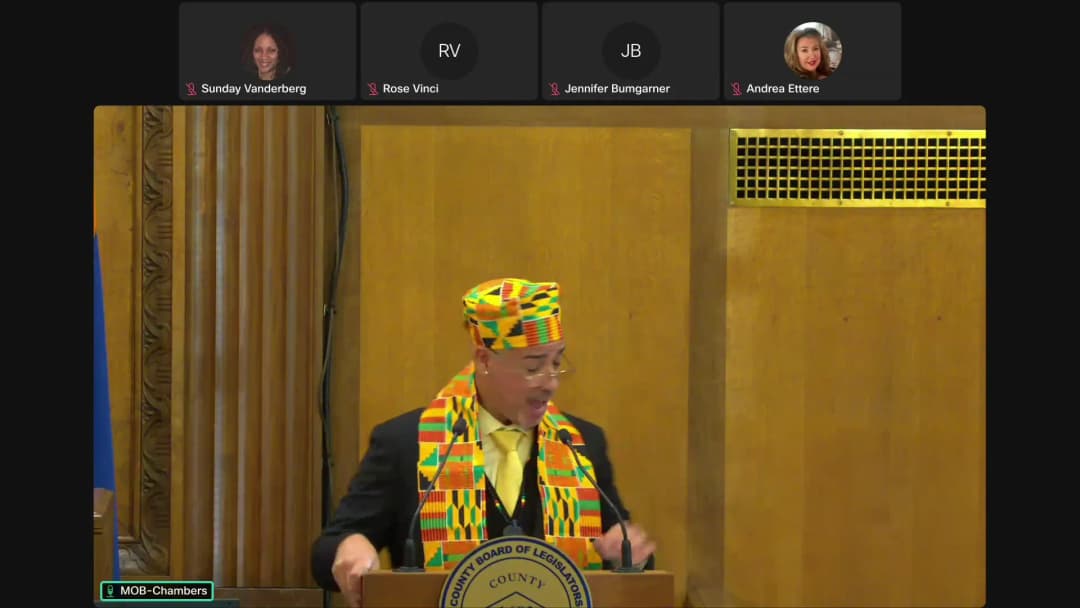
Public Meetings - Westchester County, New YorkThe Westchester County Board of Legislators held its regular meeting on Monday, June 15, 2026, beginning at 7:03 PM with a Caribbean American Heritage Month celebration honoring Judge Lyndon Williams and Coach Ted Bitter. The regular business session convened at 7:45 PM after a recess. The meeting included a public hearing, approval of minutes, receipt of communications, and votes on several bond acts, agreements, and a local law. All votes were unanimous (16-0) with Legislator Jewel Williams Johnson absent. Consent Calendar - Minutes of the June 1, 2026 regular meeting were approved unanimously. - All communications from the County Executive (items 2026-275 through 2026-295) and from the Clerk of the Board (items 2026-293, 2026-296, 2026-288, 2026-297) were received, filed, and referred to the appropriate committees without objection. Public Comments & Testimony - Benjamin Brown (White Plains resident, Coalition for Addition Without Subtraction – CAWS): Expressed disappointment with the Galleria Mall redevelopment process, stating that city officials gave short shrift to public participation; that the developer was allowed to put forth its vision as a fait accompli despite a rezoning from 90-foot maximum height to 450 feet; that home rule requests to sell public lands were submitted with only a few days' notice; and that a $175 million state appropriation was made without public transparency or opportunity for involvement. He also noted that Albany substantially scaled back the State Environmental Quality Review Act. - Howard Milbert (Executive Director, Austin Children’s Center; co-president, Westchester Early Childhood Directors Association): Expressed gratitude for historic child care funding levels, including $1.5 million for a scholarship initiative and over $79 million in total child care funds for Westchester. Urged the Board to expedite the enrollment process, allowing re-enrollment before formal fund transfer from Albany, to avoid summer camp disruptions and delays in September services. - Ed Riley: Denounced state legislator Amy Paul for sponsoring legislation to redefine mother and father, and for supporting assisted suicide. He argued that her actions are part of a pattern of killing children and old people, and predicted that such policies will become mandatory. He also criticized the Democratic Party and the Board’s past actions on free speech at abortion clinics. Discussion Items - Public Hearing – Local Law Repealing VOP Authorization (2026-25/26): A public hearing was held at 7:30 PM on a local law to repeal the County Attorney’s authority to present criminal proceedings for violations of probation. No speakers registered. The hearing was closed, and the local law (Intro 2026-26) was referred to the Board of Legislators for the June 29, 2026 meeting. - Standing Committee Items (all passed 16-0): - ACT – Sheppard Mullin Retainer for Surety Dispute: Authorizes retaining Sheppard, Mullin, Richter & Hampton LLP at a cost not to exceed $50,000 plus approved expenses for legal services related to a surety dispute on DPWT Contract 18-503. Legislator Imamura noted the firm offers a significant discount. - BOND ACT – Various County Roads Rehabilitation Program 2026 ($11,805,000): Funds design, construction management, and roadway improvements on Halstead Avenue, Theodore Fremd Avenue, Anderson Hill Road, Aqueduct Road, and Long Ridge Road. - ACT – Sexual Risk Avoidance Education Program ($260,000 grant): Authorizes acceptance of a grant from NYS OCFS and municipal agreements with Mount Vernon, New Rochelle, Ossining, Peekskill, Port Chester, White Plains, and Yonkers. Legislators described it as a proven program providing life skills and job opportunities. - BOND ACT – Information Technology 2025-2029 ($1,235,000): Supports replacement and modernization of equipment and systems in the District Attorney’s offices, including laptops, data storage, cybersecurity tools, and forensic technology. - ACT – Regional Partnership Agreement with Putnam County ($100,000 grant): Authorizes an agreement to receive a homeland security grant for specialized technical rescue equipment. - BOND ACT – Labs & Research Equipment Acquisition 2026-2030 ($550,000): Funds replacement of 13 items, most 15–20 years old, supporting water quality and public health testing. Acquisition and installation expected within six months. Key Outcomes - All six standing committee acts and bond acts (items 2026-263, 2026-264, 2026-266, 2026-271, 2026-272, 2026-273) were adopted by a vote of 16-0. - The public hearing on Local Law Intro 2026-26 (repealing VOP authorization) was closed; the local law was referred to the June 29, 2026 regular meeting. - Memorial resolutions were adopted for Kevin John Beard, Rocco R. Buonassisi, Chester C. Baranowski, Flora Magliari, Joanna Sibio, Gregory John Magann, Kurt Goldschmidt, and Tremel Lamar Taylor, Jr. A moment of silence was observed. - The Chairman acknowledged the New York Knicks’ NBA championship and Legislator Smith noted a recent fatal fire in Peekskill involving a 15-year-old. - The meeting adjourned at 8:17 PM; the next regular meeting is scheduled for June 29, 2026 at 7:00 PM.
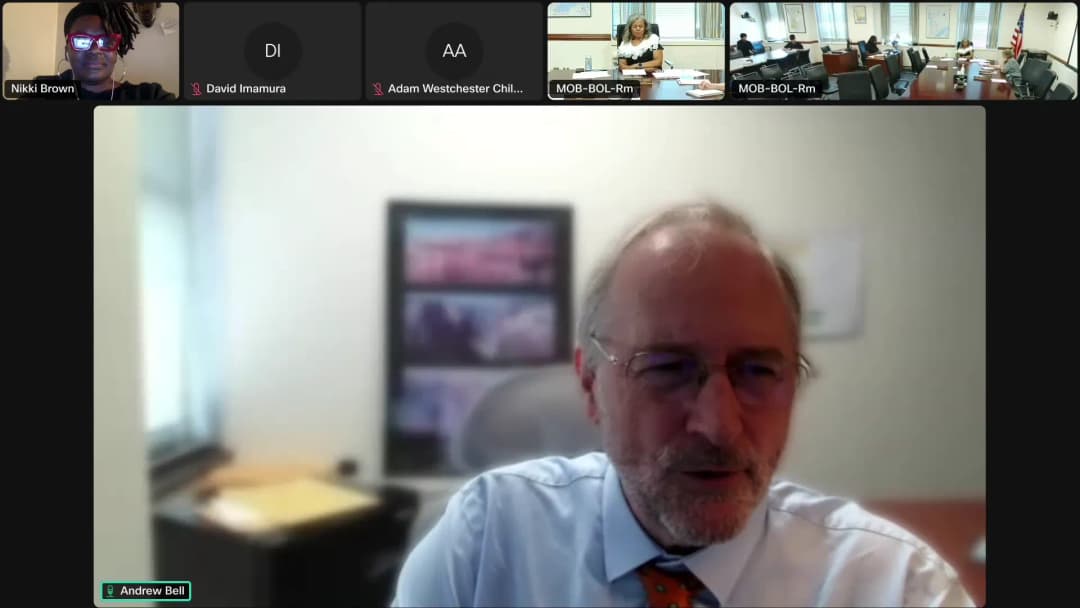
The Health Committee of the Westchester County Board of Legislators, chaired by Legislator Jewel Williams Johnson, convened on Wednesday, June 10, 2026, at 11:11 a.m. and adjourned at 12:27 p.m. The meeting focused on the impact of social media on youth and potential limits for protection. Guest speakers included Nikki Brown (Founder, Sister Nicole Speaks), Will Hatcher (King Willonius, Founder, AI & The Culture), and Dr. Andy Bell (Program Director, Westchester County Department of Community Mental Health). Adam Rubinovich, Executive Director of the Westchester Children's Association, also participated via chat. Discussion Items - Chair Williams Johnson opened by framing social media as both a source of connection and a source of risks such as cyberbullying, anxiety, depression, and distorted body image. She noted that New York State passed the Stop Addictive Feeds Exploitation (SAFE) for Kids Act and the New York Child Data Protection Act in June 2024, with implementation steps ongoing. - Nikki Brown presented the "ABCs and 1-2-3s" of digital safety: Awareness (including asking questions), Boundaries (device-free meals, no phones in bedrooms), and Conversations (ongoing, open communication). She emphasized that adults must model healthy tech use and avoid being hypocritical. - Dr. Andy Bell stated that current protections are "absolutely not" strong enough. He explained that social media can hijack the dopamine reward system, interfere with developmental tasks like serve-and-return interactions, and contribute to addiction. He advocated for the "POWER" model: Play, Outdoor time, Work/chores, Engagement (conversation), and Reading. - Will Hatcher (King Willonius) noted that for many young people, constant digital engagement is their baseline, and adults should seek to understand their world rather than simply condemn technology. He observed that children today share a global, instantaneous culture (e.g., knowing the same viral jokes) and that the long-term effects are unknown. - Legislator Barr discussed the "Disconnect to Reconnect" initiative, a coalition aiming to reduce screen time and promote real-world connection, especially for young children. She compared tech companies' tactics to those of the tobacco industry, designed to maximize user attention and profit. - Equity concerns were raised: Dr. Bell noted that families with fewer resources often have children using social media more, and that safe outdoor play spaces are inequitably distributed. Nikki Brown stressed the need to find alternative outdoor activities even in urban settings. - Addiction was a recurring theme; speakers described social media platforms as deliberately addictive. Chair Williams Johnson suggested treating addictive platform design as a public health concern, with Dr. Bell agreeing emphatically. - Student privacy and data collection were discussed, along with the need for age verification without compromising privacy. Key Outcomes - The committee agreed to explore organizing an algorithms workshop to educate parents and educators on managing device settings and understanding how algorithms influence content. - A future meeting dedicated to algorithms and their impact on youth will be planned. - The conversation reinforced the importance of grassroots parent organizing, community-wide standards for device use, and holding tech companies accountable through legal and regulatory measures.
Chair Judah Holstein called the Non-Profit Task Force meeting to order at 10:04 AM on Wednesday, June 10, 2026, in the County Board Committee Room. The meeting focused on the agenda item "Federal Impact: Challenges, Coordination, and Shared Strategies," gathering nonprofit professionals and county officials to identify immediate impacts from federal funding cuts and policy changes, understand risks to organizations and communities, and explore coordination and advocacy opportunities with county government. Discussion Items - Reimbursement and Contract Payment Delays – Navy Djonovic (representing Citrus Cooperman and numerous nonprofit clients) highlighted that nonprofits are acting as financial institutions because government reimbursements are severely delayed, with some organizations waiting since June 2025 for payment. This forces nonprofits to draw down reserves or use lines of credit, incurring interest expenses. Jan Fisher (Nonprofit Westchester – NPW) noted that the state legislature passed a bill (S. A. something) addressing payment timelines, but it has been vetoed by the governor for three consecutive years, and urged the sector to advocate strongly. As of June 2026, the bill remains pending at the governor's desk. Manny Rawlings (Chief of Staff, Community Resource Center) raised the issue of capital grants (e.g., NY Forward) that require reimbursement after spending, which forces nonprofits to front large sums, and asked if the county could serve as a bridge funder for state-guaranteed grants. - Tax Abatements and Economic Development Incentives for Nonprofits – Morgan McEwen (Director, Mordance) proposed that Westchester County explore policies to incentivize landlords who lease affordable spaces to nonprofits, similar to tax abatements given to for-profit developers. She noted that nonprofits often pay property taxes indirectly through rent, while nonprofits that own property receive exemptions. Chair Holstein called the idea "out-of-the-box" and said he and colleagues would explore it. David Buchwald (Civic Helpers) pointed out via WebEx that most real property tax exemptions are governed by state law, so the first question is whether state law allows such incentives. Manny Rawlings added that his village (Mount Vernon) has a developer fee fund used for community improvements, suggesting a similar county-level fund could support nonprofits. - Immigration Policy and ICE Enforcement Impacts – Jeanette Gisbert (Deputy Director, Neighbors Link) reported that in the past year there were over 600 changes to immigration policy. She noted a 25% reduction in immigration judges nationally, and in New York, 77 new judges were recently appointed, some without immigration law experience, causing delays and cancellations of hearings. She also described "mega master hearings" with long lines (up to three hours). Denise Durham Williams (CEO, My Sister's Place) observed a drop-off in services among undocumented survivors of domestic violence and raised concerns about a national statement that ICE would target New York. She called for a collective information system (like a hotline) and proactive preparation. Neighbors Link already provides community education and resource pages. Several speakers (including Jan Fisher and Tiffany Hamilton) urged coordination with local police and school districts, and noted the New York State Attorney General's office has a website to track ICE activity. - Mission Dilution and Funding Shifts – Tiffany Hamilton (YWCA White Plains) described indirect impacts: corporate and foundation funders are shifting away from equity-focused missions, causing increased competition and mission dilution. She suggested convening corporations and foundations to establish impact grants that could be channeled through the county to affected nonprofits. - Fair Housing and Contract Scope Reduction – Kacy Brady (Executive Director, Westchester Residential Opportunities) reported that federal contracts are being delayed and scope of work narrowed (e.g., emotional support animals, source of income discrimination cases). She thanked the county for maintaining additional protected classes under local law and emphasized the need to educate residents that state and county protections remain in effect despite federal rollbacks. - Capital Grant Payment Challenges – Jennifer Ryan Safsel (New Michelle YMCA) described capital grants (e.g., CREST, SAM) that only reimburse after expenses, requiring nonprofits to front large sums. She proposed a model where grantees receive 50% upfront, as done at the federal level. She noted she will meet with governor's staff to advocate for this change. - Legislative Advocacy – Jan Fisher highlighted that NPW is championing legislation (passed by Senate and Assembly) to require timely state payments and address contract issues. The governor previously vetoed similar bills, but this year's version addresses her stated concerns point-by-point. NPW is building an "army of advocates" for the upcoming session. Key Outcomes - No formal votes were taken. The meeting served as a listening session and brainstorming forum. - Chair Holstein expressed gratitude and commitment to explore several ideas, including tax abatements for nonprofit landlords, developer fee funds, and streamlined reimbursement processes. - Participants agreed to continue collaboration, with NPW and the County Board of Legislators facilitating follow-up. Neighbors Link offered to help other organizations with ICE response resources and tabletop exercises with local municipalities. - The meeting adjourned at approximately 11:00 AM (as Chair Holstein noted a 11:00 AM meeting commitment).
On June 10, 2026, the Westchester County Charter Revision Commission held a meeting at 7:00 PM in Committee Room, 800 Michaelian Office Building, White Plains, NY. Chairman Lyndon Williams called the meeting to order at 7:07 PM. Commissioners Beth Smayda participated remotely from Silver Bay YMCA Conference Center, NY, and Ruth Montgomery participated remotely from O'Hare Airport Terminal 5 (Delta baggage claim). The sole agenda item was discussion and approval of the 2026 Charter Revision Commission Draft Report (Item 2026-274). Consent Calendar - Minutes Approval: The minutes from the meetings of May 12, 2026 (6:00 PM) and June 9, 2026 (7:00 PM) were approved unanimously via motion by Shurla Tukuru, seconded by Shauna Rae Long. Discussion Items - Westchester County 2026 CRC Draft Report (Item 2026-274): The commission discussed the draft report, which includes recommendations, summaries of department requests, and an appendix containing the focus group report and prior meeting minutes. Key points of discussion included: - Pagination and binding: The report was to be paginated and bound with tabs for appendices. Page numbers were omitted from the current draft pending final layout. - Requests from the Office of the District Attorney (page 74): The commission clarified that none of the DA's requests were approved, and the report details the reasoning for each denial. - A typo on page 75 ("start" instead of "state") was noted and to be corrected. - The motion to approve the draft was structured to allow for non-substantive changes and corrections before final printing. Key Outcomes - Approval of the Draft Report: The commission voted to approve the 2026 CRC Draft Report, subject to non-substantive changes, corrections, and final pagination. The roll call vote recorded 17 ayes: Commissioners Lyndon Williams, Tim Warn, Carolyn Stevens, Ken Jones, Gary Holmes-Nelson, Joseph Marchese, Heather Lackey, Nancy Kaboolian, Ruth Montgomery (remote), Beth Smayda (remote), and others present. No opposed, absent, or abstentions were noted. - Adjournment: The meeting adjourned at 7:27 PM on a motion by Shauna Rae Long, seconded by Gary J. Zuckerman.
The Intergovernmental Affairs Committee, chaired by Legislator Emiljana Ulaj, convened on June 9, 2026, at 3:00 PM to discuss the financial and operational impacts of charter schools across Westchester County. The meeting featured superintendents from several school districts, a BOCES leader, and a legislative consultant. Participants expressed broad concern about the strain charter school expansion places on public school districts, particularly in southern Westchester, where districts collectively send more than $30 million annually in tuition payments to charter schools. Key issues included disparities in oversight between SUNY Charter Schools Institute and the NYS Board of Regents, lack of transparency in enrollment reporting, unbudgeted retroactive tuition bills, and rising transportation costs. Discussion Items - New Rochelle City School District (Dr. Corey Reynolds): Capital Prep charter school, approved by SUNY without a confirmed location, would cost the district $4.4 million for 250 students in the next budget. The district eliminated 193 positions (57 actual employees) and increased class sizes to budget for potential charter costs. Dr. Reynolds noted that despite community opposition, there is no metric for community approval in the SUNY process. - Peekskill City School District (Dr. David Mauricio): A charter school from the Bronx targeted Peekskill for a potential 2026 opening, but after community meetings and letters of opposition from families, partners, and the board, the applicant decided not to apply. However, the threat remains. Dr. Mauricio highlighted that 100 students would cost $2.1 million annually and that charter schools often return students before graduation to inflate their graduation rates. - North Salem Central School District (Lindsay Eidel): Received retroactive tuition bills for one student for three school years totaling approximately $25,000 per year, unbudgeted and without the student being registered in the district’s system. Charter schools are required to report enrollment but fail to do so, causing financial unpredictability. - Irvington Union Free School District (Mara Rotessic): One student attending a charter school in Yonkers cost the district $25,000 in tuition and $8,000 in transportation (shared route), with potential $85,000 if a dedicated route were needed. This represents a full teacher’s salary. - Legislation Proposals (Evan Sullivan, Ostroff Associates): Discussed a bill to close a loophole in the SUNY charter approval process (the 30-day resubmission rule) and additional proposed legislation requiring mandatory school district consultation, location disclosure, and alignment of transportation request deadlines (April 1st) with school budget cycles. These bills have not yet been introduced or advanced in Albany. - Transparency and Accountability Concerns: Multiple speakers noted that SUNY-authorized charters have less rigorous oversight, faculty do not need the same certifications as public school teachers, and there is no published list of closed charter schools in New York State, making it difficult for districts to assess applicants. Key Outcomes - Legislators agreed to include the proposed bill numbers in the county's state legislative package for the next session. Chair Ulaj requested that the superintendents provide all relevant bill numbers to the committee. - The committee committed to drafting letters of support for state legislation that improves oversight, requires community consultation, and aligns transportation timelines with budgeting. - Participants agreed to gather updated data on regional charter school caps and information on closed charter schools in New York City to inform future discussions. - Legislators encouraged public school parents to advocate directly with state representatives, emphasizing that charter school funding impacts property taxes and public school quality.
On Tuesday, June 9, 2026, at 7:00 PM, the Westchester County Charter Revision Commission held a public hearing in the Legislative Chambers of the Michaelian Office Building in White Plains, NY. Chairman Lyndon Williams presided. The purpose was to receive public comment on the proposed 2026 Westchester County Charter Revision Commission Draft Report. The hearing was recorded, transcribed, and will be posted online. Only one member of the public spoke, and the hearing was closed after approximately 15 minutes. Public Comments & Testimony - Joseph Pereiras, a resident of Yonkers and president of a large boys and girls club, spoke about the financial burden on non-profit athletic organizations. He stated that county field rental fees have risen to $100 per hour ($450 for night games), making it unaffordable for groups like the Westchester County Baseball Association and the New Rochelle Robbins. He noted that for-profit travel teams charging $4,000 per player per season have pushed out non-profits, and that only 4 out of 10 children in the U.S. now participate in athletics. He urged the Commission to recommend that county facilities be made available to non-profits at reasonable fees, warning that the decline in enrollment will continue otherwise. Discussion Items - The Commission did not deliberate on the draft report or any other items. The agenda item (2026 CRC Draft Report, Item 2026-274) was listed for discussion, but the meeting was solely a public hearing. No commissioners asked questions or offered comments on the testimony. Key Outcomes - Commissioner Gary Zuckerman moved to close the public hearing, seconded by Commissioner Carolyn Stevens. The motion carried unanimously on a roll-call vote (16 ayes, 0 nays, 6 absent, 1 away). - Commissioner Zuckerman then moved to adjourn the meeting, seconded by Commissioner Stevens. The motion carried unanimously, and the meeting was adjourned at approximately 7:15 PM.
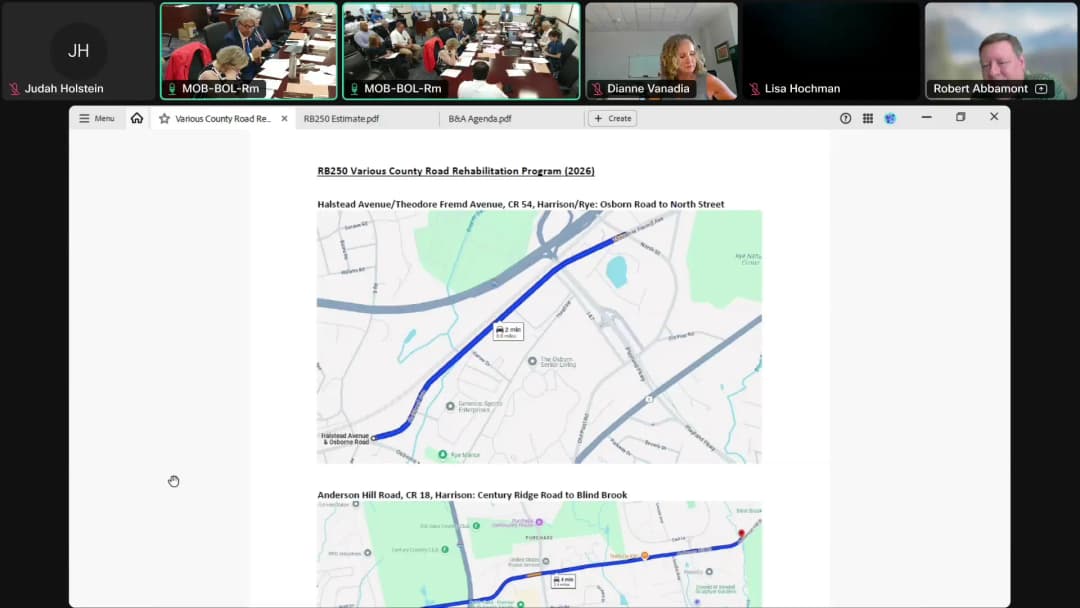
The Infrastructure and Housing (I&H) Committee met jointly with the Budget & Appropriations (B&A) and Public Safety & Veterans (PS&V) Committees on Monday, June 8, 2026, at the Michaelian Office Building in White Plains, New York. Chair Shanae Williams presided over I&H. The meeting was called to order at 10:15 AM. The I&H Committee approved prior minutes, advanced three bond acts totaling $13,590,000, and received a legislative memo. The I&H portion adjourned at 11:22 AM per the official minutes; the transcript indicates the joint session continued until 12:02 PM. Consent Calendar - Minutes Approval: The minutes of May 18, 2026 and May 26, 2026 were approved unanimously by the I&H Committee. Discussion Items - Bond Act RB250 – Various County Roads Rehabilitation Program 2026 (2026-264): This bond act authorizes $11,805,000 for design, construction management, and construction on four county roads: Theodore Friend Avenue (CR 54, 0.8 miles), Anderson Hill Road (CR 18, 2.4 miles), Aqueduct Road (CR 124, 1.17 miles), and Long Ridge Road (CR 3, 1.2 miles). Department of Public Works and Transportation representatives Robert Abbamont and Deputy Commissioner Hernane DeAlmeida presented details, including PCI ratings ranging from 51 to 73 and average daily traffic from 6,248 to 13,698 vehicles. Legislators asked about school-zone traffic mitigation and coordination with Con Edison. The item was signed by committee and referred to the Board of Legislators unanimously. - Bond Act BDA03 – Information Technology 2025-2029 (2026-271): This bond act authorizes $1,235,000 for District Attorney's office IT equipment, including laptop replacements, data storage upgrades, data center towers, and forensic surveillance equipment. District Attorney's office staff Charles Forzano and Jason Carrow confirmed there are no recurring maintenance or licensing costs. The item was signed and referred unanimously. - Bond Act BLR2F – Labs & Research Equipment Acquisition 2026-2030 (2026-273): This bond act authorizes $550,000 to replace 13 pieces of laboratory equipment, including a BOD analyzer (21 years old), BOD incubators (over 20 years old, requiring banned refrigerants), a real-time PCR system (15-18 years old), and other end-of-life items. Chief Administrator Keith Hoffman explained the procurement and installation timeline of about six months and noted no design or consulting services are needed. Legislators discussed supply chain issues and the condition of existing equipment. The item was signed and referred unanimously. Receive & File - Memo of Legislation – Improve Cell Phone Coverage (2026-267): Legislator Anant Nambiar forwarded a memo proposing that the County work with cell tower infrastructure companies to use the latest technology on County-owned properties to improve cell coverage. The I&H Committee received, filed, and approved the memo unanimously. Additional Joint Session Items (Not on I&H Agenda) The raw transcript includes other matters handled by the joint committees during the same meeting: - Bond Act 2026-263 – Surety Bond Litigation: The County Attorney's office discussed hiring the firm Shepard Mullen to compel a surety company (NGM, recently acquired by Nationwide) to honor a performance bond after contractor MBM's bankruptcy. County Attorney's office reported progress in negotiations. The B&A Committee voted to advance. - Bond Act 2026-266 – Youth Bureau Grant: A no-cost state grant for a seventh year of youth healthy relationships and employment programming. Director of the county youth bureau noted about 105-110 youth served, with 60% female and 40% male, and a 90% classroom completion rate. Legislators, including Alvarado and Barr, expressed strong support. Both B&A and Seniors & Youth advanced the item. - Bond Act 2026-272 – Putnam County Technical Rescue Partnership: Legislation authorizing a partnership with Putnam County to accept $100,000 in competitive state/federal funding for technical rescue equipment. Department of Emergency Services Commissioner and Deputy Chief presented the program, covering rescue rope, PPE, battery-powered shoring tools, and a transit. The PS&V and B&A Committees advanced it. - First Quarter Budget Report: Budget Director Larry Snow presented the first quarter forecast. Key points included holding the sales tax forecast flat, healthcare benefit costs rising 9.3% with $4.4 million in prescription savings, bus fare evasion around 40%, and a projected $4.2 million operating surplus for 2025. Legislators discussed bus fare enforcement, healthcare cost drivers, and fund balance levels. Key Outcomes - All three I&H bond acts (RB250, BDA03, BLR2F) were signed by committee and referred to the Board of Legislators with unanimous votes. - The May 18 and May 26 minutes were approved. - The cell phone coverage memo was received and filed. - In the joint session, items 2026-263, 2026-266, and 2026-272 were advanced by their respective committees, and the first quarter budget report was received.
The Public Safety & Veterans, Budget & Appropriations, Infrastructure & Housing, and Seniors & Youth Committees met jointly on June 8, 2026, at the Michaelian Office Building in White Plains, beginning at 10:11 AM (formal opening at 10:48 AM) and adjourning at 12:02 PM. The meeting addressed several bond acts, partnership agreements, a litigation engagement, and a first-quarter budget report. All items were approved unanimously. Consent Calendar - Minutes from previous committee meetings were approved. Discussion Items Litigation Engagement (Item 2026-263) The county attorney's office requested authorization to engage Shepard Mullin LLP, specifically attorney Irish Shulman, to address a dispute with a surety (NGM) over a performance bond related to a contractor's bankruptcy. Legislators expressed full support for Shulman's past work and noted the 70% discount on rates. Report back expected in 30–45 days. Approved by Budget & Appropriations and Litigation committees. Road Rehabilitation Bond Act (Item 2026-264) A bond act of $11,805,000 for design and construction of four county roads: Theodore Friend Avenue (0.8 miles, PCI 73), Anderson Hill Road (2.4 miles, PCI 63), Aqueduct Road (1.17 miles, PCI 51), and Long Ridge Road (1.2 miles, PCI 71). Work includes milling, resurfacing, drainage repairs, and markings. Discussion included coordination with Con Edison and MTA. Approved unanimously by Budget & Appropriations and Infrastructure & Housing. Youth Healthy Relationships Program (Item 2026-266) Authorization to accept a state grant for the seventh year of a youth program focusing on healthy relationships and employment skills. Program serves 105–110 youth annually across seven local youth bureaus, with a 90% classroom completion rate; no county cost. Legislators praised the program and discussed expanding outreach to underserved areas. Approved by Budget & Appropriations and Seniors & Youth. Information Technology Bond Act (Item 2026-271) A bond act of $1,235,000 for the second year of a five-year IT capital plan for the District Attorney's office, covering laptop/desktop replacements, data storage, and data center equipment. No recurring maintenance costs. Laptops had not been purchased since COVID. Approved unanimously by Public Safety & Veterans and Budget & Appropriations. Regional Partnership with Putnam County (Item 2026-272) Authorization to enter a regional partnership agreement with Putnam County to receive $100,000 in state funding from the NYS Division of Homeland Security (FY 2023 Technical Rescue/Urban Search and Rescue Assets Grant). Westchester received the maximum award and the largest grant in the state. Funds will purchase rescue rope, PPE, battery-powered tools, and monitoring equipment. Partnership enhances interoperability and mutual aid. Approved unanimously by Public Safety & Veterans and Budget & Appropriations. Laboratory Equipment Bond Act (Item 2026-273) A bond act of $550,000 to replace 13 pieces of laboratory equipment (e.g., BOD analyzer, microwave digestion system, PCR system, trace analysis unit), many over 15 years old and at end of life. Equipment is critical for public health testing, environmental monitoring, forensic investigations, and medical examiner operations. Legislators discussed life safety and energy efficiency benefits. Approved by Budget & Appropriations. First Quarter Budget Report Budget Director Larry Snow presented the first quarter fiscal report for 2026. Highlights: sales tax revenue held flat to budget ($0 variance); healthcare costs increased by $9.3 million net (with prescription rebate savings); OCFS child care funding uncertainty projected at $12–14 million; bus fare evasion still around 40%, costing approximately $1 million per month; new state transportation operating assistance increased by $4.9 million; vacancy savings of $1.7 million projected; fund balance projected at $536 million (about 21% of operating expenditures). Discussion included fare enforcement strategies, healthcare cost drivers, and the county's bond rating. The report was received and filed. Key Outcomes - All bond acts and agreements (Items 2026-263, 264, 266, 271, 272, 273) were approved with unanimous votes. - The first quarter budget report was received and filed. - Committees adjourned at 12:02 PM.
The Litigation and Budget & Appropriations Committees met jointly on Monday, June 8, 2026, from 10:15 AM to 12:02 PM. Legislators approved a surety litigation retainer, multiple bond acts, a regional emergency services partnership, a youth grant, and received the first-quarter budget report. All votes were unanimous unless otherwise noted. Consent Calendar - The Litigation Committee minutes of May 26, 2026, were approved unanimously. - Various committee minutes from May 18 and May 26, 2026, were approved for Budget & Appropriations and other committees. Discussion Items Item 2026-263 – Sheppard Mullin Retainer for NGM Insurance Surety Dispute - The agenda lists this item as 2026-263; the minutes reference ACT-2026-131. - Senior Assistant County Attorney Mark Gardner said the County is disputing a surety’s failure to pay a claim under DPW&T Contract No. 18-503. - Ira Schulman of Sheppard Mullin, who has worked with the County for many years, said he had a preliminary call with surety counsel and believed progress could be made quickly. - Chairman Imamura thanked Schulman for his successful work for the County and for providing a heavily discounted rate; the transcript mentions a roughly 70% discount. - Legislator Barr asked about the County’s responsible bidder law and whether the County could stop working with a surety acting in bad faith. Schulman responded that the County was not at that point, and he would report back in 30 to 45 days. - The item was signed by committee and referred to the Board of Legislators unanimously. Item 2026-264 – Various County Road Rehabilitation Bond Act - The County requested $11,805,000 for design, construction management, and construction on four road segments: Theodore Friend Avenue (Harrison), Anderson Hill Road (Harrison), Aqueduct Road (White Plains), and Long Ridge Road (Bedford). - Work includes milling and resurfacing, drainage repairs, traffic loops, pavement markings, and related paving work. - Reported pavement condition indices ranged from 51 to 73, and average annual daily traffic ranged from 6,248 to 13,698 vehicles. - The Deputy Commissioner estimated design and construction each averaging about nine months. - Legislators asked about school bus season, traffic disruptions, and coordination with Con Edison and the state DOT; staff said flaggers would handle one lane at a time and noted a recent state DOT presentation of $146 million in paving projects in Westchester. - The item passed unanimously. Item 2026-266 – Youth Bureau Grant Program - Director McFadden presented the seventh year of a state Office of Children and Family Services grant for youth healthy relationships and employment programs. - The program includes a classroom component on boundaries, consent, and character development, plus an employment component teaching punctuality, teamwork, and critical thinking. - About 105 to 110 young people are served annually, roughly 60% female and 40% male, ages 11 to 18, with approximately a 90% classroom completion rate. - Each municipality contributes about $32,000 and the classroom provider receives $25,000; there is no cost to the County. - Legislator Alvarado expressed strong support, saying the program prepares youth to be competent and ready for work. Other legislators also praised the program and asked about expanding it to additional municipalities. - The item passed unanimously. Item 2026-271 – Information Technology Upgrades Bond Act - The County requested bond authorization for the second year of a five-year IT capital plan, covering laptop and desktop replacement, data storage enhancements, and data center equipment. - Staff said there are no new recurring maintenance or licensing costs associated with these upgrades; warranty purchases are intended to extend the life of storage systems. - Legislators noted that the District Attorney’s office had not received a major laptop purchase since the COVID-era purchases. - The item passed unanimously. Item 2026-272 – Regional Partnership Agreement with Putnam County - Commissioner Spear and Deputy Chief Chris Johnson presented a request to authorize a partnership with Putnam County to accept $100,000 in state funding through the FY23 Technical Rescue and Urban Search and Rescue Assets Grant Program. - This was a competitive grant; Westchester received the maximum award and the largest grant in the state. - Funding would support technical rescue teams for structural collapse, trench rescue, swift water rescue, rope rescue, and wilderness search and rescue. Planned purchases include rescue rope, harnesses, fall arrest equipment, PPE, battery-powered tools, and structural evaluation transits. - Commissioner Spear said the partnership improves interoperability, avoids duplication, and supports mutual aid; the funding is not retroactive. - Legislators also discussed fire safety outreach, particularly after recent fatal home fires. Legislator Smith urged the administration to create and distribute simple fire safety graphics, including about overloaded power strips. Commissioner Spear said the department is working on messaging for schools, senior centers, and municipalities. - The item passed unanimously. Item 2026-273 – Replacement Laboratory Equipment Bond Act - The County requested $550,000 to replace 13 pieces of laboratory equipment used for public health testing, environmental monitoring, forensic investigations, medical examiner operations, and regulatory compliance. - Administrator Hoffman described each item, including a biochemical oxygen demand analyzer, microwave digestion system, segmented flow analyzers, BOD incubators, an ultra-pure water system, a purge trap concentrator, a nitrogen generator, explosion-proof refrigerators, a real-time PCR system for DNA testing, a trace evidence analysis unit, and sample evaporators. - Many existing units are 15 to 21 years old, beyond expected useful life, or unsupported by manufacturers. - Staff said the replacements would be completed before the end of the year and no supply-chain delays were anticipated. - Legislators recommended noting “life safety” and “energy efficiency” benefits on capital project forms. The item passed unanimously. First Quarter Budget & Appropriations Report - Budget Director Larry Snow presented the first-quarter forecast and year-end projections. - Economic highlights included elevated fuel prices, with WTI over $100 per barrel at one point, continued high mortgage rates, and a “K-shaped” economy where asset owners benefit while middle- and lower-income households struggle. - Sales tax, over 40% of revenues, was held flat to budget; healthcare benefits were forecast up $9.3 million net, offset by $4.4 million in prescription drug rebates. - Child care subsidies were projected to run a deficit, with 500 to 600 families on a waitlist; the County expected $12–14 million in federal child care funding, pending official numbers. - Bus operating assistance was lowered due to lower farebox collections. Staff reported fare evasion around 40%, with estimated losses near $1 million per month, and OmniCard sales below projections. Cash fare boxes were expected to be installed by July 1. - Enforcement of fare evasion was discussed, including the possibility of $1.4 million in additional police overtime; legislators asked for a future committee meeting with the involved departments. - State operating transportation assistance increased by 7.4%, about $5 million above budget. - The County projected $1.7 million in vacancy savings; the 2025 year-end operating surplus was $4.2 million, leaving fund balance at roughly 21% of operating expenditures. - The County maintains triple-A ratings from S&P and Fitch and an AA1 from Moody’s; the report was received and filed unanimously. Key Outcomes - All discussion items were approved by the joint committees and referred to the full Board of Legislators. - The first-quarter budget report was received and filed. - Staff committed to follow-up reports, including a 30-to-45-day update on the surety dispute, further fare-enforcement discussions, and continued fire-safety outreach.